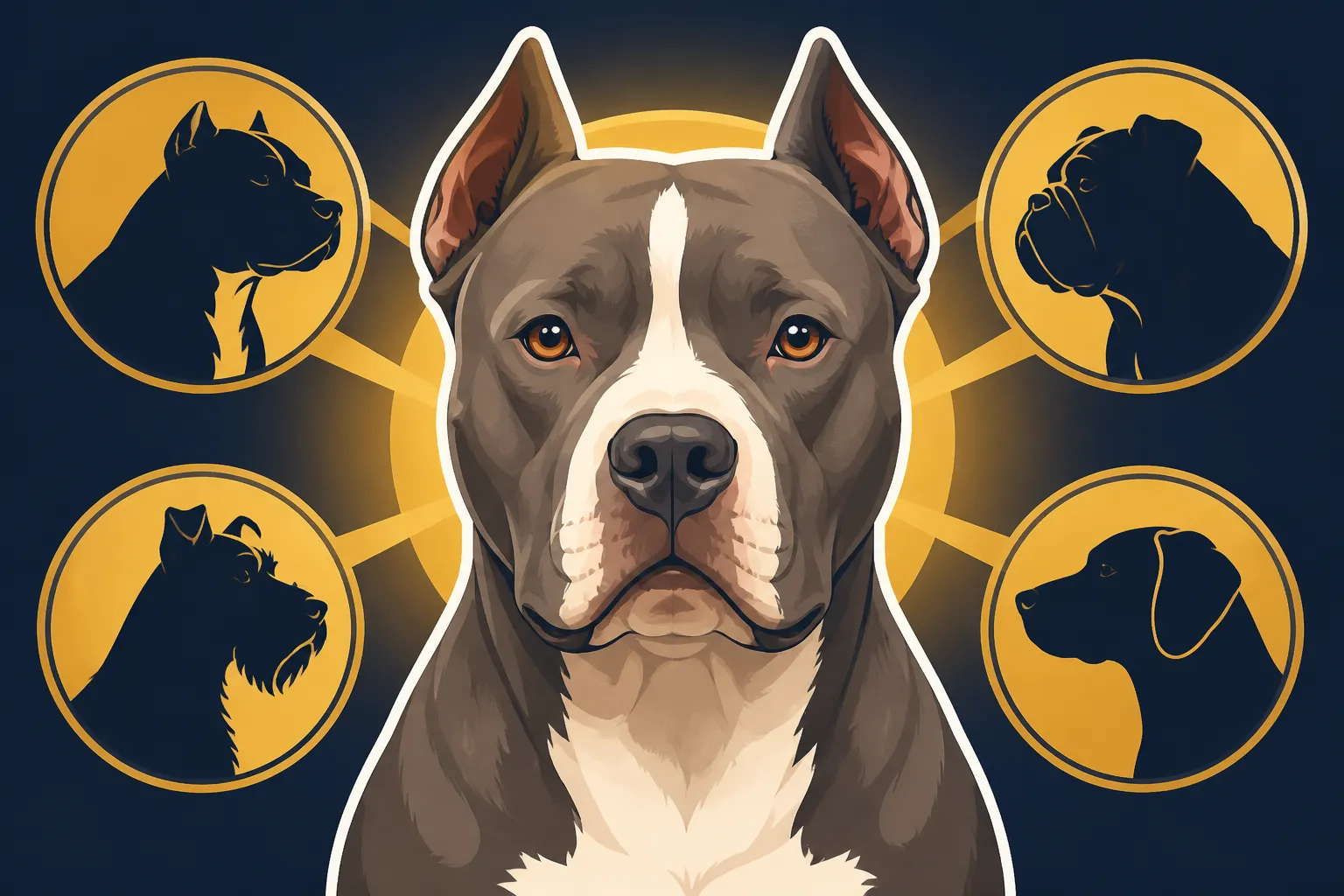
The British Crosses Behind the Pit Bull
It’s incredibly common for people to refer to a "Pit Bull" and imagine one specific dog, but the truth is, the term covers a fascinating lineage that goes back centuries. If you’ve ever wondered about the tough, resilient, and surprisingly affectionate dogs we call Pit Bulls today, understanding their deep historical roots in Britain is absolutely essential. This guide will take you on a journey through the deliberate crosses that forged these incredible dogs, helping you appreciate the rich background behind the loyal companions we cherish.
The Historical Roots of the Bull and Terrier
When we talk about the origins of what we now call Pit Bull type dogs, we have to look across the Atlantic to Great Britain, where the story really begins. This isn't just about one specific breed appearing out of nowhere; it's about a purposeful combination of existing working dogs, each bringing their own distinct traits to the mix. It was a time when dogs were bred for specific, often grueling, tasks, and their physical and mental fortitude was paramount.
The Old English Bulldog: A Foundation Breed
The original Old English Bulldog was a far cry from the squat, friendly bulldog we often see today. These were formidable animals, bred specifically for the brutal sport of bull-baiting, which was popular in Britain for centuries. Their job was to engage and hold a bull by the nose, enduring immense pressure and danger. This required incredible strength, particularly in the jaw and neck, a low center of gravity for stability, and an unwavering determination to hold their ground.
Imagine a dog built like a tank, with immense power packed into a relatively compact frame. Their sheer tenacity and refusal to back down were legendary. While the practice of bull-baiting is horrifying by today's standards, it undeniably selected for a dog with unparalleled courage, physical prowess, and an incredible pain tolerance. These were dogs bred to face down a much larger, more powerful animal, and they did so with singular focus.
Beyond their physical attributes, their temperament was also shaped by this work. They were not typically prone to random aggression, but rather possessed an intense, focused drive when "on the job." When not actively engaged in their grim sport, accounts suggest they could be quite docile and affectionate with their handlers, a trait that perhaps hints at the loyal nature seen in many of their descendants. This duality – fierce at work, calm at home – would become a hallmark.
The Terriers: Agile and Tenacious
Alongside the powerful bulldog, the other crucial ingredient in the Pit Bull recipe came from the various working terriers of Britain. These weren't the fluffy lapdogs some people associate with terriers today; these were gritty, energetic, and highly prey-driven dogs bred for vermin control. Farmers and laborers relied on them to keep down rat populations, hunt badgers, and even participate in organized ratting competitions, where their speed and killing efficiency were tested.
Different terrier types contributed to this lineage, including ancestors of what would become the Black and Tan Terrier and the White English Terrier. What they all shared was an almost boundless energy, remarkable agility, and an unshakeable determination to catch their quarry. They were smaller, quicker, and often more vocal than the bulldogs, able to squeeze into tight spaces and dig relentlessly. Their fighting style was also different, relying on quick movements and sharp bites rather than a sustained hold.
The combination of the terrier's 'game' nature and agility with the bulldog's brute strength and gripping ability was what people began to envision. These terriers were often fearless, sometimes to their own detriment, and brought a quickness of wit and movement that the heavier bulldog lacked. It was this potent blend of traits, refined through generations of selective breeding, that laid the groundwork for the modern Pit Bull type dogs.
The Blending of Bull and Terrier Traits
The specific crosses that eventually led to what we recognize as Pit Bull types weren't accidental. They were a direct response to changing societal norms and the emergence of new, albeit still brutal, sports in Britain. This period was a crucible where the strengths of two very different types of dogs were melded to create something uniquely powerful and agile.
The Drive for a New Type of Fighting Dog
The year 1835 marked a turning point in Britain with the passage of the Cruelty to Animals Act. While it didn't completely eradicate animal fighting, it did outlaw bull-baiting, dog-baiting, and cockfighting, effectively pushing these activities underground. This shift meant that larger, more public spectacles like bull-baiting became too risky. Instead, dog fighting, which required less space and could be conducted more discreetly, saw a surge in popularity, despite its illegality. The 1835 Ban That Redirected Pit Bull Breeding directly impacted how these dogs were developed.
The problem was that the pure Old English Bulldog, while incredibly powerful and brave, was often too slow and ponderous for the fast-paced, often prolonged, engagements of dog fighting. What was needed was a dog that combined the formidable power and relentless grip of the bulldog with the speed, agility, and quick reflexes of the terrier. Breeders began to experiment, carefully crossing bulldogs with various terriers to achieve this specific athletic ideal.
The goal was to create a "pit dog" – a canine athlete designed for stamina, strength, and unwavering determination in the pit. These early crosses were not formal breeds but working prototypes, selectively bred for traits like "gameness" (the refusal to quit), strength-to-weight ratio, and a formidable bite. This intense focus on performance in the fighting pit, however disturbing, cemented certain physical and behavioral characteristics that would define the emerging type for generations.
Early Manifestations: From Pit Dogs to Companions
These early Bull and Terrier crosses were quickly recognized for their exceptional capabilities. They excelled in the fighting pits, proving to be far more agile and enduring than their purely bulldog ancestors. The blend of the terrier's quickness and the bulldog's raw power created a formidable opponent, leading to their widespread, albeit clandestine, adoption by those involved in the sport. These dogs were literally known as "Bull and Terriers" – a descriptive term rather than a formal breed name.
Despite their origins, these dogs were also often valued for qualities beyond the pit. Many owners found them to be incredibly loyal, protective, and even gentle with their families, particularly children. They were often working-class family dogs, sharing small homes, and performing duties like guarding the property or keeping vermin at bay. This practical utility and affectionate nature off the "job" helped them integrate into homes, laying the groundwork for their future role as cherished companions. You could easily find sturdy leashes and harnesses for these robust dogs, even back then, perhaps from an early version of a general store that stocked supplies, much like Chewy does today for modern dog owners.
Over time, regional variations of these Bull and Terrier types began to emerge as different breeders focused on slightly different attributes or used local terrier lines. Some might have been stockier, others more leggy, depending on the specific combination of foundation dogs. This period of diverse development meant that while a "type" was becoming identifiable, it wasn't a single, uniform breed with a strict standard. Instead, it was a collection of dogs sharing a common ancestry and a potent mix of courage, strength, and surprising devotion.
The Journey to America and Breed Development
As the 19th century progressed, the dogs we now call Pit Bull types began their journey across the Atlantic, carried by immigrants seeking new lives in America. This move was pivotal, allowing these dogs to evolve in a new environment and take on new roles, eventually leading to their recognition as distinct American breeds.
Immigrant Dogs and Their New World Roles
Many British and Irish immigrants, coming to America for work and opportunity, brought their beloved Bull and Terrier dogs with them. These were not just pets; they were working animals, invaluable companions that had proved their worth back home. In the vast, expanding landscapes of America, these dogs found new purposes beyond the fighting pit, though that activity sadly persisted as well. They became integral parts of farm life, helping to drive livestock, catch feral hogs, and guard homesteads against predators and intruders.
The American frontier valued tough, versatile dogs, and the Bull and Terrier type fit the bill perfectly. Their strength, determination, and resilience made them excellent all-around farm dogs, capable of handling a variety of demanding tasks. Their loyalty and protective instincts, honed over generations, also made them exceptional family guardians, deeply bonded to their human companions. Pit Bull Type Dogs on American Farms became a common sight across the country.
It's crucial to understand that their value in America transcended their fighting heritage. They were celebrated for their utility, their courage in the face of danger, and their unwavering companionship. This period saw the type diversify further, adapting to different regional needs and preferences, leading to a broader interpretation of what a "Bull and Terrier" could be. You might find different families or communities valuing slight variations, but the core traits of strength, intelligence, and loyalty remained paramount.
Formalizing the American Breeds
As these dogs became firmly established in America, enthusiasts began to push for formal recognition and standardization. This desire led to the development of distinct American breeds from the original British stock. The most well-known are the American Pit Bull Terrier (APBT) and the American Staffordshire Terrier (AmStaff). How AmStaffs and APBTs Split in the 1930s is a key part of this story. The United Kennel Club (UKC) was the first to recognize the American Pit Bull Terrier in 1898, establishing a breed standard that focused on its working abilities and athleticism.
Later, in 1936, the American Kennel Club (AKC) also decided to recognize a similar type of dog, but they chose to emphasize a slightly different conformation and a move away from the "pit" associations. They initially registered them as Staffordshire Terriers, later changing the name to American Staffordshire Terrier in 1972 to distinguish them from their smaller British cousin. While both breeds share a common ancestry, the APBT generally remained focused on performance and athleticism, while the AmStaff often leaned more towards a show-ring standard.
Meanwhile, the original British lineage also saw its own formalization, leading to the Staffordshire Bull Terrier. The Staffordshire Bull Terrier and Its English Origin details how this breed retained its identity across the pond, generally being a smaller, more compact dog than its American relatives, while still embodying many of the core Bull and Terrier traits. Today, all three breeds – the American Pit Bull Terrier, the American Staffordshire Terrier, and the Staffordshire Bull Terrier – are distinct, yet undeniably linked by their shared ancestral crosses in Britain.
Understanding the Legacy of These Crosses
The British crosses that birthed the Pit Bull types left an indelible mark, shaping the physical and behavioral characteristics we see in these dogs today. Understanding this legacy is key to appreciating their unique qualities and managing them responsibly.
Enduring Traits in Modern Pit Bull Types
The historical selection for strength, courage, and tenacity in the Bull and Terrier crosses is profoundly evident in modern Pit Bull type dogs. Their robust musculature, powerful jaws, and inherent drive for activity are direct descendants of their working ancestors. These traits manifest in many positive ways: their impressive athleticism, their eagerness to engage in demanding physical activities like weight pull or agility, and their remarkable endurance. They are often incredibly driven and intelligent, making them highly trainable for tasks and sports, provided they have a committed handler. Even finding tough, chew-resistant toys, which you can easily source from a place like Chewy, is a nod to their strong jaws and need for mental and physical engagement.
This deep-seated gameness, or refusal to quit, can also be seen in their unwavering loyalty and determination to please their owners. When properly channeled, it translates into a dog that forms an incredibly strong bond, eager to work alongside its human companion. They often exhibit a vibrant enthusiasm for life and a delightful sense of humor, endearing them to those who truly understand and appreciate their spirit.
However, these powerful traits also come with a responsibility. The tenacity that made them formidable in the pit can, without proper socialization and training, lead to issues like dog selectivity or resource guarding. Their strength requires owners who are committed to consistent training and responsible management, especially in public. It's not about changing who they are, but about guiding their powerful natural inclinations into acceptable and positive outlets. This is why Training a Pit Bull to a Higher Standard Than Other Dogs is often essential.
Dispelling Myths and Fostering Understanding
The historical context of the Pit Bull type dogs has unfortunately led to persistent misconceptions and stereotypes. The narrative of "fighting dogs" often overshadows their true nature as affectionate, intelligent, and loyal companions. It's vital to recognize that while these dogs were indeed selectively bred for certain purposes, individual temperament is complex and influenced by a myriad of factors beyond just historical lineage. Genetics, early socialization, consistent training, and environment all play massive roles in shaping a dog's personality and behavior. What Pit Bull Temperament and What Testing Shows helps shed light on their actual predispositions.
Modern Pit Bull type dogs are not inherently aggressive towards humans; in fact, many are renowned for their gentle nature with people, often passing temperament tests at higher rates than some other breeds. Any dog, regardless of breed, can exhibit aggression if poorly bred, improperly socialized, or abused. Judging an individual dog based solely on its appearance or perceived breed history is unfair and inaccurate.
By understanding the true British crosses behind these dogs, we can move beyond simplistic labels and appreciate the intricate blend of power, agility, and loyalty that defines them. It empowers us to advocate for responsible ownership, fair treatment, and to see each Pit Bull type dog as an individual, with the potential to be a cherished and well-behaved family member. Supporting rescues and educating others about their history and needs helps shift public perception and ensures these wonderful dogs get the fair chance they deserve.
| Ancestral Dog Type | Key Traits Contributed | Original Purpose | Legacy in Modern Pit Bull Types |
|---|---|---|---|
| Old English Bulldog | Strength, powerful bite, tenacity, courage, low pain tolerance | Bull-baiting | Muscular build, strong jaws, unwavering determination, loyalty |
| Terriers | Agility, quickness, high prey drive, gameness (refusal to quit), energy | Ratting, vermin control, dog fighting (after ban) | Athleticism, quick reflexes, problem-solving, high drive, resilience |
| Resulting Bull & Terrier | Combination of all above, balance of power and agility | Dog fighting (primary), farm work, companionship | Versatility, strong bond with owners, protective instincts, need for physical/mental stimulation |
Disclaimer
This article is for general informational purposes only and does not constitute professional advice. Laws, prices and regulations vary by location and change over time. Consult a qualified professional for guidance on your specific situation.