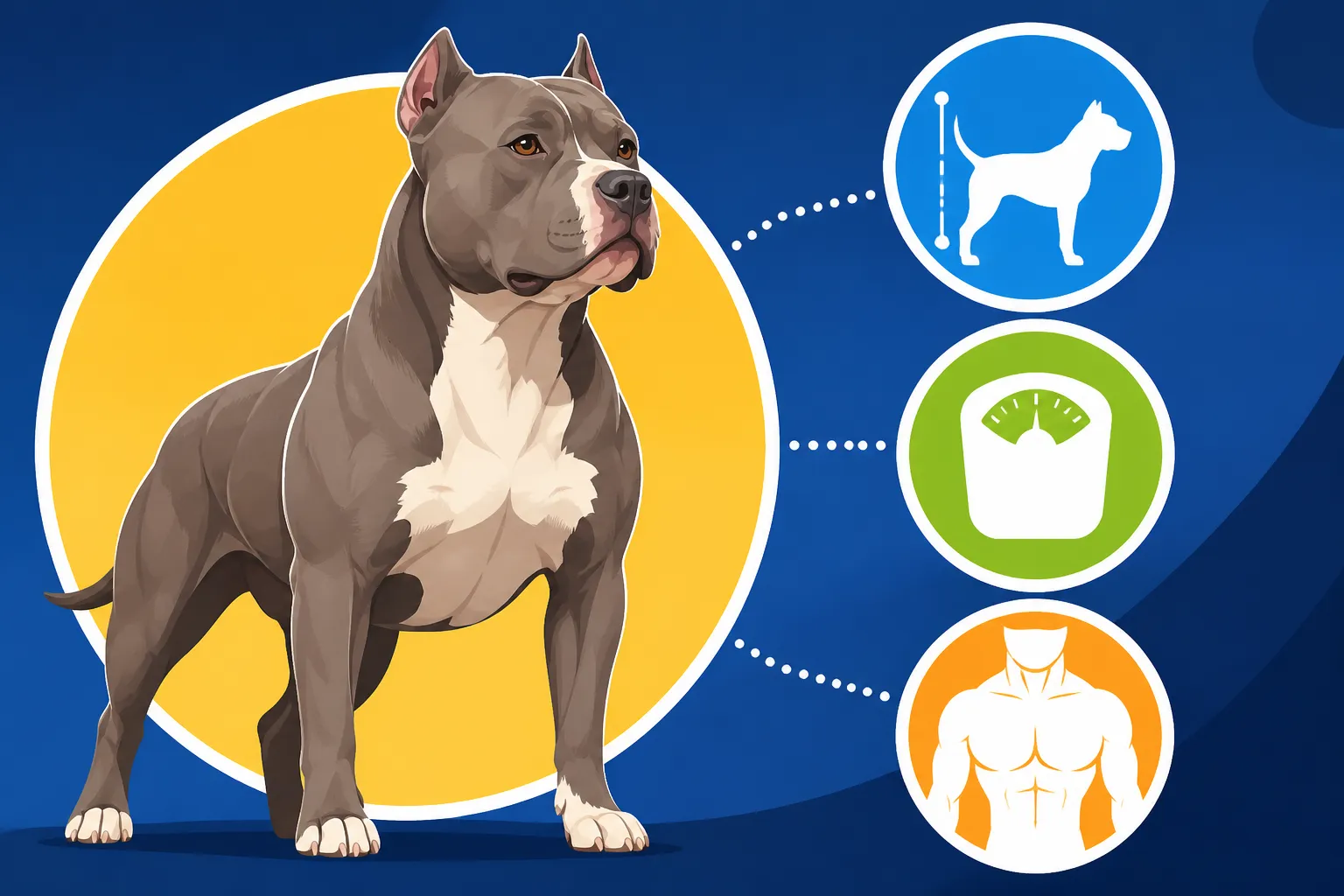
Pit Bull Height, Weight and Build
One of the biggest head-scratchers for new and experienced dog owners alike when it comes to "Pit Bulls" is trying to pin down exactly what they should look like. You hear so much conflicting information about their size, whether they're stocky or lean, big or small, and it can leave you feeling truly confused about what's "normal" or healthy for your dog. This guide is here to untangle the nuances of Pit Bull height, weight, and build, helping you understand the diverse physical characteristics of the dogs typically grouped under this broad label.
The "Pit Bull" Label: More Than One Dog
It’s easy to feel like you’re constantly trying to catch smoke when someone asks you to define a "Pit Bull." That's because the term itself is often used as a catch-all for a variety of dogs that share similar physical traits, often without being a single, officially recognized breed in every sense. This widespread, yet often imprecise, usage is at the heart of much of the confusion regarding their physical characteristics. If you've ever felt frustrated by the lack of a clear-cut answer, you're not alone; it's a very common experience for anyone trying to understand these wonderful dogs.
Why "Pit Bull" Isn't a Single Breed Standard
The biggest hurdle in discussing the definitive height, weight, and build of a "Pit Bull" is acknowledging that there isn't just one breed carrying that name. Unlike, say, a Golden Retriever or a German Shepherd, where kennel clubs have strict breed standards outlining precise measurements and appearances, the term "Pit Bull" acts more like a family name for several distinct, but related, breeds. This means that what one person considers a "Pit Bull" might be quite different from what another person visualizes, and both could be perfectly correct based on their understanding. It's not about being wrong; it's about navigating a term that has evolved in popular culture far beyond its original kennel club definitions. Why Pit Bull Is a Type and Not a Breed delves deeper into this fascinating linguistic and historical challenge.
When you look at different dogs that people call "Pit Bulls," you’ll notice a huge range in their physical presentation. Some are compact and powerfully built, almost brick-like, while others are taller, leaner, and more agile. This variation is a direct result of the different ancestral lines and purposes for which these individual breeds were developed. Without a singular breed standard to refer to, it becomes impossible to give a single, definitive answer to questions about their "typical" size or appearance. This ambiguity can be particularly frustrating for new owners or those dealing with breed-specific legislation, who just want clear information about their beloved pet.
The Core Breeds Under the Umbrella
While the term "Pit Bull" can sometimes include other bull-type dogs or even mixed breeds that simply resemble them, there are three primary breeds that are almost universally included in this classification. Understanding these individual breeds is crucial for grasping the true diversity in "Pit Bull" physical characteristics. They each have their own established standards, even if those standards are not always widely known by the general public. Recognizing these distinctions helps to clarify why your neighbor's "Pit Bull" looks different from yours.
The main players are the American Pit Bull Terrier (APBT), the American Staffordshire Terrier (AmStaff), and the Staffordshire Bull Terrier (Staffie or SBT). Each of these breeds brings its own unique set of physical traits to the "Pit Bull" family portrait. They share a common ancestry, tracing back to bull-and-terrier crosses developed for sport, but over time, different breeding preferences and purposes led to their divergence. How Many Breeds Get Called Pit Bulls offers a comprehensive overview of these different dogs. Knowing these distinctions can empower you to speak more accurately about your dog and understand why their build might lean one way or another.
American Pit Bull Terrier: Athletic and Powerful
The American Pit Bull Terrier (APBT) is perhaps the quintessential "Pit Bull" in the minds of many, and certainly the one most often referenced in discussions of the type. Developed for its athleticism, strength, and gameness, the APBT embodies a powerful yet agile build. Owners often describe them as "functionally fit," meaning every part of their physique seems designed for performance rather than just looks. They carry themselves with confidence and a characteristic spring in their step, reflecting their energetic and tenacious nature.
Typical Height and Weight Ranges
When we talk about an APBT, we're generally looking at a medium-sized dog, though there can be a fair bit of variation. Typically, adult males stand around 18-21 inches tall at the shoulder, with females being slightly smaller at 17-20 inches. This height range allows them to be powerful without being overly cumbersome, capable of quick movements and impressive jumps. Their weight, reflecting their dense musculature, usually falls between 30 and 60 pounds.
It’s important to remember that these are general guidelines, and individual dogs can certainly fall outside these averages while still being healthy and true to type. Factors like diet, exercise, and genetics play a significant role. A well-conditioned APBT will appear lean and muscular, with a visible tuck-up at the waist and defined muscle groups, even at the higher end of the weight scale. Owners dedicated to their dog's fitness often pay close attention to this, perhaps consulting resources from Pit Bull Weight and Muscle on a Working Frame to ensure their dog maintains an optimal, athletic build.
Signature Build and Musculature
The most striking feature of the APBT’s build is its incredible musculature. They are built like canine athletes, with a broad, powerful head, a strong, well-defined neck that tapers into a deep, wide chest, and heavily muscled shoulders. Their back is typically short and strong, leading to a muscular hindquarter that provides immense power for propulsion. You’ll often see their muscles ripple under their short, sleek coat as they move, a testament to their athletic heritage.
Their bone structure is substantial but not overly heavy, contributing to their agility. The legs are straight and strong, with well-knuckled feet, designed to absorb impact and provide solid traction. This combination of powerful muscles and sturdy bones makes them incredibly capable dogs, whether they're excelling in dog sports or simply enjoying a vigorous game of fetch in the yard. It's a build that demands regular, appropriate exercise to maintain, which is a commitment every APBT owner understands and embraces.
Coat and Color Variations
The APBT boasts a short, stiff, and glossy coat that lies close to the body, requiring minimal grooming beyond regular brushing to remove loose hair and keep it shiny. This practical coat type is another reflection of their working dog background, designed for resilience rather than elaborate aesthetics. They come in an astonishing array of colors and patterns, making each dog unique.
You'll see everything from solid black, white, fawn, and red to various brindle patterns, sables, and piebalds. There are some exceptions, however; merle patterns are not recognized in the APBT standard by the United Kennel Club (UKC), which is the primary registry for the breed. These color variations are purely cosmetic and don't influence the dog's build or temperament, but they certainly add to the individual charm of each American Pit Bull Terrier.
American Staffordshire Terrier: Stockier and Robust
The American Staffordshire Terrier (AmStaff) is another key player in the "Pit Bull" discussion, often confused with the APBT due to their shared ancestry and similar appearance. However, the AmStaff has its own distinct breed standard, recognized by the American Kennel Club (AKC), which emphasizes a slightly stockier, heavier-boned, and more robust build. Think of them as the slightly more "heavyweight" version within the bull-type family.
Size and Weight Expectations
AmStaffs generally present as a more substantial dog than the average APBT, both in terms of height and weight, though there's still overlap. The ideal height for an AmStaff, according to the AKC standard, is between 17-19 inches at the shoulder for males, and 16-18 inches for females. While these height ranges are fairly similar to the APBT, it's the weight and overall substance that truly differentiate them.
AmStaffs typically weigh between 40 and 70 pounds, often appearing thicker and more heavily built even at the same height as an APBT. This added mass contributes to their powerful and formidable presence. Maintaining a healthy weight for an AmStaff is crucial, as their robust build can still be susceptible to excess weight, which can lead to joint issues. Owners often choose premium foods available at retailers like Chewy to support their AmStaff's muscular physique without adding unnecessary fat. Pit Bull Obesity and Joint Strain is a valuable resource for understanding the risks.
Defining Physical Traits
The AmStaff's build is characterized by a deep, broad chest, wide-set muscular front legs, and a powerful, albeit shorter, neck. Their head is broad and distinctive, often described as square or brick-like, with pronounced cheek muscles and a strong jaw. Their body is compact and well-muscled throughout, giving them a very solid and impressive appearance. The overall impression is one of strength and stability.
Their gait is springy but powerful, reflecting their strong hindquarters. While they are certainly athletic, their conformation leans more towards strength and stamina over the sheer agility often seen in the leaner APBT. This robust build requires regular, consistent exercise to keep them in peak physical condition, preventing them from becoming soft or overweight.
Differences from the APBT in Build
While the American Pit Bull Terrier and the American Staffordshire Terrier share much of their genetic heritage and are visually quite similar, subtle differences in their breed standards have led to distinct, if sometimes hard to discern, physical divergences. The AKC standard for the AmStaff typically calls for a slightly heavier bone structure and a more blocky head than what is often seen in the UKC-registered APBT. The AmStaff as the AKC Recognizes It delves into these specific standard details.
Historically, the divergence occurred as some breeders prioritized characteristics suitable for conformation showing, leading to the development of the AmStaff, while others focused on maintaining the traditional working traits of the APBT. This has resulted in the AmStaff generally having a more "finished" or "showy" appearance with a greater sense of overall substance and robustness, compared to the often leaner, more functional athleticism emphasized in the APBT. However, it's worth noting that due to their shared lines, many individual dogs can exhibit traits from both ends of this spectrum, making visual identification challenging for anyone but a seasoned expert.
Staffordshire Bull Terrier: The Compact Powerhouse
Stepping away from the American varieties, we come to the Staffordshire Bull Terrier (SBT), often simply called a "Staffie." This breed originates from England and is known for being a much more compact, yet equally muscular and powerfully built, dog. Don't let their smaller size fool you; Staffies are incredibly sturdy, courageous, and possess an undeniable "big dog" presence packed into a smaller frame.
Smaller Stature, Big Personality
The Staffordshire Bull Terrier is significantly smaller than its American cousins, making them an excellent choice for those who love the bull-type temperament but prefer a more manageable size. Adult males and females typically stand between 14-16 inches at the shoulder. This puts them firmly in the small to medium-sized dog category.
Their weight range usually falls between 24 and 38 pounds. Despite this relatively light weight, they are incredibly dense and muscular, feeling much heavier than they appear when you pick them up. This compact power is one of their defining physical characteristics. They're often described as having the "build of a mini bodybuilder," with their broad chests and strong legs. The Staffordshire Bull Terrier From England provides more historical context on this charming breed.
Muscularity and Bone Structure
The Staffie's build is all about concentrated power. They have a remarkably broad skull, distinct cheek muscles, and a short, powerful muzzle. Their neck is thick and muscular, tapering into a very broad, deep chest. The front legs are typically set wide apart, giving them a stable, almost bulldog-like stance. Their body is short-coupled and muscular, with a deep brisket and a well-sprung rib cage.
Their hindquarters are equally well-developed, providing excellent drive and agility despite their stocky appearance. The bone structure is heavy for their size, contributing to their sense of solidity and strength. This muscular, sturdy build makes them surprisingly strong for their weight, capable of impressive feats of strength and agility. Their powerful jaws are also a hallmark, making durable chew toys from Chewy a must-have for any Staffie owner!
Grooming and Coat Characteristics
Like the American Pit Bull Terrier, the Staffordshire Bull Terrier sports a short, smooth, and close-lying coat. This type of coat is easy to maintain, typically requiring only weekly brushing to remove loose hair and keep it looking its best. Despite its brevity, the coat is dense enough to offer some protection against the elements, though Staffies are not suited for extreme cold without appropriate doggy attire.
They come in a variety of colors, including red, fawn, white, black, blue, or any brindle, with or without white markings. Pied (large patches of two colors) is also common. The vibrant colors and often shiny appearance of their coats add to their distinctive look. Regular grooming sessions, even if minimal, also serve as an excellent opportunity to perform skin checks, which are important for all short-coated breeds.
Factors Influencing Pit Bull Size and Build
While breed standards provide a blueprint, a dog's actual height, weight, and build are a complex interplay of several factors. It's not just about their parents; it's about their entire life experience. Understanding these influences can help owners better manage their dog's health and development, ensuring they reach their full potential in a healthy way. This is where the art of dog ownership truly comes into play, blending genetic predisposition with excellent care.
Genetics and Breeding Lines
The most fundamental determinant of a Pit Bull's eventual size and build lies in its genetics. The specific breeding lines a dog comes from will heavily influence its potential height, weight, and muscle mass. Reputable breeders carefully select dogs with desirable physical traits, health clearances, and sound temperaments, aiming to produce offspring that conform to their breed's standard. If you're getting a puppy, looking at the parents can give you a very strong indication of what your puppy might grow up to look like.
However, even within a single litter, there can be natural variations. Some puppies will be slightly larger or smaller, stockier or leaner, than their siblings, due to the random assortment of genes they inherit. Understanding the difference between a naturally well-built dog and one that is simply overfed is crucial. What a Pit Bull Breeder Should Have Done outlines key questions about responsible breeding practices, including those that influence physical health and conformation.
Nutrition, Exercise, and Environment
Beyond genetics, a dog's diet, exercise regimen, and overall environment play a monumental role in shaping its physical development and maintaining its build throughout its life. A puppy needs a high-quality, balanced diet to support healthy growth without growing too rapidly, which can sometimes lead to orthopedic issues. As adults, their food intake needs to match their activity level to prevent both obesity and malnourishment. Feeding a Pit Bull to Keep Muscle Without Fat details specific strategies for optimizing their diet.
Regular, appropriate exercise is equally vital. Pit Bulls are athletic dogs, and consistent physical activity helps build and maintain muscle mass, strengthens bones and joints, and keeps their metabolism healthy. Without enough exercise, even a genetically well-built dog can become overweight and lose its athletic conditioning. Environmental factors, such as living space and access to safe areas for play, also contribute to their overall fitness. For instance, a dog living in a smaller apartment might need more structured walks and trips to a dog park compared to one with a large, securely fenced yard.
The Impact of Spay/Neuter Timing
The timing of spaying or neutering can also have an unexpected, yet significant, impact on a Pit Bull's musculoskeletal development and overall build. Sex hormones play a crucial role in bone growth, specifically in the closure of growth plates. When a dog is spayed or neutered before these growth plates have fully closed, it can lead to longer limb bones, making the dog appear taller and sometimes less substantial than its intact counterparts. This can also affect joint angles and potentially increase the risk of certain orthopedic conditions later in life.
Many veterinarians and breeders now advocate for delaying spaying or neutering until a dog is more physically mature, often between 12-24 months of age, especially for larger, more powerful breeds like Pit Bulls. This allows their bones and joints to develop fully under the influence of natural hormones, potentially leading to a more robust and healthy adult build. Discussing this with your vet and researching topics like Whether Early Neutering Harms Pit Bull Joints can help you make an informed decision for your dog's long-term health.
Assessing Your Pit Bull's Condition: Muscle vs. Fat
It's a common struggle for Pit Bull owners: trying to tell if their solid, sturdy dog is perfectly conditioned or carrying a bit too much weight. Because these breeds are naturally muscular, their heft can sometimes mask excess fat, making it harder to spot early signs of obesity. However, learning to properly assess their body condition is one of the most important things you can do for their long-term health and mobility.
Visual Cues for a Healthy Weight
A truly healthy Pit Bull, regardless of its specific breed within the type, should exhibit clear visual cues of a lean, muscular build. When viewed from above, you should see a distinct waistline, an hourglass shape, where the body tucks in behind the ribs and before the hips. They should not appear barrel-chested or uniformly wide from front to back.
From the side, a well-conditioned Pit Bull should have an abdominal tuck – meaning their belly should rise up from the bottom of their chest to their hind legs, not hang low or be level with their chest. Their muscles, particularly over the shoulders and hindquarters, should be well-defined, not soft or rounded. You might even see a hint of their last two ribs, especially when they move. If you're looking for guidance, articles like Telling Muscle From Fat on a Pit Bull offer visual aids and detailed descriptions to help you make this assessment.
Palpating for Ribs and Waistline
Visual assessment is great, but palpation – feeling your dog – is equally, if not more, important, especially for a muscular breed. You should be able to easily feel your Pit Bull's ribs with minimal pressure from your fingertips, almost like feeling the back of your hand. If you have to press firmly to locate the ribs, or if they feel hidden under a layer of soft tissue, your dog is likely carrying too much weight.
Similarly, run your hands along their spine and hip bones. You should be able to feel these bony prominences without them being sharply protruding. There should be a moderate covering of muscle and skin, but not a thick cushion of fat. A healthy Pit Bull's waistline should also be palpable; you should be able to gently "pinch" a lean amount of skin and muscle in the waist area, rather than a thick, soft roll. This hands-on approach provides invaluable insight into their true body condition beneath their powerful musculature.
Avoiding Obesity in a Muscular Breed
Preventing obesity is paramount for any dog, but especially for powerful, athletic breeds like Pit Bulls, where excess weight puts tremendous strain on their joints, heart, and overall system. A few extra pounds on a smaller dog might be less impactful than the same few pounds on a robust Pit Bull. Over time, this added stress can exacerbate conditions like Pit Bull Hip Dysplasia Showing at One to Two Years or accelerate the onset of Arthritis in a Pit Bull at Seven.
The key to avoiding obesity is a combination of portion control, appropriate food choices, and consistent exercise. Measure your dog's food precisely, rather than free-feeding or guessing. Consider nutrient-dense, high-quality dog foods, and be mindful of treats – they add calories quickly! Ensure your Pit Bull gets regular, vigorous exercise that challenges them physically, whether it's long walks, running, fetch, or other active games. A consistent routine of care is the best defense against the stealthy creep of those extra pounds.
Disclaimer
This article is for general informational purposes only and does not constitute professional advice. Laws, prices and regulations vary by location and change over time. Consult a qualified professional for guidance on your specific situation.