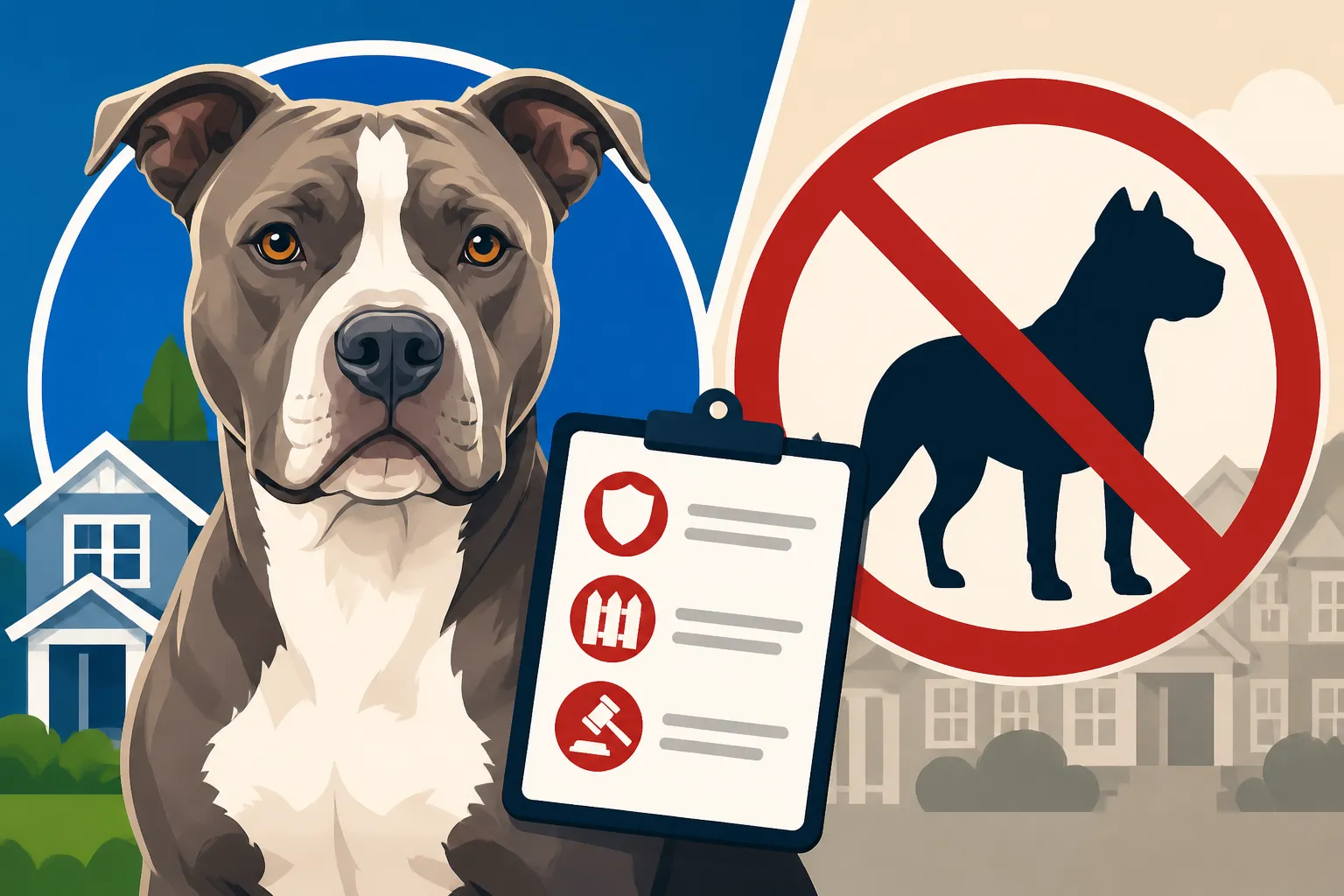
HOA Bylaws That Restrict Pit Bulls
Finding a home that welcomes your beloved Pit Bull can feel like navigating a minefield, especially when you encounter the often-confusing and sometimes outright exclusionary world of Homeowners Association (HOA) bylaws. It's incredibly frustrating to fall in love with a property only to discover that its strict rules about certain dog breeds could force a heartbreaking choice. This guide is here to shed light on how HOA restrictions on Pit Bulls work, how you can research and potentially challenge them, and practical strategies for finding a harmonious living situation with your furry family member.
Understanding the Scope of HOA Bylaws for Pit Bulls
HOAs exist to maintain community standards and property values, and while many of their rules make perfect sense – like quiet hours or lawn care guidelines – their approach to pets can often feel arbitrary and deeply unfair. For Pit Bull owners, these rules often translate into significant barriers.
What is an HOA and How Do Its Rules Apply to Pet Owners?
A Homeowners Association is typically a private organization governing a planned community, condominium, or co-operative. When you buy a home within an HOA, you automatically become a member and agree to abide by its Covenants, Conditions, and Restrictions (CC&Rs), as well as its bylaws. These documents cover everything from the color you can paint your front door to the types of fences allowed, and yes, often, the kinds of pets you can own. HOAs derive their power from state laws and the agreements signed by homeowners, giving them considerable authority over residents' lives.
For pet owners, this means that even if city or state laws don't restrict your Pit Bull, your HOA might. They often have detailed pet policies that specify size limits, number of pets, and, most controversially for many, breed restrictions. These restrictions are usually justified by the HOA as a means to reduce perceived risks, lower community insurance premiums, or address neighbor complaints. However, for a responsible Pit Bull owner, these blanket bans feel like a direct attack on their cherished companion, especially knowing that breed-specific legislation often stems from misunderstanding and fear rather than actual data. You might have the sweetest, most well-behaved Pit Bull on the planet, but if the bylaws say "no Pit Bulls," you could be out of luck unless you know how to navigate the system.
How Breed-Specific Bans Emerge in HOA Regulations
Breed-specific bans in HOAs don't just appear out of nowhere; they typically evolve from a variety of factors, often driven by reactive decision-making or generalized fear. Sometimes, a community might have experienced a negative incident involving a dog, leading to an immediate push for strict rules. Other times, the decision is influenced by the HOA's insurance carrier, which may impose higher premiums or outright deny coverage if certain "high-risk" breeds, including Pit Bulls, reside in the community. Insurers often use outdated statistics or generalized breed profiles, rather than individual dog behavior, to assess risk.
It's also common for these bans to be put in place by original developers or early board members who held particular views, and those rules become deeply entrenched over time. Imagine moving into a brand-new development where the initial board members decide to err on the side of caution, prohibiting any dog that looks like a Pit Bull, even if the specific breed isn't clearly defined. This creates a legacy of restriction that can be incredibly difficult to overturn later, even as public perception and understanding of these dogs evolve. Many Pit Bull owners face this exact scenario, inheriting rules they had no say in creating, making their housing search feel like a constant uphill battle. It’s essential to realize these rules aren't always about your specific dog, but about systemic issues and deeply ingrained biases.
Identifying and Challenging Pit Bull Restrictions
Dealing with HOA restrictions requires diligence and, often, a healthy dose of persistence. The key is to be proactive and informed, rather than reactive.
How to Research Pet Policies Before You Buy or Rent
Before you ever put in an offer or sign a lease, it is absolutely critical to obtain and thoroughly read the HOA's complete governing documents. This includes the CC&Rs, bylaws, and any separate pet policies or rules. Don't rely on a verbal assurance from a real estate agent or landlord; get everything in writing. A real estate agent might genuinely believe a community is pet-friendly, but they might not be aware of a specific breed restriction buried deep in the bylaws.
Look for specific language regarding pet breeds, weight limits, and definitions of "aggressive" or "restricted" breeds. Sometimes, the language is ambiguous, referring to "Pit Bull type dogs" or "mixes thereof," which can be a red flag. If you find such language, ask for clarification in writing. Consider bringing a copy of the rules to your attorney or a legal expert specializing in housing and pet law, especially if the wording is vague or potentially discriminatory. Many people assume they can sneak by with a mixed-breed dog, but some HOAs explicitly state that any dog resembling a restricted breed is prohibited. This upfront research, while tedious, can save you immense heartache and potential legal battles down the road. It’s far better to discover a restriction before you’re emotionally invested in a home, rather than after.
Appealing a Pit Bull Ban to Your Homeowners Association
If you find yourself facing a Pit Bull ban, appealing it is often an option, though success is never guaranteed. The first step is usually to formally submit a request for an exception or a policy review to the HOA board. This isn't just a casual conversation; it's a formal process that should include detailed information about your dog. This is where you can present your Pit Bull not as a stereotype, but as an individual. Provide evidence of your dog's temperament, such as certifications like the Canine Good Citizen (CGC) award. Demonstrating that you have invested in Canine Good Citizen and Why It Matters for a Pit Bull can show the board you are a responsible owner. Include letters of recommendation from veterinarians, trainers, and even neighbors who can attest to your dog's gentle nature and good behavior.
Sometimes, an HOA's insurance carrier is the primary driver behind the breed ban. In these cases, it can be helpful to explore specialized pet liability insurance providers that don't discriminate by breed. For example, some homeowners find that obtaining a robust policy from a company like State Farm or Farmers Insurance, which are known to be more lenient on breed restrictions than others, can help. If you can show the HOA that you have secured additional liability coverage that specifically includes your Pit Bull, this might alleviate their concerns about potential financial risk. Some owners also explore options from providers like Healthy Paws for general pet health insurance, which, while not liability insurance, shows a commitment to your dog's overall well-being and responsible ownership. Remember, the goal is to present a compelling case that addresses the HOA's underlying concerns, whether they are about safety, property value, or insurance liability.
Step Action Item Details & Tips
: ## Navigating the Maze of Pit Bull HOAs: A Comprehensive Guide
For many loving Pit Bull owners, the search for a new place to call home can feel incredibly daunting, often leading to deep frustration and even heartbreak. It’s not enough to find the perfect neighborhood or a house with a big yard; you also have to contend with the often-opaque and always-binding rules set by Homeowners Associations (HOAs) that might explicitly restrict your beloved breed. The fear of having to choose between your furry family member and a place to live is a very real burden, and it often feels like you're fighting an uphill battle against unfair stereotypes. This comprehensive guide is designed to help you understand the ins and outs of HOA bylaws that target Pit Bulls, how to effectively research and, if possible, challenge these restrictions, and ultimately, find a welcoming environment for you and your dog.
The Unseen Hand: How HOAs Dictate Pet Ownership
Many people only truly understand the power of an HOA once they've bought into a community. These private entities are designed to maintain a consistent aesthetic, shared amenities, and overall property values. However, their reach extends far beyond manicured lawns and compliant house paint; they frequently delve into the minutiae of pet ownership. This means that even if your city or state has no breed-specific legislation, your HOA can — and often does — implement its own. These rules are enshrined in documents like the Covenants, Conditions, and Restrictions (CC&Rs) and the bylaws, which homeowners implicitly agree to when they purchase property within the association's jurisdiction.
The impact on pet owners can be profound. Imagine moving into what seems like an idyllic suburban community, only to find out through the fine print that your cherished Pit Bull, a dog you've raised and trained diligently, is deemed a "restricted breed." This isn't about your dog's individual temperament or your responsible ownership; it's about a blanket rule that perceives all dogs of a certain type as a liability. HOAs often justify these restrictions by citing concerns over potential insurance premium hikes, neighbor disputes, or even perceived safety risks. The weight of these restrictions often falls disproportionately on owners of breeds like Pit Bulls, German Shepherds, Rottweilers, and Doberman Pinschers, making the search for suitable housing a protracted and stressful ordeal.
The Genesis of Breed-Specific Rules in Communities
Understanding why HOAs adopt breed-specific bans can provide some context, even if it doesn't make the situation any less frustrating. Often, these rules are not born from malicious intent but rather from a confluence of factors, including past incidents, insurance requirements, and a general lack of education about specific breeds. One common trigger is a negative event within the community involving a dog, which, regardless of the breed or circumstances, can create a strong emotional push for restrictive pet policies. The fear generated by such an event can quickly translate into widespread support for bans on breeds commonly associated with aggression, whether or not that association is accurate for the individual dog.
Another significant driver is the influence of the HOA's master insurance policy. Many insurance companies classify certain breeds as "high-risk" due to statistical data (which is often flawed in how it identifies breeds) or historical claims. To maintain affordable premiums or even secure coverage at all, an HOA might be pressured by its insurer to prohibit these breeds. For instance, if an HOA’s policy provider signals that they will raise premiums by 20% or drop coverage entirely if Pit Bulls are allowed, the board might feel compelled to implement a ban to protect the financial interests of all homeowners. This creates a difficult situation where individual homeowners' rights to choose their pets conflict with the broader financial and liability concerns of the community. In some cases, these bans are simply a legacy from the community's developer or a long-standing board that never bothered to re-evaluate outdated policies, leaving new homeowners to grapple with rules that have little basis in current understanding or ethical pet ownership practices.
Navigating the Labyrinth of HOA Pet Policies
Dealing with HOA restrictions is a multi-faceted challenge that demands both thorough preparation and strategic action. You need to be both a diligent researcher and, potentially, an advocate for your dog.
Unearthing the Truth: Researching Pet Policies Before Commitment
The golden rule when considering any property within an HOA is to never assume anything about pet policies. The moment you find a property that sparks your interest, your top priority, even before thinking about square footage or countertop materials, must be to obtain and meticulously review all of the HOA’s governing documents. This includes the Declaration of Covenants, Conditions, and Restrictions (CC&Rs), the bylaws, and any standalone pet rules or regulations. Relying on a casual comment from a real estate agent or a brief mention in a listing description is a recipe for disaster; these individuals may not be fully informed or might inadvertently misinterpret complex legal language.
Specifically, you need to scrutinize sections pertaining to pets, animals, and nuisance clauses. Look for explicit mentions of breed restrictions, weight limits, height restrictions, or even arbitrary definitions of "dangerous" or "aggressive" breeds. Pay close attention to how "Pit Bull" is defined, as some HOAs use broad terms like "Pit Bull type dogs," "any dog resembling a Pit Bull," or "any dog with ancestry including American Pit Bull Terrier, American Staffordshire Terrier, or Staffordshire Bull Terrier." If the language is vague, or if it simply states "aggressive breeds prohibited," you must seek written clarification from the HOA board or management company before proceeding. This proactive investigation, while tedious, is your strongest defense against future heartache and potential legal entanglements. It allows you to walk away before you've invested time, money, and emotion into a home where your furry family member isn't welcome. Knowing Finding a Rental That Takes a Pit Bull can also highlight similar challenges in that market.
Appealing to Authority: Challenging HOA Breed Bans
If you discover a breed restriction that affects your Pit Bull, don't despair immediately, but understand that challenging it can be an arduous process. Your first formal step should be to submit a written request to the HOA board for an exception or a review of their pet policy. This isn't a casual complaint; it's a formal plea that needs to be well-documented and persuasive. Think of it as building a legal case for your dog. Your submission should include comprehensive information about your Pit Bull, emphasizing their individual temperament and your responsible ownership.
Gather and present any evidence that showcases your dog's good behavior and training. This could include a Canine Good Citizen (CGC) certificate, which demonstrates your dog has been Training a Pit Bull to a Higher Standard Than Other Dogs and passed a rigorous obedience and temperament test. Letters of recommendation from your veterinarian, a professional dog trainer, and even current or former neighbors can also be powerful testimonials. If your HOA cites insurance concerns, research specialized pet liability insurance providers that do not impose breed restrictions. Some insurers, unlike the broader market, are willing to cover Pit Bulls based on individual dog assessment, not breed. For instance, obtaining a strong personal umbrella policy or specific animal liability coverage that names your Pit Bull can potentially address the HOA's core financial concerns. While providers like Healthy Paws primarily focus on medical expenses for pets, having comprehensive health insurance for your dog further underscores your commitment to their well-being and responsible ownership. Frame your appeal by addressing the HOA's likely concerns—safety, liability, and community harmony—and demonstrate how your Pit Bull, and your actions as an owner, not only mitigate these concerns but actively contribute positively to the community.
Living With and Beyond Pit Bull Restrictions
Even with the best intentions and efforts, you might encounter an unyielding HOA. It's crucial to understand your options, whether that means adapting or exploring new avenues.
Strategic Living: Navigating a Restricted Community with a Pit Bull
Sometimes, despite your best efforts, an HOA might maintain its breed restriction. In such cases, if you are already living in the community or if you've decided to proceed with the purchase for other reasons, it becomes a matter of careful navigation and, potentially, seeking legal counsel. It's imperative not to try and "hide" your dog, as this can lead to severe penalties, including fines, legal action, or even demands for your dog's removal, which can be devastating. Instead, consult with an attorney who specializes in HOA law and pet owner rights. They can review your specific HOA documents and local/state laws to determine if there are any legal avenues you can pursue, such as challenging the restriction as discriminatory if there are grounds.
Another crucial aspect of living in a restricted community is strict adherence to all pet rules, even those that seem trivial. This means always leashing your dog, promptly cleaning up after them, ensuring they are not a nuisance (excessive barking, digging, etc.), and making sure they are well-socialized. While Pit Bulls have wonderful temperaments and are often misunderstood, Socializing a Pit Bull Puppy Thoroughly is vital for any dog, especially when public perception is already a hurdle. Maintaining an impeccable record of responsible ownership means that if any issue arises, you have a strong history to fall back on. This might also include investing in high-quality, secure crates available through retailers like Chewy to ensure your dog is safely contained when you're away, preventing any unsupervised incidents that could be misinterpreted or used against you. Your proactive efforts to be an exemplary pet owner can go a long way in shaping the perception of your dog within the community, even if the formal rules remain unchanged.
The Evolving Landscape of Breed-Specific Legislation and HOAs
The tide is slowly turning against breed-specific legislation (BSL), both at municipal and HOA levels, but progress is often slow and uneven. Many states have begun to pass laws prohibiting local governments from enacting BSL, and some are even extending this protection to HOAs. For example, states like Maryland, New York, and Nevada have passed laws that limit or prohibit breed-specific restrictions in housing, although the exact scope and enforcement can vary. This evolving legal environment means that a ban that was once ironclad might now be legally challengeable. Staying informed about current Where Pit Bull Legislation Still Applies and how these laws are evolving is crucial for any Pit Bull owner navigating housing challenges.
Beyond legislative changes, there's a growing movement towards breed-neutral policies that focus on an individual dog's behavior rather than its perceived breed. Advocacy groups and responsible pet owner organizations are actively working to educate HOAs, insurance companies, and the public about the unfairness and ineffectiveness of breed bans. By understanding that Why Pit Bull Is a Type and Not a Breed and that individual temperament is far more important than arbitrary labels, communities can move towards more equitable and effective pet policies. As an owner, participating in local pet advocacy groups, attending HOA meetings, and calmly presenting factual information can contribute to this shift. The more collective voices champion responsible pet ownership over blanket bans, the greater the chance that these restrictive bylaws will eventually become a relic of the past, paving the way for a more welcoming future for all dog breeds.
Disclaimer
The information provided in this guide is for general informational purposes only and does not constitute legal advice. HOA laws and regulations vary significantly by state and locality, and individual circumstances can impact the applicability of general information. It is highly recommended that you consult with a qualified attorney specializing in real estate law or pet law for advice tailored to your specific situation.