The First Month Cost of a Pit Bull
Bringing a new Pit Bull into your life is an incredibly exciting journey, full of wagging tails and endless love. But let's be real, the financial reality of welcoming a furry family member can sometimes hit harder than expected, especially in that initial month. Many new owners feel overwhelmed by the sheer number of items and services needed right away, from adoption fees to vet visits to setting up a comfortable home. This comprehensive guide is here to meticulously break down what you can expect to spend in that crucial first month, helping you budget wisely and ensure your new Pit Bull gets the best start possible without any surprises.
Initial Acquisition and Veterinary Essentials
The very first expenses you'll encounter revolve around actually getting your Pit Bull and making sure they're healthy from day one. These aren't just "nice-to-haves"; they're critical foundations for a healthy, happy life together.
Adoption Fees or Breeder Costs
Whether you choose to adopt from a shelter or rescue, or purchase from a reputable breeder, there will be an upfront cost. These fees often cover a lot of the initial veterinary care, but it's important to understand what's included and what isn't.
Adopting a Pit Bull from a shelter or rescue group is a wonderful way to give a deserving dog a second chance. Adoption fees can vary widely, often ranging from $150 to $500, and sometimes even more depending on the organization and the dog's age or specific needs. These fees are usually a package deal, covering vital services like spaying or neutering, initial vaccinations (which we'll discuss next!), microchipping, and sometimes even a starter bag of food or a leash. For more on this, you might find our guide on Pit Bull Adoption Fees at a Shelter useful. It’s always a good idea to ask what exactly is included in the fee so you know what you still need to budget for.
If you're opting for a Pit Bull puppy from a reputable breeder, the initial cost can be significantly higher, often ranging from $800 to $2,500, and sometimes even more for dogs with champion bloodlines or specific rare traits. A good breeder will typically include age-appropriate vaccinations, deworming, and possibly a microchip in this price. They should also provide health clearances for the parents and a health guarantee for the puppy. Remember, a higher price from a responsible breeder often reflects the investment they've made in genetic testing, proper nutrition for the dam and pups, and early socialization. Beware of listings that seem too good to be true, as they often come from irresponsible sources that cut corners on health and welfare.
First Veterinary Visit and Preventative Care
Regardless of where your Pit Bull comes from, a trip to the veterinarian within the first few days of bringing them home is non-negotiable. This initial check-up sets the stage for their long-term health.
Your first vet visit for a new Pit Bull puppy or adult dog will involve a comprehensive physical examination. The vet will check their eyes, ears, teeth, heart, lungs, and joints, and generally ensure they're in good health. If your dog is a puppy, they'll likely need a series of vaccinations to protect against common canine diseases like distemper, parvovirus, and rabies. Even if your Pit Bull came with some vaccinations, a vet will confirm their schedule and administer any boosters needed. This initial consultation, along with vaccinations, deworming, and a fecal test for parasites, can easily run from $100 to $300, sometimes more if additional tests are recommended. Our article on Pit Bull Puppy Vaccination and Parvovirus goes into more detail on what to expect.
Beyond vaccinations, preventative care is essential. This includes heartworm prevention, flea and tick control, and possibly additional deworming treatments, especially for puppies. These medications are typically given monthly or quarterly and represent an ongoing cost, but the first month is when you'll likely purchase the initial dose. A month's supply of these preventatives can range from $20 to $60, depending on the brand and your Pit Bull's weight. For comprehensive protection, consider year-round parasite coverage for a Pit Bull. For a deeper dive into this, check out our piece on Year-Round Parasite Cover for a Pit Bull. These initial preventative measures are crucial investments in your dog's future health, preventing far more expensive problems down the road.
Essential Supplies for Your Pit Bull's New Home
Once you've secured your Pit Bull and addressed their initial health needs, it's time to set up their living space with all the necessities. This category includes everything from where they'll sleep to what they'll eat and play with.
Setting Up a Safe and Comfortable Space
Every dog needs a den, a safe haven where they can relax and feel secure. For a Pit Bull, this often means a sturdy crate and a comfortable bed.
A strong, appropriately sized crate is an absolute must, especially for a new Pit Bull. These dogs are powerful chewers and can be escape artists, so investing in a high-quality, heavy-duty wire or plastic crate from brands like MidWest or Kong will save you headaches (and money) in the long run. Don't skimp here; a flimsy crate won't stand a chance against a determined Pit Bull. The cost for a crate suitable for a fifty-pound Pit Bull can range from $70 to $200, depending on its size and construction. While crates are a significant initial expense, they are invaluable for house-training, managing destructive chewing, and providing a secure retreat. Our detailed guide on The Crate a Fifty Pound Pit Bull Needs offers more specific recommendations.
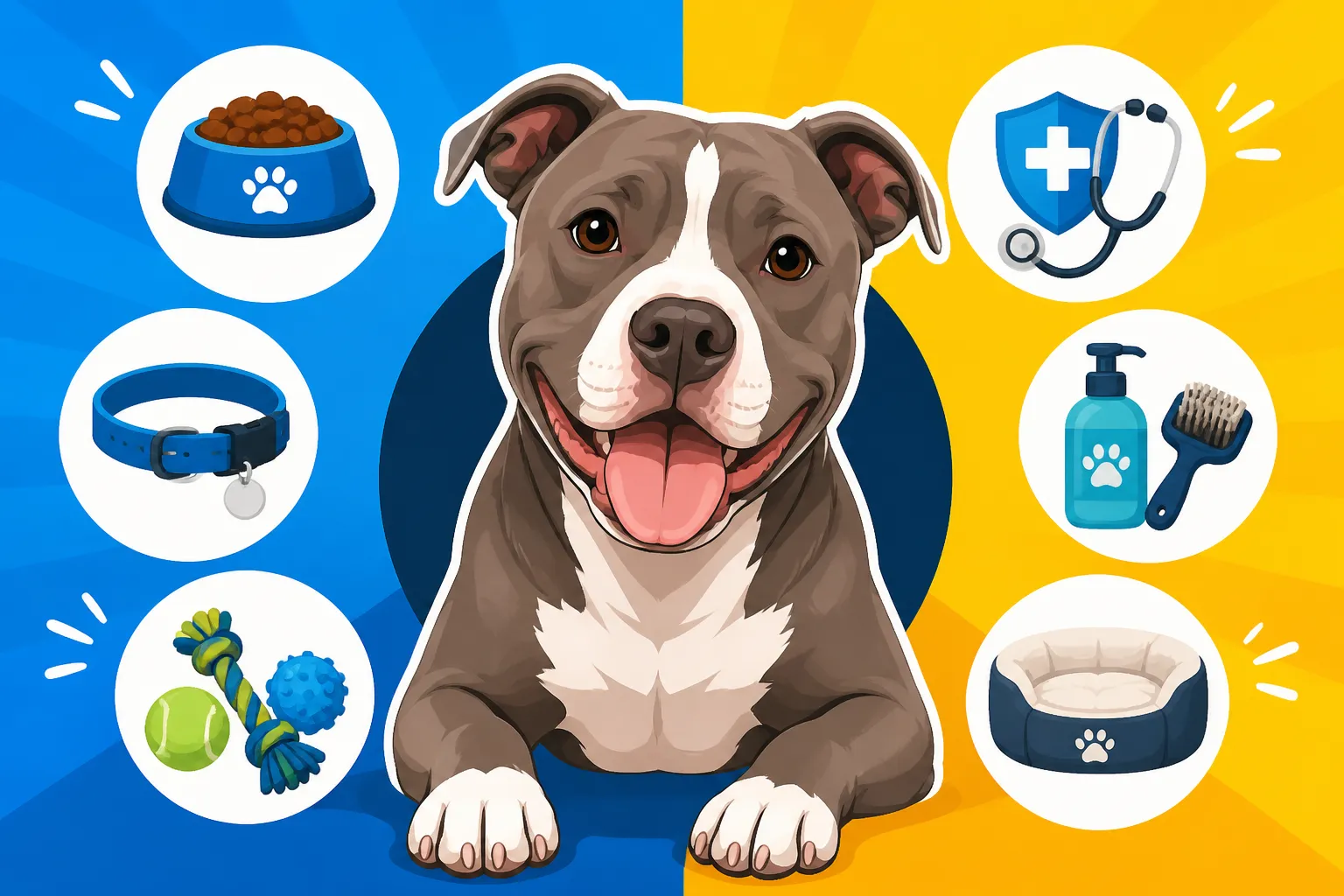
Beyond the crate, a comfortable dog bed is essential. Again, given a Pit Bull's powerful jaws, look for chew-resistant options or at least beds with removable, washable covers. Brands like K9 Ballistics or Carhartt offer durable options. An initial bed can cost anywhere from $30 to $100, depending on size and features. You'll also need food and water bowls. Stainless steel or ceramic bowls are typically recommended for durability and hygiene, costing $15-$40 for a set. Remember, a Pit Bull's short coat means they might get chilly, especially puppies or older dogs, so consider a soft blanket for their bed too.
Food, Leash, Collar, and Toys
These are the daily use items that facilitate feeding, walking, and mental stimulation. Choosing the right ones from the start is important.
The first bag of high-quality Pit Bull food is a significant initial expense. The type of food you choose will greatly impact the cost. Premium kibble brands, especially those tailored for active or large breeds, can cost $40 to $80 for a large bag (25-30 lbs), which might last a month or slightly less for a growing puppy or active adult. If you're considering fresh food options, services like Ollie offer pre-portioned, delivered meals, but these typically come at a higher monthly price point. For a Pit Bull with sensitivities, you might explore limited ingredient diets or even consider a food trial if any allergy signs are present. More information on specialized diets can be found in our article about Monthly Food for a Pit Bull on a Limited Diet. It's worth stocking up on some high-value training treats too, which can add another $10-$20.
Next up, a sturdy collar, leash, and possibly a harness are vital for walks and training. Pit Bulls are strong dogs, so durability is key. A good quality collar and leash set can cost $20-$50. For strong pullers, a front-clip harness or a head halter can be incredibly helpful for control and comfort. These can add another $30-$60 to your bill. For advice on specific gear, our guide on Harnesses Built for a Pulling Pit Bull is a great resource. Finally, don't forget toys! Pit Bulls thrive on mental and physical stimulation, and durable chew toys are essential to redirect their powerful jaws away from your furniture. Brands like Kong, Nylabone, and Goughnuts offer tough toys that can withstand rigorous chewing. Budget $20-$50 for an initial assortment of toys.
| Category | Item | Estimated First Month Cost Range | Notes |
|---|---|---|---|
| Acquisition & Vet | Adoption/Breeder Fee | $150 – $2500 | Varies hugely; adoption often includes initial vet care. |
| Vet Exam & Vaccinations | $100 – $300 | Initial check-up, boosters, deworming. | |
| Parasite Prevention | $20 – $60 | Heartworm, flea/tick monthly dose. | |
| Home Essentials | Crate | $70 – $200 | Sturdy, appropriately sized for a powerful dog. |
| Dog Bed | $30 – $100 | Chew-resistant recommended. | |
| Food & Water Bowls | $15 – $40 | Stainless steel or ceramic are best. | |
| Daily Use | High-Quality Dog Food | $40 – $80 | Depending on brand and size. |
| Training Treats | $10 – $20 | High-value treats for positive reinforcement. | |
| Collar, Leash, Harness | $50 – $110 | Durable gear for strong pullers. | |
| Durable Chew Toys | $20 – $50 | Crucial for mental stimulation and preventing destructive chewing. | |
| Grooming & Cleaning | Brush, Nail Clippers/Grinder | $20 – $50 | Basic grooming tools. |
| Dog Shampoo | $10 – $25 | Gentle, dog-specific formula. | |
| Enzyme Cleaner | $15 – $30 | Essential for house-training accidents. | |
| Miscellaneous & Contingency | Licensing/Registration | $10 – $50 | Varies by municipality. |
| Puppy Class (deposit/first mo.) | $50 – $150 | Early training investment. | |
| Emergency Fund/Insurance | (Variable) | Highly recommended; initial premium if enrolled right away. | |
| TOTAL INITIAL ESTIMATE | $600 – $3,875+ | Excludes ongoing monthly insurance premiums & assumes no major health issues arise. |
Note: These are estimated ranges. Actual costs can vary based on your location, specific product choices, and your Pit Bull's individual needs.
Training, Grooming, and Unexpected Costs
Beyond the immediate necessities, there are other important investments in your Pit Bull's well-being that arise in the first month, along with crucial considerations for unforeseen expenses.
Early Training and Grooming Supplies
Investing in training early on pays dividends for years to come, and basic grooming keeps your Pit Bull healthy and happy.
Puppy classes or initial one-on-one training sessions are invaluable for a Pit Bull, especially given their strength and the general public perception they face. Enrolling in a positive reinforcement puppy class within the first month is highly recommended for socialization and basic obedience. These classes usually run for several weeks, and you might pay the full course fee or a first installment in the initial month, ranging from $100 to $250. This investment not only teaches your Pit Bull manners but also helps you understand their unique needs and how to communicate effectively. For more on this, our article on The Cost of a Pit Bull Puppy Course offers further insights. Even if you're an experienced dog owner, a new Pit Bull brings its own set of challenges and triumphs.
Grooming a short-coated Pit Bull might seem straightforward, but you'll still need some basic supplies. A rubber curry brush or a shedding blade works wonders for managing their shedding and keeping their coat healthy, costing around $10-$20. Nail clippers or a grinder are also essential, ranging from $15-$30. Learning to trim nails early will make it a routine, not a battle. A dog-specific shampoo (around $10-$25) is important for occasional baths, as human shampoos can irritate their skin. Finally, a good enzyme cleaner (around $15-$30) is a godsend for inevitable house-training accidents, ensuring your home stays fresh and discourages repeat offenses in the same spot.
Licensing, Insurance, and Emergency Fund
Don't overlook the administrative side of dog ownership, and always prepare for the unexpected.
Most municipalities require dogs to be licensed, and the cost for this, usually an annual fee, can range from $10 to $50, sometimes more if your dog isn't spayed or neutered. This is often due within the first month of acquiring your dog. It's a small but necessary expense that helps fund local animal services. Beyond licensing, securing pet insurance is a wise consideration, particularly for a breed like the Pit Bull, which can be prone to certain health issues later in life. While you might only pay the first month's premium initially (around $30-$70), enrolling early means no pre-existing conditions are excluded. Providers like Healthy Paws offer various plans, and it's worth researching what breed exclusions, if any, might apply. Our guide on Pit Bull Pet Insurance and Breed Exclusions delves into this topic in depth.
Perhaps the most critical "cost" that isn't a direct purchase is an emergency fund. Unexpected veterinary emergencies can arise at any time, and having savings set aside can prevent significant financial stress. Even a healthy Pit Bull puppy can swallow something they shouldn't or have an unforeseen allergic reaction. Aim to have at least $500 to $1,000 readily available for these situations. While not an initial bill, establishing this fund in the first month is a testament to responsible pet ownership. The peace of mind it provides is truly priceless, knowing you can provide immediate care if needed.
Preparing Your Budget for the Road Ahead
Understanding the first month's expenses is just the beginning. It's crucial to see how these initial outlays lay the groundwork for ongoing costs and how to approach budgeting for your Pit Bull's entire life.
Budgeting for Ongoing Expenses
While the first month is often the most expensive due to initial setup costs, many expenses will continue on a monthly or annual basis.
After the initial burst of spending, you'll settle into a rhythm of recurring costs. Food, for instance, will be a consistent monthly expense. Depending on the brand, quality, and your Pit Bull's size and activity level, this could be anywhere from $40 to $100+ per month. Heartworm and flea/tick preventatives are also regular expenses, typically purchased monthly or every few months, amounting to an average of $20-$60 per month. If you opted for pet insurance, those premiums will be a consistent monthly payment. Over time, you’ll replace toys, leashes, and beds as they wear out or are outgrown. Remember that even the most durable toys, like those from Chewy, will eventually need replacing if your Pit Bull is a dedicated chewer.
Beyond these tangible items, don't forget the annual vet check-ups, which typically cost $50-$150. Booster vaccinations might also be needed on a schedule. Consider the potential for dog walking services, daycare, or boarding if your lifestyle requires it, which can add significantly to your budget. A typical dog walker might charge $20-$30 per session, while daycare can be $30-$50 per day. Thinking long-term, our comprehensive guide on What One Pit Bull Costs From Eight Weeks On provides a detailed overview of lifetime expenses. Preparing for these recurring costs from the start will help you maintain financial stability and provide excellent care for your Pit Bull without feeling constantly surprised.
Financial Planning and Long-Term Value
Looking at the bigger picture, responsible financial planning for your Pit Bull isn't just about covering bills; it's about investing in their quality of life and strengthening your bond.
While the initial costs might seem daunting, remember that many of them are one-time expenses that lay the foundation for a lifetime of companionship. The investment in a sturdy crate, quality food, and early training helps prevent more expensive behavioral or health issues down the line. For example, a well-crated and trained Pit Bull is less likely to destroy furniture, saving you thousands in repair or replacement costs. Similarly, consistent preventative veterinary care is far less expensive than treating a serious illness that could have been avoided. These initial expenditures are not just costs; they are investments in health, behavior, and the longevity of your relationship with your beloved Pit Bull.
Ultimately, the true cost of a Pit Bull, or any pet, goes far beyond the financial. It encompasses the time, love, and commitment you pour into them. By being prepared for the initial financial outlay, you free yourself up to focus on what truly matters: building an incredible bond with your new family member. Don't let the numbers scare you away; instead, empower yourself with knowledge and a solid plan to provide a wonderful life for your Pit Bull from day one.
Disclaimer
This article is intended for informational purposes only and does not constitute professional veterinary or financial advice. Costs provided are estimates and can vary significantly based on location, specific product choices, and individual pet needs. Always consult with a qualified veterinarian for any health concerns or before making decisions about your pet's care. Financial planning should be discussed with a professional if you have specific concerns.