Pit Bull Muzzle and Handling Equipment Costs
Navigating the world with a Pit Bull can sometimes feel like you’re under a microscope, with every interaction scrutinized and every piece of equipment you use subject to judgment. Finding the right muzzle and handling equipment isn't just about ensuring your dog's safety and comfort; it's also about managing public perception and responsibly handling a powerful, athletic companion. This guide will walk you through the various types of muzzles and essential handling gear, helping you understand their purposes, what they entail cost-wise, and how to make informed choices for your cherished Pit Bull.
The "Why" for Specialized Handling Gear for Pit Bulls
Owning a Pit Bull comes with a unique set of responsibilities, not least of which is ensuring public safety and demonstrating responsible pet ownership. Due to historical misconceptions and breed-specific legislation in some areas, Pit Bulls often face undue scrutiny. This means that while any dog benefits from appropriate handling equipment, it becomes particularly critical for Pit Bulls to have gear that not only works effectively but also helps portray them in a positive light.
Addressing Public Perception and Safety Concerns
It's an unfortunate truth that despite their often loving and gentle temperaments, Pit Bulls can trigger fear or anxiety in some people. This isn't fair to the dogs, but it's a reality we, as owners, have to navigate. Using appropriate handling equipment, such as a well-fitted muzzle, can be a proactive step. It’s not about admitting your dog is dangerous; it’s about signaling to the world that you are a responsible owner who prioritizes safety and peace of mind for everyone. Think of it as a seatbelt for your dog—you hope you never need it, but you're glad it's there. This outward demonstration of caution can significantly help in changing perceptions, showing that your Pit Bull is well-managed and under control, especially in crowded environments or when encountering new people or dogs.
Beyond public perception, safety is paramount. Even the most well-behaved Pit Bull can react unexpectedly in certain situations – a sudden loud noise, an off-leash dog rushing them, or a child inadvertently startling them. A properly fitted muzzle, along with a secure harness and leash, provides an extra layer of control and prevents accidental nips or bites, ensuring that both your dog and those around them remain safe. This kind of preparation means you can focus on enjoying your time with your dog, rather than constantly worrying about potential issues.
Managing Strength and Drive for Training Success
Pit Bulls are incredibly strong and athletic dogs, bred for power and resilience. This means that standard, flimsy equipment often just won't cut it. A Pit Bull that decides to pull on the leash can easily overpower an unprepared handler, leading to frustrating walks and potential injury for both dog and owner. Investing in gear specifically designed for their strength isn't just a luxury; it's a necessity for effective training and management. Strong, durable harnesses, for instance, distribute pressure across their chest and shoulders, reducing strain on their neck and making walks more comfortable and controllable.
Furthermore, Pit Bulls often possess a strong prey drive and a desire to engage. While these traits can be channeled positively in sports or specific training, they need to be managed carefully in everyday life. High-quality handling equipment allows you to communicate clearly and maintain control, which is essential for teaching good leash manners or navigating busy environments. You want gear that gives you confidence in your ability to manage your dog, rather than constantly feeling like you're fighting against it. This proactive approach to using the right tools contributes significantly to the success of your training efforts, such as Pit Bull Leash Manners and Physical Strength.
Muzzles: Types, Costs, and Considerations
Muzzles are often misunderstood, seen as a sign of an aggressive dog. However, they are invaluable tools for safety, training, and vet visits, especially for a Pit Bull. Understanding the different types and their costs is crucial for making an informed decision.
Basket Muzzles for Safety and Comfort
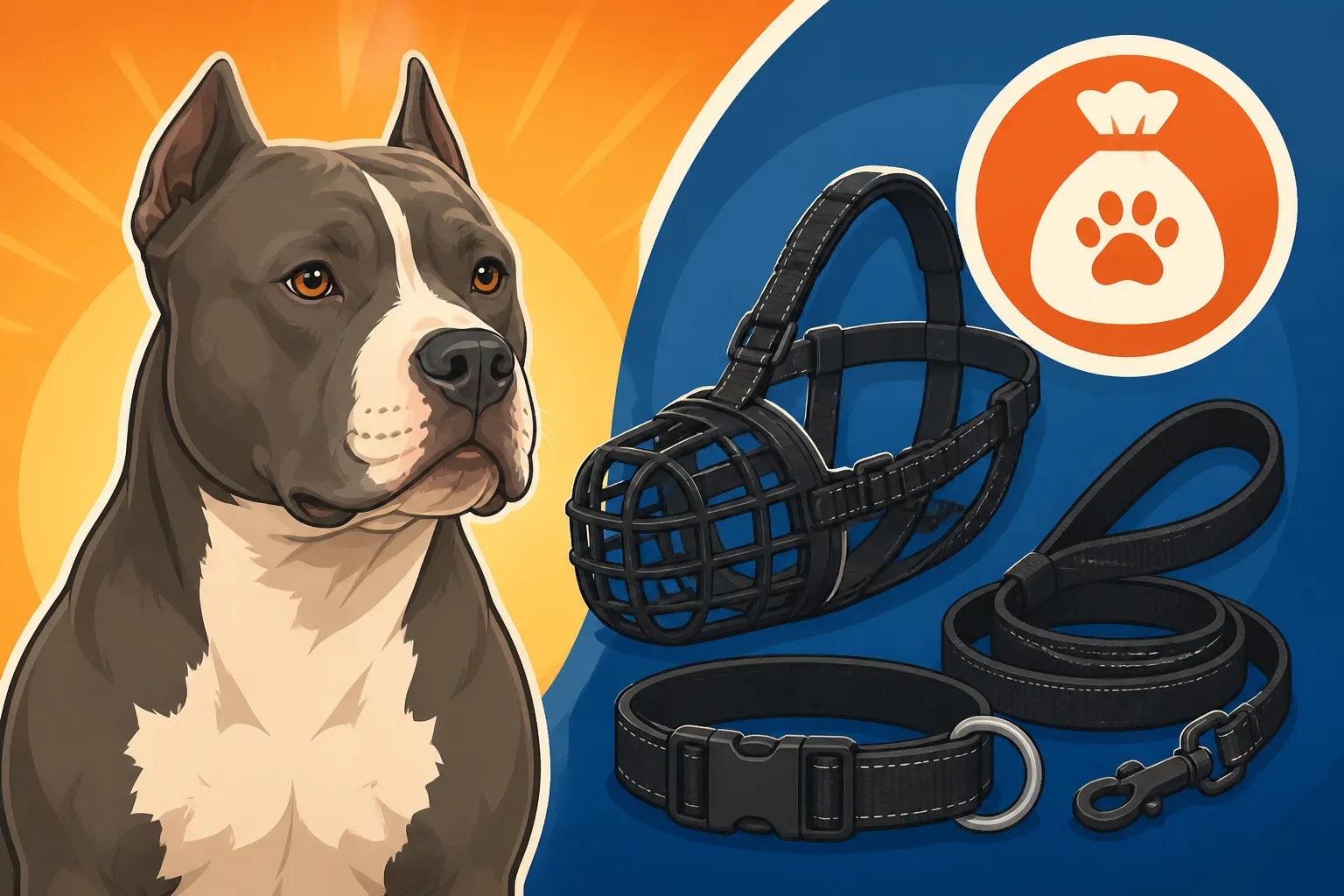
Basket muzzles are generally the preferred choice for Pit Bulls for several important reasons. They are designed to allow your dog to pant, drink water, and even take treats while wearing them, which is essential for both comfort and proper muzzle conditioning. This means they can be worn for longer periods, whether you're taking a walk in a crowded park, visiting the vet, or doing some focused training. Because Pit Bulls often have broad muzzles, finding a basket muzzle that fits properly without rubbing or restricting their breathing can sometimes be a quest, but it's worth the effort.
The cost of a quality basket muzzle can vary significantly based on material, brand, and features. You'll typically find options ranging from basic plastic or rubber models to more durable, custom-fit wire or Biothane designs. Expect to pay anywhere from a moderate amount for a basic plastic model found on sites like Chewy, to a higher investment for a custom-made, robust, and escape-proof muzzle. The key is to measure your Pit Bull's snout length and circumference accurately, ensuring a comfortable and secure fit. A poorly fitting muzzle can be easily removed by a determined Pit Bull or, worse, cause discomfort and injury. Investing in a well-fitting, high-quality basket muzzle is an investment in your dog's safety and your peace of mind. For more on proper introduction, read about Muzzle Conditioning a Pit Bull in Two Weeks.
Fabric and Emergency Muzzles: When and Why
Fabric muzzles, often made of nylon or mesh, wrap tightly around a dog's snout, preventing them from opening their mouth fully. These are typically much less expensive than basket muzzles. However, they come with significant limitations. Because they restrict panting, they should only be used for very short durations, such as during a quick nail trim at the groomer or a brief vet examination. They are absolutely not suitable for walks, prolonged wear, or situations where your dog might become overheated or stressed, as they can quickly lead to overheating and anxiety.
Emergency muzzles are usually fabric or a simple loop design and are meant for immediate, short-term restraint in unexpected situations, like an injury that causes pain or fear aggression. They are generally the least expensive option. While having one on hand can be useful, they offer minimal comfort and should never be seen as a substitute for a properly conditioned basket muzzle. For Pit Bulls, whose strong jaws make escape from ill-fitting gear more likely, a secure and comfortable basket muzzle is almost always the superior choice for any planned use. Understanding Why Every Pit Bull Should Be Muzzle Trained highlights the importance of choosing the right tool for the job.
Here's a quick comparison of muzzle types:
| Muzzle Type | Pros | Cons | Typical Cost Range | Best Use Cases |
|---|---|---|---|---|
| Basket | Allows panting, drinking, treats; can be worn longer; very safe | Can be bulky; initial investment higher; requires careful fitting | Moderate to High | Walks, vet visits, public outings, training, preventing scavenging |
| Fabric/Soft | Compact; inexpensive; easy to carry | Restricts panting/drinking; only for very short periods; overheating risk | Low | Brief vet exams, grooming (e.g., nail trims), emergency temporary restraint |
| Emergency | Very inexpensive; useful for unexpected situations; lightweight | Very restrictive; uncomfortable; not for training or prolonged use | Very Low | Immediate restraint during an emergency (e.g., injury) |
Essential Leash and Harness Systems
Beyond muzzles, the backbone of safe and effective Pit Bull handling lies in a robust leash and harness system. Given their power and athleticism, generic collars and flimsy leashes are simply inadequate and can pose risks.
Heavy-Duty Harnesses for Control and Comfort
For Pit Bulls, a well-fitting, heavy-duty harness is often preferred over a collar for everyday walks and training. A harness distributes pressure evenly across their chest and shoulders, reducing strain on the neck and trachea, which is especially important for strong pullers. Front-clip harnesses are particularly effective for dogs that pull, as they redirect the dog's forward momentum back towards the handler, making it harder for them to drag you down the street. Back-clip harnesses are great for dogs with good leash manners or those involved in activities like hiking, but offer less control for strong pullers.
When choosing a harness, look for durable materials like thick nylon webbing, strong buckles, and reinforced stitching. Brands that specialize in active or working dog gear often have the best options. Prices for a quality harness for a Pit Bull can range from moderate to higher, depending on the brand, materials, and features like multiple leash attachment points or reflective strips. Expect to pay more for a harness designed to withstand the strength of a powerful breed, but this investment often means greater comfort for your dog and more control for you. For durable options, looking at a wide selection on a retailer like Chewy can help you compare materials and prices effectively. Remember, a cheap harness that breaks is no bargain. Consider options that are Harnesses Built for a Pulling Pit Bull.
Leashes and Collars That Stand Up to Strength
Just as with harnesses, your Pit Bull's leash and collar need to be up to the task of containing a powerful dog. For leashes, look for heavy-duty nylon or Biothane with strong, metal hardware. A standard 6-foot length is versatile for most walks. Avoid retractable leashes, as they offer poor control and can be dangerous, especially with a dog as strong as a Pit Bull. The cost of a sturdy, reliable leash will be in a similar range to a good quality harness—from moderate for a solid nylon option to higher for specialized materials like Biothane or leather.
For collars, a flat buckle collar made of durable material is suitable for holding identification tags and basic leash attachment for dogs with excellent leash manners. However, for active management, especially during training or in public, a properly fitted harness is generally safer and more effective. If you use a collar for walks, ensure it's broad and strong enough to distribute pressure and prevent damage to their throat should they pull unexpectedly. Some owners also consider head halters for additional control, particularly for very strong pullers or for teaching a Pit Bull to Teaching a Pit Bull to Walk Past a Barking Dog. Costs for collars vary widely, from budget-friendly options to more premium, custom designs, but always prioritize strength and safety over aesthetics. You need Leads and Collars That Will Not Fail on a Pit Bull.
Additional Handling Equipment and Long-Term Costs
Handling equipment for a Pit Bull extends beyond just what you use on a walk. Thoughtful investment in items like crates and vehicle restraints contributes to their safety and your peace of mind in various situations.
Crates, Gates, and Vehicle Restraints
Crates are an indispensable piece of equipment for any dog owner, and especially so for Pit Bulls. A sturdy, appropriately sized crate provides a safe den, aids in house-training, and offers a secure space when you can't actively supervise your dog. For Pit Bulls, who can be incredibly determined and strong, investing in a heavy-duty, chew-proof crate is often necessary to prevent escapes and damage. Wire crates are common, but for an escape artist or a dog prone to destruction, a solid impact-resistant crate might be a wiser, albeit higher-cost, investment. Prices for crates vary significantly based on size and material, ranging from affordable wire options to considerably more expensive heavy-duty or travel-rated crates.
Beyond crates, baby gates or pet gates are useful for managing access within your home, helping to create safe zones or limit a Pit Bull's roaming when guests are over. For vehicle safety, crash-tested harnesses or crates are paramount. An unrestrained Pit Bull can become a dangerous projectile in an accident or a distraction to the driver. High-quality vehicle restraints, while an added cost, are crucial for protecting your dog and everyone in the car. Many of these items can be found and compared on large pet supply sites such as Chewy, allowing you to read reviews and assess durability.
The Long-Term Investment in Quality Gear
The upfront costs for high-quality Pit Bull handling equipment can seem significant, but it's important to view these as long-term investments. Cheap, flimsy gear will inevitably break, often at the most inconvenient or critical moment, leading to repeated purchases and potentially compromising safety. Investing in durable items from the start means fewer replacements over your Pit Bull's lifespan, which can easily be Pit Bull Lifespan Across Twelve to Sixteen Years. A well-made muzzle, a robust harness, and a strong leash, if properly cared for, can last for many years.
Furthermore, consider the potential costs of not having the right equipment. An escaped dog could incur vet bills from accidents or get lost. An incident in public could lead to legal fees, fines, or even the difficult choice of The Hardest Call a Pit Bull Owner Makes. While pet insurance through providers like Healthy Paws can help with unexpected vet expenses, prevention is always the best approach. By allocating a realistic portion of your overall What a Pit Bull Costs a Year With Allergies or general What One Pit Bull Costs From Eight Weeks On budget to quality handling equipment, you're not just buying gear; you're investing in your Pit Bull's safety, your peace of mind, and your ability to be a truly responsible dog owner.
Disclaimer
This article is for general informational purposes only and does not constitute professional advice. Laws, prices and regulations vary by location and change over time. Consult a qualified professional for guidance on your specific situation.