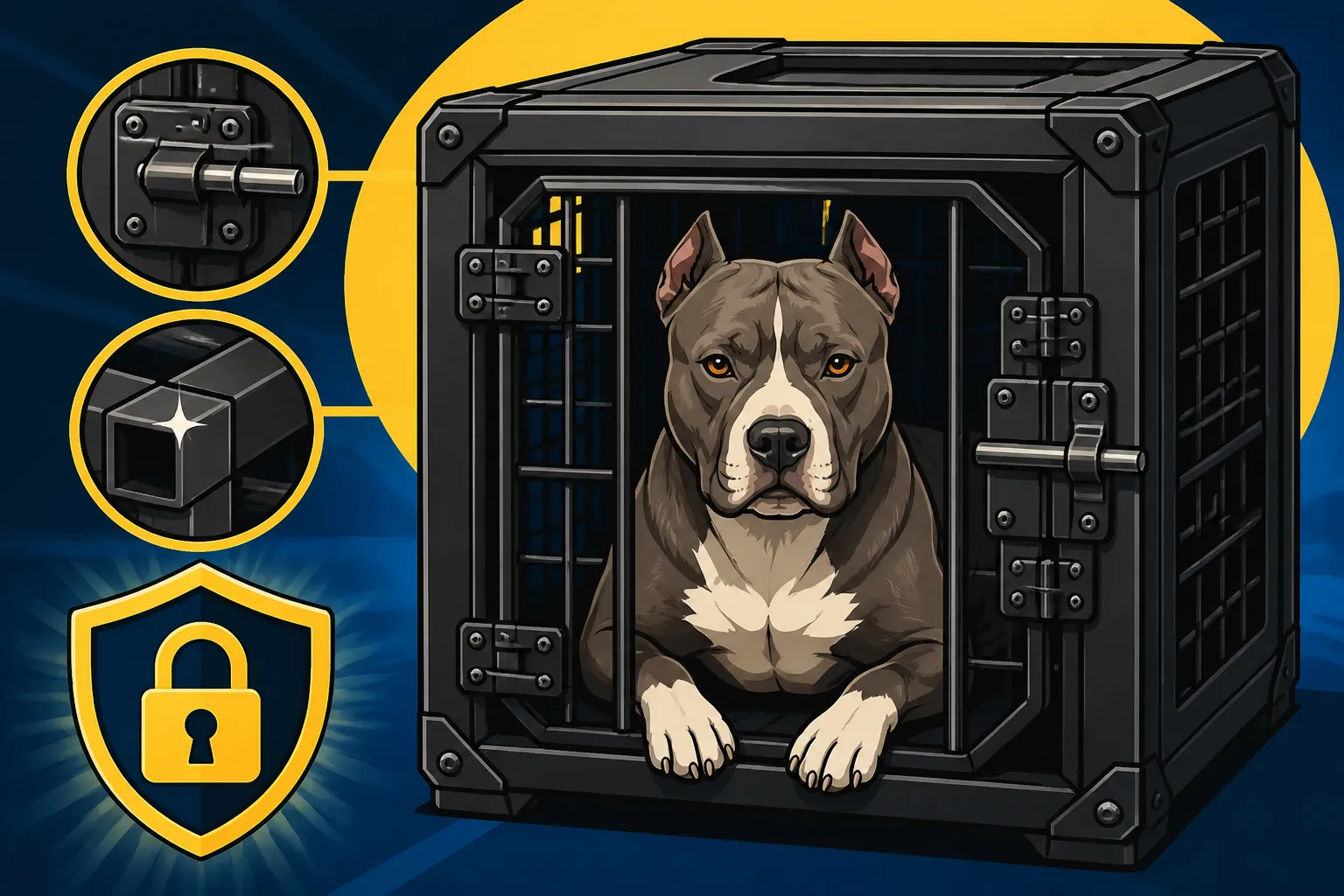
The Crate a Pit Bull Cannot Break Out Of
Oh, the sheer frustration of coming home to a crate that looks like a wild animal tried to gnaw its way out! Many Pit Bull owners know this struggle all too well – that sinking feeling when you realize your dog has bent bars, chewed through plastic, or even managed to pop latches, turning their supposed safe space into a scene of destruction. It's not just about the damaged crate; it's the worry for their safety, the mess, and the constant search for something that will actually hold up. This guide is here to walk you through understanding why your powerful Pit Bull might be turning into an escape artist and, more importantly, how to find and utilize a crate that truly withstands their strength and determination.
Why Pit Bulls Become Escape Artists
It’s easy to feel defeated when your beloved Pit Bull consistently outsmarts or overpowers their crate. But it’s important to remember that this behavior isn't typically born out of malice or stubbornness. Instead, it’s usually a symptom of underlying needs or feelings that your dog is trying to express, often in the only way they know how. Understanding these root causes is the first step toward finding a lasting solution.
High Energy and Boredom
Pit Bulls are incredibly athletic, intelligent, and possess a surprising amount of stamina. If they're not getting enough physical exercise or mental stimulation, all that pent-up energy and cleverness has to go somewhere. For many dogs, that "somewhere" ends up being their crate. Imagine being confined with boundless energy and a sharp mind, with nothing to do. You'd probably look for a way out too! A Pit Bull who isn't sufficiently tired or engaged before being crated will often channel their frustration and boredom into destructive chewing, digging, or pushing against the crate walls, quickly exposing any structural weaknesses. Coming home to a crate with mangled bars, a broken door, or even signs of paw pad injury can be a clear indicator that your dog needs more outlets for their energy.
Anxiety and Fear
Beyond boredom, emotional distress is a massive driver for crate destruction. Separation anxiety is a common culprit, where dogs experience intense panic and distress when left alone. This isn't just a dog being "naughty"; it's a genuine fear response. A Pit Bull suffering from separation anxiety might claw, chew, or push their way out of a crate with a desperation born of pure panic. You might see drooling, excessive barking, or even self-injury around their mouth or paws from their frantic attempts. Similarly, external factors like loud thunderstorms, fireworks, or even unfamiliar noises can trigger fear in a crated dog, leading them to desperately try to escape what they perceive as an unsafe confinement during a frightening event. For more on what this can look like, you might want to read A Pit Bull That Panics When the Door Shuts or A Pit Bull That Destroys Furniture When Alone.
Improper Crate Training
Believe it or not, sometimes the way a crate is introduced and used can inadvertently contribute to a Pit Bull's desire to escape. If a crate is primarily used for punishment, if they are left in it for excessively long periods without breaks, or if the initial introduction wasn't positive and gradual, a dog can develop a strong aversion to it. Instead of viewing their crate as a safe, comfortable den, they see it as a prison or a negative space. This negative association can fuel their attempts to break free, transforming what should be a secure retreat into a place of stress. Starting crate training on the right foot, or re-introducing it positively, is crucial. You can find more targeted advice in Crate Training a Pit Bull That Breaks Out.
Types of Crates for Escape-Artist Pit Bulls
Once you understand why your Pit Bull is becoming a Houdini, the next step is to invest in a crate that can actually stand up to their impressive strength and ingenuity. Not all crates are created equal, and for a powerful breed like a Pit Bull, "heavy-duty" often means something entirely different than it does for a smaller, less determined dog.
Heavy-Duty Wire Crates
When we talk about wire crates, it’s important to distinguish between the flimsy, standard models you might find at any pet store and truly heavy-duty options. A regular wire crate, while fine for many dogs, simply won't cut it for a Pit Bull who has decided they're getting out. For an escape artist, you need a wire crate made with significantly thicker gauge wire – often 6-gauge or lower – which is much harder to bend, twist, or break. Look for models with reinforced corners, extra welds, and multiple, robust latch points. Some higher-end wire crates even feature double-locking doors or a "stacked" construction where the top and bottom panels are bolted to the side panels, offering far greater structural integrity. While these are a step up in security and durability compared to standard wire crates, a truly determined Pit Bull might still find a way to work at the latches or pressure points over time. The increased visibility and ventilation are often a plus, however, and many are still foldable for convenience.
Aluminum or Steel Crates
For the ultimate in security and durability, aluminum or steel crates are often the go-to solution for Pit Bull owners battling persistent escape artists. These are not your average crates; they are constructed from industrial-grade materials, often with solid bars or thick paneling, and are designed to be virtually indestructible. Brands like Impact Crate or Zinger Winger are well-known for their heavy-duty offerings. These crates typically feature:
- Robust Construction: Think solid walls, heavy-gauge tubing, or a single-piece welded frame. They are built like tanks.
- Secure Latches: Often spring-loaded, multi-point, or even padlock-compatible, these latches are designed to prevent even the most clever canine from prying them open.
- Durability: Made to last a lifetime, resisting chewing, bending, and warping.
- Reduced Noise: Many solid-panel designs eliminate the rattling that can come with wire crates, which can be a relief for anxious dogs or their owners.
The main downsides are their higher cost, increased weight (making them less portable), and sometimes less ventilation than wire crates, depending on the specific design. However, for a Pit Bull who has defeated every other crate, these often represent the last, best option. When considering The Crate a Fifty Pound Pit Bull Needs, these types of crates are often the answer for escape artists.
Furniture-Style or Plastic Crates
While aesthetically pleasing and sometimes a good fit for calmer dogs, furniture-style crates and most standard plastic crates are generally not suitable for a Pit Bull escape artist. Furniture crates, though they look nice in your living room, are typically made of wood or composite materials that are no match for a strong Pit Bull jaw. They are designed for decoration and containment, not for a dog determined to break free. Similarly, plastic airline-style crates, while good for travel, can often have weak plastic latches or seams that a powerful dog can exploit or chew through, especially if they are in a panic. The sides can also flex, allowing a strong dog to push outwards and potentially break the door or hinges. While they offer a sense of den-like security, their structural integrity simply doesn't compare to heavy-duty metal options when dealing with a truly persistent escape artist.
Key Features to Look for in an Indestructible Pit Bull Crate
When you're ready to invest in a crate that your Pit Bull genuinely cannot break out of, you need to become an expert in its construction details. It’s not just about the general type of crate; it’s about the specifics that make it truly secure.
Material and Gauge
The first thing to scrutinize is the material. For an escape artist Pit Bull, we're talking about heavy-gauge steel or aluminum. Don't settle for thin, flimsy wire. If it's a wire crate, the lower the gauge number, the thicker and stronger the wire. Aim for 6-gauge wire or thicker for maximum durability. For solid metal crates, look at the specifications for the grade of steel or aluminum used – aerospace-grade aluminum or heavy-duty welded steel tubing are indicators of superior strength. Check how the pieces are joined: welding is generally more robust than rivets or thin bolts, which can sometimes loosen or be chewed. A high-quality metal crate will feel substantial and rigid, with no noticeable flex in the bars or panels when you push on them.
Latch and Door Mechanisms
This is often the weak point a clever Pit Bull will exploit. Forget plastic latches or single, simple slide bolts. You need mechanisms that are difficult to manipulate and built to withstand significant force. Look for:
- Multiple Latch Points: Doors with two or more secure latches, often on different sides, make it much harder for a dog to pry open a single point.
- Spring-Loaded or Gravity-Drop Latches: These types of latches often require deliberate human action to open and are less likely to be accidentally bumped or cleverly manipulated by a paw or nose.
- Padlock Compatibility: Many of the toughest crates are designed with rings or slots where you can add a sturdy padlock for an extra layer of security. This is particularly useful if your Pit Bull has figured out how to operate existing latches.
- Recessed or Covered Latches: Some designs feature latches that are protected or recessed, preventing your dog from chewing on them or getting a purchase to pry them open.
- Heavy-Duty Door Frames: Ensure the door itself is constructed with the same robust material as the rest of the crate and doesn't have any gaps around the edges where a persistent nose or paw could gain leverage.
Floor and Tray Considerations
While often overlooked, the floor and tray of a crate are critical for both security and your dog's comfort. A flimsy plastic tray can be a chew target, or worse, can crack and create sharp edges. For an escape artist:
- Metal or Heavy-Duty Composite Trays: Opt for trays made of metal, or extremely thick, chew-resistant plastic. Some robust crates have a grated floor with a removable metal pan underneath, allowing waste to fall through while keeping your dog above it.
- Secure Tray Placement: Ensure the tray sits securely within the crate and cannot be easily pushed up or dislodged from below. A dog digging at the floor could use a loose tray to create leverage for escape.
- No Gaps for Paws: Check for any gaps between the crate walls and the floor or tray where a dog could get a paw caught. This is not only a safety hazard but also a potential leverage point for escape.
Setting Up the Secure Crate and Training for Success
Even the most indestructible crate is only as effective as the environment and training that goes with it. You can buy the strongest, most expensive crate on Amazon, but if your Pit Bull still views it as a place of punishment or fear, they will continue to fight against it. Success comes from a combination of hardware and thoughtful, positive behavioral work.
Crate Location and Comfort
Where you place the crate can make a big difference. For a dog with separation anxiety, being near the family, perhaps in the living room or bedroom, might offer more comfort and reassurance. For a dog that needs to settle down, a quieter corner might be better. The key is to make the crate an appealing, den-like space.
- Comfortable Bedding: Provide soft, comfortable bedding. However, if your Pit Bull tends to destroy beds, start with a tough, chew-resistant mat or consider going without bedding until they are comfortable and reliable in the crate. Never leave anything in the crate that could be ingested and cause a blockage.
- Familiar Scents: Place a blanket or an old t-shirt with your scent on it inside the crate. This can be very comforting for a dog struggling with being alone.
- Chew Toys and Puzzle Feeders: Always provide appropriate, durable chew toys to help your Pit Bull relax and occupy themselves. Think about toys that can withstand their powerful jaws. You might want to check out Chew Toys That Hold Up to a Pit Bull for some ideas. A frozen Kong filled with peanut butter or a puzzle feeder with a portion of their meal can keep them happily occupied for a significant period.
Positive Reinforcement Training
Re-introducing or reinforcing positive crate associations is paramount. The crate should always be a place your Pit Bull wants to go, not a place they're forced into.
- Start Slowly: Never force your dog into the crate. Start with short durations, even just seconds, with the door open.
- High-Value Rewards: Use irresistible treats and praise every single time your Pit Bull calmly enters or is inside the crate. Make it rain treats!
- Gradual Increase: Slowly increase the time your dog spends in the crate. Start with them in the same room, then step out for a minute, then five, and so on. Always return before they start to get anxious or vocal.
- Never for Punishment: The crate should never, ever be used as a punishment. This will instantly undo all your positive training and reinforce negative associations.
- Desensitization: Practice opening and closing the door, walking by the crate, and even leaving the room without crating your dog. This helps them understand that every time you approach the crate, it doesn't mean confinement.
- Training Resources: If you're struggling, consider an online training program or a certified professional dog trainer. Resources like BAXTER & Bella offer virtual guidance that can be incredibly helpful. Investment in good training can truly pay off, and you can learn more about related expenses in The Cost of a Pit Bull Puppy Course. Positive reinforcement is key, and you can delve deeper into it by reading Positive Reinforcement Training With a Pit Bull.
Addressing the Root Cause (Exercise and Enrichment)
A physically tired and mentally stimulated Pit Bull is far less likely to have the energy or inclination to destroy their crate. Many crate-breaking behaviors stem from boredom, anxiety, or an excess of unchanneled energy.
- Ample Exercise: Pit Bulls need vigorous daily exercise. This means more than a quick walk around the block. Think long walks, jogs, fetch, or dedicated playtime in a secure yard. For guidance on appropriate activity levels, check out The Daily Exercise a Pit Bull Actually Needs. A tired dog is a calm dog, and a calm dog is less likely to try to escape.
- Mental Stimulation: Don't forget their brains! Pit Bulls are intelligent and thrive on mental challenges. Engage them with puzzle toys, scent work, obedience training sessions, or teaching new tricks. Even short bursts of mental work can be as tiring as physical exercise. Consider Indoor Trick Work for a Bored Pit Bull for some great ideas.
- Consistent Routine: Dogs thrive on routine. A predictable schedule for walks, meals, and potty breaks can reduce anxiety and help your Pit Bull feel more secure.
By combining the strength of an escape-proof crate with consistent, positive training and a focus on meeting your Pit Bull's physical and mental needs, you can transform their crate from a battleground into a peaceful haven.
| Crate Type | Durability / Security | Ventilation | Portability | Cost (General Shape) | Best For | Not Ideal For |
|---|---|---|---|---|---|---|
| Standard Wire Crate | Low to Moderate | Excellent | High (foldable) | Lower | Calm dogs, mild containment, travel | Escape artists, heavy chewers, anxious Pit Bulls |
| Heavy-Duty Wire Crate | Moderate to High | Excellent | Moderate | Mid-range | Strong dogs, mild chewers, some escape artists | Extreme escape artists, severe anxiety |
| Aluminum / Steel Crate | Extremely High | Moderate | Low (heavy) | Higher | Determined escape artists, extreme chewers, anxious Pit Bulls | Owners on a tight budget, frequent travel |
| Plastic Crate | Low to Moderate | Moderate | High | Lower | Calm dogs, air travel, den-like feel | Escape artists, heavy chewers, destructive dogs |
| Furniture-Style Crate | Low (aesthetic focus) | Variable | Low | Mid-to-High | Very calm dogs, home decor | Any dog with escape or chewing tendencies |
Disclaimer
This article is for general informational purposes only and does not constitute professional advice. Laws, prices and regulations vary by location and change over time. Consult a qualified professional for guidance on your specific situation.