Long Line Hardware That Holds a Pit Bull
If you've ever had a strong, enthusiastic Pit Bull type dog on a long line, you know the heart-stopping moment when the hardware strains, twists, or worse, pops open. It’s not just frustrating; it’s a real safety concern when your powerful companion suddenly gains unexpected freedom. This guide is all about helping you understand what kind of long line hardware can truly stand up to your Pit Bull's strength, ensuring safe and effective training sessions for recall, stay, or just supervised freedom.
Understanding the Strain a Pit Bull Puts on Long Line Hardware
Let's be honest, Pit Bulls are built like canine powerhouses. Their compact, muscular build and incredible drive mean they can generate an immense amount of force in a split second. This isn't just about constant pulling; it's about those sudden, unexpected lunges after a squirrel, a burst of zoomies, or a sudden change of direction that puts immense stress on every part of your long line system. Many owners, myself included, have learned the hard way that standard leash hardware just doesn't cut it.
The Power Behind a Pit Bull's Pull
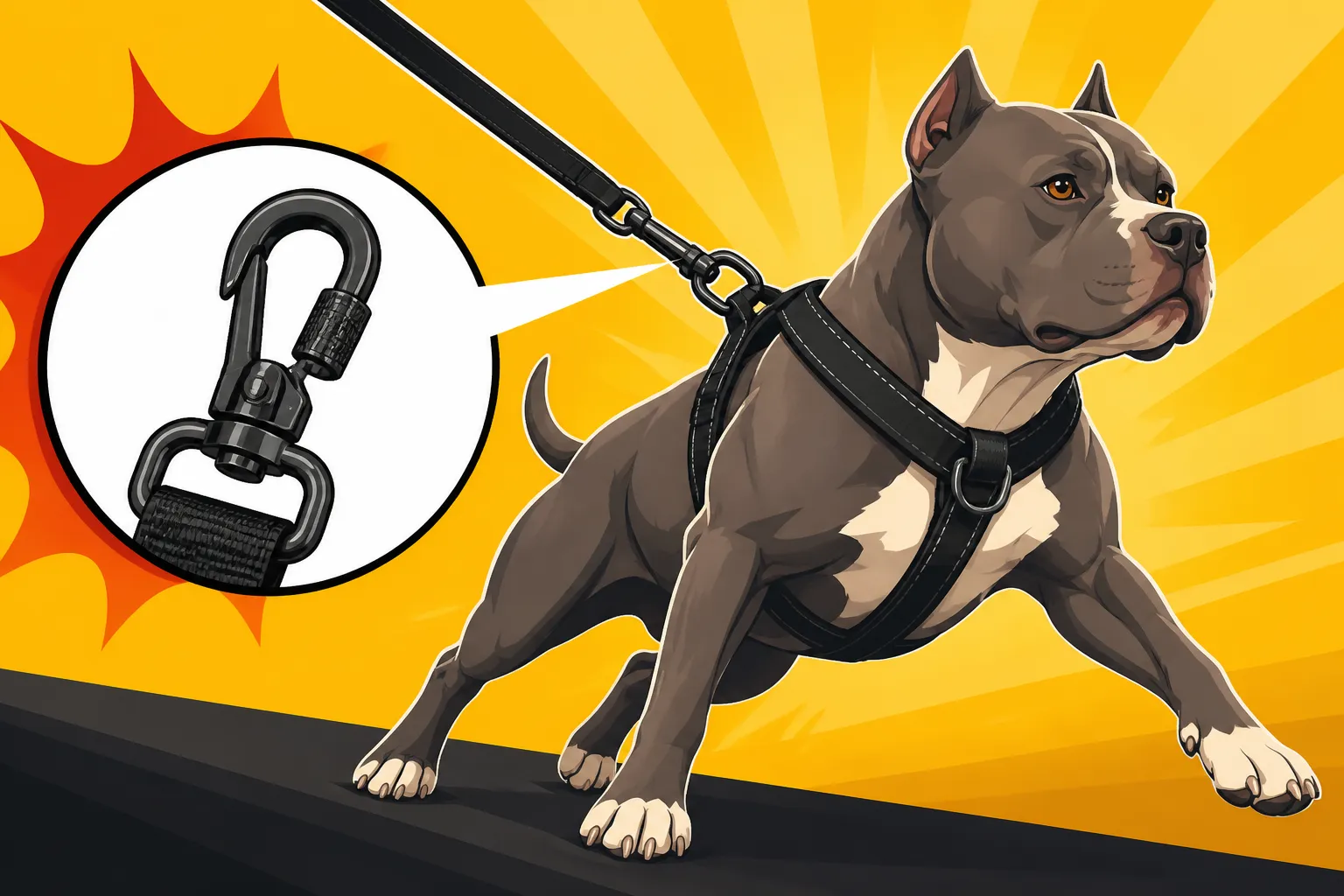
When your Pit Bull sees something exciting – a bird, another dog, or even just a particularly interesting scent – their entire body becomes a spring-loaded missile. That sudden acceleration, combined with their weight and muscle, creates a shock load. This isn't simply their static weight multiplied; it's a dynamic force that can be several times their actual body weight. Imagine a 50-pound Pit Bull hitting the end of a long line with the force of a small truck. That's the kind of force we're talking about, especially if they hit the end of the line at a dead run. It's a testament to their physical prowess, but it also means we, as responsible owners, need to equip ourselves with gear that can match that strength. Cheap, flimsy clips or thin webbing just won't cut it, and the last thing any of us wants is our beloved dog getting free in an unsafe situation. You want to feel confident that your gear can handle the unexpected.
Why Regular Hardware Fails
Most everyday leashes are designed for casual walks, not for containing a high-drive dog covering a lot of ground on an extended lead. The failure points are often predictable. Small, weak spring-loaded snaps are notorious for bending open or breaking entirely under pressure. The pivot points where the snap attaches to the line can fray or tear. Even the material of the line itself, if it’s not robust enough, can stretch, snap, or degrade quickly with outdoor use and the friction of a strong dog's movements. Over time, exposure to elements, dirt, and repeated stress weakens these components. What might seem like a minor snag or a slight hesitation on a regular leash can become a catastrophic failure on a long line with a Pit Bull in full stride. We’re not talking about bad dogs here; we’re talking about powerful, athletic animals doing what comes naturally, and our job is to keep them safe and under control while they learn and explore. For more on managing their power, check out Pit Bull Leash Pulling at Fifty Pounds.
Essential Features of Durable Long Line Hardware for Pit Bulls
Choosing the right long line for your Pit Bull isn't just about length; it's fundamentally about the strength and integrity of the materials and construction. You need components that are not only strong but also designed to withstand repeated dynamic stress without failing. Think of it as investing in your peace of mind and your dog's safety.
Material Matters: From Snaps to Swivels
When it comes to the hardware itself – specifically the clip that attaches to your dog's harness or collar – you absolutely cannot compromise on quality. Here’s what to look for:
- Snap Material: Avoid anything that feels light or looks like a thin stamped metal. Zinc alloy or plated steel snaps are common but can be brittle or weak. Look for solid brass, stainless steel, or heavy-duty carabiner-style clips made from aircraft-grade aluminum. Solid brass is excellent for strength and corrosion resistance, especially if you train in wet conditions, but it can be heavier. Stainless steel offers incredible strength and is also rust-resistant. Aircraft-grade aluminum carabiners are often surprisingly strong for their weight. The key is that they should feel substantial and well-made in your hand.
- Snap Mechanism: Spring-loaded "gate" snaps are common, but ensure the spring is strong and the gate closes fully and securely. For Pit Bulls, many owners prefer screw-lock or twist-lock carabiners, or even heavy-duty bolt snaps. Bolt snaps, with their sliding bolt, tend to be more secure against accidental openings than traditional spring clips, though a high-quality, large spring clip can still work. Double-check that there are no sharp edges that could rub or catch on the dog's gear or your hands.
- Swivel Functionality: This is crucial. A good swivel allows your long line to rotate freely, preventing tangles and twists that can shorten the effective length of the line or create snag hazards. Imagine your Pit Bull doing a tight circle or changing direction suddenly; a cheap swivel will bind, and the line will twist around itself. Look for swivels that are smooth, robust, and made from the same high-quality metals as the snap. The swivel should be an integral part of the snap mechanism or very securely attached. A smooth-action swivel will also reduce the strain on the line itself by distributing rotational forces.
Line Construction: Strength and Visibility
The line itself needs to be as robust as the hardware. It's not just about tensile strength, though that's paramount; it's also about durability, comfort in handling, and sometimes, visibility.
- Material:
- Nylon Webbing: This is a common and often durable choice. Look for thick, tightly woven nylon. It’s strong and can withstand a lot of abuse, but it can absorb water, get dirty, and, if it’s thin, cause rope burn.
- Biothane: This material is a game-changer for long lines, especially for Pit Bulls. It's a polyester webbing with a PVC or TPU coating. This makes it incredibly strong, waterproof, odor-proof, and very easy to clean – just wipe it down! It has a slightly grippy feel, which can be great for handling, and it won’t get waterlogged. It’s a bit more expensive but often worth the investment for its durability and low maintenance. You can find excellent Biothane long lines from various sellers on platforms like Amazon.
- Rope/Cord: Some long lines are made from robust braided rope. These can be very strong but might be harder to clean and can be cumbersome to manage, especially when wet. If choosing rope, ensure it's a type known for high tensile strength and marine-grade quality.
- Width and Thickness: A wider and thicker line generally means greater strength. For a Pit Bull, anything less than 1/2 inch wide (or a similar substantial diameter for rope) is usually too flimsy. The line needs to be thick enough to stand up to abrasion and the immense pressure of a pulling dog.
- Stitching/Attachments: Inspect all seams and attachment points. They should be heavily stitched with strong, thick thread, ideally reinforced at stress points. Look for multiple rows of stitching or even rivets in conjunction with stitching for maximum security.
- Visibility: If you're training in open fields or areas with tall grass, a brightly colored long line can be a real asset. It helps you keep track of the line, prevents others from tripping, and makes retrieval easier. High-visibility orange or yellow Biothane lines are popular for this reason.
Here's a quick comparison of common long line materials:
| Feature | Nylon Webbing | Biothane (Coated Webbing) | Rope (Braided Synthetic) |
|---|---|---|---|
| Strength | High, depends on weave and thickness | Very High, consistent strength | High, depends on material (e.g., mountaineering rope) |
| Durability | Good, but can fray and absorb water | Excellent, resists abrasion, weather, chemicals | Good, can be resistant to wear |
| Waterproof | No, absorbs water and can get heavy | Yes, fully waterproof | Varies, generally absorbs water |
| Odor-Proof | No, can retain odors | Yes | No, can retain odors |
| Cleanliness | Harder to clean, may require scrubbing/washing | Very easy, just wipe clean | Harder to clean, may trap dirt |
| Grip/Feel | Can be smooth, may cause rope burn when wet | Consistent, slightly tacky grip, easier on hands | Varies, can be bulky, may cause rope burn |
| Weight | Moderate, heavier when wet | Moderate | Can be heavy, especially thicker diameters |
| Visibility | Good color options | Excellent for bright, consistent colors | Varies widely |
Choosing the Right Length and Weight for Your Pit Bull's Long Line
The perfect long line isn't just about durability; it's also about matching the length and overall weight to your specific training goals and the environment you'll be using it in. What works for practicing a stay in a small park might not be ideal for recall training in a vast open field.
Matching Length to Training Goals and Environment
The length of your long line directly impacts the types of training you can do and the amount of freedom your Pit Bull experiences.
- 10-20 Feet (3-6 meters): This shorter length is often great for introducing long line work in more confined spaces, like a backyard or a quieter park. It's excellent for practicing stays, "heel" with a bit more room, or beginning recall training where you can easily reel in your dog if they get distracted. It allows them a little more freedom than a standard leash but keeps them close enough for quick intervention. It's also good for teaching Building a Pit Bull's Impulse Control in semi-distracting environments.
- 30-50 Feet (9-15 meters): This is the sweet spot for many Pit Bull owners focusing on recall. It gives your dog a significant amount of freedom to explore, sniff, and run, while still keeping them safely connected to you. This length is fantastic for Practicing Pit Bull Recall Behind a Fence or in large open fields where you want them to feel like they are off-leash without the actual risk. It requires more careful handling to avoid tangles and ensure you have enough slack and leverage.
- 75-100+ Feet (23-30+ meters): These extremely long lines are for advanced recall practice in very open, safe areas. They provide an immense sense of freedom for your dog but require a lot of space, careful footwork, and a good grip to manage. These are often used when proofing recall over long distances, making sure your Pit Bull comes back even when they are far away. Be aware that managing this much line can be a workout in itself, and it increases the risk of tangles or tripping if you’re not constantly paying attention.
When considering length, also think about the terrain. A 50-foot line in a dense forest will be a constant headache of snagging, whereas the same line in an open meadow is perfect. Always assess your training environment before you clip on that long line.
Balancing Durability and Handler Comfort
A long line needs to be strong enough for your Pit Bull, but it also needs to be manageable for you. There's a balance to strike between ultimate strength and practical use.
- Line Weight: A very long, thick, heavy-duty line can be cumbersome. It can drag in the mud, get tangled easily, and become exhausting to carry or coil. While you need durability, choose the lightest material that still meets your strength requirements. Biothane, for example, offers great strength without excessive weight or bulk compared to some heavy ropes.
- Hand Loop/Handle: This is often overlooked. A good long line should have a comfortable, sturdy loop at the handler's end. It should be large enough for your hand (even with gloves) and well-reinforced. Some lines forgo a handle entirely, which can be safer in some situations (less to get snagged on, easier to drop if needed), but requires you to develop a specific way of holding the line to avoid rope burn. If there is a handle, make sure it’s securely stitched or reinforced, as this is a major stress point when your Pit Bull takes off.
- Ease of Coiling/Uncoiling: A good long line should uncoil smoothly and coil back up easily without tangling into a bird's nest. This often comes down to the material (Biothane is excellent for this) and how you store it. A tangled line is not only frustrating but also a safety hazard. Many trainers learn specific coiling techniques to keep their long lines ready for action. Learning proper management is key for handling a strong dog, as discussed in Walking a Pit Bull as a Smaller Handler.
Recommended Hardware for Different Long Line Uses
When we talk about "hardware" for a long line, we're primarily focused on the clip that connects to your dog and the swivel that allows the line to move freely without tangling. These components are critical, and their quality can literally be the difference between a successful training session and a lost dog.
Snaps and Carabiners for Security
The snap is the literal link between your dog and the line, so it must be absolutely bomb-proof for a Pit Bull.
- Heavy-Duty Bolt Snaps: These are the classic choice for a reason. They have a strong spring-loaded bolt that slides into place, offering good security. For a Pit Bull, you want the largest, most robust bolt snap you can find. Look for solid brass or stainless steel. The mechanism should operate smoothly, and the spring should feel very firm. Avoid small, flimsy bolt snaps often found on lighter leashes, as these can bend or break at the weakest point where the bolt pivots. The wider the opening of the jaw, the better, to ensure it clips easily and securely to a thick D-ring on a harness.
- Climbing-Grade Carabiners: If you want the ultimate in security, a climbing-grade carabiner is hard to beat. These are designed to hold human weight and impact, so they're more than capable of holding a Pit Bull. Look for:
- Locking Mechanism: A screw-gate or twist-lock carabiner adds an extra layer of security, preventing accidental opening. Once locked, it's highly unlikely to fail.
- Shape: D-shaped or oval carabiners are generally good. Ensure the opening is wide enough to easily clip onto your dog's harness D-ring.
- MBS (Minimum Breaking Strength): While you don't need to get bogged down in technical specs, seeing a high MBS rating (often in kilonewtons, kN) indicates it's designed for serious load.
- Size: A large carabiner can be a bit heavy for the dog, especially if it's attached to a chest harness, so aim for one that’s robust but not excessively bulky. You can often find excellent options from outdoor gear retailers or reputable online stores like Amazon.
- Trigger Snaps (Heavy Duty): While not as common as bolt snaps for long lines, a very heavy-duty trigger snap can be an option. These have a lever that opens the jaw. Again, the key is heavy-duty – think equestrian-grade hardware rather than standard pet store fare. The lever mechanism must be strong and not prone to accidental opening if bumped.
When selecting any snap, give it a good tug and twist test in the store (or when it arrives). Does it feel solid? Does the mechanism feel secure? Does it open and close smoothly without binding? This initial inspection can save you a lot of grief down the road. Remember, the point where the snap joins the line is also critical. Ensure it's not just a small ring, but a reinforced loop or a directly integrated swivel. This all contributes to Leads and Collars That Will Not Fail on a Pit Bull.
The Importance of a Quality Swivel
A long line without a proper swivel is an exercise in frustration and potential danger. Your dog will be moving in all directions, and the line will twist.
- Preventing Tangles: A free-moving swivel ensures the line doesn't get knotted up. Tangles reduce the effective length, create drag points, and can make the line difficult to manage or even unsafe if it snags unexpectedly.
- Reducing Stress on the Line and Hardware: When a line twists, it puts torque on the connection points. A good swivel alleviates this stress, prolonging the life of your snap, the line itself, and your harness D-ring. Without a swivel, repeated twisting can weaken the line material near the snap, making it prone to snapping.
- Smooth Handling: For the handler, a freely swiveling line means less effort spent untangling and more focus on your dog and the environment. This is especially important when you’re managing a long line with a strong dog, as you need your full attention on communication and safety. Many training programs, like those you might find through BAXTER & Bella, emphasize clear communication and seamless handling, which a good swivel definitely helps facilitate.
- Integrated vs. Separate: Some snaps come with an integrated swivel at the base, which is usually the most streamlined and robust option. Others might have a simple ring, requiring the line itself to have an independent swivel or for you to add one. If you're adding one, ensure it's a heavy-duty, marine-grade swivel that matches the strength of your snap and line.
Always test the swivel by hand. It should spin freely with minimal resistance. If it feels stiff or gritty, it's not the right one. A quality swivel, much like quality snaps, is an investment in the overall functionality and safety of your long line system, allowing your Pit Bull the freedom to explore while remaining securely connected. This type of careful equipment selection is part of Training a Pit Bull to a Higher Standard Than Other Dogs.
Maintaining Your Long Line Hardware for Longevity and Safety
Even the best hardware won't last forever without proper care. For a Pit Bull owner, where the stakes are higher due to our dogs' strength and the general public perception, maintaining your gear isn't just a suggestion—it's a responsibility.
Regular Inspections and Cleaning
Make it a habit to inspect your long line and all its hardware after every few uses, or certainly once a week if it's used frequently.
- Snap and Swivel Check: Look for any signs of wear, rust, or deformation. Does the snap mechanism still close securely? Is the spring losing its tension? Does the swivel still spin freely, or is it stiff or grinding? Any bent parts, cracks, or excessive looseness are red flags. Lubricate swivel points with a dry lubricant if they start to stick, but avoid oily lubricants that attract dirt.
- Line Integrity: Examine the entire length of the line for fraying, nicks, cuts, or weak spots. Pay close attention to the areas where the line attaches to the snap, and near the hand loop, as these are high-stress areas. If you have a Biothane line, check for any tears or deep scrapes in the coating that expose the webbing beneath. Nylon lines can show wear from abrasion, especially if dragged over rough surfaces.
- Stitching: Inspect all stitching points. Are there any loose threads? Is the stitching intact, or does it look like it's pulling apart? The integrity of the stitching is crucial, particularly at the connection points to the snap and handle. If you see any compromised stitching, it's time to repair or replace the line.
- Cleaning: Dirt, mud, sand, and even dog hair can get into the mechanisms of snaps and swivels, causing them to jam or corrode. Clean your line regularly. Biothane is the easiest—a quick wipe with a damp cloth is usually all it takes. Nylon lines might need a rinse with water and mild soap, ensuring they are thoroughly dried afterward to prevent mildew. Regular cleaning not only makes your gear last longer but also makes it safer and more pleasant to handle. This diligence is part of The Daily Exercise a Pit Bull Actually Needs for a well-maintained Pit Bull.
When to Repair or Replace
Knowing when to repair versus replace is crucial for safety.
- Minor Damage: A bit of superficial fraying on a nylon line, a slightly sticky swivel that frees up with lubrication, or a small scratch on a snap might be repairable or simply require closer monitoring. For nylon, you can sometimes carefully singe minor frays with a lighter (with extreme caution!) to prevent further unraveling, but only if it's purely cosmetic and not affecting structural integrity.
- Significant Damage = Replace: When in doubt, replace. If a snap is bent, cracked, or no longer closes securely, it's done. If a swivel consistently jams or shows signs of breaking, replace the component or the entire line. If the line itself has deep cuts, significant fraying that compromises its width, or worn-through sections, it's no longer safe. The risk of a Pit Bull breaking free from compromised equipment is simply too high to gamble on. Remember, the hardware is a safety device for your dog, yourself, and others. Don't push its limits beyond what it can safely handle. Thinking ahead to preventative measures for your Pit Bull's overall health and happiness, like in Caring for a Pit Bull in Its Second Decade, includes regular checks of all their equipment.
Final Thoughts on Long Lines and Pit Bulls
Using a long line is an incredible way to give your Pit Bull a sense of freedom, allow them to explore scents, and build that rock-solid recall, which is a key part of What to Teach a Pit Bull Puppy and When. But because of their power and enthusiasm, choosing and maintaining the right hardware is non-negotiable. Invest in quality, inspect your gear regularly, and always prioritize safety over saving a few bucks. Your Pit Bull deserves the best, and so does your peace of mind.
Disclaimer
This article is for general informational purposes only and does not constitute professional advice. Laws, prices and regulations vary by location and change over time. Consult a qualified professional for guidance on your specific situation.