Whether Pit Bulls Bark Less Than Other Breeds
One common question I hear from folks considering a Pit Bull, or even those who already share their lives with one, revolves around their vocal habits. There's a persistent idea out there that Pit Bulls are somehow "quieter" than other breeds, or perhaps louder, depending on who you ask. This guide will dive deep into Pit Bull vocalization, helping you understand their barking tendencies, what drives them, and how to manage them effectively, so you can truly know what to expect from these wonderful companions.
The Truth About Pit Bull Vocalization
Let's be real, every dog barks. It’s their primary way of communicating with us and each other, a bit like how we talk or gesture. So, the idea that a Pit Bull is completely silent is simply not true. However, their barking style and frequency can indeed differ from some other breeds, and understanding these nuances is key to a harmonious home.
Dispelling the "Silent" Myth
While your Pit Bull might not be the neighborhood's loudest alarm system, it's a myth that they are inherently silent. They absolutely communicate through barks, growls, whimpers, and even those adorable "roo-roos" that many owners adore. The perception of them being quieter might stem from their history. Many of the "Pit Bull type" dogs were originally developed for tasks that didn't require extensive alarm barking. They weren't typically bred to be alert dogs like many terriers, or to drive livestock with their voices like some herding breeds. Instead, their focus was often on a specific job, and being overly vocal could have been counterproductive.
What this means for a modern Pit Bull owner is that while they might not bark at every leaf blowing past the window like some notoriously vocal breeds, they will bark when they have a good reason. And those reasons can be as varied as any other dog's. Remember, every dog is an individual, too. Just because one Pit Bull in your life was quiet doesn't mean the next one will be. Their personality, their early experiences, and the environment they grow up in play a massive role, perhaps even more so than a generalized breed tendency when it comes to vocal output.
Common Reasons for Pit Bull Barks
Just like any other canine companion, a Pit Bull will bark for a whole host of reasons. It’s not always about aggression or even pure mischief; often, it’s just a dog trying to tell you something in the only way it knows how. Learning to interpret these barks can save you a lot of frustration and help you address the root cause of the noise.
One of the most common reasons is alert barking. This happens when your Pit Bull spots something new or unusual in their territory – a stranger at the door, a squirrel scaling the fence, or even the mail carrier approaching. It's their way of saying, "Hey, something's happening! You should know about this!" This can be quite effective, but it can also become a nuisance if they consider every passing car a major event.
Then there's attention-seeking barking. If your Pit Bull wants to play, needs to go out, or knows it's dinner time, a well-placed bark can often get your immediate attention. They quickly learn that barking gets a reaction from you, whether it's positive (you get up and play) or negative (you tell them to be quiet). Even negative attention can be a reward for a dog who's feeling ignored. This type of barking often escalates if it's consistently rewarded, even accidentally.
Frustration barking is another big one. Imagine your Pit Bull sees another dog on their walk and really wants to say hello, but the leash prevents them. Or perhaps they see a favorite toy just out of reach. This can lead to a string of frustrated barks, often accompanied by whining or restless movements. This isn't necessarily aggression, but rather an outpouring of unfulfilled desire or blocked access. Similarly, excitement barking can occur during intense play, when greeting family members after a long day, or when anticipating a walk. It's often high-pitched and accompanied by wagging tails and bouncy body language.
Finally, we can't forget boredom or anxiety barking. A Pit Bull, like any intelligent and active dog, needs plenty of mental and physical stimulation. If they're left alone for long periods without adequate exercise or engagement, they might resort to barking out of sheer boredom or as an outlet for pent-up energy. This can also manifest as barking due to separation anxiety, a common issue where dogs become highly distressed when left alone, leading to incessant vocalization. If your Pit Bull starts to scream when you leave, that's usually a clear sign of distress.
Factors Influencing a Pit Bull's Barking Habits
While we can talk about general breed tendencies all day, the reality is that many different factors weave together to create your individual Pit Bull's unique barking profile. It's never just one thing, and understanding this complexity is the first step toward managing any excessive vocalization.
Genetics and Breed-Specific Traits
When we talk about "Pit Bulls," we're actually referring to a group of breeds like the American Pit Bull Terrier, American Staffordshire Terrier, and Staffordshire Bull Terrier. Each of these has its own nuances, but broadly, they share a common ancestry rooted in bull-baiting and ratting sports, and later, as farm dogs and companions. None of these roles inherently required constant alarm barking. In fact, for certain tasks, a quieter dog might have been preferred.
Compare this to, say, a Beagle bred to bay loudly on the scent trail, or a tiny Chihuahua whose very job often feels like alerting its owner to everything. Pit Bulls generally fall somewhere in the middle. They possess a natural awareness of their surroundings and will certainly let you know if a stranger approaches the house. However, they aren't typically "yappy" in the way some smaller terrier breeds can be, nor do they often have the deep, resonant, continuous bark of a large guardian breed simply patrolling its territory. Their inherent tenacity and focus, which are hallmarks of the breed type, can sometimes translate into intense focus on a barking trigger, but not necessarily a higher frequency of barking overall. If a Pit Bull has a particularly high prey drive, for example, they might be more prone to barking excitedly at squirrels, rabbits, or even blowing leaves, simply because those things trigger their natural instinct to chase.
Environment and Training Impact
Beyond genetics, your Pit Bull's environment and the training they receive are absolutely critical in shaping their barking habits. A highly stimulating environment without proper outlets can lead to more barking, whereas a calm, structured home with clear boundaries often fosters a quieter dog.
Consider a Pit Bull who lives in a bustling apartment building, with neighbors constantly walking past the door, sounds from adjacent units, and people coming and going. This dog is likely to bark more than a Pit Bull living in a quiet, rural home where external stimuli are minimal. They are simply reacting to their surroundings. Similarly, a dog that spends hours alone in a yard with little to do might bark at everything that moves out of boredom or frustration.
Early socialization plays a huge role here. A Pit Bull puppy exposed to a wide variety of sights, sounds, people, and other dogs in a positive way is often more confident and less prone to fear-based or territorial barking as an adult. Conversely, a dog that lacks these experiences might find novel situations overwhelming and resort to barking as a coping mechanism.
Then there's training, or the accidental reinforcement of barking. If your Pit Bull barks for attention and you immediately look at them, talk to them, or even tell them "no," you've just given them what they wanted: your attention. This reinforces the barking behavior. Consistency is key. Teaching your Pit Bull a "quiet" command, and then rewarding them for being silent, can be incredibly effective. Sometimes, simply redirecting their energy towards a constructive activity can work wonders. If they are barking out of boredom, engaging them with something like Indoor Trick Work for a Bored Pit Bull or Scent Work as Indoor Pit Bull Exercise can use up that mental energy and reduce the impulse to bark aimlessly. Consistent training, perhaps with the help of online programs like those offered by BAXTER & Bella, can build a solid foundation of manners that includes appropriate vocalization.
Health and Emotional Well-being
It's easy to dismiss barking as just "being a dog," but sometimes, a sudden or excessive increase in vocalization can be a red flag for underlying health or emotional issues. Your Pit Bull might be trying to tell you they don't feel well.
Pain or discomfort is a significant factor. A dog suffering from joint pain, an ear infection, dental issues, or even an upset stomach might vocalize more due to their discomfort. They might whimper or bark when moving, or simply bark out of generalized irritation. For example, if your Pit Bull has Pit Bull Skin Allergies and the Atopy Pattern, the constant itching and irritation could lead to frustration barking. Similarly, recurring Pit Bull Ear Infections and What Drives Them can cause immense discomfort, making them more vocal when touched or simply agitated by the pain. Always rule out medical causes with your vet if barking suddenly increases or changes in character.
Emotional well-being is just as important. Anxiety, particularly separation anxiety, is a common reason for excessive barking in Pit Bulls. If your dog barks incessantly, howls, paces, or is destructive when left alone, it's not simply misbehavior; it's a sign of genuine distress. This is often accompanied by other symptoms, such as your Pit Bull screaming when you leave. Addressing separation anxiety requires a careful, compassionate approach, often involving desensitization and counter-conditioning techniques. Chronic stress, fear, or a lack of security can also lead to increased barking as a dog tries to assert control or express their unease. A secure, predictable environment where your Pit Bull feels safe is crucial for reducing stress-related vocalizations.
Strategies for Managing and Reducing Excessive Barking
Dealing with a barking Pit Bull can be incredibly frustrating, especially if it's disrupting your peace or causing tension with neighbors. The good news is that most barking issues can be managed with patience, consistency, and the right approach. It's all about understanding why they're barking and then teaching them a more appropriate way to communicate.
Identifying the Root Cause
Before you can tackle the barking, you absolutely have to figure out what's causing it. Trying to silence a dog without understanding their motivation is like putting a band-aid on a gaping wound – it won't solve the underlying problem. Start by becoming a detective: observe your Pit Bull closely.
When does the barking happen? Is it only when you leave the house, or when certain people walk by the window? Does it occur at specific times of day, like during the mail delivery or when the kids come home from school? What triggers it? A sound? A sight? A perceived need? For instance, does your Pit Bull start barking when they haven't been walked, suggesting boredom or pent-up energy, or only when they see another dog, indicating potential leash reactivity or frustration?
It can be really helpful to keep a barking journal for a few days. Jot down the time, what happened just before the barking started, how long it lasted, and what you did in response. This kind of detailed information can reveal patterns you might not notice otherwise. For example, you might discover that your Pit Bull mostly barks at the window when you're busy in another room, suggesting an attention-seeking motive rather than genuine alarm. Once you pinpoint the reason, you can develop a targeted plan. Without this crucial first step, any intervention you try will likely be a shot in the dark, leading to more frustration for both you and your beloved Pit Bull.
Training and Management Techniques
Once you understand why your Pit Bull is barking, you can implement effective strategies. Remember, the goal isn't to silence them completely – that's unrealistic and unkind – but to teach them when barking is appropriate and when it's not.
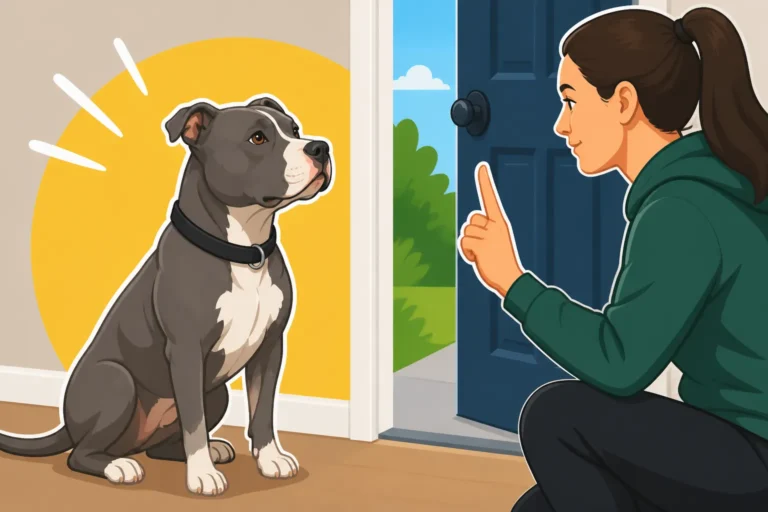
"Quiet" Command Training: This is a classic for a reason. Start by deliberately getting your Pit Bull to bark (e.g., ring the doorbell). Let them bark a few times, then hold a high-value treat near their nose. The moment they stop barking to sniff the treat, say "Quiet" and give them the treat. Repeat, gradually increasing the time they must be silent before getting the reward. Over time, you can fade the treat and just use the verbal cue. Consistency is paramount here; everyone in the household needs to use the same command and follow the same steps. This teaches your Pit Bull Replacing Pit Bull Barking With a Behavior, which is a valuable life skill.
Redirection and Environmental Management: If your Pit Bull is barking out of boredom, provide plenty of mental and physical enrichment. Daily walks are a must, but also incorporate puzzle feeders, interactive toys, or even scent games. Chew Toys That Hold Up to a Pit Bull can be a lifesaver, redirecting their energy into a productive chewing session instead of barking. You can find many durable options on platforms like Amazon. If your Pit Bull barks at everything outside the window, simply manage the environment: close the blinds, use privacy film, or play white noise to mask outdoor sounds. For attention-seeking barking, ignore it. Seriously. Turn your back, walk away, or leave the room. Only give attention when they are quiet. This can be hard initially, as barking might escalate before it gets better, but it's crucial for breaking the association between barking and attention.
Enrichment and Exercise: A tired Pit Bull is often a quiet Pit Bull. These are powerful, athletic dogs that need consistent exercise. Make sure your Pit Bull is getting enough physical activity each day, matching their age and fitness level. Beyond physical exercise, mental stimulation is equally important. Engage their minds with training sessions, new tricks, or even short sniff walks. A Pit Bull that has had its physical and mental needs met is far less likely to resort to barking out of frustration or excess energy. Considering their power, using high-value treats that hold a Pit Bull's focus during training sessions can make a huge difference in keeping them engaged and responsive.
When to Seek Professional Help
Sometimes, despite your best efforts, the barking persists or seems to be getting worse. This is not a sign of failure on your part, but rather an indicator that it's time to bring in the big guns – a qualified professional.
If you're dealing with persistent, uncontrollable barking that's impacting your quality of life or your relationship with your Pit Bull, don't hesitate to contact a certified professional dog trainer or a veterinary behaviorist. They have the expertise to assess complex behaviors, identify underlying causes that might be subtle, and develop a tailored training plan. They can help you understand nuances in your dog's body language and vocalizations that you might miss, guiding you through advanced techniques for behavior modification.
This is especially true if the barking is accompanied by other concerning behaviors, such as destruction, aggression towards people or other animals, or signs of severe anxiety like self-harm or inappropriate elimination. These are not simple "bad habits" but often symptoms of deeper issues that require a specialized approach. A veterinary behaviorist, in particular, can evaluate if medication might be a helpful adjunct to behavior modification, especially for severe anxiety or fear-related barking. Remember, seeking professional help is a sign of a responsible and caring owner who wants the best for their Pit Bull and their household. Look for trainers experienced with working breeds and the unique strength and drive of Pit Bulls. Platforms like BAXTER & Bella can also provide structured guidance for at-home training, but for severe issues, one-on-one professional help is usually best.
Comparing Pit Bull Barking to Other Breeds
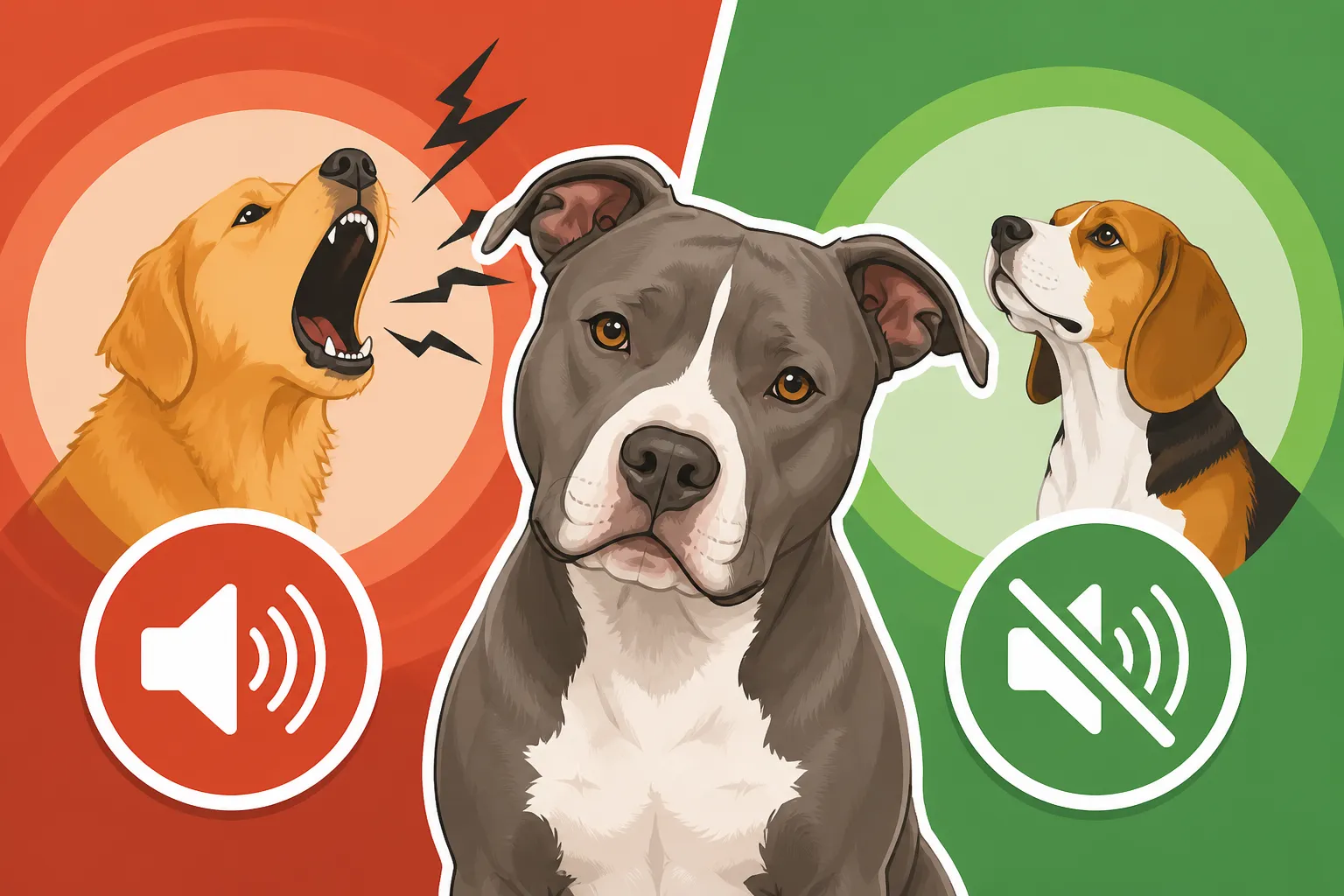
It's a really common question, "Do Pit Bulls bark less than other breeds?" And like many things in the world of dogs, the answer isn't a simple yes or no. It's more nuanced, depending heavily on the specific "other breeds" you're comparing them to, and just as importantly, the individual Pit Bull in question.
General Tendencies Across Breed Groups
When we look at the canine spectrum, there are definitely breeds renowned for their vocal prowess. Think of many smaller terriers, often bred to "go to ground" and bark persistently to alert hunters to their quarry, or to rid homes of vermin. Breeds like Jack Russell Terriers or Cairn Terriers can be famously chatty. Hounds, too, are known for their distinct baying, a deep, mournful sound designed to carry over distances, alerting hunters to a scent trail. Many herding breeds, like Shelties or Collies, use barking as part of their herding repertoire.
On the flip side, some breeds are often lauded for their relative quietness. The Basenji, for example, is famously known as the "barkless dog," though they do yodel and make other sounds. Breeds like the Great Dane or Newfoundland, despite their size, are often described as relatively quiet and reserved, only barking when there's a genuine reason. Sight hounds, such as Greyhounds, tend to be more visually oriented and less vocal than their scent hound cousins.
Where do Pit Bulls fit in? Generally, they tend to fall somewhere in the middle, perhaps leaning towards the quieter side when compared to the highly vocal breeds. They are not typically incessant barkers. However, their barks, when they do occur, often carry a certain gravitas and power, reflecting their muscular build. A Pit Bull's bark might be more impactful due to its intensity, even if less frequent than a smaller, "yappier" dog. We also need to remember that the term "Pit Bull" encompasses several breeds, each with slight variations. For instance, a Staffordshire Bull Terrier might be slightly more prone to a lively, excitable bark than some American Pit Bull Terriers, but these are broad generalizations. What's crucial is knowing that no Pit Bull is truly silent, and they are fully capable of expressing themselves vocally when the situation calls for it.
The "Pit Bull Whisper" Phenomenon
You'll often hear anecdotal stories from devoted Pit Bull owners who swear their dogs are incredibly quiet, perhaps even "whispering" their requests or alerts compared to other dogs they've owned. This isn't entirely without merit, but it's important to understand why this perception exists. Many Pit Bulls are deeply bonded with their families and often highly attuned to their owners. Their desire to please and their innate focus can mean they are less likely to engage in aimless or nuisance barking, choosing instead to "check in" with their human before reacting vocally to stimuli.
Furthermore, the very intensity and focus that Pit Bulls can bring to tasks can mean that when they do bark, it's often purposeful and directed, rather than generalized noise. For example, a Pit Bull might bark sharply once or twice to alert you to a person at the door, then fall silent, waiting for your instruction. This contrasts with a dog that barks continuously at every sound. Some owners also attribute this to their intelligence and trainability; a well-trained Pit Bull, given clear boundaries and consistent reinforcement, can learn appropriate barking behaviors relatively quickly. Pit Bulls are highly trainable dogs, and many excel in obedience and canine sports, which often leads to them being more responsive to cues like "quiet."
However, we must always balance this with realism. While some Pit Bulls are indeed quieter than many other breeds, this is not a universal guarantee. Every dog is an individual. The environment, the amount of exercise and mental stimulation they receive, and the training they undergo are all far more influential than a generalized breed trait. Given the existing public perception and scrutiny of Pit Bulls, it's always wise for owners to train their Pit Bull to a higher standard than other dogs, focusing on impeccable manners, including appropriate vocalization. This means actively managing their barking, ensuring it's not excessive, and always being mindful of how their dog's behavior is perceived by others. After all, a quiet, well-mannered Pit Bull is the best ambassador for the breed.
| Barking Trigger | Pit Bull Motivation | Management/Training Strategy | Key Consideration |
|---|---|---|---|
| Doorbell/Strangers | Alerting, territorial instinct | "Quiet" command, redirect to mat/place, close blinds | Reinforce calmness, not the barking itself. |
| Loneliness/Boredom | Seeking attention, lack of stimulation | Increase exercise, mental games, puzzle toys, structured play | Ensure physical & mental needs are met before leaving. |
| Frustration (leash) | Can't get to desired object/dog | Counter-conditioning, "look at me," crossing the street | Avoid punishment; teach an alternative behavior. |
| Excitement/Play | High arousal, joy | Teach an "off switch" (e.g., "settle"), pause play, redirect | Channel excitement into appropriate play, not constant noise. |
| Anxiety (separation) | Distress when left alone | Desensitization, counter-conditioning, professional help | This is a serious issue; immediate action is needed. |
| Pain/Discomfort | Physical discomfort, fear | Veterinary check-up | Rule out medical causes first with your vet. |
Disclaimer
This article is for general informational purposes only and does not constitute professional advice. Laws, prices and regulations vary by location and change over time. Consult a qualified professional for guidance on your specific situation.