Pit Bull Prey Drive Toward Cats
Bringing a new cat into a home with a Pit Bull, or vice-versa, often fills owners with a mix of excitement and apprehension. Many people worry about the natural predatory instincts that some Pit Bull-type dogs possess, especially when those instincts are directed at smaller, fast-moving creatures like cats. This comprehensive guide will walk you through understanding pit bull prey drive, assessing your individual dog, and implementing practical strategies to ensure the safety and harmony of your multi-species household.
Understanding Pit Bull Prey Drive
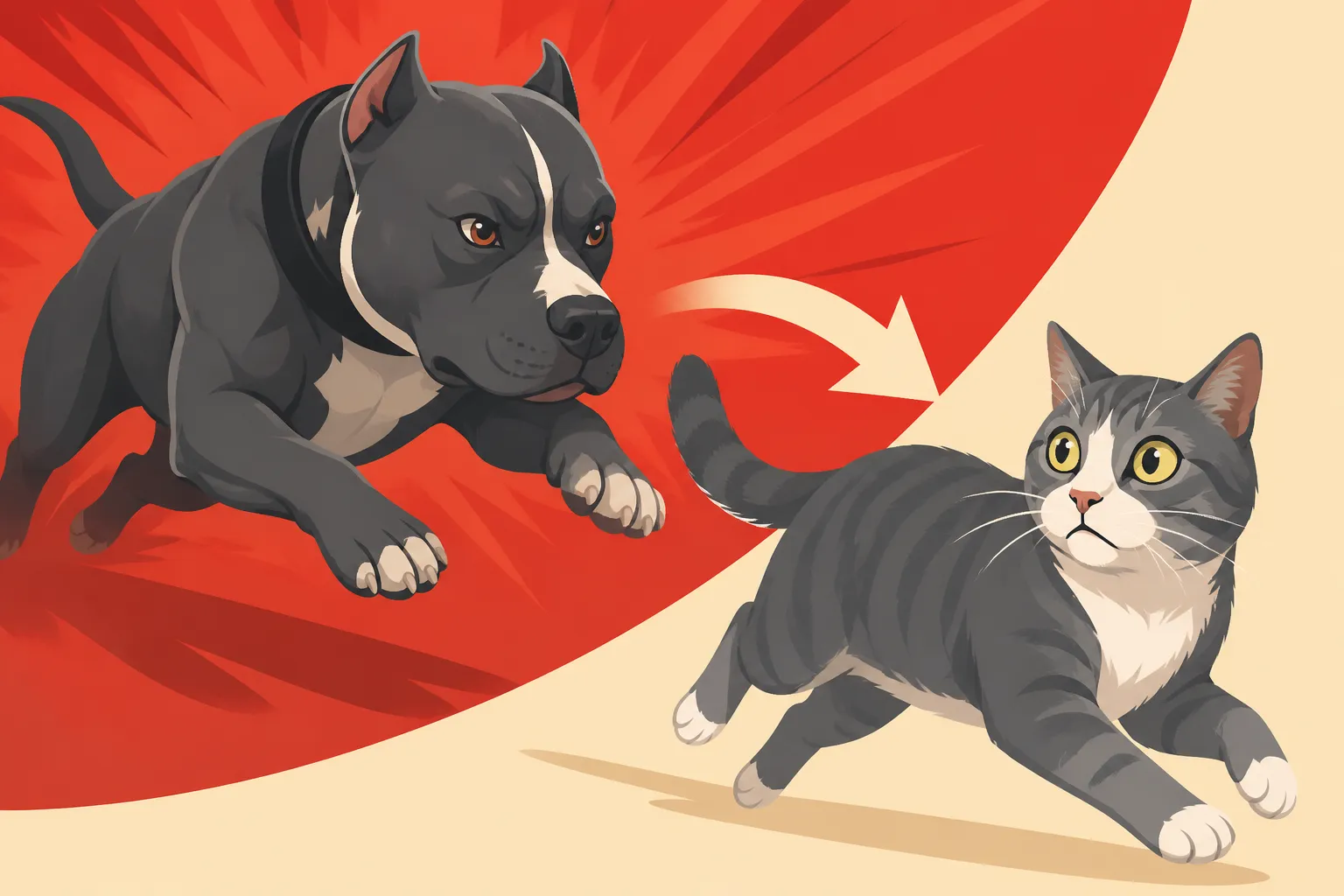
The concept of "prey drive" in dogs is often misunderstood. It's not aggression, but rather a sequence of natural behaviors rooted in a dog's ancestral hunting instincts: orienting, stalking, chasing, grabbing, and killing. For Pit Bull-type dogs, this drive can be particularly strong due to their history. These dogs were originally bred for tasks that required intense focus and tenacity, sometimes involving quarry. While modern Pit Bulls are cherished family companions, these inherent tendencies can still surface, especially with fast-moving, squeaky targets like cats.
It’s crucial to distinguish prey drive from true aggression. A dog acting out of prey drive sees the cat as something to pursue and catch, not necessarily something to harm out of malice or fear. An aggressive dog might snarl, lunge, or guard resources with intent to intimidate or injure another animal that it perceives as a threat. With prey drive, the dog might be intensely focused, silent, and exhibit body language associated with hunting – a low crouch, ears forward, tail stiff and low, or an intense stare. Ignoring these subtle cues can lead to dangerous situations, making it essential for owners to be vigilant and proactive in managing their dog's interactions with cats.
The Instinctive Sequence
Prey drive isn't a single behavior; it's a chain of events that can be triggered and then expressed. Think of it like a switch that can be flipped when the right stimulus presents itself. For a Pit Bull, that stimulus might be a cat streaking across the living room, a quick tail flick, or even a sudden meow. The sequence typically starts with orienting, where the dog’s attention is captured. This quickly moves into stalking, where the dog might lower its body, slowly creep forward, or freeze. The most common behaviors that owners observe and worry about are chasing and grabbing. If the chase sequence is consistently allowed to play out without interruption, the instinct to grab can become stronger, and the consequences for a cat can be severe.
It's important to remember that not all Pit Bulls have the same level of prey drive, and even those that do can often be managed with careful training and strict supervision. Understanding this sequence helps you intervene at the earliest possible stage, preventing the full chain from unfolding. For some dogs, just seeing the cat can initiate the sequence, while others might only react when the cat moves. Knowing your individual dog's triggers is the first step in successful management.
Genetics Versus Environment
While some Pit Bull lines may have a stronger genetic predisposition to higher prey drive, it’s not a universal trait across all Pit Bulls, nor is it insurmountable. Environment and early experiences play a massive role. A Pit Bull puppy raised with cats from a very young age, ideally before 12-16 weeks, might learn to view them as part of the family, not as prey. Conversely, a Pit Bull with little exposure to small, fast-moving animals, or one that has had negative experiences, might exhibit stronger prey drive later in life.
The key is realizing that even with a genetic component, effective management and training can often channel or redirect these instincts. It means being realistic about your dog's temperament and putting in the consistent effort to create a safe environment. Never assume that because a Pit Bull is "good with people" or "good with other dogs" (meaning other larger dogs), it will automatically be good with cats. Small, quick animals often trigger an entirely different set of instincts.
Assessing Your Pit Bull's Drive Toward Cats
Before you even consider introducing a Pit Bull and a cat, or if you're trying to integrate existing pets, a thorough assessment of your Pit Bull's current temperament and historical reactions is paramount. This isn't about judgment; it's about honest evaluation for the safety of everyone involved. Ignoring early warning signs or hoping for the best is a recipe for disaster.
Look for specific behaviors when your Pit Bull sees or hears small, fast-moving creatures, even outside. Does your dog become intensely focused on squirrels, rabbits, or even birds? Does it pull relentlessly on the leash, ignoring your commands, desperate to get to them? These are indicators that similar behaviors might be directed toward a cat.
Observational Cues
Observing your Pit Bull’s body language is critical when any small animal is present. Here’s what to look for:
- Intense Stare: Eyes locked on the cat, often unblinking, sometimes with dilated pupils. This focus is different from casual observation; it's a fixed, predatory gaze.
- Stiff Body Language: The dog's body might become rigid, tense, and still. They might lower their head slightly or even crouch in a hunting posture.
- Creeping/Stalking: Slow, deliberate movement towards the cat, often with the head low and tail tucked or held stiffly.
- Whining or Panting: While this can indicate excitement, it can also be a sign of intense arousal, a precursor to the chase.
- Ignoring Commands: A Pit Bull deeply engrossed in prey drive might have "selective hearing," completely tuning out your voice or cues.
- Lip Licking/Yawning: These can be subtle stress signals, indicating the dog is conflicted or highly aroused by the presence of the cat.
Pay attention to these cues not just when the cat is visible, but also when it’s heard. Does your Pit Bull perk up its ears and search for the source of a distant meow or the sound of a cat running? Understanding these signals allows you to intervene before the situation escalates.
Historical Reactions and Incident Review
Think back to any past interactions your Pit Bull has had with cats or other small animals. Were there any incidents, even minor ones? Did your dog snap at a neighbor's cat through a fence? Did it accidentally knock over a small dog while playing too roughly? Even if no physical harm occurred, an incident where the Pit Bull exhibited intense pursuit, grabbing, or rough handling is a red flag. A Pit Bull That Collapses Without Warning is certainly a health issue, but behavioral issues can also manifest suddenly.
If your Pit Bull has a known history of harming smaller animals, or if its prey drive is so overwhelming that it cannot be easily redirected, integrating it with a cat may not be safe or fair to either animal. In such cases, managing a safe "crate and rotate" system might be the only viable long-term solution. Crate and Rotate as a Pit Bull Management Plan details this approach, where the animals are never unsupervised together and are kept entirely separate when one cannot be actively monitored. This is not a failure, but a responsible decision to prioritize the safety and well-being of all pets.
Management Strategies for Pit Bulls and Cats
When living with a Pit Bull and a cat, management isn't just a suggestion; it's the cornerstone of safety. This isn't about training your Pit Bull not to have prey drive (that's largely impossible, as it's an instinct), but rather about managing the environment and your dog's behavior so that the drive isn't triggered or can be safely redirected.
The goal is to prevent any unwanted interactions, especially during the initial stages of integration or if your Pit Bull has a particularly high prey drive. This means creating physical barriers, providing safe spaces for the cat, and ensuring constant supervision.
Physical Separation and Safe Zones
The most critical management strategy is physical separation. This means that your Pit Bull and cat should never be left unsupervised together, especially in the early stages or if there's any doubt about their safety.
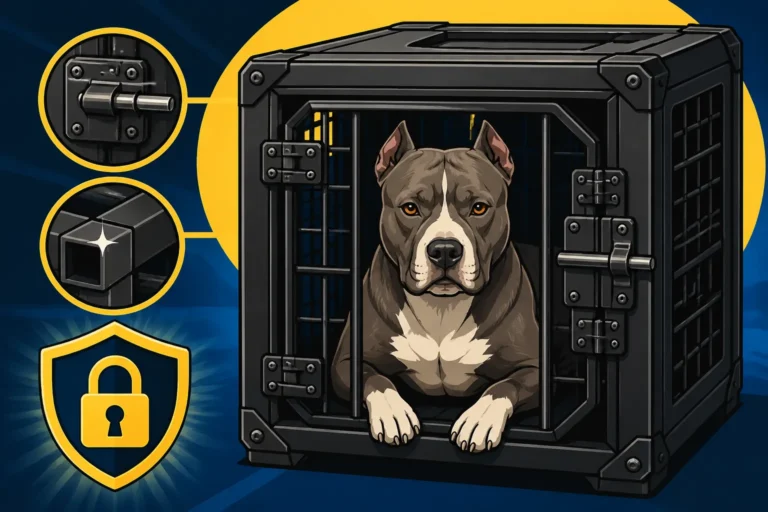
- Crates and Kennels: A sturdy, well-secured crate is invaluable. Your Pit Bull can be crated when you can't actively supervise. Ensure it's a comfortable, positive space for your dog. For strong chewers, you might need a heavy-duty crate. You can find excellent options on Amazon.
- Baby Gates/Pet Barriers: Use tall, sturdy baby gates to create zones in your home. This allows the cat to roam freely in certain areas while the Pit Bull is confined to others. Place gates in doorways or at the bottom/top of stairs. Make sure the gates are tall enough that a powerful Pit Bull cannot easily jump over them.
- Cat-Only Spaces: The cat needs vertical escape routes and rooms where the Pit Bull cannot follow. Cat trees, shelves, and dedicated cat rooms (accessed via a cat flap or baby gate installed high enough for the cat to slip under but too low for the dog) are essential. This gives the cat a sense of security and a safe retreat.
- Leash Management: Even within the home, a Pit Bull with high prey drive should be on a leash when interacting with the cat, especially during supervised sessions. This gives you immediate control to redirect or remove your dog if necessary. Leads and Collars That Will Not Fail on a Pit Bull is a good resource for strong equipment.
A "crate and rotate" system, as mentioned, can be a permanent solution for some households. It requires diligence but ensures complete safety. When one animal is out, the other is securely contained. This prevents incidents and reduces stress for both animals.
Supervised Interactions and Redirection
When you do allow supervised interactions, these should be short, controlled, and always end on a positive note.
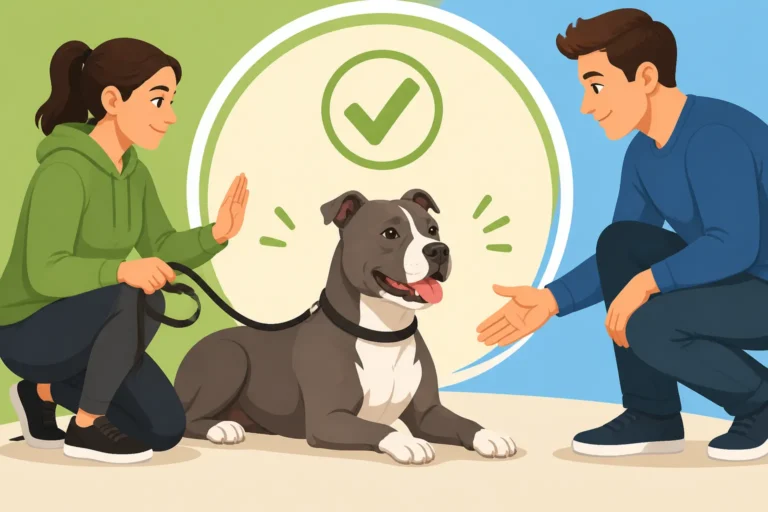
- Leashed and Ready: Your Pit Bull should always be on a leash, and you should be holding it, ready to intervene. Keep high-value treats (think cooked chicken, cheese, or hot dogs) readily available. High-Value Treats That Hold a Pit Bull's Focus are essential here.
- Positive Reinforcement: When your Pit Bull sees the cat and remains calm, reward immediately and generously. Mark the calm behavior with a clicker or a verbal marker like "yes!" then give a treat. The goal is for your Pit Bull to associate the cat's presence with good things happening (treats from you).
- Redirecting Focus: If your Pit Bull starts to fixate on the cat, immediately interrupt the behavior. Use a cheerful voice to call their name, ask for a known command like "sit" or "watch me," and reward them for shifting their attention to you. If the fixation is too intense, gently guide your dog away from the cat.
- Short Sessions: Keep these initial interactions very brief, just a few minutes, gradually increasing duration as both animals become more comfortable. Always stop before either animal shows signs of stress or intense arousal.
- Cat Comfort: Pay close attention to your cat's body language. If the cat is hunched, hissing, growling, or trying desperately to escape, end the session immediately. The cat should feel safe and have clear escape routes.
Remember, consistency is key. Every interaction, even if brief, reinforces the rules you're trying to establish.
Enrichment and Exercise
A bored or under-exercised Pit Bull is more likely to engage in unwanted behaviors, including channeling their energy into prey drive. Adequate physical and mental stimulation is crucial for managing any dog, but especially a powerful, intelligent Pit Bull.
- Physical Exercise: Pit Bulls need regular, vigorous exercise. This could be long walks, runs, fetch, or structured playtime. A tired Pit Bull is a good Pit Bull! Ensure they are getting enough outlets for their energy before any cat interactions. The Daily Exercise a Pit Bull Actually Needs offers more guidance.
- Mental Stimulation: Don't forget mental exercise! Puzzle feeders, scent work, and training sessions can tire a dog out just as much as physical activity. These activities help channel their natural drive into acceptable forms. Indoor Trick Work for a Bored Pit Bull can provide some great ideas.
- Appropriate Chew Toys: Provide plenty of durable, appropriate chew toys to satisfy your Pit Bull's natural chewing instincts. This can help redirect mouthiness away from inappropriate targets. Look for tough, interactive toys on Amazon that can withstand strong jaws. Chew Toys That Hold Up to a Pit Bull are a must-have.
By meeting your Pit Bull's needs for exercise and enrichment, you reduce the likelihood of them seeking an outlet for their energy in less desirable ways, like chasing the cat.
Training to Mitigate Prey Drive
While you can't eliminate prey drive, you can certainly train your Pit Bull to respond reliably to commands even in the presence of tempting distractions. This is where strong obedience training becomes a lifesaver, allowing you to interrupt and redirect your Pit Bull's focus.
Think of training not as a punishment for prey drive, but as building a robust communication system with your dog. You're teaching them alternative, desired behaviors and reinforcing those behaviors heavily.
Foundational Obedience
Before attempting to train around the cat, your Pit Bull needs a solid foundation in basic obedience. This means a reliable "sit," "stay," "come," and "leave it" in a variety of environments, without the cat present.
- "Watch Me" Command: Teach your Pit Bull to make eye contact with you on cue. This is invaluable for breaking focus on the cat. Start in a quiet environment, hold a treat near your nose, say "watch me," and reward when your dog looks at you. Gradually increase distraction.
- "Leave It" Command: This command teaches your dog to disengage from something tempting. Start with a low-value item, then move to higher-value items. When practicing around the cat, you want your Pit Bull to be able to "leave" the cat alone when instructed.
- Strong Recall: A reliable "come" or recall command is critical, especially if your Pit Bull somehow gets loose near the cat. Practice this frequently in various settings, always making coming to you the most rewarding choice.
Consistency and positive reinforcement are vital for building a strong foundation. Avoid punishment-based methods, especially when dealing with an instinctual behavior like prey drive, as it can lead to fear, anxiety, and potentially redirected aggression.
Counter-Conditioning and Desensitization
These techniques are about changing your Pit Bull's emotional response to the cat from one of arousal/prey drive to one of calm neutrality, or even positive association.
- Counter-Conditioning: This involves changing a negative or unwanted emotional response into a positive one. Every time your Pit Bull sees the cat (at a distance where they can remain calm), immediately reward them with a high-value treat. The cat's presence predicts good things! Over time, the goal is for the Pit Bull to see the cat and look to you for a treat, rather than fixating on the cat itself.
- Desensitization: This involves gradually exposing your Pit Bull to the cat at increasing levels of proximity and intensity, always ensuring the dog remains below its reactivity threshold. Start with the cat far away, then slowly decrease the distance as your Pit Bull demonstrates consistent calm behavior and responsiveness to your commands. If your dog shows signs of fixation, you've moved too quickly, and you need to increase the distance again.
This process can take weeks or even months, requiring immense patience and consistency. Never force interactions or push your Pit Bull past their comfort zone, as this can worsen the problem.
Muzzle Training for Safety
While often misunderstood, muzzle training is a responsible safety measure for any dog with a strong prey drive, especially when integrating with smaller animals. A basket muzzle allows your Pit Bull to pant, drink, and take treats, but prevents them from biting. Muzzle Training Every Pit Bull Should Have is an excellent resource to learn how to condition your dog to comfortably wear a muzzle.
- Positive Association: Introduce the muzzle gradually and pair it with highly positive experiences, like treats and praise. Never force it on your dog.
- Safety Net: A muzzle provides an invaluable safety net during early, supervised interactions with the cat, allowing you to focus on training and redirection without the constant fear of an incident. It buys you time to intervene.
- Public Perception: Unfortunately, Pit Bulls often face negative stereotypes. A muzzled Pit Bull can sometimes lead to assumptions, but a well-fitted basket muzzle is a sign of a responsible owner prioritizing safety.
Seeking Professional Help
If you're struggling to manage your Pit Bull's prey drive or feeling overwhelmed, don't hesitate to consult a professional. A certified professional dog trainer or a veterinary behaviorist experienced with Pit Bull breeds and multi-pet households can provide tailored guidance.
- Certified Professional Dog Trainers (CPDT-KA): These trainers use humane, science-based methods and can help you develop a practical training plan.
- Veterinary Behaviorists (DACVB): For severe cases of prey drive or if there are other behavioral concerns like anxiety or aggression, a veterinary behaviorist (a veterinarian with specialized training in animal behavior) can offer comprehensive strategies, potentially including medication in conjunction with behavior modification. Finding a Trainer Experienced With Pit Bulls can guide you in your search.
Organizations like BAXTER & Bella also offer online resources and courses that can provide structured training support, which might be helpful for some owners looking for flexible options. Remember that investing in professional guidance is an investment in the safety and harmony of your home.
| Strategy | Description | Key Benefit | Considerations |
|---|---|---|---|
| Physical Separation | Using crates, gates, and designated cat-only rooms to prevent unsupervised interactions. | Prevents incidents, provides safety for both animals. | Requires consistent management, may limit free movement in the home. |
| Supervised Interactions | Controlled, short sessions with Pit Bull leashed and handler ready to redirect. | Builds positive associations, allows for active training. | Requires constant vigilance, must be ended at first sign of stress. |
| Enrichment & Exercise | Providing ample physical and mental stimulation through walks, play, puzzle toys, and training. | Reduces boredom, channels natural drives, lowers arousal. | Needs daily commitment, may not fully eliminate drive. |
| "Watch Me" & "Leave It" | Teaching reliable commands to gain and redirect your Pit Bull's focus away from the cat. | Gives handler control, teaches alternative behaviors. | Requires consistent practice, needs high-value rewards to be effective. |
| Counter-Conditioning | Pairing the cat's presence with high-value rewards to change the Pit Bull's emotional response. | Creates positive associations, reduces reactive responses. | Slow process, requires careful timing and consistent rewards. |
| Muzzle Training | Conditioning your Pit Bull to comfortably wear a basket muzzle during high-risk situations. | Provides a critical safety barrier during training and introductions. | Requires positive conditioning, may impact public perception. |
| Professional Help | Consulting a certified dog trainer or veterinary behaviorist for tailored guidance and intervention. | Expert, individualized strategies, addresses complex issues. | Involves cost, requires commitment to follow recommendations. |
Conclusion: Creating Harmony in a Multi-Species Home
Living with a Pit Bull and a cat requires a realistic understanding of prey drive, diligent management, and consistent training. It's not a task to be taken lightly, but with the right approach, many households successfully achieve peaceful coexistence. Remember that safety is always the top priority, and that means being honest about your Pit Bull's instincts and taking proactive steps to protect your cat.
By implementing physical barriers, carefully supervising interactions, providing plenty of exercise and mental enrichment, and investing in solid obedience training, you can significantly reduce the risks. Whether you're actively working towards integration or maintaining a "crate and rotate" system, your commitment to responsible pet ownership ensures a safe and happy home for all your furry family members. A Pit Bull Sharing a House With a Cat is a dream for many, and with patience, it can become a reality.
Disclaimer
This article is for general informational purposes only and does not constitute professional advice. Laws, prices and regulations vary by location and change over time. Consult a qualified professional for guidance on your specific situation.