A Pit Bull Chasing Squirrels on Walks
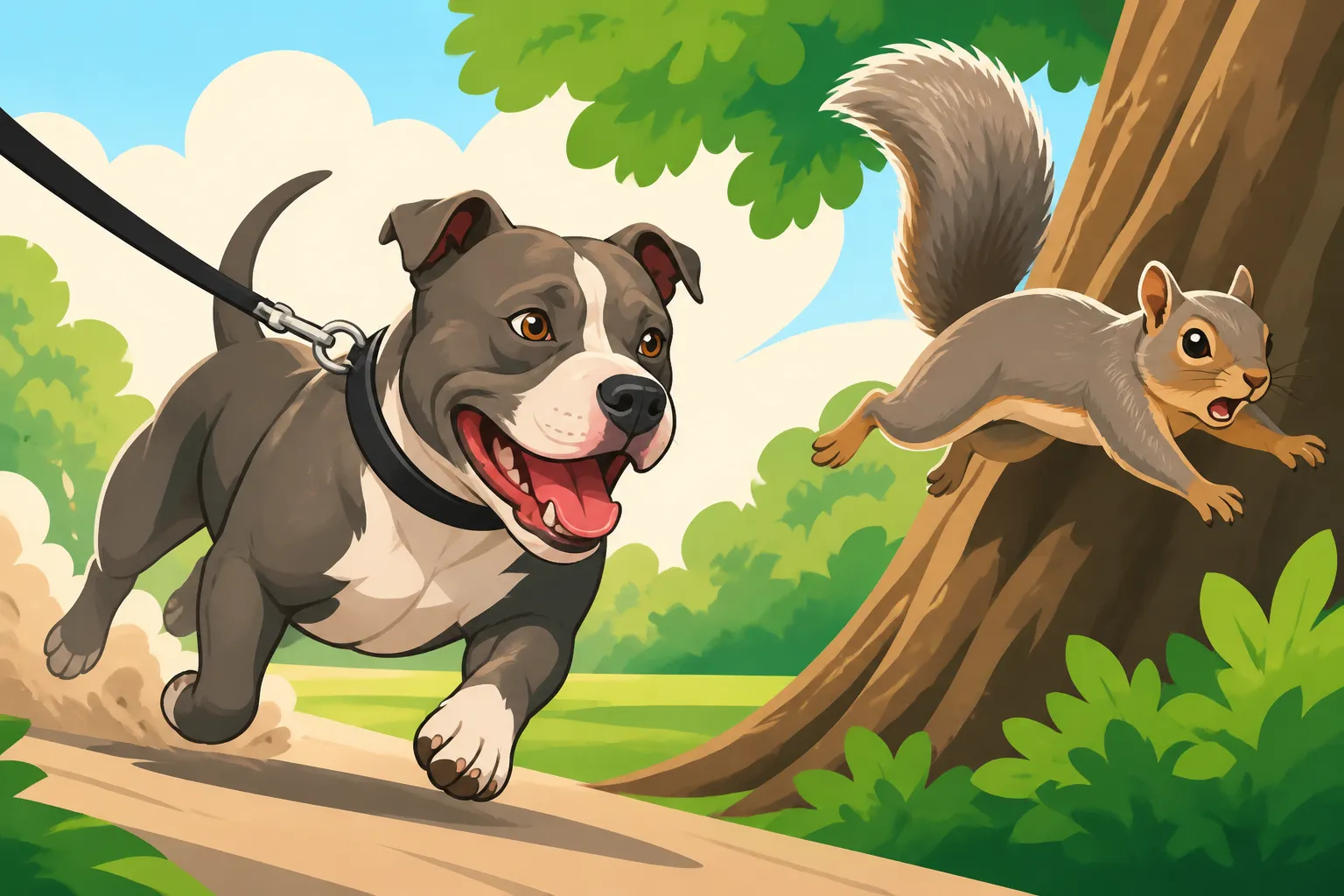
There's nothing quite like a peaceful walk with your Pit Bull, enjoying the fresh air and sunshine. That calm can vanish in a heartbeat, however, when a squirrel darts across your path, sending your powerful companion into an immediate, head-first lunge. This sudden, jarring experience is incredibly common for Pit Bull owners, often leading to pulled shoulders, dropped leashes, and sheer frustration. This guide is here to walk you through understanding why your Pit Bull acts this way, how to manage it safely, and practical training steps to bring more calm back to your walks.
Understanding Your Pit Bull's Natural Instincts
The sheer force and focus a Pit Bull displays when chasing a squirrel isn't a sign of disobedience, but rather a deep-seated instinct called prey drive. Understanding this innate characteristic is the first step toward managing it effectively and fostering a more harmonious relationship with your strong, athletic dog.
What is Prey Drive and Why Pit Bulls Have It?
Prey drive is a dog's natural instinct to detect, chase, and capture moving objects. It's a spectrum, varying from dog to dog, and is largely influenced by a breed's history and original purpose. For Pit Bulls, whose ancestors were bred for tasks requiring immense tenacity, power, and a laser-like focus on a moving target, this drive is often very strong. While modern Pit Bulls are cherished family companions, the echoes of their past are still present in their genetic makeup. They weren't bred to hunt small game in the traditional sense, but the drive to engage with and pursue something in motion is incredibly powerful.
Imagine a small, quick-moving creature like a squirrel. To your Pit Bull, it's not just a fuzzy rodent; it's a rapidly escaping target that triggers a primal response. Their body tenses, eyes lock, and before you know it, they've launched themselves, often with little to no warning. This isn't them being "bad"; it's them being a dog with a robust instinct kicking in. It's an internal reward system – the chase itself is often the reward, regardless of whether they "catch" anything. This is why even a missed squirrel chase can leave them panting, excited, and ready for the next opportunity.
The Triggers: What Sets Off a Chase?
For a Pit Bull with a strong prey drive, the world is full of potential triggers. It's not just squirrels, although they are a classic culprit. Anything that moves quickly or erratically can ignite that chasing instinct. This includes rabbits darting across a field, cats sauntering across a lawn, or even birds taking sudden flight from a bush. The triggers are primarily visual and auditory. A flash of movement in their peripheral vision, a rustle in the leaves, or the sharp chirp of a bird can be enough to set them off.
Even inanimate objects can be triggers. A plastic bag blowing across the street, a child on a scooter, or another dog running full-tilt in the distance can sometimes elicit the same intense reaction. The key factor is movement, especially sudden, unpredictable movement. For an owner, this means always being vigilant. You might think you're in a "safe" area, only for a rogue leaf to tumble just so, and suddenly you're bracing for impact. It's a constant exercise in anticipation and management, which can be exhausting for even the most dedicated owner.
Differentiating Prey Drive from Aggression
It’s absolutely critical to understand that prey drive is not the same as aggression, though the outward appearance of a lunge or chase can sometimes look concerning to an uninformed bystander. Aggression in dogs typically stems from fear, resource guarding, territoriality, or a desire to increase distance from a perceived threat. A dog acting aggressively might growl, snarl, bare teeth, or snap at another dog or person, often with stiff body language and dilated pupils.
Prey drive, on the other hand, is generally characterized by a dog's intense focus on the chase, a loose and fluid body, and often a wagging tail (though this can be misinterpreted as happiness when it's pure excitement for the hunt). Their intention is to pursue, grab, and often "shake" or dissect the target, not necessarily to inflict harm in an aggressive way. While a Pit Bull's powerful jaws mean any bite can be serious, the motivation behind a prey-driven chase is fundamentally different from a fear-based or territorial aggression. If your Pit Bull is lunging at a squirrel, they're likely not trying to "fight" it; they're trying to "catch" it. Knowing this distinction helps you tailor your training and management strategies appropriately. It's about redirecting an instinct, not punishing an aggressive act.
Practical Tools and Management for Safer Walks
Managing a Pit Bull with a strong prey drive on walks is largely about having the right tools and employing smart management strategies. You can't eliminate instinct, but you can certainly control the environment and your dog's ability to act on that impulse.
Choosing the Right Leash and Harness
When you're dealing with a powerful dog that can lunge with surprising force, your equipment is your first line of defense against pulled muscles and escaped dogs. A standard collar, even a strong one, is often insufficient for a Pit Bull that decides to chase. It puts immense pressure on their neck and trachea, can cause injury, and a determined Pit Bull can easily slip out of it if they pull hard enough.
Many owners find success with a front-clip harness or a head halter. A front-clip harness, like those widely available on Amazon, discourages pulling by redirecting your dog's momentum sideways when they try to lunge forward. Instead of pulling you along, they're turned to the side, making it much harder to generate force. Head halters, also called head collars, work similarly to a horse halter, giving you control over the dog's head, and where the head goes, the body follows. They are highly effective for strong pullers and can offer a surprising amount of control with minimal physical effort.
It’s crucial to find a harness that fits your Pit Bull's broad chest and muscular build correctly. A poorly fitting harness can chafe, restrict movement, or allow escape. Always opt for durable materials and strong hardware. A good quality six-foot lead, ideally one made from sturdy nylon or leather, is also essential. Avoid retractable leashes entirely, as they offer no real control against a sudden lunge and can be dangerous. For more in-depth advice on what might work best for your dog, check out Harnesses and Head Halters for a Pit Bull.
Here’s a quick comparison of common equipment choices:
| Equipment Type | Pros | Cons | Best Use Case |
|---|---|---|---|
| Standard Collar | Simple, easy to put on. | Poor control for lunging, neck strain, slip risk. | Best for identification tags, not primary leash attachment. |
| Front-Clip Harness | Redirects pulling, reduces neck strain. | Can sometimes tangle legs, requires proper fit. | General walking, reduces pulling, good control. |
| Back-Clip Harness | Comfortable, no neck pressure. | Can encourage pulling, less control than front-clip. | Dogs with minimal pulling, light walks. |
| Head Halter | Excellent control over head direction, minimizes pulling. | Some dogs resist it initially, can look like a muzzle. | Strong pullers, dogs needing precise direction. |
| Chain/Prong Collar | Provides strong correction. | Can cause pain/injury, often makes dogs more reactive, not recommended. | Generally discouraged by modern positive trainers. |
Leash Handling Techniques for Sudden Lunges
Even with the best equipment, a sudden lunge can still catch you off guard. Developing strong leash handling skills is vital for your safety and your dog's. The goal isn't just to hold on, but to maintain balance and redirect your dog efficiently. Firstly, always keep a firm, but not white-knuckle, grip on the leash, with any excess slack neatly gathered. Your hand should be close to your body, giving you leverage. Avoid wrapping the leash around your wrist, as this can lead to severe injury if your dog pulls unexpectedly.
When you anticipate a potential trigger, or if your dog starts to fixate, subtly shorten your grip on the leash, bringing your dog closer to your side. This provides more control and reduces the distance they can launch. If a lunge does happen, instead of pulling straight back, which can cause whiplash, try to pivot your body slightly or step to the side, using your own weight to absorb the impact and gently redirect your dog's momentum. Think of it as steering rather than yanking. Practice makes perfect here. Consider practicing in a low-distraction environment, having someone walk past with a remote-control car or another type of moving toy to simulate a chase trigger in a controlled way. This helps you develop muscle memory for effective responses. For more tips on managing a powerful dog, explore Pit Bull Leash Manners and Physical Strength.
Environmental Awareness and Avoidance
One of the simplest yet most effective management strategies for prey drive is proactive environmental awareness and avoidance. You can't control every squirrel, but you can control where and when you encounter them. Before you even step out the door, think about your route. Are there areas known for high squirrel activity? Can you walk at times when fewer critters are out, like mid-day instead of early morning or dusk?
During your walk, become a "squirrel radar." Continuously scan ahead, both sides, and even behind you. Look for movement in trees, on fences, or darting across the grass. If you spot a potential trigger before your Pit Bull does, you have precious seconds to act. This might mean crossing the street, making a sudden U-turn, or simply putting more distance between your dog and the distraction. Distraction is key here. If you can engage your Pit Bull with a high-value treat or a quick command before they even register the squirrel, you've won that battle. Avoidance isn't giving up; it's smart management, especially during the initial stages of training when your dog's impulse control is still developing. It lessens the number of times your dog gets to "practice" the unwanted behavior, which is crucial for long-term success.
Step-by-Step Training to Redirect Prey Drive
While managing your environment and using appropriate equipment are crucial, active training is how you empower your Pit Bull to make better choices on walks. It's about teaching them to focus on you, even when temptations abound.
Building a Rock-Solid "Watch Me" Command
The "Watch Me" command is foundational for any dog with strong prey drive, as it teaches them to break focus from a distraction and re-engage with you. Start in a quiet, low-distraction environment, like your living room. Hold a high-value treat near your nose, say "Watch Me," and as soon as your dog makes eye contact, even for a split second, mark the behavior (with a clicker or a verbal "Yes!") and reward them with the treat. Repeat this many, many times.
Gradually increase the duration of eye contact before rewarding. Once your Pit Bull reliably holds eye contact in your home, slowly introduce distractions. Start with mild ones, like someone walking by, or a toy rolling gently across the floor. Practice outside in a fenced yard, then on a quiet street. The key is to set your dog up for success. Don't ask for "Watch Me" when a squirrel is directly in front of them if they haven't mastered it with lesser distractions. Build up to it. The moment they choose to look at you instead of the squirrel, even for a second, is a moment of pure gold that must be heavily rewarded. Consistency here is paramount.
Practicing "Leave It" with Distractions
The "Leave It" command is your direct instruction for your Pit Bull to disengage from something tempting. Like "Watch Me," it needs to be taught in stages, starting with easy distractions and slowly increasing the difficulty. Begin indoors. Place a treat on the floor, cover it with your hand, and say "Leave It." When your dog looks away or turns their head from the covered treat, immediately mark and reward with a different, higher-value treat from your other hand. The goal is to teach them that leaving the "forbidden" item results in an even better reward from you.
Once they reliably leave a covered treat, move to an uncovered treat, then a toy, then a less tempting food item. When they’re solid indoors, take it outside. Start with innocuous items on the ground, like leaves or sticks. Then, progress to more challenging distractions, slowly adding movement. You might have a helper gently roll a ball or drag a toy while you practice "Leave It" on a long line in a secure area. If you find your Pit Bull struggling, reduce the distraction level. Remember, every successful "Leave It" builds their self-control. For a deeper dive into building this crucial skill, check out Building a Pit Bull's Impulse Control.
Reinforcing Calmness and Loose-Leash Walking
A calm dog is less likely to react impulsively. Integrating calmness into your walks, along with consistent loose-leash walking, is essential. Start your walks calmly. Before you even open the door, ensure your Pit Bull isn't hyped up. Practice a "sit-stay" at the door. If they pull, simply stop. Wait for the leash to slacken, even for a second, then praise and continue. If they pull again, stop again. This teaches them that pulling gets them nowhere, while a loose leash allows them to move forward.
When walking, actively scan for potential triggers. The moment you see one, preemptively ask for a "Watch Me" or "Look" command. If your Pit Bull gives you their attention, immediately mark and reward them with a high-value treat. Keep your walks engaging for them, but not over-stimulating. Randomly reward good behavior – looking at you, walking nicely, ignoring a distant bird – throughout the walk. This isn't just about preventing lunges; it's about consistently reinforcing the desired behavior. It's about teaching your Pit Bull that the most rewarding place to be, even with squirrels around, is right beside you.
Many owners find that having a treat pouch full of irresistible morsels is a game-changer. For instance, you can find various treat pouches and training treats on Amazon that can be easily accessed for quick rewards. It’s also important to remember that this journey requires patience. Your Pit Bull's prey drive is strong, and it will take many repetitions and consistent reinforcement to build new habits. Don't get discouraged by setbacks; simply return to a lower level of distraction and build back up.
Professional Help and Continued Training
Sometimes, despite your best efforts, your Pit Bull's prey drive can feel overwhelming. This is where professional help can be invaluable. A certified professional dog trainer, particularly one with experience in strong, driven breeds like Pit Bulls, can provide personalized guidance, help identify subtle triggers you might be missing, and teach you advanced handling techniques. They can observe your interactions and offer real-time feedback that's hard to get from online resources alone.
Consider enrolling in a structured obedience class that focuses on real-world distractions. Programs like those offered through BAXTER & Bella can provide a framework for online, self-paced learning, which can be great for foundational skills. However, for a powerful dog with strong prey drive, hands-on, in-person classes often prove most beneficial once the basics are solid. Look for classes that emphasize positive reinforcement and focus on teaching impulse control around other dogs and distractions. Achieving a title like the Canine Good Citizen (CGC) can also be a fantastic goal. Working towards Canine Good Citizen Testing With a Pit Bull provides a structured curriculum that addresses many aspects of polite public behavior, including distraction management. A good trainer can help you navigate these goals and provide support. Investing in professional guidance is not a sign of failure; it's a responsible step towards ensuring your Pit Bull is well-behaved and safe in all situations.
Long-Term Strategies and Responsible Ownership
Managing a Pit Bull's prey drive isn't a one-and-done training session; it's an ongoing commitment to responsible ownership. It involves integrating training into daily life, understanding your dog's needs, and making safety a priority.
Mental Enrichment to Satisfy Instincts
Since prey drive is an instinct, it's not something you can simply "train out." However, you can provide appropriate outlets for that natural drive in safe and controlled ways. Mental enrichment is key here. Activities that engage their scent work instincts, like nose work games where they have to find hidden treats, can be incredibly satisfying. Puzzle feeders, which you can easily find on Amazon, make them "hunt" for their meals, providing mental stimulation and a sense of accomplishment.
Physical outlets are also crucial, but they need to be safe and appropriate. Tug-of-war is a fantastic game, as it allows them to use their powerful jaws and engage in a "capture" sequence, but always play with rules (e.g., "drop it" on command). Flirt poles are another excellent tool, simulating the chase of a small animal in a controlled environment. The key is that you control the "prey" and the session ends on your terms. These activities don't encourage squirrel chasing on walks; they provide a healthy, structured release for those underlying instincts, which can actually help reduce the urgency of seeking out real prey. For ideas on how to keep your dog engaged indoors, consider Indoor Trick Work for a Bored Pit Bull or exploring Pit Bull Exercise for a Powerful Athletic Dog.
Maintaining Consistency and Realistic Expectations
This is perhaps the hardest part for many owners. You will have good days and bad days. There will be walks where your Pit Bull is a perfect angel, ignoring every rustle. And then there will be walks where they seem to forget every single lesson, lunging at a pigeon as if they’ve never been trained a day in their life. It's easy to get frustrated or feel defeated. However, consistency is your most powerful tool. Every walk, every interaction, is a training opportunity.
Don't assume that because your Pit Bull ignored a squirrel yesterday, they will today. Stay vigilant, continue to use your management tools, and consistently reinforce desired behaviors. Realistic expectations mean understanding that while you can significantly reduce and manage prey drive, you may never completely eliminate the instinct to chase. Your goal is to build strong enough alternative behaviors and impulse control that your Pit Bull chooses to disengage from the squirrel and re-engage with you. It's a continuous journey of learning and adaptation for both you and your dog.
Safety Protocols for Off-Leash Areas
For a Pit Bull with a high prey drive, letting them off-leash in unsecured public areas is generally not recommended, no matter how good their recall seems. The instinct to chase is incredibly powerful, and in that moment, even the most deeply ingrained "come" command can be overridden. The risk of them running into traffic, encountering another dog or person they shouldn't, or simply getting lost is too great.
If you want your Pit Bull to have off-leash freedom, seek out securely fenced dog parks (though always assess dog park dynamics carefully) or rent a private, fully fenced space. Even in these environments, continue to practice your recall and "Leave It" commands. Use a long line in open, safe areas to practice recall from distractions. This allows them to experience more freedom while you maintain a physical connection. Remember, Why a Pit Bull Should Not Be Off Leash in Public is a crucial piece of knowledge for any responsible Pit Bull owner, especially when strong instincts are at play. Prioritizing safety through appropriate leash management and secured environments protects your Pit Bull, other animals, and your community.
Disclaimer
This article is for general informational purposes only and does not constitute professional advice. Laws, prices and regulations vary by location and change over time. Consult a qualified professional for guidance on your specific situation.