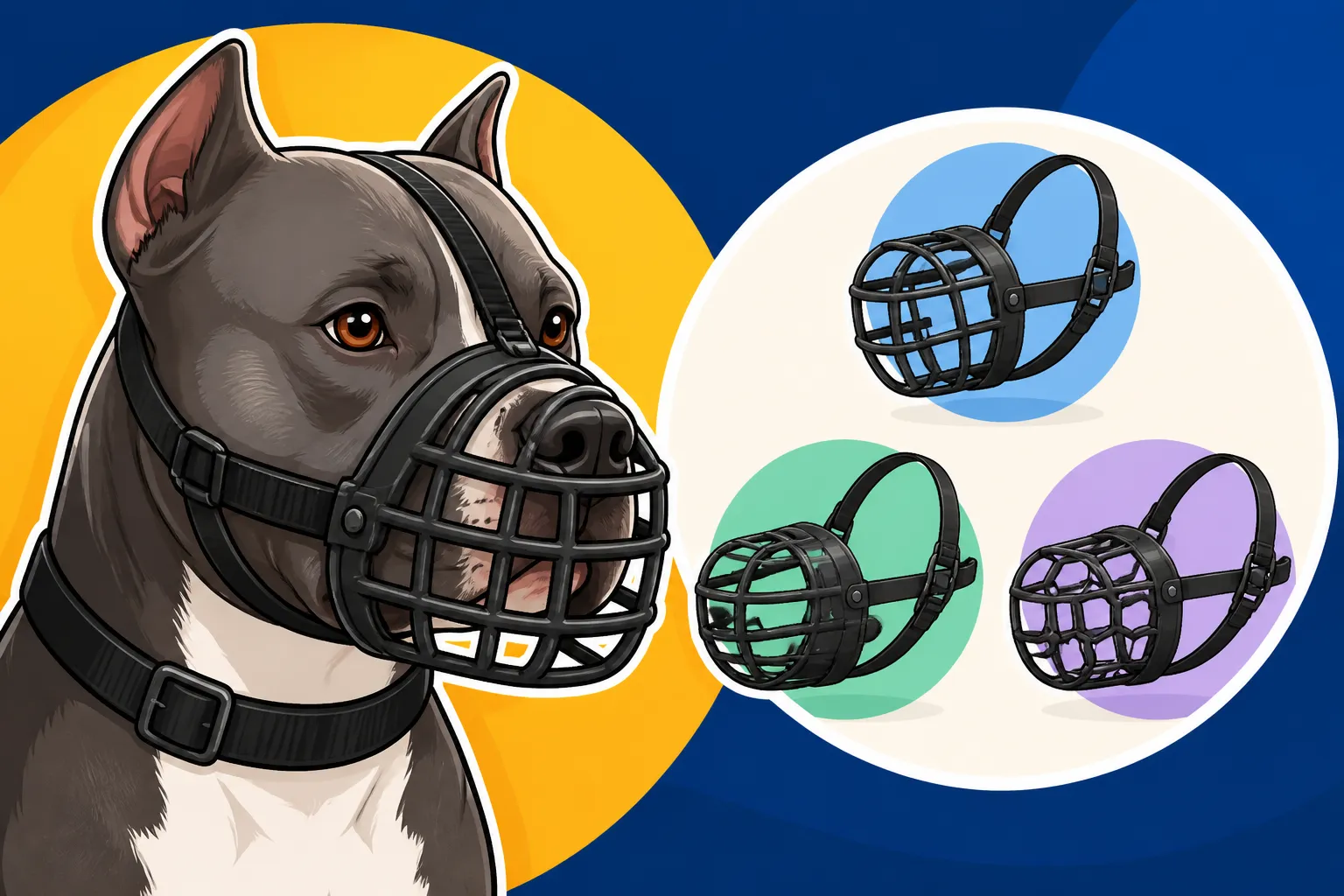
Choosing a Basket Muzzle for a Pit Bull
Many Pit Bull owners eventually find themselves considering a muzzle, not because their dog is "bad," but for a whole host of really practical, responsible reasons – from vet visits to managing interactions in public spaces. The challenge isn't just deciding if you need one, but which one will be comfortable, safe, and truly functional for your strong, active companion. This guide is here to cut through the confusion and help you select a basket muzzle that works for your Pit Bull and integrates seamlessly into your life together.
Why a Basket Muzzle is the Best Choice for a Pit Bull
When you consider muzzle options for your Pit Bull, it's easy to get overwhelmed by the sheer variety out there. However, for most situations where a muzzle is needed, a basket muzzle stands head and shoulders above other types. It’s all about enabling your dog to be a dog, safely and comfortably.
Distinguishing Basket Muzzles from Other Types
Let's be clear: not all muzzles are created equal, and for a Pit Bull, the distinction is critical. You'll typically encounter two main categories:
First, there are soft fabric or cloth muzzles. These are often seen at vet offices or groomers, and they wrap snugly around your dog's snout, holding their mouth closed. While they might seem like a quick fix, they are designed only for very short-term use, usually under direct supervision, and only for medical procedures that require minimal restraint. The huge, glaring problem with these, especially for an active breed like a Pit Bull, is that they completely prevent your dog from panting. Panting is a dog's primary way of cooling down, and without it, they can quickly overheat, even on a mildly warm day or with minimal stress. They also can't drink water or take treats, making them unsuitable for walks, training, or any prolonged wear. Using one of these for more than a few minutes can actually be dangerous.
Then there are basket muzzles. These are designed with an open, cage-like structure that fits over your dog's muzzle, keeping their mouth from fully opening to bite, but allowing ample space for them to pant, drink water, and even accept small treats. This freedom to perform essential physiological functions is non-negotiable for your Pit Bull's well-being. Think about a warm afternoon walk, or a stressful vet visit; being able to cool down and rehydrate is paramount. A good basket muzzle provides a physical barrier without suffocating or unduly stressing your dog.
Prioritizing Comfort and Safety for Daily Use
The core principle behind choosing a basket muzzle for your Pit Bull should always be comfort and safety. A muzzle isn't a punishment; it's a tool, and like any good tool, it should be designed for effective, humane use. A properly fitted basket muzzle allows your dog to breathe easily, which is crucial for a breed with such powerful musculature and active tendencies. Imagine trying to exercise or even just walk if you couldn't open your mouth fully to breathe – it’s unbearable.
Beyond basic breathing, the ability to drink water is vital, especially if you're using the muzzle for longer periods, such as during a hike or a training class. And for training purposes, being able to deliver treats through the muzzle is a game-changer. It transforms the muzzle from a restrictive device into something associated with positive reinforcement and rewards. This positive association is key to getting your Pit Bull to accept wearing the muzzle happily, reducing stress for both of you. You want a muzzle that becomes a normal part of your routine, not a battle. This is part of the broader discussion of Muzzle Training Every Pit Bull Should Have.
When the muzzle is comfortable, your Pit Bull is more likely to wear it without resistance, preventing rubbing, chafing, or skin irritation that can occur with poorly fitting alternatives. Pit Bulls can have sensitive skin, especially around their snouts, so investing in a well-designed, comfortable muzzle is an investment in their overall health and happiness.
Addressing Public Perception and Responsible Ownership
Let's be honest, Pit Bulls often get a bad rap. Unfair stereotypes unfortunately mean that owning a Pit Bull comes with an extra layer of responsibility in how you present your dog to the world. While it's deeply frustrating, sometimes a muzzle, when used appropriately, can be a proactive way to manage public perception and ensure peace of mind for everyone.
A well-fitted basket muzzle, far from confirming negative stereotypes, can actually demonstrate your commitment to responsible ownership. It signals to others that you are mindful of your dog's strength and potential, and that you are taking steps to ensure safety in various situations. It allows you to confidently take your Pit Bull to places you might otherwise avoid, like busy parks or outdoor cafes, knowing that accidental nips (which can happen with even the best-trained dogs if startled or overstimulated) are prevented. It’s about taking control of the narrative, showing people that you are a conscientious owner who prioritizes safety and good citizenship. For many Pit Bull owners, a muzzle becomes an essential part of their equipment, allowing them and their dogs to live fuller, more integrated lives in a sometimes-skeptical world. For more on this, you might explore Why Every Pit Bull Should Be Muzzle Trained.
Essential Features for a Pit Bull's Basket Muzzle
Choosing the right basket muzzle isn't just about picking one off the shelf; it requires careful consideration of materials, design, and adjustability to ensure it meets the specific needs of a strong and active breed like the Pit Bull.
Material Considerations for Durability and Comfort
The material of your Pit Bull's basket muzzle will significantly impact its durability, comfort, and effectiveness. Pit Bulls have powerful jaws and are often quite active, so flimsy materials simply won't cut it.
- Plastic Muzzles: These are often the most common and affordable option. They are lightweight, easy to clean, and typically offer excellent ventilation due to their open design. However, not all plastics are created equal. You want a robust, high-quality plastic that won't crack under impact or in cold weather. Cheaper plastics can become brittle and break, defeating the purpose of the muzzle. Some popular brands like Baskerville offer good quality plastic options.
- Wire Muzzles: Wire muzzles are often considered the gold standard for bite prevention and durability. They are incredibly strong, offering maximum security and excellent airflow. However, they are heavier than plastic muzzles and can be perceived as more intimidating. Comfort can also be a concern if they aren't properly padded, especially on the bridge of the nose, which can rub a Pit Bull's sensitive skin. They are typically more expensive but last a very long time.
- Biothane or Leather Muzzles: These options offer a more flexible and often more aesthetically pleasing alternative. Biothane (a coated webbing) is fantastic because it's durable, waterproof, easy to clean, and flexible, molding to your dog's face over time. Leather muzzles offer similar benefits but require more specific care to maintain their condition. Both offer good comfort and can be less rigid than wire, though they might not offer the same absolute bite-proof security as a sturdy wire cage if a dog is determined. They generally come with good strapping systems that are less prone to breaking.
Ultimately, the best material for your Pit Bull will balance durability with comfort. Consider how and where you'll be using the muzzle. If it's for occasional vet visits, a sturdy plastic might suffice. If it's for daily walks or training around other dogs, a more robust wire or high-quality biothane option might be a better investment.
Optimal Design for Panting, Drinking, and Treats
A basket muzzle's design is paramount. For a Pit Bull, the ability to pant fully is not just a comfort feature; it's a critical safety requirement. Pit Bulls are prone to overheating, especially during exercise or stress. A muzzle that restricts their ability to open their mouth wide enough for a full, open-mouthed pant is dangerous. The muzzle should extend far enough from the end of their nose to allow their jaws to open completely when panting, creating that necessary air gap.
The design should also facilitate easy drinking. Many basket muzzles allow a dog to drink by dipping the front of the muzzle into a water bowl. Look for a design where the bottom bars or webbing are spaced adequately to allow water intake without significant obstruction. Similarly, for positive reinforcement training, you'll want to be able to pass small, high-value treats through the muzzle's openings. This allows you to reward calm behavior while the muzzle is on, reinforcing a positive association. When you're working on challenging skills like Pit Bull Leash Manners and Physical Strength, being able to deliver a treat quickly through the muzzle can make all the difference in keeping your dog engaged.
Secure Strapping and Adjustability for a Perfect Fit
A muzzle is only effective if it stays on, and Pit Bulls, being smart and strong, can often be adept at removing ill-fitting equipment. Secure and adjustable strapping is crucial. Look for muzzles with at least two points of contact: one strap around the back of the head/neck, and ideally another strap over the top of the head (like a forehead strap) that connects to the neck strap. This multi-point system prevents the muzzle from being pushed off over the head.
The straps themselves should be made of durable, comfortable material, like nylon webbing or biothane, and should be easily adjustable to create a snug, but not tight, fit. Avoid anything that might pinch or rub behind the ears, as this can cause discomfort and lead to your Pit Bull trying to remove the muzzle. A well-designed muzzle for a Pit Bull will have sufficient adjustability to accommodate their often broad heads and strong necks, ensuring it stays securely in place during activity without causing distress.
Accurate Sizing and Fitting for Your Unique Pit Bull
Getting the right size and fit for a basket muzzle is arguably the most important step. A muzzle that's too small will be uncomfortable and restrict panting; one that's too large can be easily removed or allow your dog to bite. Pit Bulls come in a variety of sizes and head shapes, so precise measurements are key to finding the perfect match.
Taking Precise Measurements
Before you even start looking at specific brands or styles, grab a soft measuring tape and get ready to measure your Pit Bull. Do this when your dog is relaxed and comfortable. Offer treats and praise to make it a positive experience – this is a great start to Muzzle Conditioning a Pit Bull in Two Weeks!
Here are the critical measurements you'll need:
- Muzzle Length: Measure from the tip of your Pit Bull's nose straight back to the "stop" – the point where the muzzle meets the forehead, just below their eyes. This measurement ensures the muzzle isn't too long (poking into their eyes) or too short (allowing them to open their mouth too wide).
- Muzzle Circumference: Measure around the widest part of your Pit Bull's muzzle, typically just below the eyes. This is where the muzzle should sit comfortably. For a basket muzzle, you need to add extra space to this measurement to allow for panting. A good rule of thumb is to add at least 1-2 inches (2.5-5 cm) to this circumference. Some experts recommend even more for strong panting breeds. This additional space is vital for air circulation and cooling.
- Head Circumference: Measure around your Pit Bull's head, just behind their ears. This measurement helps determine the length of the head strap, ensuring it's long enough to go around comfortably and securely.
- Length from Eye Line to Behind Ears: This measurement is for the overhead strap, if the muzzle has one. Measure from just below the eyes (the stop) up and over the top of the head to where the main neck strap sits behind the ears.
Write these measurements down accurately. Remember, every brand might have slightly different sizing charts, so having your precise numbers will make comparing much easier.
Common Pitfalls in Sizing
Even with careful measuring, it's easy to fall into common sizing traps:
- Too Short: A muzzle that’s too short won't extend far enough past the end of your Pit Bull's nose. This is dangerous because it restricts their ability to open their jaws wide enough for a full pant, leading to overheating. It also makes it easier for them to potentially bite or mouth things.
- Too Tight: If the circumference is too tight, the muzzle will rub and chafe your Pit Bull's snout, causing discomfort and potentially skin irritation. It will also restrict panting and drinking. Remember, you need that extra 1-2 inches for panting room.
- Too Loose: A muzzle that’s too loose around the snout or with straps that aren’t snug enough can be easily removed by a determined Pit Bull. If the basket is too wide, it might also allow them to reach their mouth out far enough to nip. It should be snug enough to stay on, but loose enough to be comfortable.
- Incorrect Head Strap: If the head strap is too loose, the muzzle can slide off. If it's too tight, it can cause chafing behind the ears. The forehead strap, if present, also needs to be adjusted so it doesn't pull uncomfortably on the eyes or forehead.
Always refer to the manufacturer's specific sizing chart for the muzzle you're interested in, and don't hesitate to contact their customer service if you have questions. It's often better to size up if your Pit Bull is between sizes, ensuring ample panting room, and then rely on the adjustability of the straps.
Where to Find and Compare Muzzles
Once you have your measurements, you can start the hunt for the perfect muzzle. There are many retailers, both online and in brick-and-mortar stores, that carry basket muzzles.
Online platforms like Amazon are a fantastic starting point because they offer an immense variety of brands, styles, and materials, often with detailed customer reviews and sizing information. You can easily compare different options side-by-side, read about other owners' experiences with specific muzzles on similar breeds, and check sizing charts thoroughly. Pet specialty stores, both large chains and smaller independent shops, can also be helpful. Some might even allow you to try on muzzles in-store, though this is less common due to hygiene reasons.
When comparing, pay close attention to the construction, the adjustability of the straps, and reviews that specifically mention how the muzzle fits broad-headed dogs or those with strong jaws. Don't be afraid to read a lot of reviews and even look up videos of dogs wearing the specific muzzle you're considering. The goal is to find a basket muzzle that your Pit Bull can wear comfortably, safely, and without resistance, making it a positive experience for everyone involved.
Muzzle Training: Making it a Positive Experience
Choosing the right basket muzzle is only half the battle; the other, equally crucial half is properly introducing and training your Pit Bull to wear it. A muzzle should never be a source of fear or punishment. Instead, with the right approach, it can become just another piece of equipment your dog willingly accepts, similar to their collar or harness.
The Importance of Positive Association
The foundation of successful muzzle training is creating a profoundly positive association. This means every single interaction your Pit Bull has with the muzzle, especially in the beginning, should be accompanied by something wonderful – high-value treats, praise, and gentle handling. Never force the muzzle onto your dog, and never use it as a punishment. If your dog comes to associate the muzzle with negative experiences, you'll face an uphill battle, potentially causing stress and a strong aversion.
Think of it this way: your Pit Bull needs to view the muzzle as a dispenser of good things, or at least a neutral object that leads to good things. This involves classical conditioning, where the muzzle's presence predicts a reward. This positive groundwork is essential not only for acceptance but also for building trust between you and your dog, especially when introducing new tools or handling techniques. It's an extension of Consent Based Handling With a Pit Bull, where your dog learns that cooperating with the muzzle leads to positive outcomes.
Step-by-Step Conditioning
Muzzle conditioning is a gradual process, often taking days or even weeks, depending on your dog's personality and previous experiences. Patience and consistency are your best friends here.
- Introduce the Muzzle: Simply place the muzzle on the ground and let your Pit Bull sniff it. Reward curiosity with treats. Don't push it.
- Treat Through the Muzzle: Hold the muzzle, with the open end facing your dog, and place a highly appealing treat inside. Let your dog voluntarily push their nose into the muzzle to get the treat. Do this many, many times, for a few seconds at a time. The goal is for them to enthusiastically put their nose in the muzzle. For ideas on what really motivates your dog, check out High-Value Treats That Hold a Pit Bull's Focus.
- Fasten the Straps Briefly: Once your Pit Bull is happily putting their nose in for treats, gently bring the straps together behind their head, but don't fasten them. Immediately remove the muzzle and give a treat. Gradually increase the time the straps are held, then briefly fasten them, always followed by immediate removal and a reward.
- Short Wearing Periods: Fasten the muzzle and leave it on for a few seconds, distracting your dog with a stream of treats and praise. Then, remove it. Gradually increase the duration, always making sure the experience is positive. You can toss treats on the floor for them to pick up through the muzzle, or offer a liquid treat like peanut butter on a spoon through the front.
- Integrate into Routine: Once your Pit Bull is comfortable wearing the muzzle for a minute or two, start incorporating it into short, positive activities: a brief walk to the mailbox, a few minutes of training, or a quick car ride.
The online training platform BAXTER & Bella offers comprehensive training programs that often cover positive reinforcement techniques for introducing various tools, including muzzles. Their structured approach can be incredibly helpful for owners who want step-by-step guidance and support in making new experiences positive for their dogs.
When to Use a Basket Muzzle
A basket muzzle is a versatile management tool that can offer peace of mind in several situations:
- Vet Visits and Grooming: Many dogs, including Pit Bulls, can be anxious at the vet or groomer. A muzzle ensures the safety of staff, especially during procedures that might cause pain or discomfort.
- Public Outings: In crowded areas, or when walking past reactive dogs, a muzzle can prevent accidental nips due to overstimulation or miscommunication. It also helps manage situations where your Pit Bull might react strongly to other canines, an important consideration if you're dealing with Pit Bull Dog Selectivity and Multi-Dog Homes.
- Introducing New Animals: When bringing a new pet into the home, or during controlled introductions with other dogs, a muzzle can provide a crucial safety net.
- History of Biting or Strong Prey Drive: For dogs with a known bite history, or those with an intense prey drive around small animals, a muzzle is an indispensable management tool that allows them to still enjoy walks and outdoor time safely.
- Legal Requirements or Breed-Specific Legislation: In some areas, breed-specific legislation or local ordinances may require certain breeds, including Pit Bulls, to be muzzled in public. Being prepared with a comfortable, well-fitting muzzle ensures compliance.
Remember, a muzzle is a management tool, not a fix for behavioral issues. If your Pit Bull is displaying aggression or fear, it’s crucial to work with a qualified professional dog trainer or veterinary behaviorist. The muzzle provides safety while you address the root cause of the behavior through training. It allows you to continue training your Pit Bull to a higher standard than other dogs, a common reality for this breed, as explored in Training a Pit Bull to a Higher Standard Than Other Dogs. The muzzle is there to prevent incidents, allowing both you and your Pit Bull to navigate the world with greater confidence and safety.
| Feature | Plastic Muzzles | Wire Muzzles | Biothane/Leather Muzzles |
|---|---|---|---|
| Durability | Good, but quality varies; can crack in extreme cold/impact | Excellent, very robust and long-lasting | Good, flexible, can withstand wear |
| Weight | Lightweight | Heavier, especially for larger sizes | Moderate, depends on thickness/hardware |
| Comfort | Generally good, can rub if not fitted well; can be rigid | Can be cold in winter, padding often needed; rigid | Flexible, soft, generally comfortable; molds over time |
| Airflow/Panting | Excellent, open design allows full panting | Excellent, open design allows full panting | Excellent, open design allows full panting |
| Cleaning | Very easy, rinse with water | Easy, wipe down or rinse | Easy, wipe down (biothane), specific leather care |
| Visibility | Good for dog to see | Very good for dog to see | Good for dog to see |
| Cost | Generally more affordable | Mid to high range | Mid to high range |
| Pros | Lightweight, good ventilation, affordable, less intimidating appearance | Strongest, most secure for bite prevention, maximum safety | Flexible, often more aesthetically pleasing, comfortable, less rigid |
| Cons | Can be less rigid than wire, may not withstand extreme force, quality can be inconsistent | Can be heavy, can be perceived as harsher, less flexible, may need padding | May offer slightly less absolute bite prevention than rigid wire, may need more specific fit for optimal security |
Disclaimer
This article is for general informational purposes only and does not constitute professional advice. Laws, prices and regulations vary by location and change over time. Consult a qualified professional for guidance on your specific situation.