Getting a Pit Bull Ready for the CGC
For Pit Bull owners, navigating public spaces and ensuring your beloved companion is seen as a well-behaved member of society can feel like an uphill battle. There's a persistent judgment that often means your dog needs to be twice as good to be considered half as well-behaved as another breed. This guide is here to walk you through exactly how to prepare your Pit Bull for the Canine Good Citizen (CGC) test, a certification that can significantly boost public perception and demonstrate your dog's impeccable manners.
Why the Canine Good Citizen (CGC) Matters for Pit Bulls
The Canine Good Citizen program isn't just about showing off; it's a vital tool for responsible Pit Bull ownership. In a world where negative stereotypes often precede these wonderful dogs, earning a CGC title acts as a powerful statement, proving your Pit Bull is a calm, well-mannered companion. It's about opening doors and changing minds, one polite interaction at a time.
Beyond Basic Manners: What the CGC Represents
The CGC isn't just a list of commands; it's a measure of a dog's stability and reliability in everyday situations. For a Pit Bull, achieving this certification goes a long way in countering the undeserved reputation these dogs often carry. It demonstrates that your Pit Bull can be trusted to behave appropriately in public, respond to commands, and accept novel situations calmly. This isn't about rote memorization; it's about proving your dog's foundational temperament and your commitment to responsible ownership, something that is often scrutinized more heavily when you own a Pit Bull, as highlighted in discussions around Why a Pit Bull Is Judged by a Stricter Standard. It tells the world that you've put in the work to ensure your dog is a polite and pleasant member of the community.
The Real-World Benefits for Pit Bull Owners
Beyond the personal pride, the CGC offers tangible advantages. It can sometimes influence insurance providers, landlords, or even local authorities regarding breed-specific legislation, although this varies widely by location. While it's not a magic bullet, having a CGC certificate in hand provides documented proof of your dog's good behavior, which can be invaluable. It can make finding housing easier, potentially influencing apartment complexes or HOAs that might otherwise have breed restrictions. Furthermore, the training process itself strengthens the bond between you and your Pit Bull, building mutual trust and understanding that extends far beyond the test day, leading to a happier, more harmonious life together. This formal recognition can be a talking point, allowing you to advocate for your dog and the breed whenever questions or concerns arise. Some owners even find it helps when considering Whether a CGC Title Helps a Pit Bull Policy.
Debunking Myths: What the CGC Doesn't Guarantee
It's crucial to understand that while the CGC is powerful, it's not a guarantee against all future challenges or a complete shield against breed prejudice. It doesn't mean your Pit Bull will suddenly love every dog or person they encounter, nor does it guarantee they will never make a mistake. What it does provide is a baseline of reliable behavior and a testament to your dedication to training. It doesn't predict how your dog will react in extreme, unforeseen circumstances, but it significantly reduces the likelihood of issues in common, everyday scenarios. It's a snapshot of good manners and temperament under specific, controlled conditions, and ongoing training and socialization remain paramount for a well-adjusted Pit Bull throughout their life.
The Ten Test Items: Understanding What's Expected
The CGC test consists of ten specific items designed to demonstrate that your dog is a well-behaved companion. Each item tests a practical skill that's valuable in real-world scenarios. Familiarizing yourself with these items is the first step in creating a targeted training plan that addresses each area thoroughly.
A Detailed Look at Each CGC Requirement
Here's a breakdown of the ten items your Pit Bull will need to master:
- Accepting a Friendly Stranger: Your dog must allow a friendly stranger to approach and speak to you, showing no shyness or resentment. They should remain calm and polite.
- Sitting Politely for Petting: Your Pit Bull needs to allow a stranger to pet them while you talk. This demonstrates good manners and comfort with human interaction.
- Appearance and Grooming: The evaluator will simulate a brief grooming examination, checking ears and paws. Your dog should be cooperative and tolerate this handling.
- Out for a Walk (Walking on a Loose Leash): Your Pit Bull must walk on a loose leash, without pulling, alongside you. This is a crucial skill for public access and something many Pit Bull owners work hard on due to their dog's strength, often requiring specific harnesses built for a pulling Pit Bull, as discussed in Pit Bull Leash Pulling at Fifty Pounds.
- Walking Through a Crowd: Your dog must maintain composure and walk politely through a small group of people, demonstrating focus on you despite distractions.
- Sit and Down on Command/Staying in Place: Your Pit Bull should respond reliably to "sit" and "down" commands and then hold a "stay" position. Reliability in this area is key, particularly for items like Teaching a Pit Bull to Hold a Place.
- Coming When Called: When called from a short distance, your dog must enthusiastically come to you. This is vital for safety and control.
- Reaction to Another Dog: Your Pit Bull needs to behave politely when encountering another dog on leash, showing no aggression or excessive excitement.
- Reaction to Distractions: Your dog must show confidence and ignore common distractions like dropping a leash or a person jogging nearby.
- Supervised Separation: For three minutes, your Pit Bull must remain calm and alone with the evaluator while you step out of sight. This tests their confidence and ability to settle.
Setting Your Pit Bull Up for Success in Each Section
Success in the CGC test comes from consistent, patient training, breaking down each item into smaller, manageable steps. For "Accepting a Friendly Stranger" and "Sitting Politely for Petting," start with people your dog already knows, gradually introducing new, calm individuals. Always use positive reinforcement with high-value treats and praise. For "Out for a Walk," practice in increasingly distracting environments, ensuring your leash skills are solid before moving to busy areas. Commands like "sit," "down," and "stay" (or "place" as in Teaching a Pit Bull to Sit Before Every Door) should be proofed in various locations and with different levels of distraction. When preparing for "Supervised Separation," gradually increase the duration you leave your dog alone, starting with just a few seconds and building up, always returning before they become anxious. The key is repetition and making each step a positive experience, so your Pit Bull associates these behaviors with good things.
Common Pitfalls and How to Avoid Them
One common pitfall is rushing the training process. Dogs, especially strong, enthusiastic breeds like Pit Bulls, need time to generalize behaviors across different environments and distractions. Don't expect perfection overnight. Another mistake is not practicing with enough variety. If you only train in your quiet living room, your dog might struggle in a busy testing environment. Actively seek out places with mild distractions – a quiet park, a friend's yard – before moving to busier spots. Over-reliance on verbal cues without teaching the underlying behavior is also common; ensure your dog understands what you want them to do, not just the sound of the word. Finally, inconsistent expectations from different family members can confuse a dog. Make sure everyone in the household uses the same commands and rewards for desired behaviors. Consistency is your best friend when preparing for the CGC.
Building the Skills: Practical Training Strategies
Preparing your Pit Bull for the CGC test is a marathon, not a sprint. It requires a thoughtful approach, focusing on positive reinforcement and gradual exposure to new situations. This strategy builds confidence and ensures your Pit Bull genuinely enjoys learning and performing these behaviors.
Positive Reinforcement: The Cornerstone of CGC Prep
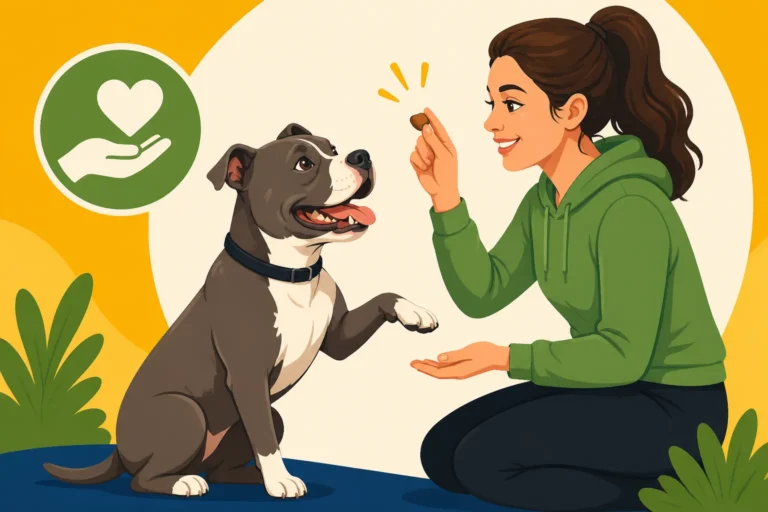
At the heart of successful CGC preparation, especially for a powerful and intelligent breed like the Pit Bull, is positive reinforcement. This means rewarding desired behaviors, rather than punishing unwanted ones. When your Pit Bull sits, comes when called, or walks politely on a leash, immediately mark that behavior with a verbal cue like "Yes!" or a clicker, followed by a high-value treat, enthusiastic praise, or a favorite toy. This creates a strong positive association, making your Pit Bull eager to repeat the behavior. For a Pit Bull, whose loyalty and desire to please are immense, this approach builds a strong, trusting relationship. It ensures they see training as a fun, collaborative activity, not a chore or a source of stress, which is crucial for engagement and retention. For more on this, check out Positive Reinforcement Training With a Pit Bull. Remember, what constitutes a "high-value treat" might vary for your dog, but it should be something truly motivating, as described in High-Value Treats That Hold a Pit Bull's Focus.
Introducing Distractions Gradually and Effectively
The CGC test takes place in a mildly distracting environment, so your Pit Bull needs to learn to perform even with things happening around them. Start training in a quiet, familiar place where your dog can easily focus. Once they're reliably performing a behavior there, gradually introduce minor distractions. This could be a family member walking by, a television playing in the background, or a few toys scattered on the floor. Slowly increase the intensity and type of distractions: move to your backyard, then a quiet park, then a slightly busier park, and eventually, places that mimic the test environment, like a local pet supply store during off-peak hours. The key is to set your dog up for success, never overwhelming them to the point where they fail. If they struggle, go back a step and make it easier. This systematic approach builds resilience and confidence, teaching your Pit Bull to maintain focus on you regardless of what's happening around them.
Simulating the Test Environment at Home
To truly prepare, you need to create "mock test" scenarios. Practice all ten CGC items in a row, just as they would be presented during the actual test. Ask friends or family members to act as evaluators and friendly strangers. Have them walk by, pet your dog, and simulate other dogs walking past. Set up a designated "stay" area for the supervised separation. Practice walking through a makeshift crowd in your living room or backyard. These simulations help your Pit Bull get accustomed to the flow and expectations of the test, reducing anxiety and increasing their comfort level on the actual day. You can even find training tools and accessories to help with this on platforms like Amazon, from long training leashes to durable treat pouches. The more realistic your practice, the more confident both you and your Pit Bull will feel when the real test comes around.
Addressing Pit Bull Specific Challenges
Pit Bulls, with their strength, enthusiasm, and often deep loyalty, bring unique qualities to the training table. While these traits are endearing, they can also present specific challenges when preparing for a formal evaluation like the CGC. Understanding these nuances is key to effective training.
Managing Enthusiasm and Excitability
One of the most wonderful things about Pit Bulls is their zest for life, but this enthusiasm can sometimes manifest as excitability, especially when greeting people or other dogs. For the CGC, your Pit Bull needs to be able to settle and remain calm. Training strategies must focus on impulse control. Teaching a strong "wait" or "stay" command before opening the door, before eating, or before greeting can be incredibly effective. Practice polite greetings where your Pit Bull remains in a sit or four-on-the-floor position when a person approaches, rewarding calmness rather than jumping or excessive wiggling. When working on walking through a crowd, teach a strong "leave it" command to help them ignore tempting smells or dropped items. It's not about stifling their joyful spirit, but channeling it into appropriate, polite behaviors that reflect well on them and the breed. Consistent practice with these impulse control exercises will make a huge difference, particularly as your Pit Bull matures through the Pit Bull Teenage Months.
Navigating Interactions with Other Dogs and Strangers
For many Pit Bull owners, interactions with other dogs and strangers are areas of particular concern, not necessarily due to aggression, but because of the potential for over-excitement or the perception of it. The CGC requires your Pit Bull to react calmly to another dog and accept petting from a stranger. If your Pit Bull tends towards Pit Bull Dog Selectivity Explained or gets overly stimulated around new people, you'll need a focused approach. Start with controlled exposures. For strangers, recruit calm friends or family members to approach and pet your dog gently, rewarding every moment of calm acceptance. For other dogs, practice parallel walking at a distance where your Pit Bull is aware but not reacting. Gradually decrease the distance as your dog shows more composure. It's about building positive associations and teaching them that polite indifference or a calm greeting is the expected behavior, rather than an intense reaction. Muzzle training, while not a CGC requirement, can also be a valuable tool for public management and safety, offering peace of mind in new or unpredictable situations, as discussed in Muzzle Training Every Pit Bull Should Have.
Overcoming Environmental Sensitivities
Some Pit Bulls can be sensitive to new environments, loud noises, or unusual objects. The CGC test might involve unfamiliar settings, varying sounds, and different people. To prepare for this, environmental desensitization is crucial. Expose your Pit Bull to a wide variety of sights, sounds, and textures from a young age, if possible. If you have an adult dog, introduce new experiences gradually. Take them to different parks, walk them near construction sites (from a safe distance), or simply expose them to different flooring surfaces. Reward curiosity and calm exploration. For dogs sensitive to noises, start with very low-volume recordings of common sounds (like sirens, children playing, or dropping items) and slowly increase the volume as your dog shows comfort. The goal is to build a resilient, confident dog who isn't easily spooked by the unexpected, allowing them to perform their best on test day without being overwhelmed by the new environment.
Finding the Right Training Resources
The journey to CGC certification is a partnership between you and your Pit Bull. While self-study is valuable, accessing the right support and resources can make all the difference, especially when you encounter plateaus or specific challenges.
Finding a Qualified and Empathetic Trainer
One of the best investments you can make is finding a certified professional dog trainer who has experience working with Pit Bull type dogs. An empathetic trainer understands the breed's strengths and potential challenges and can tailor a training plan that's both effective and kind. Look for trainers who use positive reinforcement methods exclusively and focus on building a strong relationship between you and your dog. They should be able to identify subtle body language cues, help you troubleshoot problem areas, and provide constructive feedback on your handling skills. Don't be afraid to ask about their experience with Pit Bulls and their philosophy on training. A good trainer will be a mentor, guiding you both with patience and expertise. Finding a trainer experienced with Pit Bulls can be a process, but it's worth the effort.
Leveraging Online Courses and Training Programs
In today's digital age, a wealth of online resources can supplement your in-person training or provide a comprehensive curriculum if a local trainer isn't feasible. Platforms like BAXTER & Bella offer structured online puppy and dog training programs that cover foundational obedience, socialization, and problem-solving. These programs often include video tutorials, written guides, and sometimes even personalized coaching sessions, allowing you to learn at your own pace and revisit lessons as needed. The benefit here is the flexibility and the ability to train in your home environment, which is often less distracting initially. Just be sure that any online resource aligns with positive, force-free training methods to ensure a positive experience for your Pit Bull. These resources can be a fantastic way to learn the ropes or brush up on skills before or in conjunction with group classes.
Essential Gear for Your CGC Journey
Having the right equipment can significantly aid your training efforts. A well-fitting harness that discourages pulling, like a front-clip harness, can be a game-changer for polite leash walking. A sturdy, non-slip leash of appropriate length (typically 4-6 feet for the CGC test) is essential. For training, a treat pouch that allows quick access to high-value rewards is indispensable. Consider a clicker if you're comfortable with clicker training, as it's an excellent way to precisely mark desired behaviors. Durable chew toys can be great distractions and rewards, especially during supervised separation practice. For dogs prone to stress, a comfortable, escape-proof crate or a calming bed can also be useful tools for creating a safe space. Many of these items are readily available through online retailers like Amazon, offering a wide selection to suit your Pit Bull's needs and your training style.
The CGC Test Day and Life After Certification
The big day has arrived, and you and your Pit Bull are ready! Understanding the flow of the test and what comes next can help ease any remaining nerves and allow you to fully appreciate this significant achievement.
Prepping for Test Day: Logistics and Mindset
The day before the test, give your Pit Bull a good, but not overly strenuous, exercise session. Ensure they are well-groomed and clean, as appearance is one of the test items. On test day, feed them a slightly smaller meal a few hours before the test to prevent an upset stomach but ensure they're not ravenously hungry, which could distract them. Arrive a little early to allow your Pit Bull to relieve themselves and get accustomed to the new environment. Keep your pre-test interactions calm and reassuring. Remember to bring your high-value treats, water, and any comfortable walking gear you've been using. Your mindset is crucial too: remain calm, positive, and confident. Your Pit Bull will pick up on your energy, so projecting a relaxed demeanor will help them perform their best. Trust the training you've put in.
Leveraging Your Pit Bull's CGC Title
Once your Pit Bull earns their CGC title, don't just put the certificate in a drawer! This is a powerful tool. Use it as a conversation starter to educate others about the true nature of Pit Bulls. If you've faced housing or insurance challenges, present the certificate as proof of your dog's good behavior. Some landlords and insurance companies are more amenable to dogs with formal training credentials. This title can also be a stepping stone for further endeavors. Many certified therapy dog organizations require a CGC as a prerequisite, opening up opportunities for your Pit Bull to positively impact communities as a therapy dog. For more on this, you might be interested in Certifying a Pit Bull as a Therapy Dog. It's a testament to your commitment and your dog's potential, helping to reshape perceptions one positive interaction at a time.
Continuing Your Training Journey
Earning a CGC is a fantastic accomplishment, but it's just the beginning of a lifelong journey of learning and growth with your Pit Bull. To maintain those good manners and continue strengthening your bond, keep practicing the CGC items regularly. Look for advanced training classes, such as Advanced CGC, Community Canine (CGCA), or Urban CGC (CGCU), which build upon the basic skills in more complex, real-world settings. You could also explore dog sports like obedience, rally, or agility. These activities provide mental stimulation and physical exercise, keeping your Pit Bull engaged and happy. Continuing education reinforces that training is a fun, ongoing process, not just something you do to pass a test. It ensures your Pit Bull remains a shining example of the breed's intelligence, loyalty, and wonderful temperament.
| CGC Test Item | Description | Pit Bull Training Focus |
|---|---|---|
| 1. Accepting a Friendly Stranger | Dog allows stranger to approach and speak to owner. | Reward calm greetings, prevent jumping. Gradual introduction to calm strangers. |
| 2. Sitting Politely for Petting | Dog sits calmly while a stranger pets them. | Focus on "four on the floor" behavior. Practice with different people. |
| 3. Appearance and Grooming | Dog allows evaluator to check ears, paws, and brush. | Desensitize to handling from puppyhood. Make grooming positive with treats. |
| 4. Out for a Walk | Dog walks on loose leash without pulling. | Consistent loose-leash practice with appropriate gear. Address pulling early due to strength. |
| 5. Walking Through a Crowd | Dog walks politely through a small group of people. | Maintain focus on handler despite distractions. Use "leave it" for dropped items. |
| 6. Sit and Down/Stay in Place | Dog responds to commands and holds a "stay" position. | High reliability in various environments. Build duration and distraction for stays. |
| 7. Coming When Called | Dog comes enthusiastically when called from a short distance. | Practice in distraction-free areas, then gradually add distractions. Use high-value rewards. |
| 8. Reaction to Another Dog | Dog behaves politely when encountering another dog on leash. | Practice parallel walks at a distance. Reward calm observation or polite indifference. |
| 9. Reaction to Distractions | Dog shows confidence and ignores common distractions. | Gradual exposure to various sounds and movements. Build "leave it" and "watch me" reliability. |
| 10. Supervised Separation | Dog remains calm alone with evaluator for 3 minutes. | Build confidence in being alone gradually. Ensure comfort in a crate or designated spot. |
Disclaimer
This article is for general informational purposes only and does not constitute professional advice. Laws, prices and regulations vary by location and change over time. Consult a qualified professional for guidance on your specific situation.