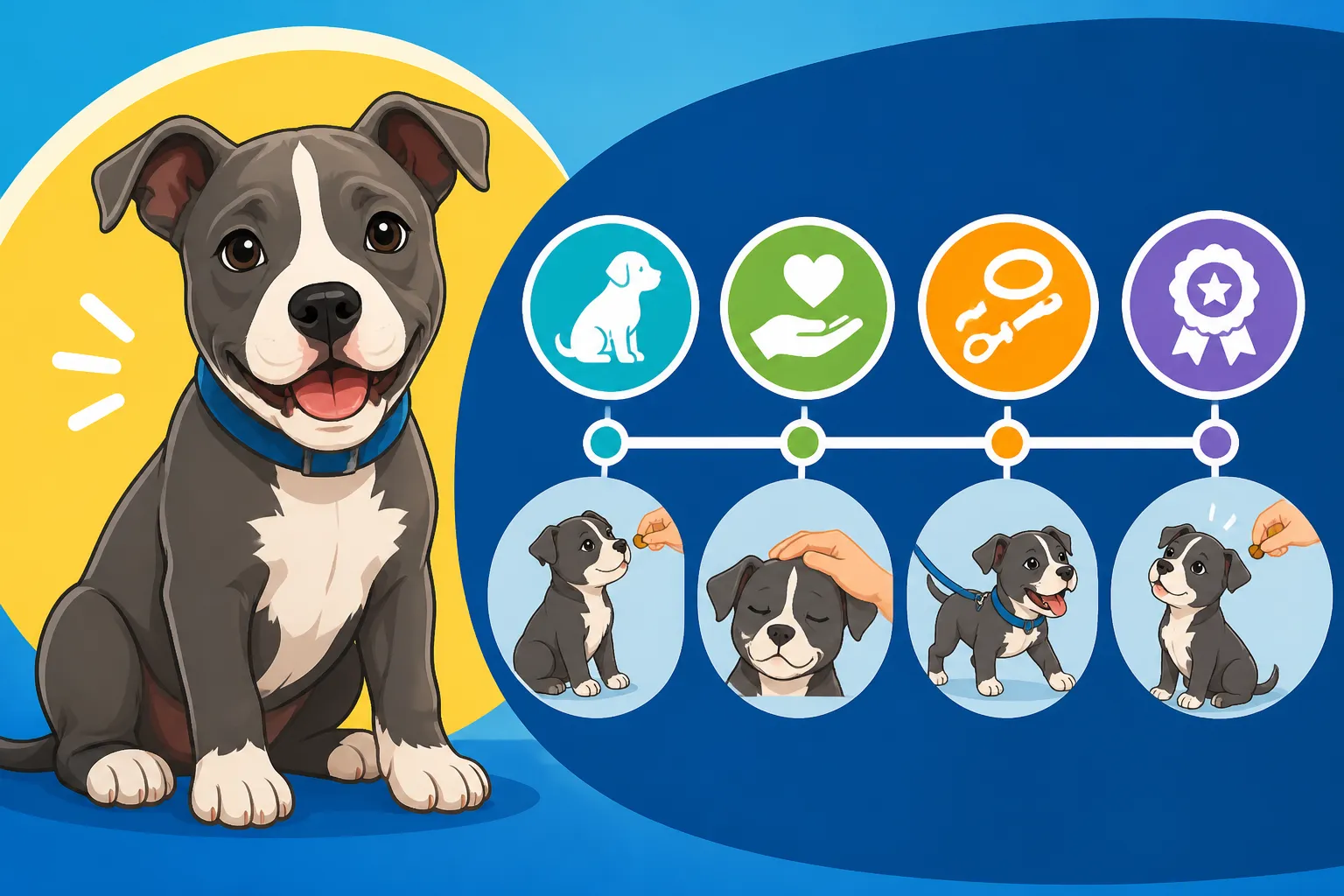
What to Teach a Pit Bull Puppy and When
Bringing a new Pit Bull puppy home is an incredibly exciting time, filled with dreams of a loyal companion. But let's be honest, it can also feel a little overwhelming when you start thinking about all the training ahead. You might be wondering, "Where do I even begin?" and "Am I doing enough?" or even, "Are Pit Bulls different to train than other breeds?" These are perfectly normal worries, and you're not alone in feeling them. The truth is, laying a strong foundation early on is key to raising a confident, well-behaved Pit Bull, and this guide is here to walk you through exactly what to teach your Pit Bull puppy and when, from those first wobbly steps right through their boisterous teenage months and beyond.
Laying the Foundation: The First Few Weeks (8-12 Weeks Old)
Those initial weeks with your Pit Bull puppy are truly formative, like a blank slate ready to absorb everything. This isn't just about teaching them commands; it's about introducing them gently to their new world, building trust, and setting up good habits that will serve them for a lifetime. This period is less about formal lessons and more about creating positive associations and a safe, predictable environment.
Early Socialization and Exposure
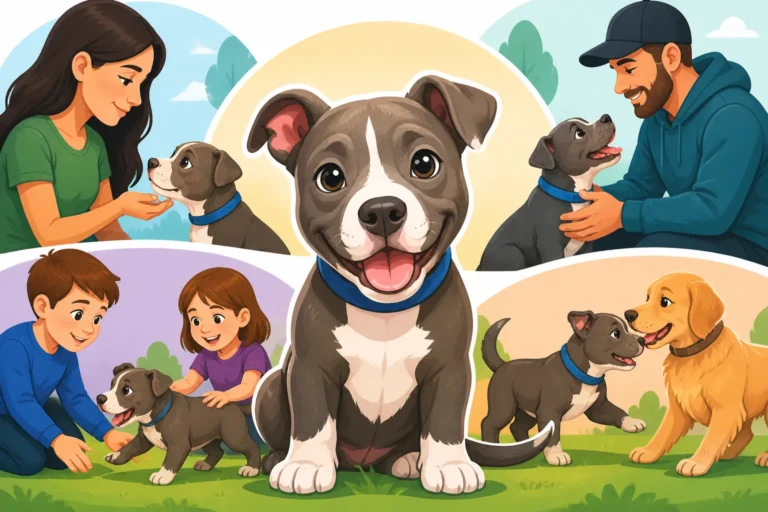
This is, without a doubt, one of the most critical aspects of puppyhood, especially for a Pit Bull. People often misunderstand socialization, thinking it means letting your puppy play with every dog and person they meet. It's actually about exposure – controlled, positive experiences that teach your puppy the world isn't a scary place.
Imagine your little Pit Bull pup meeting a friendly, calm adult dog on leash. It’s not about a wrestling match, but a brief, positive sniff and greeting, then moving on. You want them to see diverse people – different ages, genders, hats, glasses, wheelchairs – and associate them with gentle petting or a treat. Exposure to various sounds like vacuums, doorbells, traffic, or even just the clatter of pots and pans in the kitchen, should be presented calmly, perhaps paired with a favorite toy or a handful of kibble. This careful, measured exposure helps build resilience and confidence, preventing fear-based reactions later in life.
The critical window for socialization closes earlier than many realize, typically around 16 weeks. Missing this window doesn't mean your dog is doomed, but it does mean that overcoming fear or reactivity later will be a much steeper uphill battle. Think of it as investing in their emotional bank account. Every positive, low-stress experience you provide is a deposit that pays dividends in a confident, adaptable adult dog.
Crate Training Basics
Crate training is a game-changer for many Pit Bull owners, and honestly, I wish I had committed to it sooner with my first pup. It provides a safe den for your puppy, aids in house training, prevents destructive chewing when unsupervised, and can be a lifesaver for travel or vet visits. The key is to introduce the crate as a positive, comfortable space, not a punishment.
Start by making the crate inviting. Place a soft bed or blanket inside, along with a few enticing toys. Feed your puppy meals inside the crate, leaving the door open initially. Toss treats in, encouraging them to go in and out voluntarily. Once they're comfortable eating and going in for treats, you can start closing the door for very short periods, gradually increasing the time. Never force your puppy into the crate or use it for timeouts. The goal is for them to want to be in their crate, viewing it as their personal sanctuary.
Many Pit Bulls, with their strong jaws and intelligence, can be quite the escape artists or destructive chewers if bored or anxious in a crate. Choosing a sturdy, well-constructed crate from a reputable brand on Amazon can make all the difference. Some owners even opt for heavy-duty metal crates if their pup proves particularly tenacious. The crate should be just large enough for your puppy to stand up, turn around, and lie down comfortably, but not so big that they can relieve themselves in one corner and sleep in another. Consistency is paramount here; the more regularly and positively you use the crate, the faster your Pit Bull pup will accept it as their den.
Starting Potty Training
Potty training feels like a constant vigil in those early weeks, doesn't it? One minute they're playing, the next they've left a puddle on your rug. It's frustrating, but remember, your puppy has a tiny bladder and no inherent understanding of where you want them to go. The secret sauce here is a consistent schedule, frequent trips outside, and lavish praise for success.
Establish a routine from day one. Take your puppy out first thing in the morning, every 30-60 minutes during the day (especially after waking from a nap, eating, or playing), and right before bed. Always take them to the same spot, using a consistent cue like "Go potty!" When they perform, reward them immediately with enthusiastic praise and a high-value treat. Avoid scolding them for accidents inside; they won't understand why, and it can just make them afraid to go in front of you. Instead, if you catch them in the act, calmly interrupt them, scoop them up, and rush them outside.
Here’s a simple table to help visualize a typical potty training schedule:
| Time of Day | Activity | Reason |
|---|---|---|
| 6:00 AM | First thing out | Empty bladder after sleeping |
| 6:15 AM | After breakfast | Digestion stimulates elimination |
| 6:45 AM | Before crating/alone time | To prevent accidents while unsupervised |
| Every 30-60 mins | During active play/supervised time | Small bladder, frequent need |
| After naps | Immediately upon waking | Waking often means a full bladder |
| 12:00 PM | After lunch | Digestion after midday meal |
| 5:00 PM | After dinner | Digestion after evening meal |
| 8:00 PM | Before evening play | Last chance before play/settling down |
| 10:00 PM (bedtime) | Last trip out | Ensure an empty bladder for sleeping |
Remember, consistency is key. Keep a journal if needed to track when your pup eats, plays, and eliminates. This helps you anticipate their needs and reduce indoor accidents significantly. For more guidance on this crucial stage, you might find articles like Pit Bull Puppy Vaccination and Parvovirus helpful, especially for ensuring your pup is safe to explore the world outside.
Building Good Habits: The Critical Learning Period (12-16 Weeks Old)
As your Pit Bull puppy grows, they become more curious and capable, and this is the prime time to start layering in some fundamental obedience and important life skills. This period is about channeling their burgeoning energy and intelligence into positive behaviors, setting the stage for a well-mannered adult dog.
Introducing Basic Obedience Cues
This is where the real fun begins with formal training! Your Pit Bull puppy, typically full of eagerness and a desire to please, is perfectly primed to learn foundational commands. Start with simple, essential cues like "sit," "stay," "come," and "down." These aren't just parlor tricks; they are vital for safety and communication.
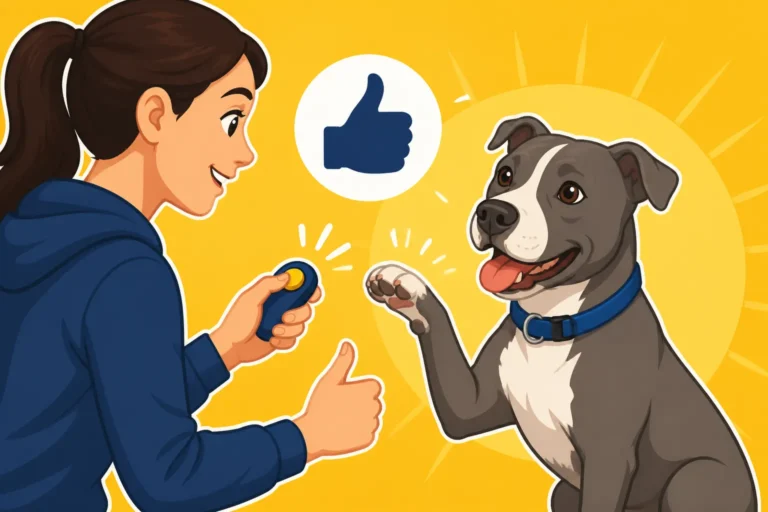
Use positive reinforcement exclusively – think tasty, pea-sized treats and enthusiastic verbal praise. Keep sessions short, fun, and frequent, aiming for 5-10 minutes a few times a day rather than one long, boring session. When teaching "sit," for example, hold a treat near your puppy's nose and slowly move it up and over their head. As their nose follows, their rear naturally lowers. The moment their bottom touches the ground, say "Sit!" and reward them. The timing of your reward is crucial; it needs to be immediate so they associate the action with the treat. For a deeper dive into effective methods, you might explore resources like Starting Clicker Training on a Pit Bull.
Don't get discouraged if progress isn't linear. Some days your pup might seem to have forgotten everything, and that's okay. They’re still babies! Keep the energy positive, celebrate every small success, and remember that consistency across all family members is vital. If one person uses "stay" and another uses "wait," it's confusing. Agree on your cues and stick to them. Many new Pit Bull owners find immense value in structured puppy classes or online programs, such as those offered by BAXTER & Bella, which provide step-by-step guidance and support during this critical phase.
Managing Puppy Nipping and Bite Inhibition
Ah, those razor-sharp puppy teeth! If you’ve spent any time with a Pit Bull puppy, you know exactly what I’m talking about. While it feels like an attack, puppy nipping is a normal part of development. Puppies explore the world with their mouths and learn about bite pressure from their littermates. Your job is to teach your Pit Bull puppy "bite inhibition" – to understand that human skin is sensitive and that they need to control the force of their bite.
When your puppy nips too hard, immediately let out a high-pitched "ouch!" or "yipe!" and withdraw all attention. Cross your arms, turn away, or even leave the room for 10-20 seconds. This mimics how a littermate would react, signaling that the play has stopped because they hurt you. When you return, redirect them to an appropriate chew toy. If they mouth gently, reward that soft mouth with praise and continued play. This teaches them that gentle mouthing keeps the fun going, while hard bites make it stop. You want them to learn to apply just enough pressure to feel good to them, without it hurting you.
It’s crucial to avoid punishing your puppy for nipping, as this can lead to fear or, worse, a dog that suppresses growls and warning signs, making future bites more dangerous. Focus on teaching them what to do, rather than what not to do. Provide a variety of sturdy chew toys, rotating them to keep things interesting. This redirection is incredibly important, as many Pit Bulls have strong chewing drives that need appropriate outlets. You can find more targeted advice on this in articles like Pit Bull Puppy Biting That Draws Blood or Teaching a Pit Bull Puppy a Soft Mouth.
Leash Acclimation
Introducing your Pit Bull puppy to a leash and collar is less about walking perfectly on day one and more about creating a positive association with these tools. For a breed that will grow into a powerful, athletic dog, early and positive leash training is absolutely essential to prevent future pulling struggles.
Start by simply putting on a lightweight collar for a few minutes at a time, especially during meal times or play, always supervising them. Distract them with treats or toys so they don't focus on the new sensation. Once they're comfortable with the collar, attach a lightweight leash and let them drag it around the house (again, supervised!). This helps them get used to the feel without the pressure of you holding it. Keep the experiences short and positive, ending before they get frustrated.
When you start holding the leash, the goal isn't to take them for a long walk around the block just yet. It's about teaching them that a loose leash means rewards. Walk a few steps, and if the leash remains slack, praise and treat them. If they pull, simply stop moving until the leash slackens, then start again. This teaches them that pulling gets them nowhere, but a loose leash keeps the adventure going. This early acclimation is key to avoiding the battle of wills that can arise when you have a 50-pound Pit Bull determined to drag you down the street. Consistent, positive early experiences can prevent issues like Pit Bull Leash Pulling at Fifty Pounds down the line.
Expanding Skills: The Teenage Months (4-6 Months Old)
This stage is often affectionately (or perhaps exasperatedly) referred to as the "teenage months." Your Pit Bull puppy is growing rapidly, full of energy, testing boundaries, and sometimes acting like they've forgotten every single thing you've taught them. Sound familiar? It’s a normal part of development, but it’s also a time to double down on your training efforts and introduce new challenges.
Reinforcing and Generalizing Commands
Just because your Pit Bull puppy "knows" sit in your living room doesn't mean they'll perform it at the park with a squirrel distraction. This stage is all about reinforcing those basic obedience cues and generalizing them to different environments, with varying distractions.
Practice "sit," "stay," "come," and "down" in new places: the backyard, a friend's house, a quiet corner of a park, or even just in a different room of your home. Gradually introduce distractions – a ball rolling nearby, a person walking by, or another dog at a distance. Start with low-level distractions and slowly increase them as your puppy succeeds. Always set your pup up for success, rewarding them heavily for performing a command in a challenging new setting. This isn't just about showing off; a solid "come" command could literally save your dog's life if they get off-leash. It also directly addresses the need for Training a Pit Bull to a Higher Standard Than Other Dogs.
Consistency remains the golden rule. Everyone in the household needs to use the same cues and reward structure. Consider enrolling in a follow-up puppy class or a basic obedience course. These classes provide a structured environment with controlled distractions and expert guidance, helping you solidify those behaviors. Remember, Pit Bulls are intelligent and can pick up on cues quickly, but they thrive on repetition and clear communication. The more you practice in varied settings, the more reliable those commands become.
Addressing Chewing and Destructive Behaviors
The intense chewing phase for a Pit Bull often peaks during these months as they lose their puppy teeth and their adult teeth come in. If not managed properly, this can lead to serious destructive behaviors, from chewed furniture to ruined shoes. It's not malice; it’s a natural drive that needs redirection.
The first step is prevention. Puppy-proof your home. If you can’t supervise your Pit Bull puppy, they should be in their crate or a securely puppy-proofed area (like a playpen with all tempting items removed). Provide an abundance of appropriate chew toys – durable rubber toys, puzzle toys, and sturdy nylon chews. Rotate them daily to keep them interesting. Amazon offers a wide range of strong chew toys specifically designed for powerful chewers. When you catch your pup chewing something inappropriate, calmly redirect them to an approved chew toy and praise them when they engage with it.
If destructive chewing seems to stem from boredom or excess energy, increase their mental and physical exercise. A tired Pit Bull is a good Pit Bull! Engage them in puzzle feeders, short training sessions, or interactive play. Sometimes, destructive chewing can also be a sign of separation anxiety. If your pup is showing other signs like excessive drooling, pacing, or frantic attempts to escape when left alone, consult a professional trainer or vet. For more insights on this, you can look into Pit Bull Chewing Through Furniture and Crates for prevention strategies.
Continuing Socialization with Boundaries
While the critical socialization window might be closing, continuing positive, controlled exposures is still incredibly important during the teenage months. This period is when many Pit Bulls start to develop their individual personalities and, sometimes, their dog-selectivity.
Continue to expose your Pit Bull to various sights, sounds, people, and calm, well-behaved dogs. Focus on quality over quantity. A few positive interactions with a well-mannered adult dog are far more beneficial than a free-for-all at the dog park with unknown dogs. Teach your Pit Bull to calmly observe other dogs from a distance, rewarding them for polite behavior rather than over-excitement or reactivity. This teaches them to be neutral around others, which is invaluable. For more about understanding this trait, read Pit Bull Dog Selectivity Explained.
It's also crucial to teach your Pit Bull polite greetings with people. They might be getting quite large now, and jumping up can be intimidating or even knock someone over. Practice "four on the floor" greetings, where all four paws stay on the ground when someone approaches, rewarding them for calm behavior. If they jump, politely turn your back until they settle, then reward when they keep all paws down. The goal is a confident, well-mannered dog who understands appropriate social etiquette with both humans and other canines.
Solidifying Training: Adolescence and Beyond (6-12 Months Old)
As your Pit Bull enters later adolescence, they're transitioning from a gangly teenager to a more mature, powerful young adult. This is a time to refine their skills, challenge them with more complex tasks, and really solidify their reliability, especially in public settings.
Advanced Obedience and Impulse Control
By this age, your Pit Bull should have a solid grasp of their basic commands. Now, it's time to add layers of difficulty, focusing heavily on impulse control. Impulse control means teaching your dog to think before they act, to wait for your cue even when highly motivated to do something else. This is incredibly important for a strong, driven breed like the Pit Bull.
Introduce longer "stays" in increasingly distracting environments. Practice "leave it" and "drop it" with high-value items, teaching them to release something they want in exchange for something even better. Work on a rock-solid recall, practicing in larger, more open spaces (ideally fenced at first) with various distractions. A reliable recall is not just a party trick; it's a safety net. Consider enrolling in an advanced obedience class or a specialized "Canine Good Citizen" preparation course. Programs like BAXTER & Bella often offer modules or courses that guide owners through these more advanced stages of training, providing structure and support.
These skills are invaluable for public safety and for your peace of mind. A Pit Bull with strong impulse control is a joy to live with and can navigate the world with confidence and good manners. This stage is about teaching them that listening to you, even when there are exciting squirrels or interesting smells, brings the best rewards. You'll find more helpful advice in articles such as Building a Pit Bull's Impulse Control and Recall Training a Pit Bull From Scratch.
Navigating Dog-to-Dog Interactions
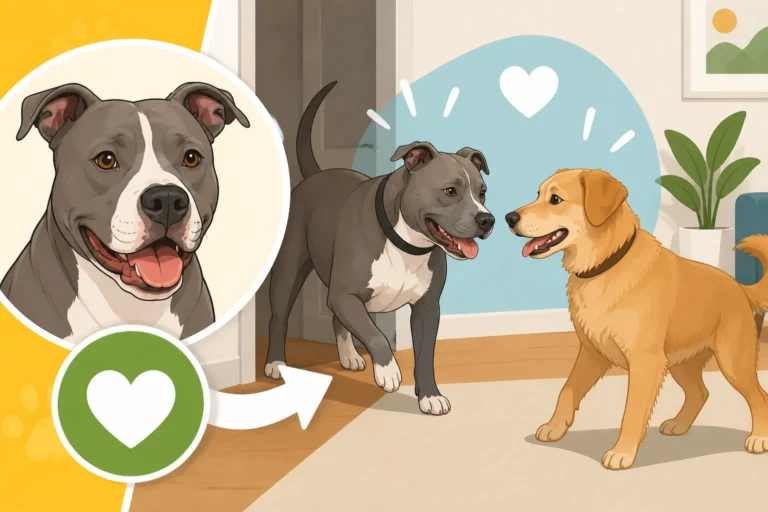
Dog-to-dog interactions become a more nuanced topic as your Pit Bull matures. While some Pit Bulls remain perfectly happy and appropriate with all dogs, many, as they hit maturity, develop dog-selectivity. This means they might be fine with some dogs but not others, or they might prefer to avoid direct interactions altogether. It’s crucial to understand this potential trait and manage it proactively.
Never assume your adolescent Pit Bull will be friendly with every dog they meet, regardless of their puppyhood experiences. Always supervise interactions closely, especially with new dogs. Learn to read dog body language – both your Pit Bull's and the other dog's – to intervene before tension escalates. Signs of stress or discomfort include stiff bodies, direct stares, tucked tails, lip licking, yawning, or turning away. For some Pit Bulls, the best approach might be polite parallel walks or maintaining distance from unknown dogs. You can find more comprehensive information on this sensitive topic in Pit Bull Dog Selectivity and Multi-Dog Homes and Whether Two Pit Bulls Can Share a House.
The goal is to teach your Pit Bull to be calm and neutral around other dogs, not necessarily to be best friends with every dog. Respecting their preferences and managing their interactions responsibly is a sign of a truly dedicated owner. A basket muzzle, properly conditioned, can be an excellent tool for safety and peace of mind during introductions or in new environments, regardless of whether your dog is dog-selective. Muzzle Training Every Pit Bull Should Have is an excellent resource for learning how to introduce this valuable tool positively.
Preparing for Public Encounters
Taking your Pit Bull out in public is a big step, and it requires careful preparation and management. Due to common misconceptions, Pit Bulls often face unfair scrutiny, so it's even more important that they are ambassadors for their breed. This means ensuring they are well-behaved, calm, and under control in all public settings.
Start by practicing your obedience cues in increasingly busy public areas – a quiet park path, outside a pet-friendly cafe, or on a less crowded sidewalk. Focus on loose-leash walking, teaching them to ignore distractions like passing people, strollers, or other dogs. Work on their "sit" and "stay" commands while people walk by. The objective is for your Pit Bull to be able to politely coexist in public, not necessarily to greet everyone. This ties directly into Handling a Pit Bull in Public Without Incident.
Always be mindful of your surroundings. If you see a potential trigger for your dog (like another dog that seems over-excited), be proactive: create distance, use a "look at me" command, or change direction. Carrying high-value treats to reward calm behavior in public is always a good idea. Your calm, confident demeanor will also help your Pit Bull feel secure. Remember, your Pit Bull is a representative, and their good behavior helps challenge negative stereotypes.
Specialized Training and Continued Growth
Once your Pit Bull has a solid foundation of basic and advanced obedience, a whole world of possibilities opens up. This stage is about exploring their potential, strengthening your bond, and perhaps even giving back to the community.
Considering Canine Good Citizen Certification
The Canine Good Citizen (CGC) program, offered by the American Kennel Club (AKC), is a fantastic benchmark for any dog owner, but it holds particular significance for Pit Bulls. Earning a CGC title demonstrates that your Pit Bull is a reliable, well-mannered member of the community, capable of performing ten basic obedience skills in a calm and controlled manner.
The ten test items cover practical skills like accepting a friendly stranger, sitting politely for petting, walking on a loose leash through a crowd, "sit" and "down" on command, coming when called, and reacting appropriately to distractions. Preparing for and passing the CGC test can be a huge confidence booster for both you and your dog, and it provides objective proof of their good temperament and training. For Pit Bull owners, this certification can also be incredibly helpful in navigating housing restrictions, insurance issues, and public perception. Many articles on our site, such as Getting a Pit Bull Ready for the CGC and Whether a CGC Title Helps a Pit Bull Policy, delve into its importance.
Enrolling in a CGC prep class is highly recommended, as the instructors can help you fine-tune your dog's skills and ensure they're ready for the test environment. Even if you never take the test, working through the curriculum provides a structured path to a well-behaved dog.
Exploring Advanced Sports or Activities
Pit Bulls are incredibly intelligent, athletic, and eager to please, making them fantastic candidates for a variety of dog sports and activities. Don't let their image as "tough" dogs overshadow their versatility and capacity for joy in these pursuits.
Consider options like:
- Agility: A fast-paced sport where dogs navigate an obstacle course with their handler. Pit Bulls excel with their speed and agility.
- Dock Diving: Dogs leap from a dock into a pool of water to retrieve a toy. Many Pit Bulls love water and excel at this.
- Obedience/Rally: Further development of their obedience skills in a competitive setting.
- Scent Work/Nose Work: Dogs use their powerful noses to find hidden target odors, a fantastic mental exercise.
- Weight Pull: For muscular Pit Bulls, this can be an appropriate and safe activity when done with proper training and supervision, emphasizing strength and drive.
These activities provide incredible mental and physical stimulation, deepen your bond, and offer a positive outlet for their energy and drives. They also showcase the incredible capabilities and temperament of these dogs in a positive light. Just be sure to choose activities that are appropriate for your dog's age, physical condition, and temperament. Always prioritize safety and fun. You might find articles like Springpoles, Flirt Poles and Pit Bull Play or Whether Weight Pull Suits a Pet Pit Bull interesting for exploring suitable activities.
Handling Common Adolescent Challenges
Even with the best training, adolescence can bring its unique set of challenges. This is when some behaviors might resurface or new ones develop, often testing your patience. Common issues include increased stubbornness, selective hearing (especially "come"!), boundary-testing, and sometimes a temporary regression in house training or obedience.
Remember that these behaviors are often hormonal and developmental, not a reflection of your dog's intelligence or your training efforts. The key is to remain consistent, patient, and understand that this phase will pass. Don't slack on training; in fact, increase short, positive training sessions. Revisit foundational commands and reinforce them heavily. If your Pit Bull starts testing boundaries, go back to basics and make sure they understand what's expected.
If you find yourself truly struggling with a specific behavior, don't hesitate to seek professional help. A certified professional dog trainer or behaviorist can offer tailored advice and strategies to help you navigate these adolescent hurdles. Ignoring problems now will only make them harder to address later. This is also a good time to consider discussions around When to Neuter a Pit Bull Without Costing Joints and What Neutering Does to Pit Bull Behavior, as surgical alteration can sometimes impact adolescent tendencies.
The Lifelong Journey of a Well-Trained Pit Bull
Training isn't a one-time event; it's a continuous conversation and a lifelong journey with your Pit Bull. From puppyhood to their golden years, keeping their minds engaged and their manners sharp will contribute to a happy, well-adjusted companion.
Maintaining Consistency and Reinforcement
Even the most well-trained Pit Bull needs ongoing practice and reinforcement. Think of it like keeping a language fluent – if you don't use it, you might lose it. Integrate training into your daily life. Ask for a "sit" before opening the door, a "down" before they get their meal, or a "stay" while you answer the phone. These small, consistent requests keep their minds sharp and reinforce your leadership in a positive way.
Continue to use positive reinforcement, even if you’re phasing out treats for every single command. Verbal praise, a favorite toy, or a good scratch behind the ears can be powerful rewards. This maintains their motivation and keeps training fun. Remember that consistency also means everyone in the household adheres to the same rules and commands. A dog shouldn't be allowed on the couch by one person and then scolded for it by another. Clear boundaries and consistent expectations make for a confident and well-behaved dog.
Regularly review and practice commands in different environments, just as you did in adolescence. This helps prevent regression and ensures your Pit Bull remains reliable no matter the situation. Training is not just about control; it's about building a strong, clear line of communication and mutual respect between you and your dog.
Adapting Training as Your Pit Bull Ages
As your Pit Bull moves into their senior years, their physical and sometimes mental capabilities will change. Their energy might wane, their senses might dull, and conditions like arthritis might make certain movements uncomfortable. Your training approach needs to adapt to these changes.
Shorten training sessions and make them less physically demanding. Focus on mental stimulation through puzzle toys, scent games, or gentle trick training. If your senior Pit Bull has difficulty with stairs, teach them to wait while you help them, or explore ramps. Commands that require quick movements, like a fast "come," might need to be reinforced with a visual cue or a gentler pace. Be patient and understanding of their changing needs. For more details on adapting to age, you can consult articles such as Caring for a Pit Bull in Its Second Decade or Pit Bull Mobility Aids in Old Age.
Maintaining mental engagement is crucial for senior dogs, as it helps keep their minds sharp and prevents cognitive decline. Even gentle walks and familiar training exercises can provide comfort and structure. Observe your dog closely for any signs of discomfort or confusion and adjust your expectations and activities accordingly. The bond you've built over the years will only deepen as you continue to care for their evolving needs.
Seeking Professional Help When Needed
There's absolutely no shame in seeking professional help for your Pit Bull's training or behavior, no matter their age. In fact, it's a sign of a responsible and dedicated owner. Whether you're dealing with a challenging puppy phase, an adolescent hiccup, or a more serious behavioral issue, a qualified professional can be an invaluable resource.
Look for certified professional dog trainers (CPDT-KA, KPA CTP) or veterinary behaviorists (DACVB) who use positive reinforcement and science-based methods. Be wary of trainers who promise quick fixes, use aversive tools (like prong collars, shock collars, or choke chains), or advocate for methods based on dominance theory. These methods can damage your relationship with your dog and often exacerbate behavioral issues, especially with a sensitive and intelligent breed like the Pit Bull. Articles such as Vetting a Trainer Before Booking a Pit Bull can help you choose wisely.
Don't wait until a problem becomes overwhelming. Addressing issues early on is always easier and more effective. A professional can help you understand the root cause of a behavior, teach you effective management strategies, and guide you through a comprehensive training plan. Your Pit Bull deserves the best possible guidance, and sometimes, that means bringing in an expert to ensure both of you are set up for success.
Disclaimer
This article is for general informational purposes only and does not constitute professional advice. Laws, prices and regulations vary by location and change over time. Consult a qualified professional for guidance on your specific situation.