Therapy and Service Work With a Pit Bull
It's incredibly frustrating when you know your Pit Bull has a heart of gold and an incredible capacity to help people, yet the world often sees them differently. Many devoted owners aspire to harness their Pit Bull's unique traits for meaningful roles like therapy or service work, but the journey is fraught with misinformation, breed prejudice, and the sheer demanding nature of the training itself. This comprehensive guide aims to demystify the process, distinguishing between therapy and service roles, outlining the rigorous training and temperament requirements, and offering honest advice on overcoming public perception challenges specific to your cherished Pit Bull.
Understanding the Difference: Service Dog vs. Therapy Dog
Before embarking on any training path, it's crucial to understand the fundamental differences between a service dog and a therapy dog. These two roles, while both incredibly beneficial to humans, operate under vastly different legal frameworks, training requirements, and public access rights. Confusing them can lead to significant misunderstandings and even legal issues.
Legal Distinctions and Public Access
The most critical distinction lies in the legal protections and public access granted to each. A service dog is specifically trained to perform tasks directly related to a person's disability. This could involve guiding a visually impaired individual, alerting a diabetic to low blood sugar, pulling a wheelchair, or providing deep pressure during a panic attack. Under federal law, these dogs are considered medical equipment, and their handler has the right to bring them into most public places where the general public is allowed, regardless of "no pets" policies. This includes stores, restaurants, hospitals, and public transportation. The key here is the task the dog performs to mitigate a disability.
In contrast, a therapy dog provides comfort and affection to many people in various settings like hospitals, nursing homes, schools, and disaster areas. They are typically owned by volunteers who take them to visit facilities. While immensely valuable, therapy dogs do not have the same public access rights as service dogs. They are generally considered "pets" by law and must be invited into facilities. Their access is at the discretion of the facility management, who can set their own rules regarding breed, temperament, and health screenings. This means a therapy dog and its handler cannot demand access to a grocery store or restaurant simply because the dog offers comfort. The distinction is absolutely vital for Pit Bull owners to understand, as navigating public spaces can be a significant hurdle due to breed-specific legislation and biases.
Role of Each in Human Well-being
Both roles profoundly impact human well-being, albeit in different ways. A service dog enables an individual with a disability to live more independently, safely, and with greater confidence. Imagine someone with severe anxiety being able to venture into a crowded public space because their service dog is trained to create a buffer or alert them to rising stress levels. For these individuals, their service dog is not just a companion; it's an essential tool for daily living, allowing them to participate in society more fully. The bond is deep and unique, focusing on the specific needs of one person.
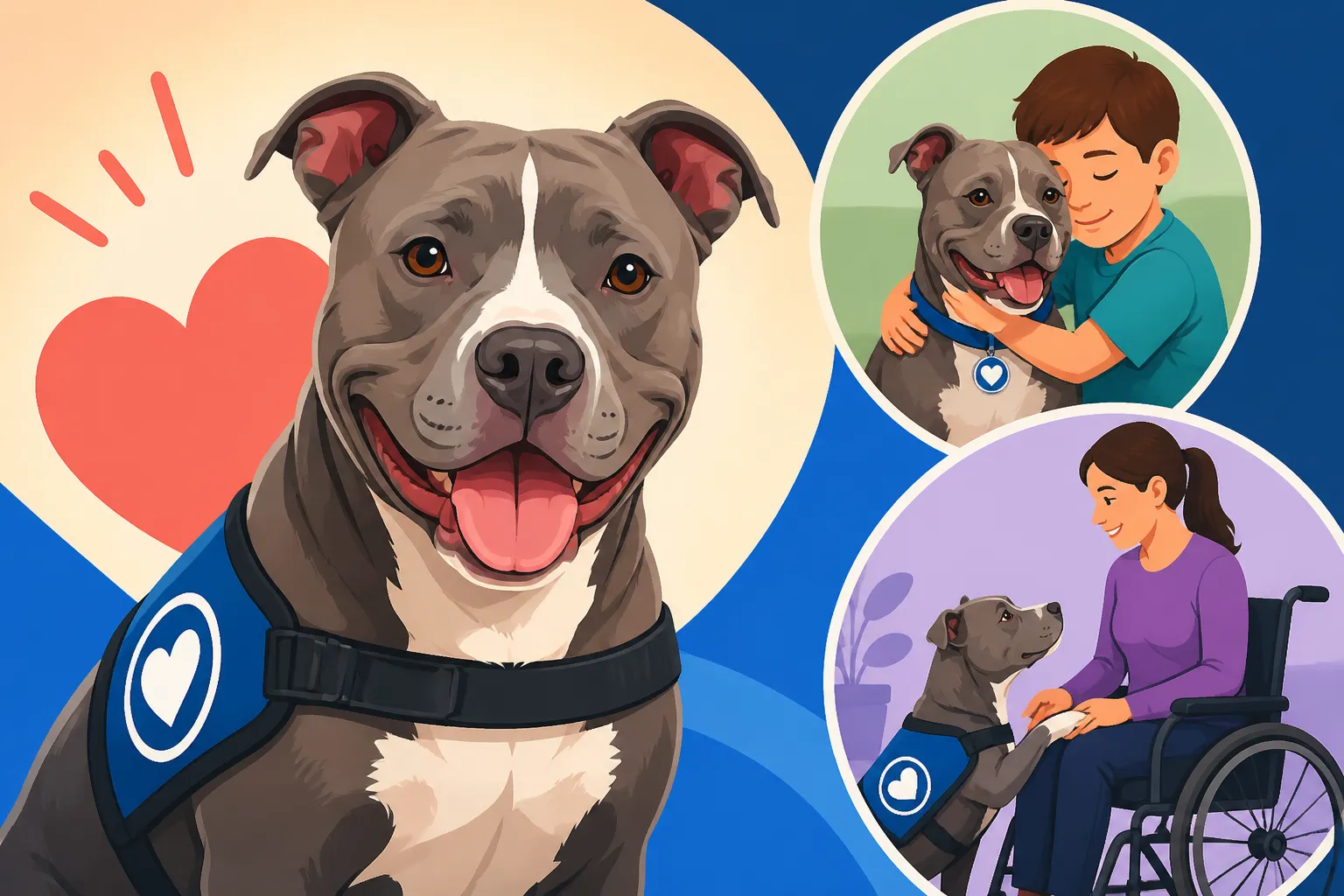
A therapy dog, on the other hand, spreads joy, comfort, and a sense of calm to a wider array of people. Picture a child in a hospital finding solace in petting a soft, friendly Pit Bull, or an elderly resident in a nursing home reminiscing about their own dogs while interacting with a visiting therapy animal. These dogs bring moments of relief, distraction, and unconditional affection to many, often reducing stress and promoting emotional healing. While the impact is broad, it's generally about general well-being rather than mitigating a specific disability for one handler. For a Pit Bull owner, proving your dog's gentle nature in these settings can be a powerful way to change perceptions, one wagging tail at a time.
Temperament and Training Requirements for Pit Bulls
No matter whether you're aiming for therapy or service work, the foundation for a Pit Bull – or any dog – lies in an exceptional temperament and robust, consistent training. For Pit Bulls, these standards are often judged even more stringently due to pervasive breed stereotypes, making an impeccable record of behavior not just desirable, but essential.
Essential Temperament Traits
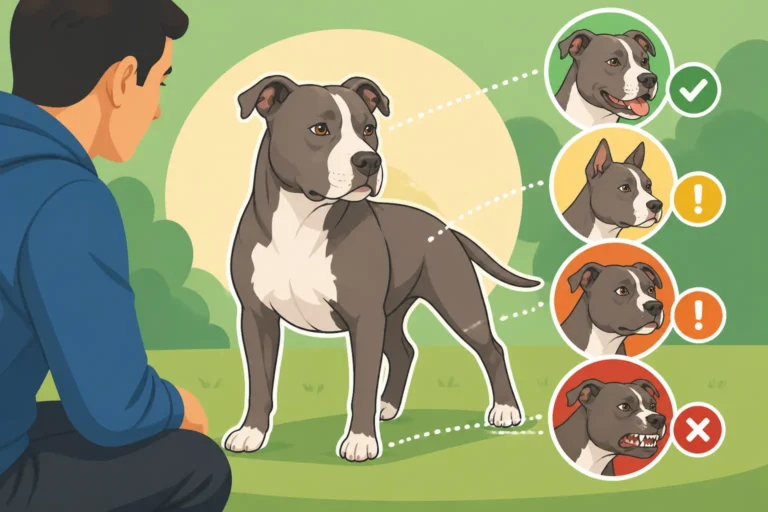
A truly successful service or therapy Pit Bull must possess an unwavering, rock-solid temperament. This means more than just being "good with people." They need to be inherently calm, confident, and resilient. A dog that is easily startled, anxious in new environments, or reactive to unexpected noises or movements simply won't make the cut. They must be incredibly stable, able to handle strange sights, sounds, smells, and interactions without fear or aggression. Think about the bustling environment of an airport for a service dog, or the unpredictable movements and loud noises in a children's hospital for a therapy dog. Any hesitation, shyness, or over-excitement can be detrimental.
Crucially, they must also show absolutely no signs of dog-to-dog reactivity or human aggression. While Pit Bulls can sometimes be "dog selective," for service or therapy work, they need to be reliably neutral or friendly towards other dogs they encounter in public. This is a non-negotiable trait. Furthermore, they need to be highly motivated to work with their handler and possess a natural eagerness to please, even amidst distractions. A strong desire for praise and interaction over external motivators (like sniffing interesting smells or chasing squirrels) is key. You'll want to review resources like Pit Bull Temperament and the ATTS Results to understand the typical temperament profile and how to assess your dog's natural predispositions.
Early Socialization and Foundation Skills
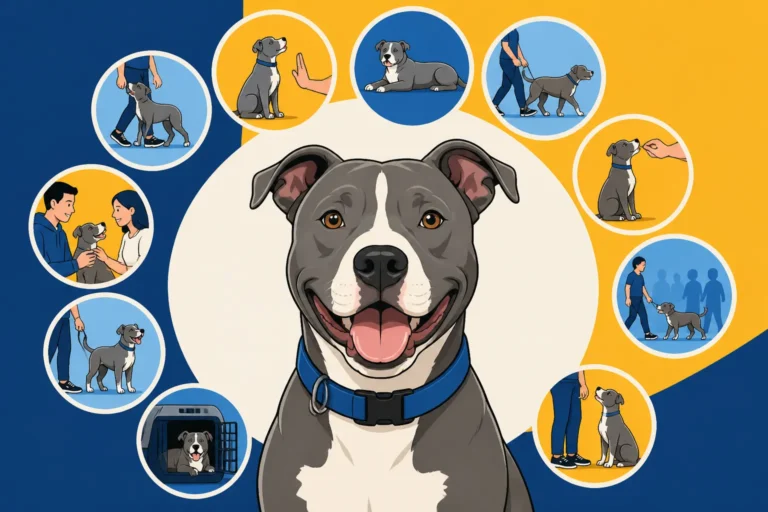
The journey to becoming a working dog begins long before formal task training: it starts with comprehensive early socialization. A Pit Bull puppy destined for such a role needs to be exposed to a vast array of positive experiences during its critical developmental periods. This means introducing them to different types of people (ages, ethnicities, uniforms, hats), various environments (urban, rural, busy, quiet), diverse sounds (traffic, alarms, children playing), and different surfaces (tile, carpet, grass, grates). Each exposure must be positive, building confidence rather than fear. Skipping this crucial step is often why otherwise well-behaved dogs struggle in public.
Beyond socialization, strong foundation skills are paramount. This includes perfect leash manners – no pulling, even when excited – and a rock-solid recall. Imagine a service dog that drags its handler into traffic, or a therapy dog that won't come when called in a crowded room. Basic obedience commands like sit, stay, down, and come must be instant and reliable, even with high-level distractions. Impulse control is also critical; the dog must be able to ignore food dropped on the floor, loud noises, or playful invitations from other dogs. Many owners find online resources, such as those offered by BAXTER & Bella, to be invaluable in building this strong foundation from puppyhood, emphasizing positive reinforcement methods that are essential for shaping a confident working dog.
The Rigorous Training Journey for a Pit Bull
Once the right temperament and foundational skills are in place, the specialized training for a service or therapy Pit Bull begins. This isn't just about teaching tricks; it's about developing highly reliable behaviors under diverse and often challenging conditions, ultimately shaping a dog into a reliable partner or a comforting presence.
Obedience and Task Training
For therapy dogs, the focus is primarily on advanced obedience and impeccable manners. They need to be calm and gentle during interactions, comfortable with being petted by multiple strangers, and tolerant of clumsy handling from children or the elderly. They must also learn "leave it" to ignore dropped medications or food, and to remain quiet and settled for extended periods. The Canine Good Citizen (CGC) certification is often the absolute minimum requirement, and many therapy organizations require additional testing to ensure the dog can handle unique environments like hospitals with medical equipment or busy schools. This level of calm, consistent behavior requires ongoing practice in various settings, not just in your living room.
For service dogs, the training is far more intense and highly individualized. While impeccable public manners are a must, the core of their training revolves around specific tasks directly mitigating their handler's disability. This could involve complex scent detection for medical alerts, retrieving specific items, providing balance support, or interrupting self-harm behaviors. These tasks are often trained through many hours of repetition, often breaking down complex behaviors into tiny, achievable steps. For a Pit Bull, whose physical strength can be an asset, tasks like brace or mobility support are possible, but require precise training to ensure safety and effectiveness. Finding a qualified service dog trainer who understands these complex tasks and positive reinforcement methods is crucial, and it's a long-term commitment that often spans years. Positive Reinforcement Training With a Pit Bull is a good starting point for understanding effective methods.
Public Access Training
Public access training is where many Pit Bull owners face their biggest challenges. For service dogs, this phase involves gradually exposing the dog to every conceivable public environment they might need to navigate. This includes stores with trolleys and loud announcements, busy restaurants, public transport, medical facilities, and more. The dog must learn to ignore all distractions, remain focused on its handler, and perform its tasks reliably. This isn't just about training the dog; it's also about training the handler to advocate for their rights and manage public interactions, which often include skepticism or outright prejudice against the breed. Your Pit Bull needs to be so well-behaved that its presence becomes a non-issue, despite what some might think.
For therapy dogs, public access is different, as they don't have the same legal rights. Their public access training focuses on being calm and appropriate when invited into a facility. This means practicing in simulated environments, getting used to hospital smells, loud beeping machines, or the excited voices of children. While they don't have the legal right to enter any public place, training them to be exemplary guests is paramount to maintaining their invitation to facilities. This kind of careful exposure and desensitization is key to ensuring they can truly bring comfort without causing any disruption.
| Feature | Service Dog | Therapy Dog |
|---|---|---|
| Legal Status | Medical equipment under federal law (ADA) | Pet/Volunteer animal |
| Primary Role | Performs tasks to mitigate handler's disability | Provides comfort/affection to many people |
| Public Access | Broad public access rights (most public places) | Access by invitation only (at facility discretion) |
| Handler | Individual with a disability | Volunteer owner |
| Training Focus | Task-specific training + public access manners | Advanced obedience + public manners + tolerance |
| Certification | No federal certification required; task-based proof | Often requires certifications (e.g., CGC) + facility screening |
| Breed Restrictions | Legally no breed restrictions (for service dogs) | May face facility-specific breed restrictions |
| Relationship | Essential for handler's independence | Enhances well-being for many |
Navigating Public Access and Breed Perceptions
Even with impeccable training, Pit Bull owners pursuing service or therapy work face an uphill battle against deeply ingrained stereotypes. Public perception, often fueled by media and misinformation, can create challenging situations that require both strong advocacy and a perfectly behaved dog.
Legal Protections and Asserting Rights
For service dog teams, federal laws like the Americans with Disabilities Act (ADA) explicitly state that breed cannot be a determining factor in allowing a service animal access to public spaces. However, knowing your rights and confidently asserting them are two different things. It's common for Pit Bull service dog handlers to be challenged more frequently than those with more traditionally accepted breeds like Labradors or Golden Retrievers. You might encounter store managers, restaurant staff, or even members of the public who are genuinely unaware of the law or who harbor personal biases. Having your dog's training documentation, although not legally required to be shown, can sometimes help de-escalate situations, as can a clear explanation of what tasks your Pit Bull performs.
Remember, staff can only ask two questions: (1) Is the dog a service animal required because of a disability? and (2) What work or task has the dog been trained to perform? They cannot ask about your disability, require documentation, or demand the dog demonstrate its task. For therapy dogs, these protections do not apply, and access is always at the discretion of the facility. This is why a therapy Pit Bull's demeanor and its handler's professionalism are critical in maintaining good relationships with the organizations they visit.
Overcoming Stigma and Misinformation
Overcoming the negative stigma associated with Pit Bulls requires consistent effort and an unwavering commitment to excellence. Every time a Pit Bull service or therapy dog behaves perfectly in public, it serves as an ambassador for the entire type. This means your dog not only has to be perfect, but you, as the handler, must also be calm, confident, and polite when facing scrutiny or questions. Handling a Pit Bull in Public Without Incident covers many of the techniques needed here. Simple things like having a clean, well-groomed dog and choosing appropriate gear (such as a professional-looking vest, easily found on platforms like Amazon, that clearly identifies them as a "service dog" or "therapy dog") can help.
Sometimes, despite your best efforts, you might still encounter resistance. In these moments, it's vital to stay calm, educate politely, and, if necessary, be prepared to walk away or escalate the issue through proper channels. Documenting interactions can be helpful. For therapy teams, making a positive impression during initial visits to facilities is paramount. A Pit Bull that is gentle, responsive to commands, and clearly enjoys interacting with people can slowly chip away at preconceived notions, proving that a dog's heart and training matter far more than its appearance. This is a long game, but one that dedicated Pit Bull owners are often eager to play for the benefit of their dogs and the people they serve.
The Rewards and Challenges of Working with a Pit Bull
The journey of training a Pit Bull for therapy or service work is undoubtedly demanding, but the rewards can be immeasurable, both for the individual whose life is impacted and for the perception of Pit Bulls as a whole. However, it's also important to acknowledge the ongoing commitment and unique challenges that come with this path.
The Impact on Lives and Perceptions
Witnessing your Pit Bull transform someone's day, or even their life, is an incredibly profound experience. For service dog handlers, their Pit Bull isn't just a pet; it's a lifeline, a partner that grants them independence and dignity. The ability to navigate the world more safely, to manage health crises, or to simply have a constant, non-judgmental companion can drastically improve a person's quality of life. The bond forged through such a partnership is incredibly powerful and mutually beneficial.
For therapy dog teams, the joy of bringing smiles to faces, easing anxieties, or providing a moment of calm connection for countless individuals is its own reward. A gentle Pit Bull patiently accepting pets from an eager child or nuzzling into the hand of a lonely senior speaks volumes, often more effectively than any verbal advocacy. These interactions slowly, but surely, start to shift public opinion, demonstrating the loving, stable temperament that many Pit Bulls possess. Each successful visit is a step towards breaking down stereotypes and showcasing the true nature of these wonderful dogs.
Ongoing Commitment and Unique Hurdles
However, the commitment doesn't end with certification. Maintaining a service or therapy dog's skills requires continuous training, regular practice, and ongoing socialization. Life changes, and dogs age, meaning handlers must always be adaptable. Furthermore, the emotional toll of constant public scrutiny and potential discrimination can be heavy for Pit Bull handlers. You might face questions, dirty looks, or outright denial of access, even when legally protected. It requires a thick skin and a fierce dedication to your dog and its role.
Financially, while there are no specific prices to list, the cost of top-tier training, veterinary care, high-quality food, and specialized equipment can be substantial. For a powerful dog like a Pit Bull, Pit Bull Joint and Ligament Injuries or Pit Bull Dental Disease and Hard Chewing can become concerns over time, necessitating proactive care to keep them in peak working condition. Even things like finding appropriate pet-sitters or boarding facilities that are comfortable with a working Pit Bull can be a challenge. It's a journey that demands resilience, passion, and an unwavering belief in your dog's potential. If you're considering this path, prepare for a rewarding, yet often challenging, adventure that truly exemplifies the strength and heart of the Pit Bull.
Disclaimer
This article is for general informational purposes only and does not constitute professional advice. Laws, prices and regulations vary by location and change over time. Consult a qualified professional for guidance on your specific situation.