The AmStaff as the AKC Recognizes It
It’s easy to get lost in the whirlwind of names—Pit Bull, AmStaff, American Bully—and feel utterly confused about what each one actually means, especially when official kennel clubs enter the conversation. Many people hear "Pit Bull" and picture a single, unified dog type, but the reality is much more complex and breed-specific. This guide will clarify the distinct identity of the American Staffordshire Terrier (AmStaff) as specifically recognized and championed by the American Kennel Club (AKC), helping you understand its unique history, defining physical traits, and the temperament that breeders strive for.
The Historical Split: From "Pit Bull" Type to Distinct Breed
Understanding the American Staffordshire Terrier (AmStaff) as recognized by the AKC means taking a little trip back in time to when these dogs, and their cousins, were still finding their formal footing. It's a journey from a general "type" of dog to a meticulously defined breed, a distinction that often causes confusion for new owners and long-time enthusiasts alike. The evolution of the AmStaff from a broader pool of bull-and-terrier dogs is a fascinating story of selection, recognition, and intentional breeding for specific traits.
Early Bull and Terrier Roots
Before any kennel club recognized them, the ancestors of today’s AmStaffs were working dogs, a blend of bulldogs and terriers brought over from England in the 19th century. These crosses were originally bred for tasks that required strength, tenacity, and gameness—think bull-baiting and ratting, grim as those activities were. When these practices were outlawed, the dogs found new purpose on farms and in homes, excelling as catch dogs, guardians, and companions. They were powerful, athletic animals, renowned for their incredible courage and often referred to broadly as "bull and terrier" dogs or simply "Pit Bulls" due to their arena origins. This shared ancestry is a critical piece of the puzzle, as it explains why so many dogs today, regardless of their specific breed, get lumped under the "Pit Bull" umbrella. The foundation stock for what would become both the American Pit Bull Terrier (APBT) and the AmStaff were essentially the same dogs, sharing common traits of muscle, athleticism, and a strong will.
The AKC's Decision and Registry Opening
The American Kennel Club, or AKC, is a registry focused primarily on purebred dogs and the promotion of dog shows and sporting events. In the 1930s, as interest in formal dog breeding and showing grew in the United States, a group of fanciers sought AKC recognition for the "Pit Bull" type dogs they were breeding. However, the AKC, perhaps due to the unsavory connotations of the "pit" in their name and their fighting history, opted to recognize them under a new designation: the Staffordshire Terrier. This was a pivotal moment. By giving them a new name and establishing a breed standard, the AKC officially differentiated these dogs from their un-registered, or United Kennel Club (UKC) registered, counterparts. This act essentially created a separate lineage aimed at conformation showing, emphasizing uniformity and adherence to a written standard, rather than solely working ability. You can read more about The 1936 Studbook Opening That Split the Type and how this historical moment laid the groundwork for the two distinct breeds we know today.
Renaming and Formalizing the Breed
The story didn't end with the initial recognition. Over the years, the American-bred Staffordshire Terriers began to diverge slightly in type from their English Staffordshire Bull Terrier cousins. They generally grew a bit larger and heavier, reflecting the preferences of American breeders and the available gene pool. To acknowledge this growing distinction and clearly separate the American variant from the smaller English breed, the AKC officially changed the name in 1972 to the American Staffordshire Terrier. This renaming wasn't just a cosmetic change; it solidified the AmStaff's place as a distinct American breed with its own unique standard and identity within the AKC system. It was a formal acknowledgment of the breeding program that had been underway for decades, shaping these dogs into what they are today. This careful distinction is why you'll often hear about The 1972 Renaming to American Staffordshire Terrier when discussing the breed's history.
The AKC Breed Standard: A Blueprint for the AmStaff
For any breed recognized by the American Kennel Club, the breed standard is everything. It’s the written description of the ideal dog, outlining everything from their physical appearance to their desired temperament. For the AmStaff, this standard is a meticulous blueprint that guides breeders, judges in the show ring, and ultimately, helps define what an AmStaff should be. It’s not just about looks; it’s about character, balance, and soundness, all contributing to a functional, healthy, and desirable companion.
Importance of the Standard
The AKC breed standard for the American Staffordshire Terrier serves multiple crucial purposes. Firstly, it provides a unified vision for breeders. They strive to produce dogs that most closely conform to this ideal, selecting breeding stock based on how well they embody the standard's descriptions. This helps maintain consistency within the breed over generations. Secondly, for dog show judges, the standard is their bible. They evaluate each AmStaff against this written ideal, awarding points to dogs that best exemplify its traits and faulting those with deviations. This ensures that judging is objective and that the breed's integrity is preserved.
Beyond the show ring, the standard indirectly guides pet owners. While pet AmStaffs may not be show quality, understanding the breed standard gives owners insight into the inherent traits and physical needs of their dog. For example, knowing the emphasis on muscle and athleticism in the standard helps owners understand the importance of proper nutrition and exercise for their AmStaff. Products available through trusted retailers like Chewy often cater to these breed-specific needs, offering high-protein foods or durable toys designed for strong jaws.
Key Physical Characteristics
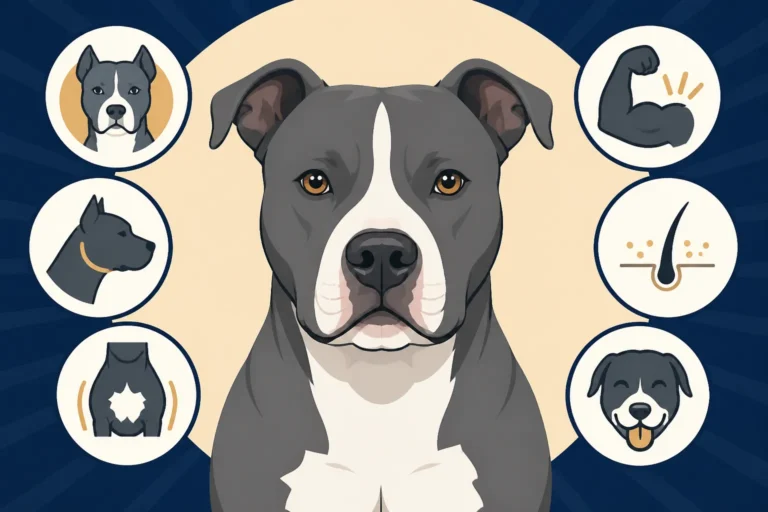
The AKC breed standard for the AmStaff emphasizes a strong, muscular, well-balanced dog, giving an impression of great strength for its size, but without appearing clumsy or coarse. They are typically medium-sized, agile, and graceful. The head is a particularly defining feature: broad and deep, with pronounced cheek muscles and a distinct stop. The ears can be cropped or uncropped, with a strong preference for uncropped ears if left natural, standing rather than hanging low. Their eyes are dark and round, set low and wide apart. A strong, medium-length neck that tapers from the shoulders to the back of the skull contributes to their powerful appearance.
The body is compact, with a broad, deep chest and well-sprung ribs. The back is short and slopes slightly from the shoulders to a broad, muscular loin. Legs are straight, heavy-boned, and well-muscled, indicating strength and agility. The tail is short in proportion to the size of the dog, set low, tapering to a fine point, and carried naturally, not docked. Their coat is short, stiff to the touch, and glossy, coming in a variety of colors and patterns, although coats with more than 80% white, black and tan, or liver are generally considered less desirable in the show ring. This specific physical blueprint helps differentiate the AmStaff from other Pit Bull type dogs, some of which may have different build requirements or preferred traits.
AmStaff Temperament According to the AKC
When we talk about the American Staffordshire Terrier, it’s impossible to separate their physical prowess from their mental and emotional makeup. The AKC breed standard isn't just about how a dog looks; it meticulously describes the temperament considered ideal for the breed. This aspect is perhaps even more critical than appearance, especially for a breed that often faces misconceptions. The AmStaff temperament, as outlined by the AKC, is a testament to their potential as loyal, loving, and stable companions, provided they receive appropriate training and socialization.
Desired Traits
The AKC standard explicitly describes the AmStaff as "courageous, intelligent, and good-natured." This is the cornerstone of the breed's ideal temperament. They are expected to be outgoing and confident, showing a zest for life. AmStaffs should possess a high degree of intelligence, making them highly trainable and eager to please their human companions. This intellectual capacity, coupled with their inherent strength, means they thrive on engaging activities and consistent training. A good-natured disposition, especially towards people, is paramount. This includes being affectionate with their families and generally tolerant of strangers when properly introduced.
An ideal AmStaff is stable and reliable, not overly shy or aggressive, but certainly alert and aware of their surroundings. They are known for their unwavering loyalty and protective instincts towards their family, traits that make them excellent guardians without being unduly suspicious. This combination of courage, intelligence, and a gentle disposition towards humans is what breeders strive for and what makes a well-bred, well-socialized AmStaff such a cherished member of many households. Many AmStaff owners seek out training programs that enhance these natural traits, and find excellent resources, from books to durable training aids, at stores like Chewy.
Disqualifying Traits
Just as the AKC standard outlines desired traits, it also specifies characteristics that are considered serious faults or even disqualifications in the show ring, particularly concerning temperament. Any form of shyness, fearfulness, or unprovoked aggression towards humans is a major red flag and grounds for disqualification. The standard emphasizes that an AmStaff should be confident and self-possessed, not exhibiting timidity or nervousness. An overly aggressive dog, one that lunges, snarls, or bites without provocation, is absolutely contrary to the breed’s ideal temperament.
While many AmStaffs are known for their strength and prey drive, the standard aims for a dog that is manageable and stable. Therefore, any excessive or uncontrolled aggression, whether towards people or other animals, particularly if it compromises their safety or trainability, is a serious concern. While they can be selective with other dogs, an AmStaff should not be inherently or uncontrollably aggressive towards them; such traits would be heavily faulted. Responsible breeders screen for these undesirable traits carefully, understanding that temperament is hereditary and vital for the breed's reputation and its role as a family companion.
Distinguishing the AmStaff from Other Pit Bull Types
This is where the waters get really murky for a lot of people! The term "Pit Bull" is often used as a catch-all for several breeds and mixes that share a similar powerful build and head shape. While the American Staffordshire Terrier certainly falls into the "Pit Bull type" category due to its ancestry and appearance, it is a distinct breed with its own specific standards and lineage, particularly when we talk about AKC recognition. Understanding these distinctions is crucial, not just for breed enthusiasts but for anyone living in areas with breed-specific legislation or dealing with insurance companies.
AmStaff vs. American Pit Bull Terrier APBT
The most common point of confusion lies between the AKC-recognized American Staffordshire Terrier (AmStaff) and the United Kennel Club (UKC) recognized American Pit Bull Terrier (APBT). Historically, they share the same foundational stock. However, their paths diverged when the AKC recognized the Staffordshire Terrier in 1936. The key difference lies in the registries and their respective breed standards. The AKC AmStaff standard, as discussed, focuses on a slightly heavier, more compact dog, bred primarily for conformation showing. The UKC APBT, on the other hand, often allows for a wider range in size and build, and its standard emphasizes athleticism, gameness, and working ability, reflecting its historical roots as a versatile working dog.
It's not uncommon for a dog to be dual-registered with both clubs if it meets both standards, but many dogs are bred specifically to one standard or the other. Generally, AmStaffs tend to have a slightly broader head, a more defined stop, and a stockier build than the typically leaner, more agile APBT. Temperamentally, both breeds are known for their loyalty and good nature with people, but the APBT standard often places a stronger emphasis on characteristics like "gameness" and high drive, which relate to their working heritage. It's a subtle but important distinction that often gets lost in generalized discussions about "Pit Bulls."
Beyond the Breed Name
Adding to the confusion is how dogs are labeled in shelters and by the general public. A dog with a blocky head and muscular body is often immediately labeled a "Pit Bull" by visual identification, regardless of its actual genetic makeup or breed background. This means that many dogs in shelters identified as "Pit Bulls" are, in fact, mixed breeds or even other distinct breeds like American Bullies or true American Staffordshire Terriers, which may or may not have an AKC pedigree. This subjective labeling can have serious consequences, impacting adoption rates, insurance policies, and even housing options.
While DNA testing can offer a clearer picture of a dog's ancestry, even then, the term "Pit Bull" isn't a single genetic identifier. Instead, DNA tests usually reveal percentages of American Staffordshire Terrier, American Pit Bull Terrier, Staffordshire Bull Terrier, and other bully breeds. Therefore, while a DNA test can tell you a lot, it won't always give you a simple "yes" or "no" to the "is it a Pit Bull?" question, because "Pit Bull" isn't a recognized breed name in itself, but a type. Exploring Whether a DNA Test Settles the Pit Bull Question can help clarify this further. What truly matters is recognizing that the AKC AmStaff is a specific, well-defined breed with a known lineage, rather than a generic descriptor.
| Feature | AKC American Staffordshire Terrier (AmStaff) | UKC American Pit Bull Terrier (APBT) |
|---|---|---|
| Primary Registry | American Kennel Club (AKC) | United Kennel Club (UKC) |
| Origin of Name | Staffordshire Terrier (1936), AmStaff (1972) | American Pit Bull Terrier (UKC) |
| Focus of Standard | Conformation showing, balanced appearance | Performance, working ability, gameness |
| Typical Build | Generally stockier, broader head, deeper chest | Often slightly leaner, more agile |
| Size (Approx.) | 17-19 inches tall, 50-70 pounds | 17-21 inches tall, 30-85 pounds (broader range) |
| Temperament Emphasis | Good-natured, intelligent, courageous, family dog | Loyal, courageous, high drive, tenacious |
| Ear Cropping | Optional (can be natural or cropped) | Optional (can be natural or cropped) |
Living with an AKC-Recognized AmStaff
Bringing an American Staffordshire Terrier into your home is a commitment to a powerful, intelligent, and deeply loyal companion. Because of their breed background and the general misconceptions surrounding "Pit Bull" types, AmStaff owners often face higher expectations and scrutiny. This isn't a breed for the faint of heart or for someone looking for a purely decorative pet. An AKC-recognized AmStaff, bred to standard, comes with a specific set of needs and characteristics that, when understood and met, lead to a rewarding partnership.
Training and Socialization Needs
Given their strength, intelligence, and often high energy levels, consistent and positive training and socialization are non-negotiable for an AmStaff. Early socialization, starting from puppyhood, is crucial to help them develop into well-adjusted adults. This means safely exposing them to a wide variety of sights, sounds, people, and other well-behaved dogs in a controlled manner. Puppy classes are an excellent way to start, providing structured environments for learning and interaction. Continued training throughout their lives reinforces good manners and keeps their intelligent minds engaged.
Their physical strength necessitates a focus on leash manners. An adult AmStaff can easily pull an unprepared owner down the street, so teaching them to walk politely on a leash is paramount. Training a Pit Bull to a Higher Standard Than Other Dogs isn't just a suggestion; it's often a necessity for their well-being and public acceptance. Positive reinforcement methods work incredibly well with AmStaffs, who are eager to please and highly motivated by food and praise. Engaging in activities like obedience, agility, or even trick training can harness their intelligence and energy in constructive ways, helping them to be confident and well-behaved members of the community. Many AmStaff owners find great options on platforms like Chewy, from puzzle feeders to durable chew toys that can stand up to their strong jaws, which are essential tools for a well-managed dog.
Care Considerations
Caring for an AmStaff involves more than just food and water; it requires attention to their physical and mental well-being. Their muscular build means they need a high-quality diet that supports their energy levels without leading to obesity. Regular exercise is key, not just for physical health but also for mental stimulation. Daily walks, runs, hikes, or vigorous play sessions are essential to keep them happy and prevent boredom-induced destructive behaviors. Remember, a bored AmStaff is a creative AmStaff, and that creativity often involves chewing on things you don't want them to!
Grooming is relatively low-maintenance due to their short, stiff coat. Regular brushing helps control shedding and keeps their coat healthy and shiny. However, regular checks of their skin for any irritation or allergies are important, as some bully breeds can be prone to skin sensitivities. Dental care is also crucial, as their strong jaws and love of chewing can sometimes lead to broken teeth if they're given inappropriate chew toys. For specialized diets or supplements to support joint health in an active AmStaff, online pet supply stores such as Chewy can be an invaluable resource. Ensuring they have a comfortable, durable bed that can withstand their tendencies to "dig" or nest is also a good investment.
Finding a Reputable Breeder
If you're set on bringing an AKC-recognized American Staffordshire Terrier into your life, finding a reputable breeder is of utmost importance. A good breeder will prioritize health, temperament, and adherence to the breed standard. They should be transparent about their breeding practices, openly discuss the health history of their breeding stock, and be able to provide pedigrees. Responsible breeders typically conduct various health clearances, such as hip and elbow evaluations, and often test for cardiac issues, to ensure they are not passing on genetic diseases. Looking into What Testing a Pit Bull Breeder Should Have Done can give you a clear idea of what to expect and ask for.
A reputable breeder will also be deeply knowledgeable about the AmStaff temperament and will socialize their puppies from birth. They will ask you many questions to ensure you are a suitable home for one of their puppies, and they will be a lifelong resource for advice and support. Be wary of breeders who prioritize "rare" colors, offer multiple breeds, cannot provide health clearances, or seem more interested in making a quick sale than in the welfare of their dogs. Choosing a well-bred AmStaff from a responsible source sets the foundation for a healthy, happy, and well-adjusted companion for years to come.
Disclaimer
This article is for general informational purposes only and does not constitute professional advice. Laws, prices and regulations vary by location and change over time. Consult a qualified professional for guidance on your specific situation.