What the ATTS Test Measures in a Pit Bull
There's a lot of talk out there about Pit Bull temperament, and often, it's not very positive or well-informed. As a Pit Bull owner, you probably know the frustration of encountering misconceptions firsthand. One tool often brought into these discussions is the American Temperament Test Society (ATTS) test. But what exactly is this test, and what does it truly measure in a dog, especially a Pit Bull? This guide is here to break down the ATTS test, demystify its components, and help you understand what insights it offers – and what it doesn't – when it comes to assessing a Pit Bull's character.
Unpacking the ATTS Test: What It Actually Aims to Assess
When we talk about a dog's temperament, it's a really broad term that can mean a lot of things to different people. Some might think of aggression, others think of shyness, and some think of general friendliness. The American Temperament Test Society (ATTS) test, however, has a very specific goal: to measure a dog's natural stability, their ability to recover from surprising or startling events, and their reaction to unusual or potentially threatening situations. It's not about how well a dog performs tricks or how much they love belly rubs, though those are certainly wonderful traits. It's about how they cope with stress and the unknown in a controlled environment.
The Core Purpose of the ATTS: Stability and Reactivity
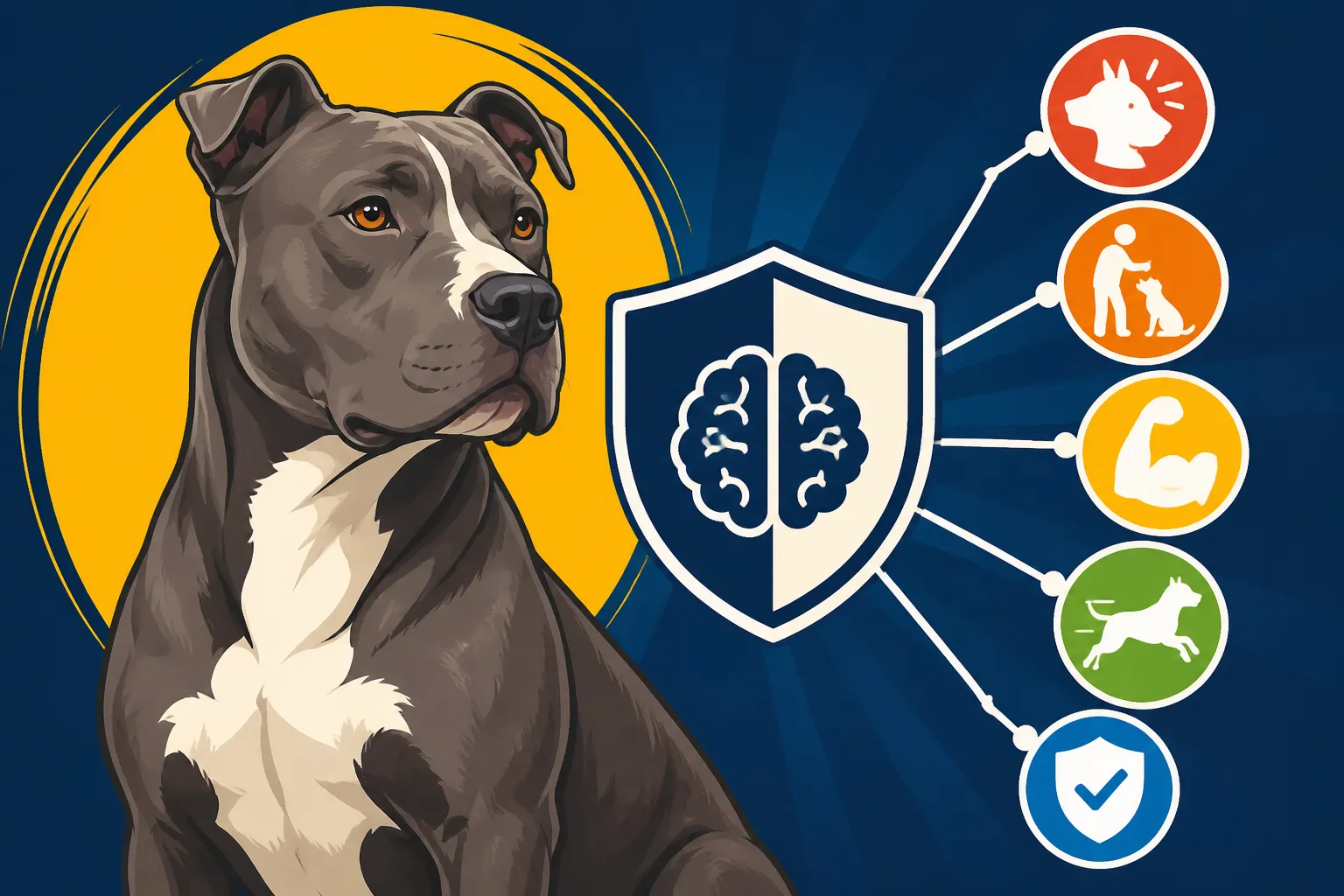
At its heart, the ATTS test is designed to gauge a dog's inherent temperament, looking for traits like shyness, aggression, and unprovoked panic, as well as testing for a dog’s natural friendliness. Dogs face a series of carefully orchestrated situations that simulate common encounters or slightly unsettling scenarios they might experience in the real world. The test is less about obedience and more about instinctual reactions. Does the dog become overly aggressive? Does it bolt in fear? Or does it show a calm, confident, and curious demeanor, recovering quickly from startling events? These are the questions the ATTS aims to answer. It's a snapshot of how a dog is likely to react when confronted with something unexpected, providing valuable insights into their overall mental soundness and resilience.
What they're really trying to get at is whether a dog is stable. A stable dog is one that can handle novel situations without falling apart. They might be surprised, sure, but they recover quickly and don't escalate into uncontrolled fear or aggression. This kind of stability is incredibly important, especially for dogs like Pit Bulls, who often face undue scrutiny. Having a dog that can handle the unexpected calmly is a hallmark of responsible ownership and good breeding.
The Specific Scenarios a Dog Faces During the Test
The ATTS test puts a dog through ten distinct stations, each designed to elicit a specific type of reaction. Think of it as a carefully crafted obstacle course for a dog's nerves. These stations range from friendly greetings to more confrontational scenarios. For instance, a dog might first encounter a friendly stranger, then a stranger walking with an unusual gait or carrying an odd object. Then come the auditory tests – a sudden loud noise, like a metal pan dropping. Visual stimuli are also introduced, such as an umbrella snapping open right in front of them or a human "stalker" approaching in a disquieting manner.
The key is not to judge if a dog reacts, but how it reacts and how quickly it recovers. A quick startle is normal; prolonged fear or aggression is not. Each scenario is designed to see if the dog can process the information, recover its composure, and continue to function without becoming overwhelmed. For example, when the decoy "attacks" the handler, the test assesses whether the dog attempts to defend its handler with appropriate force and then returns to a calm state once the "threat" is gone. It's a rigorous test of nerve, control, and inherent disposition. You can learn more about this by reading How the ATTS Test Is Run on a Pit Bull.
How the ATTS Test Is Conducted on a Pit Bull
The ATTS test is standardized, meaning every dog, regardless of breed, goes through the same sequence of events. This consistency allows for a fair comparison of temperament across different dogs. For a Pit Bull, this means they're evaluated under the exact same conditions as a Golden Retriever or a German Shepherd, which is vital for providing objective data to counter breed-specific biases.
The Structured Approach and the Role of the Decoy
During the test, the dog is on a leash, accompanied by its handler, who is typically the owner. The test usually takes place outdoors in an open area. A series of trained volunteers, called decoys, execute the various scenarios. These decoys are skilled at playing their parts convincingly, whether they are acting friendly, behaving oddly, or simulating a threat. Their job is to be consistent and unbiased in their presentation of the stimuli. The judges observe the dog's reactions closely, noting everything from tail carriage and ear position to barks, growls, and attempts to avoid or engage. The dog's natural response to each situation is the focus.
The handler's role is to simply walk their dog through the course as instructed. They are not to encourage or dissuade any reaction, allowing the dog's true temperament to shine through. This "hands-off" approach is crucial for an accurate assessment. Imagine walking your powerful Pit Bull through a course where strange sounds go off and people act strangely – it requires trust in your dog and a willingness to let their true colors show. This controlled environment is what makes the ATTS data so compelling.
Interpreting a Pit Bull's Reactions During the Test
Dogs receive a "pass" or "fail" based on their overall performance. A dog typically fails if it exhibits unprovoked aggression, extreme panic that it cannot recover from, or overwhelming shyness that prevents it from engaging with the environment or people. A pass indicates a stable, confident, and resilient temperament. It doesn't mean the dog is "perfect" or that it will never react to anything negatively in its life. Instead, it suggests that under controlled, unexpected circumstances, the dog demonstrates a balanced and appropriate response.
For Pit Bulls, achieving a passing score is often seen as a significant achievement, not just for the individual dog, but for the breed type as a whole. It provides concrete evidence that these dogs, when well-bred and properly socialized, are mentally sound and capable of handling various stimuli without aggression or extreme fear. The data gathered from these tests helps us understand The Pit Bull ATTS Pass Rate in the Latest Results and provides a more factual basis for discussions about their suitability as family companions. For those looking to work on their Pit Bull's confidence or basic manners, resources like BAXTER & Bella's online training programs can be incredibly helpful for building a strong foundation, which indirectly contributes to a dog's ability to handle novel situations.
What the ATTS Test Doesn't Measure (And Why That's Crucial to Understand)
While the ATTS test is an excellent tool for assessing core temperament, it's really important to understand its limitations. No single test can encapsulate the entirety of a dog's personality or predict every single behavior it will ever exhibit. Thinking of it as a definitive statement on a dog's future actions would be a misunderstanding of its purpose.
Beyond a Single Score: Individual Temperament vs. Breed Averages
A "pass" on the ATTS test doesn't mean a dog is automatically a perfect family pet, nor does a "fail" doom a dog to a life of behavioral problems. Individual temperament is complex, influenced by genetics, early experiences, ongoing training, and environmental factors. The ATTS score is one data point, but it's not the whole story. For instance, a dog might pass with flying colors but still have specific triggers or anxieties that aren't revealed during the test. Maybe it's wonderful with strangers but struggles with Pit Bull Dog Selectivity Explained around other dogs.
Furthermore, while breed-wide ATTS statistics can offer insights into general tendencies, they can never predict the temperament of an individual Pit Bull. Every dog is an individual. A Pit Bull puppy from a reputable breeder with generations of stable temperaments might have a different disposition than a rescue Pit Bull with an unknown history. That's why Why a Test Score Cannot Predict Your Pit Bull is such an important concept for owners to grasp. Responsible ownership means understanding your dog's unique personality, not just relying on breed averages or a single test result.
Real-World Behavior vs. Test Day Performance
The ATTS test is a controlled environment. Real life, as we all know, is anything but. The distractions, variables, and nuances of daily interactions are far more complex than what can be simulated in a test. A dog might perform beautifully on the test course, but then struggle with Pit Bull Leash Pulling at Fifty Pounds on a busy city street, or become reactive when startled by a skateboarder. The test is a controlled assessment, not a guarantee of perfect behavior in every conceivable situation.
This distinction is especially crucial for Pit Bull owners, who face heightened scrutiny. You can't just pass an ATTS test and expect all breed-specific legislation or public apprehension to disappear. It’s an excellent measure of inherent temperament, but it doesn’t replace the need for ongoing Training a Pit Bull to a Higher Standard Than Other Dogs, thorough socialization, and consistent management in the real world. A dog's true "temperament" is a dynamic interplay of nature and nurture, constantly shaped by its experiences and how its human family guides it.
Here's a quick look at what the ATTS test focuses on versus broader behavioral aspects:
| ATTS Test Focus | Broader Behavioral Aspects Not Directly Assessed |
|---|---|
| Reaction to friendly strangers | Consistent friendliness in high-distraction environments |
| Reaction to neutral/unusual persons | Dog-to-dog interactions in novel settings |
| Reaction to auditory stimuli (e.g., loud noise) | Separation anxiety or destructive chewing |
| Reaction to visual stimuli (e.g., umbrella opening) | Resource guarding or prey drive towards small animals |
| Recovery from startling events | House training consistency or recall reliability |
| Protection of handler from 'threat' | Overall obedience and manners in daily life |
| Confidence and stability | Adaptability to new homes or travel experiences |
Why the ATTS Test Matters for Pit Bull Owners and Advocates
Despite its limitations, the ATTS test holds significant value, particularly for Pit Bull owners and those who advocate for the breed type. It offers an objective, data-driven perspective that can help challenge long-standing biases and promote a more accurate understanding of Pit Bull temperament.
Challenging Misconceptions with Data
Pit Bulls have suffered from a public relations nightmare for decades. Sensationalized media reports and breed-specific legislation have painted a picture of inherently dangerous dogs. The ATTS test provides a counter-narrative based on actual observed behavior, not speculation or fear. When Pit Bulls consistently show high pass rates – often comparable to or even exceeding those of breeds traditionally considered "gentle" – it demonstrates that a responsible, stable temperament is very much within the norm for these dogs. This kind of data can be a powerful tool for education, helping to dispel myths and change negative perceptions.
For owners, knowing their dog has passed an ATTS test can be a source of pride and confidence, allowing them to educate others with verifiable information. It contributes to a larger effort to reshape Pit Bulls in Culture and Public Perception and push back against breed stereotypes. This is about more than just one dog; it's about advocating for an entire group of dogs that deserve a fair assessment.
A Starting Point for Responsible Ownership and Training
While the ATTS test isn't a magical fix, it serves as a valuable benchmark. For breeders, it can be a tool to assess the temperamental soundness of their breeding stock, aiming to produce confident, stable puppies. For potential owners, understanding what the ATTS evaluates can help them seek out dogs from lines or rescues that prioritize good temperament.
Moreover, preparing for an ATTS test, or simply focusing on the areas it evaluates, naturally encourages Positive Reinforcement Training With a Pit Bull and comprehensive Socializing a Pit Bull Puppy Thoroughly. The very act of exposing a dog to novel stimuli in a positive, controlled manner builds confidence and resilience – traits that are invaluable for any dog, especially a Pit Bull navigating a sometimes-prejudiced world. Whether you get specific training for the test or just focus on solid manners and confidence building, every step you take in training, like the basics you might find on Amazon for dog supplies or through a structured program, contributes to a well-adjusted companion. Ultimately, the ATTS test helps underscore that responsible ownership, consistent training, and thorough socialization are paramount, leading to well-behaved Pit Bulls who are a credit to their families and their breed. It also reinforces the notion that The Manners a Pit Bull Needs in Public are non-negotiable, given the scrutiny they face.
Disclaimer
This article is for general informational purposes only and does not constitute professional advice. Laws, prices and regulations vary by location and change over time. Consult a qualified professional for guidance on your specific situation.