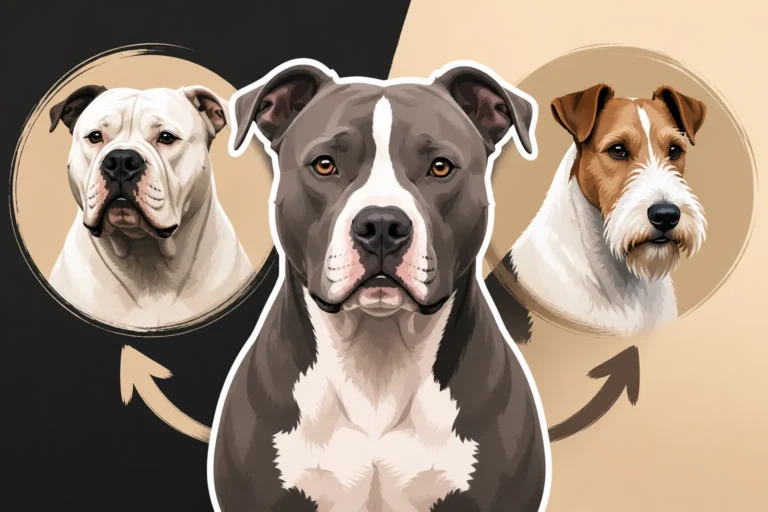
Which Registries Recognize the APBT
It can be incredibly confusing when you're trying to understand the world of Pit Bulls, especially when you start looking into official recognition and breed registries. Many well-meaning folks mistakenly believe that "Pit Bull" is a single, recognized breed by all major kennel clubs, or they get tangled up in the differences between the various bully breeds. This often leads to frustration when trying to confirm a dog's lineage or anticipate their needs. This guide aims to clear up that confusion, diving deep into which specific registries officially recognize the American Pit Bull Terrier (APBT), why those distinctions exist, and what it all means for you as an owner or prospective owner.
The United Kennel Club: Home of the American Pit Bull Terrier
When we talk about the American Pit Bull Terrier (APBT) as a distinct breed, there is one major registry that stands out as its original and primary recognizing body: the United Kennel Club (UKC). This is often the first and most important piece of information for anyone delving into the APBT breed. Unlike some other kennel clubs that might have stricter criteria for entry or a different historical focus, the UKC has maintained a strong connection to the working origins of the breed.
The UKC's Long History with the APBT
The United Kennel Club was established way back in 1898, and from its very beginning, it recognized the American Pit Bull Terrier. This was a time when dog fighting was still legal and prevalent, and these dogs were bred for specific traits like gameness, strength, and athleticism. However, the UKC quickly shifted its focus to promoting legitimate dog sports and companionship, moving away from the darker aspects of the breed's past. They established a breed standard that described the ideal physical characteristics and temperament of the APBT, emphasizing their intelligence, loyalty, and powerful build. For generations, the UKC has been the bedrock for APBT breeders and enthusiasts who want to maintain the integrity of the breed according to its historical roots.
Being registered with the UKC means that your dog's lineage can be traced back through documented pedigrees, ensuring that they truly are an American Pit Bull Terrier. This isn't just about a fancy piece of paper; it's about preserving the breed's characteristics, both physical and temperamental. Breeders who register their dogs with the UKC are typically committed to upholding the breed standard and often participate in UKC events such as conformation shows, obedience trials, and weight pull competitions. This commitment helps ensure that responsible breeding practices are followed, and the future of the breed is protected. If you're considering getting a puppy, understanding The American Pit Bull Terrier as the UKC Defines It is essential for making an informed choice.
What UKC Registration Means for Owners
For an owner, UKC registration provides a sense of certainty about their dog's background. It means you have a recognized pedigree, which is crucial if you plan on participating in dog sports or breeding your APBT. It also helps to differentiate the true American Pit Bull Terrier from other bully breeds or mixed-breed dogs that are often broadly labeled as "pit bulls" by the general public or even in shelters. When you're trying to buy products that are specifically suited for the breed's needs, like durable toys or specific harnesses, knowing your dog is a true APBT can help guide your choices, whether you're shopping at a local pet store or browsing online at places like Chewy.
Furthermore, UKC events provide a fantastic community for APBT owners. You'll find fellow enthusiasts who appreciate the breed for its capabilities and unique traits. It's a great way to learn more about training, health, and care from experienced individuals. For example, understanding Pit Bull Heart and Thyroid Conditions is critical, and connecting with other UKC members can offer valuable insights into managing these challenges within the breed. These events emphasize the versatility and trainability of the APBT, showcasing them as much more than just a powerful dog, but a dedicated companion and athlete.
The American Kennel Club and the American Staffordshire Terrier
This is where much of the confusion around Pit Bull recognition often begins. While the United Kennel Club embraces the American Pit Bull Terrier, the much larger and more widely known American Kennel Club (AKC) does not recognize a breed called the "American Pit Bull Terrier." Instead, the AKC recognizes a very similar, but distinct, breed known as the American Staffordshire Terrier (AmStaff). This distinction is incredibly important for anyone trying to navigate the world of purebred dogs and understanding why some "Pit Bulls" might have AKC papers while others do not.
The Historical Split Between APBT and AmStaff
The story of the American Pit Bull Terrier and the American Staffordshire Terrier is a fascinating tale of divergence. Both breeds share a common ancestry, stemming from the bull-and-terrier crosses that were popular in 19th-century England and later brought to America. These dogs were initially bred for dog fighting, but also found roles as farm dogs, guardians, and companions. When the UKC began registering the American Pit Bull Terrier, it laid the groundwork for one branch of the breed's development.
However, in the 1930s, as public perception towards dog fighting began to shift and the sport itself became illegal, some breeders sought to distance their dogs from the "pit fighter" image. They wanted to have their dogs recognized by the AKC, which at the time was primarily focused on show dogs. The AKC initially recognized these dogs as "Staffordshire Terriers" in 1936, with a slightly different emphasis on conformation and temperament, aiming for a more refined show dog. This was the pivotal moment, a historical split where some lines of the original American Pit Bull Terrier stock began to develop independently under the AKC banner. This divergence is beautifully detailed in How AmStaffs and APBTs Split in the 1930s.
Differences in Breed Standard and Focus
While genetically very close, the AKC's American Staffordshire Terrier developed a breed standard that emphasized certain traits that diverged from the UKC's APBT. Generally, AmStaffs tend to be slightly stockier, with a broader head and a more compact build, bred primarily for the show ring. The AKC standard focuses on conformation and consistency in appearance, rewarding dogs that fit a specific aesthetic ideal. Their temperament is also geared towards being stable and tractable in public and show environments.
The UKC, while also valuing conformation, often places a stronger emphasis on the working capabilities and original athleticism of the APBT. Their standard might allow for a bit more variation in size and build, reflecting the diverse tasks these dogs historically performed. For a breeder, this means choosing which registry's vision they align with. For owners, it means understanding that while your dog might look like a "Pit Bull," if it has AKC papers, it's technically an American Staffordshire Terrier. This difference can also impact how the dogs are perceived in public; an AmStaff with AKC titles might have an easier time in some restrictive housing situations than a UKC-registered APBT, even if they look similar. You might even find breed-specific accessories on sites like Chewy labeled for "AmStaffs" that are quite similar to those for APBTs.
| Feature | United Kennel Club (UKC) | American Kennel Club (AKC) |
|---|---|---|
| Recognized Breed | American Pit Bull Terrier (APBT) | American Staffordshire Terrier (AmStaff) |
| Primary Focus | Working ability, athleticism, traditional APBT traits | Conformation showing, stable temperament for public |
| Standard Evolution | Maintained historical connection to working origins | Developed distinct standard for show ring and refinement |
| Recognition Status | Original and primary registry for APBT | Does not recognize APBT; recognizes AmStaff as separate breed |
| Temperament Focus | Gameness, intelligence, loyalty, athleticism | Steady, confident, gentle companion, amenable to showing |
| Typical Build | May have wider range, often leaner, athletic | Generally more compact, stockier, broader-headed |
Other Registries and Misconceptions
Beyond the UKC and AKC, the world of dog registries can become a bit of a wild west, especially when dealing with the broader "Pit Bull" type. There are many other organizations, some reputable and some less so, that claim to register various "Pit Bull" breeds. It's crucial for prospective owners to understand that not all "registries" hold the same weight or adhere to rigorous standards, and some can even be misleading.
Less Reputable "Registries" and Pedigree Claims
You might encounter individuals or online "breeders" who offer "registered Pit Bull puppies" from various obscure registries. These organizations often have loose standards, if any, and their "papers" may not mean much in terms of verifiable lineage, health testing, or commitment to breed improvement. Some might exist simply to validate dogs of unknown origin or to allow for the registration of dogs that don't fit the established standards of the UKC or AKC. This is a common issue with many breeds, but particularly with "Pit Bull" types due to the general public's confusion about what constitutes a true breed.
A real-life scenario might be seeing an advertisement for a "Blue Nose Pit Bull" registered with a lesser-known club, with an inflated price tag based on the color. While a blue nose can occur in APBTs, the color itself does not denote a separate breed, nor does it guarantee superior quality or health. Reputable breeders, whether UKC APBT or AKC AmStaff, prioritize health, temperament, and adherence to the breed standard over trendy colors. When looking for a puppy, always ask what testing a What Testing a Pit Bull Breeder Should Have Done and verify the validity of any registry claims. Don't be shy about asking to see actual registration documents and talking directly with the registry if you have doubts.
How Shelters Identify and Label "Pit Bulls"
Complicating matters further is the way shelters and rescue organizations often identify dogs. Because "Pit Bull" has become a generic term for several visually similar bully breeds and mixes, shelters frequently label any dog resembling an APBT, AmStaff, Staffordshire Bull Terrier, or even American Bulldog as a "Pit Bull." This visual identification, while practical for categorization in a shelter environment, is often inaccurate from a breed-specific standpoint. A dog labeled a "Pit Bull" at a shelter may actually be a mixed breed with some bully characteristics, or even another bully breed altogether.
This broad labeling significantly impacts the adoption rates and public perception of these dogs. Many people seek to know Whether a DNA Test Settles the Pit Bull Question to clarify their rescue dog's lineage. While DNA tests can offer insights into a dog's genetic makeup, even they can sometimes struggle with pinpointing exact proportions of "Pit Bull" type breeds due to their shared ancestry and overlapping characteristics. What's important to remember is that a dog's individual temperament and training are far more indicative of its suitability as a pet than a vague breed label. Many wonderful dogs labeled "Pit Bull" are waiting for homes, and their lack of a specific breed registry doesn't diminish their worth. Sites like Chewy often provide excellent resources and products for all dogs, regardless of their precise breed label or origin.
Why These Distinctions Matter for Owners
Understanding which registries recognize the APBT and the differences between "Pit Bull" as a type and specific breeds isn't just academic; it has very real, practical implications for owners, from housing to insurance to participating in canine events. Navigating these complexities is part of being a responsible and informed Pit Bull owner.
Impact on Housing and Insurance
One of the biggest hurdles many Pit Bull owners face is breed-specific legislation (BSL), which can include restrictions on housing and prohibitive clauses in insurance policies. Many landlords and insurance companies use the broad "Pit Bull" label to determine eligibility. While some policies might specifically exclude "American Pit Bull Terriers," others might cast a wider net to include "any dog of Pit Bull type."
Knowing your dog's specific breed registration, if applicable, can sometimes help. If you have an AKC-registered American Staffordshire Terrier, for example, you might be able to argue that your dog is not an American Pit Bull Terrier, which might exempt you from some restrictions. However, this is not always a guaranteed solution, as many policies and municipal laws cast a very wide net based on visual appearance rather than specific registry papers. It's why researching Getting Home Insurance With a Pit Bull and Finding a Rental That Takes a Pit Bull becomes so critical, often requiring direct communication with providers and landlords to clarify their policies. Having documented proof of lineage, even if it's UKC for an APBT, can sometimes demonstrate responsible ownership, which might sway a decision, though this varies greatly by individual company or property manager.
Implications for Showing, Breeding, and Training
For those interested in showing their dogs, breed registration is non-negotiable. If you want to compete in UKC conformation events, your dog must be a UKC-registered American Pit Bull Terrier. Similarly, if you aim for AKC titles, your dog must be an AKC-registered American Staffordshire Terrier. Mixing these up simply won't work, as they are considered distinct breeds by their respective organizations. This also extends to breeding; reputable breeders only breed dogs registered within the same registry to maintain breed purity and standards.
Furthermore, these distinctions can influence how people approach training and expectations. While many training principles apply across breeds, a deeper understanding of the specific breed standard can inform your approach. For instance, the sheer strength and drive often associated with the APBT might mean a focus on rigorous leash manners and impulse control. For all Pit Bull types, training to a high standard, such as earning a Canine Good Citizen (CGC) certificate, is invaluable, irrespective of registry. Canine Good Citizen and Why It Matters for a Pit Bull highlights how important these achievements are for public perception and responsible ownership. Many owners purchase specific training aids and high-value treats from retailers like Chewy to support these intensive training regimens.
Public Perception and Advocacy
Ultimately, the confusion around APBT registration and the broader "Pit Bull" label impacts public perception and ongoing advocacy efforts. When people understand that "Pit Bull" is a type encompassing several breeds, and that the American Pit Bull Terrier is a specific breed with a dedicated registry (UKC) and a detailed standard, it helps to dismantle stereotypes. It encourages people to look beyond generic labels and appreciate individual dogs for their unique qualities and temperaments.
As an owner of any "Pit Bull" type dog, you become an ambassador for the breed. By understanding the nuances of registration, advocating for responsible ownership, and participating in positive dog activities, you contribute to a more informed and fair view of these incredible animals. Whether your dog is a UKC APBT, an AKC AmStaff, or a beloved mixed breed, your commitment to their well-being and training is what truly matters. From understanding your dog's genetic background to choosing the right toys and foods on Chewy, every step you take to be an informed and dedicated owner helps change the narrative.
Disclaimer
This article is for general informational purposes only and does not constitute professional advice. Laws, prices and regulations vary by location and change over time. Consult a qualified professional for guidance on your specific situation.