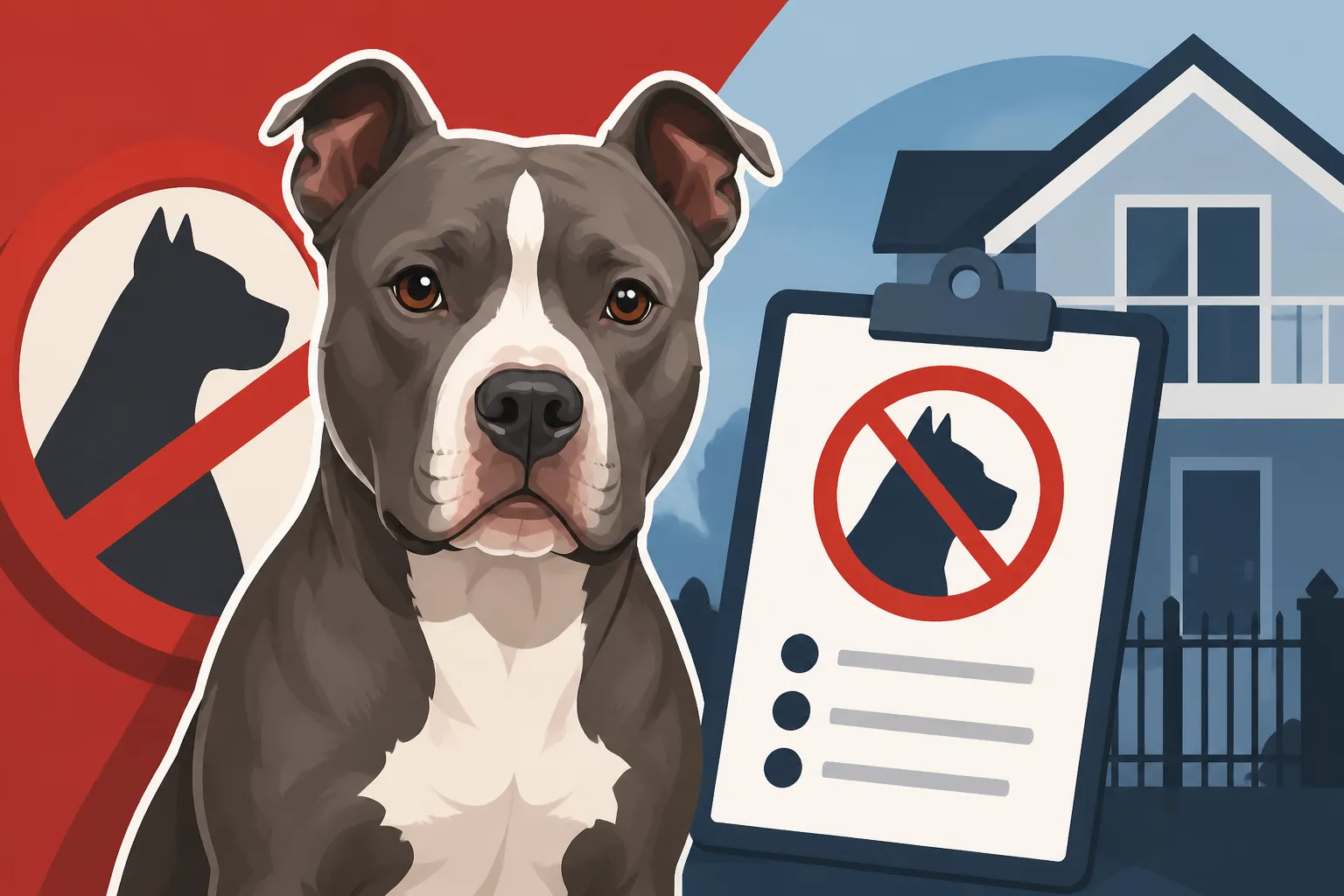
Landlord Breed Clauses Naming Pit Bulls
Finding a rental property when you share your life with a Pit Bull can feel like an uphill battle. It’s incredibly frustrating to stumble upon what seems like the perfect home, only to have your hopes dashed by a single line in the lease agreement: "No Pit Bulls allowed." This guide is here to shed light on why these dreaded landlord breed clauses exist, how they affect Pit Bull owners, and what practical steps you can take to navigate the challenging rental market.
Understanding Landlord Breed Clauses and Why They Exist
Let’s be honest, those blanket breed bans aren't usually born out of a landlord's personal vendetta against a specific dog. More often than not, these clauses stem from complex factors, primarily driven by insurance requirements and a desire to mitigate perceived liability risks. It's a tough pill to swallow when you know your dog is a gentle giant, but understanding the landlord's perspective, however flawed, is the first step in tackling the issue.
The Root of Breed Restrictions: Insurance and Liability
The biggest boogeyman for landlords when it comes to "aggressive" breeds is often their insurance carrier. Many homeowners insurance policies, especially those covering rental properties, have specific exclusions for certain dog breeds, and Pit Bulls frequently top that list. If a landlord's insurance policy won't cover a dog bite incident involving a Pit Bull on their property, they face a massive personal liability risk. They might be looking at potential lawsuits, sky-high legal fees, and significant financial payouts if something were to happen. It's not about whether your dog would bite; it's about the statistical risk their insurer perceives.
This isn't just about individual landlords; it often trickles down from the commercial insurance companies that cover entire apartment complexes or property management firms. These larger entities negotiate policies that might cover hundreds or thousands of units, and to keep premiums down, they often agree to breed restrictions. So, your individual landlord might not even have a choice; they're bound by the rules of their property management company or their overarching insurance policy. It creates a seemingly impenetrable wall for responsible Pit Bull owners, even when their furry companion is a certified angel. This often connects directly to the larger topic of Getting Home Insurance With a Pit Bull and the struggles owners face.
Common Misconceptions and Stereotypes
Beyond the insurance hurdles, a significant factor driving breed clauses is the persistent negative public perception and widespread stereotypes surrounding Pit Bulls. Decades of sensationalized media coverage, often fueled by misinformation, have painted a picture of these dogs as inherently dangerous, unpredictable, and aggressive. This deeply ingrained fear or prejudice can influence landlords, neighbors, and even other tenants.
Many people simply don't understand that "Pit Bull" isn't a single breed but a blanket term encompassing several breeds, like the American Pit Bull Terrier, American Staffordshire Terrier, and Staffordshire Bull Terrier, as well as various mixes. They don't differentiate between a responsibly bred, well-trained family pet and a dog that might have been neglected or abused. The unfortunate reality is that the term itself triggers an automatic "no" from many people who haven't had personal experience with these wonderful dogs. It's a battle against perception, one that responsible owners fight every single day, and it's why you often find yourself having to justify your dog’s existence before you even get to show off their charm.
Identifying Pit Bull Type Dogs in Lease Agreements
One of the most frustrating aspects of breed-specific legislation and landlord clauses is the sheer ambiguity of what constitutes a "Pit Bull." It's not like there's a universally agreed-upon definition, and this lack of clarity can lead to inconsistent and unfair enforcement. You might think your dog isn't a "Pit Bull," but your landlord's perception or their insurance company's vague checklist might say otherwise.
The Ambiguity of "Pit Bull" Labels
Imagine having a dog that's a mixed breed, perhaps part Boxer, part Labrador, but with a blocky head and muscular build. To you, they're a "Lab-Boxer mix." To a landlord or their agent, they might be immediately labeled a "Pit Bull type" dog simply based on visual appearance, without any formal breed identification. This is a common and infuriating scenario. The term "Pit Bull" is often used as a catch-all for any dog resembling one of the bully breeds, even if their actual genetic makeup is quite different.
This ambiguity means that even if your dog's paperwork says "American Bulldog mix" or "Staffordshire Terrier," a landlord might still deny your application if they visually determine your dog to be a Pit Bull type. It places an enormous burden on you, the owner, to prove your dog's lineage or temperament, even when breed identification itself is notoriously unreliable. The arbitrary nature of these labels is a constant source of stress for owners just trying to find a safe home for their companions. It often leaves owners wondering Which DNA Panel Tells You If It Is a Pit Bull, hoping for a definitive answer that might appease a landlord.
Breed Specific Language Versus Visual Identification
Lease clauses can take a couple of forms: some are explicitly breed-specific, naming "Pit Bulls," "Rottweilers," "Dobermans," etc., by name. Others might be more general, referring to "aggressive breeds" or dogs "over a certain weight," but everyone knows which dogs they're really targeting. Regardless of the language, the actual identification often comes down to visual assessment by untrained individuals—landlords, property managers, or even neighbors reporting to the landlord.
This visual identification is highly problematic. Studies have shown that visual identification of dog breeds, especially Pit Bull types, is often inaccurate. A dog might be visually identified as a Pit Bull even if DNA testing reveals little or no Pit Bull ancestry. Conversely, a dog with significant Pit Bull genetics might not "look" like a Pit Bull and therefore escape the ban. This discrepancy highlights the fundamental flaw in relying on appearance alone to enforce breed restrictions. It's a superficial judgment that ignores the individual temperament and training of a dog, putting well-behaved, loving pets and their owners in an unfair predicament.
Strategies for Renters with Pit Bulls
So, what’s a devoted Pit Bull owner to do when facing such restrictive rental markets? Don't despair. While challenging, there are proactive steps and strategies you can employ to increase your chances of securing a fantastic rental home. It often comes down to being overly prepared, meticulously documenting your dog’s stellar qualities, and presenting yourself as an exceptionally responsible tenant.
Proactive Communication with Landlords
One of the most effective strategies is to be upfront and honest, but also strategic, from the very beginning. When you first inquire about a property, don't just ask "Do you allow dogs?" Instead, be specific. "I have a well-trained American Pit Bull Terrier mix, 'Brutus.' Do you have any breed restrictions?" This might seem counterintuitive, as it could lead to an immediate rejection, but it saves you time and emotional energy pursuing properties where your dog will never be welcome.
For properties that seem promising or have slightly ambiguous pet policies, offer to meet the landlord or property manager in person, with your dog (if appropriate and agreed upon). A calm, well-behaved Pit Bull meeting a potential landlord can often be far more convincing than a dozen phone calls. Bring a folder with all your dog's documentation, including their vaccination records, references from previous landlords, and proof of training classes. A landlord seeing your dog's excellent leash manners or their polite greeting can go a long way in dispelling preconceived notions. Sometimes, a face-to-face interaction can humanize the situation and break down those arbitrary barriers.
Documentation and Training Records
This is where you truly shine as a responsible Pit Bull owner. You need to gather an impeccable "pet resume" that demonstrates your dog is not just a pet, but a valuable, well-managed member of your family. This portfolio should include:
- Veterinary Records: Up-to-date vaccination history, spay/neuter certificates, and general health records. A healthy dog implies a responsible owner.
- Training Certificates: Proof of obedience classes, particularly certifications like the Canine Good Citizen (CGC) from the AKC. A CGC title, or even basic obedience diplomas, shows a commitment to your dog's behavior and manners.
- References: Letters from previous landlords, neighbors, or even your current vet vouching for your dog's good behavior and your responsibility as an owner.
- Photos and Videos: High-quality, appealing photos or short videos of your Pit Bull interacting calmly with people, children, or other animals. Showcase their loving, gentle side.
- Breed Identification (if applicable): If your dog is a mix and you have a DNA test that downplays the "bully" aspect, include it. If they are a purebred recognized by the UKC as an American Pit Bull Terrier, provide that registration.
- Proof of Pet Insurance: This is a big one. Showing that you have a liability policy specifically for your dog can often alleviate a landlord's insurance concerns. We'll talk more about this next.
The more evidence you can provide that your Pit Bull is a well-adjusted, well-trained, and well-cared-for companion, the harder it is for a landlord to dismiss them based purely on breed stereotypes.
Renter's Insurance for Liability Protection
As mentioned, a landlord's biggest fear is often liability. This is where you can proactively address their concern. Many insurance companies offer personal liability coverage specifically for dog owners, regardless of breed. By presenting proof of your own robust renter's insurance policy that includes significant liability coverage for your Pit Bull, you can directly mitigate the landlord's perceived risk. This is crucial, as Renters Insurance That Accepts a Pit Bull can be a game changer.
Companies like State Farm, USAA, and even some specialty pet insurance providers like Healthy Paws, often have more flexible breed policies than standard homeowners insurance for landlords. Research these options and get a quote that explicitly covers dog-related incidents. Presenting this policy to a prospective landlord demonstrates your commitment to being a responsible pet owner and shifts the liability burden from their shoulders to yours. It’s a powerful tool in your arsenal, showing you’ve thought ahead and taken tangible steps to protect everyone involved, not just your own interests. This commitment also reflects a broader understanding of the financial responsibilities that come with dog ownership, often including expenses like What a Pit Bull Costs a Year With Allergies.
| Documentation Type | Purpose | Why It Helps |
|---|---|---|
| Vet Records | Proof of health, vaccinations, spay/neuter | Shows responsible ownership, commitment to health. |
| Training Certificates (CGC) | Demonstrates obedience and good manners | Counteracts stereotypes, proves dog is well-behaved. |
| Previous Landlord References | Verifies good behavior in previous rentals | Provides third-party validation of dog's conduct. |
| Pet Resume (Photos/Videos) | Visual evidence of dog's temperament | Allows landlords to see the dog's true personality, not just a label. |
| Renter's Liability Insurance | Covers potential dog-related incidents | Directly addresses landlord's primary concern: financial liability. |
| DNA Test Results | Clarifies breed mix (if advantageous) | Helps challenge "Pit Bull" label if dog is largely another breed. |
Legal Protections and Advocacy for Pit Bull Owners
While navigating landlord clauses can feel like a personal battle, it's also important to be aware of broader legal frameworks that might offer protection, especially for those with assistance animals. Additionally, the landscape of breed-specific legislation is constantly shifting, with a growing movement towards breed-neutral laws.
Fair Housing Act and Assistance Animals
Here's a critical distinction: if your Pit Bull is a legitimate service animal or an emotional support animal (ESA), they are not considered "pets" under the Fair Housing Act (FHA) and related disability laws. This means that landlords generally cannot deny housing to you or your assistance animal, regardless of breed, weight, or typical pet policies. They also cannot charge pet fees or pet rent for assistance animals.
However, there are important caveats. You must have a disability recognized under the FHA, and your animal must perform a task related to your disability or provide emotional support directly related to your disability. You'll typically need documentation from a licensed healthcare professional. Landlords can ask for verification that your animal is indeed an assistance animal and not just a pet, but they cannot demand specific training certifications or deny based on breed alone if the animal is legitimate. It's vital to understand the difference between a beloved pet and a legally recognized assistance animal, as the protections are entirely different. Misrepresenting your pet as an assistance animal can lead to legal trouble, so ensure you meet the strict criteria if you go this route.
State and Local Breed-Neutral Legislation
Beyond the FHA, some states and local municipalities are taking steps to ban breed-specific legislation (BSL) or to prohibit insurance companies from denying coverage based solely on breed. This is a huge win for Pit Bull owners! For example, states like Pennsylvania, Maryland, and Michigan have laws that explicitly prevent local governments from enacting BSL. Florida recently enacted legislation to remove its long-standing statewide ban on breed-specific ordinances, leaving it to local jurisdictions. Similarly, cities like Denver repealed their longstanding Pit Bull bans, shifting focus to individual dog behavior rather than breed. Knowing whether your current or prospective city has Cities That Still Restrict Pit Bulls is crucial for any owner.
While these laws primarily target municipal breed bans, the shift towards "breed-neutral" policies can sometimes influence landlord and insurance practices. If a state explicitly says that breed cannot be a determining factor for municipal dog laws, it strengthens the argument against landlords who use breed as their sole reason for denial. It shows a legislative trend towards individual responsibility rather than blanket discrimination. While these laws don't directly override private landlord policies on pets, they create a more favorable environment and provide strong arguments for advocacy when engaging with property owners or management companies.
Navigating the Rental Application Process
The rental market is competitive enough without adding breed restrictions into the mix. However, by being strategic and thorough in your search and application, you can improve your chances significantly. Think of it as a marketing campaign for your awesome dog and yourself.
Finding Pet-Friendly Properties (and what 'pet-friendly' means)
First, expand your search beyond the usual online filters. While sites like Zillow or Apartments.com allow "pet-friendly" filters, these often don't differentiate between a small lap dog and a larger breed, let alone one on a restricted list. Dig deeper.
- Network: Talk to other Pit Bull owners in your area. They are often the best resource for knowing which landlords or complexes are truly welcoming. Online forums or local Pit Bull rescue groups (like those often supported by companies like Chewy for supplies and donations) can be invaluable.
- Property Management Companies: Some larger companies have more uniform policies. Find out which ones manage properties in your target areas and research their pet policies directly on their websites or with a direct call.
- "For Rent by Owner" listings: Private landlords can sometimes be more flexible than large corporate complexes, especially if you can establish a good rapport and present a strong case for your dog.
- Be Specific in Your Inquiry: When you call about a listing, don't just ask "Do you allow pets?" Ask, "Do you have any breed restrictions? I have an American Pit Bull Terrier." It might lead to a quick no, but it saves you from wasting time on an application fee.
Remember, "pet-friendly" doesn't always mean "Pit Bull-friendly." It's essential to clarify their specific policies regarding breed, weight, and number of pets right from the start.
Crafting a "Pet Resume"
We touched on this earlier, but let’s delve deeper into making your pet resume truly shine. This isn't just a collection of documents; it's a narrative that presents your Pit Bull as an ideal tenant.
- Professional Presentation: Assemble everything in a neat binder or a well-organized digital file. Include a friendly cover letter introducing yourself and your Pit Bull, highlighting their best qualities and your commitment to responsible ownership.
- Tailor It: If you know the landlord has specific concerns (e.g., noise, property damage), address them directly in your cover letter. "Brutus is a quiet dog who rarely barks" or "He has never been destructive in any previous rental home."
- Showcase Training: Emphasize any advanced training, especially if you've worked with a professional like those specializing in Finding a Trainer Experienced With Pit Bulls. Mentioning specific commands your dog knows and demonstrating their recall or 'place' command can be incredibly impressive.
- Pet-Sitting/Daycare References: If your dog regularly attends daycare or has a trusted pet sitter, ask for a letter of reference from them. These professionals can speak to your dog's social behavior and temperament around other animals and people.
- Grooming Routine: Briefly mention your regular grooming routine, especially if it involves frequent bathing or skin care (like for a dog with Pit Bull Skin Allergies and the Atopy Pattern). This demonstrates your commitment to their hygiene and health, and by extension, the cleanliness of the property.
By putting in this extra effort, you’re not just applying for a rental; you're building a compelling case for why you and your Pit Bull are the best possible tenants. It shows initiative and responsibility, qualities any landlord would appreciate.
The Impact of Breed Clauses on Pit Bull Owners
The struggle to find housing due to breed clauses isn't just an inconvenience; it has profound financial, emotional, and social consequences for Pit Bull owners. It's a constant source of stress that can affect every aspect of life, from job opportunities to mental well-being.
Financial and Emotional Strain
The financial burden can be enormous. You might find yourself paying higher pet deposits, higher monthly pet rent, or even having to commute further for work because you couldn't find suitable housing closer. Some owners even resort to paying higher rent for larger, more expensive properties that are more lenient on pets, simply out of desperation. The cost of "pet-friendly" anything tends to skyrocket, and for Pit Bull owners, it's often compounded. You might find yourself buying specialized supplies from places like Chewy or feeding a high-quality, potentially more expensive food from brands like Ollie just to ensure their health and well-being, on top of all the extra housing costs.
Beyond the monetary costs, the emotional toll is heavy. The constant rejection, the judgment, and the fear of homelessness for your beloved companion can lead to significant stress and anxiety. Owners often feel isolated, misunderstood, and unfairly targeted. It can make planning for the future, like taking a new job or starting a family, incredibly difficult if housing stability for your Pit Bull is always in question. The feeling that your loyal, loving dog is being unfairly demonized takes a heavy toll, breeding frustration and sometimes anger.
The Broader Social Implications
These breed clauses don't just impact individual owners; they have far-reaching social implications. One of the most heartbreaking consequences is the number of Pit Bulls surrendered to shelters. Owners facing eviction or unable to find new housing due to breed restrictions are sometimes forced to make the agonizing decision to give up their dogs. This contributes to the already overflowing shelters, particularly with Pit Bull type dogs, who already face longer waits for adoption due to the same stereotypes.
Furthermore, these policies perpetuate and reinforce negative stereotypes about Pit Bulls. When major apartment complexes or entire cities ban certain breeds, it sends a clear message that these dogs are dangerous, regardless of scientific evidence or individual temperament. This widespread institutional discrimination makes it even harder for breed advocates to change public perception and achieve breed-neutral policies. It creates a vicious cycle: negative perceptions lead to bans, which then reinforce those negative perceptions, making the fight for these dogs even more challenging. It highlights why understanding Why a Pit Bull Gets Less Benefit of the Doubt is so important in advocating for them.
Disclaimer
The information provided in this article is for general informational purposes only and does not constitute legal advice. Laws regarding breed-specific legislation, housing, and assistance animals vary significantly by location and are subject to change. Always consult with a qualified legal professional or local housing authority for advice pertinent to your specific situation.