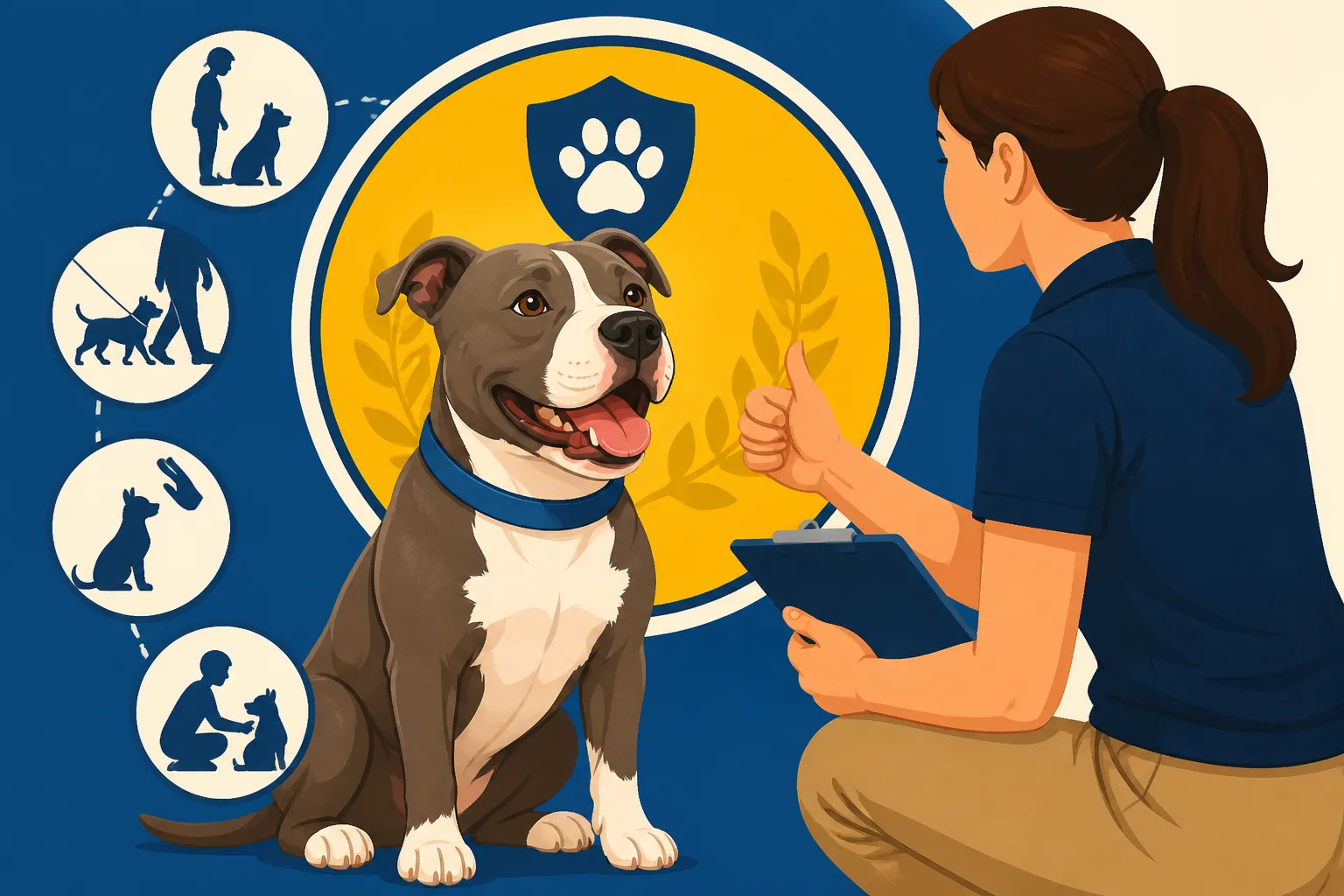
Canine Good Citizen Testing With a Pit Bull
As Pit Bull owners, we often feel like we're walking a tightrope, constantly having to prove that our beloved companions are not the monsters painted by societal misconceptions. It's frustrating and unfair, but it also gives us a unique opportunity to become powerful advocates for our dogs. One of the best ways to do this, to truly shine a light on their wonderful temperaments and the dedication of their owners, is through the American Kennel Club's Canine Good Citizen (CGC) program. This guide is all about demystifying CGC testing specifically for Pit Bulls, detailing why it's so important, what it entails, and how you can prepare your amazing dog to ace it, breaking stereotypes one calm sit at a time.
Understanding the Canine Good Citizen Program
Navigating the world with a Pit Bull can sometimes feel like an uphill battle against assumptions and stereotypes. That's why programs like the Canine Good Citizen (CGC) test aren't just about showing off your dog's obedience; they're a vital tool for advocacy and education. It's a chance to demonstrate, in a very tangible way, that Pit Bulls are capable of being well-mannered, reliable members of our communities.
What is the CGC Test and Why Does it Matter?
The Canine Good Citizen program, established by the American Kennel Club (AKC), is designed to recognize dogs who have excellent manners both at home and out in public. It's often considered the gold standard for dog behavior, a baseline that demonstrates your dog is a polite, calm, and trustworthy companion. The test itself consists of ten specific skills, ranging from accepting a friendly stranger to demonstrating a solid recall. It's not about high-level competition obedience; it's about practical, real-world good manners.
For Pit Bull owners, the "why it matters" goes far beyond a simple certificate. It's an undeniable statement. When a Pit Bull earns their CGC title, it provides concrete proof that they are well-trained and capable of behaving appropriately in various situations. This tangible evidence can be instrumental in shifting public perception, one interaction at a time. It challenges the narratives that often paint Pit Bulls with a broad, negative brush, showcasing instead their intelligence, eagerness to please, and the commitment of their owners. This title can serve as a powerful counter-narrative to negative stereotypes, offering a pathway to a more inclusive future for our dogs.
The Benefits of Achieving a CGC Title for Pit Bulls
The advantages of your Pit Bull achieving a CGC title are multifaceted, impacting not just your daily life but also broader societal perceptions. Perhaps the most significant benefit is the powerful statement it makes about your dog's temperament and your commitment to responsible ownership. In a world where Pit Bulls often face undue scrutiny, a CGC certificate acts as a formal endorsement of their good behavior. This can lead to more positive interactions with strangers who might otherwise be wary, sparking conversations that can change hearts and minds about the breed.
Beyond public perception, the practical benefits are enormous. A CGC-trained Pit Bull is simply a joy to live with. They are more likely to walk politely on a leash, ignore distractions, and respond reliably to commands, making daily walks and outings much more relaxed and enjoyable for everyone involved. This higher level of predictability and control can open doors to more experiences, from dog-friendly cafes to visiting friends and family without worry. The skills learned are foundational for a happy, well-adjusted dog.
Furthermore, a CGC title can sometimes be a game-changer when it comes to navigating breed restrictions. While it's not a magic bullet, some landlords and insurance companies may view a CGC certification as evidence of a responsible owner and a well-behaved dog, potentially easing restrictions or offering discounts. If you've ever struggled with Getting Home Insurance With a Pit Bull or finding Renters Insurance That Accepts a Pit Bull, or even faced challenges with Landlord Breed Clauses Naming Pit Bulls, having this title can sometimes provide an extra layer of reassurance to those who might otherwise be hesitant. It shows you've gone the extra mile. Lastly, the CGC is a stepping stone for more advanced training, such as therapy dog work. Many organizations require a CGC or equivalent for dogs to become certified therapy animals. Imagine your Pit Bull bringing comfort and joy in hospitals or nursing homes, all starting with that initial CGC achievement. It’s an incredibly rewarding path for both you and your loyal companion.
Preparing Your Pit Bull for the CGC Test
Getting your Pit Bull ready for the Canine Good Citizen test isn't just about rote memorization of commands; it's about building a strong foundation of trust, clear communication, and consistent practice. Pit Bulls are intelligent and eager to please, but their strength and enthusiasm mean that every bit of training needs to be precise and reinforced positively.
Essential Foundational Skills
Before you even think about the specifics of each CGC test item, your Pit Bull needs to have a rock-solid grasp of basic obedience. This means a reliable "sit," "stay," "down," and "come" command. These aren't just tricks; they are the language you use to communicate with your dog and manage them safely in various environments. Consistency is absolutely key here. Practice these commands multiple times a day, in different locations, and with varying levels of distraction. Start in a quiet environment, like your living room, and gradually increase the challenge, moving to your backyard, then a park during off-peak hours.
Loose-leash walking is another non-negotiable skill. Pit Bulls are powerful dogs, and a tug-of-war on the leash is not only unpleasant but can also reinforce negative stereotypes in public. Invest time in teaching your dog to walk politely by your side, without pulling. Techniques like stopping every time they pull, changing direction frequently, or using a front-clip harness can be incredibly effective. Remember, the goal is for your dog to walk calmly beside you, attentive and responsive to your cues. A well-fitted harness, like those from companies found on Chewy, can make a huge difference in comfort and control for both of you. Many of the fundamental lessons you need to master are covered in articles like What to Teach a Pit Bull Puppy and When and Pit Bull Leash Manners and Physical Strength, which offer deeper dives into establishing these crucial behaviors from an early age.
At the heart of all this training should be positive reinforcement. Pit Bulls thrive on praise, treats, and toys. Use high-value treats – small, soft, and extra yummy – to reward desired behaviors instantly. This creates a positive association with training and makes your dog eager to learn. Building this strong, positive bond with your Pit Bull is paramount; they need to see you as a benevolent leader, someone who provides guidance and rewards, not punishment. This trust will be the bedrock for all your training, especially when facing the unexpected distractions of the CGC test. If you're looking for ideas on what really motivates your dog, check out High-Value Treats That Hold a Pit Bull's Focus for some excellent suggestions.
Socialization and Desensitization
Socialization isn't just for puppies; it's an ongoing process that's crucial for every Pit Bull, especially those aiming for a CGC title. A well-socialized Pit Bull is one that has been exposed to a wide variety of sights, sounds, smells, people, and other dogs in positive, controlled ways throughout their life. This helps them develop confidence and resilience, making them less likely to react fearfully or aggressively to novel situations. For a deeper understanding of this vital process, take a look at Socializing a Pit Bull Puppy Thoroughly. The key is controlled exposure, not overwhelming them.
Start by exposing your Pit Bull to different types of people – men, women, children, people with hats, people carrying bags, people in wheelchairs. Make these interactions positive by having them offer treats or gentle praise. Similarly, expose them to various environments: bustling parks, quiet streets, vet offices, and even the sounds of traffic or construction. The goal isn't necessarily for them to interact with everyone or everything, but rather to learn to observe calmly and remain neutral.
Desensitization builds on this by systematically exposing your dog to specific stimuli that might cause them stress, but at a low intensity, gradually increasing the intensity as they remain calm. For example, if your Pit Bull is startled by loud noises, start by playing soft recordings of those sounds and rewarding calmness. Slowly increase the volume over many sessions. This process helps your dog learn that these stimuli are not threats. For the CGC test, this might mean practicing in areas with other dogs, people jogging, or kids playing, so your Pit Bull learns to maintain focus on you despite distractions. It’s all about building their confidence and your control in diverse, real-world scenarios.
Addressing Common Pit Bull Training Challenges
Every dog breed comes with its unique set of challenges, and Pit Bulls, due to their impressive strength and sometimes intense focus, can present a few specific hurdles for owners, especially when preparing for a program like CGC. One of the most common issues is leash pulling. A 50-pound Pit Bull can easily pull an unprepared owner off their feet, and this behavior isn't just annoying; it can make public outings stressful and reinforce negative stereotypes. To combat this, consistent loose-leash training is vital. This means stopping every time the leash goes taut, changing directions, or using tools like a front-clip harness or head halter to gain better control without causing pain.
Another challenge often associated with Pit Bulls is what’s known as "dog-selectivity." This isn't necessarily aggression, but rather a preference for certain dogs or an intolerance for certain play styles. While the CGC test doesn't require direct interaction with other dogs, it does involve your dog remaining calm and focused on you when another dog passes by. If your Pit Bull tends to get overly excited or reactive around other canines, you'll need to work on counter-conditioning and desensitization. This means creating positive associations with other dogs at a distance, gradually decreasing the distance as your dog remains calm, always rewarding their neutral or positive responses. Understanding Pit Bull Dog Selectivity Explained can offer deeper insights into managing this trait effectively and responsibly, emphasizing that it's about management and training, not a character flaw.
Finally, many Pit Bulls, with their affectionate and enthusiastic personalities, can be prone to overly exuberant greetings – think jumping on people or mouthing. While adorable to some, this behavior can be alarming to others, especially strangers or small children, and it's an automatic fail on the CGC test. Training a calm "four on the floor" greeting is essential. This involves teaching your dog that all four paws must remain on the ground to receive attention. You can practice this by having friends approach and only greeting your dog when they're sitting or standing calmly. If they jump, the person immediately turns away. Consistency from everyone interacting with your dog is crucial for success. For more specific guidance on this, consider resources like Teaching a Pit Bull to Greet Calmly. Overcoming these challenges with patience and positive training not only helps you pass the CGC but also makes your Pit Bull an even more valued member of your family and community.
Breaking Down the Ten CGC Test Items
The Canine Good Citizen test is broken down into ten specific real-world scenarios, each designed to assess your dog's manners and your ability to control them. Understanding each item and how to specifically train your Pit Bull for it will set you up for success.
Specific Skills and How to Practice Them with Your Pit Bull
Let’s walk through each of the ten test items, focusing on how to best prepare your Pit Bull:
-
Accepting a Friendly Stranger: This tests your dog's ability to remain calm and allow a stranger to approach and speak to you without showing shyness or resentment. Practice by having friends or family members (who your dog knows but isn't overly excited by) approach you, talk to you for a moment, and then walk away. Your Pit Bull should ideally sit or stand calmly by your side, not jump, bark, or pull. Reward quiet, calm behavior.
-
Sitting Politely for Petting: This item assesses if your Pit Bull will allow a stranger to pet them without jumping or being overly timid. The evaluator will approach and pet your dog on the head or body. Practice this by having various people gently pet your dog while they are sitting. If your dog gets excited or tries to jump, the petting stops immediately. Only resume when all four paws are on the ground and they are calm. This helps teach them polite interaction.
-
Appearance and Grooming: This tests your Pit Bull's comfort with being examined and handled. The evaluator will gently touch your dog's ears, feet, and brush them briefly. This is where early and consistent handling pays off. Start by regularly touching your dog's paws, ears, and mouth at home, associating it with positive rewards. Make grooming sessions a pleasant experience. For tips on regular maintenance, refer to Pit Bull Coat and Skin Care Week to Week and learn the best practices for Cleaning a Pit Bull Ear Properly. The more accustomed your dog is to gentle handling, the easier this item will be.
-
Out for a Walk (Walking on a Loose Leash): Your Pit Bull will walk on a loose leash for about 20 feet, turn, and come back. The leash should not be taut. This is a foundational skill we discussed earlier. Practice walking in a straight line, making turns, and stopping while maintaining a loose leash. Use a front-clip harness or head halter if needed, and reward consistent slack in the leash.
-
Walking Through a Crowd: This tests your Pit Bull's ability to walk politely through a small group of people without jumping, nudging, or showing shyness. Practice in low-traffic areas first, then gradually move to busier environments like parks or outdoor shopping areas during off-peak hours. Keep your Pit Bull close and focused on you, rewarding them for ignoring the people around them.
-
Sit and Down on Command/Staying in Place: Your dog must respond to "sit" and "down" commands on the first cue and then hold a "stay" for a short period (1 minute for sit/down, 3 minutes for place) while you walk away about 10 feet. Start with short durations and distances in quiet environments, then slowly increase both. This is an excellent exercise for building your Pit Bull's impulse control. A dedicated "place" command, as detailed in Teaching a Pit Bull to Hold a Place, can be a great asset here.
-
Coming When Called: Your Pit Bull must reliably come to you when called from 10 feet away. This command is crucial for safety and confidence. Practice "come" in a secure, fenced area, starting close and gradually increasing distance. Make coming to you the most rewarding thing ever, with high-value treats and enthusiastic praise. Building a strong recall is a topic covered deeply in Recall Training a Pit Bull From Scratch.
-
Reaction to Another Dog: Your Pit Bull will pass another dog and handler (approximately 20 feet away) without showing aggression, barking, or lunging, remaining focused on you. If your Pit Bull is dog-selective, this is where your desensitization training comes in. Practice parallel walks at a distance where your Pit Bull notices but does not react to other dogs. Reward them for looking at you instead of the other dog.
-
Reaction to Distraction: This tests your dog's ability to maintain composure when faced with common distractions, such as a dropped object or a sudden noise. The evaluator will create two mild distractions. Practice by exposing your Pit Bull to various unexpected noises (like dropping a pan, a car backfiring on TV) or movements, rewarding them for remaining calm or quickly recovering and looking to you.
-
Supervised Separation: Your dog must stay with a trusted person for three minutes while you are out of sight. This tests their confidence and ability to handle brief separation. Practice leaving your Pit Bull with a friend or family member for short periods, increasing the time as they become more comfortable. Ensure they are comfortable in a "stay" or "down" command with someone other than you before practicing this.
The Importance of a Reliable Handler
While the CGC test focuses on your Pit Bull's behavior, your role as the handler is absolutely paramount. You are your dog's guide, coach, and cheerleader. A calm, confident handler makes for a calm, confident dog. If you're stressed or anxious, your Pit Bull will pick up on that energy, and it can negatively impact their performance. Therefore, it's essential that you are as prepared as your dog.
Practice giving clear, concise commands in a neutral tone. Avoid repeating commands unnecessarily, as this teaches your dog that they don't have to respond the first time. Your body language also speaks volumes; stand tall, maintain eye contact with your dog, and project an aura of control and reassurance. Remember, the evaluator is not just assessing your dog, but also your ability to effectively handle and communicate with them. If your dog makes a mistake, avoid frustration. Instead, calmly guide them back to the correct behavior and try again. Your unwavering positive attitude and clear leadership will be the ultimate confidence booster for your Pit Bull, helping them perform their best on test day.
Finding a CGC Evaluator and What to Expect on Test Day
You've put in the hard work, countless hours of training, and seen your Pit Bull transform into a polite, confident companion. Now it's time for the big day! Finding the right evaluator and knowing what to expect can ease a lot of the pre-test jitters.
Locating an Official AKC CGC Evaluator
Finding an official AKC Canine Good Citizen evaluator is the first step once you feel your Pit Bull is ready. The easiest and most reliable way to do this is to visit the American Kennel Club's official website (akc.org). They have a searchable database where you can input your location and find certified evaluators near you. These individuals are trained and authorized by the AKC to administer the test, ensuring consistency and fairness across the program.
Beyond the AKC website, many local dog training clubs, obedience schools, and even some veterinary offices or pet supply stores (like larger Chewy stores that sometimes host events) will offer CGC testing sessions. It's a good idea to call around and inquire about upcoming test dates. When you contact an evaluator, don't hesitate to ask about their experience, especially if they have worked with Pit Bulls or similar strong breeds before. While all evaluators follow the same protocol, someone with experience with powerful, athletic dogs might offer subtle tips or create a more comfortable environment for you and your dog. Ask about the test environment as well; knowing whether it's indoors, outdoors, or in a bustling training hall can help you prepare your dog for those specific distractions.
Navigating Test Day with Your Pit Bull
Test day can feel a bit like a job interview for your dog, but approaching it with a calm, positive mindset will significantly benefit your Pit Bull. Remember, they feed off your emotions. Arrive early enough to allow your dog to relieve themselves and get accustomed to the new environment before the test begins. A quick, calm walk outside can help burn off some excited energy and allow them to take in the smells without feeling rushed.
When you check in, keep your Pit Bull on a regular collar and leash. Electronic collars, prong collars, and head halters (while great training tools) are generally not permitted during the actual CGC test, as the test aims to show good behavior with standard equipment. Double-check with your evaluator beforehand if you have any questions about acceptable gear. Bring a variety of high-value treats – something truly irresistible to your dog – as well as water and a bowl. Your dog might be a little nervous or distracted, and those super yummy treats can help maintain their focus and motivation. Healthy Paws pet insurance might not cover a bad test day, but it’s a great idea for peace of mind for any unexpected vet needs while out and about!
During the test, listen carefully to the evaluator's instructions. They will guide you through each of the ten items. If your dog makes a mistake, don't get frustrated. Simply correct them calmly and try again, if permitted by the test item rules. The goal is to demonstrate that your dog can perform the skills, even if it takes a second try. If your Pit Bull doesn't pass all items, it's not a failure; it's simply an indication of where more practice is needed. The evaluator can often provide valuable feedback on specific areas to improve. Many dogs benefit from attending a specific CGC prep class, which some evaluators also offer, to iron out any kinks and boost confidence before the official test. Remember, the journey itself is often more rewarding than just the destination.
Beyond the CGC: Continued Training and Advocacy
Earning the Canine Good Citizen title with your Pit Bull is a fantastic achievement, a testament to your dedication and your dog's wonderful temperament. But it's not the end of the road; it's often just the beginning of a lifelong journey of learning, advocacy, and deepening the bond with your canine companion.
Advanced Titles and Therapy Work
Once your Pit Bull has their basic CGC title, a whole new world of opportunities opens up for continued training and engagement. The AKC offers advanced Canine Good Citizen titles like the Community Canine (CGCA) and Urban CGC (CGCU), which build upon the foundational skills in more complex, real-world settings. These programs challenge your dog to perform their good manners in busy public spaces, navigating crowds, traffic, and urban distractions, further solidifying their role as a polite public citizen. There are also AKC Trick Dog titles, which are a fun way to continue training, keep your Pit Bull mentally stimulated, and impress your friends! These programs prove that Pit Bulls are not only well-behaved but also intelligent and capable of complex learning.
Beyond advanced obedience, the CGC title is often a prerequisite for therapy dog certification. Imagine the joy your well-mannered Pit Bull could bring to hospitals, nursing homes, or schools. Organizations such as Therapy Dogs International (TDI) or Pet Partners welcome all breeds, including Pit Bulls, who demonstrate stable temperaments and solid obedience. Becoming a certified therapy dog is one of the most powerful ways to use your Pit Bull's natural affectionate nature to change hearts and minds about the breed. For instance, if your therapy dog needs regular vet check-ups or has a sudden illness while on a visit, having pet insurance from a company like Healthy Paws can provide crucial support, covering a significant portion of those unexpected veterinary bills. To delve deeper into this incredibly rewarding path, resources like Therapy Dog Work With a Pit Bull can guide you through the process and requirements.
Becoming a Pit Bull Ambassador
Every time you step out with your CGC-titled Pit Bull, you become an ambassador for the breed. Your dog's calm demeanor, polite greetings, and reliable obedience are a living testament against the negative stereotypes. This is perhaps the most profound impact of achieving a CGC with a Pit Bull: it provides tangible, undeniable proof of their potential and character. Use these opportunities to educate others. When someone compliments your well-behaved dog, take a moment to mention their CGC title and share a positive fact about Pit Bulls. These small, positive interactions chip away at misconceptions, one person at a time.
Responsible ownership goes beyond just training; it involves actively participating in advocacy. Support breed-neutral legislation that focuses on individual dog behavior rather than blanket breed bans. The more well-trained Pit Bulls there are in communities, the stronger the argument against discriminatory laws becomes. Learning Why Support for Pit Bull Bans Has Fallen can provide you with arguments and insights to discuss with others. Your actions and your dog's behavior contribute directly to this shift. Providing your dog with a consistent, high-quality diet, like what Ollie offers, also contributes to their overall health and temperament, ensuring they can consistently perform their best, both in training and as a public ambassador. Remember, every time you handle your Pit Bull with confidence and grace in public, you are helping to rewrite their narrative, proving that they are loyal, loving, and invaluable members of our society.
| CGC Test Item | What it Tests | Key Tip for Pit Bull Owners |
|---|---|---|
| 1. Accepting a Friendly Stranger | Dog's comfort with an unfamiliar person approaching. | Practice calm greetings; ensure your Pit Bull doesn't jump or show shyness. Reward "four on the floor" behavior. |
| 2. Sitting Politely for Petting | Dog allows a stranger to pet them without jumping. | Start with people your dog knows, then introduce new faces. Petting stops if dog jumps; resumes when calm. |
| 3. Appearance and Grooming | Dog tolerates being handled and gently groomed. | Regularly handle paws, ears, and mouth at home. Make it a positive experience with treats. Consistency is key for their comfort. |
| 4. Out for a Walk (Loose Leash) | Dog walks calmly on a loose leash beside handler. | Utilize a front-clip harness or head halter if needed. Practice frequent stops and changes of direction to reinforce slack in the leash. |
| 5. Walking Through a Crowd | Dog navigates a small crowd politely. | Start in quiet areas, gradually increasing distractions. Keep your Pit Bull close and reward focus on you. |
| 6. Sit & Down/Stay in Place | Dog responds to commands and stays when handler moves away. | Build duration and distance slowly. Practice "place" command. Use high-value treats for holding position. |
| 7. Coming When Called | Dog reliably comes when called from a distance. | Practice in secure, fenced areas. Make recall the most exciting thing by using enthusiastic praise and top-tier treats. |
| 8. Reaction to Another Dog | Dog remains calm when another dog passes by. | Work on parallel walks at a distance where your Pit Bull is aware but doesn't react. Reward for looking at you instead of the other dog. |
| 9. Reaction to Distraction | Dog maintains composure amidst sudden noises/movements. | Expose your Pit Bull to various unexpected sounds (e.g., dropping keys) and reward them for remaining calm or quickly recovering. |
| 10. Supervised Separation | Dog can be left alone with a trusted person for a short time. | Practice short separations in safe environments. Ensure your Pit Bull is comfortable with being left with someone other than you, building confidence gradually. |
Disclaimer
The information provided in this article is for general informational purposes only and is not a substitute for professional veterinary advice, diagnosis, or treatment. Always seek the advice of your veterinarian or other qualified health provider with any questions you may have regarding a medical condition or treatment. Breed-specific information is based on general characteristics and may not apply to every individual dog. Always consult with a certified professional dog trainer for personalized training advice and to ensure the safety and well-being of your pet and others.