Why Support for Pit Bull Bans Has Fallen
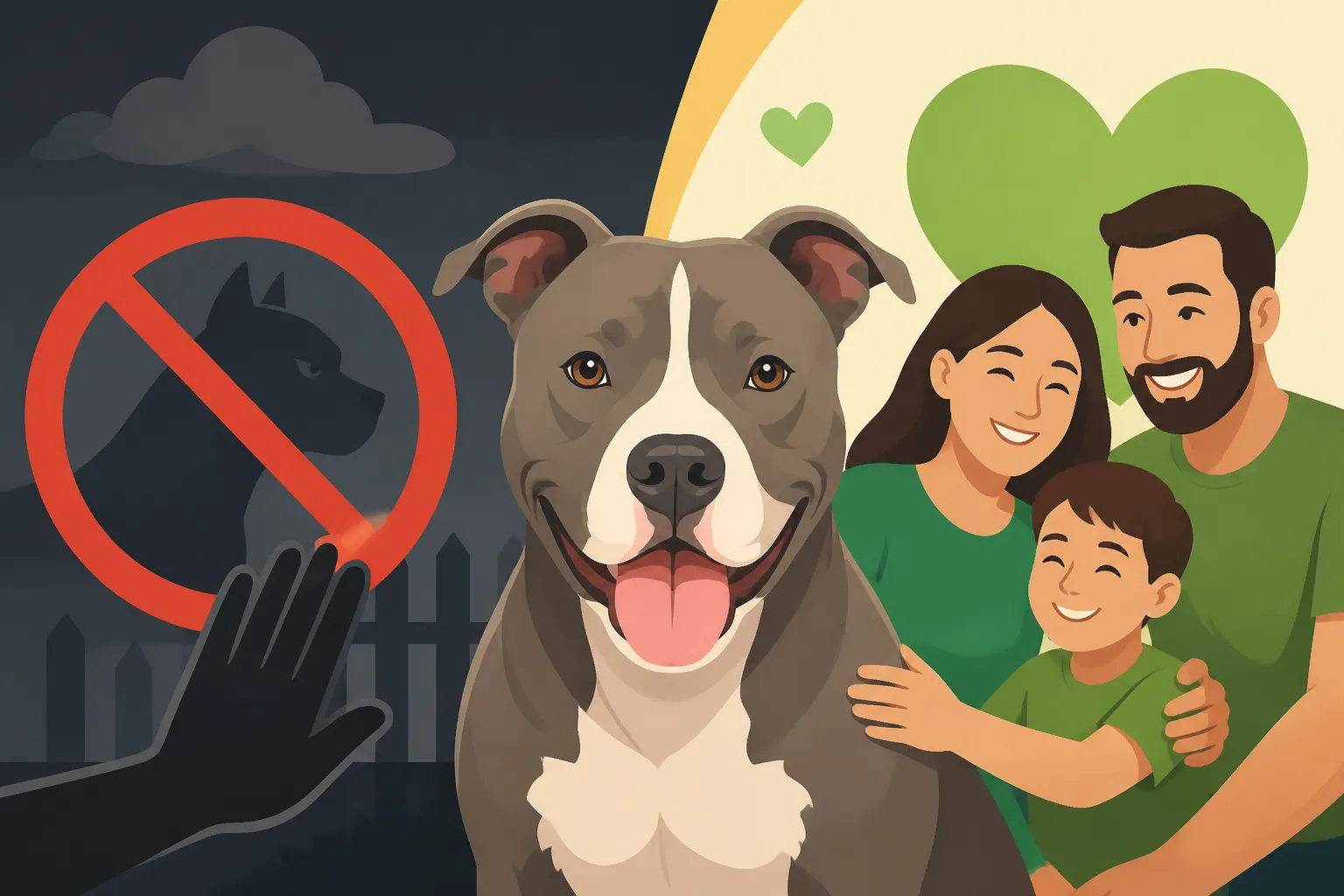
It's a frustrating reality that for decades, many communities and even entire states have targeted certain dog types, often lumping them under the blanket term "Pit Bull," with breed-specific legislation (BSL). These bans have caused immense heartache for loving owners, filled shelters with perfectly wonderful dogs, and honestly, haven't made our communities any safer. But the tide is turning, and this guide is all about understanding why support for these outdated and often discriminatory Pit Bull bans has fallen significantly, leading to real change in how we view and regulate our canine companions.
The Evolving Understanding of "Pit Bull" as a Type, Not a Breed
One of the biggest shifts in public and legislative opinion comes from a more accurate understanding of what we even mean when we say "Pit Bull." For so long, it was treated like a single, easily identifiable breed, when in reality, it's anything but.
Dispelling the Myth of a Single Breed
Imagine trying to define "sports car" by a single manufacturer or model – it's just not possible, right? Well, "Pit Bull" is much the same. It's a broad, umbrella term that encompasses several distinct breeds and countless mixed breeds sharing similar physical characteristics. When people talk about a "Pit Bull," they could be referring to an American Pit Bull Terrier, recognized by the United Kennel Club (UKC), or an American Staffordshire Terrier, recognized by the American Kennel Club (AKC). They might even be thinking of a Staffordshire Bull Terrier from England, or perhaps even the newer American Bully, which has its own distinct characteristics but is often visually grouped with Pit Bull types.
This is a critical distinction because it means that a vast array of dogs, with incredibly diverse genetic backgrounds and temperaments, have been unfairly categorized and penalized. The idea that there's one singular "Pit Bull" breed with inherent, predictable traits is simply inaccurate. In fact, many shelter workers and even experienced dog professionals can struggle to accurately identify a dog's breed simply by looking at it, especially when mixed breeds are involved. DNA testing often reveals a much more complex ancestry than visual assessment suggests. This fundamental misunderstanding of what constitutes a "Pit Bull" has been a major crack in the foundation of breed-specific laws. If you're curious to learn more, our guide on Why Pit Bull Is a Type and Not a Breed dives deeper into this topic, explaining how the term became so widely used and what it actually covers. You can also explore The Three Breeds People Call Pit Bulls to understand the nuances.
The Impact of Breed Misidentification on Data
Now, let's talk about statistics, because they've often been weaponized against Pit Bull types. For years, opponents of Pit Bulls would cite "bite statistics" that seemed to suggest these dogs were disproportionately involved in incidents. However, as our understanding of breed identification improved, so did our critical analysis of these numbers.
Think about it: if a dog involved in an incident is visually identified as a "Pit Bull" by someone who isn't a canine geneticist or even a trained breed expert, how reliable is that data? The answer, unfortunately, is "not very." Studies have shown that visual identification of breeds, especially "Pit Bull type" dogs, is highly unreliable. A Labrador mix might be called a "Pit Bull" if it has a blocky head, while a purebred American Pit Bull Terrier might be misidentified as something else entirely. This widespread misidentification means that any data collected on dog bites and attributed specifically to "Pit Bulls" was likely inflated and skewed. It became clear that the data used to justify BSL was often built on shaky ground, making the legislation itself questionable. Understanding Why Bite Statistics Cannot Be Pinned to Pit Bulls really highlights the flaws in using such broad, unreliable categories for public safety policy. It also sheds light on How Shelters Decide a Dog Is a Pit Bull, which often contributes to these identification challenges.
Growing Awareness of Ineffective and Unfair Breed-Specific Legislation
Beyond the breed identification issue, there's a much broader realization that BSL simply doesn't work. It's an emotional reaction, not an effective solution, and its negative consequences far outweigh any perceived benefits.
BSL's Failure to Improve Public Safety
The ultimate goal of any dog law should be to enhance public safety. If BSL truly achieved this, perhaps the debate would be different. However, study after study, and real-world experience in communities that enacted bans, have demonstrated that breed-specific laws do not lead to a reduction in dog bites or attacks. They don't make communities safer. Instead, they often create a false sense of security, diverting attention and resources from the real factors that contribute to dog bite incidents.
The truth is, responsible dog ownership, proper socialization, consistent training, and humane education are what genuinely prevent dog bites, regardless of the dog's breed or physical appearance. A well-socialized and responsibly managed Pit Bull type dog is far safer than an unsocialized, neglected, or poorly trained dog of any breed, be it a Golden Retriever or a Chihuahua. Focusing solely on a dog's appearance ignores critical factors like a dog's history, training, living conditions, and the owner's behavior. When you really dig into Whether Pit Bull Bans Reduce Dog Bites, you find that the evidence points to a resounding "no." Effective public safety policies need to address the root causes of dangerous behavior, which are overwhelmingly tied to human actions and neglect, not breed.
The Burden on Responsible Owners and Shelters
While BSL might have been intended to protect communities, it has inadvertently caused immense hardship for responsible dog owners and put an unsustainable strain on animal shelters. Imagine being a loving Pit Bull owner, your dog a cherished family member, only to be told you have to move because your city has enacted a ban. Many families have faced heartbreaking choices, forced to surrender their pets or relocate to avoid legal repercussions. This creates a deeply unfair situation where law-abiding citizens are punished simply for owning a dog that fits a certain physical description.
The impact on shelters is even more devastating. When BSL is enacted, shelters in those areas suddenly become overwhelmed with "Pit Bull type" dogs that are perfectly healthy, well-behaved, and adoptable, but cannot be placed due to the bans. This leads to overcrowded kennels, increased stress for the animals, and tragically, higher euthanasia rates for these innocent dogs. Resources that could be used for education, training, and addressing genuine problem behaviors are instead spent managing the fallout of breed bans. This cycle is not only heartbreaking but also incredibly costly, both emotionally and financially. Our article on Why Housing Rules Send Pit Bulls to Shelters illustrates just how difficult life can become for Pit Bull owners trying to navigate rental markets, and the severe consequences this has on dogs ending up homeless. The financial and emotional toll of these policies cannot be overstated.
The Rise of Advocacy and Education
Thankfully, as the ineffectiveness and unfairness of BSL became more apparent, a powerful wave of advocacy and education rose to meet it. Animal welfare organizations, veterinary associations, and grassroots activists have worked tirelessly to challenge misconceptions and promote a more nuanced understanding of Pit Bulls.
Powerful Voices for Pit Bull Advocacy
Major animal welfare organizations, like the ASPCA, the Humane Society of the United States, and the American Veterinary Medical Association (AVMA), have taken strong stances against breed-specific legislation. They, along with countless local and national Pit Bull rescue organizations, have become powerful voices for change. These groups don't just advocate; they educate. They provide resources on responsible pet ownership, debunk myths, and highlight the positive qualities of Pit Bull type dogs.
Their campaigns often focus on stories of individual dogs, showing the public that every dog is an individual and cannot be judged solely by its appearance. These organizations lobby lawmakers, participate in community outreach, and tirelessly work to change hearts and minds. It’s through their sustained efforts that many people are starting to see beyond the stereotypes and understand the true nature of these dogs. If you're interested in connecting with these groups, exploring National Pit Bull Rescue Organizations is a great starting point to see how much work is being done. This collective voice has been instrumental in shaping public opinion and pushing for legislative reform, demonstrating Whether Pit Bull Advocacy Has Changed Outcomes.
Showcasing Positive Pit Bull Temperament
One of the most effective ways advocacy groups have changed perceptions is by showcasing Pit Bulls in positive, real-world roles. You see stories of Pit Bulls working as therapy dogs, bringing comfort to hospital patients and nursing home residents. They excel in search and rescue missions, using their strength and determination for good. Many Pit Bulls are certified Canine Good Citizens (CGC), demonstrating excellent manners and training, and proving that with proper guidance, they can be outstanding members of any community.
These examples directly contradict the sensationalized narratives that have often painted Pit Bulls as inherently dangerous. They highlight that traits like loyalty, intelligence, and eagerness to please are common in these dogs. The message is simple yet profound: temperament is shaped by genetics and environment, training, and socialization, just like any other dog. A dog's individual personality and behavior are far more important than its breed label. Understanding Pit Bull Temperament and What Testing Shows can provide a more objective view, while pursuits like Canine Good Citizen and Why It Matters for a Pit Bull demonstrate their potential. This positive exposure helps people realize that a Pit Bull is just a dog – a dog that thrives with love, training, and a responsible owner. Even the notion of Therapy Dog Work With a Pit Bull demonstrates their capability to be gentle and comforting companions.
Legislative Shifts and the Push for Breed-Neutral Laws
Perhaps the most significant evidence of falling support for Pit Bull bans is the legislative trend towards repealing BSL and adopting breed-neutral dangerous dog laws. This shift reflects a growing consensus that effective public safety measures focus on behavior, not breed.
States and Cities Repealing BSL
Across the United States, we’re seeing a clear movement away from breed-specific legislation. States like Maryland, Ohio, and Florida have passed laws prohibiting local governments from enacting or enforcing BSL. This means that even if a city wanted to ban Pit Bulls, they wouldn't be able to. In Florida, for example, the statewide ban on breed-specific legislation became effective in October 2023, a huge win for Pit Bull owners in the state. Historically, cities like Denver, Colorado, had notorious Pit Bull bans, but even they repealed their ban in 2020 after extensive debate and a public vote.
These repeals aren't happening out of sentimentality; they're driven by the acknowledgment that BSL is simply not effective and has too many negative consequences. Lawmakers are recognizing that these bans are costly to enforce, create division, and fail to make communities safer. They're realizing that focusing on breed diverts resources from actual solutions. How Denver's Pit Bull Ban Was Repealed in 2020 is a fascinating case study in how public advocacy and reasoned argument can overturn long-standing legislation. Similarly, Why Florida Removed Its Pit Bull Bans showcases a broader legislative shift at the state level. Many other Cities That Repealed Pit Bull Bans Recently are following suit, indicating a national trend.
Focusing on Owner Accountability
The modern, effective approach to dog control laws is centered on breed-neutral dangerous dog legislation. Instead of targeting specific breeds, these laws focus on holding all dog owners accountable for their dogs' behavior, regardless of breed. This means implementing and enforcing robust leash laws, requiring proper containment, mandating licensing, and having clear procedures for dealing with genuinely dangerous dogs based on their individual actions, not their appearance.
This approach is much more fair and, crucially, far more effective at improving public safety. It ensures that owners who allow their dogs to be aggressive or a nuisance face consequences, while responsible owners of all breeds can enjoy their pets without fear of discrimination. This philosophical shift from "blame the breed" to "blame the deed" is a testament to progress in animal welfare and public policy. It means that issues like adequate fencing, proper socialization, and appropriate training become the focus, rather than arbitrary breed labels.
This table highlights the fundamental differences and why the shift is occurring:
| Feature | Breed-Specific Legislation (BSL) | Breed-Neutral Legislation (BNL) |
|---|---|---|
| Focus | Dog's breed/appearance | Dog's behavior and owner's responsibility |
| Effectiveness | Generally proven ineffective at reducing bites | More effective as it targets actual dangerous behavior |
| Impact on Owners | Punishes responsible owners; limits housing/insurance | Holds all owners accountable; no breed discrimination |
| Impact on Shelters | Increases euthanasia; overburdens resources | Promotes responsible adoption; reduces breed discrimination |
| Public Perception | Often seen as discriminatory and unfair | Generally seen as fair and focused on safety |
| Resource Allocation | Wastes resources on breed identification and enforcement | Directs resources towards education, training, and behavioral issues |
This move towards breed-neutral laws is a sign of a more informed and humane society, one that understands that a dog's character is shaped by much more than its looks. It allows us to focus on practical solutions for harmonious communities, where all dogs, including our beloved Pit Bulls, have the chance to thrive under responsible care. For instance, brands like Chewy and Ollie offer a wide range of products that support responsible pet ownership, from durable toys for strong chewers to specialized diets. You can find everything from sturdy leashes to puzzle feeders, which are essential for any well-managed dog, not just specific breeds. And if you're ever worried about unexpected vet bills, companies like Healthy Paws offer pet insurance plans that cover illnesses and accidents regardless of breed, providing peace of mind to any dog owner.
Disclaimer
Please note that while this article provides comprehensive information, it should not be considered a substitute for professional veterinary advice or legal counsel. Always consult with a qualified veterinarian for any health concerns regarding your Pit Bull and seek legal advice from a local attorney regarding specific breed legislation in your area. Laws and regulations can change, and it's vital to stay informed about your local ordinances.