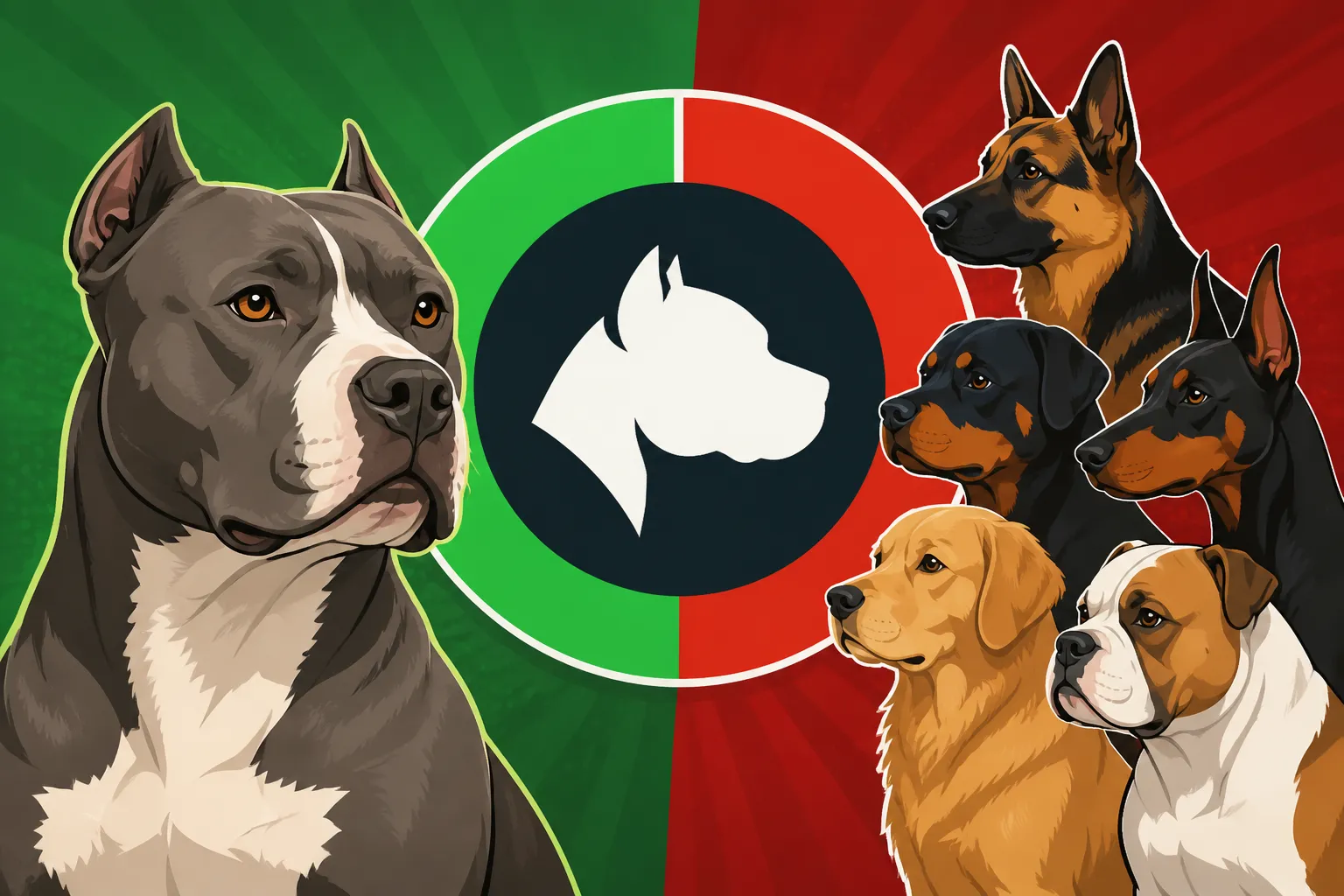
The Pit Bull ATTS Pass Rate Against Other Breeds
For anyone who’s ever loved a Pit Bull, the constant battle against stereotypes is a familiar, frustrating fight. We know our dogs are sweet, goofy, and loyal, but public perception often paints a very different, unfair picture. This guide dives deep into temperament testing, specifically the American Temperament Test Society (ATTS) results, to shed light on how Pit Bull type dogs truly perform when objectively evaluated, and how those results compare to other popular breeds.
Understanding the ATTS Temperament Test
The American Temperament Test Society (ATTS) test is a non-profit organization dedicated to certifying the temperament of dogs. It’s a standardized test designed to measure a dog's stability, shyness, aggressiveness, and friendliness, as well as its instinct for protection in various situations. It's not about training obedience, but about the dog's innate, natural reactions to unfamiliar sights, sounds, and people. It helps us understand a dog's inherent character rather than learned behaviors.
What the ATTS Test Measures in a Pit Bull
When a Pit Bull or any other breed goes through the ATTS test, the evaluators are looking for consistency and composure. The test is set up to expose dogs to a series of common, yet potentially startling, scenarios they might encounter in daily life. This includes things like meeting a neutral stranger, then a friendly stranger, and observing how the dog reacts to a hidden person suddenly appearing. They’ll also gauge responses to sudden visual and auditory stimuli, like an umbrella popping open or a chain rattling. The test also involves a simulated aggressive encounter, where a threatening stranger approaches the handler and dog.
What’s truly being measured here isn’t whether the dog jumps or barks, but how quickly it recovers, how it responds to its handler, and whether it shows unprovoked aggression or extreme shyness. A confident dog might startle, but it will quickly recover and move on. A stable dog will assess the situation and respond appropriately, without prolonged fear or aggression. It’s a comprehensive look at their emotional resilience and overall character, focusing on their ability to bounce back from stress and maintain an even keel.
How the ATTS Test Is Run on a Pit Bull
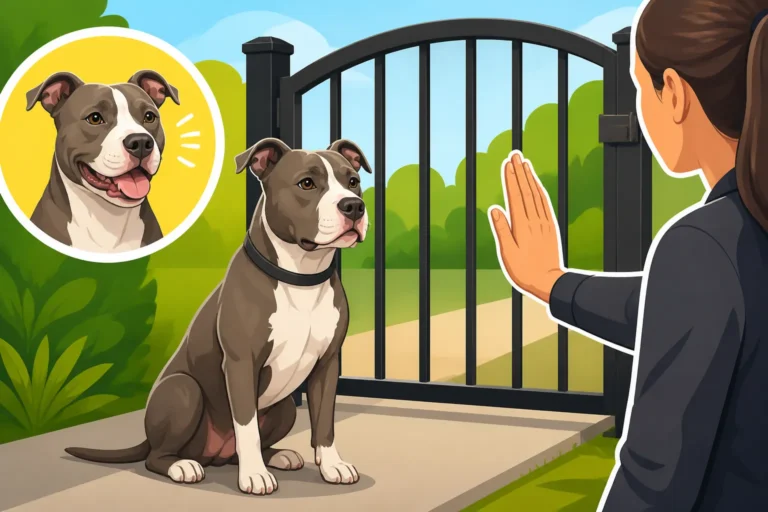
The ATTS test is usually conducted in a neutral, open environment, often a park, to simulate real-world conditions as closely as possible. The dog is on a leash with its handler, and they navigate a course designed with specific "stations." At each station, a different scenario unfolds. For instance, the handler and dog might walk past a group of people, testing their comfort in a crowd. Then, they encounter a "friendly stranger" who approaches to pet the dog, and an "unfriendly stranger" who might act hesitant or avoidant. The test includes sudden, unexpected events like a loud noise or an object falling, to see how the dog reacts to surprises.
One of the more challenging parts involves a person hidden from view who suddenly appears and makes a threatening gesture or sound, then immediately retreats. This sequence is crucial for evaluating how a dog handles a perceived threat and its ability to de-escalate once the threat is gone. Throughout the entire test, evaluators are observing the dog's body language, vocalizations, and recovery time. They're not looking for perfection, but rather a dog that is self-assured, manageable, and doesn't exhibit extreme fear or unprovoked aggression. It’s about assessing their emotional bandwidth and how they cope with stress, which is so important for dogs in any community.
Deciphering Pit Bull ATTS Pass Rates
It’s easy to get caught up in the sensational headlines about Pit Bulls, but when you look at objective data from organizations like the ATTS, a very different picture emerges. Many owners are surprised, and often relieved, to see how well Pit Bull type dogs perform in these standardized temperament evaluations.
The Pit Bull ATTS Pass Rate in the Latest Results
Historically, and consistently, Pit Bull type dogs, which include breeds like the American Pit Bull Terrier (APBT) and American Staffordshire Terrier (AmStaff), have demonstrated remarkable pass rates on the ATTS temperament test. When you dig into the ATTS archives, you'll find that these dogs often score in the high 80s to low 90s percentage-wise, meaning a very large majority of tested individuals pass with flying colors. This is a crucial piece of information that often gets overlooked in broader discussions about these dogs. It highlights their inherent stability and composure when evaluated under controlled, yet realistic, conditions.
It can be incredibly frustrating for Pit Bull owners when their loving, well-behaved dogs are judged based on misconceptions, while these objective test results clearly show a strong aptitude for stable temperaments. These high pass rates suggest that, as a group, Pit Bull type dogs possess a robust and resilient nature, capable of handling novel situations without undue stress or aggression. Of course, this doesn't excuse any individual dog from proper training and socialization, but it certainly offers a powerful counter-narrative to the prevailing negative stereotypes.
How the Pit Bull Rate Compares to a Golden Retriever and Other Breeds
This is where the ATTS data truly becomes an eye-opener for many. When you compare the pass rates of Pit Bull type dogs to other breeds widely considered "family-friendly" or "safe," the results are often surprising. For example, many breeds known for their gentle nature, like Golden Retrievers or Labrador Retrievers, typically achieve pass rates in the high 80s or low 90s. What's astonishing is that American Pit Bull Terriers and American Staffordshire Terriers frequently match, and sometimes even exceed, these rates.
To illustrate, let's look at some general findings over time:
| Breed Type | Typical ATTS Pass Rate Range | Common Public Perception |
|---|---|---|
| American Pit Bull Terrier | High 80s – Low 90s | Aggressive, unpredictable |
| American Staffordshire Terrier | High 80s – Low 90s | Aggressive, unpredictable |
| Golden Retriever | High 80s – Low 90s | Gentle, family-friendly |
| Labrador Retriever | High 80s – Low 90s | Friendly, reliable |
| German Shepherd Dog | Mid 80s – High 80s | Protective, sometimes aloof |
| Border Collie | Mid 80s – High 80s | Intelligent, high-energy |
This comparison is vital because it directly challenges the narrative that Pit Bulls are inherently more aggressive or less stable than other popular breeds. The data suggests that, on average, they are just as, if not more, temperamentally sound as many dogs we readily welcome into our homes and communities. It strongly indicates that judgment based on breed alone is often misplaced and unsupported by empirical evidence. This isn't to say other breeds are "bad," but to highlight the unfair bias against Pit Bulls.
What ATTS Scores Mean and Don't Mean for Your Dog
While the ATTS results provide valuable insights into the general temperament of Pit Bull type dogs, it's crucial to understand what these statistics truly represent and, perhaps more importantly, what they don't. It's easy to look at high pass rates and assume that every individual dog of that type will be a perfect angel, but reality is far more nuanced.
Why a Test Score Cannot Predict Your Pit Bull
An ATTS pass rate, even a high one, should never be taken as a guarantee for the temperament of any single Pit Bull. Think of it like a human IQ score; an average IQ for a population doesn't tell you the intelligence of any one person within that group. Similarly, while the average Pit Bull performs very well on the ATTS, your individual dog's behavior is a complex interplay of genetics, early life experiences, socialization, and ongoing training. A dog from a responsible breeder who prioritizes temperament, like those described in What Testing a Pit Bull Breeder Should Have Done, and receives consistent positive reinforcement training, like you might learn through resources like BAXTER & Bella, will likely have a much better chance at a stable temperament than one from unknown origins with little to no guidance.
Even a dog with excellent genetics can become anxious or reactive if not properly socialized or if it experiences trauma. Conversely, a dog with a less-than-ideal start can often thrive with dedicated, informed owners. It truly boils down to the commitment of the owner to understand their dog's needs and to provide consistent guidance. The ATTS score gives us a foundation of understanding about the breed type, but it never replaces the responsibility of individual ownership and training. If you're looking to start training, consider exploring various techniques, perhaps beginning with Starting Clicker Training on a Pit Bull.
What Pit Bull Temperament Testing Cannot Predict
It's vital to remember that the ATTS test has specific parameters and, therefore, specific limitations. It assesses a dog's general stability and reaction to novel stimuli and perceived threats from humans. What it doesn't specifically test for are things like dog-on-dog reactivity, prey drive, or resource guarding. These are distinct behavioral traits that are often more breed-specific and can manifest even in an otherwise temperamentally stable dog. For instance, many Pit Bull type dogs exhibit what is known as "dog selectivity" or "dog tolerance," meaning they may not get along with all other dogs, or may prefer to avoid close interactions after reaching social maturity. This is not aggression, but a preference, and it's not something the ATTS test directly measures. For more on this, you might find Pit Bull Dog Selectivity Explained helpful.
Additionally, the test doesn't predict how a dog will behave in a novel home environment, with specific children, or in high-stress, prolonged situations. While a stable foundation helps, a dog's behavior is always contextual. A dog might pass the ATTS beautifully but still struggle with separation anxiety at home or exhibit a high prey drive towards cats. It reinforces the idea that temperament testing is one piece of the puzzle, and owners must remain diligent in training, socialization, and management to ensure their dog is a well-adjusted member of the family and community.
The Broader Context of Pit Bull Temperament
Understanding ATTS results is just one step in appreciating the complex nature of Pit Bull type dogs. While the statistics offer a powerful counterpoint to negative narratives, it's crucial to place these findings within the broader context of individual variation and responsible ownership.
Why a Pit Bull Average Says Little About Yours
While the high ATTS pass rates for Pit Bull type dogs are encouraging and statistically significant, they represent an average across a large group. Your individual Pit Bull, however, is not an average. Every single dog has its own unique personality, shaped by a myriad of factors. Genetics certainly play a role; a Pit Bull from a well-researched lineage with parents who have stable temperaments is likely to inherit some of that calm disposition. However, the environment and early experiences are equally, if not more, impactful. A puppy that experienced poor socialization during its critical developmental windows, or one that suffered neglect or abuse, may exhibit behavioral challenges regardless of its breed's average temperament score.
This is why focusing solely on breed statistics can be misleading. It's about your dog, in your home, with your consistent effort and understanding. A responsible owner prioritizes their dog's individual needs, understands their body language, and continues to provide appropriate training and enrichment throughout their life. It means accepting that even a statistically "good" dog still needs dedicated guidance to be its best self.
The Advice Experienced Pit Bull Owners Give
Ask any seasoned Pit Bull owner, and they'll tell you that while these dogs are incredible companions, they also require a dedicated and proactive approach to ownership. Their top advice consistently revolves around early, consistent, and positive reinforcement training. Starting with basic obedience, like sit, stay, and recall, is fundamental, and programs like those offered by BAXTER & Bella can be a fantastic resource for new puppy owners. Beyond that, many recommend exposing your Pit Bull to a wide variety of positive experiences, people, and appropriate environments from a young age. This helps build their confidence and adaptability. Socializing a Pit Bull Puppy Thoroughly is an excellent resource for this.
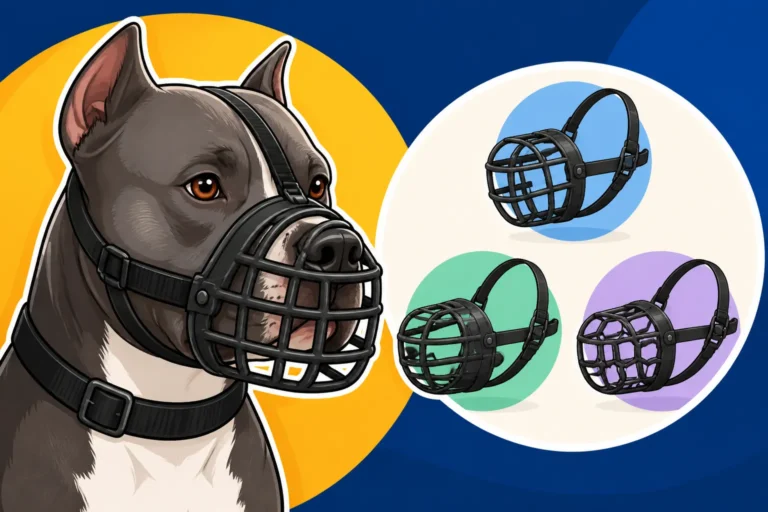
Another common piece of advice is to understand and manage breed-specific traits. This might mean recognizing their potential for strong prey drive and implementing careful management around smaller animals, or understanding that dog selectivity isn't a flaw, but a trait that requires careful introductions and management in multi-dog households. Investing in durable training equipment, such as sturdy harnesses or leashes found on Amazon, is also often recommended given their strength. Finally, many experienced owners advocate for muzzle training every Pit Bull, not out of fear, but as a responsible safety measure and a way to positively influence public perception. For more detailed guidance, consider reading Why Every Pit Bull Should Be Muzzle Trained. These proactive steps, combined with empathy and realistic expectations, are what truly define responsible Pit Bull ownership.
Disclaimer
This article is for general informational purposes only and does not constitute professional advice. Laws, prices and regulations vary by location and change over time. Consult a qualified professional for guidance on your specific situation.