Teaching a Pit Bull to Wait at Gates
There’s nothing quite like the rush of adrenaline when your strong, enthusiastic Pit Bull barrels through an open gate, leaving you breathless and chasing them down the street. It’s a common, incredibly frustrating scenario for many Pit Bull owners, made even more stressful by the breed's powerful build and the scrutiny they often face. This guide will walk you through clear, actionable steps to teach your beloved Pit Bull polite gate manners, ensuring safety and peace of mind for both of you.
Why Waiting at Gates Is a Pit Bull Priority
Let's be honest, living with a Pit Bull comes with its own unique set of responsibilities. Their incredible strength, speed, and often boundless energy mean that a simple lapse in gate manners can quickly escalate from an inconvenience to a dangerous situation. Teaching them to wait patiently isn't just a nicety; it's a critical safety measure and a testament to responsible ownership.
Safety First: Preventing Escapes and Accidents
Imagine your Pit Bull, full of joy and curiosity, spotting a squirrel across the street just as you open the garden gate. Their powerful build means they can clear that opening in a flash, launching themselves into traffic or into a neighbor's yard without a second thought. This isn't just a hypothetical scenario; it's a real fear that keeps many Pit Bull owners on edge. A dog that doesn't wait at a gate is a potential escape artist, and escapes can lead to injuries, lost dogs, or even incidents with other animals or people, which no owner ever wants.
For a breed that can weigh a solid 50 to 70 pounds, or even more, and is built like a brick house, having them respect boundaries like gates, doors, and car exits is non-negotiable. It protects them from hazards like cars, poisons, or getting into scuffles, and it protects others from unexpected, enthusiastic greetings that could knock them over. It really comes down to preventing those heart-stopping moments where your dog vanishes from sight in an instant.
Moreover, if you have children or other pets, a runaway Pit Bull can complicate things immensely. A child might accidentally leave a gate ajar, or another pet might slip out with your Pit Bull, compounding the danger. Training your Pit Bull to wait means that even if a gate is opened prematurely, they’ll pause and look to you for direction, giving you those precious extra seconds to secure the situation.
Building Impulse Control in a Strong Dog
Pit Bulls are incredibly driven dogs, and that drive, whether it's for play, chasing, or exploring, can sometimes override their good sense. Teaching them to wait at gates is a fantastic way to build their overall impulse control, a skill that translates into better behavior in countless other situations. It’s about teaching them to pause, think, and look to you for guidance, rather than simply acting on instinct.
Think about it: a dog that can wait patiently at a gate has learned to suppress the urge to bolt. This same mental discipline can help them ignore a barking dog on a walk, refrain from jumping on guests, or even wait for their dinner bowl. It's a foundational skill for a well-mannered dog. Building a Pit Bull's Impulse Control is key to a calm, manageable dog, regardless of the situation.
This training isn't just about the physical act of waiting; it’s about mental engagement. You're asking your Pit Bull to make a choice – to stay rather than go – which strengthens their cognitive abilities and their bond with you as their leader and guide. This kind of nuanced training helps them become a more thoughtful and less reactive companion, something every Pit Bull owner desires.
The Public Perception Angle
Let's face it, Pit Bulls often carry a heavy burden of public misconception. Every time your Pit Bull lunges, pulls, or seems out of control, it can unfortunately reinforce negative stereotypes. Conversely, a Pit Bull that calmly waits for permission before stepping through a gate or door makes a powerful statement. It shows thoughtful training, responsible ownership, and a well-behaved dog.
When your Pit Bull demonstrates impeccable manners, it helps chip away at the unfair prejudices many people hold. A calm, controlled dog walking politely through a gateway, even if that gateway is just the front door of your home, subtly educates those around you. It allows people to see the true nature of your dog: a loving, intelligent companion, not a rampaging menace. Why a Pit Bull Gets Less Benefit of the Doubt means that every positive interaction counts.
This isn’t about performing for others, but about being a good ambassador for your breed. By showcasing your Pit Bull's excellent manners, you contribute to a more positive image for all Pit Bull type dogs, potentially making a difference in how they are viewed in your community and beyond. It’s a small but significant step towards changing hearts and minds.
Essential Foundations Before Gate Training
Before you even think about tackling the gate itself, there are a few foundational elements that need to be in place. Trying to jump straight to gate training without these basics is like trying to build a house without a solid foundation – it’s just going to crumble. Your Pit Bull needs to understand basic commands and have some leash manners under their belt.
Mastering Basic Obedience Commands
The commands "Sit," "Stay," and "Leave It" are your best friends when it comes to gate training. Your Pit Bull needs to understand and reliably perform these commands in various environments before you introduce the excitement of an open gate. "Sit" and "Stay" give you control over their position, while "Leave It" helps them ignore distractions beyond the threshold.
Practice these commands diligently in low-distraction environments first, like inside your home or a quiet room. Use high-value treats to make these commands rewarding. For example, when you ask for a "Sit," make sure they stay seated until you release them with a verbal cue like "Okay" or "Free." Don't rush these steps; consistency here will pay dividends later.
You want these commands to be second nature, almost automatic responses. This isn’t just about them knowing what the words mean; it’s about them choosing to obey even when their instincts are telling them to do something else. Many online resources, like those offered by BAXTER & Bella, can provide structured programs to help you solidify these essential commands with positive reinforcement.
Leash Manners and Equipment Choices
A Pit Bull that drags you down the street on a leash isn't going to suddenly become a polite waiter at a gate. Strong leash manners are absolutely crucial. If your dog pulls on the leash, you need to address that habit first. This often involves using equipment that gives you more control and consistent training. Pit Bull Leash Pulling at Fifty Pounds is a common challenge that needs to be tackled head-on.
Consider using a front-clip harness or a head halter if your Pit Bull is a strong puller. These tools redirect their pulling power, making it harder for them to drag you and easier for you to guide them. An anti-pull harness, often available on Amazon, can make a huge difference in your walks, allowing you to focus on training rather than just bracing for impact. Ensure any harness fits well across your Pit Bull's broad chest to prevent rubbing or discomfort. Harness Fit Across a Broad Pit Bull Chest is important for effectiveness and comfort.
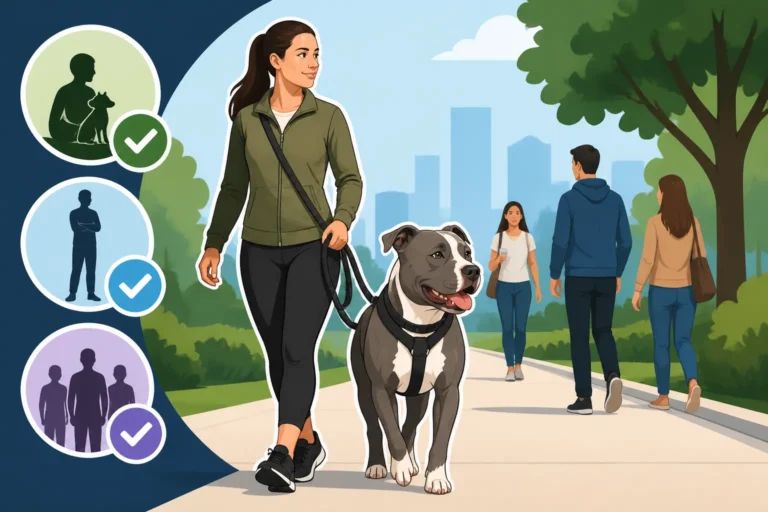
Practice walking calmly on a leash in various environments, focusing on loose-leash walking. Reward heavily when your dog walks nicely by your side without tension on the leash. The goal is for them to understand that the leash is a communication tool, not a tow rope. A dog that respects the leash indoors will be more likely to respect the gate when attached to it.
Creating a Consistent Routine
Dogs thrive on routine and consistency. Every single interaction you have with your Pit Bull around gates, doors, and thresholds is a training opportunity. If you sometimes let them rush through the door and sometimes ask them to wait, you’re creating confusion, not compliance. Everyone in the household needs to be on the same page, consistently applying the rules.
This means no one in the family should open a door or gate if the dog is pushing or lunging. If they do, even once, it undermines all your hard work. Establish a clear "no push, no pass" rule. This also applies to car doors, crates, and even entering or exiting different rooms. Consistency is the secret sauce to effective dog training, especially with intelligent and persistent breeds like Pit Bulls.
Before you even begin formal gate training, start enforcing this rule with interior doors. When you go to open a door to another room, ask your Pit Bull to sit or stand politely. If they rush, close the door slightly or take a step back and try again. They need to learn that polite behavior is what earns them access to exciting new places.
Step-by-Step Guide to Teaching Gate Waiting
Now that you've laid the groundwork, it's time to introduce the gate itself. This process requires patience, consistency, and a generous supply of high-value treats. Remember, we’re setting your Pit Bull up for success, not failure.
Starting with Simple Doorways
Don't dive straight into the big, exciting outdoor gate. Begin with an interior doorway, like a bedroom door or a baby gate, where distractions are minimal. The process is the same for any threshold, and starting simple builds confidence for both of you.
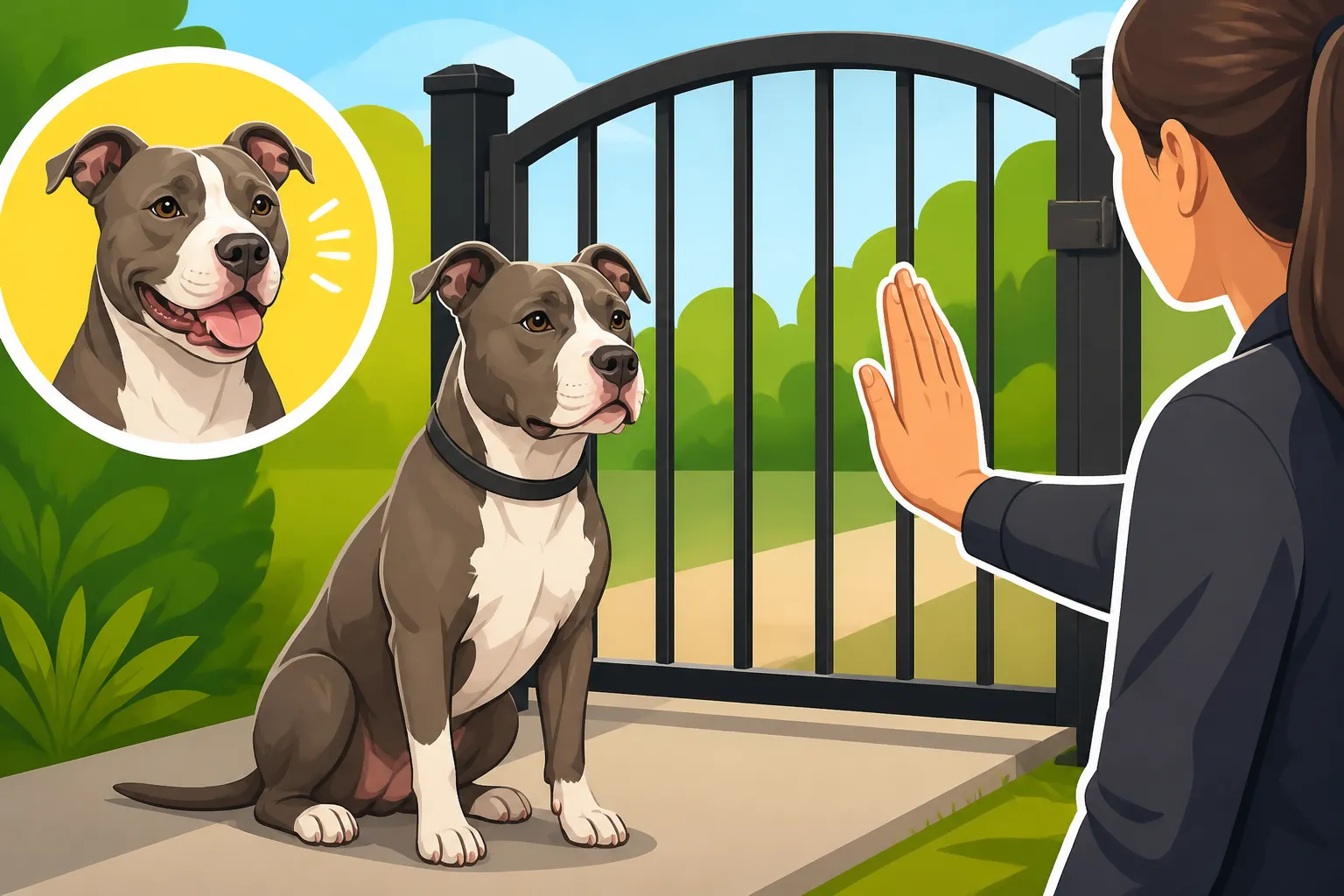
Approach the closed door with your Pit Bull on a leash. Ask them to "Sit" or "Stay" a few feet away from the door. If they hold the position, reward them. Then, reach for the doorknob. If they try to get up or lunge, immediately stop what you're doing, reset, and ask for the "Sit" or "Stay" again. You only continue reaching for the knob if they remain calm.
Once you can reach the knob without them breaking their stay, turn the knob. Again, if they move, stop. The moment they stay calm, even for a split second, open the door just an inch. If they lunge, gently close the door. Repeat this until they can hold their position with the door slightly ajar. Gradually increase the opening, always closing the door if they break their stay, and rewarding heavily when they remain still.
The "Open-Close" Drill
This drill is fantastic for teaching your Pit Bull that a gate opening doesn't automatically mean "go time." You'll need a gate that you can easily open and close, and your dog on a leash, initially.
- Approach the Gate: With your Pit Bull on a leash, walk calmly towards the gate. Ask them to "Sit" or "Stay" a few feet away.
- Open Slightly: Reach for the latch. If they remain still, unlatch it and open the gate just a crack. If they move, immediately close the gate and reset.
- Hold Position: Once they stay calm with the gate slightly open, reward them. Hold this position for a few seconds.
- Close and Repeat: Gently close the gate, latch it, and then release your dog from their "Stay" with a marker word like "Okay" or "Free" and a treat.
Repeat this drill many, many times. The goal is to desensitize them to the opening and closing of the gate, so it becomes less of an immediate cue to bolt. Gradually increase how wide you open the gate, and how long you keep it open, always closing it if they try to push through. Always make sure to reward their patience. High-Value Treats That Hold a Pit Bull's Focus will be essential here.
Adding Distractions and Duration
Once your Pit Bull is reliably waiting at a simple gate in a low-distraction environment, it’s time to up the ante. Start introducing minor distractions. This could be you stepping just outside the gate, someone walking by in the distance, or even a toy placed strategically just out of reach on the other side.
Increase the duration of their "Stay" at the open gate. Can they wait for 5 seconds? 10 seconds? A full minute? Always build up slowly. If they fail, go back a step to where they were successful and build up again. Remember, the journey is more important than rushing to the finish line.
Practice with different types of gates – your front door, the back gate, the car door, or even a kennel door. Each new location presents a slightly different challenge and helps generalize the behavior. The more varied the practice, the more reliable your Pit Bull will become in real-world scenarios. This is also where an online training course, like those available through BAXTER & Bella, can offer structured distraction training.
Real-World Scenarios and Troubleshooting
Eventually, you'll need to practice in real-world situations with higher stakes. This might mean the mail carrier walking by, a neighbor's dog barking, or even just the sound of kids playing down the street. Always start these sessions with your Pit Bull on a leash for added control.
- If your Pit Bull rushes: Immediately close the gate and step back. Re-establish the "Sit" or "Stay." Do not allow them through until they are calm. This teaches them that rushing actually prevents them from getting what they want.
- If your Pit Bull whines or paces: This is often a sign of frustration or impatience. Go back to a simpler step where they were successful. Make sure your rewards are frequent and high-value for quiet, calm waiting.
- If you need to leave quickly: Sometimes, despite your best efforts, you might need to quickly exit. Always have your Pit Bull on a leash when approaching a gate or door if there's any doubt about their reliability. Better safe than sorry.
Common Pitfalls and How to Avoid Them
Training a Pit Bull to wait at gates is a process, and like any process, there are common mistakes that can derail your progress. Being aware of these pitfalls can help you navigate them more effectively.
Inconsistency is the Enemy
This is perhaps the biggest pitfall of all. If you sometimes let your Pit Bull dash out, and sometimes ask them to wait, they will become confused and their training will break down. Dogs are creatures of habit, and they learn through consistent rules and consequences.
Every family member, every visitor, and every person who interacts with your Pit Bull around a gate or door needs to understand and enforce the "no push, no pass" rule. This might mean a quick briefing for guests before they come over or placing a sign on your gate as a reminder. If even one person allows them to rush, it teaches them that sometimes, it's okay to ignore the rule.
Think of it like this: if you occasionally let your Pit Bull jump on the counter, they’ll keep trying, because they know there's a chance they might get away with it. The same goes for gates. Zero tolerance for rushing at the threshold is the most effective approach.
Rushing the Process
It's tempting to want immediate results, especially when dealing with the strength of a Pit Bull. However, trying to move too quickly through the training steps will almost certainly lead to setbacks and frustration for both of you. Each step needs to be fully mastered before you progress.
If your Pit Bull struggles at any point, it means you've moved too fast. Don't punish them; simply go back to the previous step where they were successful and build up again, but more slowly this time. Break down the behavior into even smaller increments if necessary. For instance, instead of opening the gate a foot, open it an inch. Reward heavily for even tiny improvements.
Patience is a virtue in dog training, especially with a powerful and enthusiastic breed. Celebrate the small wins, and remember that slow and steady progress is far more sustainable than a rushed, inconsistent effort. A good training resource, perhaps a book or video course found on Amazon, can help you manage your expectations and guide your pace.
Relying on Physical Correction Over Positive Reinforcement
While a quick correction (like immediately closing the gate) is part of setting boundaries, relying on harsh physical corrections or punishment is counterproductive and can damage your relationship with your Pit Bull. Instead of teaching them what to do, it only teaches them what not to do out of fear, which can lead to anxiety or even aggression.
Focus on positive reinforcement. When your Pit Bull performs the desired behavior – waiting calmly – reward them immediately with high-value treats, praise, or a favorite toy. This teaches them that waiting at the gate is a positive, rewarding experience. Positive Reinforcement Training With a Pit Bull builds confidence and willingness to work with you.
A gentle physical cue or a slight tension on the leash is sometimes necessary to guide them, but the emphasis should always be on rewarding the correct action. You want your Pit Bull to choose to wait because they've learned it's the most rewarding option, not because they're afraid of a consequence.
Handling Setbacks and Regression
No training journey is perfectly linear. There will be days when your Pit Bull seems to "forget" everything they've learned, lunging at the gate like it's their first time seeing it open. This is normal, especially during adolescent phases or when new distractions are introduced. Don't get discouraged!
Regression doesn't mean your training has failed; it just means you need to revisit earlier steps. Go back to basics: use an interior door, have them on a leash, and reinforce the "Open-Close" drill with lots of rewards. Identify what triggered the setback – was it a new sound? A new person? A particularly exciting smell? And then address that specific distraction gradually.
Remember that training is an ongoing process. Even a fully trained Pit Bull benefits from occasional refreshers. A little patience, a step back in the training plan, and a renewed focus on consistency will get you both back on track.
| Training Stage | Goal | Common Pitfall | Troubleshooting Tip |
|---|---|---|---|
| Foundation | Reliable "Sit," "Stay," "Leave It," loose-leash walking. | Skipping basics. | Spend more time on core commands in quiet settings. |
| Doorways (Low Dist.) | Waiting calmly at interior doors and baby gates. | Rushing to outdoor gates. | Use interior doors for practice. Close door immediately if dog moves. |
| Gate (Leashed) | Waiting calmly with gate open/closed on leash. | Opening gate too wide, too fast. | Start with small openings, gradual increases. Reward quiet waiting. |
| Gate (Off-Leash) | Waiting calmly at open gate off leash. | Inconsistency from family. | Ensure everyone follows "no push, no pass." Use visual reminders. |
| Real World | Waiting in presence of distractions (people, dogs, cars). | Overwhelming with too many distractions. | Introduce distractions one at a time. If dog fails, reduce distraction level. |
| Maintenance | Consistent waiting over time. | Assuming training is "done." | Periodically reinforce with drills and rewards. Address any regression immediately. |
This article is for general informational purposes only and does not constitute professional advice. Laws, prices and regulations vary by location and change over time. Consult a qualified professional for guidance on your specific situation.