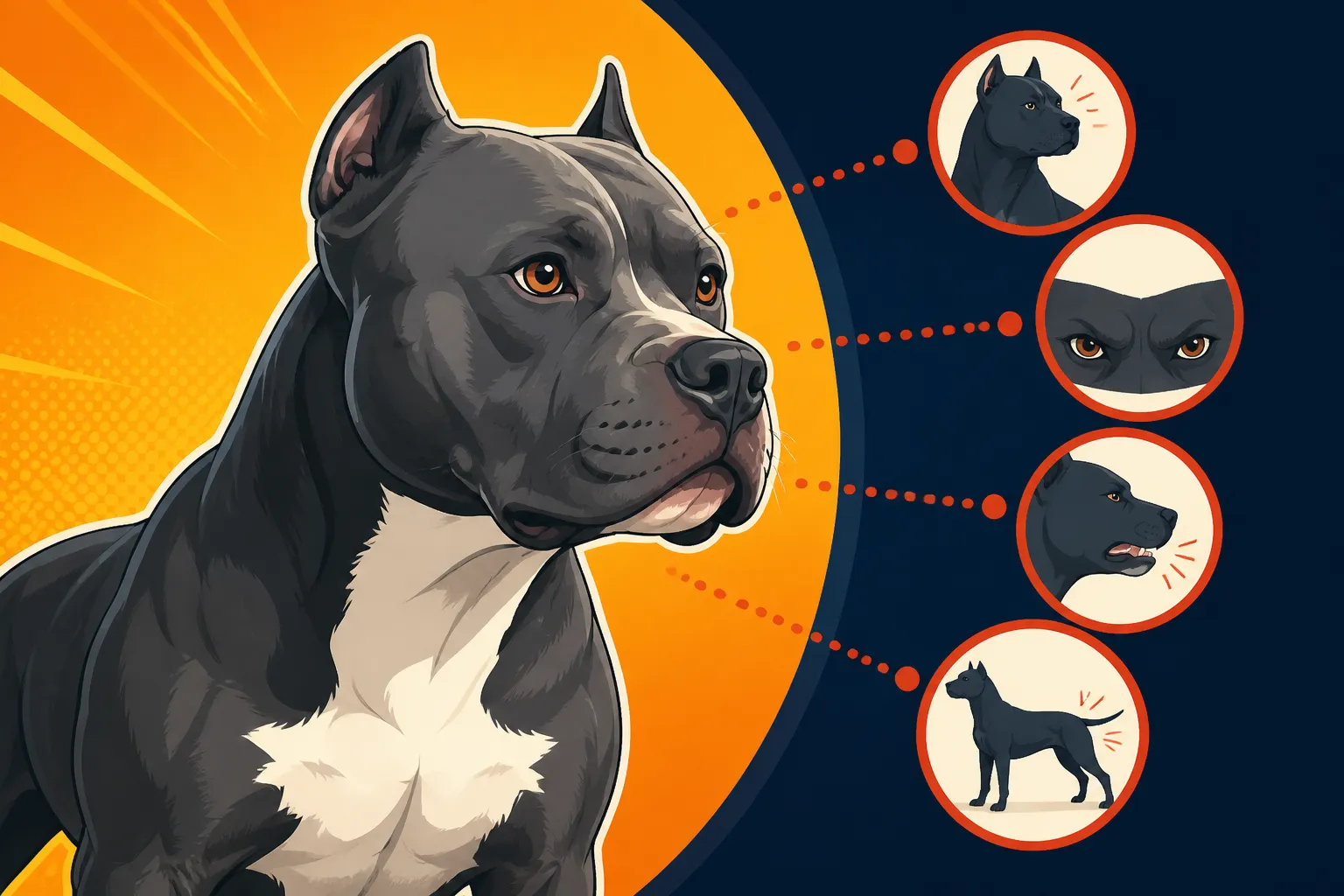
Reading a Pit Bull Before a Scuffle Starts
Let's be honest, having a Pit Bull means you're often under a magnifying glass. Every interaction, every nuance of their behavior, can be scrutinized in a way that just isn't true for many other breeds. This unfair reality means that as owners, we have an extra responsibility to be incredibly attuned to our dogs, especially in situations that could potentially escalate. This guide is here to help you become a master at reading your Pit Bull's subtle cues, recognizing the early signs of discomfort or stress, and intervening before a simple misunderstanding turns into a full-blown scuffle.
Why Hyper-Vigilance is Essential for Pit Bull Owners
Owning a Pit Bull is a deeply rewarding experience, but it also comes with a unique set of challenges. One of the biggest is navigating the prevailing public perception, which can unfortunately be skewed by stereotypes and misinformation. This means you, as the owner, need to be hyper-vigilant about your dog's interactions, not just for their safety, but for the well-being of everyone around them.
The Burden of Breed Stereotypes
It’s a frustrating truth that Pit Bulls often get less benefit of the doubt than other dogs. A Golden Retriever might pull on the leash, bark at another dog, or even snap, and it's often dismissed as "just being a dog." When a Pit Bull does the same, it can immediately be labeled as "aggressive" or "dangerous," even if the behavior is perfectly normal canine communication. This unfair bias means that even a minor incident involving your Pit Bull can be blown out of proportion, leading to serious consequences ranging from complaints to authorities to legal action, or even demands for euthanasia. It's a heavy burden, and it means we have to be exceptional advocates for our dogs by preventing these situations from even starting. You might find our article Why a Pit Bull Gets Less Benefit of the Doubt sheds more light on this difficult reality.
Because the stakes are so high, our primary goal as Pit Bull owners must be prevention. This isn't about making your dog "perfect" or suppressing their natural instincts; it's about understanding their inherent language and proactively managing situations to avoid stress or conflict. By learning to read their subtle body language, you can step in long before any tension escalates, keeping both your dog and others safe, and helping to chip away at those unfair stereotypes one positive interaction at a time. It also strengthens the bond between you and your dog, as they learn to trust that you will understand their needs and protect them.
Understanding Your Dog’s Natural Communication
Dogs communicate constantly, not just through barks or growls, but through a complex tapestry of body language. Tail wags, ear positions, eye contact, lip licks, and even subtle shifts in weight all tell a story. For Pit Bulls, whose powerful build can sometimes make their intentions seem more intimidating than they actually are, understanding these signals is paramount. Our dogs are trying to tell us how they feel about a situation, whether they're comfortable, anxious, or starting to feel overwhelmed.
Think of it like learning a new language. You wouldn't expect to understand someone speaking a foreign tongue without putting in the effort, right? The same goes for our dogs. They use a universal canine language, and it's our job to become fluent. They don't just "suddenly" react; there's always a progression, a series of increasing signals that indicate their rising discomfort. By recognizing these early cues, we gain the power to change the narrative of an interaction, guide our dogs to a more positive outcome, and ensure their confidence grows in new situations. This proactive approach is foundational to responsible Pit Bull ownership.
Deciphering the Subtle Language of Discomfort
Dogs are masters of non-verbal communication, often giving off a variety of signals long before they resort to overt aggression. Learning to pick up on these early, subtle cues is like having a superpower that allows you to intervene and redirect your Pit Bull before a situation escalates beyond control.
Early Visual Cues: Eyes, Ears, and Mouth
A dog's face can tell you so much, almost like reading a book. Start with their eyes, as they are often the most telling. If your Pit Bull starts showing "whale eye," where you see the whites of their eyes on either side of the iris, it often indicates stress or discomfort. This is different from a relaxed, soft gaze. A hard, unwavering stare can be a challenge or a sign of intense focus that could lead to trouble, while quick glances away can signal appeasement or an attempt to de-escalate on their part. Imagine your dog in a new place; if their eyes dart around quickly, taking everything in with a wide, tense look, that's often a sign they're feeling overwhelmed. Our article Reading Pit Bull Body Language Before a Greeting offers more insights into these subtle visual cues.
Next, pay attention to their ears. When a Pit Bull is relaxed, their ears are often in a natural, neutral position, maybe slightly forward or resting. If they're suddenly pinned flat against their head, it's usually a sign of fear or submission. Stiffly forward ears, on the other hand, can indicate intense focus or high arousal, which isn't always negative, but it's a cue to monitor closely. Continuously flicking ears can suggest anxiety, as if they're trying to process every sound in their environment, unable to settle. A Pit Bull's ears, whether cropped or natural, are dynamic indicators of their emotional state.
Finally, their mouth can offer several clues. Lip licking, especially when no food is present, is a common appeasement signal, showing they're feeling a bit stressed or trying to calm a situation down. Excessive yawning when they aren't tired can also be a stress signal. A tightly closed mouth, where the lips are pulled back tautly, suggests tension. If you see teeth, even just the front ones, or a wrinkle around the muzzle, it’s a clear escalation towards a snarl. Pay attention to how often they pant too; if it's not hot and they haven't been exercising, heavy panting can signify anxiety. These subtle facial changes, when combined, paint a vivid picture of your dog's inner state.
Body Posture and Movement Signals
Beyond the face, a Pit Bull's entire body is a canvas of communication. One of the most critical signals is sudden stiffening. If your dog suddenly freezes or their body becomes rigid, even for a moment, it's a huge red flag that they're uncomfortable and potentially preparing for action, either fight or flight. This might be a slight tensing of their muscles or a complete halt in movement. Similarly, a dog that is trying to make themselves smaller by crouching or lowering their head is often signaling fear or submission, hoping to avoid conflict.
Active avoidance is another key signal. If your Pit Bull turns their head away, averts their gaze, or even tries to physically move away from another dog, person, or object, they are clearly communicating "I don't like this; please give me space." Ignoring these signals is a common mistake that can lead to escalation, as the dog feels its subtle requests are being disregarded. Sometimes, they might even put a paw up, almost like a tentative "stop."
The tail, often misunderstood, is another important indicator. A low tail, or one tucked tightly between the legs, screams fear or submission. A high, stiffly carried tail can indicate arousal or confidence, but it can also precede a conflict if combined with other tense body language. Even a tail wag can be misleading; a loose, broad wag is typically friendly, but a short, stiff, fast wag held high is often a sign of high arousal or even nervousness, not necessarily happiness. Always read the tail in context with the rest of the body. Raised hackles – the hair standing up along their spine – is an undeniable sign of arousal, often due to fear, excitement, or aggression. It's an involuntary reaction, but it tells you your dog is feeling something intensely.
Vocalizations and Other Auditory Clues
While body language is often subtle, vocalizations can be much more direct indicators of your Pit Bull's emotional state. A soft, low growl is rarely an immediate threat; rather, it’s a crucial warning. Your dog is saying, "I'm uncomfortable, please back off." Punishing a growl can be dangerous, as it might teach your dog to suppress this warning, leading them to bite without prior vocal notice. Instead, acknowledge the growl and address the underlying discomfort.
Whining or soft, repetitive barks, especially if directed towards something specific, can signal anxiety, frustration, or a plea for attention or help. If your Pit Bull is whining while looking at a closed door or another dog, they might be expressing a desire or an apprehension they can't quite articulate in other ways. Our guide How Much a Pit Bull Actually Barks delves deeper into understanding their vocal range.
Beyond direct vocalizations, pay attention to other sounds your dog makes. Heavy panting, even when they haven't been exerting themselves in warm weather, is a classic sign of stress. Rapid breathing or shivering can also indicate fear or anxiety. These auditory cues, while perhaps less overt than a snarl, are just as important in building a complete picture of your Pit Bull's emotional state and should prompt you to investigate and intervene.
Recognizing the Escalation Ladder in Action
Understanding individual cues is one thing, but knowing how they string together and escalate is another. Dogs, like people, typically follow a predictable pattern when they're moving towards aggression. Rarely do they jump from calm to biting without a series of increasing signals.
From Warning to Threat Display
The concept of an "escalation ladder" is vital for any dog owner, especially those with Pit Bulls. Imagine a series of steps your dog takes when feeling pressured or uncomfortable. They start at the bottom with subtle appeasement signals (yawning, lip licking, turning away), hoping to diffuse the situation. If those are ignored, they might move up to signs of mild stress or discomfort (stiffening, hard stare, low growl). If those are still overlooked, they may escalate to overt threat displays like showing teeth, snarling, a quick lunge, or an air snap. The very top of the ladder is, of course, a bite. Dogs rarely skip steps unless they have been taught (often inadvertently by humans) that their earlier warnings are ignored or punished.
Here's a simplified look at the typical escalation ladder:
| Level of Discomfort | Signals to Watch For | What It Means |
|---|---|---|
| Low | Lip licking, yawning, nose licking, turning head/body away, blinking, sniffing ground | "I'm a little uncomfortable; I'm trying to appease." |
| Medium | Freezing, stiff body, lowered head, whale eye, low tail wag (stiff), growl, soft bark | "I'm stressed/uncomfortable; please give me space." |
| High | Hard stare, hackles up, snarling, showing teeth, snapping air, lunging, biting | "I feel threatened; I'm prepared to defend myself." |
Your goal is always to intervene at the bottom of this ladder. If you see your Pit Bull doing multiple "low" level signals in a specific context, that's your cue to remove them from the situation or introduce a distraction. Waiting until they are growling or snarling means you've missed many opportunities to de-escalate. Ignoring these warnings can lead to a dog feeling like its communication is ineffective, and it may then feel compelled to use stronger, more dangerous signals.
Understanding Triggers and Context
To effectively read your Pit Bull, you also need to understand their personal triggers and the context of the situation. Is your dog generally fearful of strangers? Does he guard his food bowl or favorite toys? Does he react strongly to other dogs, particularly those that are boisterous or pushy? Common triggers include resource guarding (food, toys, resting spots, or even people), fear or anxiety in new or crowded environments, loud noises, fast-moving objects (like bikes or skateboards), or even pain or discomfort. For instance, an otherwise friendly Pit Bull might snap if touched unexpectedly when they're in pain. Our article A Pit Bull Snapping During a Skin Flare explains how physical discomfort can dramatically alter a dog's behavior.
The context is everything. A yawn might just mean your dog is tired, but a yawn in a stressful situation, combined with lip licking and averted eyes, means something else entirely. Observe when and where your Pit Bull exhibits these stress signals. Is it only at the dog park? When small children approach? When another dog invades their personal space? Knowing your dog's specific triggers allows you to anticipate potential problems and proactively manage the environment. Building a strong foundation of training, like those offered by programs such as BAXTER & Bella, can help you develop the skills to understand these triggers and respond appropriately, building your dog's confidence in various situations.
Proactive Management and Intervention Strategies
Spotting the signs is only half the battle; knowing what to do about them is where the real work begins. Your ability to calmly and decisively intervene can prevent a minor moment of discomfort from becoming a serious incident.
De-escalation Techniques in the Moment
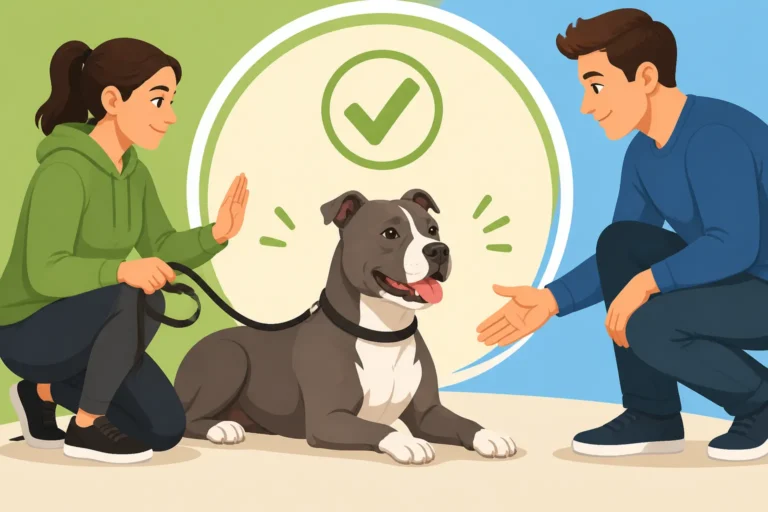
When you see your Pit Bull exhibiting early stress signals, your immediate goal is to create space and break their focus from the trigger. The simplest and often most effective method is to physically move your dog away from the source of their discomfort. This might mean crossing the street when you see another dog approaching or guiding them to a quieter corner if they’re overwhelmed in a busy park. Do not force interaction or try to "make" them like something they clearly don't. That only increases their anxiety.
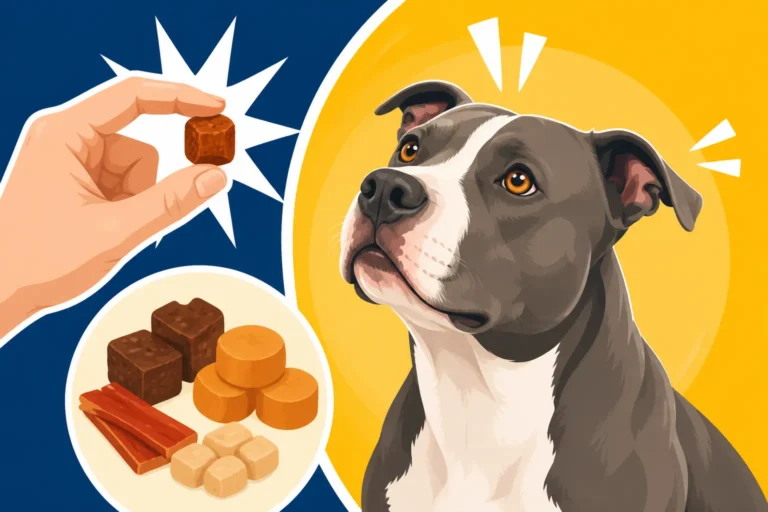
Once you’ve created some distance, redirection is key. Use a cheerful, upbeat voice to call their name and get their attention, then reward them with a high-value treat for looking at you. Keep a supply of truly irresistible treats on hand for these moments – something they only get in challenging situations. Many owners find a variety of excellent, high-value training treats on Amazon that are perfect for holding a Pit Bull's focus. The goal is to interrupt the stress response and associate seeing you (and moving away from the trigger) with something positive. Our guide High-Value Treats That Hold a Pit Bull's Focus provides great ideas for this.
Your own demeanor is crucial. Dogs are incredibly attuned to our emotions. If you become tense, anxious, or angry, you will only fuel your Pit Bull's stress. Strive to remain calm, speak in a low, reassuring tone, and avoid pulling or yanking on the leash, which can increase tension. Consistent use of management tools like a well-fitting, sturdy harness or even muzzle training, as discussed in Choosing a Basket Muzzle for a Pit Bull, can provide extra safety and confidence in unpredictable situations.
Building Better Habits Through Training and Socialization
Beyond immediate de-escalation, long-term prevention involves consistent training and appropriate socialization. Positive reinforcement training is the most effective approach for Pit Bulls, building trust and confidence rather than fear. Reward your dog lavishly for calm behavior in situations that might typically trigger them. For example, if they usually bark at dogs passing the window, reward them every time they don't bark, or even for simply looking at the dog and then back at you without reacting. You can learn more about this in Positive Reinforcement Training With a Pit Bull.
Controlled exposure is another cornerstone. Instead of throwing your Pit Bull into a chaotic dog park, gradually introduce them to triggers at a distance where they remain comfortable. This might mean starting with simply sitting on a bench far from a dog park, rewarding them for calmly observing, and slowly reducing the distance over many sessions. For Pit Bulls struggling with other dogs, careful, structured introductions to calm, dog-savvy companions can be beneficial. Consider the advice in Introducing a Pit Bull to an Existing Dog Slowly for this process.
If you're struggling to read your Pit Bull's signals or manage their reactions, do not hesitate to seek professional help. A certified professional dog trainer or a veterinary behaviorist can provide invaluable guidance. Look for someone experienced with strong, active breeds and who uses positive, force-free methods. Our guide Finding a Trainer Experienced With Pit Bulls can help you choose the right expert. Online resources, such as those offered by BAXTER & Bella, provide structured programs and support that can be a game-changer for owners looking to deepen their understanding of canine behavior and implement effective training strategies from home. Ultimately, the goal is to equip your Pit Bull with the skills and confidence to navigate the world calmly, and to equip you with the knowledge to be their best advocate. Remember that prevention is always better than intervention, especially given the scrutiny our Pit Bulls often face. If, despite your best efforts, an incident does occur, knowing What to Do If a Pit Bull Bites Someone is crucial for responsible ownership.
Disclaimer
This article is for general informational purposes only and does not constitute professional advice. Laws, prices and regulations vary by location and change over time. Consult a qualified professional for guidance on your specific situation.