A Pit Bull That Bolts Through an Open Door
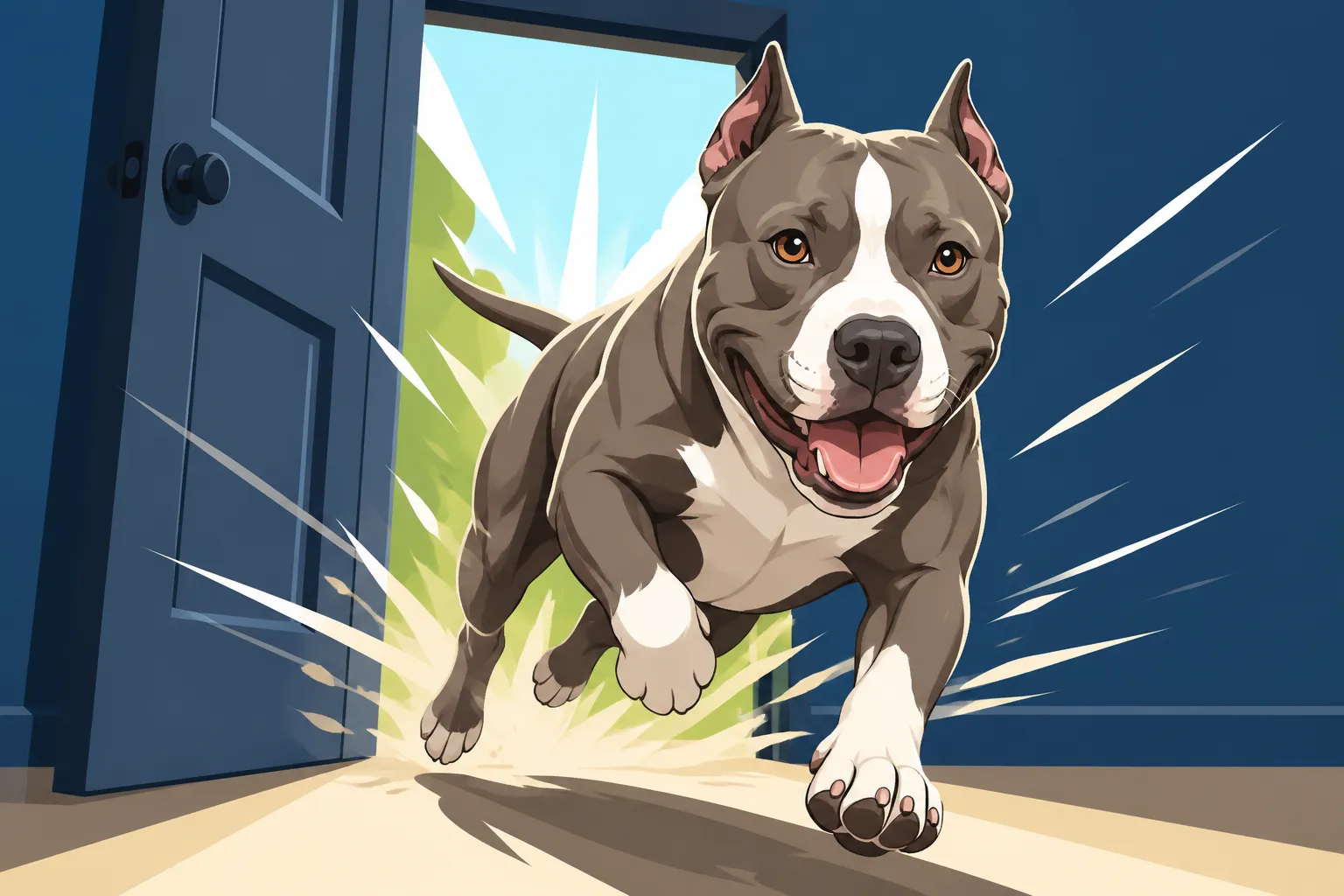
There's nothing quite like that heart-stopping lurch you feel when your strong, athletic Pit Bull spies an open door and takes off like a rocket. It's not just annoying; it's genuinely terrifying, bringing visions of traffic, lost pets, and potential incidents. This guide is here to walk you through understanding why your beloved Pit Bull might be making a break for it and, more importantly, how to teach them solid door manners so you can all live with a little more peace of mind.
Understanding Why Your Pit Bull Bolts Through Open Doors
It's easy to label a dog that bolts as "disobedient" or "stubborn," especially when they're so clearly ignoring your calls. But often, it's not malice; it's a potent mix of instinct, excitement, and a lack of clear boundaries around doors. For a powerful breed like a Pit Bull, the urge to explore, chase, or simply greet the outside world can be incredibly strong, overriding everything else in that split second an opportunity presents itself.
The Thrill of the Chase and Exploration
Imagine seeing the world as an endless playground, full of fascinating smells, sounds, and potential adventures. That's often what the outside represents to a dog. For a Pit Bull, who often possesses a natural athleticism and curiosity, that open door isn't just an exit; it's a gateway to excitement. They might be driven by a strong prey drive, spotting a squirrel or a bird across the street, and their instinct takes over before they even register your command. Or perhaps it's simply the sheer joy of a sudden burst of freedom, the wind in their fur, and the promise of new sniffs. This isn't about defying you; it's about following an incredibly powerful, inherent motivation. They're not thinking about the dangers; they're just reacting to the thrill.
Lack of Impulse Control and Training Gaps
Many dogs, especially those with high energy and enthusiasm like Pit Bulls, haven't been explicitly taught how to manage their excitement around thresholds. We often assume they'll just "get it," but waiting politely at a door requires a significant amount of impulse control. If your Pit Bull hasn't been systematically taught that doors are not an automatic "go" signal, then bolting becomes their default reaction. This can stem from insufficient training during puppyhood when they're learning What to Teach a Pit Bull Puppy and When, or simply a lack of consistency from all household members. Every time they successfully bolt, even just a few feet, it reinforces the idea that an open door means freedom. It becomes a deeply ingrained habit, making it harder to break without dedicated effort.
Environmental Reinforcement and Accidental Learning
Sometimes, we inadvertently teach our dogs to bolt. If a dog rushes out and immediately finds something rewarding – a new scent, a friendly neighbor, another dog to greet – that behavior is reinforced. Even a panicked chase by you, the owner, can be seen as a fun game by some dogs. They've learned that pushing through the door, rather than waiting, leads to good things or exciting interactions. This isn't just about walks; it could be the mail carrier, a delivery person, or even just another family member arriving home. The sudden flurry of activity at the door can escalate their arousal, making it even harder for them to maintain a calm, waiting demeanor.
Immediate Management Strategies to Prevent Bolting
While you work on long-term training, it's crucial to put immediate management strategies in place to keep your Pit Bull safe. Bolting is a dangerous habit, and every time it happens, it reinforces the behavior. Think of these strategies as safety nets to prevent incidents while you build better habits.
Using Leashes and Harnesses for Door Safety
This is your first line of defense, and it's surprisingly often overlooked in the rush to get out the door. Always have a leash on your Pit Bull when approaching an exterior door, even if you’re just stepping out for a moment. This might mean having a designated "door leash" hanging right by the exit. For a powerful dog, ensure you're using equipment that provides control, such as a sturdy harness designed for strong pullers. A front-clip harness can give you more leverage than a back-clip harness if they do try to lunge. The key is to make it a habit: leash on, then door opens. This simple step can prevent a panic-inducing escape and keep both your dog and others safe. Many excellent options are available online through retailers like Amazon.
Implementing Physical Barriers and Gates
Sometimes, a leash isn't enough, or you need a buffer zone. This is where physical barriers come in handy. Baby gates, pet gates, or even a solid internal door can create a "decompression zone" between your Pit Bull and the exterior. If you know you'll be getting a delivery or anticipate guests, simply gate your dog in another room before you open the main door. This prevents them from even getting to the threshold. For some Pit Bulls, especially those with extreme bolting tendencies, a double barrier system might be necessary – perhaps a gate across the hallway leading to the front door, plus the door itself. The goal is to remove the opportunity for the unwanted behavior to occur, giving you space and time to manage the situation calmly.
Training a "Place" or "Stay" Command Away from the Door
Teach your Pit Bull to go to a designated "place" (like their bed or a mat) or to "stay" a few feet away from the door whenever someone approaches it. This isn't just about preventing bolting; it's about teaching them an alternative, desirable behavior for a high-excitement situation. Start practicing this in low-distraction environments first, rewarding heavily for staying. Gradually introduce distractions, like someone knocking or ringing the doorbell, and work up to opening the door while they remain in their "place." For some dogs, this might mean a short duration at first, building up slowly. Use high-value treats to make this command incredibly rewarding. High-Value Treats That Hold a Pit Bull's Focus are essential here to compete with the lure of the outside world.
Training Protocols to Teach Door Manners
Prevention is great for safety, but true success comes from training your Pit Bull to have impeccable manners around doors. This involves breaking down the behavior into smaller steps and consistently reinforcing the desired actions. It takes time, patience, and repetition, but the payoff is a safer, more predictable home life.
The "Wait" Command at Thresholds
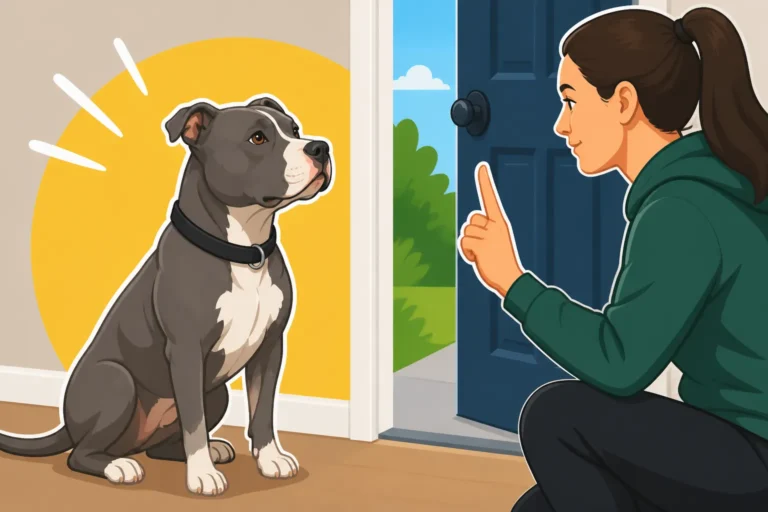
The "wait" command is your best friend when it comes to doors. Unlike a "stay," which often means remaining in a specific spot, "wait" means pausing until you give a release cue. Start by having your Pit Bull on a leash (even inside). Approach the door, give the "wait" command, and then reach for the doorknob. If your dog moves, close the door immediately and restart. If they hold their "wait" even for a second, open the door a tiny crack, then immediately close it and reward them heavily.
Gradually increase the duration the door is open, and eventually, the distance you step through. The goal is for them to understand that the door only opens and they can only pass through when you give the explicit release command, such as "Okay!" or "Free!" This process teaches them impulse control directly at the point of temptation.
Practicing Controlled Exits with a Long Line
Once your Pit Bull has a solid "wait" at the door, you can begin practicing controlled exits. Use a long line – a lightweight leash that can be 15 to 30 feet long – attached to their harness. This gives you a safety backup if they break their "wait" and bolt. With your dog on the long line, approach the door. Give your "wait" command, open the door, and step outside yourself. If your dog remains, reward them. If they try to dart out without permission, the long line allows you to gently stop them without a harsh correction, then guide them back inside to restart the exercise.
Gradually, you can invite them out on the long line, ensuring they walk calmly beside you, rather than charging ahead. This also helps with Pit Bull Leash Manners and Physical Strength, teaching them that outdoor access comes with polite walking. Resources like BAXTER & Bella offer excellent online courses that break down these kinds of training steps for various situations, often providing video demonstrations which can be really helpful.
Desensitization to Doorbell and Knocking
Many Pit Bulls bolt because the doorbell or a knock triggers an intense burst of excitement or anxiety. To address this, you need to desensitize them to these triggers. Start by having a helper (a family member or friend) stand outside and knock or ring the doorbell once. Immediately, before your dog can get overly excited, toss a high-value treat away from the door, creating distance.
Repeat this many times, gradually increasing the intensity (more knocks, longer rings) and shortening the distance to the door only when your dog remains calm. The goal is to change their emotional response from "OMG, someone's here!" to "Oh, the doorbell! That means treats!" You want them to associate the sound with something positive and calm, rather than a frantic dash. Over time, you can integrate this with their "place" command, so the doorbell becomes a cue to calmly go to their spot.
Addressing Underlying Factors and Maintaining Consistency
Bolting is often a symptom of broader training or environmental needs. To truly solve the problem, you need to look at the whole picture and commit to consistent reinforcement, making it a lifestyle rather than just a quick fix.
Ensuring Adequate Physical and Mental Exercise
A Pit Bull with pent-up energy, both physical and mental, is far more likely to bolt through an open door out of sheer exuberance. These are powerful, intelligent dogs that need a good outlet. The Daily Exercise a Pit Bull Actually Needs goes beyond a quick walk around the block. This might mean brisk walks, structured play sessions, puzzle toys, or even dog sports. A tired dog is a good dog, and a dog whose brain has been engaged is less likely to be overwhelmed by an impulse. If they haven't had enough appropriate stimulation, that open door becomes an irresistible escape valve for their excess energy. Regularly assess your Pit Bull's exercise routine to make sure it's meeting their needs for both physical exertion and mental engagement.
Building Strong Recall and Impulse Control
A reliable recall is your ultimate safety net. If your Pit Bull does manage to get out, a strong "come" command can literally be a lifesaver. This needs to be practiced consistently in various environments, always making coming back to you the most rewarding thing they could possibly do. Start in a low-distraction area and gradually introduce more challenges. Pair your recall with High-Value Treats That Hold a Pit Bull's Focus and enthusiastic praise. Building a Pit Bull's Impulse Control extends beyond the door. It involves teaching self-control in many situations, from waiting for food to ignoring distractions on walks. Every piece of impulse control training you do reinforces their ability to make good choices, even when excited.
Consistency Across All Household Members
This is where many training efforts fall apart. If one person diligently practices door manners, but another just lets the dog rush out, your Pit Bull receives mixed messages. Every single person who interacts with your dog and the doors must be on the same page. This includes family members, roommates, and even regular visitors. Explain the rules clearly: "We always put the leash on before opening the door," or "Rocky always waits on his mat until I say 'Okay'."
A simple visual reminder on the door can help, or a quick briefing for guests. Lack of consistency can quickly undo weeks or months of hard work. For instance, if one person allows the dog to Stopping a Pit Bull That Drags You Down the Street, while another tries to enforce polite leash walking, the dog will simply learn to try their luck with whoever is least consistent. Everyone needs to be a team player for your Pit Bull to truly understand and internalize the rules.
Seeking Professional Guidance if Necessary
If you've tried these strategies and are still struggling, don't hesitate to seek help from a qualified professional dog trainer, especially one with experience with Pit Bull type dogs. They can observe your specific situation, identify subtle cues you might be missing, and tailor a training plan for you and your Pit Bull. Sometimes, an outside perspective and hands-on guidance can make all the difference. A professional can help you troubleshoot specific challenges, whether it's an unusually strong prey drive, or anxiety contributing to the bolting. They can also ensure you're using proper tools and techniques, such as Leads and Collars That Will Not Fail on a Pit Bull, safely and effectively.
| Strategy Type | Benefit | Key Action Points |
|---|---|---|
| Management | Immediate safety and prevention | Leash at all exterior doors; physical barriers/gates; "Place" away from door. |
| Training | Long-term behavior change; teaches impulse control | "Wait" command at thresholds; controlled exits on long line; desensitize to doorbell. |
| Reinforcement | Supports training, addresses root causes | Adequate physical/mental exercise; strong recall training; household consistency. |
Disclaimer
This article is for general informational purposes only and does not constitute professional advice. Laws, prices and regulations vary by location and change over time. Consult a qualified professional for guidance on your specific situation.