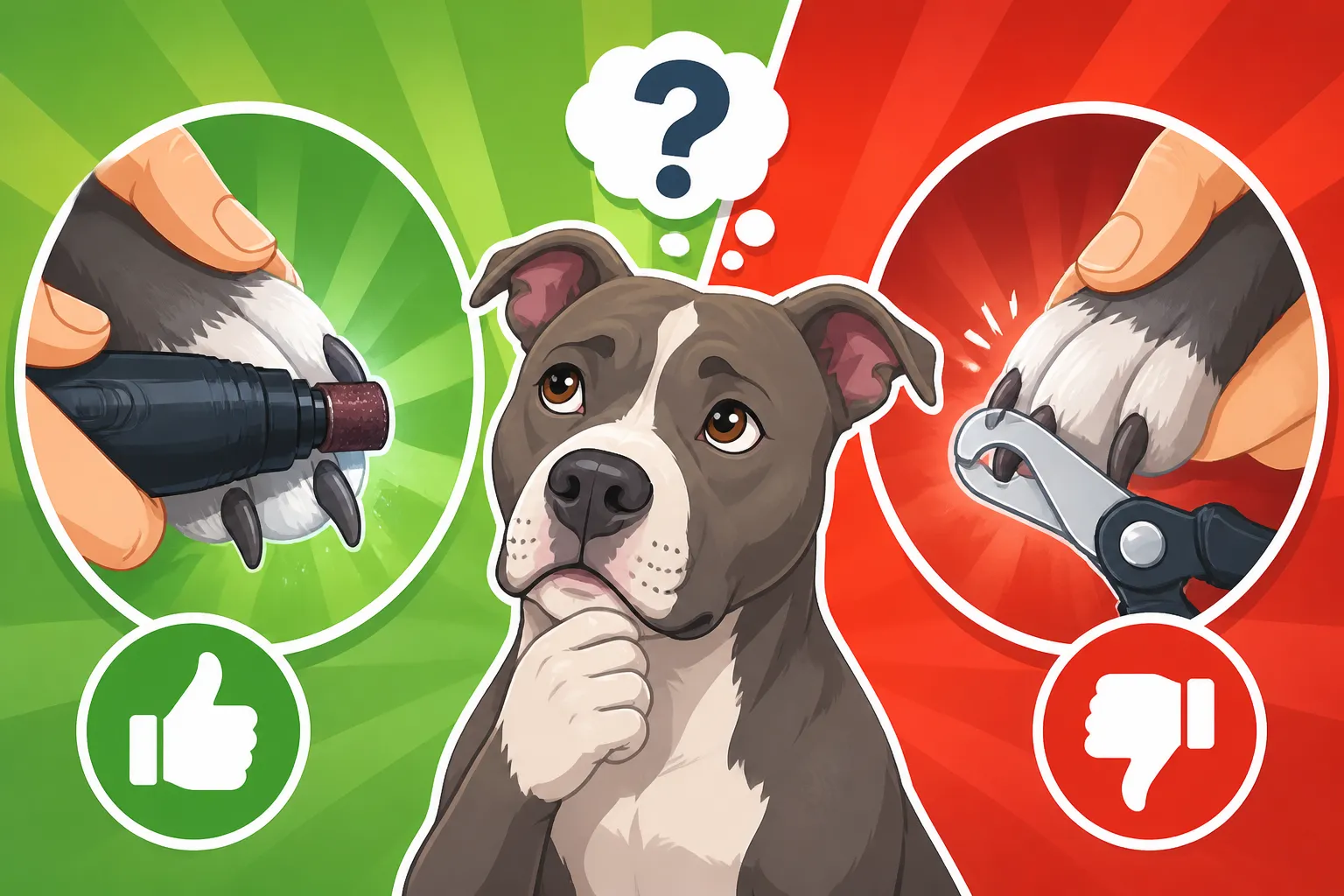
Whether a Grinder Beats Clippers on Pit Bull Nails
Oh, the battle of the Pit Bull nails! If you're anything like me, you've probably spent more than a few frustrated moments trying to tackle those rock-hard, fast-growing claws on your beloved bully. It feels like a constant struggle, a dance of dodging kicks and trying not to "quick" them, leaving both you and your Pit Bull stressed and wondering if there's a better way. This comprehensive guide is here to walk you through the age-old debate of nail grinders versus clippers, offering insights into which method might be best for your specific Pit Bull, and how to make nail care a less dreaded experience for everyone involved.
The Unique Challenge of Pit Bull Nails
Let's be real: Pit Bull nails are a breed apart. They aren't dainty little things that easily snip. They're often thick, dark, and seem to grow at an alarming rate, posing a real challenge for even the most experienced dog owner. This isn't just about aesthetics; overgrown nails can lead to significant discomfort and even health issues for your strong, athletic companion.
Why Pit Bull Nails Are So Tough
Pit Bulls are built for power and endurance. Their nails, much like the rest of their robust anatomy, are often incredibly dense and strong. Unlike some breeds with finer, lighter nails, a Pit Bull's claws can feel like concrete when you try to cut them. This density means that standard, flimsy clippers often struggle, sometimes bending or leaving jagged edges rather than a clean cut. It’s not just the nail plate itself, but often the entire structure of the paw and nail is designed for traction and durability, which translates to a tough job for us humans when grooming time rolls around. This inherent toughness is one of the primary reasons why many Pit Bull owners find nail care to be such a daunting task, often delaying it until the nails become truly problematic.
Furthermore, many Pit Bulls, especially those with darker coats, tend to have black nails. This makes identifying the "quick"—the sensitive, blood-filled part of the nail—even harder. Without a clear view, you're essentially guessing, and that guesswork often leads to hesitation or, worse, accidental injury. Imagine trying to trim a dark, thick nail while your powerful dog is trying to pull away; it’s a recipe for anxiety on both sides of the clippers. Understanding this physical reality is the first step toward finding a suitable nail care routine that respects both your dog's comfort and your peace of mind.
The Quick: A Hidden Danger
Ah, the quick. For many Pit Bull owners, this little pink or black vein is the stuff of nightmares. It’s a blood vessel and nerve ending that runs down the center of each nail. If you cut into the quick, it’s painful for your dog and will bleed, sometimes quite a bit. This single incident can set back your nail trimming efforts for months, creating a deeply ingrained fear of clippers in your Pit Bull. Once a dog associates nail trims with pain, getting them to cooperate becomes exponentially harder. They might yank their paws away, vocalize, or even try to snap, not out of malice, but pure fear and self-preservation.
The challenge is amplified with dark-colored nails, which are very common in Pit Bulls. Unlike clear or light nails where you can often see the quick through the nail, black nails offer no such visual guide. This forces owners to trim in small increments, which can be time-consuming, or to rely on other cues, which can still be uncertain. Accidentally cutting the quick not only causes immediate pain and bleeding but can also cause the quick to recede less over time, making future trims even more difficult. It's a vicious cycle that many of us have unfortunately experienced.
The Stress of Nail Trims for Both Dog and Owner
Let’s be honest, nail trimming day is rarely a joyous occasion in a Pit Bull household. For your dog, it can be a source of immense stress, especially if they’ve had a negative experience in the past. They might start shaking, try to hide, or become defensive, anticipating discomfort or pain. This isn't a reflection of their temperament; it's a natural reaction to something they perceive as threatening. A Pit Bull's strength means that a reluctant dog can be incredibly difficult to restrain, turning a simple grooming task into a wrestling match.
As the owner, this stress is palpable. You're trying to be gentle, efficient, and avoid injury, all while managing a powerful, potentially fearful dog. The fear of hurting them, combined with the struggle, can leave you feeling frustrated, guilty, and completely drained. Many owners simply avoid nail trims altogether, leading to overgrown nails that cause their own set of problems. It becomes a cycle of avoidance and eventual necessity, often culminating in an emergency trip to the vet for a trim. Creating a positive association with nail care is paramount, and it starts with understanding the tools and techniques that might make it less traumatic. Don't forget that training plays a huge role in this; if you need to work on general handling, check out Teaching a Pit Bull to Tolerate Ear Cleaning for some overlapping principles.
Traditional Clippers: Pros, Cons, and Common Pitfalls
For generations, clippers have been the go-to tool for dog nail care. They're widely available, relatively inexpensive, and for some dogs, they get the job done quickly. However, with a Pit Bull's unique nail structure and common anxieties, clippers come with their own set of considerations.
Different Types of Clippers
When you head to the pet store, you'll generally find two main types of nail clippers: guillotine style and scissor style. Guillotine clippers have a small hole you insert the nail into, and a blade slides across to make the cut. They're often favored for medium to large dogs because they can provide a quick, clean cut. However, some find them less precise, and if the blade isn't sharp, they can crush the nail rather than cut it cleanly. This crushing can be uncomfortable for your Pit Bull and lead to splitting.
Scissor-style clippers, often resembling heavy-duty pliers, are typically recommended for larger, thicker nails, making them a popular choice for Pit Bulls. They offer more control and leverage, which is crucial for those dense nails. Within the scissor style, you might find options with a safety guard, designed to prevent you from cutting too much, though these guards aren't foolproof and often get in the way for those trying to trim nails very short. No matter the type, the key is sharpness. Dull clippers are not only ineffective but can also be painful, leading to a negative association for your dog. You can find a wide variety of these on Amazon or at your local pet supply store, but remember that the brand matters less than the sharpness and your comfort holding it.
When Clippers Work Best and When They Don't
Clippers shine when you have a cooperative dog with light-colored nails, or when you need to remove a significant amount of length quickly. If your Pit Bull tolerates the sound and sensation of clippers and has nails that aren't too dark, you might find them efficient. They can be very effective for maintaining nails that are already at a good length, requiring just a quick snip every week or so. They're also usually quicker than a grinder, which can be a huge plus if your dog has a short attention span or is prone to fidgeting.
However, clippers often fall short for Pit Bulls with dark, thick nails or those who are fearful of the process. The "snapping" sound of clippers can be startling, and the pressure applied to the nail before the cut can be unsettling. If your Pit Bull pulls away, jerks its paw, or outright resists, attempting to use clippers can become a dangerous affair, risking injury to both of you. Many owners find it almost impossible to get a clean, short trim with clippers without nicking the quick, which, as we discussed, can set back all your training efforts. For dogs prone to stress during grooming, the speed advantage of clippers is often negated by the difficulty of getting them to stay still long enough. If your Pit Bull already struggles with nail trims, you'll need to work on Positive Reinforcement Training With a Pit Bull to make any method successful.
The Fear of the Quick and How to Manage It
The fear of cutting the quick is a very real and understandable concern for Pit Bull owners. It’s the primary reason many of us hesitate, take off too little, or delegate the task to a professional. To manage this fear, a good strategy is to trim very small amounts at a time, frequently. Think of it as micro-trimming. Instead of trying to take off a large chunk, aim for just the very tip. Over time, with consistent, tiny trims, the quick will naturally recede, allowing you to gradually shorten the nails. This process is slow but far less stressful for everyone.
Having styptic powder or cornstarch on hand is absolutely essential. If you do accidentally nick the quick, immediately apply pressure with styptic powder – it works wonders to stop the bleeding and calm both you and your dog. Don't beat yourself up if it happens; it's a common mistake. The key is how you react: stay calm, reassure your dog, and stop the session on a positive note, even if it means only trimming one nail. Consistency and positive reinforcement are your best friends here. High-value treats, like those from Ollie, can be incredibly effective in creating a positive association with nail trims. Offering a special, delicious treat only during nail care can make a huge difference in your Pit Bull's willingness to cooperate.
Nail Grinders: A Gentler Approach?
In recent years, nail grinders have gained immense popularity, particularly among owners of breeds with tough nails or those whose dogs have developed a fear of traditional clippers. These rotary tools gently file the nail down, offering a different experience for both dog and owner.
How a Nail Grinder Works
A dog nail grinder is essentially a small, handheld rotary tool fitted with an abrasive sanding drum or stone. When you turn it on, the drum spins rapidly, and you simply touch it to the tip of your dog's nail to file it down. The grinding action slowly removes layers of the nail, allowing for much more precision than clippers. You can shape the nail, smooth out rough edges, and gradually get closer to the quick without the risk of a sudden, deep cut. This gradual removal also heats the nail slightly, which can make the quick recede over time, just like frequent clipping.
Grinders come in various sizes and power levels. Some are battery-operated and very quiet, ideal for nervous dogs, while others are more powerful, corded models designed for very thick nails. Brands like Dremel (available on Amazon and at hardware stores) are popular choices, but there are also many pet-specific grinders on the market. The key is to find one that feels comfortable in your hand, has sufficient power for your Pit Bull's tough nails, and isn't excessively loud or vibrating, as noise and vibration can be deterrents for sensitive dogs. Always read reviews specific to powerful breeds if you're shopping for a new grinder.
Benefits of Using a Grinder for Pit Bulls
For Pit Bulls, nail grinders offer several distinct advantages that can make a world of difference in your nail care routine.
- Precision and Control: This is perhaps the biggest benefit. Grinders allow you to take off tiny amounts of nail at a time, giving you much more control over the length. This precision drastically reduces the risk of hitting the quick, especially with those challenging dark nails. You can "dust" the tip, check your progress, and continue, minimizing the chance of an accidental painful cut.
- Smoother Edges: Clippers can sometimes leave sharp or jagged edges on a Pit Bull's thick nails, which can snag on carpets or scratch you (or your furniture!). A grinder, by its very nature, smooths and rounds the nail as it works, leaving a much cleaner and safer finish. This also means less chance of your dog catching their nails and potentially tearing them.
- Gradual Quick Recession: With consistent, short grinding sessions, the quick will naturally start to recede further back into the nail. This is a game-changer for Pit Bulls with long quicks, as it allows you to achieve shorter, healthier nail lengths over time without pain. Many owners find that after a few months of regular grinding, they can get the nails significantly shorter than they ever could with clippers.
- Less Startling: While grinders do make a noise and vibrate, many dogs find this sensation less startling than the sudden "snap" of clippers. With proper introduction and positive reinforcement, many Pit Bulls can learn to tolerate or even enjoy the grinding process. This can turn a dreaded chore into a more manageable experience. For many Pit Bulls, the tactile sensation of a grinder is preferable to the sudden pressure and potential pinch of clippers. This is particularly true for dogs that may have had a negative experience with clippers in the past, leading to a strong aversion.
Potential Downsides and How to Overcome Them
While grinders offer many benefits, they aren't without their challenges, especially when introducing them to a powerful breed like a Pit Bull.
- Noise and Vibration: The whirring sound and vibration of a grinder can be intimidating for some dogs. If your Pit Bull is sensitive to noise, this can be a major hurdle. To overcome this, introduce the grinder slowly. First, let your dog see and sniff the grinder while it’s off. Then, turn it on near them without touching them, rewarding calm behavior with treats. Gradually, touch the grinder to their paw (while it's off), then briefly to one nail, always following with generous rewards. This desensitization process might take days or even weeks. Remember to use those High-Value Treats That Hold a Pit Bull's Focus to make it a super positive experience.
- Heat Generation: The friction from grinding generates heat. While a quick grind on each nail usually isn't an issue, holding the grinder on one spot for too long can cause discomfort or even burn the quick. It's crucial to use quick, light touches, moving from nail to nail and giving each one a break. This prevents overheating and keeps the experience positive.
- Time Commitment: Grinding typically takes longer than a quick clip, especially when you're first starting out and taking tiny bits off each nail. For a Pit Bull with notoriously tough nails, you might need several passes per nail to achieve the desired length. If your dog has a short attention span or gets restless easily, this extended time can be challenging. Breaking up the session into shorter intervals (e.g., doing one paw at a time over a day or two) can help. Regular sessions are essential for keeping nails at an ideal length.
- Dust and Odor: Grinding creates fine nail dust, and some owners report a slight burning odor. This is generally harmless but can be off-putting. Doing nail trims in a well-ventilated area can help. For dogs with respiratory sensitivities, it might be something to consider, though usually, it's not a significant issue.
Making the Choice: Clippers, Grinder, or Both?
Deciding between clippers and a grinder isn't a one-size-fits-all answer, especially for Pit Bulls. What works for one dog might be a nightmare for another. The best approach often involves considering your specific dog's personality, their history with nail trims, and your own comfort level.
Factors to Consider for Your Pit Bull
When making your decision, take a moment to honestly assess your Pit Bull and your own situation.
- Your Dog's Temperament: Is your Pit Bull generally laid-back and tolerant of handling? Or do they become anxious or reactive during grooming? If your dog is fearful of sudden sounds or has a history of bad experiences with clippers, a grinder might be a gentler option to introduce. Conversely, if your dog is easily startled by vibrations or unfamiliar noises, clippers might initially seem less intimidating, provided you can handle them with confidence. For a Pit Bull that is particularly anxious or has a history of reactivity, remember that building trust and positive associations is key, regardless of the tool.
- Nail Color and Thickness: Pit Bulls often have thick, dark nails. If this describes your dog, the precision of a grinder can significantly reduce the risk of hitting the quick, making it a safer bet. For very thick nails, some clippers may struggle to make a clean cut, potentially crushing the nail. A powerful grinder can typically handle even the densest of nails with relative ease.
- Your Comfort and Skill Level: Be honest about your own comfort. Are you confident with clippers, or does the fear of hurting your Pit Bull make you hesitant? Many owners feel more secure using a grinder because it's a slower, more controlled process. If you're stressed, your Pit Bull will pick up on it, making the process harder. Choose the tool that makes you feel more capable and less anxious.
- Time Availability: Grinding typically takes longer per session than clipping, especially when you're trying to shorten long nails or get the quick to recede. If you have limited time and a very cooperative dog, clippers might be faster. However, if you're prepared to invest a little more time per session for a less stressful outcome, a grinder can be a fantastic choice. Consistent, short sessions are almost always better than infrequent, long, stressful ones.
Here's a quick comparison to help you weigh your options:
| Feature | Traditional Clippers | Nail Grinder |
|---|---|---|
| Speed | Generally faster for quick trims | Slower, more gradual process |
| Precision | Less precise, higher risk of cutting the quick | Highly precise, lower risk of cutting the quick |
| Nail Finish | Can leave sharp edges, potential for splitting | Smooth, rounded edges |
| Noise/Vibration | Sudden "snap" sound, no vibration | Whirring sound, vibration |
| Quick Recess | Recedes with frequent small trims | Encourages quicker quick recession with regular use |
| Cost | Generally lower initial cost | Higher initial cost, replaceable sanding bands/stones |
| Ease of Use | Can be intimidating due to quick fear | Requires patience for desensitization |
| Suitability for Dark Nails | Challenging due to quick visibility | Ideal for dark nails due to gradual removal |
A Hybrid Approach to Nail Care
Often, the ideal solution for a Pit Bull isn't one or the other, but a clever combination of both. Think of it as using the best of both worlds. For instance, if your Pit Bull's nails are very long, you might use clippers to take off the bulk of the length first, carefully avoiding the quick. This quickly reduces the overall nail length. Once the major length is gone, you can then switch to a grinder to smooth the edges, shape the nails, and get them perfectly rounded and short without risking the quick. This allows you to leverage the speed of clippers for initial removal and the precision and finishing touch of the grinder.
Another scenario for a hybrid approach is maintaining the quick recession. You might clip the tips every week or two, and then once a month, use the grinder to really work on pushing that quick back and achieving a super short, tidy nail. This approach can be particularly efficient and effective for Pit Bulls whose nails grow incredibly fast. Having both tools means you're prepared for any nail situation, from a tiny chip to a completely overgrown claw. Just make sure both tools are well-maintained; remember to keep those clippers sharp!
Introducing a Grinder to a Clipper-Shy Pit Bull
If your Pit Bull is already terrified of clippers, switching to a grinder requires patience, positive reinforcement, and a gentle touch. This isn't a race; it's about rebuilding trust and creating a positive association with nail care.
-
Desensitize to the Sound and Vibration:
- Off, then On, then Near: Start by simply letting your Pit Bull see and sniff the grinder while it's turned off. Reward them for calm interest.
- Next, turn the grinder on in another room or far away, so it's a faint sound. Offer treats and praise. Gradually, move the running grinder closer, always keeping it a non-threatening distance. The goal is for them to associate the sound with good things (treats!) and not fear. Think of it like acclimating your dog to thunder – it's about exposure and positive experiences.
- You might find great success with a very quiet, battery-operated grinder, many of which can be found on Chewy or Amazon, as they're less intimidating than powerful, corded models.
-
Touch and Reward:
- Once your Pit Bull is comfortable with the sound, turn the grinder off and gently touch it to their paw, then a nail, for a fleeting moment. Immediately reward with a high-value treat.
- Repeat this many times, gradually increasing the duration of the touch. The key is to never push past their comfort level. If they pull away, go back a step.
-
Short Sessions, Big Rewards:
- When you're ready to actually grind, start with just one nail, or even just a fraction of one nail. Turn the grinder on, briefly touch it to the nail tip for a second or two, then turn it off and lavish your Pit Bull with praise and their favorite Ollie training treats.
- The first few sessions might involve only one nail or even no actual grinding, just positive interaction with the tool. The goal is to end every session on a positive note, with your dog feeling good about what just happened.
- Consider Muzzle Conditioning a Pit Bull in Two Weeks if your dog is particularly defensive, as this can provide a layer of safety for both of you while you work through the desensitization process. It’s not about punishment, but about managing risk and creating a calmer environment for everyone.
-
Consistency is Key:
- Regular, short, positive sessions are far more effective than infrequent, long, stressful ones. Aim for a few minutes every day or every other day, rather than trying to do all four paws at once. This builds confidence and makes nail care a routine rather than an ordeal.
Taking the time to introduce a grinder properly can transform nail care from a wrestling match into a manageable, even pleasant, routine for you and your Pit Bull. Your patience will be richly rewarded with healthier paws and a happier companion. Remember that Pit Bull Nail Trimming and Thick Nails covers additional tips for managing this common chore.
Disclaimer
This article is for general informational purposes only and does not constitute professional advice. Laws, prices and regulations vary by location and change over time. Consult a qualified professional for guidance on your specific situation.