Whether a Pit Bull Should Wear Boots in Summer
The summer months, while wonderful for outdoor adventures, bring a very real and often overlooked danger for our beloved Pit Bulls: scorching hot pavement. It's a frustrating situation to be in when you know your active dog needs exercise, but the ground outside feels like a griddle to your own hand, leaving you wondering how to protect those tough but sensitive paw pads. This guide will explore whether paw boots are the answer for your Pit Bull in the summer heat, alongside other vital strategies for keeping their paws healthy and safe.
The Harsh Reality of Hot Pavement and Pit Bull Paws
As Pit Bull owners, we're keenly aware of our dogs' robust nature and their desire to be active. They are often built like tanks, eager to go, go, go! But that physical strength doesn't extend invincibly to their paw pads when faced with extreme heat. It’s a common misconception that because a dog's paws are tough, they can handle any surface. The reality is far more delicate, and understanding this vulnerability is the first step toward effective protection.
Why Pit Bull Paws Are Vulnerable to Heat
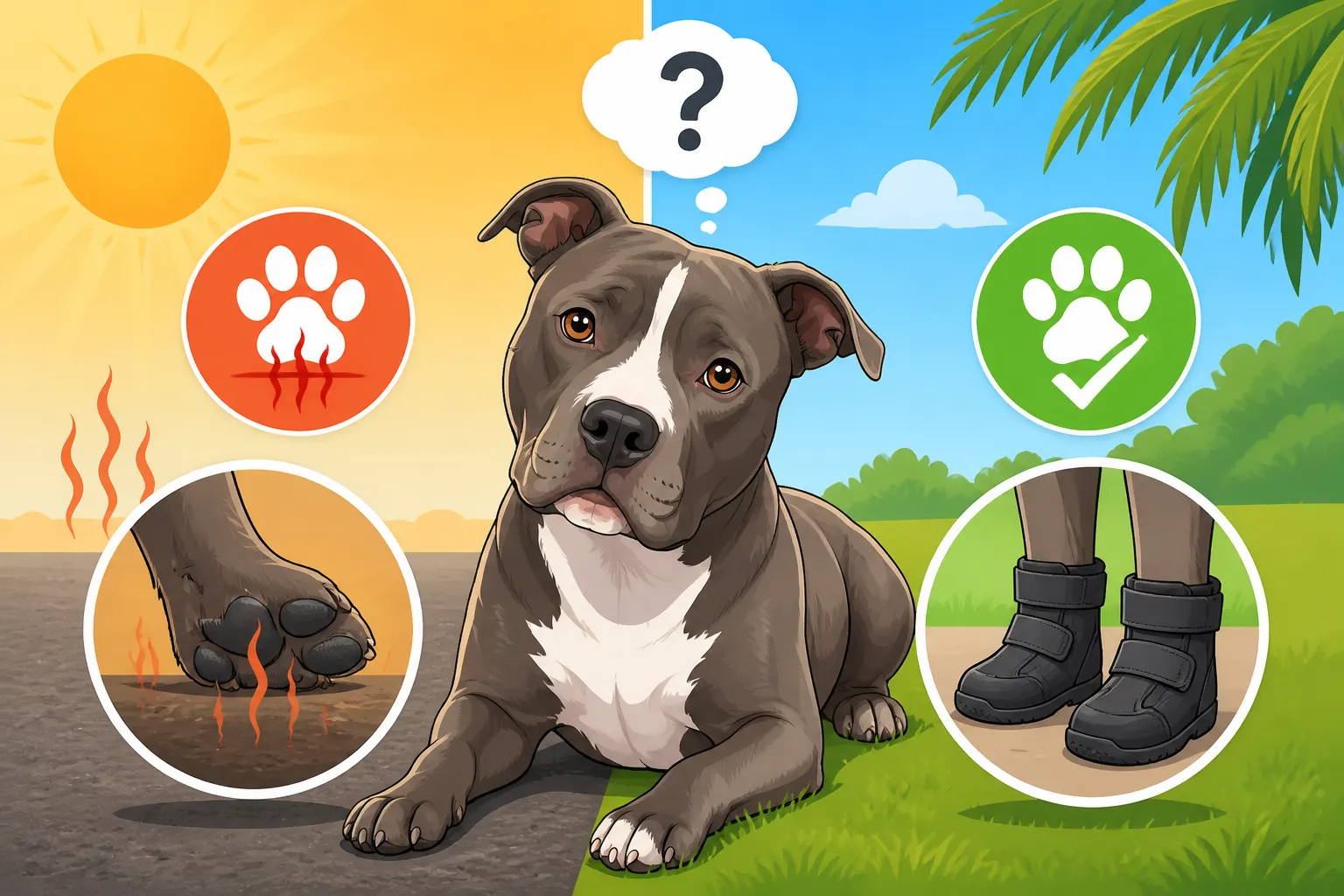
Think about walking barefoot on asphalt in July. Ouch, right? Your Pit Bull's paw pads, despite their leathery appearance, are still skin and tissue. They are not insulated in the same way your shoes protect your feet. Concrete, asphalt, and even artificial turf can reach astonishingly high temperatures under direct sunlight, often far exceeding the ambient air temperature. While the air might be a pleasant 80 degrees Fahrenheit, the pavement could easily be soaring past 120 or even 140 degrees. That's hot enough to cook an egg, and certainly hot enough to inflict serious burns on your dog's delicate paw pads.
These pads are designed for traction, shock absorption, and some insulation against cold, but direct, intense heat is a different challenge altogether. The dense network of blood vessels in their paws also means that heat absorbed there can quickly transfer to the rest of their body, contributing to overall overheating. We want our dogs to be able to enjoy their walks, but not at the expense of their comfort and health. It’s a common frustration to have a dog bouncing with energy but be unable to provide the outlet they need because of the ground temperature.
Spotting the Signs of Hot Paw Pads
Knowing what to look for can prevent a minor irritation from escalating into a serious injury. The "seven-second rule" is a widely shared piece of advice for good reason: if you can't comfortably hold the back of your hand on the pavement for seven seconds, it's too hot for your Pit Bull's paws. But what if you're already out there, enjoying a walk, and you start to suspect trouble?
Look for subtle changes in your Pit Bull's gait or behavior. They might start limping or showing a noticeable reluctance to walk, perhaps stopping more frequently or trying to stand on grassy patches. You might see them licking or chewing at their paws excessively, even favoring one foot over another. In more severe cases, you could notice visible redness, swelling, or even blisters on their paw pads. If you ever see any of these signs, it’s critical to get your dog off the hot surface immediately, check their paws carefully, and consider reaching out to your vet if you suspect burns. This immediate action can make a huge difference in their recovery and comfort. Hot Pavement Under a Pit Bull Paw delves deeper into these warnings.
The Dangers of Unprotected Paws
The consequences of consistently exposing your Pit Bull's paws to hot surfaces are not just temporary discomfort. Repeated minor burns can lead to chronic sensitivity, making future walks even more challenging. Severe burns can result in painful blisters, open wounds, and secondary bacterial infections that require veterinary intervention, antibiotics, and significant healing time. Imagine how much that would impact your active Pit Bull's daily life, not to mention the unexpected vet bills.
Beyond the immediate injury, damaged paw pads can affect your dog's long-term mobility and overall well-being. They might develop a fear or aversion to walking on certain surfaces, or their gait could change to compensate for persistent tenderness. This can put additional strain on their joints, potentially exacerbating issues like Pit Bull Hip Dysplasia Showing at One to Two Years or general arthritis later in life. Protecting their paws isn't just about preventing immediate pain; it's about safeguarding their ability to enjoy a happy, active life well into their senior years.
Are Paw Boots the Ultimate Summer Solution for Your Pit Bull?
For many Pit Bull owners, the idea of paw boots comes up as a logical solution when facing the summer heat. They seem like a straightforward way to create a barrier between delicate paws and treacherous ground. However, like any dog accessory, paw boots come with their own set of considerations, especially when dealing with a strong, active breed like a Pit Bull.
The Case for Paw Boots
Paw boots offer a direct and effective way to protect your Pit Bull's pads from hot surfaces, sharp objects, rough terrain, and even certain allergens found in grass that might trigger Pit Bull Atopy and Seasonal Itching. Many boots are designed with durable, rubberized soles that provide excellent heat resistance, similar to your own shoes. This means you can venture out for walks when the ground might otherwise be too warm, extending your options for exercise and enrichment.
There's a wide variety available through online retailers like Amazon and Chewy, ranging from lightweight, breathable mesh boots for mild heat and light protection, to more robust, waterproof options for serious hiking or extreme conditions. Some even feature reflective material, which is a nice bonus for visibility during those early morning or late evening walks. For Pit Bulls who are prone to paw irritation or allergies, the physical barrier provided by boots can also prevent direct contact with irritants, offering a dual benefit. They are particularly useful for urban environments where hot asphalt and concrete are unavoidable.
Challenges with Introducing and Fitting Boots
Despite their benefits, getting your Pit Bull to comfortably wear paw boots can be a journey. Pit Bulls are powerful dogs, and their strong paws, while tough, are also highly sensitive and used for precise movements. The sensation of having something on their feet can be quite foreign and even alarming at first. Many dogs will do the "boot dance" – lifting their feet high, shaking them, or trying to kick the boots off. It's a comical sight, but it can be frustrating if your goal is a smooth walk.
Finding the right fit is paramount. Pit Bulls often have broad chests and muscular builds, which can extend to their paw structure. A boot that's too tight will pinch and restrict movement, potentially causing chafing or even cutting off circulation. One that's too loose will slip, twist, and be easily kicked off, making them useless. You need to measure your Pit Bull's paws carefully – both width and length – and consult sizing guides specific to the brand. Remember, their front paws are often larger than their back paws, so you might even need different sizes. Trying on various styles and brands, perhaps ordered from a place like Amazon with an easy return policy, might be necessary to find the perfect match for your individual dog.
Training Your Pit Bull to Accept Boots
Introducing boots requires patience, positive reinforcement, and a gradual approach. Don't just strap them on and expect your Pit Bull to go for a casual stroll. Start with very short sessions indoors. Let your Pit Bull sniff and investigate the boots. Pair the boots with high-value treats and praise. Put one boot on for a few seconds, then take it off and reward. Slowly increase the time and the number of boots. The goal is to make the boots a positive experience, not a punishment or an annoying restriction.
Once they tolerate wearing them indoors for a few minutes, try a very short walk in the yard or on a cool, familiar surface. Keep it positive and playful. Distract them with toys or a favorite game. This desensitization process might take days or even weeks, but it's crucial for long-term success. If you rush it, your Pit Bull might develop a strong aversion to the boots. Consistency is key, and remember that High-Value Treats That Hold a Pit Bull's Focus will be your best friend during this training. Think of it as another form of cooperative care, similar to getting them used to Cleaning a Pit Bull Ear Properly or having their nails trimmed.
Beyond Boots: Comprehensive Paw Care and Summer Strategies
While boots can be an excellent tool, they aren't the only answer, and sometimes, they aren't even the best answer for every Pit Bull or every situation. A holistic approach to summer paw care involves more than just protective footwear. It includes smart planning, environmental awareness, and consistent care.
Alternative Paw Protection and Balms
Beyond boots, paw balms offer a simpler, though less robust, layer of protection. These balms, often made with natural waxes and oils, are designed to moisturize and condition your Pit Bull's paw pads, making them more resilient against dryness, cracking, and minor abrasions. Think of them like a good hand cream for your own hands. They can be incredibly soothing for Pit Bull Paw Pad Cracks and Balm that sometimes develop from dry conditions or rough surfaces.
While balms create a slight barrier, it’s crucial to understand their limitations. They will not protect your Pit Bull's paws from truly scorching hot pavement. They are not a substitute for boots when the ground is dangerously hot. However, they can be excellent for everyday conditioning, especially if your Pit Bull regularly walks on varied, but not extreme, surfaces, or if they are prone to dry, rough pads. Many brands are available, and you can easily find highly-rated options on Chewy or at your local pet store. Apply them before and after walks to keep those pads supple and healthy, reducing the likelihood of minor injuries or discomfort.
Smart Walking Schedules and Surface Choices
Sometimes, the best solution is the simplest: avoid the danger altogether. Adjusting your walking schedule is one of the most effective ways to protect your Pit Bull's paws in summer. Aim for early morning walks, ideally before 9 AM, and late evening strolls, after 7 PM or even later, once the sun has dipped and the accumulated heat in paved surfaces has had a chance to dissipate. These times also tend to be cooler for your Pit Bull's overall body temperature, reducing the risk of overheating. Heat Tolerance in a Short-Coated Pit Bull is a good reminder that they aren't impervious to high temperatures.
When you do walk, be mindful of your route. Prioritize grassy paths, shaded dirt trails, or any natural surface over asphalt or concrete. If you live in an urban area where pavement is unavoidable, try to stick to the shadier side of the street or seek out parks with ample green space. A short walk on grass is always preferable to a long walk on sizzling pavement. This strategy might mean changing up your routine, but your Pit Bull's paw health is worth the adjustment.
Indoor Activities and Water Play
On days when the heat is simply too oppressive, and even early morning or late evening walks are risky, don't despair! Your Pit Bull still needs mental and physical stimulation. This is where indoor activities and water play become your best friends. Engage their brains with puzzle feeders or scent work, hiding treats around the house for them to sniff out. Tug-of-war and fetch indoors can burn off some energy, just be mindful of space and surfaces. Indoor Games for a Housebound Pit Bull offers plenty of ideas.
For physical exercise that doesn't involve hot pavement, consider supervised water play. Many Pit Bulls love to splash in a kiddie pool in the backyard, or chase a floating toy in a shallow natural body of water (always check for safety and water quality first). Make sure they have a dog-specific life jacket if you're exploring deeper water. The cooling effect of water on their paws and body can be a wonderful relief, offering both fun and exercise without the risk of burns. Just remember to thoroughly dry their ears afterward to prevent Pit Bull Ear Infections and What Drives Them.
When to Consider Boots and When Alternatives Suffice
The decision to use paw boots isn't always black and white. It often comes down to balancing necessity, your Pit Bull's comfort, and the specific environmental conditions you're facing. Understanding when boots truly shine versus when other strategies are sufficient will help you make the best choice for your individual dog.
Situations Where Boots Shine
There are definitely scenarios where paw boots go from being a helpful accessory to a virtual necessity. Extreme summer temperatures, particularly those that push past 90 degrees Fahrenheit with high humidity, make pavement dangerously hot, and boots become critical for any outdoor activity. If you live in an urban environment where long stretches of hot asphalt are unavoidable, or if your daily routine requires you to walk across such surfaces, boots provide that essential barrier.
Consider specific events, too. Attending an outdoor festival, a street fair, or even a trip to a heavily paved outdoor mall with your Pit Bull means they'll be exposed to hot, hard surfaces for extended periods. This is an ideal situation for boots. Similarly, if you enjoy hiking on rocky, abrasive trails that could cause Pit Bull Paw Pad Injuries on Hard Ground, boots offer protection not just from heat but also from cuts and scrapes. For a Pit Bull with existing paw sensitivities or allergies that manifest on their feet, boots can provide both thermal and allergen protection, offering a much-needed shield.
Daily Routines and Simpler Solutions
For many Pit Bull owners, daily life doesn't always involve extreme conditions or urban jungles. If your routine allows for walks primarily on grass, dirt trails, or in shaded areas, or if you can consistently adjust your walking schedule to avoid peak heat, then boots might not be a daily requirement. Simply being strategic about when and where you walk can often be enough. This allows your Pit Bull's paws to maintain their natural toughness and direct contact with varying surfaces, which is generally healthy for their proprioception and pad conditioning.
For instance, if your dog is well-exercised with morning jogs on a cool, tree-lined path, and gets their evening energy out in a grassy backyard, forcing them into boots for a short walk to the mailbox might be overkill and unnecessary stress. Always check the pavement with your hand. If it's comfortable for you, it's likely comfortable for them. Over-reliance on boots for every single outing when simpler solutions suffice can make your dog less accepting of them when they are truly needed.
Combining Approaches for Optimal Protection
Often, the most effective strategy is not to rely on one single solution, but to combine several approaches. For example, you might use a quality paw balm for daily conditioning to keep pads supple and less prone to cracking, while also diligently adjusting your walking times. On days when you know you'll be on hotter, harder surfaces for longer, that's when you bring out the boots.
Consider the weather forecast: if it's going to be an exceptionally hot day, you might plan indoor playtime or a trip to a dog-friendly pool instead of a walk. For those who frequently visit dog parks with mixed surfaces, boots could be reserved for the paved entryways and parking lots, then removed once inside the grassy, shaded play areas. The key is flexibility and observation. Watch your Pit Bull, feel the ground, and be ready to adapt your plan to ensure their paws are always protected. It's about proactive care and being prepared for all conditions, ensuring your Pit Bull can maintain Pit Bull Exercise for a Powerful Athletic Dog safely.
Here’s a quick overview of common paw protection methods for summer:
| Method | Pros | Cons | Best Use Case |
|---|---|---|---|
| Paw Boots | Excellent heat protection, physical barrier | Can be uncomfortable, require training, fitting challenges | Extreme heat, rough terrain, urban environments |
| Paw Balms | Conditions pads, minor barrier, soothing | No protection from extreme heat, not a substitute for boots | Daily conditioning, minor abrasions, general paw health |
| Adjusted Walk Times | Free, natural, avoids peak heat | Restricts walk schedule, requires discipline, not always feasible | Most common solution for moderate heat, flexible schedules |
| Surface Selection | Free, safe, promotes natural paw health | May limit routes, not always available in urban areas | Prioritizing grass/shade for all walks |
| Indoor Activities | No paw risk, mental/physical stimulation | No outdoor exposure, requires owner engagement | Very hot days, alternative exercise |
| Water Play | Cooling, fun, good exercise | Requires access to safe water, supervision, drying time | Hot days for active cool-down, exercise |
Ultimately, keeping your Pit Bull's paws safe in the summer is about being a vigilant and informed owner. Whether that means investing in a good pair of boots from Chewy, consistently applying a paw balm, or simply adjusting your routine to walk during cooler hours, every step you take contributes to their comfort and well-being. Don't let the summer heat put a damper on your adventures; with a little planning, your Pit Bull can enjoy the season safely and happily.
Disclaimer
This article is for general informational purposes only and does not constitute professional advice. Laws, prices and regulations vary by location and change over time. Consult a qualified professional for guidance on your specific situation.