How the Pit Bull Rate Compares to a Golden Retriever
It's incredibly frustrating when you hear conflicting stories about a dog's temperament, especially with breeds like the Pit Bull that carry so many unfair stereotypes. Many prospective owners or those already deeply in love with their Pit Bulls often wonder how these dogs truly compare to universally beloved breeds, like the Golden Retriever, when it comes to inherent disposition. This guide will unpack the data from established temperament tests, offering a clear, empathetic comparison to give you a more nuanced understanding.
Understanding Temperament Testing for Dogs
When we talk about a dog's temperament, it's easy to get lost in anecdotal evidence or broad generalizations. But thankfully, there are organizations dedicated to objectively assessing a dog's inherent reactions, giving us a more factual foundation. One of the most respected is the American Temperament Test Society.
What is the American Temperament Test Society (ATTS) Test?
The ATTS test is designed not to evaluate a dog's obedience, but rather its underlying temperament and stability in a variety of situations. Think of it less as a "good dog" test and more as a "how does this dog react when surprised or faced with something unusual?" assessment. It’s a standardized, repeatable procedure that aims to remove handler influence as much as possible, focusing on the dog's innate responses.
During the test, dogs are exposed to a series of common and uncommon stimuli, all designed to gauge their natural reactions. This might include a neutral stranger approaching, a person in unusual clothing or carrying an odd object, loud noises, or even a sudden, startling visual. The environment is always neutral, free from distractions that might skew a dog's focus. The entire point is to see how a dog handles unexpected stress or novelty, observing whether they show curiosity, confidence, indifference, or signs of fear, shyness, or unprovoked aggression. It's a snapshot, a moment in time that reveals a dog's natural coping mechanisms and resilience.
How the ATTS Test Evaluates Temperament
A dog "passes" the ATTS test if it demonstrates confidence, a willingness to be approached by strangers, and a general stability when confronted with startling visual or auditory stimuli. It's about a dog showing it can recover from a surprise and return to a calm, neutral state, or approach a new situation with curiosity rather than fear or aggression. A dog might fail if it shows unprovoked aggression, extreme shyness, panic, or unmanageable fear. It's important to understand that a dog isn't necessarily failing for being cautious; rather, it's about how they resolve that caution. Do they investigate once they realize there's no threat, or do they remain frozen in fear or lash out?
The ATTS isn't looking for a dog that will immediately love everyone. It's looking for a dog that possesses good nerves and a sound mind, capable of handling the ups and downs of a typical life without becoming overwhelmed or exhibiting inappropriate reactions. The evaluators are observing the dog's body language, its posture, its tail carriage, and its willingness to engage or disengage appropriately. This standardized approach allows for a more consistent measure of temperament across different breeds and individual dogs, helping us to move beyond subjective feelings and toward observable behavior. What the ATTS Test Measures in a Pit Bull delves deeper into the specifics of this evaluation for the breed.
Comparing Pit Bull and Golden Retriever ATTS Pass Rates
Now, let's get to the heart of the matter and look at how these two breeds typically perform on the ATTS test. The results often challenge widespread assumptions.
The Pit Bull Type Dog's Performance
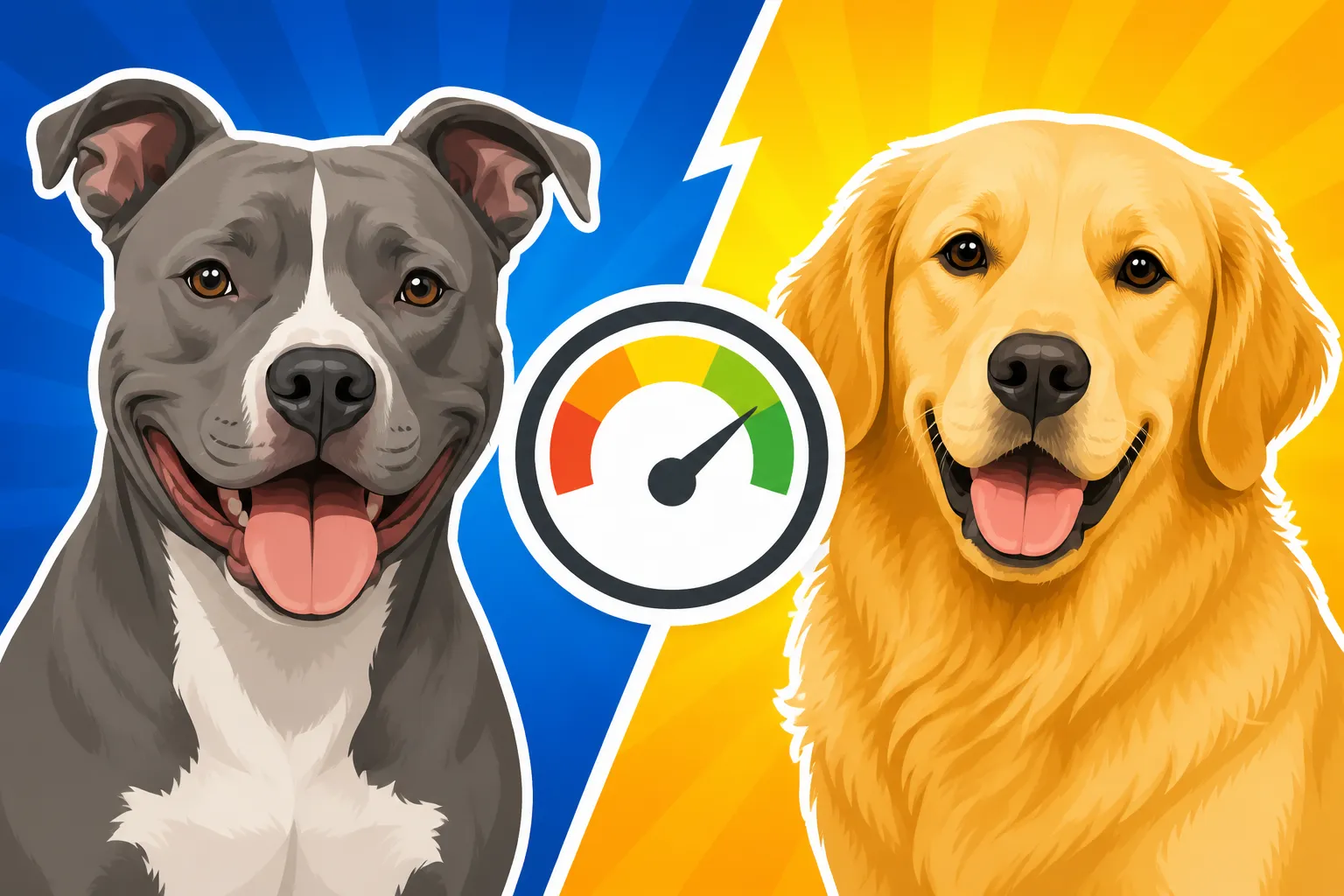
When people hear "Pit Bull," many unfortunately conjure images of aggression or unpredictability, fueled by media portrayals and breed-specific legislation. However, the ATTS data consistently tells a very different story. Pit Bull type dogs, which generally include the American Pit Bull Terrier, American Staffordshire Terrier, and Staffordshire Bull Terrier, consistently show impressively high pass rates on the ATTS test. In fact, their pass rates often hover in the mid-80s to low-90s percentile, frequently outperforming many breeds typically perceived as "gentler."
This high pass rate suggests that a well-bred, well-socialized Pit Bull type dog, when tested under neutral conditions, generally exhibits strong nerves, confidence, and a stable temperament. They tend to recover quickly from startling events and approach novel situations with curiosity rather than fear or hostility. This data often surprises those unfamiliar with the breed, showcasing a fundamental soundness in temperament that is often overlooked. Pit Bull Temperament and the ATTS Results offers more detail on these findings.
The Golden Retriever's Performance
Golden Retrievers are often considered the epitome of the family dog: gentle, friendly, and eager to please. They are universally loved, and for good reason! Their calm demeanor and outgoing nature are well-documented. However, when it comes to the specific criteria of the ATTS test, their pass rates, while still very good, sometimes fall slightly below those of Pit Bull type dogs. Golden Retrievers typically achieve pass rates in the high 80s, which is excellent, but not always higher than the Pit Bull types.
This isn't to say Golden Retrievers have "worse" temperaments. Not at all. It simply highlights that the ATTS test measures a very specific aspect of temperament – stability and resilience in the face of unexpected stimuli. While a Golden Retriever might greet a stranger with wagging tail and boundless enthusiasm, a sudden, loud noise or an odd-looking figure might illicit a moment of startled caution that, if not quickly recovered from, could lead to a minor deduction in the ATTS scoring system. It merely underscores that different breeds, even those with fantastic temperaments, have different inherent coping mechanisms and reactions to stress or novelty.
Interpreting the Raw Numbers
Comparing these two breeds based solely on ATTS pass rates gives us a valuable piece of the puzzle, but it's essential to understand what these numbers actually mean. They don't mean that one breed is inherently "better" or "nicer" than the other. They speak to a fundamental soundness of nerves and a general ability to recover from surprising situations.
Here’s a simplified look at how the numbers might appear, keeping in mind that exact figures can fluctuate slightly based on testing populations and dates, but the general trend remains consistent:
| Breed Type | Typical ATTS Pass Rate Range |
|---|---|
| Pit Bull Type Dogs | 86% – 92% |
| Golden Retrievers | 85% – 90% |
| Other Breeds (for context): | |
| Rottweiler | 90% – 94% |
| Doberman Pinscher | 85% – 90% |
| German Shepherd Dog | 85% – 90% |
| Poodle (Standard) | 82% – 87% |
| Chihuahua | 70% – 75% |
As you can see, the Pit Bull type dogs often sit at the higher end of the spectrum, showcasing their inherent stability. This data provides a strong counter-narrative to many of the negative stereotypes. It illustrates that, on a population level, these dogs are often incredibly resilient and possess solid nerves. The difference between, say, an 88% and a 90% pass rate is statistically minor, but the fact that Pit Bull type dogs consistently perform at such a high level is a testament to their temperament. These numbers underscore the importance of looking past superficial judgments and considering objective evaluations.
Why Aggregate Data Doesn't Define Your Individual Dog
While the ATTS data offers fascinating insights into breed-wide temperament trends, it's crucial to remember that statistics represent populations, not individuals. Your dog, whether a Pit Bull, a Golden Retriever, or a mix of many breeds, is a unique individual.
The Limitations of Breed-Specific Data
Think of breed statistics like weather patterns for a region: you know the general climate, but you can't predict if it will rain on your specific picnic day. Similarly, knowing a breed's average ATTS score gives you an idea of the potential or tendency within the breed, but it doesn't dictate the temperament of the dog curled up on your couch. Many factors contribute to a dog's behavior that go far beyond its breed or a single temperament test score.
Genetics, of course, play a role, but so do early life experiences, socialization, and the environment they grow up in. A Pit Bull puppy from an excellent breeding program with stable parents, raised with care and positive exposure, is likely to be a confident adult. Conversely, a Golden Retriever puppy from a less reputable breeder, or one that experiences trauma or neglect in its formative weeks, might grow up to be anxious or fearful, despite its breed's generally stellar reputation. Why a Pit Bull Average Says Little About Yours really dives into this nuance, explaining how the individual journey shapes the dog more than just the breed average.
The Importance of Responsible Ownership and Training
This is where you, the owner, come in as the ultimate game-changer. Regardless of breed, every dog benefits immensely from responsible ownership, consistent training, and thorough socialization. A well-trained and socialized Pit Bull, for example, is a wonderful ambassador for its type, showcasing intelligence, loyalty, and a joyful spirit. Without this foundation, even a dog from a "calm" breed can develop behavioral issues.
Consider a Pit Bull with strong physical capabilities and a naturally robust personality. Without proper guidance and boundaries, this energy and strength could become overwhelming. Training a Pit Bull to a Higher Standard Than Other Dogs is not just a suggestion, it’s a necessity to ensure they navigate our complex human world successfully. I always advocate for starting positive reinforcement training early. Simple commands like "sit," "stay," and a reliable "come" are vital, but so is exposing them to different sights, sounds, and people in a controlled, positive way. You can find a huge variety of high-value training treats and sturdy toys, perfect for keeping a Pit Bull engaged and focused, on sites like Chewy. These tools are crucial for building that strong, positive relationship and reinforcing good behavior. Consistent Starting Clicker Training on a Pit Bull can work wonders for impulse control and focus.
Beyond the Test: What Truly Shapes a Dog's Temperament
A dog's temperament isn't a static thing, determined solely by its DNA or a single test. It's a dynamic interplay of nature and nurture, constantly evolving based on their experiences. A dog living in a chaotic household might be more prone to anxiety than one in a calm, structured environment. A dog that experiences pain or discomfort, perhaps from untreated allergies or joint issues, might become irritable or withdrawn, regardless of its baseline temperament.
The owner's consistency, patience, and ability to read their dog's signals are paramount. Understanding your dog's individual quirks, fears, and joys allows you to provide an environment where they can thrive. This includes everything from routine vet check-ups to mental enrichment activities. A stable home, clear communication, and plenty of positive interactions go a long way in shaping a dog that is confident, happy, and well-adjusted. The collective wisdom found in The Advice Experienced Pit Bull Owners Give highlights just how much effort and understanding goes into raising a well-adjusted Pit Bull.
Practical Takeaways for Pit Bull Owners and Enthusiasts
Understanding temperament data is great, but how do we apply it in our daily lives as Pit Bull owners or advocates? It's about empowering ourselves with knowledge and taking proactive steps.
Advocating for Your Pit Bull
Armed with the knowledge that Pit Bull type dogs often perform exceptionally well on objective temperament tests like the ATTS, you have a powerful tool to counter misconceptions. When faced with unfair stereotypes, you can calmly present factual data to educate others. It's not about being confrontational, but about being informative. Share stories of your own well-behaved Pit Bull, highlighting their training and good manners. This is especially important in communities where breed discrimination is still prevalent.
Beyond just talking, your dog's behavior is the strongest advocate. A well-mannered Pit Bull that walks calmly on a leash, greets people politely, and responds reliably to commands does more to shift public perception than any statistic ever could. Consider enrolling your dog in programs like the Canine Good Citizen (CGC) test, which formally acknowledges their good manners. Canine Good Citizen and Why It Matters for a Pit Bull explains how these certifications can be vital. Having a Documenting a Pit Bull's Training Record readily available can also be incredibly helpful in various situations, from finding housing to insurance.
Responsible Breeding and Adoption Practices
If you're considering adding a Pit Bull type dog to your family, whether through a breeder or a rescue, prioritize responsible sources. A reputable breeder will focus not only on physical traits but also on health and temperament. They should be able to show you the parents, discuss their temperaments, and provide health clearances. What Testing a Pit Bull Breeder Should Have Done is a crucial read for anyone looking into breeders. Avoid breeders who focus solely on "rare" colors or extreme physical characteristics without regard for health or disposition.
When adopting from a shelter or rescue, inquire about their behavior assessments. Many organizations now use standardized evaluations to understand a dog's temperament before placement. Shelter Behavior Evaluations on a Pit Bull can provide valuable insights into a dog's suitability for your home environment. Remember, adoption is a wonderful way to give a deserving dog a second chance, and many shelter Pit Bulls are loving, resilient companions just waiting for their forever homes. You can gather all your initial supplies, from crates to food bowls and leashes, efficiently through online retailers like Chewy, ensuring your new family member has everything they need from day one.
Continuing Education and Training
A dog's education is never truly complete. Consistent, ongoing training and mental stimulation are vital for a happy, well-adjusted Pit Bull throughout their life. This doesn't mean you need to be in formal classes every week, but it does mean dedicating time to practice known commands, teach new tricks, and engage in activities that challenge their minds.
Puzzle toys, scent work games, or even just regular walks in new environments can provide excellent enrichment. Consider exploring dog sports like obedience, rally, or even dock diving, if your dog enjoys it. These activities build confidence, strengthen your bond, and provide a healthy outlet for their natural energy and intelligence. Many resources, including detailed training guides and specialized equipment, can be found online at places like Chewy, helping you continue your Pit Bull's education and ensure they remain a well-behaved, delightful member of your family. This ongoing commitment ensures that your Pit Bull continues to be the best version of themselves, shattering stereotypes one wagging tail at a time.
Disclaimer
This article is for general informational purposes only and does not constitute professional advice. Laws, prices and regulations vary by location and change over time. Consult a qualified professional for guidance on your specific situation.