Why a Pit Bull Average Says Little About Yours
It's a common, often frustrating experience: you meet a wonderful, well-behaved Pit Bull, full of joy and affection, only to encounter someone who immediately brings up statistics or generalized breed characteristics. They might cite some widely publicized 'average temperament' data or even specific test results, implying that your individual dog is somehow an anomaly or a ticking time bomb. This guide is here to unravel that pervasive misconception, helping you understand why a breed's average temperament says very little about the specific, complex, and beautiful creature sleeping at the foot of your bed right now.
The Flaw in Judging an Individual by Group Averages
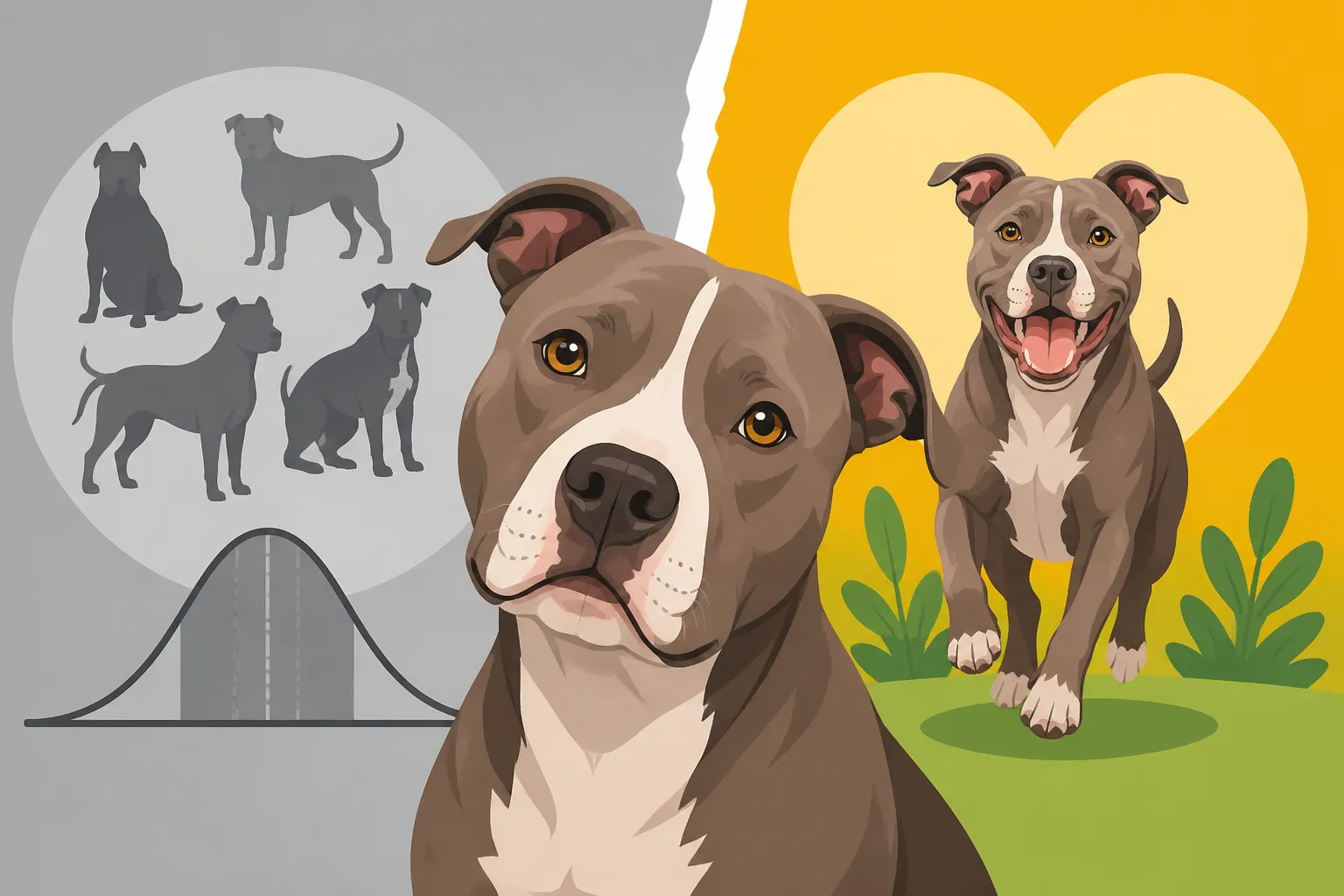
We live in a world that loves statistics, averages, and convenient labels. When it comes to dogs, especially Pit Bulls, these averages can do a real disservice, painting an entire group with a broad brush. While population-level data can highlight trends or potential predispositions within a breed type, it utterly fails to capture the intricate tapestry of an individual dog's personality, behavior, and unique life experiences.
Why Breed-Specific Data Can Be Misleading for Your Dog
Think about humans for a moment. We have population statistics for everything from average height to propensity for certain personality traits in different cultures. Does that mean you can predict how a specific person will act or what their character will be like based solely on their nationality or background? Of course not. People are individuals, shaped by their genes, their upbringing, their education, and their personal choices. Dogs are no different.
When someone looks at a Pit Bull and immediately draws conclusions based on a breed average, they're missing the forest for a single, often out-of-context, tree. A breed average tells you what most dogs of a certain type might be like under specific testing conditions, or what some dogs of that type have been like in historical records. It doesn't tell you about Princess, who loves to cuddle with your kids, or Thor, who spends his evenings gently nudging your hand for pets. Every dog is a product of both their genetics and their environment, and the latter plays a far more significant role than many realize. Even within the umbrella term "Pit Bull," you have American Pit Bull Terriers, American Staffordshire Terriers, and Staffordshire Bull Terriers, all with distinct characteristics, though often lumped together. To truly understand your dog, you need to look beyond the general labels.
The ATTS Test and What It Really Tells Us
One of the most frequently cited pieces of data regarding Pit Bull temperament comes from the American Temperament Test Society (ATTS). This test evaluates a dog's stability, shyness, aggressiveness, and friendliness, among other things, and Pit Bulls often show high pass rates, sometimes exceeding those of breeds typically considered "gentle" like Golden Retrievers. On the surface, this sounds great for advocating for the breed, and it is! It demonstrates that Pit Bull type dogs, as a population, are not inherently vicious or unstable.
However, it's crucial to understand what the ATTS test doesn't tell us. What the ATTS Test Measures in a Pit Bull is a specific, controlled scenario. It tests a dog's reaction to novel sights, sounds, and an unfamiliar person. A dog might pass this test with flying colors because they are stable and non-reactive in that particular setup. But this single test cannot predict how that same dog will behave when left alone for long hours, when introduced to a new dog in its home, or when experiencing chronic pain from an underlying health condition. It doesn't assess prey drive, dog-to-dog social skills, or resilience to poor training.
The pass rates are valuable for demonstrating potential for stability across a population, but Why a Test Score Cannot Predict Your Pit Bull as an individual is fundamental. Your Pit Bull’s unique personality, quirks, and behavioral tendencies are far more complex than a single test result can convey. It's like judging a person's entire character based on how they act during a 10-minute job interview. It's a snapshot, not a biography.
Unpacking the True Architects of Your Pit Bull's Personality
If breed averages and temperament tests aren't the whole story, then what truly shapes a Pit Bull's personality? The answer lies in a complex interplay of inherited traits, early life experiences, ongoing training, and consistent care. It's a holistic picture, not a single genetic predisposition.
The Power of Genetics: Beyond the Breed Label
While the "Pit Bull" label is broad, the specific genetics passed down from a dog's parents play a significant role. Just like in humans, some traits are hereditary. A puppy inherits a predisposition for certain physical characteristics, energy levels, and even some aspects of temperament from its parents. However, these are often predispositions, not guarantees.
For example, a puppy from parents with stable, confident temperaments is more likely to also be stable and confident. Conversely, a puppy from poorly bred lines where parents might be anxious, fearful, or even aggressive, might inherit a higher tendency towards those traits. This is why responsible breeders are so vital – they prioritize health and temperament in their breeding stock. They can show you not just the parents, but sometimes even grandparents, and provide a Pit Bull Health History Should Cover for the lineage. If you're considering a puppy, meeting the parents is incredibly insightful. You can observe their general demeanor, how they interact with strangers, and their overall stability. Beyond the general breed, specific bloodlines can carry traits for higher drive, more intense focus, or even certain health issues that might indirectly impact behavior. It’s never just "a Pit Bull thing" — it's always "this particular Pit Bull’s genetic background and life experience thing."
Environmental Impact: Socialization and Training
This is where the rubber truly meets the road. A dog's environment and experiences, especially during its formative months, are arguably the most powerful shapers of its adult behavior. A Pit Bull puppy with excellent genetics can still become problematic if neglected, poorly socialized, or trained with harsh, outdated methods. Conversely, a Pit Bull with a less-than-ideal genetic start can blossom into a wonderful companion with consistent, positive training and extensive socialization.
Early Socialization is Key: From eight weeks old, a Pit Bull puppy needs to be exposed to a wide variety of sights, sounds, people, and appropriate canine companions in a positive, controlled manner. The Weeks That Shape a Pit Bull Puppy are critical. This isn't just about avoiding fear; it's about building confidence and teaching the puppy how to navigate the human world calmly. This means positive interactions with different types of people (kids, adults, people in hats, people with glasses), different environments (parks, stores that allow dogs, car rides), and different surfaces. A steady supply of high-value treats from Chewy can make these experiences overwhelmingly positive.
Consistent, Positive Training: Pit Bulls are intelligent and eager to please, making them highly trainable. However, their strength and natural drive mean that Training a Pit Bull to a Higher Standard Than Other Dogs is often necessary for public acceptance. This means investing in ongoing Positive Reinforcement Training With a Pit Bull. This is not just about basic commands like 'sit' and 'stay', but also about impulse control, polite greetings, and rock-solid recall. Consistency is paramount. Every interaction is a training opportunity, reinforcing desired behaviors and gently redirecting undesired ones. Without this foundation, even the best-natured Pit Bull can develop behavioral challenges simply due to a lack of clear communication and guidance.
Health and Well-being: A Foundation for Good Behavior
It's easy to overlook, but a dog's physical and mental health directly impacts its behavior. A dog in pain, discomfort, or suffering from a chronic illness is far more likely to be irritable, withdrawn, or even reactive. Imagine trying to be your best self when you're constantly battling a headache or an upset stomach. Dogs are the same.
Common health issues in Pit Bulls, such as skin allergies or joint pain, can lead to behavioral changes. A dog constantly itching from Pit Bull Skin Allergies and the Atopy Pattern might snap if touched in a sensitive spot. A dog with hip dysplasia or Pit Bull Joint and Ligament Injuries might become grumpy or reluctant to move, leading to frustration and potential aggression if pushed. Regular veterinary check-ups are essential to catch and manage these conditions early. Providing a balanced diet, such as high-quality food available on Chewy, appropriate for Feeding a Pit Bull to Keep Muscle Without Fat, can also contribute significantly to their overall well-being and, by extension, their temperament. Don't underestimate the impact of subtle, chronic discomfort on your dog's daily demeanor.
Practical Steps to Understanding and Nurturing Your Individual Pit Bull
So, if averages don't define your dog, how do you truly get to know and support them? It comes down to observation, individualized care, and proactive advocacy.
Observing Your Dog's Unique Personality
The first step is to treat your Pit Bull as an individual, not as a representative of a breed. Spend time observing them. What makes them happy? What makes them nervous? How do they react to different stimuli? Do they prefer quiet cuddles or boisterous play?
- Pay attention to body language: A subtle shift in ear position, a slight tense up of the body, or a quick lip lick can tell you volumes about how your dog is feeling. Learn to read these cues before they escalate into more obvious signs of discomfort or stress.
- Identify individual triggers: Does your dog react to skateboards but ignore bicycles? Are they uncomfortable with men in hats but fine with everyone else? Recognizing these specific triggers allows you to manage situations proactively and help your dog build positive associations.
- Understand their play style: Some Pit Bulls prefer rough-and-tumble play, while others enjoy more chase-based games. Knowing their preferred playmates and styles can help you set up successful social interactions and keep them from overwhelming other dogs.
Keep a mental (or even written) log of these observations. This isn't just about avoiding problems; it's about understanding and deepening your bond with your unique companion.
Tailored Training and Management Strategies
Once you understand your individual Pit Bull, you can tailor your training and management strategies to their specific needs. What works for one Pit Bull might not work for another, even from the same litter.
- Customized Training Plans: If your Pit Bull struggles with leash reactivity, focus intensely on Pit Bull Leash Manners and Physical Strength and positive counter-conditioning. If they are prone to destructive chewing, ensure you provide plenty of appropriate chew toys and mental stimulation. Companies like Chewy offer a vast selection of puzzle toys and durable chews that can keep even the most determined Pit Bull engaged.
- Proactive Management: This might mean avoiding dog parks if your Pit Bull is Pit Bull Dog Selectivity and Multi-Dog Homes and prefers the company of known canine friends. It could mean creating a safe, quiet space for them when guests visit, or ensuring they are comfortable with a Muzzle Training Every Pit Bull Should Have for vet visits or public transportation. Management isn't a failure; it's a responsible way to set your dog up for success and prevent incidents.
- Continued Education: Dogs are always learning, and so should we. Consider advanced classes, workshops, or seeking out a trainer experienced with Pit Bulls if you encounter new challenges. Whether an Older Rescue Pit Bull Can Be Retrained is a resounding yes, though it may take more patience and consistency. The key is never to stop learning alongside your dog.
Advocating for Your Individual Pit Bull
Being a Pit Bull owner often means being an advocate. You'll likely encounter stereotypes and misunderstandings, but your best tool for countering them is a well-behaved, well-adjusted dog.
- Show, Don't Just Tell: Let your dog's excellent manners speak for themselves. A Pit Bull walking calmly on a loose leash, greeting strangers politely, or performing tricks on cue does more to challenge negative perceptions than any argument.
- Share Your Dog's Story: Talk about your dog's personality, their silly quirks, their gentle moments. Humanize them, because that's what they are: living, feeling beings.
- Be a Responsible Owner: This means adhering to local leash laws, supervising interactions, and ensuring your dog is always under control. Handling a Pit Bull in Public Without Incident is crucial. Every responsible Pit Bull owner contributes to a more positive public image for the entire type. It's a heavy burden, but one that is essential for the future of these dogs.
Understanding that your Pit Bull is a unique individual, shaped by a multitude of factors far beyond a simple breed average, is the first step towards a deeper, more meaningful relationship with your amazing companion.
| Factor | Impact on Temperament | Type of Influence | Key Action for Owners |
|---|---|---|---|
| Genetics | Predispositions for traits (calmness, drive, health issues) | Inherited | Choose responsible breeders, understand parentage |
| Early Socialization | Confidence, comfort with novel stimuli, appropriate greetings | Environmental (Learned) | Positive exposure to diverse people, places, sounds |
| Ongoing Training | Impulse control, manners, understanding commands, responsiveness | Environmental (Learned) | Consistent positive reinforcement, clear boundaries |
| Health & Nutrition | Comfort, energy levels, pain tolerance, cognitive function | Environmental (Physical) | Regular vet checks, quality diet, manage chronic conditions |
| Living Environment | Stress levels, enrichment, sense of security | Environmental (Learned) | Provide secure home, mental stimulation, consistent routine |
Disclaimer
This article is for general informational purposes only and does not constitute professional advice. Laws, prices and regulations vary by location and change over time. Consult a qualified professional for guidance on your specific situation.