Cruciate Ligament Tears in a Muscular Pit Bull
It’s a heart-stopping moment for any Pit Bull owner: your powerful, athletic dog is suddenly limping, holding up a back leg, or struggling to put weight on it. This terrifying scenario often points to a cruciate ligament tear, a devastating injury that can sideline even the toughest, most muscled Pit Bull. Dealing with such an injury can be incredibly stressful and overwhelming, leaving you wondering how your active companion will ever get back to their playful self. This guide will walk you through everything you need to know about cruciate ligament tears, from understanding why they happen to navigating treatment options and ensuring a full recovery for your beloved Pit Bull.
Understanding the Cruciate Ligament and Why Pit Bulls Are Prone
Cruciate ligament injuries are unfortunately common in dogs, and particularly so in strong, active, and heavily muscled breeds like Pit Bulls. The sudden onset of lameness can be alarming, but understanding the anatomy and the predisposing factors can help you grasp why this injury occurs and what it means for your dog.
Anatomy of the Cruciate Ligament
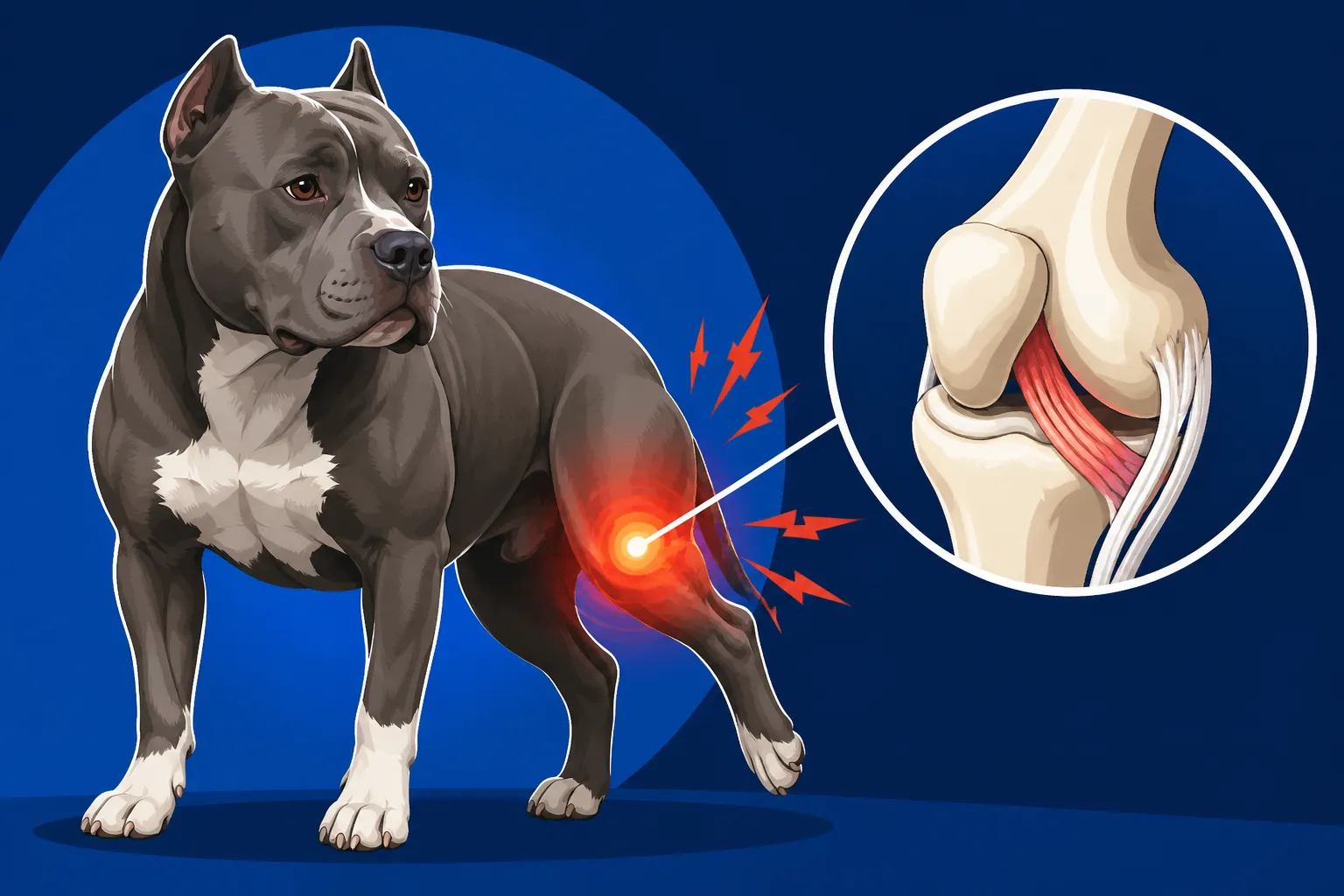
Imagine the inside of your Pit Bull's knee (stifle) joint. It's a complex structure, but two key ligaments crisscross within it, connecting the femur (thigh bone) to the tibia (shin bone). These are the cranial (anterior) and caudal (posterior) cruciate ligaments. For dogs, the cranial cruciate ligament (CrCL) is the one that most commonly tears, often compared to the ACL injury in humans. Its job is crucial: it prevents the tibia from sliding forward relative to the femur, prevents hyperextension of the knee, and limits internal rotation of the tibia. When this ligament is intact, it provides stability, allowing your Pit Bull to run, jump, and play with confidence. When it tears, that stability is lost, leading to pain and lameness.
Factors Increasing Risk in Muscular Breeds
Pit Bulls, with their deep chests, powerful hindquarters, and often high drive, are uniquely susceptible to cruciate ligament tears. While any dog can suffer this injury, their athletic build and propensity for intense, sudden movements—like launching themselves after a squirrel, sharp turns during play, or landing awkwardly after a jump—can put immense stress on their knee joints. The sheer force generated by their muscular legs can overwhelm the ligament, leading to either an acute tear from a traumatic event or a chronic, degenerative tear over time. Often, the ligament weakens gradually before a seemingly minor misstep causes the final rupture. Overweight dogs, even those that are naturally muscular, carry additional load, increasing the risk. For more on the health of these powerful joints, you can read about Pit Bull Joint and Ligament Injuries.
Common Misconceptions About Tears
There are a few common misconceptions about cruciate tears that can sometimes lead to confusion or delayed treatment. One is the idea that the injury only happens during a dramatic, single traumatic event. While this can certainly be the case, a significant number of tears, especially in dogs, are degenerative. This means the ligament has been weakening over weeks or months, perhaps even with subtle signs you might have missed, before it finally gives way. Another misconception is that smaller, less active dogs are immune. While Pit Bulls might be at higher risk due to their activity level and build, a sedentary lifestyle or smaller size doesn't make a dog immune. Even a casual walk can lead to a tear if the ligament is already compromised. Lastly, some owners believe rest alone will fix it. While rest is part of any recovery, especially initially, it rarely fully heals a complete tear in the way needed for long-term stability, especially in a muscular and active dog who needs full function.
Recognizing the Signs of a Cruciate Tear in Your Pit Bull
Spotting a cruciate ligament tear early can make a big difference in your Pit Bull's treatment and recovery path. Because Pit Bulls are so stoic and driven, they might try to push through discomfort, making it tricky to pinpoint the problem right away. But by knowing what to look for, you can act quickly.
Sudden Onset Lameness and Limping
The most obvious sign of a cruciate ligament tear is sudden, acute lameness. One minute your Pit Bull is tearing around the yard, the next they're holding up a back leg, limping severely, or refusing to put weight on it entirely. This usually indicates a complete or near-complete tear. You might notice them "toe-touching," where they gingerly place just their toes on the ground rather than bearing full weight. This is particularly noticeable after a period of rest, like getting up from a nap. The pain is often intense, and your dog might vocalize or flinch if you try to touch the affected knee. This sudden instability is a clear red flag that warrants immediate veterinary attention.
Subtle, Chronic Instability and Pain
Not all cruciate tears are sudden and dramatic. Many Pit Bulls experience a partial tear or a slow degeneration of the ligament over time, leading to more subtle, chronic symptoms. You might notice intermittent lameness that seems to come and go, especially after exercise. Your dog might be reluctant to jump into the car, avoid stairs, or seem generally less enthusiastic about their usual activities. They might sit with one leg stretched out to the side in an awkward position, often called a "sit test," to avoid bending the painful knee. This chronic discomfort can be hard to pinpoint because it's not always constant, but it's important not to dismiss these signs as just "getting older" or "a little stiff." These are often early indicators that something more serious is brewing within the knee joint.
Behavioral Changes Indicating Discomfort
Beyond the physical limp, a Pit Bull in pain from a cruciate tear might exhibit behavioral changes. They might become more withdrawn, less eager to play, or even a little grumpy or snappish if the affected leg is accidentally bumped. You might notice them licking or chewing at the knee area excessively, attempting to soothe themselves. Changes in appetite or sleep patterns, a general reluctance to move, or a hesitation to engage in activities they once loved are all subtle signals that something is wrong. Remember, Pit Bulls are tough, and they'll often try to hide their pain, so any deviation from their normal joyful demeanor should prompt a closer look at their physical well-being. Keeping an eye on their overall fitness, including their Pit Bull Weight and Muscle on a Working Frame, can help you distinguish between normal aging and signs of underlying pain.
Diagnosis and Initial Management of a Suspected Tear
When you suspect a cruciate ligament tear, prompt veterinary attention is paramount. Diagnosing this injury in a muscular Pit Bull requires a careful examination, and initial management focuses on alleviating pain and preventing further damage.
Veterinary Examination and Palpation
When you bring your Pit Bull to the vet, the first step will be a thorough physical examination, focusing intensely on the affected knee. Your veterinarian will carefully palpate the joint, feeling for swelling, pain, and instability. The classic diagnostic test for a cruciate tear is the "cranial drawer test" and the "tibial compression test." These tests involve manipulating the tibia and femur to see if there's abnormal forward movement (like a drawer opening), indicating a torn CrCL. In muscular dogs like Pit Bulls, especially if they are tense or in significant pain, these tests can sometimes be difficult to perform accurately without sedation, as their strong leg muscles can brace the joint. Don't be surprised if your vet suggests a mild sedative to get a clearer picture. Your vet will also check the other knee, as many dogs who tear one cruciate ligament are prone to tearing the other within a year or two.
Imaging Techniques to Confirm Diagnosis
While a physical exam is often highly indicative, imaging techniques can help confirm the diagnosis and rule out other issues. X-rays are commonly used, though they don't directly show the ligament itself. Instead, they look for secondary signs of a cruciate tear, such as fluid buildup in the joint, arthritic changes, or changes in the position of the bones. These X-rays are also vital for surgical planning, as they allow the surgeon to measure angles and assess the bone structure. In some complex cases, or if a definitive diagnosis remains elusive, advanced imaging like an MRI or CT scan might be recommended, though these are less common for routine cruciate tear diagnosis due to cost and availability. These imaging results help the vet present a clear treatment plan, which is crucial given the often significant Pit Bull Cruciate Repair Costs.
Immediate Steps to Stabilize Your Dog
Once a cruciate tear is suspected or confirmed, your vet will discuss immediate management to make your Pit Bull more comfortable. This typically involves strict rest and pain medication. Rest means no running, jumping, stairs, or even long walks – only short, controlled leash walks for potty breaks. This helps prevent further damage to the joint and allows any initial swelling to subside. Non-steroidal anti-inflammatory drugs (NSAIDs) like carprofen or meloxicam are often prescribed to manage pain and inflammation. In some cases, joint supplements containing glucosamine and chondroitin might be recommended to support joint health, though they won't repair a torn ligament. It's a tough time for an active dog, but adhering to rest protocols is critical before deciding on surgical intervention.
Surgical Options for Repairing a Pit Bull's Cruciate Ligament
For active, muscular Pit Bulls, surgery is almost always the recommended treatment for a torn cruciate ligament. Without surgical stabilization, chronic pain, severe arthritis, and a high likelihood of tearing the other knee are significant concerns. There are several surgical techniques, each with its own benefits and considerations.
Tibial Plateau Leveling Osteotomy TPLO
The Tibial Plateau Leveling Osteotomy, or TPLO, is one of the most common and highly effective surgical procedures for cranial cruciate ligament tears, particularly in larger, active, and muscular breeds like Pit Bulls. Rather than trying to repair the torn ligament, the TPLO changes the biomechanics of the knee joint. The surgeon makes a curved cut in the tibia (shin bone), rotates the top section (tibial plateau) to flatten its slope, and then secures it with a bone plate and screws. This flattening prevents the femur from sliding backward down the tibial slope, effectively stabilizing the knee without needing an intact cruciate ligament. Pit Bulls recover exceptionally well from TPLO, often returning to high levels of activity. The initial recovery can be intense, but the long-term prognosis is generally excellent.
Tibial Tuberosity Advancement TTA
Another popular and effective surgical technique, especially for muscular dogs, is the Tibial Tuberosity Advancement (TTA). Similar to TPLO, TTA also aims to change the biomechanics of the knee rather than directly repairing the ligament. In a TTA, the surgeon makes a cut in the front part of the tibia (the tibial tuberosity), moves it forward, and secures it with a titanium cage and bone plate. This advancement alters the angle of the patellar ligament, reducing the forces that cause the tibia to slide forward during weight-bearing. Many veterinary surgeons find TTA to be less invasive than TPLO, potentially leading to a slightly faster initial recovery for some dogs. Both TPLO and TTA are considered excellent options for Pit Bulls due to their ability to create a stable, functional knee joint that can withstand the demands of their powerful musculature.
Extracapsular Repair Lateral Suture
The extracapsular repair, often called the lateral suture technique, is an older but still viable option, particularly for smaller, less active dogs, or sometimes for larger dogs where TPLO or TTA are not feasible due to other health concerns or financial constraints. In this procedure, a strong, artificial ligament (usually a nylon suture or fishing line material) is placed outside the joint capsule, extending from the femur to the tibia. This suture mimics the function of the torn cranial cruciate ligament, providing external stability to the knee joint. While less biomechanically altering than TPLO or TTA, it can still provide good functional outcomes. For a powerful Pit Bull, this technique might carry a higher risk of the suture failing over time due to the immense forces exerted on the knee. However, with strict post-operative care and diligent rehabilitation, many dogs can still do very well with an extracapsular repair. It's essential to discuss all options with your veterinary surgeon to determine the best choice for your individual Pit Bull's needs and activity level.
Here’s a quick comparison of the common surgical options for cruciate ligament repair:
| Surgical Technique | Description | Ideal Candidate | Pros | Cons |
|---|---|---|---|---|
| Tibial Plateau Leveling Osteotomy (TPLO) | Involves cutting the tibia and rotating the tibial plateau to a new, flatter angle, then securing it with a bone plate and screws. This neutralizes the cranial tibial thrust, eliminating the need for an intact CrCL. | Active, large breed, and muscular dogs like Pit Bulls. Dogs with significant tibial plateau slope. | Excellent long-term stability and return to high activity. Rapid weight-bearing post-op. Widely regarded as the gold standard. | More invasive bone cut. Requires specialized equipment and training. Higher cost than lateral suture. Potential for delayed bone healing or implant complications (though rare). |
| Tibial Tuberosity Advancement (TTA) | Involves cutting the front part of the tibia (tibial tuberosity) and moving it forward, which changes the angle of the patellar ligament to stabilize the knee by counteracting cranial tibial thrust. | Large to giant breed dogs, active and muscular breeds. | Less invasive bone cut than TPLO. Potentially faster initial recovery in some cases. Good long-term results. | Similar to TPLO, requires specialized training and equipment, and higher cost. Not suitable for all anatomical variations. Potential for implant complications or delayed bone healing. |
| Extracapsular Repair (Lateral Suture) | Uses a strong, artificial material (suture) placed outside the joint capsule to mimic the function of the torn CrCL, preventing excessive forward movement of the tibia. | Smaller, less active dogs. Sometimes used in larger dogs when TPLO/TTA are not an option (e.g., severe arthritis, financial constraints). | Less invasive than osteotomy procedures. Lower cost. | May not provide the same long-term stability for large, active Pit Bulls, higher risk of suture failure. Increased risk of chronic arthritis development compared to osteotomies. Slower return to full activity. |
Post-Surgical Recovery and Rehabilitation
Undergoing surgery for a cruciate ligament tear is a big step, but it's only half the battle. The recovery and rehabilitation period are absolutely critical for ensuring a successful outcome and getting your Pit Bull back on their feet safely. This phase requires immense patience, dedication, and adherence to your vet's instructions.
Immediate Post-Op Care at Home
The first few weeks after surgery are arguably the most important. Your Pit Bull will come home with sutures or staples, potentially a drain, and often an Elizabethan collar to prevent them from licking the incision. Strict rest is non-negotiable. This means confining your dog to a small area, like a crate or a small room, and only allowing short, controlled leash walks for potty breaks. Absolutely no running, jumping, playing, or going up/down stairs. You'll be responsible for administering pain medication, possibly antibiotics, and monitoring the incision site for any signs of infection (redness, swelling, discharge). Ice packs can be beneficial in the first few days to reduce swelling and discomfort. This period is a huge mental challenge for an active Pit Bull and their owner, but it's essential for the bone and soft tissues to heal properly. Any pet insurance coverage, like that offered by Healthy Paws, can be a huge relief in covering the significant costs of post-operative care and rehabilitation.
Structured Rehabilitation and Physical Therapy
Once the initial healing has occurred (usually around 2-4 weeks post-op, or when sutures are removed), your vet will likely recommend a structured rehabilitation program. This isn't just "letting them loose." It involves specific exercises designed to rebuild muscle, improve range of motion, and restore balance and coordination. This might include:
- Passive Range of Motion (PROM) exercises: Gentle flexing and extending of the knee.
- Therapeutic exercises: Slow, controlled walks, weight shifts, standing exercises, and eventually walking over cavaletti poles.
- Hydrotherapy: Underwater treadmill sessions are fantastic for rebuilding muscle without putting excessive weight on the healing joint.
- Massage: To improve circulation and reduce muscle tightness.
- Laser therapy: To reduce pain and inflammation and promote healing.
A certified canine rehabilitation therapist can guide you through these exercises, progressively increasing the intensity as your Pit Bull heals. Consistent, correct physical therapy is paramount to regaining full function and preventing muscle atrophy. For a more detailed look at this phase, consider resources on Rebuilding a Pit Bull Knee After a Tear.
Managing Expectations During the Recovery Journey
Recovery from cruciate surgery is a marathon, not a sprint. It typically takes 4-6 months, and sometimes even longer, for a Pit Bull to return to full activity, and in some cases, a very high level of intense activity might need to be modified long-term. There will be good days and bad days. Some days your Pit Bull might seem almost completely recovered, only to regress slightly the next. It's crucial to manage your expectations, celebrate small victories, and remain patient and consistent. Don't push your dog too hard, too fast. Follow your therapist's schedule diligently. Remember that even with excellent surgical outcomes, some level of arthritis will develop in the joint over time due to the initial injury. Long-term management will focus on keeping this arthritis at bay and maintaining comfort. Maintaining open communication with your veterinary team is key to navigating this journey successfully.
Prevention and Long-Term Joint Health Strategies
While cruciate ligament tears can sometimes feel like an unavoidable stroke of bad luck, there are proactive steps Pit Bull owners can take to minimize the risk and promote long-term joint health. It's about combining smart management with dedicated care to keep your muscular companion in top form.
Weight Management and Lean Body Condition
Perhaps the single most impactful preventative measure is maintaining your Pit Bull at a lean, healthy weight. Every extra pound your dog carries puts exponentially more stress on their joints, especially the knees. For a powerful breed like a Pit Bull, whose musculature already exerts significant force, excess fat is a recipe for disaster. Talk to your vet about what a truly lean body condition looks like for your dog – you should be able to easily feel their ribs without seeing them, and they should have a discernible waist when viewed from above. Regularly checking their weight and adjusting their diet and exercise accordingly is crucial. This helps to reduce the overall load on their knees, buying precious time and reducing the risk of a ligament tear. You can learn more about this by reading How Weight Multiplies the Load on Pit Bull Joints.
Controlled Exercise and Muscle Building
Regular, controlled exercise is vital for building and maintaining strong muscles around the joints, which in turn provides natural support. However, uncontrolled, high-impact activities, especially on slippery surfaces or with sudden stops and starts, can actually increase the risk of injury. Instead of sporadic bursts of intense play, aim for consistent, moderate activity.
- Leash walks: Provide excellent cardiovascular exercise and controlled muscle building.
- Swimming: A fantastic low-impact exercise that builds muscle without stressing joints.
- Uphill walking: Strengthens hindquarter muscles safely.
- Controlled fetch: Keep sessions short and on soft ground, avoiding sudden pivots.
It's also important to avoid activities that involve excessive jumping or twisting, particularly for younger Pit Bulls whose growth plates are still developing, or older dogs with pre-existing joint issues. Gradual conditioning is always better than trying to turn your couch potato into an athlete overnight. For guidance on appropriate physical activity, check out Pit Bull Exercise for a Powerful Athletic Dog.
Joint Supplements and Nutritional Support
While no supplement can replace an intact cruciate ligament, a combination of targeted nutritional support can help maintain joint health and potentially slow the progression of arthritis, especially in high-risk breeds or those recovering from injury. Common joint supplements often contain ingredients like:
- Glucosamine and Chondroitin: These are building blocks of cartilage and may help maintain its integrity.
- Omega-3 Fatty Acids (EPA & DHA): Found in fish oil, these have anti-inflammatory properties that can help reduce joint pain and stiffness.
- MSM (Methylsulfonylmethane): Another compound thought to have anti-inflammatory effects.
- Green-lipped mussel: Contains a natural combination of joint-supporting nutrients.
Always discuss any supplements with your veterinarian before adding them to your Pit Bull's regimen, as they can advise on appropriate dosages and brands. High-quality dog foods formulated for large breeds or with joint support can also contribute to overall well-being. Coupled with proper weight management and sensible exercise, these supplements contribute to a holistic approach to maintaining your Pit Bull's long-term joint health. Considering these long-term care costs can be daunting, but a good pet insurance plan from a provider like Healthy Paws can help manage expenses for ongoing supplements or treatments, provided it's not a pre-existing condition.
Navigating the Emotional and Financial Toll
Dealing with a cruciate ligament tear is not just a physical challenge for your Pit Bull; it's an emotional and financial strain for you, the owner. It's okay to feel overwhelmed, but understanding these aspects can help you prepare and cope.
The Emotional Rollercoaster for Owners
Watching your active, vibrant Pit Bull suddenly unable to move freely can be heartbreaking. The initial shock, the worry about their pain, the anxiety about surgery, and the long, slow recovery process can take a significant emotional toll. You might feel guilt, wondering if you could have prevented it, or frustration with the slow pace of healing. It’s also incredibly challenging to manage an energetic Pit Bull’s boredom and frustration during strict confinement. They don’t understand why they can’t run and play, and their pent-up energy can manifest in whining, restlessness, or destructive behaviors. Remember, you're not alone in these feelings. Many Pit Bull owners face this exact situation. Lean on your veterinary team for support and advice, and consider connecting with other owners who have navigated similar journeys. Patience and compassion, both for your dog and yourself, are essential during this trying time.
Understanding the Financial Burden
Let's be frank: cruciate ligament surgery is expensive, and it's a cost many owners aren't prepared for. The total bill can vary significantly based on the surgical technique chosen, your geographic location, the specific veterinary hospital, and the extent of post-operative care needed. You might be looking at anywhere from $3,000 to $7,000 or even more per knee, and that's just for the surgery itself. This figure often doesn't include the initial diagnostic work-up, pre-surgical bloodwork, take-home medications, or the extensive rehabilitation sessions. Given the high likelihood of the other knee tearing, you could potentially face these costs twice.
This is where pet insurance can be an absolute lifesaver. Providers like Healthy Paws, for example, can reimburse a significant percentage of eligible veterinary bills, making these complex and costly procedures far more manageable. However, it's crucial to understand that pet insurance typically won't cover pre-existing conditions, so enrolling your Pit Bull before an injury occurs is key. For a deep dive into what you might expect financially, exploring topics like Pit Bull Cruciate Repair Costs and Pit Bull Pet Insurance and Breed Exclusions is highly recommended. For those without insurance, discussing payment plans with your vet, looking into veterinary credit options, or exploring local financial assistance programs might be necessary.
Supporting Your Pit Bull Through Recovery
Beyond the physical care, your emotional support is invaluable during recovery. Create a comfortable, quiet space for them. Engage them with gentle mental stimulation, like puzzle toys or quiet training sessions that don't involve weight-bearing on the injured leg. Offer plenty of praise and reassurance. If they're struggling with confinement, discuss options with your vet for mild sedatives to help them relax. As they slowly return to activity, continue to be their biggest cheerleader, but also their firmest protector, ensuring they don't overdo it. The bond you share with your Pit Bull will undoubtedly deepen as you navigate this challenging period together. Your dedication to their recovery is a testament to the love and commitment you have for your companion.
Disclaimer
This article is intended for informational purposes only and does not constitute veterinary advice. Always consult with a qualified veterinarian for any health concerns or before making any decisions about your Pit Bull's medical care.