An Old Pit Bull Losing Sight and Hearing
Watching your beloved Pit Bull navigate the world, only to see their keen senses start to dim with age, can be incredibly heartbreaking and disorienting for any owner. The dog who once spotted a squirrel from a mile away or came bounding at the crinkle of a treat bag might now seem lost or unresponsive. This guide aims to help you understand the common signs of age-related sight and hearing loss in your Pit Bull and provide practical, compassionate strategies to help them live a full, happy life as their senses fade.
Recognizing the Signs of Sensory Decline
It's tough when your once-vibrant Pit Bull starts showing signs of aging, and one of the most common, and often insidious, changes is the gradual loss of sight and hearing. These aren't always sudden events; they often creep up slowly, making it difficult to pinpoint exactly when things started to shift. But being aware of the subtle indicators can help you intervene early and make life easier for your loyal companion.
Subtle Changes in Vision
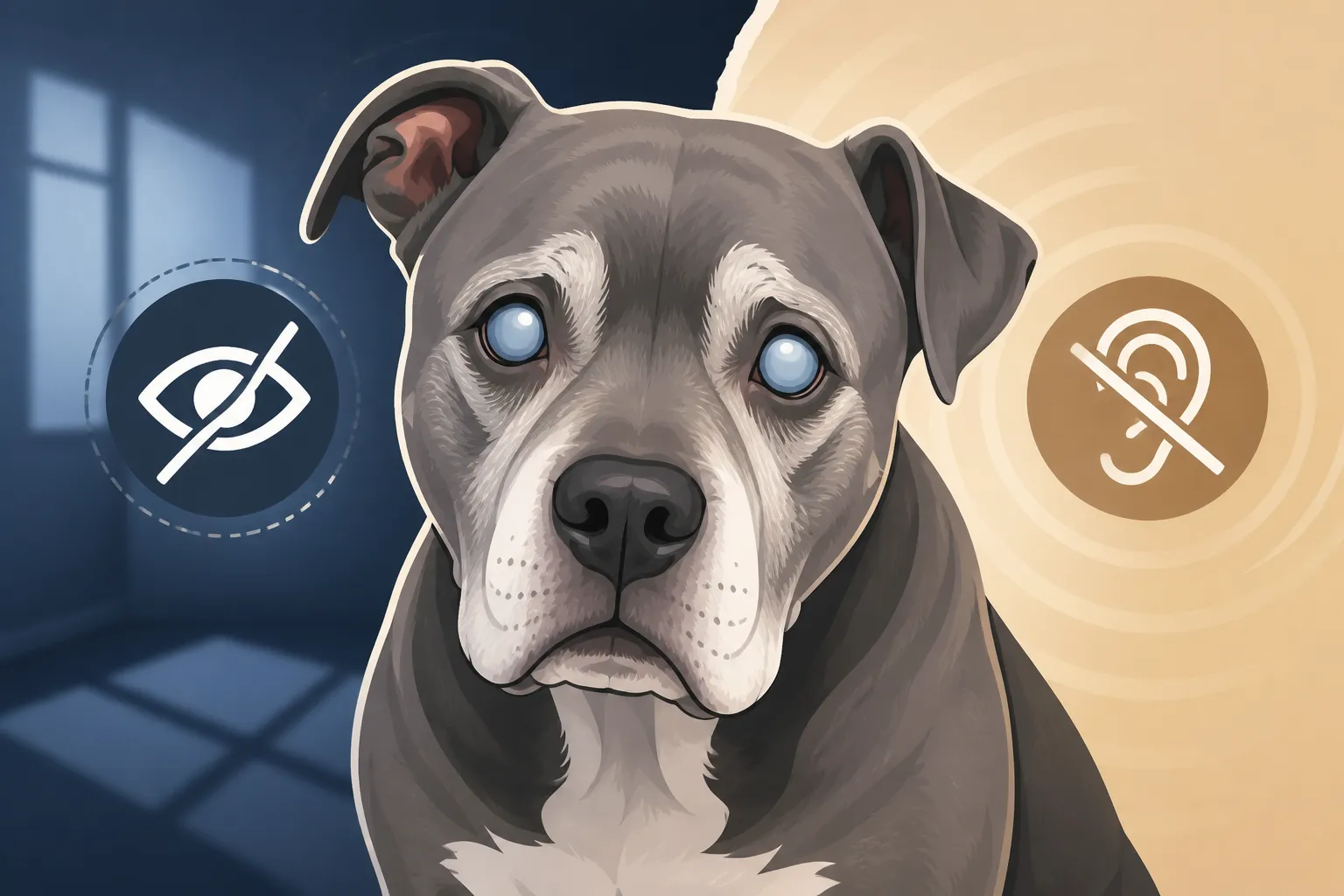
Early signs of vision loss in a Pit Bull can be surprisingly subtle. You might first notice your dog hesitating on stairs they used to fly up, or bumping into furniture that has always been in the same spot. It’s not necessarily a full loss of sight, but rather a decline in clarity, depth perception, or peripheral vision. Your Pit Bull might become less confident in dimly lit rooms or at dusk, preferring to stay close to you or familiar objects.
As vision continues to decline, you might observe a cloudiness or bluish haze in their eyes, which can be a sign of nuclear sclerosis, a normal aging change, or potentially cataracts. For more serious conditions, it's worth reading up on Pit Bull Cataracts and Eye Problems to understand the full spectrum of possibilities. They may start to rely more on their nose and ears, sniffing the ground more intently on walks, or startled more easily by sudden movements they can no longer see coming. Their pupils might also appear more dilated, especially in bright light, as their eyes try to gather more light to compensate for the reduced vision.
Noticing Hearing Loss
Just like vision, hearing loss often starts gradually. You might find yourself calling your Pit Bull’s name multiple times before they respond, or they might not seem to notice the doorbell ringing, a sound that once sent them into a frenzy. They might also stop reacting to familiar sounds like the rustle of a treat bag, the jingle of keys, or even the sound of your car pulling into the driveway.
A common behavior for dogs experiencing hearing loss is startling more easily. Because they can't hear you approach, a gentle touch might make them jump, which can be upsetting for both of you. You might also notice an increase in barking or howling, as they can no longer regulate their own volume or hear your commands to quiet down. Sometimes, they might even seem to sleep more soundly, oblivious to noises that would have once woken them. If you suspect ear issues beyond just age, learning about Pit Bull Ear Infections and What Drives Them could provide valuable insights into other causes of auditory problems.
The Overlap of Age-Related Changes
It’s important to remember that vision and hearing loss rarely happen in isolation as a Pit Bull ages. They often occur concurrently, and can be compounded by other age-related issues such as cognitive dysfunction (canine dementia) or joint pain. When a dog is losing both senses, their world shrinks dramatically, making them more prone to anxiety, confusion, and a reluctance to explore. This can lead to your Pit Bull becoming confused in rooms it knows, bumping into familiar objects, and generally struggling to navigate.
A dog with declining vision might already be hesitant, but if they also can’t hear your comforting voice or the tap of your foot to guide them, their fear can escalate. Similarly, a deaf dog might use their vision to compensate, but if that's also failing, their primary ways of understanding their environment are compromised. This cumulative effect can make their behavior seem more pronounced, and it can be difficult to tell if a lapse is due to sensory loss or cognitive decline. For a broader understanding of senior dog care, you might want to explore Caring for a Pit Bull in Its Second Decade.
Adapting Your Home for a Sensory-Impaired Pit Bull
Once you've started to recognize the signs of sensory loss in your aging Pit Bull, the next crucial step is to adapt their environment to keep them safe, comfortable, and confident. This isn't about babying them, but rather about creating a predictable and supportive world where they can continue to thrive despite their limitations.
Creating a Safe and Predictable Environment
One of the kindest things you can do for a sight-impaired Pit Bull is to maintain consistency in your home layout. Avoid rearranging furniture whenever possible. Your dog relies on their internal "map" of your home, built up over years, and suddenly moving a couch or a coffee table can lead to frightening collisions. If you absolutely must move something, do it gradually or block off the area temporarily to help them adjust.
For a dog with severe vision loss, consider placing soft, scented barriers around sharp corners or hazardous areas. For instance, a pool noodle taped to the edge of a coffee table can prevent painful bumps. You could also use different textures of rugs or runners to mark pathways or boundaries. For example, a rougher mat might signify the step down to the yard, while a smoother one leads to their food bowl. Scent cues can also be incredibly powerful. A drop of a familiar, calming essential oil (like lavender, diluted and used sparingly) on their bed, or a specific air freshener near their water bowl, can help them orient themselves. Baby gates are also your friends, allowing you to block off dangerous areas like stairs or rooms where they might get lost or bump into things.
Enhancing Communication and Cues
When your Pit Bull can no longer hear your voice or see your hand signals clearly, you need to find new ways to communicate. For dogs with hearing loss, touch cues become invaluable. A gentle tap on the shoulder might mean "come," while a rhythmic pat on the side could mean "good dog." Consistency is key here; everyone in the household needs to use the same cues.
For vision-impaired dogs, strong verbal cues and sound markers are essential, especially if they still have some hearing. Use distinct words for "stop," "step up," or "danger." If their hearing is also going, you might use vibrating collars (not shock collars!) to get their attention, paired with a consistent touch cue. Flashlights can be used as visual cues in the dark if they still have some residual vision. And don't underestimate the power of scent again here – highly fragrant treats or a specifically scented toy can act as a "homing beacon" for a dog whose senses are fading. Keep their world predictable and use these new cues to help them anticipate what's next, reducing anxiety.
Nutritional and Supplemental Support
Just like humans, aging Pit Bulls can benefit from dietary adjustments and supplements to support their declining senses and overall health. A high-quality diet rich in antioxidants, omega-3 fatty acids, and specific vitamins can help support eye and brain health. Many premium senior dog foods are formulated with these benefits in mind. Consult with your vet to see if a change in diet or the addition of supplements like fish oil, lutein, or zeaxanthin would be beneficial for your dog. For more on this, check out Adjusting a Pit Bull Diet in Old Age.
These supplements won't reverse sensory loss, but they can sometimes slow progression or support the remaining healthy tissue. It's also crucial to maintain a healthy weight for your senior Pit Bull, as obesity can exacerbate many age-related health issues, including joint pain that might make navigating with poor senses even harder. Remember, the costs for these specialized diets and supplements, along with more frequent vet visits, can add up, which is where pet insurance like Healthy Paws can really help cover unexpected medical expenses for your senior companion.
Supporting Your Pit Bull's Mental and Physical Well-being
Beyond adapting the physical environment, supporting your Pit Bull's mental and physical health is paramount as they age and lose their senses. An aging dog isn't just a physical body; they're still a thinking, feeling being who needs engagement and love, perhaps now more than ever.
Maintaining Routine and Enrichment
Structure and routine become incredibly important for a sensory-impaired Pit Bull. A predictable daily schedule for meals, walks, and potty breaks reduces anxiety and helps them navigate their world with confidence. Even if their walks are shorter and slower, stick to the same routes. They'll likely rely on their memory and scent to track their path.
Mental enrichment doesn't stop because their senses are declining; it simply adapts. Scent work, where they use their powerful nose to find hidden treats or toys, can be incredibly engaging and satisfying. Puzzle toys that dispense treats for mental effort are also fantastic, keeping their minds sharp and preventing boredom. Tactile toys with different textures can provide sensory stimulation they might be missing. Even short, gentle massage sessions can provide comfort and connection. For specific ideas on keeping your aging dog active, consider exploring articles like Pit Bull Mobility Aids in Old Age.
The Importance of Regular Vet Check-ups
Regular veterinary check-ups become even more critical for older Pit Bulls, especially those experiencing sensory decline. These visits allow your vet to monitor the progression of vision and hearing loss, rule out other underlying health conditions, and manage any secondary issues. Conditions like Arthritis in a Pit Bull at Seven or even Congestive Heart Failure in an Older Pit Bull can significantly impact their quality of life, and their reduced senses might make it harder for them to communicate their pain or discomfort.
Your vet can perform specialized eye and ear exams to assess the extent of the loss and recommend specific treatments or management strategies. For example, certain types of cataracts can be surgically removed, or ear infections might need targeted medication. These check-ups also provide an opportunity for crucial blood work, as outlined in The Bloodwork an Old Pit Bull Should Have, to catch other age-related diseases early. Having pet insurance like Healthy Paws can be a lifesaver for managing these increased medical costs, ensuring you can provide the best care without financial strain. Your vet will also advise you on How Often a Ten Year Old Pit Bull Needs Checking.
Emotional Support for Both Pet and Owner
Watching your Pit Bull age and decline is profoundly difficult. It’s natural to feel a mix of sadness, frustration, and even guilt. Be patient with your dog and yourself. They aren't being stubborn; they genuinely can't hear or see you as they once did. Provide them with extra comfort, affection, and reassurance. Your calm presence is often the most important thing for them.
Celebrate the small victories – a successful navigation through a tricky doorway, a happy response to a touch cue, or a moment of joyful play despite their limitations. Recognize that their world has changed, and they are doing their best to adapt. For you, seeking support from other pet owners or even a pet bereavement counselor can be helpful. It’s okay to grieve the changes, but it's also important to focus on the love and bond you still share. Remembering that you are providing them with the best possible end-of-life care is crucial, even when facing The Hardest Call a Pit Bull Owner Makes.
When to Seek Professional Help and Specialized Care
While many aspects of sensory decline can be managed at home with patience and environmental adaptations, there are times when professional veterinary intervention and specialized care are not just helpful, but essential. Understanding when to seek this higher level of care can make a significant difference in your Pit Bull's comfort and quality of life.
Diagnostic Tests and Medical Interventions
If you notice sudden, significant changes in your Pit Bull's sight or hearing, or if their condition seems to be causing them pain or extreme distress, it's time for a thorough veterinary examination. Your regular vet can perform preliminary diagnostic tests, such as detailed eye exams to look for conditions like glaucoma or retinal degeneration, and otoscopic exams to check for deep ear infections, polyps, or tumors that might be contributing to hearing loss.
Beyond general practice, your vet might recommend a referral to a veterinary ophthalmologist for advanced eye diagnostics, which could include electroretinography (ERG) to assess retinal function, or ultrasound of the eye. For hearing, a veterinary audiologist can perform a Brainstem Auditory Evoked Response (BAER) test, which objectively measures electrical activity in the brain in response to sounds, pinpointing the extent and type of hearing loss. Depending on the diagnosis, medical interventions could range from prescription eye drops for glaucoma, oral medications for inflammation, or even surgical options for certain types of cataracts. These advanced treatments can be costly, making a robust pet insurance plan from providers like Healthy Paws an invaluable asset.
Working with Specialists and Therapists
Beyond direct medical interventions, specialists can offer tailored strategies for managing your Pit Bull's sensory loss. A veterinary behaviorist, for example, can help address anxiety, fear, or aggression that might arise from confusion or insecurity due to their declining senses. They can provide specific training protocols and environmental management plans. For instance, if your Pit Bull is suddenly barking more due to not hearing cues, a behaviorist can help you develop alternative communication methods.
Similarly, a rehabilitation therapist or a certified professional dog trainer with experience in working with senior or disabled dogs can teach you specialized cues and techniques. They can also recommend exercises to help your Pit Bull maintain physical strength and balance, which is vital when their other senses aren't providing full information about their surroundings. They might suggest specific massage techniques or gentle range-of-motion exercises to keep joints supple. Remember that ongoing care, from specialized food to medication and therapy, can be covered by pet insurance, further highlighting the benefit of planning ahead with a company like Healthy Paws.
Here's a quick overview of common signs and adaptations:
| Sensory Loss Type | Common Signs | Home Adaptations | Communication Aids |
|---|---|---|---|
| Vision Loss | Bumping into objects, hesitant movement, cloudy eyes, dilated pupils, reluctance in low light | Maintain consistent furniture layout, use baby gates, soft corner bumpers, scent markers (e.g., lavender on bed) | Clear verbal cues (if hearing allows), flashlight signals, strong scent cues for food/water |
| Hearing Loss | No response to name/commands, startled easily, increased barking/howling, ignores familiar sounds | Approach from front, ensure visibility before touching, use consistent routine, keep home quiet for rest | Touch cues (gentle taps, pats), vibrating collars (non-shock), visual signals (hand gestures) |
| Combined | Disorientation, heightened anxiety, reduced exploration, overall confusion in familiar spaces | All above adaptations combined, focus on predictability, tactile pathway markers, calming presence | Consistent, multi-modal cues (touch, scent), prioritize safety and comfort, avoid sudden changes |
Disclaimer
The information provided in this article is for educational and informational purposes only and does not constitute veterinary advice. Always consult with a qualified veterinarian for any health concerns or before making any decisions about your Pit Bull's medical care.