Cruciate Tears in a Pit Bull That Pulls Hard
It's incredibly disheartening when your strong, athletic Pit Bull, full of life and eager to explore, suddenly comes up lame or starts limping. For many enthusiastic pullers, especially those with powerful builds, a common and devastating injury we see far too often is a torn cruciate ligament. This guide is here to walk you through exactly what a cruciate tear entails, why your hard-pulling Pit Bull might be at higher risk, and how we can best prevent, diagnose, and manage this challenging condition to keep them happy and healthy.
Understanding Cruciate Ligament Tears in Pit Bulls
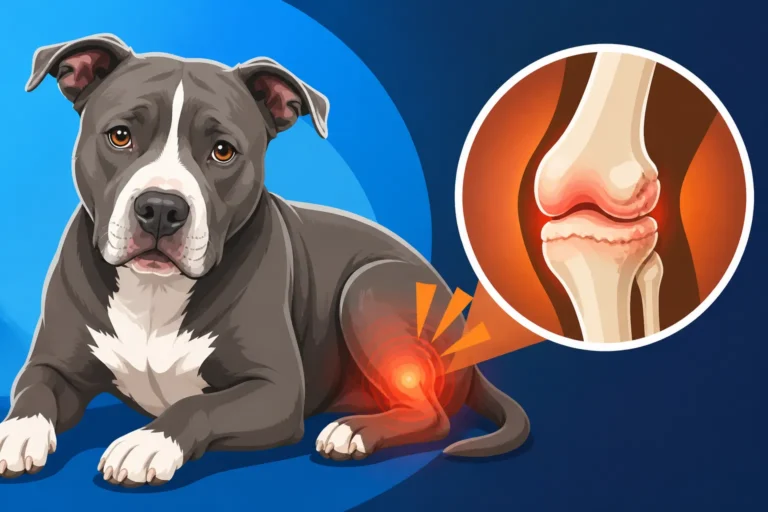
When your Pit Bull sustains a cruciate ligament tear, it's a serious injury that can drastically affect their mobility and quality of life. Unlike humans who typically injure their anterior cruciate ligament (ACL) with sudden twists, dogs often suffer from cranial cruciate ligament (CCL) tears through chronic degeneration, though acute trauma can certainly be a factor, especially in highly active or hard-pulling dogs.
What is the Cruciate Ligament?
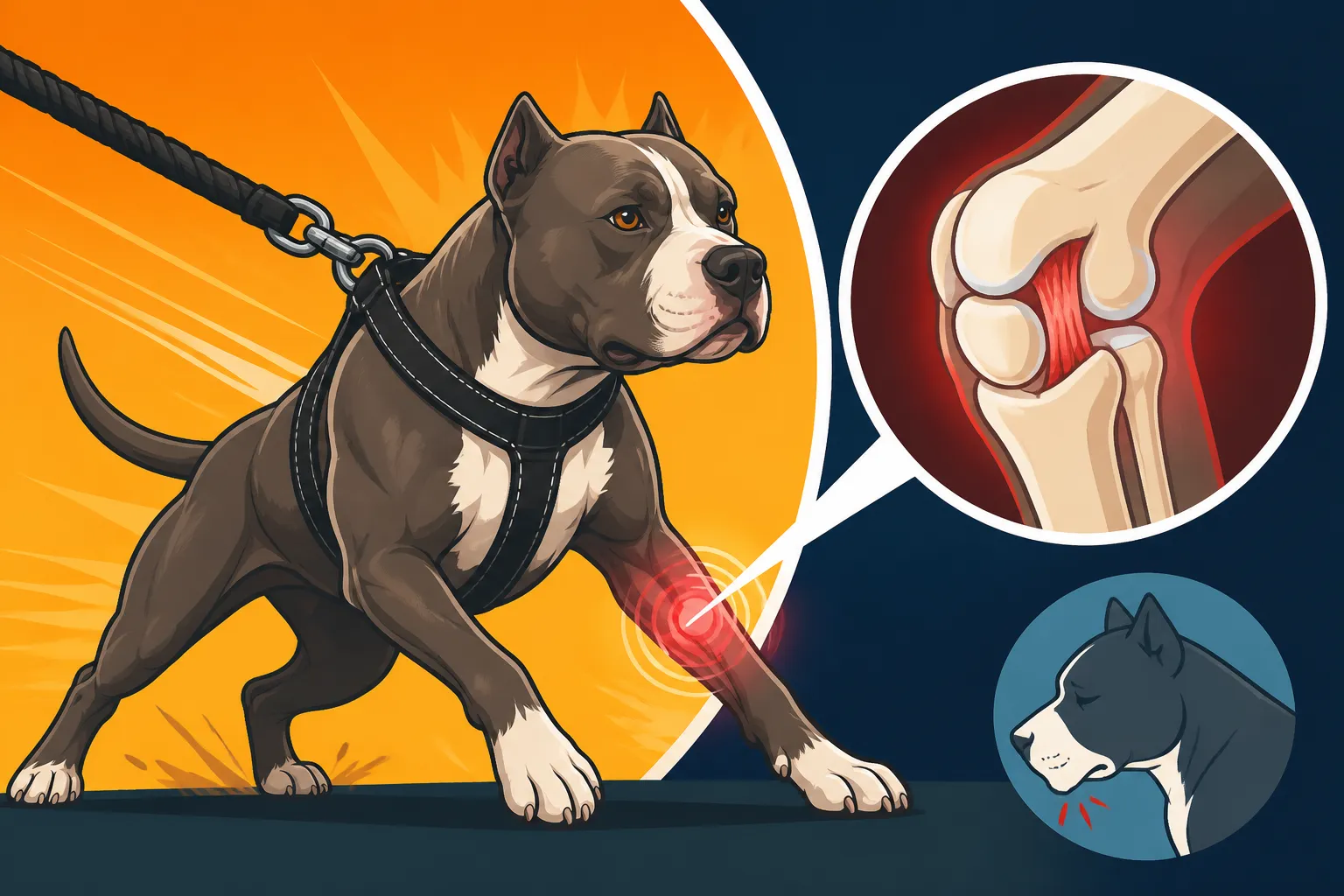
To really grasp what's happening, let's talk a little anatomy. Inside your dog's knee joint – which vets call the stifle joint – there are two crucial ligaments that cross over each other, much like an "X," connecting the femur (thigh bone) to the tibia (shin bone). These are the cranial cruciate ligament (CCL) and the caudal cruciate ligament (CaCL). Think of them as the primary stabilizing ropes for the knee, preventing the tibia from sliding forward relative to the femur, and limiting excessive rotation.
The cranial cruciate ligament is the one most commonly injured in dogs. When it's healthy, it ensures that your dog’s knee remains stable during all sorts of movements – running, jumping, twisting, and even just standing. It’s integral to their ability to bear weight and move fluidly.
When this ligament is compromised, even partially, that vital knee stability is lost. The joint becomes unstable, leading to pain, inflammation, and eventual degeneration of the cartilage within the joint, which can quickly spiral into arthritis. This is why addressing a tear quickly is so important.
How a Cruciate Tear Happens in a Strong Puller
For a powerful dog like a Pit Bull, especially one that loves to put its whole body into a walk by pulling hard on the leash, the constant strain on their knees can be immense. While a sudden, traumatic event like a misstep or a sharp turn during play can certainly cause an acute tear, many cruciate tears in dogs actually begin as a slow, degenerative process. The ligament weakens over time, fraying bit by bit, until even a minor activity can cause it to rupture completely.
Imagine your Pit Bull lunging after a squirrel, or bracing hard against you when they hit the end of their leash. That explosive energy and sudden stop or twist puts an incredible amount of force through their hind limbs and directly onto their knee joints. Over months and years, if this is a regular occurrence, that repetitive stress can take its toll on the cranial cruciate ligament. It’s like repeatedly bending a paper clip until it finally snaps.
This chronic strain can predispose the ligament to tear even with what seems like a simple movement. One day, they might just step awkwardly, or jump off the couch, and that already weakened ligament gives out. This cumulative damage is often overlooked until the final rupture, which is why prevention and understanding the risks associated with hard pulling are so vital for Pit Bull owners.
Recognizing the Signs of a Tear
Spotting a cruciate tear can sometimes be straightforward, but other times it can be a bit more subtle, especially if it’s a partial tear that progresses over time. An acute tear often presents dramatically: your Pit Bull might suddenly yelp, refuse to bear weight on the affected leg, or hold it up completely. They might come limping back from an enthusiastic chase or a rough play session, clearly in distress.
If the tear is partial or develops gradually, the signs might be less obvious. You might notice a persistent, mild limp that seems to get better with rest but returns with activity. They might be reluctant to put full weight on the limb, often "toe-touching" with their paw, or they might shift their weight uncomfortably when standing. You might also see them struggling with stairs, hesitating before jumping into the car or onto the furniture, or generally seeming less enthusiastic about their usual playtime and walks.
Another common sign is muscle atrophy in the affected hind leg over time, as they avoid using it fully. You might run your hands over their thighs and notice one is noticeably thinner than the other. Early detection is key to a better outcome, so paying close attention to any changes in your Pit Bull's gait, activity level, or willingness to engage in physical activities is paramount. Don't dismiss a persistent limp; it's always worth a vet visit.
Why Hard Pulling Increases Risk in Pit Bulls
Pit Bulls are renowned for their strength, agility, and powerful physique. These are wonderful traits that make them incredible companions and athletes, but they also contribute to the unique challenges their joints face, particularly when they exhibit habits like persistent leash pulling.
The Mechanics of Leash Pulling and Knee Strain
Think about what happens when your Pit Bull is pulling hard on the leash. They brace their body, lower their head, and engage their powerful chest and hindquarters, driving forward with incredible force. Every lunge, every sudden stop, every quick change of direction they make while pulling is transmitting significant impact and twisting forces directly through their legs and into their knee joints. It’s not just a gentle tug; it's a dynamic, often violent, application of force.
When a dog pulls, especially if they are consistently pulling hard, their body is often out of alignment, and they are essentially fighting against the leash and handler. This unnatural posture, combined with the sheer power they generate, puts tremendous strain on their cranial cruciate ligaments. Imagine trying to walk while someone pulls on a rope around your waist, making you constantly brace and lunge. Your knees would take a beating! Over time, this repeated stress can weaken the ligament, making it far more susceptible to a complete tear, even during an everyday activity.
This constant stress isn't just about the acute risk of a sudden tear, but also the long-term degenerative impact. Each time they pull and twist, tiny micro-traumas can occur in the ligament, slowly breaking it down. Eventually, it reaches a point where it can no longer withstand even minor forces, leading to a full rupture.
Pit Bull Physiology and Joint Susceptibility
Pit Bulls are built like canine athletes: dense muscle, powerful hindquarters, and a compact yet robust frame. While these characteristics are part of what makes them so admired, they also mean that when a Pit Bull applies force, they do it with significant power. Their musculature provides incredible leverage and strength, which, when channeled into an action like pulling, can generate substantial force through their joints.
Consider a 50-pound Pit Bull lunging with all its might; the force exerted on that single knee during a sudden twist or stop can be many times their body weight. Their broad chest and powerful rear drive mean they can accelerate and change direction with intense speed and power, further increasing the risk of injury during uncontrolled movements. While Pit Bulls aren't necessarily predisposed to CCL tears more than some other breeds like Rottweilers or Newfoundlands due to genetic factors alone, their physical capabilities and enthusiastic nature certainly put them at a higher functional risk if not managed properly.
Moreover, if a Pit Bull is carrying even a few extra pounds, the additional weight further amplifies the strain on their already stressed knees. Pit Bull Obesity and Joint Strain is a serious concern, as excess weight drastically increases the load on all joints, including the crucial knee stabilizers. Their muscular build can sometimes hide a few extra pounds, making it harder to spot until it's become a problem.
Common Scenarios Leading to Tears
It’s often the everyday moments that catch us off guard. For a Pit Bull that pulls hard, these moments are amplified. Imagine these scenarios:
- The Squirrel Chase: You’re on a walk, your Pit Bull is pulling, and suddenly a squirrel darts across their path. Without thinking, they lunge, twisting their body to pursue, hitting the end of the leash with a jerk. This sudden, uncoordinated twist and impact is a prime culprit for a cruciate tear.
- Slipping on Wet or Icy Pavement: Even with the best intentions, if your Pit Bull is pulling and steps onto a slick surface, their powerful drive can cause their hind legs to splay out. The knee then twists unnaturally as they try to regain footing, putting immense stress on the ligament.
- Roughhousing with Other Dogs: Many Pit Bulls love to play hard. They might body-check, spin, and wrestle with their canine friends. If one of their hind legs gets caught or twisted in an awkward position during an intense play session, especially if their ligaments are already weakened from chronic pulling, a tear can occur.
- Jumping On and Off High Surfaces: While jumping seems innocuous, repeatedly leaping off high beds, couches, or out of vehicles, particularly if landing awkwardly, can contribute to ligament stress, especially if the dog is already pulling hard on walks, putting daily strain on their knees.
These common occurrences underscore why managing leash manners and overall physical fitness is not just about polite walks, but about protecting your beloved Pit Bull's long-term joint health. The constant tugging and sudden impacts from strong pulling dramatically increase the chances that one of these everyday events will turn into a significant injury.
Diagnosis and Treatment Options
If you suspect your Pit Bull might have a cruciate ligament tear, getting a proper diagnosis from your veterinarian is the crucial next step. It can be a scary time, but knowing your options is empowering.
The Vet Visit and Diagnostic Process
When you bring your Pit Bull to the vet with signs of lameness, the first thing they’ll do is a thorough physical examination. This usually involves observing your dog’s gait, palpating the knee joint, and attempting specific maneuvers to assess joint stability. The two classic tests for a torn CCL are the "cranial drawer test" and the "tibial compression test."
- Cranial Drawer Test: This involves the vet stabilizing the femur with one hand and attempting to slide the tibia forward with the other. In a healthy knee, the CCL prevents this "drawer" motion. If the ligament is torn, the tibia will move forward like a drawer opening.
- Tibial Compression Test: The vet will extend the ankle joint and palpate the knee. If the CCL is torn, this action causes the tibia to move forward relative to the femur.
These tests can sometimes be performed on an awake dog, but with a muscular Pit Bull who might be in pain or resistant, sedation is often necessary to get an accurate assessment. Following the physical exam, X-rays (radiographs) are typically recommended. While X-rays don’t show the ligament itself, they are invaluable for:
- Confirming knee effusion (fluid buildup due to inflammation).
- Looking for signs of arthritis, which commonly develops with chronic instability.
- Ruling out other orthopedic issues that might mimic a cruciate tear, like fractures or other joint diseases.
- Planning for surgery by providing measurements of the bones in the joint.
Sometimes, further diagnostics like MRI or arthroscopy might be used, but generally, the combination of a thorough physical exam and X-rays is sufficient to confirm a CCL tear.
Surgical Interventions
For most Pit Bulls with a complete cruciate ligament tear, especially active and muscular ones, surgical repair is often the recommended course of action for the best long-term outcome. Surgery aims to stabilize the knee, reduce pain, and prevent or slow the progression of arthritis. There are several highly effective surgical techniques:
- Tibial Plateau Leveling Osteotomy (TPLO): This is one of the most common and effective surgeries for CCL repair. Instead of trying to repair the torn ligament directly, the TPLO procedure changes the angle of the top of the tibia (the tibial plateau) by cutting and rotating a section of the bone. This effectively neutralizes the forces that cause the tibia to slide forward, making the CCL redundant. It stabilizes the knee dynamically, allowing for excellent weight-bearing and return to function. TPLO is particularly well-suited for larger, more active breeds like Pit Bulls due to their strong musculature and active lifestyles.
- Tibial Tuberosity Advancement (TTA): Similar to TPLO, TTA also modifies the biomechanics of the knee. In this procedure, the front part of the tibia (the tibial tuberosity) is cut and advanced forward, changing the angle of the patellar ligament. This also helps to neutralize the cranial thrust and stabilize the knee. TTA is another excellent option, and the choice between TPLO and TTA often comes down to the surgeon's preference and the specific anatomy of your dog's knee.
- Lateral Suture (Extracapsular Repair): This is an older technique, sometimes referred to as "fishing line surgery." It involves placing a strong suture material (often nylon) outside the joint capsule, mimicking the action of the original cruciate ligament. While less invasive and generally less expensive than TPLO or TTA, it's often considered less robust for large, active, or heavily muscled dogs like Pit Bulls, as the suture material can stretch or break. However, it can be a viable option for smaller, less active dogs or specific cases where TPLO/TTA are not feasible.
| Surgical Procedure | Description | Pros | Cons | Best For |
|---|---|---|---|---|
| TPLO | Changes tibial angle to neutralize forward thrust. | Excellent long-term stability, high success rate, good for active dogs. | More invasive, higher cost, longer initial recovery. | Active, larger, heavily muscled dogs (like Pit Bulls). |
| TTA | Advances tibial tuberosity to change patellar ligament angle. | Good long-term stability, high success rate, quicker return to function for some. | Invasive, higher cost, potential for hardware complications. | Active, larger dogs, often chosen based on individual anatomy. |
| Lateral Suture (Extracapsular) | Uses strong suture outside the joint to stabilize. | Less invasive, lower cost, shorter surgery time. | May be less stable for large/active dogs, suture can stretch/break, higher re-tear rate in large breeds. | Smaller, less active dogs, or those with financial constraints. |
Following any of these surgeries, a dedicated rehabilitation program is crucial for a full recovery. This often involves strict rest, gradual exercise, and physical therapy exercises. Rebuilding a Pit Bull Knee After a Tear is a long-term commitment, but with proper care, most dogs return to a good quality of life.
Non-Surgical Management (When Applicable)
While surgery is often the best choice for complete CCL tears in Pit Bulls, non-surgical (conservative) management can be considered in specific situations. This approach is generally reserved for:
- Dogs with very small, partial tears that are caught early and show minimal instability.
- Very small or elderly dogs with low activity levels where the owner prioritizes comfort over full athletic function.
- Dogs with other severe health conditions that make anesthesia and surgery too risky.
- Owners for whom surgical costs are prohibitive (though it’s important to understand the long-term implications of choosing not to operate).
Conservative management typically involves strict rest for an extended period (6-8 weeks or more), often combined with anti-inflammatory medications (NSAIDs), pain relievers, and sometimes a knee brace. Physical therapy exercises, once approved by the vet, are then gradually introduced to rebuild muscle and improve range of motion.
The reality, however, is that for a muscular, active Pit Bull with a complete tear, conservative management often leads to chronic lameness, significant arthritis progression, and a much higher chance of tearing the cruciate ligament in the other knee due to compensation. The instability remains, leading to ongoing pain and degeneration. This is why most veterinary orthopedic specialists will strongly recommend surgical intervention for Pit Bulls with full tears, as it provides the most stable and comfortable long-term outcome. It's an investment in your dog's future comfort and mobility.
Prevention and Long-Term Management
The best offense is a good defense, especially when it comes to preventing cruciate ligament tears in our powerful Pit Bulls. Proactive steps in training, diet, and overall care can significantly reduce their risk, and good long-term management ensures they stay healthy and mobile.
Training for Better Leash Manners
One of the most impactful things you can do to prevent cruciate tears, especially in a dog that pulls hard, is to teach impeccable leash manners. Pit Bull Leash Manners and Physical Strength is a topic that can't be stressed enough. Training your Pit Bull to walk politely on a loose leash eliminates the sudden jerks and constant strain on their joints.
Start early with positive reinforcement training, rewarding calm walking and ignoring pulling. Be consistent, patient, and use high-value treats to keep their attention. If your Pit Bull is a strong puller, consider using equipment that discourages pulling without causing discomfort or injury. Front-clip harnesses, like those from popular brands such as Freedom No-Pull Harness, attach at the dog’s chest, gently redirecting them back towards you when they pull. This greatly reduces the leverage they have to pull you forward and puts less strain on their neck and joints compared to traditional back-clip harnesses or neck collars. Head halters can also be effective tools for managing strong pullers. Harnesses and Head Halters for a Pit Bull can provide you with more detailed options.
Remember, training is a continuous process. Regular practice, even short sessions daily, will build good habits and strengthen your bond, making walks enjoyable for both of you and safer for your Pit Bull’s knees. Avoid retractable leashes, which can encourage pulling and make sudden stops even more jarring.
Maintaining Ideal Weight and Muscle Condition
For a muscular breed like the Pit Bull, maintaining a lean, healthy weight is absolutely critical for joint health. Every extra pound your dog carries significantly increases the stress on their joints, including their knees. Think about it: a 50-pound Pit Bull carrying an extra 5 pounds is like a person constantly carrying a heavy backpack – it adds up over time. This extra load makes cruciate ligaments more prone to injury and accelerates the development of arthritis if a tear does occur.
It can be tricky to tell if a Pit Bull is overweight because their muscle mass can obscure body fat. You should be able to easily feel, but not necessarily see, their ribs without pressing hard. They should also have a visible waist when viewed from above and a tuck-up from the side. Regular exercise is key to building and maintaining strong, supportive muscle around their joints. Strong core and hindquarter muscles help stabilize the knee joint, acting as a natural support system for the ligaments.
A balanced diet, measured portions, and plenty of appropriate exercise are your best tools. Consult your vet to determine your Pit Bull’s ideal weight and a suitable feeding plan. How Weight Multiplies the Load on Pit Bull Joints is a clear indicator of why this is so crucial. Getting your Pit Bull back into condition after an injury, or simply keeping them fit, requires a strategic approach to diet and exercise, as detailed in Getting a Pit Bull Back Into Condition.
Joint Supplements and Regular Vet Checks
While no supplement can replace healthy ligaments, certain joint supplements can play a supportive role in overall joint health and may help slow the progression of arthritis, especially after an injury or as your Pit Bull ages. Common ingredients include:
- Glucosamine and Chondroitin Sulfate: These are building blocks of cartilage and can help maintain cartilage health and reduce inflammation.
- Omega-3 Fatty Acids: Found in fish oil, these have powerful anti-inflammatory properties that can help reduce joint pain and swelling.
- MSM (Methylsulfonylmethane): Another compound that may help with pain and inflammation.
Always discuss any supplements with your veterinarian before introducing them to ensure they are appropriate for your dog and won't interact with any medications. Reputable brands like Cosequin or Dasuquin are often recommended by vets. More information can be found on Joint Support for a Heavily Muscled Pit Bull.
Finally, regular veterinary check-ups are paramount. Your vet can monitor your Pit Bull's weight, assess their gait, and catch subtle signs of joint issues before they become debilitating. Early detection of any lameness or instability allows for prompt intervention, potentially preventing a full tear or managing a partial one more effectively. Don't skip these routine visits. Also, consider pet insurance from providers like Healthy Paws. While it won't cover pre-existing conditions, enrolling when your Pit Bull is young and healthy can provide invaluable financial support for unexpected injuries or illnesses, including the significant costs associated with cruciate ligament surgery and subsequent rehabilitation. It's a smart way to budget for potential future health needs, especially considering the commonality of Pit Bull Joint and Ligament Injuries.
Disclaimer
This article is intended for informational purposes only and does not constitute veterinary advice. Always consult with a qualified veterinarian for any health concerns or before making any decisions about your Pit Bull's medical care or treatment.