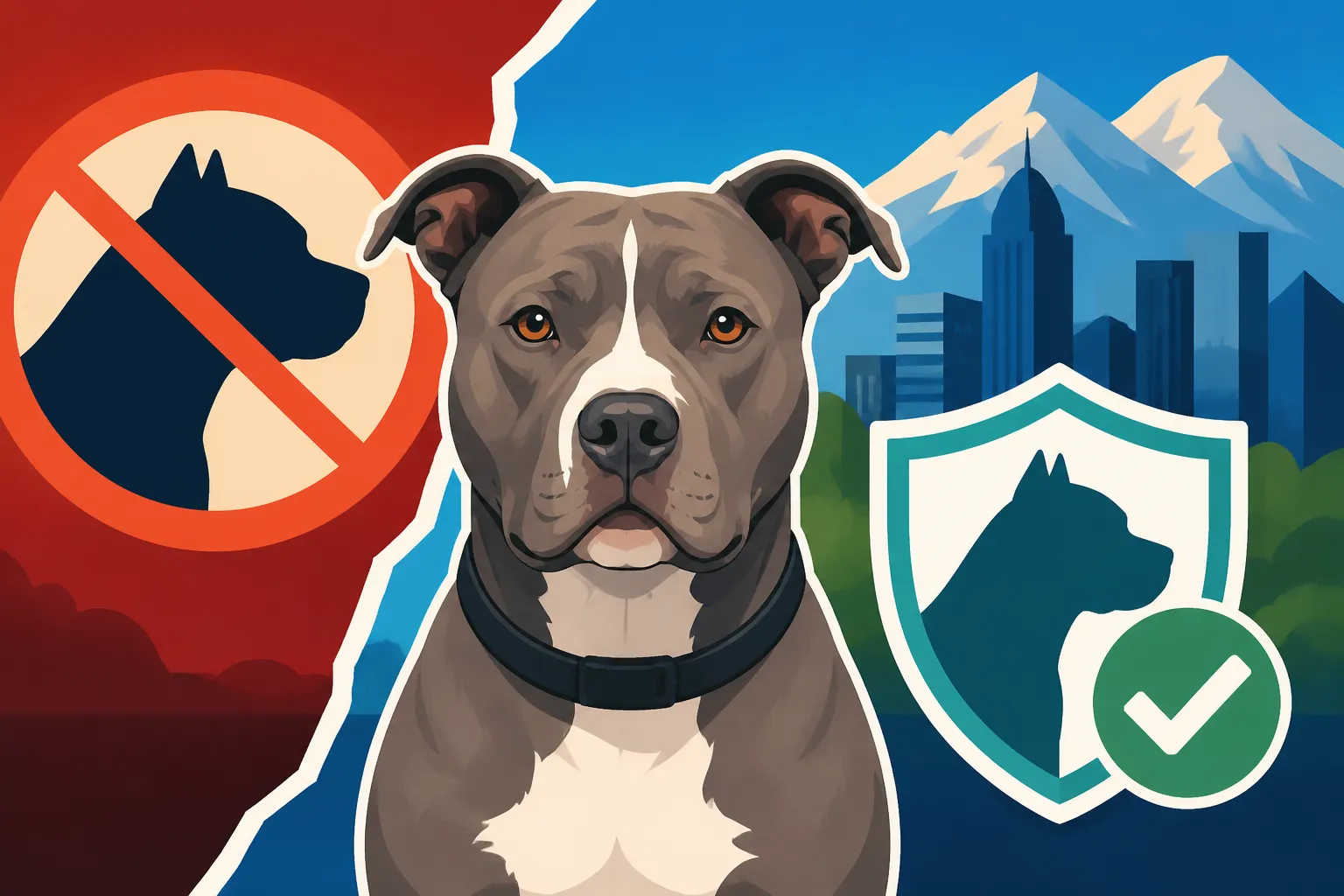
Denver’s Pit Bull Permit After the 2020 Repeal
The journey of Pit Bull ownership in Denver has been a rollercoaster for many, marked by years of navigating breed-specific legislation that often felt unfair and isolating. For decades, the city's ban cast a long shadow, making it incredibly difficult to own these dogs openly and responsibly. This guide is here to walk you through the significant changes that came with the 2020 repeal, explaining Denver's new permit system, what it means for you and your beloved Pit Bull, and how to stay compliant with the updated regulations.
Denver's Long History with Breed-Specific Legislation
For many years, Denver was a prime example of a city with strict breed-specific legislation (BSL), particularly targeting what were classified as "Pit Bull breeds." This history shaped how countless dog owners lived their lives, often in fear or forced to make heartbreaking decisions. It's important to understand where this all came from to truly appreciate the shift that has occurred.
The Initial Ban and Its Rationale
The original ban in Denver took effect in 1989. The rationale behind it, like many BSLs across the country, stemmed from public safety concerns following a series of highly publicized dog bite incidents. Pit Bulls, or dogs identified as such, became the focus of intense scrutiny. The ordinance essentially made it illegal to own, possess, or harbor American Pit Bull Terriers, American Staffordshire Terriers, and Staffordshire Bull Terriers within city limits. This wasn't just a restriction; it was an outright prohibition that forced many families to either move out of Denver, give up their pets, or live in a constant state of anxiety, hiding their dogs from authorities. Imagine the stress of loving your dog, knowing it's a gentle member of your family, yet constantly worrying that a neighbor's complaint could lead to its confiscation. It was a tough reality for many.
The ban, unfortunately, also fueled a narrative that painted all dogs of a certain appearance with the same brush, regardless of individual temperament or behavior. It created a deep divide and stigma around these dogs and their owners, often overlooking the nuances of responsible pet ownership, training, and the actual causes of dog bites. Many felt that the city was punishing dogs based on looks rather than deeds, and punishing owners who were doing everything right.
The Long Fight for Repeal
Despite the ban, a passionate community of Pit Bull advocates, responsible owners, and animal welfare organizations never stopped fighting for change. For decades, they worked tirelessly to challenge the legislation, arguing that BSL was ineffective, discriminatory, and didn't actually make communities safer. They pointed to studies showing that BSL often fails to reduce dog bites and instead leads to the euthanasia of countless adoptable dogs. Organizations like the Dumb Friends League and the Denver Animal Shelter themselves, who were on the front lines of seeing the impact of the ban, eventually advocated for its repeal.
The argument centered on the idea that focusing on a dog's behavior and an owner's responsibility, rather than arbitrary breed labels, was a more effective and humane approach to public safety. This advocacy involved educating the public, lobbying city council members, sharing personal stories of beloved Pit Bulls, and highlighting the positive contributions these dogs make as therapy animals, working dogs, and cherished family pets. It was a slow, uphill battle, fraught with emotional testimony and persistent misinformation, but the tide slowly began to turn as more people realized the flaws in breed-specific laws.
The 2020 Repeal and Its Impact
The year 2020 marked a monumental shift for Pit Bull owners in Denver. After years of dedicated advocacy and public debate, the city council voted to repeal the controversial breed ban. This decision was a beacon of hope for many, signaling a move towards more progressive and effective animal welfare policies.
What Changed with the Vote
The repeal of Denver's Pit Bull ban wasn't an instant free-for-all. Instead, it introduced a new framework designed to allow Pit Bull-type dogs back into the city under specific, regulated conditions. The city council’s vote replaced the outright ban with a permit system, acknowledging the need for public safety while also respecting responsible pet ownership. This meant that dogs previously identified as American Pit Bull Terriers, American Staffordshire Terriers, and Staffordshire Bull Terriers could now legally live in Denver, provided their owners went through the necessary permitting process. It was a middle-ground solution, aiming to address both the concerns of those who feared the repeal and the desires of those who simply wanted to live with their dogs without legal threat.
The repeal itself was a complex legislative act, passed after much deliberation. It reflected a growing national trend away from BSL as communities recognize its ineffectiveness and the harm it causes. Instead of focusing on breed, Denver's new approach shifts the emphasis to individual dog behavior and owner accountability, which many animal welfare experts agree is a far more robust way to manage dog safety in a community. The idea is that a well-trained, well-socialized dog with a responsible owner is safe, regardless of its breed type.
Immediate Effects on Owners
For Pit Bull owners already living covertly in Denver, or those who had moved away because of the ban, the repeal brought a wave of relief and excitement. Suddenly, their dogs were no longer illegal pariahs but could be registered and allowed to live openly. This change meant no more furtive walks late at night or constant worry about a neighbor reporting them. It opened up possibilities for better veterinary care without fear, access to dog parks, and participation in community events. It was a huge weight lifted from their shoulders.
However, it wasn't as simple as just bringing your dog home. The new permit system required action. Owners immediately had to understand the new rules and begin the application process to ensure their dogs were legally compliant. This included initial veterinary visits for vaccinations and microchipping, and potentially signing up for responsible ownership classes. For some, it also meant having to explain the new laws to skeptical neighbors or landlords who were still operating under the old ban's assumptions. It was a transition that required patience and proactive engagement from Pit Bull owners, even as they celebrated their newfound freedom.
Understanding the New Pit Bull Permit System
The permit system introduced in Denver is a structured approach to regulating Pit Bull ownership, ensuring accountability while allowing these dogs to reside within city limits. It's crucial for any current or prospective Pit Bull owner in Denver to grasp the nuances of this system.
The Core Philosophy Behind the Permit
At its heart, Denver's permit system for Pit Bulls is built on the principle of responsible ownership and public safety through accountability. It moves away from the blanket assumption that all dogs of a certain "type" are inherently dangerous, instead placing the responsibility squarely on the shoulders of the owner to prove their dog is well-behaved and safely managed. The city isn't saying these dogs are universally safe without any conditions; rather, it's saying that with proper oversight, training, and care, they can be integrated safely into the community.
This philosophy is a direct response to the failures of BSL, which often punished good owners and well-behaved dogs without actually improving public safety. The permit system aims to identify and track Pit Bulls, ensure they receive essential care like vaccinations, and encourage owners to take additional steps, such as training and spay/neuter, that contribute to a safer, more stable dog population. It's a pragmatic shift that seeks to balance community concerns with animal welfare.
Who Needs a Permit and Why
Any resident of Denver who owns a dog identified as an American Pit Bull Terrier, American Staffordshire Terrier, or Staffordshire Bull Terrier, or any dog that primarily exhibits the physical characteristics of one of these breeds, is required to obtain a permit. This isn't just for new owners; it applies to dogs that were previously owned under the ban but now need to be brought into compliance. The "why" behind this requirement is multi-faceted:
- Identification and Tracking: The permit system ensures that Denver Animal Protection (DAP) has a record of these dogs, allowing for better management in case of emergencies, lost pets, or incidents.
- Encouraging Responsibility: By requiring specific steps (like microchipping, vaccinations, and sometimes training), the city is actively promoting responsible pet ownership. This helps ensure that dogs are healthy, identifiable, and less likely to pose a risk to the community. You can find more details on how to get your furry friend protected by reading about Year-Round Parasite Cover for a Pit Bull.
- Public Reassurance: For residents who were apprehensive about the repeal of the ban, the permit system provides a layer of reassurance that Pit Bulls in the city are known to authorities and their owners are held to specific standards.
The permitting process is not meant to be a barrier for responsible owners, but rather a mechanism to ensure that the transition from a ban to a more inclusive policy is managed effectively and safely.
Requirements for Obtaining a Pit Bull Permit
Navigating the permit application can feel a bit daunting, but it’s a clear process once you know the steps. Denver has laid out specific requirements that owners must meet to legally keep their Pit Bull type dogs within city limits. These requirements are designed to ensure public safety and promote responsible pet ownership.
Mandatory Microchipping and Vaccinations
One of the most fundamental requirements for a Pit Bull permit in Denver is ensuring your dog is microchipped and up-to-date on all core vaccinations, particularly rabies. The microchip serves as permanent identification, linking your dog directly to you, the owner. This is incredibly important not just for permit compliance, but also for reuniting you with your dog if they ever get lost. Imagine the relief of a shelter being able to scan a microchip and call you immediately, rather than your dog becoming just another stray.
In addition to microchipping, current rabies vaccination is non-negotiable. Rabies is a serious public health concern, and ensuring your dog is protected is a critical part of responsible pet ownership. Beyond rabies, most vets will also recommend other core vaccinations for your dog's overall health, such as distemper, parvovirus, and adenovirus. While these might not be strictly mandated for the permit itself, keeping your dog's vaccines current is just good practice. If you adopted a puppy, understanding Pit Bull Puppy Vaccination and Parvovirus schedules is crucial from the start.
Spay/Neuter and Responsible Ownership Classes
Denver's permit system also strongly encourages, and in some cases requires, that Pit Bull type dogs be spayed or neutered. This is a common practice in animal welfare aimed at controlling pet overpopulation and often mitigating certain behavioral issues. An intact dog, particularly a male, can be more prone to roaming, marking, and sometimes aggression, though individual temperament always varies. For a female, spaying prevents unwanted litters and reduces the risk of certain health problems. Consider discussing Spay Timing for a Female Pit Bull with your vet for optimal health and behavior benefits.
Beyond physical health and population control, many cities, including Denver, emphasize responsible ownership training. While not always a direct requirement for the initial permit, Denver's program typically includes a provision that if your Pit Bull has any documented behavioral concerns, or if you are applying for a "dangerous dog" permit (a separate, stricter category), then completion of an approved responsible ownership or obedience class may become mandatory. Even if not strictly required, enrolling in a good obedience class is a fantastic idea for any Pit Bull owner. It helps strengthen the bond between you and your dog, teaches crucial manners, and demonstrates to the community that you are a responsible owner. Programs like the Canine Good Citizen test, detailed in Canine Good Citizen Training With a Pit Bull, are excellent benchmarks for well-behaved dogs and can show a commitment to training.
Permit Renewal and Compliance
The Pit Bull permit in Denver is not a one-time affair; it requires regular renewal, usually annually. This ensures that owners continue to meet the city’s standards over time. During renewal, you'll typically need to provide updated proof of rabies vaccination and potentially confirm your dog's spay/neuter status. This ongoing compliance is key to the system's effectiveness.
Furthermore, there are conditions attached to the permit that owners must always uphold. This means ensuring your dog is always on a leash in public spaces, is not allowed to roam freely, and is maintained in a manner that does not pose a nuisance or threat to others. Failure to adhere to these ongoing requirements can lead to fines, revocation of the permit, and in severe cases, legal consequences. It's a commitment that requires continuous vigilance from owners. For example, if your dog gets out and causes an incident, even if it's just a chase, the permit holder is responsible.
Here's a quick overview of the typical permit requirements:
| Requirement | Description | Frequency/Status |
|---|---|---|
| Microchip | Permanent identification linked to owner. | One-time implant, verified at renewal |
| Rabies Vaccination | Proof of current rabies vaccination. | Annually or every 3 years (based on vaccine type) |
| Spay/Neuter | Proof of sterilization (encouraged/required depending on circumstances). | One-time procedure (unless medical reason not to) |
| Permit Fee | Non-refundable fee for processing and maintaining the permit. | Annually |
| No Dangerous Dog History | Dog must not have a history of dangerous behavior or prior incidents. | Ongoing |
| Responsible Ownership | Adherence to city ordinances (leash laws, waste removal, etc.). | Ongoing |
| Address/Contact Info | Up-to-date contact and address information. | Update as changes occur, verified at renewal |
Life with a Permitted Pit Bull in Denver
Living with a permitted Pit Bull in Denver is about embracing responsible ownership and being a good ambassador for your dog. It means understanding the rules, being proactive in their care and training, and being mindful of how your dog interacts with the community.
Public Spaces and Leash Laws
One of the most important aspects of living with a Pit Bull in Denver, post-ban, is strict adherence to leash laws and regulations in public spaces. Your permitted Pit Bull must always be on a leash when outside of your property, unless in a designated, fenced off-leash dog park. This isn't just a suggestion; it's a legal requirement that helps ensure public safety and prevents incidents. A strong, reliable leash and collar or harness are essential. Even if your Pit Bull has impeccable recall, the perception of an off-leash Pit Bull can cause anxiety for others, and breaking the law can put your permit at risk.
Beyond leashing, being aware of your surroundings in public is paramount. This includes understanding Reading Pit Bull Body Language Before a Greeting to ensure interactions with other dogs and people are positive. Always be ready to intervene if an interaction starts to go south, and consider crossing the street if you see a person or dog who seems uncomfortable. Remember, you're not just representing your dog; you're representing all Pit Bulls and demonstrating that responsible ownership makes all the difference. Many people have old ideas about these dogs, and your actions can help change minds.
Ensuring Your Home is Compliant
Responsible ownership extends beyond public spaces and into your own home and property. While your Pit Bull is permitted, you still need to ensure your home environment is secure and safe. This means having a properly fenced yard if your dog spends time outdoors unsupervised. The fence should be sturdy, high enough to prevent jumping, and free of gaps that your dog could squeeze through. For many Pit Bulls, a six-foot fence is a minimum.
Moreover, if your dog is prone to digging or attempting to escape, additional measures like L-footer fencing or burying wire along the fence line might be necessary. It’s also wise to have secure doors and gates. These measures aren't just about preventing escapes; they're about ensuring your dog's safety and preventing any accidental interactions that could lead to complaints or incidents. For first-time Pit Bull owners or those who struggle with specific behaviors, engaging with a professional trainer can be invaluable. Brands like Chewy offer a vast array of secure crates, durable leashes, and even GPS trackers to help keep your dog safe and your home compliant. Finding a Trainer Experienced With Pit Bulls can make all the difference in setting up your dog for success in your home and beyond.
Challenges and Public Perception Post-Repeal
While the repeal of Denver's Pit Bull ban was a significant victory for breed advocates, it didn't instantly erase decades of negative stereotypes and misinformation. Pit Bull owners still face unique challenges related to public perception and the ongoing effort to prove the effectiveness of the new permit system.
Ongoing Stigma and Education
Despite the legal changes, the stigma surrounding Pit Bulls persists in some corners of society. Many individuals still harbor preconceived notions about these dogs, often fueled by sensationalized media reports or outdated beliefs. This can manifest as wary glances on walks, landlords who are hesitant to rent to Pit Bull owners even with permits, or even subtle discrimination from other dog owners at the park. Imagine the frustration of constantly having to defend your dog's good nature, simply because of how they look.
As a Pit Bull owner in Denver, you become an ambassador for your dog and the breed type. This means being extra diligent in your training, ensuring your dog is always well-behaved, and proactively educating others when opportunities arise. Sharing positive interactions, demonstrating excellent leash manners, and simply showing the world what a loving, well-adjusted Pit Bull truly is can go a long way in chipping away at the lingering stigma. Organizations continue to work on broader educational campaigns to foster understanding and acceptance within the community.
Monitoring the New System's Effectiveness
The city of Denver, along with animal welfare groups, continues to closely monitor the effectiveness of the new permit system. This involves tracking bite statistics, compliance rates among Pit Bull owners, and overall public safety outcomes. The success of this new approach hinges on responsible ownership and the city's ability to enforce its regulations fairly and consistently. If the system proves effective in reducing incidents and promoting responsible ownership, it could serve as a model for other cities still grappling with breed-specific bans.
For owners, this means your ongoing compliance and commitment are more important than ever. Every permitted Pit Bull living peacefully in Denver contributes to the positive data that supports this progressive legislation. If there are incidents or widespread non-compliance, it could potentially jeopardize the future of the permit system, making it crucial for every owner to be an exemplary citizen. Pet insurance, like that offered by Healthy Paws, can be a valuable tool in responsible ownership, helping cover unexpected vet bills and demonstrating a commitment to your dog's long-term health, which is part of being a prepared and responsible owner. Furthermore, ensuring your dog is on a high-quality diet, perhaps from a brand like Ollie, can contribute to their overall health and temperament, making them better canine citizens.
Disclaimer
The information provided in this article is for general informational purposes only and does not constitute legal advice. While we strive to keep the information up-to-date and correct, laws and regulations can change rapidly. Always consult with Denver Animal Protection, a qualified legal professional, or a certified dog trainer for specific advice regarding your situation and local ordinances.