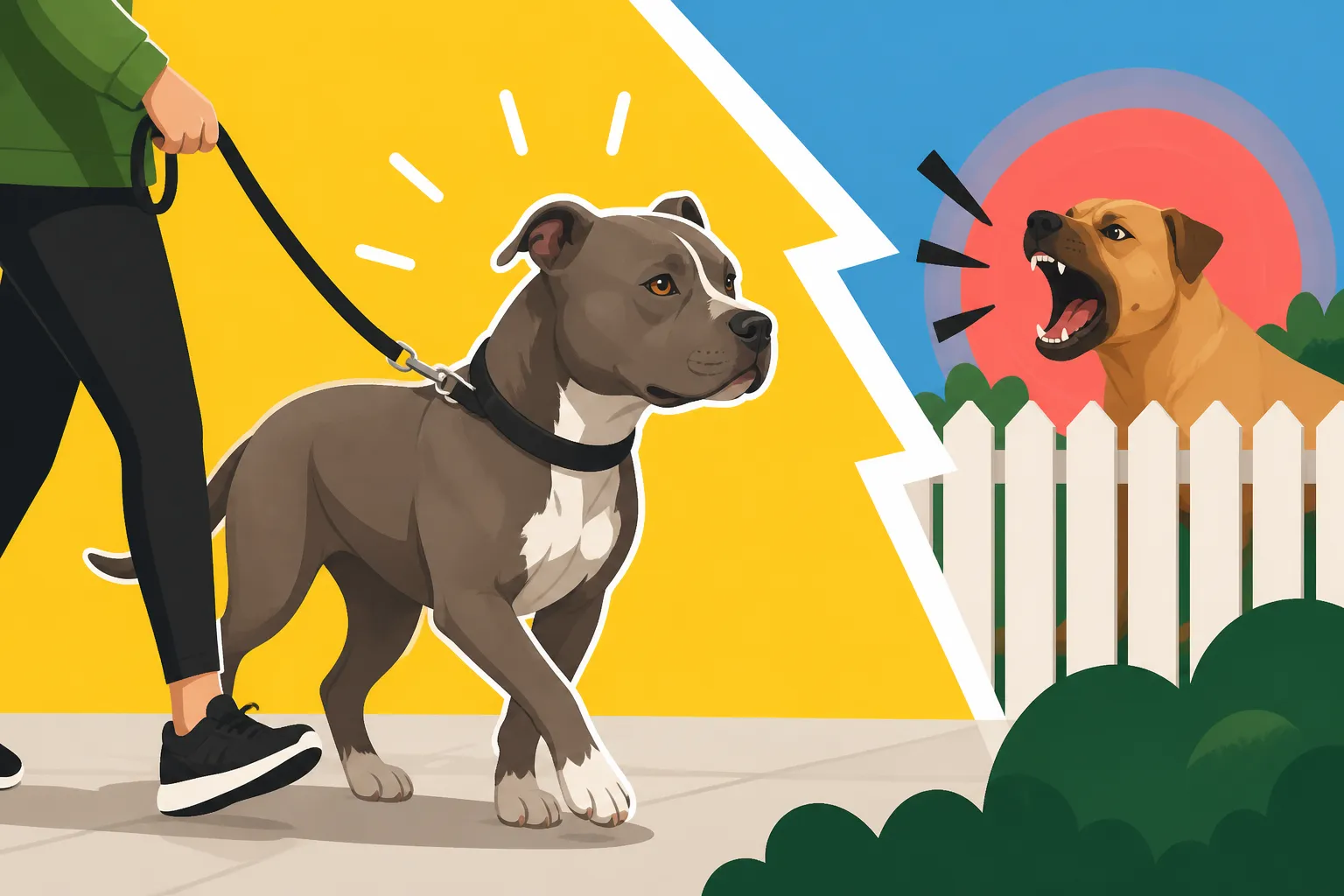
Teaching a Pit Bull to Walk Past a Barking Dog
Oh, the sheer frustration of walking your strong, eager Pit Bull and encountering another dog who decides to serenade the street with barks and lunges! It’s a moment many of us dread: the tightening leash, the sudden explosion of energy, the feeling of eyes on you, judging. You just want a peaceful stroll, but instead, you’re left feeling embarrassed, exhausted, and like you’ve lost control. This guide is here to help you navigate those challenging situations, offering practical strategies to teach your Pit Bull to walk calmly past even the most boisterous barking dogs.
Understanding Why Barking Dogs Trigger Your Pit Bull
It’s easy to feel like your Pit Bull is just being "naughty" or "aggressive" when they react to another dog, but often, there's a deeper reason for their outburst. Understanding these underlying motivations is the first step toward effective training and building a calmer walking experience.
The Instinctual Drive
Many Pit Bulls, like other strong-willed breeds, possess a potent mix of instinctual drives that can be ignited by a barking dog. It’s not necessarily malice; it’s often deeply rooted behaviors.
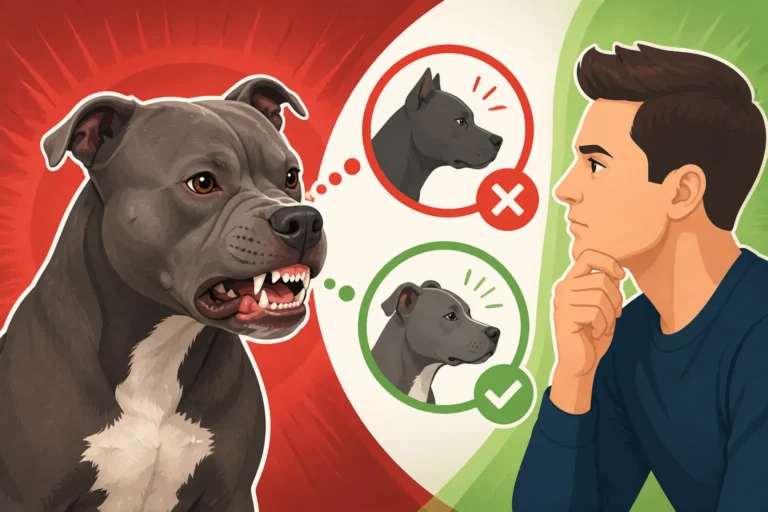
Think about it: the sudden, sharp sound of barking, especially if it's accompanied by lunging or fence-fighting from the other dog, can trigger a variety of responses in your Pit Bull. For some, it might tap into a strong prey drive, seeing the other dog's frantic movements as something to chase or engage with. For others, it could be territoriality – a sense of needing to protect you or their immediate space. And sometimes, it's simply fear or insecurity. A barking dog can be intimidating, and your Pit Bull might react defensively to keep that perceived threat at bay. We often hear stories of Pit Bulls being misunderstood, and these reactive moments can certainly be misinterpreted by onlookers. It's crucial to remember that these reactions often stem from over-excitement, frustration at not being able to investigate or engage, or a desire to communicate, rather than outright aggression. Your dog isn't trying to be difficult; they're reacting to a situation they perceive in a certain way.
Leash Frustration and Barrier Reactivity
One of the biggest culprits behind leash reactivity in strong dogs like Pit Bulls is what trainers call "leash frustration" or "barrier reactivity." It’s a common scenario that can escalate a simple encounter into a chaotic one.
Imagine you really want to get to something or someone, but you’re held back by an invisible, unyielding force. Frustrating, right? That’s often what happens to a leashed Pit Bull. When they see another dog and want to go investigate, play, or even just assess the situation, the leash prevents them from doing so naturally. This restraint can build up immense frustration. The more they pull and strain against the leash, the more that tension amplifies their internal state. When another dog starts barking, it acts as a catalyst, pouring gasoline on an already burning fire of frustration. The inability to move freely, to greet appropriately (or disengage if they feel uncomfortable), means that all that pent-up energy and emotion explodes in a frantic display of barking, lunging, and pulling. This is why you might notice your dog is perfectly fine with other dogs off-leash in a secure area, but a complete mess on-leash. The leash, unfortunately, becomes part of the problem, intensifying their response to the perceived barrier between them and the other dog.
Essential Tools and Management Strategies for Safer Walks
Before diving into intensive training, setting yourself and your Pit Bull up for success with the right equipment and smart management strategies is vital. These aren’t just temporary fixes; they are foundational elements for building better habits and safer, calmer walks.
Choosing the Right Equipment
When you're dealing with a powerful dog like a Pit Bull, especially one prone to reactivity, your walking equipment is your best friend. It needs to give you control without causing pain, and it needs to be comfortable for your dog.
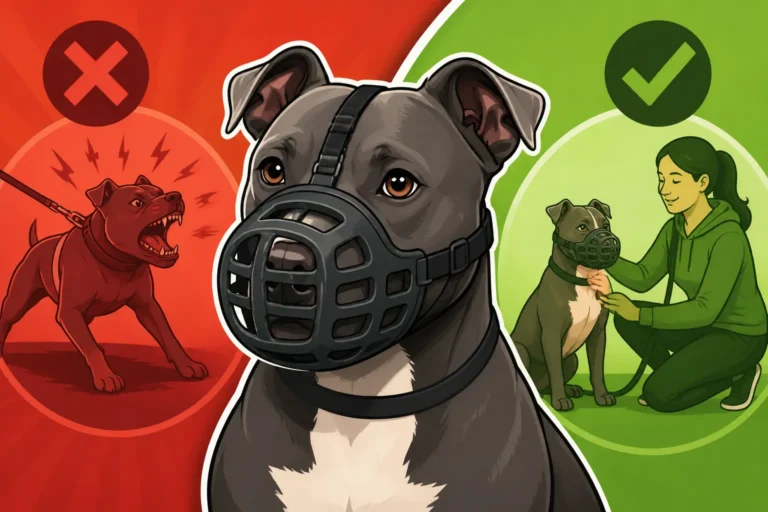
Let’s talk harnesses. Many people default to a back-clip harness, and while these are fine for dogs that don’t pull, they can actually encourage pulling in strong dogs by engaging their opposition reflex – essentially, the more you pull back, the more they pull forward. For a Pit Bull that's prone to tugging hard, a front-clip harness can be a game-changer. It redirects their forward momentum, turning them gently to the side when they pull, making it much harder for them to drag you down the street. Another excellent option, often used in conjunction with a harness for extra security or on its own for sensitive dogs, is a head halter. A head halter fits over your dog's snout and behind their ears, allowing you to gently guide their head and, by extension, their body. It gives you incredible steering ability, making it easier to redirect your Pit Bull's attention away from a barking dog. Imagine trying to steer a car by its bumper versus its steering wheel – that’s the difference a head halter can make. Just be sure to properly introduce any new equipment with positive reinforcement so your dog forms a good association with it. You can find many durable, well-fitting options on platforms like Amazon that are designed to hold up to the strength of a Pit Bull. Exploring options for Harness Fit Across a Broad Pit Bull Chest is always a good idea to ensure comfort and effectiveness.
Here’s a quick overview of common walking equipment:
| Equipment Type | Pros | Cons | Best Use Case |
|---|---|---|---|
| Flat Collar | Simple, easy for ID tags, widely available | Minimal control for pulling, can strain neck/throat | Well-trained, non-pulling dogs |
| Back-Clip Harness | Comfortable, good for dogs without pulling issues | Can encourage pulling, less control for strong dogs | Casual walks, dogs with no reactivity |
| Front-Clip Harness | Redirects pulling, better control for strong dogs | Can tangle legs if poorly fitted, some dogs dislike front pressure | Pit Bulls who pull or are leash reactive |
| Head Halter | Excellent control and steering, redirects focus | Requires careful introduction, some dogs resist it at first | Strong pullers, highly reactive dogs |
| Martingale Collar | Prevents slipping off, provides gentle correction without choking | Still can cause neck strain if constantly pulled, not for every dog | Sighthounds, escape artists, Pit Bulls with thick necks |
Proactive Management and Acknowledging Your Dog's Space
The goal isn't always to "fix" your Pit Bull's reaction in the moment, but often to prevent it from happening in the first place. Proactive management is about being a savvy handler, anticipating potential triggers, and giving your dog the space they need.
This means becoming a master of observation. As you walk, scan ahead, look around corners, and listen for approaching dogs. If you spot a potential trigger – another dog on a porch, a person walking a dog towards you, or even just the sound of distant barking – act before your Pit Bull notices. The easiest strategy is creating distance. This could mean simply crossing the street, ducking behind a parked car or a bush to create a visual block, or making a swift U-turn and heading in the opposite direction. Your Pit Bull has a "bubble" of comfort, an invisible boundary within which they can handle a trigger calmly. Outside that bubble, they're likely to react. Your job is to keep them outside that reactive threshold as much as possible. This isn’t about coddling; it’s about strategically avoiding over-stimulation so that when you do engage in training, your dog is in a state where they can actually learn. Think of it as managing the environment so your dog can succeed. Mastering this can significantly reduce the number of reactive incidents and make walks far more enjoyable for both of you. It's akin to what we discuss when Crossing the Street With a Reactive Pit Bull.
Step-by-Step Training for Calm Encounters
Management is excellent for damage control, but true progress comes from targeted training. We want to change your Pit Bull's emotional response to barking dogs from "OMG, chaos!" to "Oh, a barking dog means good things!"
"Look at That" (LAT) or Engage-Disengage Game
This is a fantastic counter-conditioning and desensitization technique that actively changes your Pit Bull's association with barking dogs. It’s all about creating a positive link.
Here’s how it works:
- Spot the Trigger (at a distance): As you walk, and before your Pit Bull starts reacting, identify a barking dog. The key here is distance – you need to be far enough away that your dog notices the other dog but doesn't feel the need to react strongly. This is their threshold.
- Mark the Sight: The very instant your Pit Bull looks at the barking dog (without reacting), say a clear marker word like "Yes!" or click your clicker.
- Treat Time: Immediately after your marker, give your Pit Bull a high-value treat – something truly irresistible like boiled chicken, cheese, or hot dogs. The treat should appear after they've looked at the other dog, and before they react.
- Repeat: Continue this sequence. Your dog looks at the barking dog, you mark, you treat. They look again, you mark, you treat. The goal is for your Pit Bull to start looking at the barking dog and then voluntarily turn their head back to you, anticipating the treat. This is the "disengage" part.
- Gradually Decrease Distance: Over many, many sessions, as your Pit Bull consistently looks at the barking dog and then back at you calmly, you can slowly, incrementally reduce the distance. If your dog starts reacting, you've moved too close, too fast. Go back to a comfortable distance.
The beauty of LAT is that you're teaching your Pit Bull that the sight of a barking dog predicts something wonderful (a treat!), rather than something stressful or exciting. This fundamentally changes their emotional response over time. Patience is paramount here, and don't be afraid to use High-Value Treats That Hold a Pit Bull's Focus to make this game extra rewarding. Many trainers, including those that design programs like BAXTER & Bella, advocate for similar positive reinforcement methods.
Emergency U-Turn and Redirection
Despite your best efforts at proactive management and LAT training, there will be times when a barking dog pops out unexpectedly, or your Pit Bull is simply having an off day and reacts. In these moments, you need a reliable "escape" plan.
The Emergency U-Turn is your best friend. It’s a swift, decisive move to get you and your Pit Bull out of a triggering situation quickly and safely.
- Spot the Imminent Reaction: You see your Pit Bull stiffen, ears perk, or focus intensely on a barking dog, and you know a full-blown reaction is about to happen.
- Clear Command: With enthusiasm, say a command like "Let's go!" or "This way!" while simultaneously taking a large step in the opposite direction.
- Swift Turn and Treat: Gently but firmly guide your Pit Bull with the leash to turn 180 degrees with you. As soon as they are moving in the new direction, reward them with a steady stream of high-value treats while you continue to walk away from the trigger. The treats should keep coming for several steps, reinforcing the act of turning and moving with you.
- Practice in Low-Distraction Areas: This isn't a command you want to only practice during emergencies. Drill it in your yard, then on quiet streets, rewarding every successful, quick turn. The goal is for it to be a fluid, automatic response for your Pit Bull.
This technique is incredibly effective because it removes your Pit Bull from the stressful situation without punishment, while simultaneously rewarding them for disengaging and moving with you. It teaches them that when things get too much, you’re there to guide them to safety, and positive things happen when they follow your lead. Remember, even during a swift redirection, the principles of Positive Reinforcement Training With a Pit Bull should be applied.
Building Focus and Impulse Control
Ultimately, much of a Pit Bull's reactive behavior stems from a lack of focus on their handler and difficulty controlling their impulses when faced with high-value distractions. Strengthening these areas through various drills and games will have a ripple effect on their leash manners.
- "Watch Me" or "Look": This is a cornerstone command. Start in a quiet environment. Hold a treat by your nose and say "Watch me" or "Look." The instant your Pit Bull makes eye contact, say "Yes!" and give the treat. Gradually increase the duration of eye contact and introduce minor distractions. This teaches your dog to willingly offer you attention, even when there are other interesting things around.
- "Leave It": Teach your Pit Bull to ignore tempting items on the ground or even other dogs. Start with a treat on the floor, covered by your hand. Say "Leave it." When your dog looks away or disengages from trying to get the treat, reward them with a different treat from your other hand. Build up to leaving tempting items uncovered, then move to more distracting environments. This directly helps with Building a Pit Bull's Impulse Control.
- Impulse Control Games:
- The Doorway Game: Before going through any doorway (your house, a gate, the car), ask your Pit Bull to sit and wait. Only when they are calm and you release them do they get to go through. This translates to waiting calmly when excitement is high.
- "Find It" or Scent Work: Use their incredible nose! Scatter treats in the grass or hide them around the house. This engages their brain, burns mental energy, and teaches them to focus on a task even with potential distractions. You can find durable snuffle mats and puzzle feeders on Amazon that are perfect for this.
Consistency is key for all these exercises. The more you practice these foundational skills in controlled environments, the better your Pit Bull will be at maintaining focus and impulse control when faced with the real-world challenge of a barking dog.
Consistency, Patience, and Realistic Expectations
Let's be real: transforming a reactive Pit Bull into a zen master on walks doesn't happen overnight. This journey demands commitment, understanding, and a whole lot of grace for both you and your dog.
The Marathon, Not a Sprint
Training a Pit Bull to calmly walk past a barking dog is a marathon, not a sprint. There will be good days where you feel like a dog-training wizard, and then there will be days where you wonder if you’ve made any progress at all. This is normal.
Every successful calm encounter, no matter how small, is a victory. Every time your Pit Bull looks at you instead of lunging, every successful U-turn, every second they spend not reacting is a win worth celebrating. Don't let the occasional setback discourage you. Reactive behavior is deeply ingrained and often emotionally charged. It takes time to rewire those associations and build new, positive habits. Consistency is the most powerful tool in your arsenal. Stick to your training plan every single walk, even on days you don't feel like it. The more your Pit Bull experiences positive outcomes around other dogs, the more those new neural pathways strengthen. Remember that pressure or harsh handling tactics are often counterproductive and can erode trust, as we've discussed when examining Why Harsh Handling Backfires on a Pit Bull. Instead, focus on building confidence and a positive relationship.
Seeking Professional Guidance
While this guide offers a solid foundation, there are times when an expert eye and personalized plan are invaluable. Don't hesitate to seek professional help if you're feeling overwhelmed or not seeing the progress you hoped for.
Red flags that it might be time to call in a professional include escalating aggression (where your Pit Bull's reactions are becoming more intense or pose a risk of injury), if you're consistently feeling unsafe or losing control, or if your frustration is high and impacting your relationship with your dog. A certified professional dog trainer or a veterinary behaviorist experienced with Pit Bulls and reactivity can observe your dog's specific triggers, body language, and the nuances of your interactions. They can then tailor a training plan that addresses your unique situation, offering guidance on timing, technique, and management that might be hard to figure out on your own. They can also help you identify if there are underlying medical issues or anxiety contributing to the reactivity. Finding a trainer who understands the specific needs and challenges of training a Pit Bull is crucial; ensure you are Vetting a Trainer Before Booking a Pit Bull.
Understanding Your Pit Bull's Unique Needs
Owning a Pit Bull comes with its own set of responsibilities, and unfortunately, navigating public perception is a significant part of it. Training your Pit Bull to walk calmly isn't just for your peace of mind; it's also about being a responsible ambassador for the breed.
Pit Bulls are often unfairly judged and placed under a magnifying glass by the general public. A reactive incident on a walk, even if it's born of frustration rather than aggression, can unfortunately reinforce negative stereotypes. Therefore, diligent advocacy and a commitment to high standards of training are paramount for Pit Bull owners. This training isn't just about managing a behavior; it's about showcasing the true nature of your loving, loyal companion. By putting in the work, you're not only improving your dog's quality of life and your own, but you're also helping to chip away at the misconceptions surrounding the breed. Remember, your Pit Bull often gets Why a Pit Bull Gets Less Benefit of the Doubt, so every calm, controlled walk is a small victory for them and for their reputation. It’s about setting them up for success in a world that often starts with a bias against them.
Disclaimer
This article is for general informational purposes only and does not constitute professional advice. Laws, prices and regulations vary by location and change over time. Consult a qualified professional for guidance on your specific situation.