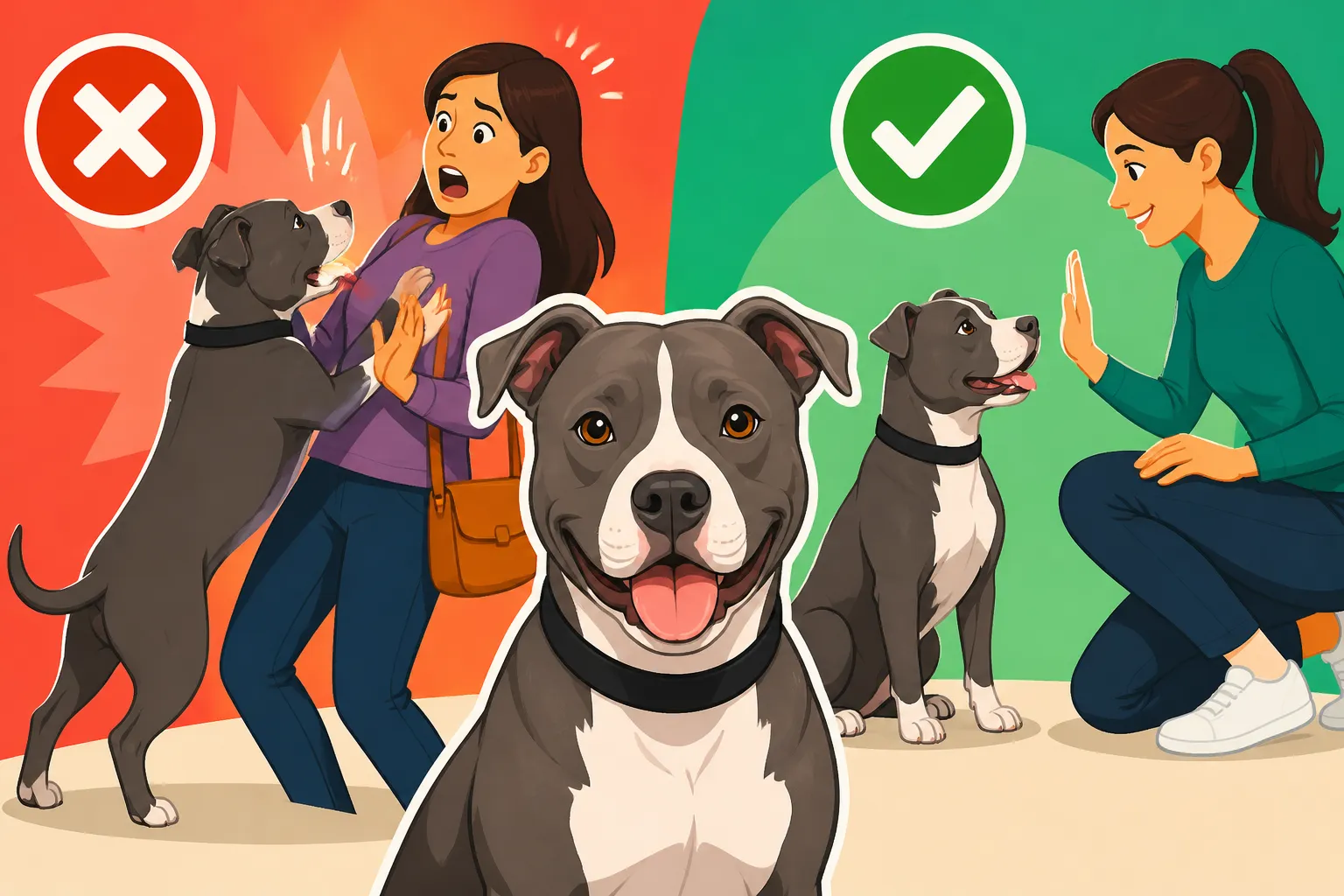
Teaching a Pit Bull Not to Jump on Guests
It can be incredibly frustrating – and sometimes downright embarrassing – when your beloved Pit Bull decides that the best way to greet every new person who walks through your door is with an enthusiastic, full-body jump. It might seem endearing to them, but for guests, especially those who aren't dog-savvy or are perhaps a little unsteady on their feet, it can be startling, overwhelming, or even dangerous. This guide will walk you through practical, empathetic strategies to teach your Pit Bull calmer, more polite ways to welcome visitors, ensuring happier greetings for everyone.
Understanding Why Your Pit Bull Jumps on Guests
Before we dive into the "how-to," it's crucial to understand the "why." Your Pit Bull isn't jumping to be naughty; they're usually just communicating in the most effective way they know how, or they're overwhelmed by their own excitement. Recognising the root cause can help you tailor your training approach.
The Roots of the Greeting Jump
Think about it from your dog's perspective. When someone new comes in, especially someone they're excited to see, they want to get closer. Their world is often centered on smell and eye-level interactions with other dogs. For humans, however, that eye-level is much higher. A jump can be an attempt to get closer to your face, to sniff the interesting new smells on your clothes, or simply to get your undivided attention. It's often a learned behavior, too. Perhaps when they were a tiny puppy, a little hop was cute and earned them pets and praise. As they grew, that little hop turned into a full-on leap, but the reinforcement (even if it was just an accidental pat or a "no, stop it!") might have continued.
Dogs, particularly breeds like Pit Bulls that are often very people-oriented and eager to please, thrive on interaction. If jumping has ever resulted in any form of attention – even negative attention like pushing them away or a stern "off!" – they might perceive that as a reward. It's still attention, after all, and they might think, "Well, something happened when I jumped, so I'll try that again!" It's rarely malicious; it's just a dog trying to interact.
Excitement and Lack of Impulse Control
Pit Bulls are renowned for their strength, enthusiasm, and sometimes, a tendency to get incredibly excited when new stimuli arrive. A new guest is a very exciting stimulus! This surge of excitement can make it genuinely hard for them to control their impulses. Imagine a toddler who sees their favorite grandparent – they might squeal, run, and throw themselves into a hug. A Pit Bull's excited jump is often a similar emotional outburst, just in a more physically powerful package.
This lack of impulse control isn't a sign of a "bad" dog; it's a sign of a dog that hasn't been taught how to manage its arousal levels in stimulating situations. They might genuinely want to be calm, but their instincts take over. This is where training comes in, helping them to understand that calm behavior leads to the rewards they crave, like attention and petting. It's about teaching them an alternative, acceptable way to channel that excitement. For a deeper dive into managing their energy, consider reading about Building a Pit Bull's Impulse Control.
Attention-Seeking Behavior
Another common reason for jumping is simply attention-seeking. Your Pit Bull loves you and loves guests. If they're not sure how else to get noticed, a big jump is certainly effective. They might have learned that when they jump, people look at them, talk to them, or touch them. Even if it's a quick push away, that's still physical contact and an acknowledgment of their presence.
This can be particularly prevalent if your Pit Bull doesn't get a lot of structured attention or mental stimulation throughout the day. A bored dog might resort to more boisterous behaviors to get a reaction. When a guest arrives, it's a golden opportunity for interaction, and if jumping has worked in the past, they'll likely try it again. The goal here is to teach them that calm behavior is what earns them the positive attention they're seeking, not the jumping.
Setting Up for Success: Management Before Training
Effective training isn't just about teaching new behaviors; it's also about managing the environment to prevent the unwanted behavior from happening in the first place. This is especially true when working with a strong, enthusiastic breed like a Pit Bull. Setting up your home and routine to minimise jumping opportunities gives you a crucial head start.
Creating a Calm Entryway Environment
The entryway is often the most chaotic part of a guest's arrival. This is where your Pit Bull's excitement levels can skyrocket. To counteract this, think about how you can make that space calmer. Can you install a baby gate or a sturdy dog gate a few feet back from the door? This allows your Pit Bull to see and hear guests without being able to physically launch themselves. A strong, easily installed gate from a brand found on Amazon can be a real game-changer here, giving you a physical barrier to manage the initial rush.
Consider having a designated "place" for your dog to go when the doorbell rings – perhaps a mat or their bed that's a safe distance from the door. Start training this "place" command before guests arrive, using positive reinforcement. When the doorbell rings (or someone knocks), immediately direct your Pit Bull to their place. Reward them heavily for staying there, even if it's just for a few seconds initially. This teaches them that the doorbell means "go to your spot" rather than "time to jump on new people!"
Using Leashes and Gates Effectively
Sometimes, a physical barrier isn't enough, or you need more direct control during that crucial greeting period. This is where a leash comes in handy, even indoors. Before a guest arrives, put your Pit Bull on a leash. This allows you to maintain control of their body, preventing them from jumping. You can gently guide them away from the door or ask for a sit as the guest enters. The leash isn't for punishment; it's a tool for gentle guidance and management.
Combine the leash with your gate strategy. If your Pit Bull is behind a gate on a leash, you have double the control. You can keep them at a distance, ask for a sit, and reward them for calm behavior. Once they're calm, and only if they are calm, you can slowly introduce them to the guest. If they start to get too excited, you can use the leash to guide them back behind the gate or ask for another "sit" until they settle. Consistency with this approach is key. You might find our article on Pit Bull Leash Manners and Physical Strength helpful in developing better control.
Pre-empting the Jump Before It Happens
The best defense is a good offense, right? Instead of waiting for the jump to happen and then reacting, try to pre-empt it. This involves being incredibly observant of your Pit Bull's body language. Do they start to stiffen up when they hear the car pull up? Do their ears perk up, or do they start pacing as someone approaches the door? These are all signs that excitement is building.
At these early stages, before the energy fully escalates, you have a better chance of redirecting their behavior. Immediately ask for an incompatible behavior, something they can't do while jumping. A "sit" or a "down" command is perfect. Reward them immediately and generously for complying. If they offer a sit on their own as a guest approaches, even better – shower them with praise and treats! The goal is to catch them before the jump, interrupt the thought process, and reward the calm alternative. This can take a lot of practice, but with enough repetition, your Pit Bull will start to associate guests with calm greetings, rather than jumping. Consider incorporating advice from Teaching a Pit Bull to Sit Before Every Door for consistent entry manners.
Step-by-Step Training to Stop Jumping
Once you've got your management strategies in place, it's time to actively teach your Pit Bull the polite way to greet guests. This isn't a one-and-done process; it requires patience, consistency, and the cooperation of your guests.
Teaching an Alternate Behavior (Four on the Floor)
The core principle here is to teach your Pit Bull that having "four on the floor" (all four paws on the ground) is the only way to get attention and interaction from guests. Jumping gets them nothing; calm behavior gets them everything they want.
- Start with "Sit": This is your foundation. Practice the "sit" command in various environments, with increasing distractions. Use high-value treats that your Pit Bull absolutely loves to motivate them. Make "sit" automatic.
- Introduce "Four on the Floor" (without guests initially):
- Have someone approach your Pit Bull. If your dog starts to get excited, stand still.
- The moment all four paws are on the ground, even for a split second, immediately mark the behavior with a verbal cue like "yes!" or a clicker, and give a treat.
- Repeat this many, many times. The goal is for your dog to understand that standing calmly with all paws down is what earns the reward.
- Practice with mild distractions: Gradually increase the level of distraction. Have someone walk past, then approach slightly, always rewarding "four on the floor." You can find excellent resources on positive reinforcement techniques through programs like BAXTER & Bella, which often emphasize these types of foundational skills.
Consistency is paramount. Every time your Pit Bull jumps, they are practicing the unwanted behavior. Every time they are rewarded for four-on-the-floor, they are practicing the desired behavior.
Consistent Practice with Controlled Greetings
This is where your guests come in. Explain your training plan to them before they enter your home. This is crucial.
- The "Pre-Brief": Tell your guest, "My dog is learning not to jump. When you come in, please ignore them if they jump. Only pet them and give them attention when all four paws are on the floor. If they jump, turn your back and walk away."
- Controlled Entry:
- Have your Pit Bull on a leash (as per our management strategy) or behind a gate.
- As the guest enters, ask your Pit Bull to "sit" or "place." Reward them for holding it.
- If they remain calm with all four paws on the floor, allow the guest to approach slowly.
- Instruct the guest to give a quick pet or treat only while your dog is calm and on the floor. If the dog jumps, the guest immediately stands up, turns their back, and ignores them. No eye contact, no talking. This removes the reward (attention) for jumping.
- Repeat and Fade: Repeat this process several times during the visit. Each time, your Pit Bull should be learning that calm behavior gets them the desired interaction. Over time, you can gradually reduce the reliance on the leash or gate as your Pit Bull demonstrates consistent calm greetings.
Remember, a Pit Bull is often judged by a stricter standard, so nailing this skill is not only good manners but also helps shape public perception. You can also explore Socializing a Pit Bull Around Strangers to broaden their positive experiences.
Involving Guests in the Training Process
It truly takes a village, or at least a cooperative guest list, to properly train out jumping. Without guests' understanding and participation, your efforts will be undermined.
- Educate Your Guests: Provide them with clear, simple instructions. Explain why you're doing this – for safety, for better manners, and to help your dog be the best version of themselves. Most friends and family will be happy to help once they understand. You can even keep a jar of high-value treats (like small pieces of cooked chicken or cheese) near the door for them to use as rewards when your dog is calm. This is an excellent way to use resources found on Amazon for practical training aids.
- The "Silent Treatment" for Jumping: Emphasize the "no attention for jumping" rule. This is harder than it sounds, as our instinct is often to push a dog down or say "no." But even that is attention. The guest must completely disengage – turn their back, fold their arms, avoid eye contact, and remain silent. The moment the dog's paws are on the floor, they can praise and interact.
- Gradual Introduction of Petting: Once your Pit Bull is consistently keeping all four on the floor, guests can gradually introduce more interaction. Start with a quick scratch behind the ear while the dog is sitting. If the dog stays down, they can continue. If the dog tries to jump, the attention immediately stops. This teaches your dog that calm interaction continues the petting, while jumping stops it.
This method requires patience from everyone involved. Some Pit Bulls learn quickly, while others, especially those with deeply ingrained jumping habits, will take longer. But with consistency, your Pit Bull will learn that polite greetings are far more rewarding. For further tips, consider reading Teaching a Pit Bull to Greet Calmly.
Troubleshooting and Long-Term Consistency
Training a behavior is one thing, but maintaining it over time and troubleshooting when things go wrong are entirely different challenges. Pit Bulls are smart and can be very persistent, so your approach needs to be equally consistent and adaptable.
What to Do When the Jumps Still Happen
Let's be real: training isn't a straight line. There will be days when your Pit Bull backslides, or a particularly exciting guest sends them over the edge. Don't get discouraged!
- Revert to Management: If your Pit Bull is repeatedly jumping, it means they're not ready for the level of freedom you're giving them. Go back to basics. Use the leash. Use the gate. Ensure every single greeting is controlled. It's better to prevent the jump than to try to correct it after the fact.
- Increase the Value of the Reward: Are your treats high-value enough? For an incredibly exciting event like a guest arriving, plain old kibble might not cut it. Bring out the cheese, the hot dogs, the boiled chicken – whatever your Pit Bull considers the absolute best. Check out High-Value Treats That Hold a Pit Bull's Focus for ideas.
- Shorten the Exposure: If your Pit Bull can't maintain "four on the floor" for more than a few seconds, that's okay. Have the guest greet them for two seconds of calm, then step back and ignore. Build up the duration of calm interaction gradually.
- Practice with "Set-Up" Guests: Enlist friends or family members who are willing to come over specifically to practice greetings, without staying for a long visit. They can come and go multiple times, allowing your dog to practice calm greetings in a lower-stakes scenario.
It's about finding the sweet spot where your dog can succeed. If they're failing, you might be asking too much too soon, or the environment is too stimulating.
Maintaining Training Beyond the Puppy Stages
The behaviors you instill in your Pit Bull puppy should ideally last their entire life. But adult dogs, even well-trained ones, can sometimes test boundaries or revert to old habits, especially if rules become lax.
- Continued Reinforcement: Don't stop rewarding good behavior just because your Pit Bull "knows" not to jump. Occasionally, when a guest arrives and they offer a perfect calm sit, still give them a super-tasty treat and praise. This keeps the behavior strong and reinforces that it's always the desired action.
- Varied Environments: Practice greetings in different contexts. If your Pit Bull only greets calmly at home, what happens if you visit a friend's house? Start with low-distraction environments and gradually increase the complexity, always reinforcing "four on the floor."
- Involve Everyone: Ensure everyone in the household, and frequent visitors, are on the same page. If one person allows jumping, it confuses your Pit Bull and makes training harder for everyone else. This consistent messaging is vital for a breed that responds so well to clear leadership.
Think of it like exercising a muscle – you can't just work out once and expect to be strong forever. You need to maintain the effort to maintain the results.
Building a Positive Public Perception
For Pit Bulls, good manners aren't just polite; they're vital for their reputation. A Pit Bull that jumps on people, even playfully, contributes to negative stereotypes and can unintentionally cause fear or concern. Conversely, a calm, well-mannered Pit Bull ambassador can do wonders for the breed's image.
Consider how an incident where your enthusiastic jumper accidentally knocks over a child or an elderly person could severely impact not only your dog's future but also the perception of Pit Bulls in your community. That's a heavy burden, but it highlights why this particular training is so important. When your Pit Bull greets guests politely, sitting calmly and waiting for an invitation to interact, it speaks volumes about their temperament and your responsible ownership. It changes minds and fosters understanding. Our article, Why a Pit Bull Gets Less Benefit of the Doubt, elaborates on the importance of these public displays of good behavior.
By dedicating time to teach your Pit Bull not to jump, you're not just training a dog; you're actively working to make them a cherished and respected member of society, defying the unfair biases that still exist. It’s an investment in their future and a gift to your community.
| Strategy | Description | Key Benefit |
|---|---|---|
| Management | Leashes, gates, designated "place" command before guests arrive. | Prevents unwanted behavior from happening, reduces opportunities for jumping. |
| Alternate Behavior | Teach "sit" or "four on the floor" as the default greeting. | Gives the dog a clear, acceptable action to perform instead of jumping. |
| Consistent Practice | Controlled greetings with guest cooperation; immediate reward for calm. | Reinforces the desired behavior and removes reinforcement for jumping. |
| High-Value Rewards | Use super-tasty treats to motivate calm behavior during greetings. | Increases motivation for the dog to perform the desired action. |
| Guest Involvement | Educate guests to ignore jumps and reward calm, "four on the floor" behavior. | Ensures consistent messaging and prevents accidental reinforcement of jumping. |
Disclaimer
This article is for general informational purposes only and does not constitute professional advice. Laws, prices and regulations vary by location and change over time. Consult a qualified professional for guidance on your specific situation.