Socializing a Pit Bull Around Strangers
It’s a scenario many Pit Bull owners dread: you’re out on a walk, enjoying some fresh air with your beloved companion, when someone new approaches. Suddenly, your calm, happy dog transforms. Maybe they get overly excited, jumping and barking, or perhaps they become stiff, hesitant, and even a little fearful. This immediate shift in behavior, often misunderstood by strangers, can be incredibly frustrating and even embarrassing, making you feel judged and your dog unfairly labeled. This guide is all about navigating those tricky encounters, understanding the nuances of Pit Bull socialization, and empowering you with practical strategies to help your dog interact calmly and confidently with new people.
Understanding the Nuances of Pit Bull Temperament
Before we dive into the nitty-gritty of training, it’s crucial to acknowledge the unique position Pit Bulls occupy in public perception. These dogs are often unfairly characterized, and this can lead to unwarranted fear or misunderstanding from strangers, which in turn can impact your dog's interactions. Understanding your dog's natural tendencies and how they perceive the world is the first step towards effective socialization.
Dispelling the "Aggressive" Myth: What Temperament Tests Show
The persistent myth of the "aggressive Pit Bull" weighs heavily on owners. It's a stereotype that creates a constant uphill battle, making every public interaction a potential proving ground. What many people don't realize is that temperament tests, like those conducted by the American Temperament Test Society (ATTS), often show Pit Bull type dogs performing exceptionally well, sometimes even above the average for all breeds tested. These tests assess a dog's reaction to various stimuli, including strangers, unusual sights, and sounds, looking for signs of unprovoked aggression, panic, or shyness. The results consistently demonstrate that a well-bred, well-socialized Pit Bull is no more predisposed to aggression than many other popular breeds.
The challenge, however, isn't just about the dog's inherent temperament; it's about the breed's reputation and how it colors every interaction. When a Labrador jumps on someone out of excitement, it's often seen as boisterous. When a Pit Bull does the same, it can be perceived as an attack. This is why our approach to socializing a Pit Bull around strangers has to be even more deliberate, consistent, and proactive than with other breeds. We're not just training our dogs; we're often managing public perception, too. You can learn more about how these evaluations assess dogs in What ATTS Pass Rates Show About Pit Bull Temperament.
Reading Your Pit Bull's Body Language Around New People
Your Pit Bull is constantly communicating, and learning to interpret their body language is your superpower in guiding stranger interactions. Before a word is even exchanged, your dog is sending signals. A loose, wagging tail, soft eyes, and relaxed posture usually indicate a friendly, open disposition. However, a stiff body, a low or tucked tail, flattened ears, yawning (when not tired), lip-licking, or averting gaze can signal discomfort, stress, or even fear. An excited Pit Bull might have a stiff, high tail wag, a forward lean, and intense focus, which can be misread by strangers who aren't familiar with dog body language.
It's crucial to distinguish between genuine friendliness, over-excitement, and apprehension. An overly excited dog might jump and mouth out of sheer joy, but this can be intimidating or even painful for a stranger. A fearful dog, on the other hand, might react defensively if pushed too far. By carefully observing your Pit Bull’s cues—even subtle ones—you can intervene before a situation escalates. For instance, if you see your dog stiffen slightly or give a quick lip lick as someone approaches, you know to create more space or redirect their attention before the stranger gets too close. Understanding these signals helps you advocate for your dog and prevent uncomfortable or unsafe situations for everyone involved. Reading a Pit Bull Before a Scuffle Starts can offer more insights into canine communication.
Why Early Experiences Shape Future Interactions
Just like children, puppies have critical developmental windows where experiences profoundly shape their adult personalities and behaviors. For Pit Bulls, the period from about 3 weeks to 16 weeks is especially vital for socialization. During this time, positive exposure to a wide variety of sights, sounds, people, and experiences helps build a resilient, confident adult dog. If a Pit Bull puppy primarily encounters only family members during this period, or worse, has negative experiences with strangers, they can grow up to be wary, fearful, or overly protective around new people.
Imagine a young Pit Bull puppy, still a bit wobbly on its feet, meeting gentle, calm strangers who offer a tasty treat and soft praise. These positive associations imprint deeply, teaching the puppy that new people are a source of good things. Conversely, a puppy who only experiences strangers looming over them, making loud noises, or being handled roughly might develop lifelong fear or suspicion. These early impressions are foundational. Even if you adopt an older Pit Bull, understanding their likely early experiences helps you tailor your approach, as you might need to actively work on positive counter-conditioning rather than simple exposure. The goal is to create a positive emotional response to novelty, turning potential fear or over-excitement into calm curiosity.
The Critical Window for Early Socialization
Socializing your Pit Bull effectively doesn't just happen; it's a deliberate, ongoing process that begins the moment you bring them home. While every stage of a dog's life requires attention, the early months are particularly crucial for building a strong foundation for future interactions with strangers.
The Puppy Period: From Eight Weeks to Four Months
This golden window, roughly from eight weeks to four months of age, is paramount for Pit Bull puppies. During this time, their brains are like sponges, soaking up every experience and forming associations. Positive, controlled exposure to a diverse range of people is absolutely essential. This means gentle interactions with men, women, children, people wearing hats, glasses, or uniforms, people of different ethnicities, and varying heights and builds. Each interaction should be short, positive, and ideally involve treats or praise.
Think about it this way: if your Pit Bull puppy only ever sees your immediate family, they might grow up associating unfamiliar people with novelty and potential threat, rather than something benign or even positive. I remember one client, Sarah, who lived alone with her Pit Bull puppy, Duke. She was diligent about taking him to puppy classes, but realized she needed to do more. She started inviting a few trusted friends over each week, each one bringing a small, high-value treat to offer Duke after he had calmly approached and sniffed them. She also took him to quiet public places, like a park bench, just to observe people from a distance, without direct interaction. These small, consistent efforts built Duke's confidence, teaching him that strangers weren't scary but could actually be a source of good things. The Sounds and People a Pit Bull Puppy Needs expands on this further.
Beyond Puppyhood: The Importance of Continued Exposure
While the puppy period is critical, socialization is not a one-and-done event. It's a lifelong commitment. As your Pit Bull matures, especially through their "teenage" months (roughly 6-18 months), they might go through fear periods or revert to some cautious behaviors they seemed to outgrow. Continued, positive exposure helps reinforce good habits and prevents regression. An adult Pit Bull who isn't regularly exposed to new people might become rusty, or even develop anxieties they didn't have as a puppy.
Imagine you have a wonderfully socialized Pit Bull who loves people. If you move to a new area where social interactions are less frequent, or if your lifestyle changes, you might notice them becoming a little more reserved or unsure around strangers. This isn't a failure of their early socialization; it's a natural dulling of a skill without practice. Therefore, make a conscious effort to keep introducing your Pit Bull to new, friendly faces in a controlled manner. Regular walks in moderately busy areas, visits to pet-friendly stores (if appropriate for your dog), or inviting different friends over can all contribute to maintaining their social graces. The goal is to keep "topping up" their positive experiences reservoir.
Gradual Introductions vs. Overwhelming Encounters
One of the biggest mistakes owners can make is overwhelming their Pit Bull with too many new people at once, or forcing interactions when the dog is clearly uncomfortable. This is especially true for a breed that already faces public scrutiny. Imagine taking a shy Pit Bull straight to a crowded street festival and expecting them to be perfectly at ease. This kind of intense, unplanned exposure can be traumatizing and counterproductive, potentially creating negative associations with strangers.
Instead, always opt for gradual, controlled introductions. Start with one calm, dog-savvy stranger in a quiet environment. Allow your Pit Bull to approach at their own pace. If they hesitate, the stranger should turn sideways, avoid direct eye contact, and perhaps toss a treat nearby, allowing the dog to initiate contact. Never force your Pit Bull to "say hello" if they're showing signs of discomfort. For dogs who are prone to over-excitement, the challenge is different but still requires control. It means managing their energy and rewarding calm behavior before they can jump or bark. The key principle is to set your dog up for success, ensuring each new interaction builds confidence, not anxiety or frustration.
Structured Exposure: Controlled Environments for Stranger Interactions
Once you understand the 'why' behind socialization, it's time to delve into the 'how.' Creating positive, controlled environments for your Pit Bull to interact with strangers is paramount, especially given the breed's physical presence and public perception. This isn't about throwing your dog into the deep end; it's about carefully orchestrating successful encounters.
Creating Positive First Impressions
The foundation of good stranger interactions lies in building positive associations. Every time your Pit Bull sees a new person, you want them to think: "Yay! Good things happen!" This often involves a technique called counter-conditioning, where you change a negative or neutral emotional response into a positive one. When a stranger approaches, immediately start feeding your Pit Bull high-value treats. The stranger doesn't even need to touch or interact directly with your dog at first. The mere presence of a new person signals that delicious things are coming.
Let's say you're on a walk and see someone ahead. As soon as your Pit Bull notices them, start a rapid-fire treat delivery. "Good girl! Look at the person! Treat! Yes!" Continue this until the person has passed or the interaction is over. This teaches your dog that strangers predict treats, not tension or over-excitement. For dogs who are particularly anxious, you might start this process from a greater distance, gradually decreasing the space as your dog becomes more comfortable. The goal is to create a happy, relaxed emotional state around new people, rather than one of apprehension or hyper-arousal.
Controlled Greetings: The "Four Paws on the Floor" Rule
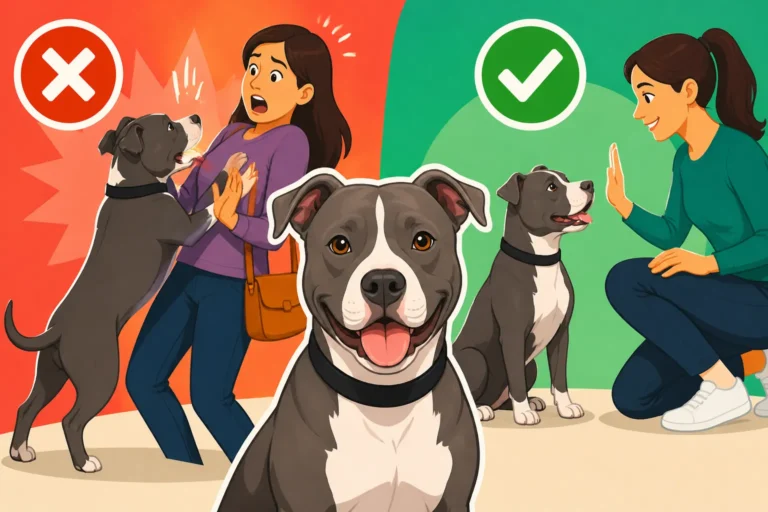
For many Pit Bulls, enthusiasm for new people can manifest as jumping, pawing, or even excited mouthing. While well-intentioned, this can be alarming to strangers and reinforces an undesirable behavior. This is where the "four paws on the floor" rule comes into play. It’s a simple, non-negotiable standard for greetings. Your Pit Bull only gets attention from a stranger (or anyone, for that matter) if all four paws are on the ground. The moment they jump, the attention stops.
This requires consistency from both you and the stranger. Before someone approaches, brief them: "Please only pet him if all four paws are on the ground. If he jumps, just turn away." When a stranger approaches, keep your dog on a loose leash. If they try to jump, immediately step on the leash a little so they can't jump up, or calmly turn your back. As soon as they settle, even for a split second, reward them heavily with praise and a treat, and then signal the stranger that they can offer a pet. You can use this principle when Teaching a Pit Bull Not to Jump on Guests. It's a continuous dance of rewarding the desired behavior and withholding reinforcement for the unwanted one, but it's incredibly effective in teaching polite greetings.
Public Outings: Navigating Busy Environments with Confidence
Taking your Pit Bull into public spaces requires careful planning and a deep understanding of your dog's comfort levels. Busy environments, with their myriad sights, sounds, and smells, can be overwhelming for any dog, let alone a Pit Bull who might already be the subject of scrutiny. Start small: a quiet park during off-peak hours, a stroll down a less-trafficked street, or a pet-friendly store when it’s not crowded. The goal is exposure, not interaction, at first.
As your Pit Bull grows more comfortable, you can gradually increase the intensity of the environment. Always keep your dog on a leash and consider a comfortable, well-fitting harness or head halter for better control, especially if they are strong pullers. Brands like Ruffwear or even those found on Amazon offer a variety of sturdy, secure options. Focus on rewarding calm behavior, loose-leash walking, and attentiveness to you. If your dog becomes stressed, find a quiet spot to decompress or end the outing. The aim is to build their confidence in navigating the human world without needing to greet every single person, but rather to be comfortable simply existing politely alongside them. Remember, The Manners a Pit Bull Needs in Public are critical for positive interactions.
| Interaction Type | Goal | Strategy | Best Environment | Key Takeaway |
|---|---|---|---|---|
| Observation | Build positive association with stranger's presence | High-value treats for calm focus on you or distant person; no direct interaction | Quiet park bench, outside a cafe, low-traffic sidewalk | Strangers equal good things (treats), not direct contact |
| Controlled Approach | Introduce 1-on-1 interaction with a calm stranger | Stranger stands sideways, avoids eye contact; tosses treats, waits for dog to initiate; 4 paws on floor | Your home (first), quiet friend's yard, deserted park | Stranger interactions can be gentle and rewarding |
| Brief Greeting | Practice polite greetings in a moderately stimulating area | Stranger is briefed on "4 paws on floor"; short, positive interaction; immediate reward for calm | Park entrance, pet-friendly store (quiet times), sidewalk | Politeness gets positive attention |
| High-Traffic Area | General desensitization to crowds, not direct interaction | Focus on loose-leash walking, attentiveness to you; reward for ignoring people; avoid direct greetings | Busy park, outdoor market, bustling street (from distance) | Comfortable co-existence, no need to engage with everyone |
Addressing Common Challenges and Misconceptions
Despite your best efforts, socializing a Pit Bull around strangers isn't always smooth sailing. There are common hurdles and deeply ingrained misconceptions that owners frequently encounter. Addressing these head-on, with empathy and practical strategies, is crucial for both your dog's well-being and your peace of mind.
When Your Pit Bull is Overly Excited by Strangers
It’s a scenario many Pit Bull owners know well: a new person appears, and your dog, fueled by pure joy and enthusiasm, launches into a frenzy of jumping, barking, and wiggling. While it comes from a place of friendliness, this "over-excitement" can be intimidating due to their size and strength, leading strangers to back away, reinforcing your dog's frustration. This isn't aggression; it's often a lack of impulse control and an intense desire for attention.
The key to managing this is teaching an alternative, calm behavior. Instead of allowing your Pit Bull to jump, teach them to sit or stand politely for a greeting. Before a stranger even gets close, ask for a "sit" and immediately reward them. If the stranger offers to interact, instruct them to only engage when your dog is calm and has all four paws on the floor. If the excitement escalates, calmly turn and walk away, removing the reward of interaction. This requires incredible consistency, but your Pit Bull will quickly learn that calm behavior gets them what they want – attention and interaction. Using high-value treats and a strong verbal marker like "yes!" the moment their feet hit the ground can be incredibly effective. Consider enrolling in positive reinforcement classes through services like BAXTER & Bella to help reinforce these calm behaviors.
Managing Apprehension or Fear Towards New People
On the opposite end of the spectrum is the Pit Bull who shows apprehension or fear towards strangers. This might manifest as backing away, barking, growling, hiding behind your legs, or even lunging defensively if they feel trapped or threatened. Fear-based reactions are often misunderstood as aggression, especially in a Pit Bull, making these situations incredibly stressful. It's vital to remember that a fearful dog is not trying to be "bad"; they are simply trying to cope with something that makes them uncomfortable.
For a fearful Pit Bull, forced interactions are an absolute no-go. This will only exacerbate their anxiety. Instead, focus on building positive associations from a distance. Use the "treat for sight of stranger" technique described earlier, starting at a distance where your dog notices the person but doesn't react negatively. The moment they spot a stranger, start feeding high-value treats until the person is gone. The goal is to change their emotional response from fear to "oh, a stranger! I wonder if I get a treat?" Over time, you can gradually decrease the distance, always staying below their threshold for fear. Work with a qualified, positive reinforcement trainer who understands fear-based behaviors. They can provide tailored strategies and help you recognize subtle signs of stress before they escalate. Muzzle training, even for a non-aggressive dog, can be a valuable safety tool and confidence booster for owners, providing peace of mind during these desensitization efforts. Muzzle Training Every Pit Bull Should Have can offer guidance.
Dealing with Public Perception and Unsolicited Advice
Let's be real: owning a Pit Bull means constantly navigating public perception. You’re likely to encounter people who cross the street to avoid your dog, make negative comments, or offer unsolicited (and often unhelpful) advice. This constant scrutiny can be draining and can make you feel defensive, impacting your confidence, which your dog can pick up on. This is a very real frustration, and you are not alone in experiencing it. Why a Pit Bull Gets Less Benefit of the Doubt is a harsh reality for many owners.
The best way to deal with this is to be your dog's best advocate and to project confidence and calm. Maintain a polite but firm stance. If someone offers unhelpful advice, a simple "Thanks, we're working with a trainer" or "We've got it covered" is usually sufficient. If someone is genuinely afraid, create distance and reassure them politely. Focus on your dog's behavior and your training, rather than trying to educate every passerby. Your consistent, calm handling and your Pit Bull’s polite demeanor will speak volumes more than any argument. Remember, you are a responsible owner, and your dog is a beloved family member. Don't let others' prejudices undermine your bond or your training efforts.
Tools and Resources to Support Positive Interactions
Socializing a Pit Bull around strangers is an ongoing journey, and thankfully, you don't have to go it alone. There are numerous tools and resources available to make the process smoother, safer, and more effective for both you and your Pit Bull.
Essential Gear for Safe and Controlled Interactions
Having the right equipment can make a world of difference when you're working on stranger greetings, especially with a strong and energetic Pit Bull. First and foremost, a well-fitting harness is invaluable. Look for options that distribute pressure across their chest rather than their throat, preventing choking and giving you more control without causing discomfort. Brands found readily on Amazon or specialized pet retailers offer robust options designed for stronger breeds. Front-clip harnesses can be particularly helpful in discouraging pulling, gently redirecting your dog's momentum back towards you.
Beyond harnesses, consider a sturdy leash – not a retractable one, which offers little control. A standard 6-foot leash made of durable nylon or leather is ideal. For dogs that are still learning polite greetings, a head halter can be an excellent tool, as it provides leverage over their head, making it easier to guide their focus and prevent jumping. Always introduce any new gear slowly and positively, using treats to create good associations. And don't forget high-value treats! These are your most powerful currency in shaping positive behaviors. Think small, soft, smelly treats that your Pit Bull absolutely loves – cheese, cooked chicken, or specialized training treats from brands like Zuke's or Wellness. These are essential for Positive Reinforcement Training With a Pit Bull.
Enlisting Professional Guidance and Training Programs
While online guides and personal anecdotes are helpful, nothing beats the personalized expertise of a professional dog trainer, especially one experienced with Pit Bulls. A certified professional dog trainer can assess your Pit Bull's specific temperament and challenges, identify triggers, and design a tailored socialization plan. They can provide hands-on guidance, teach you how to read your dog's subtle cues, and troubleshoot issues you might be struggling with.
When looking for a trainer, prioritize those who use positive reinforcement methods and have a solid understanding of canine behavior, not just obedience commands. Avoid any trainer who advocates for harsh corrections, intimidation, or punitive tools, as these methods can severely damage your Pit Bull's trust and exacerbate fear or reactivity. Organizations like the Certification Council for Professional Dog Trainers (CCPDT) or the Karen Pryor Academy list certified trainers in your area. Online platforms like BAXTER & Bella also offer structured puppy and adult dog training programs that can provide invaluable resources and live support, helping you build a confident, well-mannered companion. Don't hesitate to invest in professional guidance; it's an investment in your Pit Bull's future and your relationship with them. This is a key step in Finding a Trainer Experienced With Pit Bulls.
Online Resources and Community Support
In today's interconnected world, you don't have to navigate Pit Bull ownership in isolation. There's a vast array of online resources and supportive communities dedicated to the breed. Forums, social media groups, and breed-specific rescue organizations can be incredible sources of information, tips, and emotional support. Hearing from other Pit Bull owners who face similar challenges can be incredibly validating and provide a sense of camaraderie.
Look for groups that focus on responsible ownership, positive training methods, and advocating for the breed. These communities often share success stories, offer advice on specific training dilemmas, and can even help you find local events or meet-ups for well-socialized dogs. Websites of reputable animal behaviorists and positive reinforcement trainers frequently offer free articles, videos, and webinars on socialization and behavior modification. Just be mindful to vet the information you receive and always cross-reference it with certified professional advice. These resources can be a fantastic complement to your training efforts, providing ongoing learning and a network of encouragement.
Continuing Socialization Throughout Your Pit Bull's Life
Socialization is not a finish line you cross; it's a marathon. Your Pit Bull's social skills, much like any other skill, require consistent practice and adaptation as they age and their environment changes. This ongoing effort is key to maintaining a well-adjusted and confident companion.
Maintaining Skills Through Regular Practice
Just because your Pit Bull aced puppy class and handles greetings like a pro doesn't mean you can stop practicing. Like a muscle, social skills can atrophy without regular use. Life changes – a new house, a different walking route, or even just a period of less frequent visitors – can impact your dog's comfort level. Therefore, make it a point to intentionally seek out opportunities for positive, controlled exposure to strangers on a regular basis.
This doesn't mean throwing them into chaotic situations. It simply means integrating controlled interactions into your routine. Perhaps you take a weekly trip to a pet-friendly hardware store during a quieter time, allowing your Pit Bull to calmly observe people from a distance while you shop. Or maybe you invite a different friend over for coffee once a month, ensuring they understand your "four paws on the floor" greeting rule. Even just walking a different route once a week, exposing your Pit Bull to new sights, sounds, and people, helps keep their social skills sharp. The more consistent you are, the more ingrained these positive associations become, and the more resilient your Pit Bull will be to unexpected encounters.
Adjusting Socialization for the Older Pit Bull
As Pit Bulls age, their needs and capabilities change, and your socialization approach should adapt accordingly. An older Pit Bull might have reduced sight or hearing, making them more easily startled by sudden movements or sounds from strangers. They might also develop arthritis or other physical discomforts, making them less tolerant of boisterous greetings or prolonged standing. Their energy levels naturally decrease, and they might simply prefer a quieter, less interactive existence. Caring for a Pit Bull in Its Second Decade offers broader advice for senior dogs.
For an aging Pit Bull, prioritize quality over quantity in interactions. Continue to expose them to gentle, calm strangers, but reduce the intensity and duration. If their senses are declining, always approach them slowly and announce your presence verbally before touching. Ask strangers to do the same. Provide comfortable, quiet spaces where they can retreat if they feel overwhelmed. Their physical comfort should always be paramount. A gentle sniff and a calm head scratch might be all an older Pit Bull desires, rather than a full-on play session. Respect their boundaries and continue to advocate for their comfort.
The Role of the Owner's Confidence and Calmness
Perhaps the most underestimated aspect of successful socialization is your own state of mind. Dogs are masters at reading human emotions. If you are anxious, tense, or worried every time a stranger approaches your Pit Bull, your dog will pick up on that energy and often mirror it. Your apprehension can communicate to them that there is something to be worried about, even if objectively there isn’t. Conversely, if you project calm confidence, your Pit Bull is more likely to feel secure and respond positively.
Before you even step out the door, take a deep breath. Remind yourself that you are prepared, you have the right tools, and you are your Pit Bull's protector and guide. During interactions, maintain a loose grip on the leash (unless you need to correct jumping), speak in a calm, reassuring tone, and visibly relax your shoulders. If a stranger makes you uncomfortable, calmly extract yourself and your dog from the situation. Your confidence not only helps your Pit Bull feel safe but also demonstrates to others that you are in control and your dog is well-managed, slowly but surely helping to shift public perception. Remember, you are your Pit Bull's biggest advocate, and your calm demeanor is their anchor in a sometimes-judgmental world.
Disclaimer
This article is for general informational purposes only and does not constitute professional advice. Laws, prices and regulations vary by location and change over time. Consult a qualified professional for guidance on your specific situation.