Teaching a Pit Bull to Hold a Place
It can be incredibly frustrating when your Pit Bull is constantly underfoot, demanding attention, or struggling to settle down when guests arrive or the family is eating dinner. This guide is here to walk you through teaching your loyal companion the invaluable "place" command, giving them a designated spot to relax and helping you manage a calmer, more harmonious household.
Why the "Place" Command is a Game-Changer for Pit Bulls
Many Pit Bull owners know the struggle: you love your dog's enthusiasm and desire to be near you, but sometimes you just need them to settle. Whether you're trying to cook dinner, have a conversation with a visitor, or simply enjoy a quiet moment, a dog that struggles with impulse control can make things feel chaotic. The "place" command isn't just about making your dog lie down; it’s about teaching them a deep level of self-control and providing them with a reliable, comfortable spot when they need to be out of the way, even if they'd rather be glued to your side.
Building Impulse Control and Settling Skills
Pit Bulls are often highly intelligent and eager-to-please, but that enthusiasm can sometimes translate into a lack of impulse control. They want to be involved in everything, which, while endearing, can be disruptive. A solid "place" command helps channel that energy positively. When a Pit Bull learns to go to their designated spot and stay there, even with exciting things happening around them, they're building crucial mental muscles. They're learning that sometimes, the best reward comes from holding still and being patient, rather than pushing for immediate interaction. This skill translates to other areas of their life, fostering a more mindful and well-behaved companion.
Think about it: the doorbell rings, and your Pit Bull goes from zero to sixty in a blink, barking and jumping at the door. Imagine if, instead, with a simple command, they calmly trot to their mat and wait there while you handle the visitor. This isn't just wishful thinking; it's a direct result of consistent "place" training. It teaches them to pause, process, and make a controlled choice, rather than reacting on instinct. This kind of mental engagement is incredibly beneficial for a breed known for its drive and powerful physicality. It helps them become the calm, confident dog you know they can be.
Creating a Safe Space and Management Tool
Beyond impulse control, the "place" command provides your Pit Bull with their very own sanctuary. This designated spot becomes a place of peace and predictability. For dogs who might feel overwhelmed by too much activity, or for those who thrive on routine, knowing they have a "place" to retreat to can actually reduce anxiety. It's not a punishment; it's a comfortable, known zone where they can relax without being constantly asked to move or be redirected. This is especially helpful in multi-dog households where quiet time might be at a premium.
As a management tool, "place" is unparalleled. Hosting a dinner party? "Place." Kids running around with toys? "Place." Need to vacuum or mop without your dog interfering? You guessed it – "place." It allows you to maintain control and safety in various situations without having to resort to crating every time. It’s also invaluable for managing greetings with guests. Instead of wrestling your enthusiastic greeter, you can ask them to "place," and once settled, you can then invite your guests to approach them calmly. This proactive management helps your Pit Bull learn appropriate social manners and reinforces their role as a valued, well-behaved family member. Consider how useful it is to have a tool like this when working on Pit Bull Dog Selectivity and Multi-Dog Homes, providing a clear boundary and expectation for each dog.
Setting Up for Success: Gear and Environment
Before you even start the training, getting the right setup is crucial. You want your Pit Bull to associate their "place" with comfort and positive experiences, not with an uncomfortable spot or a flimsy piece of equipment that won't hold up to their enthusiastic nature. Investing a little time and thought into selecting the right gear can make all the difference in your training journey. This isn't just about convenience; it's about building a solid foundation for a command that will serve you and your Pit Bull for years to come.
Choosing the Right "Place" for Your Pit Bull
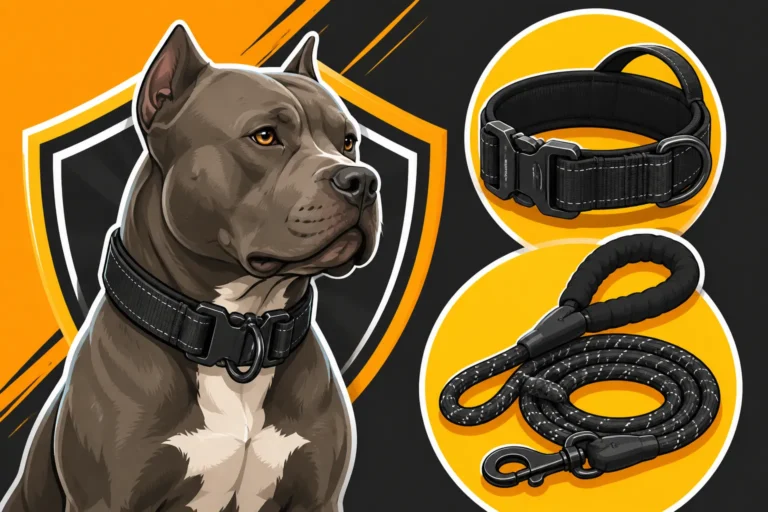
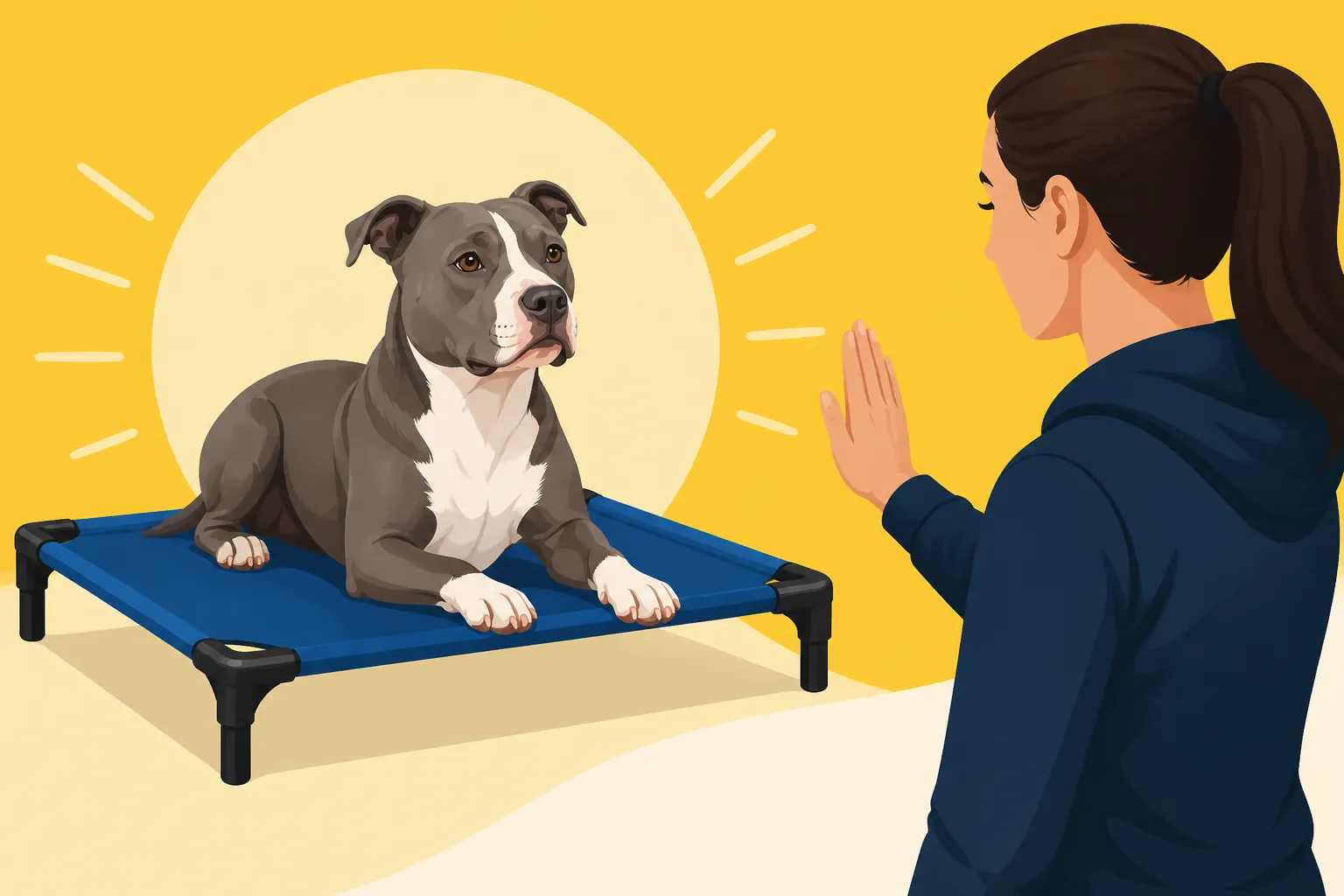
The "place" itself can be almost anything, but it needs to be clearly defined, comfortable, and durable enough to withstand a Pit Bull's natural strength and desire to dig or chew. A plush dog bed works wonderfully if your dog isn't a destroyer. For many Pit Bulls, a raised cot or a sturdy, chew-resistant mat might be a better option, as they are less likely to be seen as a chew toy and offer good air circulation. The key is that it's a distinct item that can be moved if needed but is typically kept in a consistent spot.
When you're choosing, think about where you'll be using this command most often. If it's for the living room, make sure it blends in or is easy to tuck away. If you plan to use it in multiple rooms, consider getting a second, lighter mat that's easy to transport. I've seen many owners find great, durable options for beds and cots on Amazon that stand up to the rigorous use of a powerful breed. Just be sure to read reviews and select something robust. For a Pit Bull that tends to chew through things, you might even consider something as tough as The Crate a Pit Bull Cannot Break Out Of material, if you're looking for extreme durability in a "place" item.
Essential Training Tools and High-Value Rewards
Successful training, especially with a breed as intelligent and food-motivated as many Pit Bulls, relies heavily on good communication and powerful incentives. A clicker (or a consistent verbal marker like "yes!") is indispensable for precise communication, immediately marking the exact moment your dog performs the desired behavior. This clarity helps your Pit Bull understand exactly what earned them the reward. Along with a clicker, having a variety of high-value treats is paramount. These aren't just any old kibble; these are the treats your Pit Bull would practically climb mountains for.
Think about tiny pieces of cooked chicken, cheese, or specialized training treats that have a strong smell and irresistible taste. The higher the value of the reward, the more motivated your Pit Bull will be to perform, especially as you introduce more distractions. For more on this, check out High-Value Treats That Hold a Pit Bull's Focus. Also, a regular leash, and eventually a long line, will be helpful, especially in the initial stages to guide your dog and manage any attempts to leave their "place" prematurely. Many online resources and training programs, like those offered by BAXTER & Bella, emphasize the importance of these tools for effective positive reinforcement, which is exactly what we need for our Pit Bulls.
Step-by-Step: Teaching the "Place" Command
Teaching the "place" command is a gradual process, built on small successes and positive reinforcement. Don't rush it! Every successful repetition, no matter how brief, builds confidence and understanding for your Pit Bull. Remember that patience is key, and every dog learns at their own pace. Our goal is to make this a joyful, rewarding experience for them, so they want to go to their "place." This foundation will help in all aspects of Training a Pit Bull to a Higher Standard Than Other Dogs.
Introducing the Concept: Luring and Rewarding
Start in a quiet environment with minimal distractions. Lay out your chosen "place" item (mat, bed, cot).
- Lure onto Place: Hold a high-value treat near your Pit Bull's nose. Lure them towards and then onto their "place." As soon as all four paws are on the mat, mark the behavior with your clicker or verbal marker ("yes!") and immediately give them the treat. Repeat this several times.
- Add the Command: Once they are consistently stepping onto the mat with the lure, add your verbal cue: "Place!" or "Mat!" as they are moving towards it. Mark and reward the moment they are on it.
- Encourage Lying Down: Once they are confidently going to "place," begin to encourage them to lie down. You can do this by luring their nose down towards the mat with another treat once they are on it. As soon as their elbows hit the mat, click/mark and reward.
- Practice Short Stays: Once they are on their mat and lying down, start practicing very short stays. Give the "place" command, lure them down, mark, and reward. Then, before they have a chance to get up, mark and reward again for staying for just one second. Release them with a cheerful "Free!" or "Okay!" and throw a treat off the mat. This teaches them that the release cue is important and that leaving the mat on their own isn't the desired behavior.
The idea here is to build a strong positive association. Your Pit Bull should think, "Going to this mat means good things happen!" Consistency is far more important than long sessions. Five short, successful sessions a day are better than one long, frustrating one. This initial phase is all about making the "place" command the most wonderful thing in the world.
Adding Duration and Distance Gradually
Once your Pit Bull reliably goes to their "place" and lies down for a second or two, it’s time to slowly increase the challenge. This is where Building a Pit Bull's Impulse Control really comes into play.
- Increase Duration: Gradually extend the time your Pit Bull stays on their "place." Instead of one second, wait two, then three, then five. Remember to reward frequently in the beginning for simply being on the place. Randomly reward for duration even if they haven't been released yet. For example, if they've been there for ten seconds, click/mark and give a treat, then wait another few seconds before releasing them. This teaches them that good things happen while they are still there.
- Add Distance: Once duration is solid, start taking a step away. Give the "place" command, ensure they are settled, then take one step back. If they stay, step back to them, mark, and reward. If they break, calmly reset them without scolding – lead them back to "place," give the command again, and start over. Gradually increase the number of steps you take, then the distance you move away.
- Introduce Mild Distractions: Once your Pit Bull is holding their "place" for a minute or two with you several feet away, begin to introduce very minor distractions. This could be you gently jiggling your keys, standing up and sitting down, or walking a short circle around them. Again, if they hold, reward. If they break, reset. The goal is to make success easy at first. Remember that Positive Reinforcement Training With a Pit Bull is all about building up success, not punishing mistakes.
It's common for Pit Bulls to test boundaries, especially when new challenges are introduced. Don't get discouraged. A small step back in your training plan often leads to two steps forward.
Proofing the Command with Distractions
This is the stage where the "place" command truly becomes reliable in real-world scenarios. Proofing means practicing the command in increasingly challenging environments and with more significant distractions. This is crucial because a command mastered in a quiet living room might fall apart when the doorbell rings or another dog walks by.
- Introduce Controlled Distractions: Start with distractions you can control. For example, have a family member walk past the dog's "place," or gently bounce a ball (without throwing it) a few feet away. Each time your Pit Bull maintains their "place," offer a super high-value treat. If they break, simply lead them back to their spot with no fanfare and try again with a slightly less intense distraction.
- Gradually Increase Distraction Level: Slowly work your way up to more exciting things. This might involve:
- You walking through the room with their favorite toy.
- Someone coming through the door (start with a quiet knock, then a light ring).
- Another family pet walking nearby (if applicable).
- Practicing during meal prep in the kitchen.
- Practice in Different Locations: Once they're solid at home, try practicing "place" in a friend's quiet house, then a slightly busier park (on a long line for safety). The more varied the successful experiences, the stronger the command becomes. This can also be a fantastic way to offer Indoor Trick Work for a Bored Pit Bull, by incorporating novel elements while they are on their place.
The key to proofing is never to set your Pit Bull up to fail. If a distraction is too much, scale it back. Always aim for success, reward heavily for it, and make sure that staying on "place" is consistently more rewarding than breaking it. This rigorous training helps them maintain focus even amidst exciting stimuli, making them a well-behaved companion in any situation.
Common Challenges and Troubleshooting
Even with the best intentions and consistent training, you'll inevitably encounter moments where your Pit Bull just doesn't seem to "get it," or they revert to old habits. This is completely normal! Pit Bulls are intelligent and persistent, which means their training needs to be equally persistent. Don't let these bumps in the road derail your progress.
When Your Pit Bull Breaks "Place"
It happens. Your Pit Bull is on "place," you take a step away, and whoosh, they're off the mat and at your feet. The most important thing here is your reaction: stay calm and neutral. Scolding or getting frustrated will only make your dog anxious and associate "place" with negative feelings, which is the opposite of what we want.
Instead, without a word, simply take your Pit Bull back to their "place." Guide them gently by their collar or leash. Put them back on the mat and give the "place" command again. Immediately mark and reward them for being on the mat, even if it's just for a split second. Then, release them and try again with a slightly easier version of the exercise. Perhaps reduce the duration you're asking for, or shorten the distance you step away. The message needs to be clear: "You only get rewarded for staying on 'place,' and leaving it means you just go back there." Never reward them for breaking "place" by petting or giving attention when they come off. Consistently, calmly, and without emotion, return them to their spot. This repetition, combined with the earlier foundational work, is key to building a reliable Teaching a Pit Bull to Sit Before Every Door and other impulse control commands.
Maintaining the "Place" Command in Daily Life
A command isn't truly learned until it's practiced and maintained in everyday situations. Think of "place" not as a trick, but as a life skill for your Pit Bull. Integrate short "place" sessions into your daily routine.
- During Meals: Ask your Pit Bull to "place" while you're preparing dinner, or even while you're eating. Start with short durations and build up.
- When Guests Arrive: As soon as the doorbell rings or someone knocks, give the "place" command. Reward them for holding it while you answer the door and greet your guests. You can then release them for a polite greeting once everyone is settled.
- Quiet Time: Use "place" when you need a moment to read, work, or just relax. It helps them understand that quiet settling is sometimes expected.
- Provide Enrichment on Place: To make "place" even more appealing, offer a durable chew toy (like those suggested for Pit Bull Dental Disease and Hard Chewing) or a puzzle feeder once they are settled on their spot. This helps them associate "place" with enjoyable, calming activities.
The goal is to make "place" a default behavior, something your Pit Bull readily offers when asked, because they understand its value and find it rewarding. Regular, short practice sessions, even just a few minutes here and there throughout the day, will solidify the command and ensure it remains a reliable tool for a calm, well-managed home. This consistency is vital for a breed with such powerful drive and helps build trust and understanding between you and your Pit Bull, leading to better Pit Bull Leash Manners and Physical Strength and overall obedience.
Disclaimer
This article is for general informational purposes only and does not constitute professional advice. Laws, prices and regulations vary by location and change over time. Consult a qualified professional for guidance on your specific situation.