The Word That Stops a Pit Bull Mid-Stride
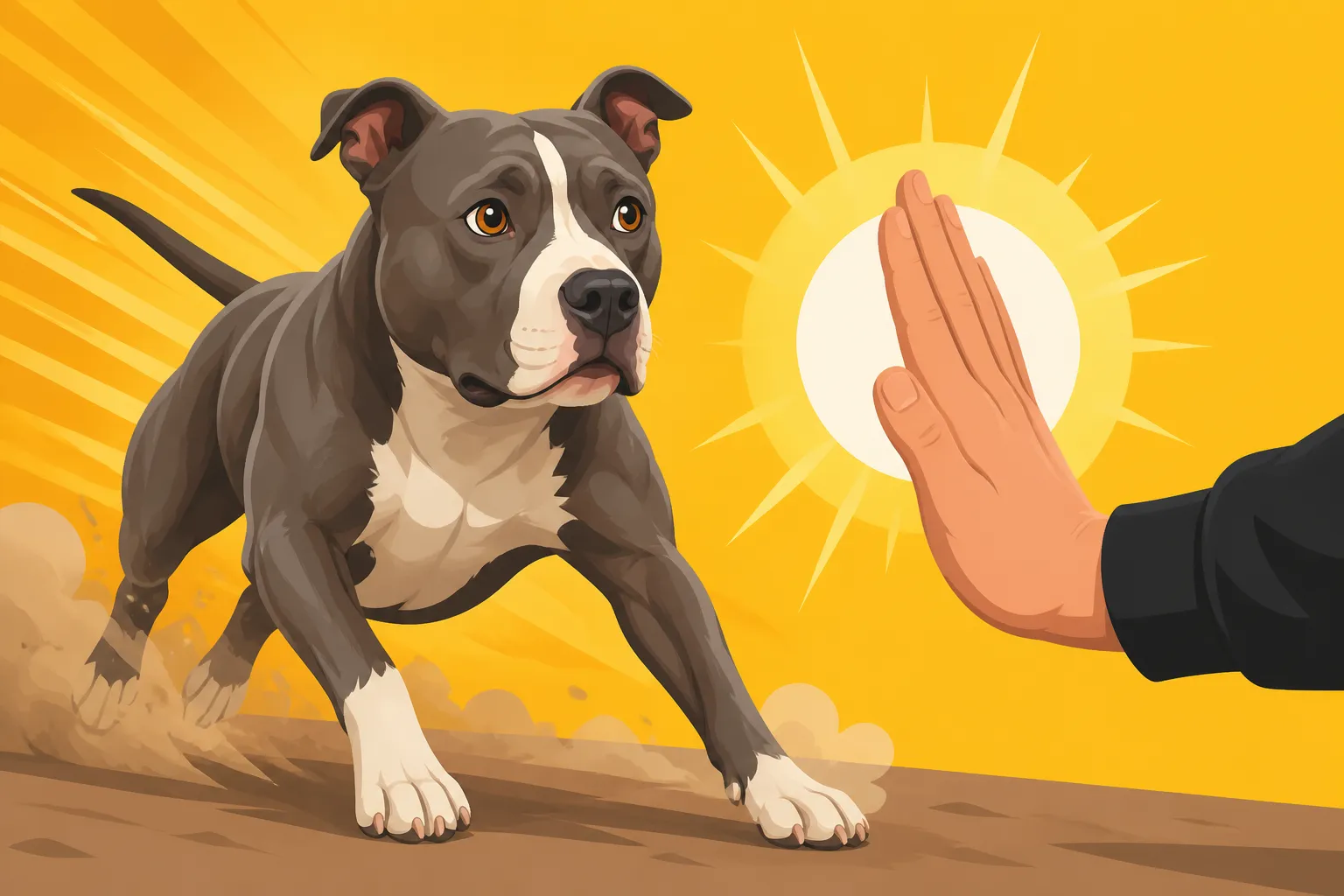
It's a familiar scenario for so many of us Pit Bull owners: you're out for a walk, everything is going smoothly, and then BAM! a squirrel darts across the path, a rogue soccer ball bounces by, or another dog appears unexpectedly, and your powerful companion is suddenly laser-focused, pulling with all their might or, heaven forbid, breaking free and bolting. That heart-stopping moment when you need your dog to stop right now is terrifying, and this guide is here to help you develop and implement a reliable, life-saving "emergency stop" command for your Pit Bull.
Understanding the "Mid-Stride" Challenge with Pit Bulls
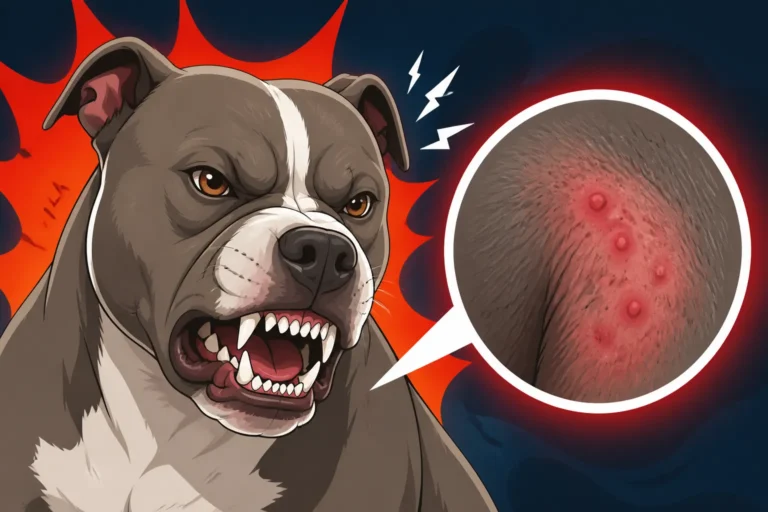
Let's be real, Pit Bulls are incredible dogs. They're intelligent, athletic, and often possess an intensity that's both a blessing and, in moments like these, a significant challenge. When they get an idea in their head, whether it's chasing something or greeting someone, their focus can be absolute, making it incredibly difficult to break their concentration. This isn't stubbornness; it's often a combination of strong prey drive, enthusiasm, and a powerful build that makes them hard to physically control.
Why Pit Bulls Are Prone to Bolting or Tunnel Vision
Pit Bulls, including American Pit Bull Terriers and American Staffordshire Terriers, were historically bred for tenacity and drive. This means they can lock onto a stimulus and be incredibly difficult to deter. Imagine their ancestral purpose: once they engaged, they were meant to stay engaged. While we're not using them for those historical purposes today, that underlying drive is still there. When a Pit Bull sees a rabbit bolt across an open field, or hears the high-pitched yelp of a playful dog, their instinct can kick in hard and fast.
This intense focus, often called "tunnel vision," means they literally might not hear your regular "come" command, or see your frantic hand signals. Their brain is entirely consumed by the object of their attention. For us owners, this can be incredibly frustrating and, more importantly, dangerous. We need a command that cuts through that intense focus, one that has been conditioned to override everything else in that moment. It's about safety, not just convenience. We want to be able to trust our dogs in varied environments, and that requires a superior level of training, as covered in Training a Pit Bull to a Higher Standard Than Other Dogs.
The Importance of Foundation Work Before an Emergency Stop
You can't just slap an "emergency stop" command onto a dog that doesn't have basic manners. Think of it like trying to build a roof without walls. Before you even consider teaching a high-stakes emergency stop, your Pit Bull needs a solid foundation in general obedience. This means a reliable "sit," "stay," and a decent "come" in low-distraction environments. They need to understand what it means to pay attention to you, even when there are minor distractions around.
Furthermore, building a strong relationship with your Pit Bull is paramount. They need to view you as the most valuable and rewarding thing in their environment. This isn't about being their "pack leader" in some outdated, dominance-theory sense, but about being a consistent, fair, and high-value source of good things. If your dog barely glances at you on a walk, or only comes when they feel like it, an emergency stop will be a non-starter. This foundational work also includes getting their energy needs met; a bored or under-exercised Pit Bull is far more likely to bolt and ignore commands. Consider the insights in The Daily Exercise a Pit Bull Actually Needs to help with this.
Beyond "Come": Crafting Your Emergency Stop Command
Your regular recall command, often "come" or "here," is fantastic for everyday use. It's for when your dog is wandering a bit too far in the yard, or when you want them to return from playing with a friend. But an emergency stop needs to be different. It needs to be special, urgent, and carry an entirely different weight.
Choosing the Right Word or Signal
The key to an emergency stop command is that it should be unique and used only for emergencies. This prevents it from being "poisoned" by everyday use where your dog might choose to ignore it. A common mistake is to use "come" in an emergency, and if your dog blows you off, then your general recall becomes less reliable.
Consider a distinct, sharp, and attention-grabbing word. Some popular choices include:
- "STOP!" (Sharp, clear, and universally understood)
- "FREEZE!" (Implies immediate cessation of movement)
- "ANCHOR!" (Suggests digging in and staying put)
- A specific whistle or a distinct hand signal (like both arms thrown wide, or a chop motion).
Whatever you choose, it needs to be something you can say loudly and clearly, or signal distinctly, even under stress. Avoid words you use frequently in other contexts. The goal is for this word to act like a sudden, unexpected mental jolt that snaps your Pit Bull out of their fixation and into a state of immediate attention on you.
The Critical Difference Between Recall and Emergency Stop
Let's break down why these two commands are distinct and why they need to be treated that way in training.
| Feature | Regular Recall ("Come!") | Emergency Stop ("STOP!") |
|---|---|---|
| Purpose | General return, checking in, moving between locations. | Immediate cessation of movement, often from a distance, to prevent danger. |
| Context | Lower stakes, everyday situations, often expected. | High stakes, unexpected danger (traffic, fight, forbidden item). |
| Reinforcement | Usually a good treat, praise, continuation of fun. | EXTREMELY high-value reward, celebration, often the best treat they ever get. |
| Frequency of Use | Daily, multiple times a day. | Infrequent, reserved for true emergencies to maintain impact. |
| Desired Action | Dog actively returns to you. | Dog immediately halts all forward motion, often dropping into a sit or down. |
| Training Intensity | Consistent, gradual increase in distraction. | Intense, focused, practiced under controlled, simulated "emergency" conditions. |
The emergency stop isn't about coming to you; it's about stopping in place. It's about interrupting the undesirable behavior and making them hold their position until you can safely reach them or give another command. This critical distinction is what makes it so powerful. For more on general recall work, check out Recall Training a Pit Bull From Scratch.
Teaching the Emergency Stop: A Step-by-Step Approach
Now for the practical part! Teaching an emergency stop requires patience, consistency, and an understanding of positive reinforcement principles. This is not a command you want to rush, and you definitely don't want to use it "just to see if it works" before it's solid.
Starting in a Low-Distraction Environment
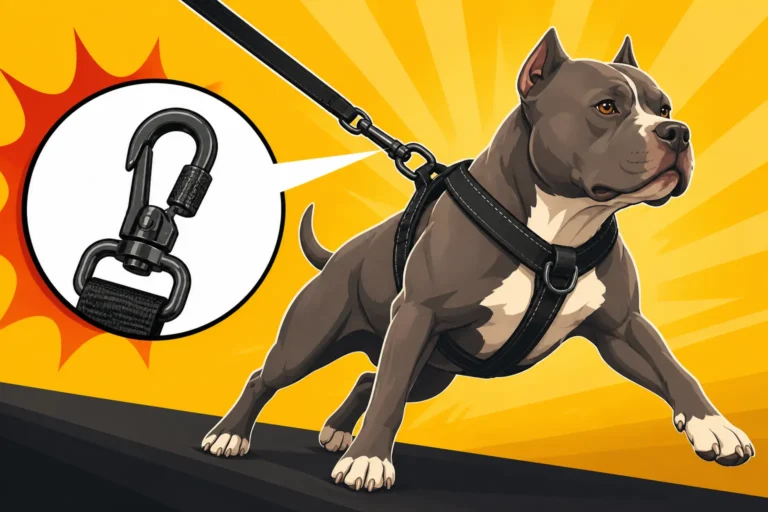
Begin your training in a quiet, controlled environment, like your living room or a securely fenced yard. Your Pit Bull should be on a long line – a lightweight, durable one you can find on Amazon works perfectly for this – even indoors, so you always have a physical connection if they forget the command. The long line gives you safety and control, which is essential, especially with a strong dog.
- Introduce the Command: Let your Pit Bull wander a short distance away from you, perhaps 10-15 feet. Wait for them to take a few steps or show mild interest in something non-essential (like sniffing a rug).
- Give the Command: As they are moving, loudly and clearly say your chosen emergency stop word (e.g., "STOP!").
- Encourage the Stop: Simultaneously, if needed, gently apply upward pressure on the long line or give a slight tug-and-release to encourage them to stop their forward motion. The goal is not to yank them, but to provide a physical cue that matches the verbal one.
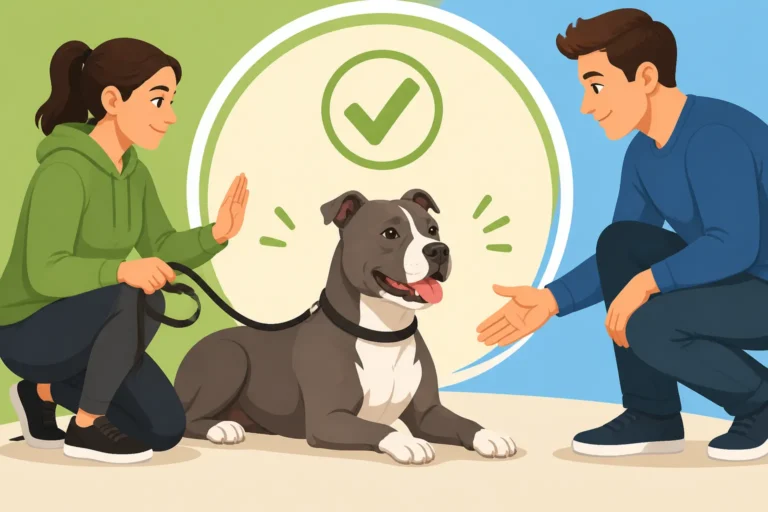
- Reward Instantly: The instant they stop, even if it's just for a second, rush over to them with the absolute highest-value treat you can imagine. This isn't just a regular kibble; this is boiled chicken, cheese, or liverwurst. Shower them with praise ("YES! GOOD STOP!").
- Release: After they've eaten the treat and received praise, give a release command ("OK!" or "Free!") so they know the exercise is over. You don't want them to think "stop" means "stay frozen forever."
Repeat this process many, many times over several short sessions. Keep the sessions fun and positive. You want your Pit Bull to associate the emergency stop command with an immediate, fantastic reward and your enthusiastic approval. High-Value Treats That Hold a Pit Bull's Focus will be invaluable here.
Gradually Increasing Distractions and Distance
Once your Pit Bull is reliably stopping in a low-distraction environment, it's time to slowly dial up the challenge. This is where many owners get stuck; they practice once or twice and expect perfection. Remember, Pit Bulls learn by generalization, so they need to practice in many different scenarios to truly understand the command's universality.
- New Locations, Same Low Distraction: Move your training to different parts of your house, then the backyard, then a quiet park during off-peak hours. Always start with minimal distractions in the new location.
- Introduce Minor Distractions: While still on the long line, have a family member walk by at a distance, or let a toy roll a few feet away (but not close enough to trigger full chase mode). Give the command and reward heavily when successful.
- Increase Distance: Slowly increase the distance your Pit Bull is from you before you give the command. Work up to the full length of your long line. For a powerful dog, investing in a good quality, long training line (15-30 feet) from Amazon is a must. This allows them to move further while still being safely tethered, which is a great way to practice Long Line Hardware That Holds a Pit Bull.
- Practice with Movement: Have your dog trotting or even running slightly before you give the command. The goal is to interrupt forward momentum.
- Simulated Real-Life Scenarios (Controlled): Set up scenarios. Have a friend walk a friendly, calm dog across your path from a distance while your Pit Bull is on the long line. This allows you to practice the emergency stop command in a controlled, safe way without risking a real incident.
Always set your Pit Bull up for success. If you try to practice with a squirrel 10 feet away too soon, you're likely to fail, and that failure can set your training back. Building a Pit Bull's Impulse Control is a long game, but every successful stop builds valuable muscle memory.
The Role of High-Value Rewards
I cannot stress this enough: the reward for a successful emergency stop needs to be epic. This isn't just about giving a treat; it's about making the decision to stop so incredibly worthwhile that it overrides even the most tempting distraction.
Imagine your Pit Bull is about to chase a deer. If your "stop" command only gets them a piece of kibble, that deer is going to win every time. But if that "stop" command means a handful of hot dogs, a dollop of peanut butter, or a quick, energetic game of tug (if that's their ultimate motivator), then you start to stand a chance.
The reward should be immediate and generous. Don't make them wait. The second their feet stop moving, that reward should be coming. Pair it with enthusiastic praise. You want to create a mental shortcut: "That word means awesome things happen RIGHT HERE, RIGHT NOW, no matter what else is going on." This consistent high-value reinforcement is what makes the command truly bomb-proof over time.
Maintaining Reliability: Integrating the Stop into Daily Life
An emergency stop command isn't a one-and-done training session. It's a skill that needs to be polished and maintained throughout your Pit Bull's life. Like any emergency preparedness, you hope you never have to use it, but when you do, it needs to work perfectly.
Practicing Consistently Without Overuse
The paradox of the emergency stop is that it needs to be practiced, but not overused. If you use it every time your dog pulls on the leash or looks at a bird, it loses its special urgency and becomes just another ignored command. This is why having a strong general recall and good leash manners are so important. Your regular training should handle most situations, leaving the emergency stop for true "break glass in case of emergency" moments.
Aim for short, focused practice sessions a few times a week in varied environments. Again, always start with the long line until the command is rock solid in that specific environment. Don't always make it easy for your dog; sometimes practice when they are a bit distracted by sniffing a interesting patch of grass, or when they are walking towards something they clearly want to investigate. These controlled practice scenarios reinforce the power of the command. If you're looking for structured guidance on integrating commands, a comprehensive program like BAXTER & Bella can provide excellent support and curriculum.
What to Do When the Stop Doesn't Work Immediately
Let's be realistic: dogs aren't robots. There will be times, especially early in training or with a novel, extremely high-value distraction, where your Pit Bull might hesitate or even ignore the command. This is why the long line is non-negotiable for practice and for any time your dog is off-leash in an unfenced area.
If they don't stop:
- Re-engage the Long Line: Gently but firmly use the long line to bring them to a halt. Don't yank or punish. The goal is to physically enforce the stop, then immediately reward the act of stopping, even if it was physically prompted.
- Evaluate the Situation: Was the distraction too high for their current training level? Were your rewards not high-value enough? Were you too far away? Sometimes you need to take a step back in your training plan.
- Do Not Repeat the Command: This is crucial. If you say "STOP!" and they don't, don't say "STOP! STOP! STOP!". Repeating a command they ignore teaches them that the command is optional. Instead, enforce the stop physically with the long line, then try again later in an easier context.
- Protect the Command: If your Pit Bull ignores the emergency stop, it means they weren't ready for that level of distraction. Revert to easier scenarios where they can succeed, rebuilding their confidence and the reliability of the command. Remember, for their safety and public perception, Pit Bulls need strong control, as explored in Why a Pit Bull Should Not Be Off Leash in Public.
Addressing Underlying Issues: Drive and Engagement
Sometimes, a Pit Bull's inability to stop mid-stride isn't just about not knowing the command; it's about overwhelming drive or a lack of engagement with you. If your Pit Bull is always straining on the leash, you might need to address Pit Bull Leash Pulling at Fifty Pounds as a separate issue.
- Management First: Until your emergency stop is reliable, manage your Pit Bull's environment. Use leashes, secure fences, and avoid situations where they might bolt.
- Engagement Games: Play games that build your Pit Bull's focus on you. Tug, fetch, or even just silly games in the house where you randomly reward attention can make you more interesting than the environment.
- Structured Training: Consider enrolling in a positive reinforcement training class or working with a certified professional dog trainer. They can help you identify specific triggers for your Pit Bull and develop tailored strategies to improve focus and impulse control. For those new to or needing a refresh on methodology, Positive Reinforcement Training With a Pit Bull can offer great insight.
- Consistency from Everyone: Ensure everyone in the household uses the same command and reinforcement strategy. Inconsistency is a killer for training.
Developing a reliable emergency stop command for your Pit Bull is one of the most important things you can do for their safety and your peace of mind. It takes dedication, the right tools, and plenty of high-value rewards, but the ability to cut through their intense focus with one clear word is truly invaluable.
Disclaimer
This article is for general informational purposes only and does not constitute professional advice. Laws, prices and regulations vary by location and change over time. Consult a qualified professional for guidance on your specific situation.