Replacing Pit Bull Barking With a Behavior
That persistent barking from your Pit Bull can be incredibly frustrating, whether it's at every passing squirrel, the sound of the doorbell, or simply when you leave the room. It’s not just annoying; it can strain relationships with neighbors and leave you feeling helpless. This guide is all about giving you practical, empathetic strategies to understand why your Pit Bull barks and, more importantly, how to teach them a more desirable behavior instead of that incessant vocalization.
Understanding Why Your Pit Bull Barks
Before you can even begin to think about replacing barking with a different behavior, you have to play detective and figure out the 'why' behind the 'woof'. Barking isn't random; it's a form of communication, and your Pit Bull is trying to tell you something. Ignoring the root cause often means any training efforts will be like putting a band-aid on a gaping wound – it might seem to help for a moment, but the problem will persist.
Identifying Common Bark Triggers
There's a whole symphony of sounds, sights, and feelings that can set off a Pit Bull's barking. Is it the mail carrier approaching the front door? That tell-tale jingle of keys can be a huge trigger for many dogs, especially those who struggle with separation-related behaviors. Perhaps it’s a dog walking by outside the window, eliciting a territorial response. Sometimes, it's just the sound of someone in the hallway of an apartment building, or even an unfamiliar car pulling up next door. A Pit Bull That Rushes the Door often starts with a bark at the trigger.
Consider environmental cues. Does the barking happen more often when the blinds are open, allowing a clear view of the outside world? Or is it triggered by specific noises that you might not even consciously register, like the hum of a distant lawnmower or a neighbor’s gate clicking shut? Sometimes, the triggers are internal, like boredom or anxiety. A Pit Bull left alone for too long without enough mental or physical stimulation might resort to barking simply to release pent-up energy or call for attention.
Differentiating Bark Types and Their Meaning
Not all barks are created equal, and learning to distinguish between them is a critical step. A sharp, high-pitched bark often signals excitement or playful solicitation. Think of your Pit Bull doing zoomies and letting out little "yip-barks." This is very different from a low, guttural growl followed by a series of deep, sustained barks, which typically indicates territorial defense or alarm. That latter bark is your Pit Bull saying, "I see something I don't like, and I'm warning you and it to back off."
Then there's the attention-seeking bark – often repetitive, insistent, and usually directed right at you. This might escalate if you inadvertently reinforce it by giving in with a glance, a touch, or even a frustrated shout. A Pit Bull that experiences distress when left alone might engage in a mournful, drawn-out bark, often accompanied by whining, which is a classic sign of separation anxiety. A Pit Bull That Screams When You Leave needs a different approach than a dog barking at a squirrel. Understanding the emotional context behind the bark helps you choose the most effective intervention.
Foundation Skills for Managing Barking
Before you dive into specific techniques to replace barking, it’s vital to ensure your Pit Bull has a solid foundation of general training and enrichment. Think of it like building a house: you can't put up the roof until the foundation and walls are strong. Without these basics, any specialized barking interventions might crumble under the first challenge.
Ensuring Adequate Exercise and Mental Stimulation
A tired Pit Bull is often a quiet Pit Bull. These dogs are incredibly athletic and intelligent, bred for stamina and problem-solving. If they don't get sufficient outlets for their energy and minds, they will find their own ways to cope, and excessive barking is a common symptom of boredom or pent-up frustration. This isn't just about physical exercise; it's about structured engagement.
Think beyond just a walk around the block. Consider activities like long walks or jogs if your dog's joints are healthy, or even trail days on a long line where they can explore different scents and textures. Engaging their powerful minds is just as important. Puzzle feeders, where your Pit Bull has to work to get their meal, can be incredibly effective at burning mental energy. Indoor Trick Work for a Bored Pit Bull can also be a fantastic way to redirect energy. Training sessions, even short ones, that teach new commands or refresh old ones, act as mental workouts. A Pit Bull that has had its physical and mental needs met is far less likely to resort to nuisance barking. You can find a wide variety of interactive toys and puzzle feeders on Amazon that challenge their intellect.
Reinforcing Calmness and Impulse Control
Many barking issues stem from a lack of impulse control. Your Pit Bull sees a squirrel, and BAM! They react immediately with barking. Teaching your dog to pause, think, and choose a different, calmer behavior is key. This isn't about suppressing the bark with punishment, but about teaching them a more appropriate response. This is where Building a Pit Bull's Impulse Control becomes invaluable.
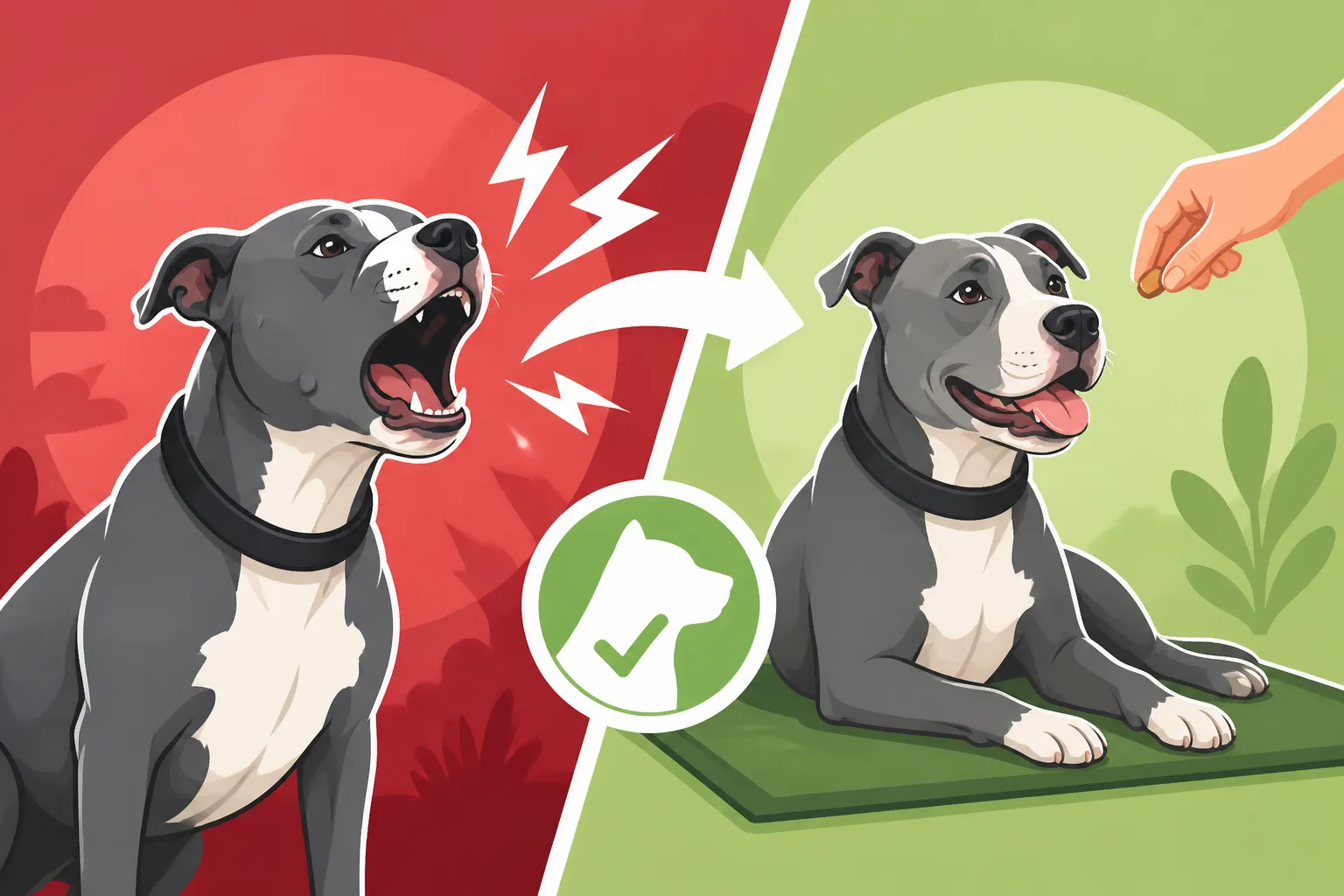
Start by rewarding calm behaviors whenever you see them. If your Pit Bull is lying quietly, offer a soft "good dog" and a treat. If they ignore the doorbell, even for a split second, reward that moment of calm. Practicing "settle" or "place" commands can also be incredibly useful. This involves teaching your Pit Bull to go to a designated spot, like a dog bed or mat, and stay there calmly until released. By consistently rewarding calmness, you're teaching your Pit Bull that a quiet, relaxed state earns good things, shifting their default response away from instant vocalization. This takes patience, but it pays off in spades.
Techniques to Replace Barking With Calmer Behaviors
Once you understand why your Pit Bull barks and you've laid the groundwork with exercise and impulse control, you can actively start replacing the unwanted barking with behaviors you prefer. The goal isn't to silence your dog completely – that's unrealistic and unkind – but to teach them to communicate in a way that is less disruptive and more manageable.
Teaching an Alternative "Quiet" Command
The first step in replacing barking is to give your Pit Bull a clear alternative. This means teaching a "quiet" command. It sounds simple, but it involves a bit of careful timing and positive reinforcement. First, identify a common barking trigger that isn't too intense, like a knock on the door rather than a full-blown stranger arriving. Let your Pit Bull bark a few times, then gently interrupt the barking by saying "Quiet" in a calm, firm voice, and immediately offer a high-value treat right at their nose the moment they pause. The goal is to mark that moment of silence.
As soon as they stop barking to take the treat, praise them enthusiastically. Repeat this many, many times, gradually increasing the duration of silence required before the treat is given. You want to generalize this to different triggers. Over time, your Pit Bull will learn that "Quiet" means "stop barking, and good things will happen." For especially stubborn barkers, a clicker can be incredibly effective here. You would click the instant they are quiet, then treat. Starting Clicker Training on a Pit Bull can provide more detail on this method. Eventually, the verbal cue alone should prompt silence.
Redirecting Attention to a Designated Activity
Another powerful strategy is to redirect your Pit Bull's attention to an incompatible behavior or activity when a trigger appears. This means teaching them to do something else instead of barking. For example, if your Pit Bull barks at every person walking past the window, you might teach them to go to their mat or bed when they hear or see someone. This is where a "place" command is gold.
You start by practicing the "place" command in a low-distraction environment, rewarding heavily with High-Value Treats That Hold a Pit Bull's Focus when they go to their spot and settle. Once they're proficient, introduce the trigger at a low intensity. If it's the window, put them on a leash and stand with them a good distance from the window. When you see someone approaching, before your Pit Bull barks, cue them to "place" and reward them for doing so calmly. This takes consistency and precise timing. The aim is to interrupt the barking cycle before it even starts.
You could also teach them to fetch a specific toy when the doorbell rings. Keep a designated "doorbell toy" near the entrance. When the bell rings, immediately say "go get your toy!" and praise them for retrieving it. This occupies their mouth and mind, making barking impossible. Online resources, like the structured courses from BAXTER & Bella, often have specific modules on these types of redirecting behaviors.
Managing Environmental Triggers
Sometimes, the simplest solution is to manage the environment to reduce the likelihood of barking. This isn't a long-term fix for the behavior itself, but it can provide much-needed peace while you work on training. If your Pit Bull barks incessantly at passersby, closing the blinds or curtains can remove the visual trigger. For sound-sensitive dogs, playing classical music or a white noise machine can help muffle outside noises that might set them off.
For dogs that bark at activity in the yard, consider investing in privacy screening for fences or using frosted window film for lower windows. If a specific area of the house seems to be the barking hot spot, consider restricting access to that area during peak trigger times. This management is especially crucial when you're just starting training, as it reduces the number of times your Pit Bull gets to practice the unwanted behavior, making the new, desired behaviors easier to establish.
Here's a quick reference for common barking triggers and potential redirection behaviors:
| Barking Trigger | Type of Bark | Suggested Alternative Behavior | Training Focus |
|---|---|---|---|
| Doorbell/Knocking | Alert/Territorial | Go to Mat/Place, Retrieve Toy | Impulse control, "Quiet" command |
| People/Dogs Outside Window | Alert/Territorial | Look at Me, Go to Mat, Settle | Counter-conditioning, redirection |
| Loneliness/Boredom | Attention/Distress | Puzzle Feeder, Chewing on Kong | Increase mental/physical enrichment |
| Separation Anxiety | Distress | Settle on Bed, Calm Chewing | Desensitization to departure cues, "Quiet" |
| Excited Greeting | Excitement | Sit for Petting, Four on the Floor | Impulse control, calm greetings |
| Play Solicitation | Playful | Bring Toy to You, Sit | Teach a polite "ask" for play |
Consistency and Troubleshooting
Training a Pit Bull to replace barking with a different behavior is a journey, not a sprint. There will be setbacks, and some days you’ll feel like you’re making no progress at all. That’s perfectly normal. The key is unwavering consistency and knowing how to troubleshoot when things aren't going as planned.
The Importance of Consistent Reinforcement
Consistency is the absolute bedrock of successful dog training, especially with a strong-willed and intelligent breed like the Pit Bull. Every single family member or anyone who interacts with your dog must be on the same page regarding the rules and the desired replacement behaviors. If one person allows barking at the mail carrier while another tries to train "quiet," your Pit Bull will become confused, and progress will stall.
Establish clear rules: never reward barking, even inadvertently. This means no yelling, no rushing over to soothe them (unless it's truly distress-related, which needs a different approach), and certainly no giving in to their demands if they're attention barking. Instead, consistently reward the alternative behavior you’re teaching. If you're teaching "place" for the doorbell, every time the bell rings, you should immediately send your Pit Bull to their place and reward them heavily for staying there calmly. This repetition, done correctly every single time, is what rewires their brain to choose the new behavior.
What to Do When Training Seems Stuck
It’s disheartening when you feel like you’re doing everything right, but the barking persists. First, don't despair. Revisit the initial detective work. Has something changed in your Pit Bull’s environment or routine? Are their exercise and mental stimulation needs truly being met? Sometimes, an increase in barking can be a symptom of an underlying medical issue, especially if it's new behavior or accompanied by other changes. Pain, discomfort from allergies, or even early signs of cognitive decline in an older dog can manifest as increased vocalization. If your Pit Bull is A Pit Bull Snapping During a Skin Flare, that discomfort could lead to increased irritability and barking. A quick vet check can rule out any health concerns.
If health isn’t the issue, go back to basics. Are your rewards truly high-value enough to motivate your Pit Bull? For some, plain kibble won't cut it when a squirrel is darting by. You might need to use tiny pieces of cooked chicken, cheese, or hot dogs to get their attention and make the new behavior worth their while. Are you escalating the difficulty too quickly? If your Pit Bull barks at people on the sidewalk, don't start by practicing right next to a busy street. Start far away, where they barely notice the trigger, and gradually move closer as they succeed.
Consider seeking help from a certified professional dog trainer or behaviorist, particularly one experienced with Pit Bull types. They can offer an objective eye, identify subtle cues you might be missing, and provide personalized strategies tailored to your specific dog and situation. Sometimes, an extra layer of expert guidance is all it takes to get over that hump.
Disclaimer
This article is for general informational purposes only and does not constitute professional advice. Laws, prices and regulations vary by location and change over time. Consult a qualified professional for guidance on your specific situation.