Muzzle Conditioning a Pit Bull in Two Weeks
It’s a tough spot to be in: you know your Pit Bull needs to be muzzle conditioned for safety, for vet visits, or for peace of mind in public, but the idea feels daunting. Maybe you've tried before and it just felt like a struggle, or you worry about people's reactions when they see your beloved dog in a muzzle. This guide is here to walk you through a clear, step-by-step two-week plan to help your Pit Bull not just tolerate, but truly love wearing their muzzle, turning it into a positive experience for everyone involved.
Why Muzzle Conditioning Is So Important for Your Pit Bull
Let's be honest, the word "muzzle" often conjures up negative images for many people, and as Pit Bull owners, we already face more than our fair share of judgment. But a muzzle isn't a punishment; it's a vital tool for responsible pet ownership, especially with a strong, powerful dog like a Pit Bull. The proactive decision to muzzle train your dog is a testament to your dedication to their safety and the safety of others. It’s about being prepared, not about admitting fault or predicting aggression.
Promoting Safety and Preventing Incidents
Think of a muzzle as another piece of safety equipment, much like a car seat for a child or a seatbelt for yourself. It’s there for when you need it, and when properly conditioned, it causes no distress. Emergencies happen: your dog might get injured and need urgent veterinary care, and even the sweetest, most docile Pit Bull can snap when in immense pain. A conditioned muzzle allows vets and vet techs to treat your dog safely, without fear of an accidental bite. Imagine needing to rush your dog to the emergency vet after a sudden injury or illness – having them comfortable with a muzzle could literally save their life by allowing immediate, calm examination and treatment. Emergency Signs That Cannot Wait in a Pit Bull covers critical situations where quick action is paramount.
Beyond emergencies, muzzle conditioning also offers a layer of protection in situations where your dog might be overstimulated, in crowded public spaces, or if you're dealing with a dog-selective Pit Bull. It gives you, the owner, peace of mind, knowing you've taken every reasonable precaution. It also provides a clear visual signal to others that you are a responsible owner who prioritizes safety, which, unfortunately, is a conversation starter Pit Bull owners often need to have. Handling a Pit Bull in Public Without Incident delves deeper into managing your dog's presence in public spaces.
Navigating Breed-Specific Perceptions
The unfortunate reality is that Pit Bulls, more than many other breeds, are often subjected to intense scrutiny and breed-specific legislation. Whether you agree with it or not, public perception can make things harder for us. A muzzle, especially a comfortable basket muzzle, can sometimes act as a visual cue to those who might be wary, signaling that you are a thoughtful owner. It allows your dog to participate in more activities, like walks in busier parks or visits to certain dog-friendly establishments, without causing undue anxiety for others.
Furthermore, a muzzle is a non-negotiable requirement for many public transport options, airline travel, or even certain boarding facilities. By taking the time to properly condition your Pit Bull, you are expanding their world and making it easier for them to accompany you on various adventures. This proactive training ensures that these requirements don't become a barrier to providing your dog with a full and enriching life. It’s about making sure your dog can thrive in a world that isn't always fair to their breed.
Choosing the Right Muzzle for Comfort and Safety
Before we even think about conditioning, we need the right equipment. This isn't just any old muzzle you grab off the shelf. The wrong muzzle can be uncomfortable, cause chafing, restrict breathing, or even be dangerous. We’re aiming for comfort, safety, and functionality.
Basket Muzzles Are Your Best Friend
For muzzle conditioning, and for any extended wear, a basket muzzle is the gold standard. Forget those fabric "grooming muzzles" that hold a dog's mouth shut; those are for very temporary use, usually only for a few minutes, and they prevent panting, drinking, and even vomiting, which can be incredibly dangerous. A basket muzzle, on the other hand, allows your Pit Bull to pant freely, drink water, and even take treats through the openings. This is crucial for their comfort, especially if they’ll be wearing it for walks or longer durations. It also means you can continue to use positive reinforcement throughout the conditioning process, feeding treats through the muzzle itself.
When selecting a basket muzzle, look for one made of durable, non-toxic materials. Plastic or wire basket muzzles are common. The key is finding one that fits properly. Too small, and it will rub and restrict; too large, and it could slip off or allow your dog to bite. You'll need to measure your dog's snout length (from just below their eyes to the tip of their nose) and circumference (around the widest part of their snout, just below the eyes). Many brands, available easily through online retailers like Amazon, provide detailed sizing guides, which are invaluable. Remember that Pit Bulls often have broad heads and strong jaws, so a standard sizing chart might need a bit of adjustment to ensure a comfortable fit that doesn't pinch or squeeze.
Ensuring a Proper Fit
A proper fit is paramount. Here’s what to look for:
- Snout Length: The muzzle should extend about a half-inch to an inch beyond the tip of your dog's nose. This prevents the muzzle from pressing into their nose or eyes and ensures there's enough room at the front.
- Snout Circumference: There should be enough room for your dog to fully open their mouth to pant. A good rule of thumb is to be able to comfortably slide one or two fingers under the muzzle strap around the snout.
- Strap Behind Ears: The head strap should sit securely behind the ears, not too tight, but snug enough that the muzzle cannot be easily dislodged. It shouldn't ride up into their eyes or slip down toward their throat.
- Clearance Around Eyes: There should be no rubbing or pressure near your Pit Bull's eyes.
- Material and Weight: Choose a lightweight but sturdy material that won't chafe. Some muzzles have padding on the nose bridge for added comfort.
It might take a few tries to find the perfect fit, and don't be afraid to return muzzles that aren't quite right. Your dog's comfort will directly impact the success of your conditioning efforts. Just like finding the right harness for a pulling Pit Bull, getting the muzzle fit right is half the battle. Harness Fit Across a Broad Pit Bull Chest highlights the importance of proper gear fitting.
The Two-Week Muzzle Conditioning Plan: A Step-by-Step Guide
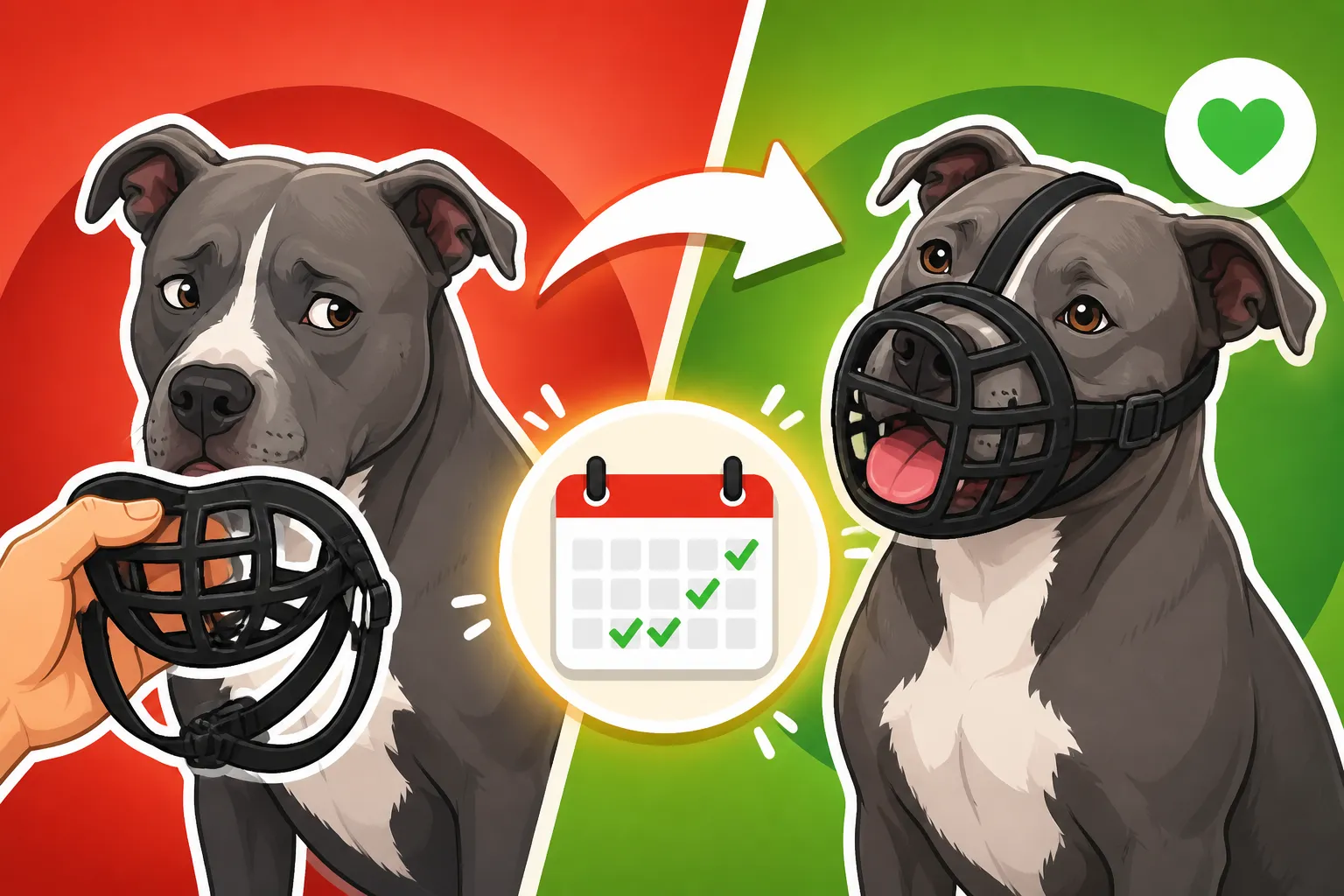
Alright, now that we have the right muzzle, let's dive into the conditioning. The goal here is to create positive associations with the muzzle at every single step. This isn't about force; it's about making the muzzle a predictor of good things – treats, praise, and fun. Remember, every dog is an individual, so some might progress faster or slower. Be patient, keep sessions short and positive, and never push your dog beyond their comfort zone.
Week One: Building Positive Associations and Brief Contact
The first week is all about laying the groundwork and getting your Pit Bull comfortable with the presence of the muzzle. We’re breaking it down into tiny, achievable steps.
Day 1-2: Introduction and Treat Delivery
Start by simply presenting the muzzle. Don't try to put it on yet. Hold the muzzle in one hand and a super high-value treat in the other (think small pieces of cooked chicken, cheese, or peanut butter). Let your Pit Bull sniff the muzzle, then immediately offer the treat. Repeat this several times. The muzzle appears, treat appears. Then, put a smear of peanut butter or cream cheese inside the muzzle, at the very bottom. Let your Pit Bull stick their nose into the muzzle voluntarily to lick it out. The moment they pull their nose out, praise them and maybe offer another treat. Do this for a few minutes, several times a day. The key is that they choose to engage with the muzzle.
Day 3-4: Short Durations and Nasal Entry
Continue with the treat delivery and licking out the muzzle. Now, as your dog is licking the treat from inside the muzzle, try to gently hold the muzzle against their face for a second or two while they lick. The moment they finish licking and before they can pull away, remove the muzzle and give another treat. We want them to associate the muzzle being on with a reward, and the removal with a reward, too. Keep these durations incredibly brief. We’re talking one or two seconds. The mantra is: muzzle on, treat, muzzle off, treat. You can even use a training program like BAXTER & Bella, which emphasizes positive reinforcement, to help guide your general approach to conditioning.
Day 5-7: Fastening the Straps Briefly
This is where it gets a little more advanced, but still brief! With your Pit Bull happily licking the treat from inside the muzzle, gently bring the straps up and clip them together behind their head for just a second or two. Immediately unclip and remove the muzzle, then reward with a fantastic treat. The goal is for the straps to be clipped while they are still focused on the treat. If they stop licking, unclip immediately. Gradually increase the duration of the clipped straps by a single second at a time. This might mean going from 1 second to 2 seconds, then 3. This slow, methodical approach is crucial. Never force it, and if your dog shows any signs of stress (pawing at the muzzle, shaking their head, trying to rub it off), go back a step.
Week Two: Increasing Duration and Movement
Week two builds on the positive foundation. We’re now aiming for longer durations, integrating the muzzle into daily activities, and reinforcing the idea that the muzzle is a normal, non-threatening part of their routine.
Day 8-10: Muzzle During Short Activities
Now that your Pit Bull is comfortable with the muzzle being on and clipped for a few seconds, start extending the duration slightly, always pairing it with something positive. Put the muzzle on, give a treat, then give them a puzzle toy, or start a short play session with a favorite toy. Keep the muzzle on for 30 seconds to a minute while they are engaged, then remove it and give another jackpot treat. Do this several times a day. You want them to be so distracted by the fun activity that they barely notice the muzzle. Gradually increase this duration. A good rule of thumb is to end the session before they get uncomfortable or try to remove the muzzle. High-Value Treats That Hold a Pit Bull's Focus will be invaluable here.
Day 11-12: Walking and Longer Wear
Once your Pit Bull is comfortable wearing the muzzle for several minutes while distracted, it's time to introduce it to short, positive experiences like a quick potty break in the yard or a very short walk around the block. Put the muzzle on (with a treat, of course!), then immediately take them out. Keep the walk short and sweet, offering praise and treats frequently. When you come back inside, remove the muzzle and give a big reward. The muzzle should still be a predictor of good things.
Day 13-14: Normalizing Muzzle Wear
By the end of two weeks, if you’ve been consistent and positive, your Pit Bull should be comfortable wearing the muzzle for 5-10 minutes, perhaps during a short walk or a training session. Continue to incorporate it into routines. Take it out when you grab their leash. Put it on when you're preparing their dinner (then feed them after it comes off, as a reward). The goal is to make it as normal as putting on their collar. Remember to always supervise your dog while they're muzzled, especially during these conditioning phases.
Here’s a simplified table to help you visualize the progression:
| Phase | Goal | Duration | Key Activities |
|---|---|---|---|
| Week 1: Intro | Positive association with muzzle presence and brief contact. | Multiple short sessions (1-2 mins each) | Present muzzle & treat. Smear treats inside. Hold muzzle to face while licking. Briefly clip straps while licking. |
| Week 2: Extend | Increase muzzle wear duration, integrate into daily positive tasks. | Gradually increasing from 30 secs to 10 mins+ | Muzzle on during puzzle play. Muzzle on for short walks/potty breaks. Normalizing muzzle as part of routine. |
Troubleshooting Common Muzzle Conditioning Challenges
Even with the best intentions and the perfect plan, you might hit a snag or two. That’s totally normal! Pit Bulls are smart, and they’ll test the boundaries. The key is to remain patient, consistent, and always, always positive.
Resistance and Fear
If your Pit Bull is showing strong resistance – backing away, pawing at the muzzle, or even trying to destroy it – it means you've moved too fast. Don't get discouraged. Simply go back a few steps in the conditioning process. Perhaps you need to spend more time just presenting the muzzle and pairing it with treats without any attempt to put it on. Maybe your treats aren't high-value enough. Experiment with different, super-delicious options. The goal is to make the muzzle's appearance the most exciting thing in the room.
It’s crucial never to scold or punish your dog for resisting the muzzle. This will only create negative associations and make the process harder. Instead, make it a game. If they pull away, put the muzzle down, wait for them to calm, then try again at a simpler step. Remember, the conditioning should always be your dog's choice to engage, not a forced interaction. If your Pit Bull suddenly turns sharp or seems to snap during the process, it might not be about the muzzle itself but related to underlying pain or discomfort, which is important to consider. A Pit Bull Snapping During a Skin Flare or A Pit Bull Snapping Because Its Skin Hurts touches on how physical discomfort can impact behavior.
Removing the Muzzle
Sometimes, your Pit Bull might try to rub the muzzle off, paw at it, or even attempt to use their teeth to dislodge it. This is a sign of discomfort or a lack of full conditioning. Again, shorten the duration immediately. If they start trying to remove it, try to distract them with a treat or a game before they succeed, then remove the muzzle yourself. We want to teach them that the muzzle comes off when you decide, not when they fight it.
Ensure the muzzle fits correctly. A poorly fitting muzzle will always be uncomfortable and your dog will naturally try to remove it. Double-check that it’s not too tight, too loose, or rubbing anywhere. Some dogs with shorter snouts or broader heads might require specific muzzle designs, so be prepared to explore different brands or styles if needed. Don't be afraid to consult with a professional positive reinforcement trainer for personalized advice if you're truly stuck. They can offer invaluable insights into your dog's specific body language and help you tailor the plan.
Public Perception Challenges
Even when your Pit Bull is perfectly conditioned and happy in their muzzle, you might still encounter judgmental stares or comments from the public. This is a tough pill to swallow for many Pit Bull owners. However, you are doing the responsible thing. You are prioritizing safety and preparing your dog for any eventuality. You can choose to ignore the stares, offer a friendly but firm "He's just being safe!" or even use it as an opportunity to educate.
Remember that muzzle conditioning your Pit Bull is a powerful statement about your commitment to responsible dog ownership and community safety. It shows foresight and care. While it won't magically change every negative perception, it can certainly help you feel more confident and prepared in various situations. Continuing to reinforce calm public manners, as discussed in The Manners a Pit Bull Needs in Public, further strengthens this image.
Ultimately, muzzle conditioning is a marathon, not a sprint. While a two-week intensive plan can build a strong foundation, true comfort comes with consistent, ongoing positive experiences. Keep using that muzzle during positive activities, keep those treats flowing, and your Pit Bull will come to view their muzzle as just another normal, even pleasant, part of their life with you.
Disclaimer
This article is for general informational purposes only and does not constitute professional advice. Laws, prices and regulations vary by location and change over time. Consult a qualified professional for guidance on your specific situation.