Pit Bull Pass Rates Against Other Breeds
It's incredibly frustrating when assumptions are made about your dog purely based on how they look, especially for those of us who share our lives with Pit Bull type dogs. These magnificent animals often face undue scrutiny and harsh judgments, making it vital to look beyond common myths and understand their true temperaments. This guide will delve into objective temperament test results, specifically focusing on how Pit Bull pass rates compare to those of other breeds, helping to shed light on their actual disposition and challenge long-standing misconceptions.
Understanding Canine Temperament Testing
When we talk about a dog's "temperament," we're really talking about their innate character, their typical way of reacting to the world around them. For breeds like the Pit Bull, which carry a heavy burden of public misunderstanding, objective evaluations become incredibly important. These tests aren't about proving one breed is "better" than another, but rather about providing data points that can inform prospective owners and challenge negative stereotypes. It's about looking at dogs as individuals and groups, through a structured lens, rather than relying on hearsay or fear.
The American Temperament Test Society (ATTS) Explained
The American Temperament Test Society (ATTS) is a non-profit organization dedicated to certifying the temperaments of dogs. Their mission is to promote and foster understanding of the value of canine temperament and its importance to society. The test itself is a standardized, repeatable series of exercises designed to simulate typical encounters a dog might have in everyday life. It's not a dog show or an obedience competition; it’s designed to gauge a dog's stability, shyness, aggressiveness, and protectiveness. Dogs are evaluated on their reactions to visual, auditory, and tactile stimuli, including strange sights, sounds, and an unknown person. Passing the ATTS test means a dog demonstrated a stable temperament, showing no unprovoked aggression, panic, or extreme shyness. Many owners find preparing for such a test also improves their bond and handling skills with their dogs. You can find more specific details on How the ATTS Test Is Run on a Pit Bull.
What a Temperament Test Actually Assesses
So, what exactly are they looking for during an ATTS test? It's a comprehensive assessment of how a dog reacts to new and unusual situations. Imagine walking your dog down a street when suddenly an umbrella pops open, or a strange figure approaches in a hooded cloak. The test includes situations like:
- Neutral Stranger: How does the dog react to a friendly, neutral person? Does it show curiosity, indifference, or fear?
- Unusual Visual Stimuli: A "strange" person might appear with a prop, like crutches or a wheelchair. How does the dog respond to something out of the ordinary?
- Auditory Stimuli: Loud, sudden noises are introduced. Does the dog startle, recover quickly, or panic?
- Threatening Stranger: A stranger might approach with a slightly menacing posture, but without direct confrontation. The test measures the dog's judgment and appropriate response.
- Surface Tests: Depending on the setup, dogs might encounter unstable surfaces.
The goal is to see if the dog can cope with these stressors in a controlled, non-aggressive, and stable manner. A dog that passes shows confidence and discernment, reacting appropriately without becoming overly fearful or aggressive. This kind of assessment offers a snapshot of a dog’s general psychological makeup.
Limitations of Single Test Scores
While temperament tests like the ATTS provide valuable data, it’s crucial to understand their limitations. A single pass or fail score, while indicative, doesn't tell the whole story of an individual dog. Think of it like a driver's test: passing means you demonstrated competence on that particular day, but it doesn't predict every single driving scenario you'll face for the rest of your life. A dog's temperament is also influenced by its environment, training, socialization, and even its health on any given day. A dog might have an off day, or an exceptional day. Moreover, these tests are artificial environments; real-world interactions are far more complex and nuanced. A breed's average pass rate gives us a general idea, but it should never replace getting to know an individual dog, their specific history, and observing their behavior firsthand. For a deeper dive into this, consider reading Why a Pit Bull Average Says Little About Yours.
Pit Bull Temperament Test Results: The Data
When we specifically look at the various dogs commonly referred to as "Pit Bulls" – which is an umbrella term, remember, not a single breed – their temperament test results often surprise those who hold preconceived notions. The data consistently reveals that these dogs, when given the opportunity, perform remarkably well in standardized temperament evaluations. This data helps us understand Pit Bull Temperament and What Testing Shows in a way that goes beyond anecdote.
American Pit Bull Terrier Pass Rates
The American Pit Bull Terrier (APBT), recognized by the United Kennel Club (UKC), is one of the primary breeds often grouped under the "Pit Bull" label. Historical ATTS data indicates that APBTs consistently achieve high pass rates, often on par with or even exceeding many breeds generally considered "family-friendly." This means that a significant majority of tested APBTs exhibit stable, confident, and non-aggressive responses to the various stimuli presented during the test. They tend to recover quickly from startling events and engage appropriately with strangers, demonstrating resilience and a level head under pressure. This performance directly challenges the narrative that APBTs are inherently unstable or dangerous, suggesting that individual temperament is far more about specific breeding, early socialization, and ongoing training than about broad breed stereotypes.
American Staffordshire Terrier Pass Rates
The American Staffordshire Terrier (AmStaff), recognized by the American Kennel Club (AKC), is another key breed within the Pit Bull type. Like their APBT cousins, AmStaffs have shown excellent performance in temperament tests. Their pass rates have historically been very high, often placing them among the top-performing breeds in the ATTS evaluations. These results highlight their robust and steady nature, indicating a strong capacity for calm and appropriate reactions even in unexpected circumstances. Owners of AmStaffs often speak of their dogs' loyalty, intelligence, and eagerness to please, qualities that contribute positively to their ability to navigate temperament tests successfully. Their strong showing in these tests underscores that, like any breed, proper upbringing and environment are critical in shaping a well-adjusted companion.
Staffordshire Bull Terrier Pass Rates
The Staffordshire Bull Terrier (Staffie) is the third breed frequently included in the "Pit Bull type" discussion, known for being a smaller, stockier dog. Staffies also exhibit consistently high pass rates in temperament testing. Their reputation as "nanny dogs" (though this term is a myth, it speaks to their generally stable nature with families) is supported by their performance in these tests, where they demonstrate a confident and friendly disposition. They are often noted for their affinity for people, which helps them navigate interactions with strangers during testing without undue fear or aggression. These high scores suggest that, despite their powerful appearance and historical working background, Staffies are largely good-natured and stable dogs when tested under controlled conditions. This consistent performance across all three major Pit Bull type breeds in temperament evaluations paints a clear picture of their general disposition.
Comparing Pit Bull Types to Other Popular Breeds
It's one thing to say Pit Bulls have good pass rates, but how do they truly stack up when compared directly to other breeds that people often view as inherently "safe" or "good family dogs"? This is where the ATTS data becomes truly eye-opening, challenging many of our cultural assumptions head-on. The numbers often speak louder than any individual story, painting a broader picture of canine temperament across the spectrum of breeds.
Benchmarking Against Commonly Perceived "Good" Breeds
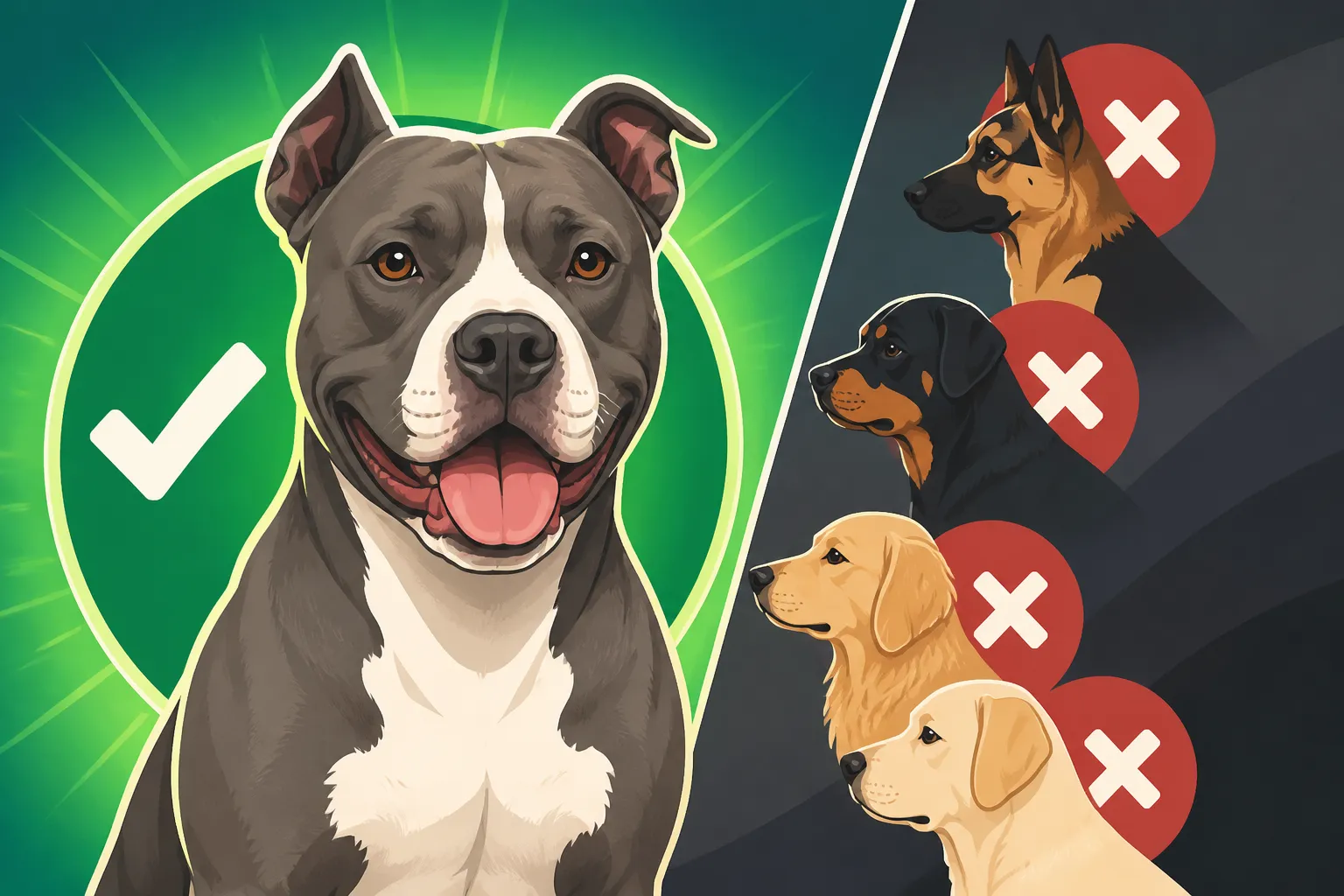
When you look at the aggregated results from organizations like the ATTS, you'll find that Pit Bull type dogs often perform as well as, if not better than, many breeds held in high public esteem. For instance, How the Pit Bull Rate Compares to a Golden Retriever is a question many people ask. Historically, breeds like Golden Retrievers and Labradors, widely celebrated for their gentle nature and family-friendliness, have high ATTS pass rates. What often surprises people is that the American Pit Bull Terrier, American Staffordshire Terrier, and Staffordshire Bull Terrier consistently achieve pass rates that are very comparable, and sometimes even slightly higher, than these universally beloved breeds. This isn't to say Golden Retrievers aren't wonderful dogs (they absolutely are!), but it does highlight that the perception of inherent aggression in Pit Bulls is not supported by objective temperament data. This data suggests that a dog's general temperament is less about its breed label and more about factors common to all dogs.
Breeds with Lower Pass Rates
It's also interesting to note that some breeds, despite not carrying the same public stigma as Pit Bulls, can have lower ATTS pass rates. This isn't a judgment against those breeds, but rather an illustration that temperament is complex and breed-specific traits can manifest in different ways. Some breeds might show more shyness, more protectiveness, or a slower recovery from startling events, which could lead to a lower pass rate. These differences underscore that every breed has its own characteristics, and a good temperament isn't exclusive to one type of dog. The key takeaway is that the "Pit Bull" type dogs are not outliers at the bottom of the temperament scale; quite the opposite, they frequently demonstrate above-average stability.
Interpreting the Comparative Data
Interpreting this comparative data requires careful thought. It doesn't mean you should run out and get any Pit Bull type dog without doing your homework, just as you wouldn't do so with any other breed. What it does mean is that the statistical evidence from structured temperament tests does not support the widely held belief that Pit Bulls are inherently more aggressive or temperamental than most other dog breeds. In fact, the data often points to them being remarkably stable and resilient. This information is crucial for informed decision-making and for advocating against breed-specific legislation that unfairly targets these dogs. It helps us move away from fear-based reactions and towards evidence-based understanding, recognizing that individual temperament and responsible ownership are paramount, regardless of breed type.
Factors Influencing Temperament Test Outcomes
While temperament tests offer a valuable snapshot, they are not a crystal ball into every dog's personality. Many factors contribute to a dog's behavior on any given day, and a stable temperament isn't solely a product of genetics. For any dog, including Pit Bulls, a complex interplay of influences shapes how they respond to the world and, by extension, how they perform in temperament evaluations.
The Role of Socialization and Training
One of the most profound influences on a dog's temperament, and certainly its performance in an ATTS test, is early and ongoing socialization and training. A Pit Bull puppy that is exposed to a wide variety of sights, sounds, people, and appropriate dog interactions during its critical developmental window (roughly 3-16 weeks) is far more likely to grow into a confident, well-adjusted adult. Positive reinforcement training further builds this foundation, teaching the dog appropriate responses to commands and novel situations. A dog that has learned to trust its handler and understand expectations will generally be more relaxed and capable of handling stress. Without adequate socialization, any dog, regardless of breed, can develop fear or reactivity, which would negatively impact its temperament test results. Many resources for proper socialization and training, including high-quality treats for positive reinforcement, can be found through retailers like Chewy. Getting started on Socializing a Pit Bull Puppy Thoroughly is one of the best investments an owner can make.
Genetics and Individual Variation Within Breeds
Of course, genetics play a foundational role. Responsible breeders prioritize good temperament in their breeding stock, selecting parents that exhibit stability, confidence, and friendliness. A well-bred Pit Bull from a line known for sound temperaments is more likely to inherit those desirable traits. However, even within the same litter, there can be individual variations. Just like people, dogs have distinct personalities. One puppy might be naturally bolder, another more reserved. This is why looking at breed averages is helpful for general understanding, but it doesn't predict the temperament of your specific dog. It's a combination of nature (genetics) and nurture (environment and training) that ultimately sculpts a dog's temperament. Even with the best genetics, poor socialization can undermine natural tendencies, and conversely, excellent training can help a dog overcome some genetic predispositions.
Environmental Impact and Past Experiences
A dog’s past experiences and current living environment significantly influence its behavior and emotional state. A dog that has experienced neglect, abuse, or prolonged confinement may understandably be more fearful or reactive, regardless of its breed. Conversely, a dog raised in a loving, stable home with consistent boundaries and positive reinforcement is more likely to develop a confident and balanced temperament. Even seemingly minor environmental stressors, like loud noises or frequent changes in routine, can affect a dog's general disposition. When evaluating a rescue Pit Bull, for example, understanding its history (if known) and recognizing that its behavior might be a response to past trauma, rather than an inherent fault, is crucial. Providing a safe, predictable, and enriching environment is key to helping any dog thrive and demonstrate its best temperament. It's why rescues often need extra patience and structured routines to help them adjust and shine.
Why Temperament Tests Matter for Pit Bull Perception
The existence and results of objective temperament tests are not just interesting statistics; they are vital tools in the ongoing effort to reshape public perception and advocate for the fair treatment of Pit Bull type dogs. In a world where these dogs are so often judged by their appearance and sensationalized headlines, data provides a much-needed counter-narrative.
Challenging Negative Stereotypes
For far too long, Pit Bulls have been burdened by deeply ingrained negative stereotypes, often portrayed as inherently aggressive, unpredictable, or dangerous. This stereotype leads to unfair policies, breed bans, and tragic outcomes for countless innocent dogs in shelters. Temperament test results, which consistently show Pit Bull type dogs performing at or above the average for many other breeds, directly contradict these harmful narratives. They provide concrete, objective evidence that a dog's breed type is not a reliable predictor of individual temperament or aggression. By widely disseminating this information, we can empower potential owners, inform policymakers, and gradually dismantle the prejudice that has unfairly targeted these loving companions. Understanding What Pit Bull Temperament Testing Cannot Predict is also key to a balanced view, but the core message remains: the stereotypes are not supported by data.
Supporting Responsible Ownership
Highlighting the positive temperament test results of Pit Bulls also supports and encourages responsible ownership. When people see that these dogs have the potential for stable and friendly temperaments, it encourages them to adopt and then invest in proper training and socialization. It shifts the focus from "controlling a dangerous breed" to "nurturing a well-adjusted dog." Responsible owners of Pit Bulls often feel a heightened sense of duty to ensure their dogs are exceptionally well-behaved in public, precisely because of the scrutiny they face. This commitment to training and socialization, sometimes involving purchasing specific durable toys or healthy training treats from places like Chewy, not only benefits the individual dog but also helps to further improve the breed's image by showcasing well-mannered examples in the community. This virtuous cycle is essential for improving the lives of Pit Bulls everywhere.
Advocating for Breed-Neutral Legislation
Perhaps one of the most significant impacts of temperament test data is its use in advocating for breed-neutral legislation. Laws that ban or restrict specific breeds, often known as breed-specific legislation (BSL), are discriminatory and have proven ineffective in enhancing public safety. They punish responsible owners and innocent dogs based solely on physical appearance, rather than actual behavior. When presented with objective data showing that Pit Bull type dogs are no more inherently dangerous than many other popular breeds, policymakers have a strong basis to reconsider and repeal BSL. This shift towards breed-neutral laws focuses on individual dog behavior, responsible ownership, and education, which are far more effective strategies for promoting community safety and preventing dog bites. The ongoing efforts in cities and states to repeal such bans often cite data like ATTS scores to make their case, proving that evidence-based arguments can create real change for these dogs.
Temperament Test Scores and Pit Bull Adoption
For anyone considering adopting a Pit Bull type dog, understanding temperament scores can be incredibly reassuring and help to guide your decision-making. It's natural to have questions, especially given the reputation these dogs sometimes carry. However, looking at the data can give you confidence that a well-socialized and responsibly managed Pit Bull can be an incredible companion.
Understanding Shelter Assessments
While a shelter dog might not come with an official ATTS certificate, many reputable rescue organizations and shelters conduct their own behavioral assessments. These assessments, while not as standardized as the ATTS, aim to evaluate a dog's reactions to various stimuli, interaction with staff, and overall disposition. They look for signs of stress, fear, sociability, and potential aggression. A shelter might also offer information about a dog's known history, if available, which can provide context to its behavior. When considering a rescue Pit Bull, ask about their assessment process and spend time interacting with the dog. A calm, friendly, and curious dog in the shelter environment is a good indicator of a stable temperament. Always remember that a shelter environment can be stressful, and a dog's true personality may take some time to emerge in a loving home.
The Value of a Good Match
Ultimately, finding the right dog for your home is about a good match, regardless of breed. A high ATTS pass rate for a breed type doesn't mean every individual dog will be a perfect fit for your lifestyle. It means the potential for a stable temperament is high. When bringing any dog home, especially a powerful and energetic one like a Pit Bull, it's essential to consider your living situation, your experience level, and the time you can dedicate to training, exercise, and socialization. Many dedicated Pit Bull owners swear by specific training regimens, harnesses built for strong pullers, and enriching toys from stores like Chewy to keep their dogs happy and well-adjusted. The ATTS data simply confirms that when you put in the effort, Pit Bulls respond just as positively as many other dogs. It reinforces that with love, consistency, and proper guidance, these dogs can be among the most loyal and loving companions you'll ever know.
| Breed Group (Examples) | Common Pit Bull Types | ATTS Temperament Pass Rate (General Trend) | Public Perception (General) | Evidence-Based Temperament (ATTS) |
|---|---|---|---|---|
| Pit Bull Types | American Pit Bull Terrier | Consistently High | Often Negative/Feared | Highly Stable & Confident |
| American Staffordshire Terrier | Consistently High | Mixed/Slightly Better | Highly Stable & Confident | |
| Staffordshire Bull Terrier | Consistently High | Generally Positive | Highly Stable & Confident | |
| Working & Herding Breeds | German Shepherd Dog | High | Capable/Protective | Generally Stable |
| Rottweiler | High | Guard Dog/Strong | Generally Stable | |
| Sporting & Companion Breeds | Golden Retriever | High | Friendly/Family Dog | Highly Stable & Tolerant |
| Labrador Retriever | High | Friendly/Family Dog | Highly Stable & Tolerant | |
| Poodle (Standard) | High | Intelligent/Elegant | Highly Stable & Intelligent | |
| Other Popular Breeds | Dachshund | Moderate to High | Playful/Spirited | Can be more vocal/assertive |
| Chihuahua | Moderate | Tiny/Feisty | Can be more fearful/reactive |
This table provides a general overview based on historical ATTS data. It's crucial to remember that actual pass rates fluctuate, and the most current figures should always be sought from the ATTS directly. The key takeaway here is the comparative trend.
Disclaimer
This article is for general informational purposes only and does not constitute professional advice. Laws, prices and regulations vary by location and change over time. Consult a qualified professional for guidance on your specific situation.