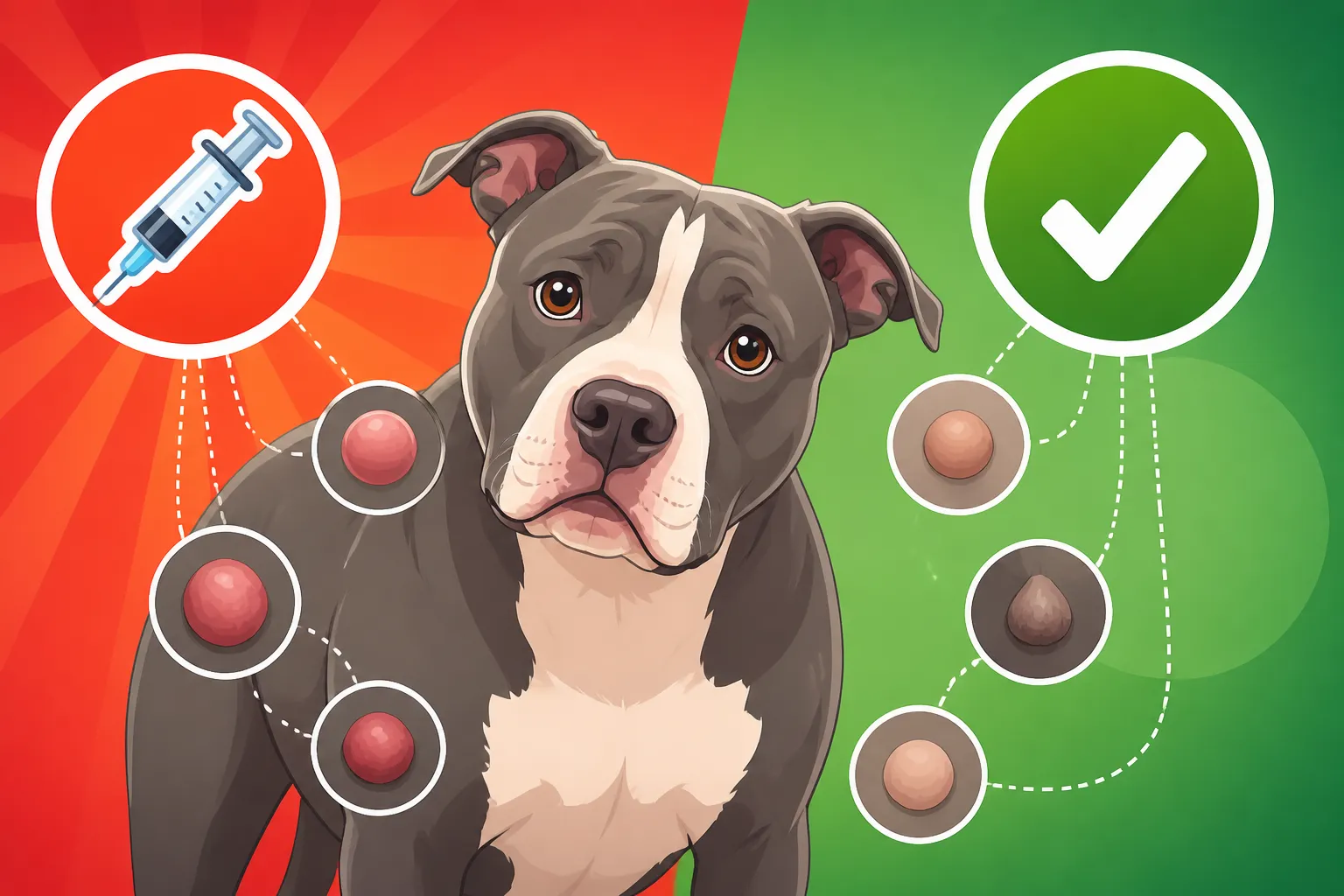
Which Pit Bull Lumps Need a Needle
Spotting an unexpected lump or bump on your beloved Pit Bull can send a wave of panic through you, bringing all sorts of worst-case scenarios to mind. It’s a common worry for many dog owners, and the truth is, not every growth is a cause for alarm. This guide will walk you through the different types of lumps you might find on your Pit Bull, helping you understand which ones are usually benign, which demand close monitoring, and crucially, which ones absolutely need a veterinarian's needle for a closer look.
Understanding Common Pit Bull Lumps and Bumps
Our Pit Bulls have wonderfully expressive skin, but sometimes that skin can throw us a curveball with unexpected bumps. Many of these are harmless, but knowing what they are and what to look for is the first step in being a proactive pet parent.
Fatty Tumors Lipomas
One of the most frequent types of lumps we find on our dogs, Pit Bulls included, are lipomas. These are essentially benign fatty tumors, and they're incredibly common, especially as dogs get older. You'll often feel them as soft, somewhat movable masses just under the skin. They can range in size from tiny pea-sized bumps to larger, several-inch growths. They tend to pop up on the chest, abdomen, or limbs, and while they can look a bit alarming, they're typically non-painful and don't bother your dog at all.
However, even though they're usually harmless, it's always a good idea to have any new lump checked by your vet. Sometimes a lipoma might grow in a spot that interferes with movement, like near a joint, or it might grow quite large, making removal a consideration. It's easy to assume it's "just a fatty lump," but only a vet can truly confirm that through examination, and often, a fine needle aspirate (FNA). You might also be surprised to find other issues that look similar, so don't self-diagnose based on feel alone.
Cysts and Abscesses
These are two different conditions that can sometimes feel like a lump. Cysts are sacs that are typically filled with fluid, dead cells, or other material, often caused by blocked glands or hair follicles. They can feel soft or firm, depending on their contents, and often appear suddenly. Sometimes, they can rupture, leading to irritation or secondary infection. Sebaceous cysts are quite common, appearing as small, firm bumps that might occasionally ooze a white, cheesy substance. While generally benign, they can become inflamed or infected.
Abscesses, on the other hand, are collections of pus that form under the skin, usually as a result of an infection from a bite wound, thorn, or foreign body. These lumps are typically hot to the touch, painful for your Pit Bull, and can develop rapidly. Your dog might be lethargic, run a fever, or simply refuse to let you touch the area. An abscess absolutely needs prompt veterinary attention because the infection can spread, and they often require drainage and antibiotics. Distinguishing between a cyst and an abscess can be tricky by touch alone, so a vet visit is essential for proper diagnosis and treatment.
Warts and Skin Tags
Just like us, dogs can get warts and skin tags. Warts, often caused by the canine papillomavirus, typically appear as small, cauliflower-like growths, most commonly around the mouth or eyes in younger dogs. They usually resolve on their own within a few months, but if they're in an area that gets irritated or bleeds, your vet might recommend removal. Skin tags are small, benign growths of skin that often look like a tiny, dangling piece of flesh. They're usually soft and fleshy, common in older dogs, and typically don't cause any problems unless they're in a location where they get constantly rubbed or pulled, such as under the armpit or on a collar line. While they rarely need treatment, it’s still wise to have your vet confirm their identity, especially if they appear suddenly or start to change.
When a Lump Demands Immediate Veterinary Attention
While many lumps are benign, there are definite red flags that signal a more serious underlying issue. Knowing these signs can help you act quickly, which can be crucial for your Pit Bull's health.
Rapid Growth and Changing Appearance
One of the biggest indicators that a lump needs immediate attention is how quickly it grows or if its appearance changes significantly. A lump that doubles in size in a matter of weeks, or even days, is highly suspicious. Similarly, if a lump changes in color, develops irregular borders, or becomes harder and more fixed to underlying tissue, it’s time to call your vet without delay. These kinds of rapid, aggressive changes can be hallmarks of malignant tumors, such as mast cell tumors, which are notorious for their unpredictable behavior and ability to spread quickly. You might remember the worry of Feeling for a Mast Cell Tumor on a Pit Bull. Catching these early can make a world of difference in treatment outcomes.
Lumps Causing Pain or Discomfort
If touching a lump causes your Pit Bull to yelp, pull away, or show any signs of pain, discomfort, or limping, it’s an urgent matter. Pain can indicate inflammation, infection (like an abscess), or a rapidly growing tumor pressing on nerves or muscle tissue. Observe your dog's behavior: Is he reluctant to move, jump, or play? Is he licking or chewing excessively at the area around the lump? These are all signs that the lump is causing distress and requires immediate veterinary assessment. A painful lump could also be a sign of a bone tumor, especially if located on a limb, which would require prompt diagnosis and aggressive treatment.
Open Sores or Ulceration
Any lump that breaks open, bleeds, oozes, or develops an ulcerated (raw, open wound) surface is a significant concern. Not only does an open sore invite secondary bacterial infections, but it can also be a sign of a more aggressive tumor that has outgrown its blood supply or is very irritated. Skin cancers, in particular, can present as non-healing sores or ulcers. If you notice an open sore on a lump, clean it gently with a mild antiseptic solution, prevent your Pit Bull from licking or chewing it (an E-collar might be necessary), and get to the vet as soon as possible. This is particularly important if you've ever dealt with Pit Bull Hot Spots and Secondary Infection, as a similar approach to preventing further damage is needed.
Lumps in Concerning Locations
The location of a lump can also provide clues about its potential severity. Lumps found in areas like the lymph nodes (under the jaw, in the armpits, or behind the knees), mammary glands (especially in intact females or spayed females who were spayed later in life), or rapidly growing masses on the face, eyelids, or muzzle warrant heightened concern. Enlarged lymph nodes can be a sign of infection, inflammation, or certain types of cancer. Mammary gland tumors can be malignant and require prompt surgical removal and biopsy. Any lump near an orifice, such as the anus, mouth, or eyes, should also be thoroughly investigated due to its potential to interfere with vital functions or be more aggressive in nature.
The Diagnostic Process: Why a Needle Biopsy Matters
Once you've found a lump and determined it needs veterinary attention, the next step is typically diagnostic testing. A physical exam by your vet is crucial, but often, the true nature of a lump can only be revealed by looking at the cells or tissue itself.
Fine Needle Aspiration FNA
A fine needle aspiration (FNA) is often the first, least invasive diagnostic tool your vet will use. It's a quick procedure where a very fine needle, similar to those used for vaccinations, is inserted into the lump to collect a sample of cells. These cells are then spread onto a slide, stained, and examined under a microscope by your veterinarian or a veterinary pathologist. The beauty of an FNA is that it can often be done during a regular office visit, often without sedation, and yields results relatively quickly. It’s excellent for identifying common benign growths like lipomas or cysts, or for giving an initial indication of more serious issues like mast cell tumors or lymphoma.
However, it's important to understand that an FNA is not always definitive. Sometimes, the sample collected might not be representative of the entire mass, or the cells might be too few or too fragmented to make a conclusive diagnosis. In these cases, or if the results are suspicious, your vet will likely recommend a more invasive biopsy to get a clearer picture. While the cost for an FNA is usually manageable, if further diagnostics are needed, the bills can start to add up quickly. This is where pet insurance, like a plan from Healthy Paws, can really come in handy, helping to cover unexpected diagnostic and treatment costs. Many policies, including those from Healthy Paws, are designed to help with these situations, easing the financial burden during a stressful time.
Incisional or Excisional Biopsy
When an FNA is inconclusive, or if the vet has a strong suspicion of malignancy, an incisional or excisional biopsy is the next step.
An incisional biopsy involves surgically removing only a small piece of the mass for analysis, leaving the rest of the lump intact. This is often done when the lump is very large, or when its location makes full removal in one go difficult without a definitive diagnosis. The goal is to obtain enough tissue to accurately diagnose the type of tumor and determine its grade (how aggressive it is) and margins (whether it has clear boundaries).
An excisional biopsy, on the other hand, means the entire lump is surgically removed, along with a margin of healthy tissue around it. This is usually preferred if the lump is small and easily accessible, as it can be both diagnostic and curative in one procedure. Both types of biopsies require general anesthesia for your Pit Bull, meaning they are more involved and carry a higher cost than an FNA. The tissue samples are then sent to a specialized veterinary pathologist for detailed examination. These biopsies provide the most definitive diagnosis, guiding the best course of treatment. The information obtained about the specific type of cancer and its characteristics is vital for formulating a targeted treatment plan. For more general insights into comprehensive health checks, consider What a Pit Bull Health History Should Cover might detail.
Interpreting Results and Next Steps
Once the biopsy results are back, your vet will discuss them with you. A "benign" diagnosis is a huge relief, meaning the lump is non-cancerous. In many cases, no further treatment is needed beyond monitoring. If the lump is causing problems, such as irritation or interfering with movement, your vet might recommend surgical removal, but the urgency is typically lower.
A "malignant" diagnosis means the lump is cancerous. The biopsy report will detail the specific type of cancer, its grade, and whether the surgical margins were "clean" (meaning all visible cancer cells were removed). Depending on the cancer type and stage, treatment options can vary widely. They might include:
- Further Surgery: If the margins weren't clean, or if the tumor is very aggressive, additional surgery might be needed to remove more tissue. This is a big deal, and topics like Anesthesia and Muscle Mass in a Pit Bull become very relevant when planning such procedures.
- Chemotherapy or Radiation: For certain aggressive cancers or those that have spread, chemotherapy or radiation therapy may be recommended.
- Palliative Care: In some advanced cases, the focus might shift to managing symptoms and ensuring your Pit Bull's comfort.
This phase can be emotionally and financially challenging. Understanding your options and having a clear plan is paramount. Organizations and insurance providers, including Healthy Paws, aim to support pet owners through these difficult times by helping to cover the often significant costs associated with cancer treatment. Unexpected vet bills can truly strain a household budget, and having a safety net can allow you to focus on your Pit Bull's recovery. For a deeper dive into specific health concerns in older dogs, it's helpful to be aware of Cancers That Show Up in an Older Pit Bull.
Here's a quick overview of common lump characteristics and what they might mean:
| Lump Characteristic | Potential Type of Lump | Recommended Action |
|---|---|---|
| Soft, movable, non-painful | Lipoma, Cyst | Vet exam, possibly FNA for confirmation, then monitor. |
| Firm, fixed, rapid growth | Malignant Tumor (e.g., Mast Cell) | Urgent vet exam, FNA or biopsy immediately. |
| Hot, painful, rapid onset | Abscess, Severe Inflammation | Urgent vet exam for drainage and antibiotics. |
| Oozing, bleeding, ulcerated | Infected Cyst, Tumor, Hot Spot | Urgent vet exam to diagnose and treat infection/cause. |
| Small, cauliflower-like | Papilloma (Wart) | Vet exam for confirmation, monitor unless irritated. |
| Small, fleshy, dangling | Skin Tag | Vet exam for confirmation, typically no action needed. |
| Enlarged lymph node location | Infection, Lymphoma | Urgent vet exam, FNA or biopsy. |
Proactive Care and Monitoring for Pit Bull Skin Health
Being vigilant about your Pit Bull's overall health and taking a proactive approach to their care can make a huge difference, especially when it comes to catching lumps early.
Regular Skin Checks
Making regular skin checks a part of your routine is perhaps the most important thing you can do. Aim for a thorough head-to-tail examination at least once a month, more frequently if your Pit Bull is older or prone to skin issues. While you're petting and grooming them, systematically run your hands over their entire body, paying close attention to areas like the armpits, groin, belly, between the toes, and around the ears and mouth. Don't forget their tail and paw pads!
Feel for anything new or unusual. Note its size, shape, texture, and whether it’s movable or fixed. If you find something, it's a good idea to record it. Take a picture, measure it, and make a note of the date you found it. This documentation will be incredibly valuable to your vet if you need to seek professional advice. It helps them track any changes accurately. This kind of regular monitoring is crucial for dogs of all ages, but particularly as they get older, you should consider How Often a Ten Year Old Pit Bull Needs Checking. Many Pit Bulls also suffer from Pit Bull Skin Allergies and the Atopy Pattern, which can sometimes manifest as irritated skin leading to secondary issues that might be mistaken for lumps or hide them.
Lifestyle Factors and Prevention
While not all lumps can be prevented, certain lifestyle factors can contribute to overall skin health and potentially reduce the incidence of some types of growths. A high-quality diet provides the nutrients necessary for healthy skin and a robust immune system. Discuss with your vet if a specific diet or supplements, such as omega-3 fatty acids, could benefit your Pit Bull's skin.
Managing allergies is also key. Pit Bulls are often prone to environmental allergies, which can lead to chronic skin inflammation, itching, and secondary infections. Keeping these allergies under control can reduce skin irritation that might predispose to certain issues or simply make it harder to spot new lumps. Consistent parasite prevention, covering fleas, ticks, and mites, is also essential, as bites and infestations can cause inflammatory reactions that manifest as skin lumps. Finally, protecting your Pit Bull from excessive sun exposure, especially on sparsely haired or pink-skinned areas, can help reduce the risk of sun-induced skin cancers. Being proactive in managing your Pit Bull's overall health, including preventative measures and early detection, gives them the best chance at a long, healthy life.
Disclaimer
The information provided in this guide is for general educational purposes only and should not be considered a substitute for professional veterinary advice. Always consult with a qualified veterinarian for any health concerns or before making any decisions about your Pit Bull's medical care.