A Weekly Toothbrushing Routine for a Pit Bull
As a Pit Bull owner, you've probably experienced that unique "Pit Bull breath" – sometimes charmingly doggy, sometimes… well, let's just say it could clear a room faster than a fire alarm. But beyond the occasional funky smell, what many of us don't realize is that our beloved, strong-jawed companions are just as susceptible to serious dental health issues as any other dog, if not more so due to their powerful chewing. Neglecting their pearly whites can lead to painful infections, lost teeth, and even systemic health problems down the road. This guide is all about setting you up for success with a practical, weekly toothbrushing routine designed specifically for your Pit Bull, helping you tackle that dental plaque head-on and keep their mouth healthy and happy for years to come.
Understanding Why Dental Care is Crucial for Your Pit Bull
It's easy to overlook dental care when you're focused on daily walks, playtime, and making sure your Pit Bull is the best-behaved dog at the park. But truly, dental health is a cornerstone of their overall well-being, and ignoring it can have far-reaching consequences that go well beyond just bad breath. These dogs, with their incredible strength and zest for life, need every advantage to stay healthy, and that absolutely includes a clean mouth.
The Silent Threat of Periodontal Disease
Periodontal disease isn't just a fancy vet term for bad teeth; it's a progressive and often painful condition that affects the gums and supporting structures of your dog's teeth. It starts subtly, with plaque – a sticky film of bacteria – building up on the tooth surface. If not removed, this plaque hardens into tartar, a rough, calcified deposit that clings stubbornly to the teeth, usually around the gum line. And once tartar sets in, brushing alone often isn't enough to get rid of it.
This buildup creates a breeding ground for more bacteria, irritating the gums and leading to gingivitis – inflammation and redness that might make the gums bleed easily. This is often the first visible sign, and sadly, many owners miss it. As the disease progresses, the inflammation spreads deeper, attacking the bone and ligaments that hold the teeth in place. Teeth can become loose, painful, and eventually fall out. What's even scarier is that these oral bacteria can enter the bloodstream through the inflamed gums, traveling to vital organs like the heart, kidneys, and liver, potentially causing serious secondary infections and health complications. This is a big part of Pit Bull Dental Disease and Hard Chewing, and why prevention is so much better than treatment.
Pit Bulls and Their Powerful Chewing Habits
We all know Pit Bulls are champion chewers. Give them a toy, and they'll dedicate themselves to it with an intensity few other breeds can match. This isn't inherently bad; in fact, appropriate chewing can be beneficial, helping to scrape away some plaque and satisfy their natural instincts. However, their incredible jaw strength also comes with a unique set of dental challenges.
For one, if they're given inappropriate or excessively hard chews, they can easily Chews That Crack a Pit Bull Molar. A cracked tooth is not only excruciatingly painful but also creates an entry point for bacteria, leading to infections and abscesses that require immediate veterinary intervention. Furthermore, while chewing can help some, it often doesn't reach the critical gumline area where plaque and tartar typically accumulate. Those back molars, in particular, often bear the brunt of chewing activity but can still get covered in tartar where the brush simply doesn't reach. So, relying solely on chews, even dental-specific ones, isn't a substitute for hands-on brushing. Their powerful jaws mean they need our diligent care to ensure their teeth stay strong and healthy, without breaking them in the process.
Essential Tools for Your Pit Bull's Dental Routine
Before you even think about tackling your Pit Bull's mouth, you need to gather the right equipment. Just like you wouldn't use a regular human toothbrush on your dog, you need specialized tools designed for their unique oral anatomy and taste preferences. Having the right arsenal makes the task much easier for both of you and far more effective in the long run.
Choosing the Right Toothbrush and Toothpaste
This is where your weekly routine truly begins. You wouldn't expect your dog to willingly accept a minty human toothpaste or a giant stiff-bristled brush, right?
-
Toothbrushes for Dogs: You have a few options here.
- Finger Brushes: These are small, soft brushes that fit over your finger. They're excellent for getting your Pit Bull used to the sensation of brushing, offering direct tactile feedback for you, and are great for focusing on specific areas. However, their bristles aren't always as effective at scrubbing as a traditional brush. You might find these on Amazon or Chewy.
- Dog Toothbrushes (Long-Handled): These look more like miniature human toothbrushes but are designed with softer bristles and an angled head to reach those tricky spots in a dog's mouth. The dual-headed ones with different sized brushes on each end can be particularly useful for navigating a Pit Bull's varied tooth sizes. These are often the most effective for a thorough clean once your dog is comfortable.
- Electric/Sonic Toothbrushes for Dogs: Yes, they exist! These can be fantastic for efficiency and effectiveness, but they come with a higher price tag and require a much longer conditioning period to get your dog accustomed to the noise and vibration. For a long-term strategy, especially if you're battling significant tartar buildup, they might be worth considering after you've mastered manual brushing.
-
Dog Toothpaste: This is non-negotiable. Never use human toothpaste on your dog. Human toothpaste often contains xylitol, an artificial sweetener that is highly toxic to dogs, and fluoride, which can cause stomach upset if swallowed. Dog toothpastes are specially formulated with pet-safe ingredients and come in flavors dogs adore, like poultry, beef, or peanut butter. The enzymatic action in many dog toothpastes also helps break down plaque and bacteria, adding an extra layer of protection. Brands like Virbac C.E.T. or Petrodex are popular choices and can be found at most pet stores or online retailers.
Beyond the Brush: Exploring Other Dental Aids
While brushing is the gold standard, there are other tools that can complement your routine and help maintain oral health between those weekly sessions. Think of them as reinforcements in the battle against plaque and tartar.
- Dental Chews: Not all chews are created equal. Look for dental chews that are specifically designed to reduce plaque and tartar, often indicated by a veterinary oral health council (VOHC) seal of approval. These chews typically have a texture that helps scrape the tooth surface as your dog chews, and some contain ingredients that inhibit bacterial growth. Brands like Greenies or Dentastix are widely available. Remember, these are a supplement to brushing, not a replacement, and they still contribute to your dog's daily calorie intake, so adjust their food accordingly to prevent Pit Bull Obesity and Joint Strain. You want Chews Safe for Pit Bull Teeth, not ones that cause more problems!
- Water Additives: These products are poured into your Pit Bull's drinking water and contain ingredients that help reduce bacteria in the mouth and freshen breath. They are usually flavorless or have a very mild taste, so most dogs don't even notice them. They can be a helpful addition, particularly if your Pit Bull is resistant to brushing or if you're trying to manage bad breath. Again, look for veterinary-approved options.
- Dental Sprays and Gels: These topical products can be sprayed directly onto your dog's teeth and gums or applied with a finger. Many contain enzymes or antiseptics that help reduce plaque and bacteria. They're often used for dogs who won't tolerate brushing but can also be a quick daily touch-up after a weekly brush. These might be a good option if your Pit Bull has A Pit Bull Rubbing Its Face on the Carpet due to gum irritation, providing some localized relief and cleaning.
- Dietary Choices: Some dog foods are formulated with kibble designed to scrub teeth as your dog eats, or with ingredients that support oral health. While not a standalone solution, incorporating a dental-focused diet can contribute positively to their overall oral hygiene. Consult your vet before making drastic changes to your Pit Bull's diet, especially if you're also concerned about Feeding a Pit Bull to Keep Muscle Without Fat.
Step-by-Step: Establishing Your Weekly Brushing Routine
Getting your Pit Bull to accept toothbrushing might sound like a wrestling match waiting to happen, but with patience, positive reinforcement, and a consistent approach, it's absolutely achievable. Remember, this isn't a one-time event; it's a routine you're building together for their health.
Getting Your Pit Bull Comfortable with the Process
This is perhaps the most crucial stage. Rushing it will only create negative associations and make future brushing sessions a battle. The key is to introduce each step gradually and make it a positive experience.
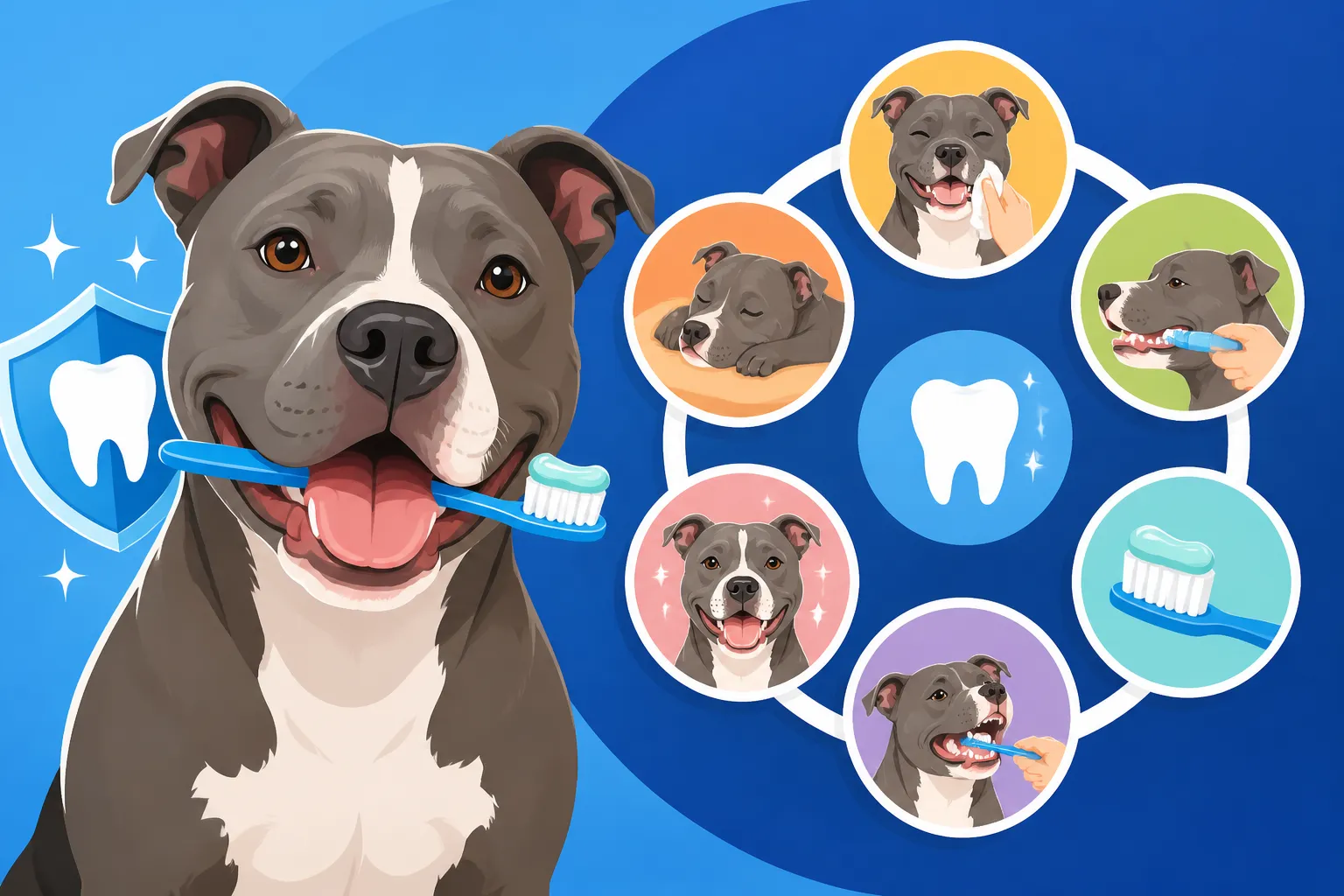
- Start with Touch: Begin by simply touching your Pit Bull's muzzle and around their mouth. Gently lift their lips for a second, then immediately praise and reward them with a high-value treat. Do this several times a day for a few days until they're completely comfortable with you handling their face. The goal here is to make them associate your hands near their mouth with good things.
- Introduce the Toothpaste: Once they're okay with facial touching, let them lick a tiny bit of the dog-specific toothpaste off your finger. The tasty flavor will create a positive association. Do this for a few days, gradually increasing the amount they lick. They should start getting excited when they see the tube! Brands like Ollie or other fresh food companies might offer dog-friendly pastes or ingredients that can be mixed into a paste for variety.
- Introduce the Brush/Finger Brush: Next, put a small amount of toothpaste on a finger brush or a regular dog toothbrush. Let them lick the paste off the brush. Then, very gently, just touch the brush to one of their canine teeth or a front tooth for a second. Immediately praise and reward. Don't try to brush yet. Just let them feel the brush in their mouth. Repeat this several times over a few days, gradually increasing the number of teeth you touch and the duration.
- Practice Short Brushing Sessions: When your Pit Bull is completely relaxed with the brush touching their teeth, try a very short, gentle brush stroke on just one or two teeth. Again, praise and reward immediately. Keep these early sessions extremely brief – literally a few seconds – and always end on a positive note. Over several sessions (and days or even weeks), gradually increase the duration and the number of teeth you brush. The aim is for them to not just tolerate it, but to look forward to it because they know delicious treats are coming!
Remember, consistency is key, but so is patience. If your Pit Bull shows any signs of stress or resistance, go back a step and spend more time at that level of comfort. This initial investment in time will pay dividends.
The Brushing Technique for Maximum Effectiveness
Once your Pit Bull is a pro at tolerating the brush, it's time to refine your technique to ensure you're actually cleaning effectively. The goal is to tackle that insidious plaque and prevent Tartar Building on Pit Bull Molars.
- Positioning: Find a comfortable position for both of you. Many owners find it easiest to stand or kneel beside their dog, gently cradling their head in one arm. Some dogs prefer to sit between your legs, or even lie down. Experiment to see what works best for your Pit Bull.
- Lifting the Lip: Gently lift your Pit Bull's upper lip to expose the outer surfaces of their teeth and gums. You don't need to open their mouth wide at first; most dental disease occurs on the outer surfaces.
- Angle the Brush: Hold the toothbrush at a 45-degree angle to the gum line. This angle allows the bristles to clean both the tooth surface and gently massage the gum line where plaque and bacteria accumulate most.
- Gentle Circular Motions: Use gentle, circular motions, almost like you're polishing the teeth. Concentrate on small sections at a time, spending about 15-30 seconds on each section. Make sure to get those crucial back molars and the canine teeth, as these are often hotbeds for plaque and tartar.
- Focus on the Outside: Don't stress too much about cleaning the inside surfaces of the teeth. Most dogs' tongues do a pretty good job of cleaning the inner surfaces, and the majority of dental problems occur on the outer, cheek-facing surfaces.
- Praise and Reward: Throughout the process, offer soft praise and reassurance. When you finish, immediately offer that high-value reward they love. Keep the entire brushing session relatively short – ideally 1-2 minutes for a thorough clean.
- Consistency: Aim for at least once a week, but daily is truly ideal if you can manage it. Even a few times a week is vastly better than nothing. The more consistent you are, the less plaque has a chance to harden into tartar. This routine will be a major part of your Pit Bull Dental Cleaning Schedule.
Troubleshooting Common Challenges and Staying Consistent
It's entirely normal to hit a few bumps in the road when establishing a new routine with your Pit Bull. They're intelligent and strong-willed, and if they've had a bad experience or simply don't understand, they'll let you know. The trick is to anticipate these challenges and have strategies ready to overcome them.
Dealing with Resistance and Making it Positive
Sometimes, despite your best efforts, your Pit Bull might still resist. This could manifest as pulling away, snapping, or just general unhappiness. It's frustrating, especially when you know it's for their own good.
- Re-evaluate Your Pace: Are you rushing things? Go back to the comfort-building steps outlined earlier. Sometimes, we need to spend more time on each stage than we initially anticipate. It might take weeks, not days, to get them truly comfortable.
- Increase the Value of the Reward: Is your treat truly high-value? For some Pit Bulls, a regular kibble isn't enough motivation. Think small pieces of cooked chicken, cheese, or special training treats. Make the reward so good that they want to participate.
- Change the Environment: Is there too much going on? Try brushing in a quiet room where there are no distractions. Some dogs feel more secure on a non-slip mat or even a raised surface if they're used to grooming there.
- Check for Pain: If your Pit Bull suddenly becomes resistant to brushing after being okay with it, or if they show signs of pain, it could be a sign of an underlying dental issue like a cracked tooth, a deep gum infection, or even something else entirely. In such cases, stop brushing and schedule a vet visit immediately. This is a critical point where What a Pit Bull's Breath Says About Its Teeth might hint at bigger problems.
- Keep it Short and Sweet: Even if you can only manage 15 seconds, make those 15 seconds positive and rewarding. Gradually build up from there. Ending on a good note, even if it’s brief, is more important than pushing too far and creating a negative association.
- Use a Cue Word: Introduce a specific word like "teeth" or "brush time" before you start the routine. Over time, this word will signal to your Pit Bull what's coming and that good things (treats!) follow.
When to Call in Professional Help
Despite your best at-home efforts, sometimes your Pit Bull will need professional dental attention. This isn't a failure on your part; it's a necessary step in their comprehensive health care.
- Signs of Advanced Dental Disease: Look out for persistent bad breath, visible tartar buildup (especially yellow or brown deposits near the gums), red or swollen gums, bleeding from the mouth, loose teeth, difficulty eating, pawing at the mouth, or excessive drooling. If you notice any of these, it's definitely time for a vet visit.
- Annual Dental Check-ups: Even with diligent home care, your Pit Bull should have their teeth checked annually by a veterinarian. During these check-ups, your vet can assess their oral health, recommend professional cleaning if needed, and address any potential issues early.
- Professional Dental Cleaning: Just like humans, dogs sometimes need their teeth professionally cleaned. This involves a procedure under anesthesia where the vet scales away tartar above and below the gum line, polishes the teeth, and performs a thorough oral exam, often including dental X-rays to check for problems beneath the gum line. This is the only way to remove hardened tartar and address issues that can't be seen on the surface. Understanding the typical Pit Bull Dental Cleaning Schedule will help you budget and plan for these essential appointments.
- Finding a Vet: It’s vital to find a vet who is not only skilled in general practice but also comfortable and experienced with the unique needs and anatomy of Pit Bulls. A vet who understands their powerful build and potential for dental issues can provide the best guidance. If you're struggling to find the right care, read our guide on Finding a Vet Comfortable With Pit Bulls. These professional cleanings can be one of The Pit Bull Costs Owners Never See Coming, so regular preventative care at home is crucial.
By combining a consistent at-home weekly toothbrushing routine with regular veterinary check-ups and professional cleanings when necessary, you'll be giving your Pit Bull the best possible chance at a long, healthy, and happy life, free from the pain and complications of dental disease. Your dedication truly makes all the difference!
Disclaimer
This article is for general informational purposes only and does not constitute professional advice. Laws, prices and regulations vary by location and change over time. Consult a qualified professional for guidance on your specific situation.