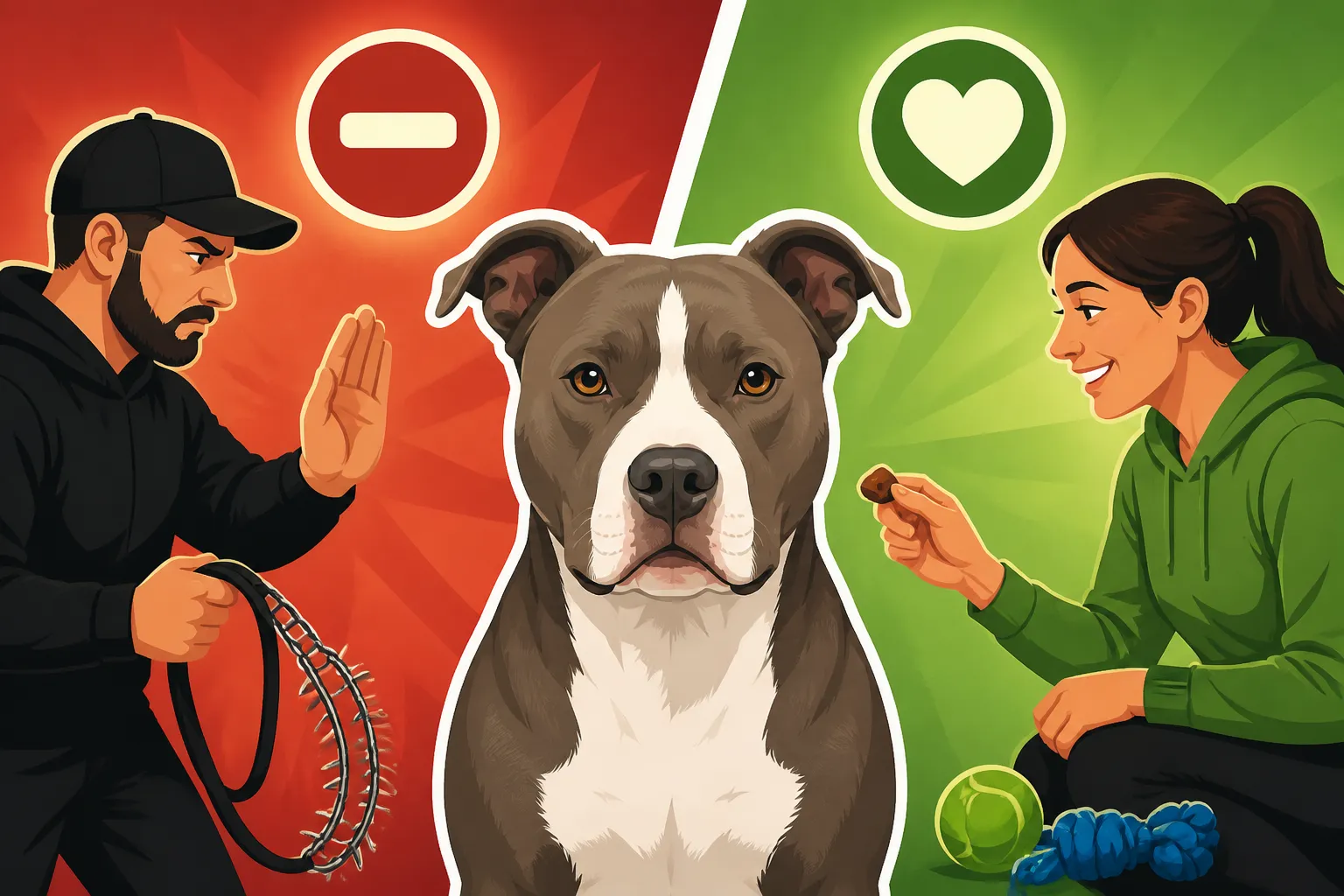
Balanced Against Positive Training for a Pit Bull
As a Pit Bull owner, you know the scrutiny our dogs face. Every walk, every interaction, feels like an audition for the breed itself. When it comes to training, the debate between "balanced" and "positive-only" methods can add another layer of stress, leaving you wondering which approach is truly best for your powerful, loving companion and for maintaining their reputation in a world that often misunderstands them. This guide aims to clear up the confusion, delve into the nuances of both training philosophies, and help you navigate the choices so you can build the strongest, most trusting relationship with your Pit Bull.
Unpacking the Philosophies: What "Balanced" and "Positive" Training Truly Mean
Before we can even begin to discuss which approach might be better suited for a Pit Bull, it's absolutely vital that we understand what each philosophy actually entails. The terms "balanced" and "positive" are thrown around a lot, often with strong opinions attached, but without a clear understanding, it's impossible to make an informed decision for your dog. Let's break down the foundational principles of each.
The Core of Positive Reinforcement
At its heart, positive reinforcement training is all about encouraging desired behaviors by adding something the dog finds rewarding. Think treats, praise, toys, or even access to a favorite activity. When your Pit Bull does something you like – perhaps sits calmly when a visitor arrives – you immediately reward that action. This makes your dog more likely to repeat that behavior in the future because they associate it with a positive outcome. It's a proactive approach, focused on teaching your dog what to do, rather than punishing them for what you don't want them to do. The goal is to build a strong, trusting relationship where your dog enthusiastically chooses to cooperate with you, not out of fear, but out of a desire for good things. It's about clear communication and making learning a fun, engaging process for both of you.
This method often heavily utilizes "marker training," where a specific sound (like a clicker or a verbal cue like "yes!") immediately marks the exact moment the dog performs the desired behavior, followed by a tangible reward. This precision helps your Pit Bull understand exactly what they're being rewarded for. When teaching a new command or refining a behavior, you'll often break it down into tiny steps, rewarding each successful approximation. For example, when teaching a "down," you might first reward a head lower, then a chest lower, then finally a full down. You're constantly setting your dog up for success, ensuring they have plenty of opportunities to get it right and earn rewards. The array of high-value training treats available on platforms like Amazon can be a game-changer here, as finding something your Pit Bull absolutely adores is crucial for motivation. You can find more on this in High-Value Treats That Hold a Pit Bull's Focus.
A hallmark of pure positive reinforcement is the absence of aversive tools or corrections. This means no choke chains, prong collars, or electronic collars. The philosophy maintains that these tools, which work by creating discomfort or pain, can damage the dog-owner bond, suppress natural behaviors without resolving the underlying issue, and potentially lead to fear or aggression, especially in a breed already facing stigma. Instead, if a dog performs an unwanted behavior, the focus is on managing the environment to prevent the behavior (e.g., putting tempting items out of reach), or redirecting the dog to an appropriate alternative that can then be rewarded. For instance, if your Pit Bull is jumping on guests, instead of kneeing them, you might prompt them to sit and then reward the sit, while ensuring they can't practice the jumping.
The Principles of Balanced Training
Balanced training, as its name suggests, incorporates elements from both positive reinforcement and correction-based methods. Proponents believe that while rewarding good behavior is important, sometimes a dog needs to be told when a behavior is unacceptable through a form of aversive consequence or "correction." This approach often references the "four quadrants of operant conditioning," which include positive reinforcement (adding something good), negative reinforcement (removing something unpleasant), positive punishment (adding something unpleasant), and negative punishment (removing something good). Balanced training typically utilizes all four quadrants, though often with a stronger emphasis on positive reinforcement for teaching new behaviors and positive punishment/negative reinforcement for stopping unwanted ones.
In practice, a balanced trainer might use food rewards and praise to teach a "sit" or "stay," but if a dog pulls on the leash, they might apply a quick "pop" with a prong collar, or use an electronic collar with a low-level stimulation to discourage the pulling. The idea is that the dog learns not only what to do to earn rewards but also what not to do to avoid an unpleasant sensation. The aim is to create clear boundaries and consequences for the dog. Balanced trainers often argue that these corrections, when applied correctly and with precise timing, are a quick and effective way to communicate with dogs, especially those with strong drives or serious behavioral challenges that haven't responded to purely positive methods.
The range of tools in a balanced trainer's toolkit can be quite broad, including flat collars, harnesses, head halters, prong collars, slip leads, and electronic collars. The emphasis is on using the right tool for the specific dog and situation, with the understanding that some dogs may require stronger motivators or deterrents. For example, a powerful Pit Bull with a history of strong leash pulling might be introduced to a prong collar to teach loose-leash walking, with the correction being released as soon as the dog slackens the leash (negative reinforcement). The crucial element, according to balanced trainers, is the timing and fairness of the correction – it should be clear, consistent, and immediately linked to the unwanted behavior, and followed by an opportunity to perform the desired behavior and earn a reward.
Why Positive Reinforcement Often Shines for Pit Bulls
Given the public perception of Pit Bulls, choosing a training method that builds trust, confidence, and showcases their best qualities is incredibly important. Many experienced Pit Bull owners and trainers find that positive reinforcement methods are not only effective but also align perfectly with the needs of these sensitive, powerful, and often misunderstood dogs.
Building Trust and a Strong Relationship
Pit Bulls, more than many other breeds, often enter our lives with a history of unfair judgment or even abuse. For these dogs, fostering an environment of trust, safety, and unwavering positive regard is paramount. Positive reinforcement training inherently builds this trust. When your Pit Bull learns that engaging with you consistently leads to good things – treats, praise, games, affection – their confidence blossoms. They learn that you are a reliable source of good experiences, and this strengthens your bond exponentially. This deep trust is crucial for a breed that society often eyes with suspicion; a confident, happy Pit Bull who relies on and trusts their owner is far less likely to exhibit fear-based reactions or be misunderstood in public. You can learn more about building this bond in Positive Reinforcement Training With a Pit Bull.
Conversely, training methods that rely on fear or discomfort can be particularly detrimental to a Pit Bull. While a quick "correction" might stop an unwanted behavior in the moment, it can erode the very foundation of trust you're trying to build. A dog who anticipates punishment may become hesitant, anxious, or even reactive, especially if they don't fully understand why they're being corrected. For a Pit Bull, whose physical presence already carries certain connotations, any training that might inadvertently create or exacerbate anxiety or reactivity is a significant risk. We want our Pit Bulls to feel safe and secure with us, knowing they can make mistakes without harsh repercussions, and that we will guide them patiently towards the right choices.
Ultimately, consistent, clear, and positive communication from you helps your Pit Bull understand the world and their place in it. It empowers them to make good choices because they want to earn those rewards, not because they fear consequences. This proactive approach to teaching new skills and managing their environment sets your Pit Bull up for success in every situation. From learning to walk politely on a leash to greeting new people calmly, these positive experiences accumulate, shaping a well-adjusted, confident, and beloved family member. Teaching a Pit Bull to Greet Calmly is a perfect example of a behavior best taught through positive methods.
Managing a Powerful Breed with Empathy
Pit Bulls are incredibly athletic, intelligent, and possess a strong drive. Their physical strength alone means that any behavioral issue can feel magnified, and managing a pulling Pit Bull or one with high prey drive requires smart, empathetic training. Positive reinforcement excels at channeling these inherent traits into productive, desirable behaviors. Instead of trying to suppress a Pit Bull's natural inclination to chase, for example, positive trainers teach an alternative, incompatible behavior – perhaps a rock-solid recall or a "leave it" command – that is then heavily rewarded. This approach works with the dog's natural instincts rather than against them. You're giving them a job, a way to expend that energy and intellect in a manner that benefits everyone.
Consider leash manners. A Pit Bull who learns that walking calmly beside you leads to treats, praise, and eventually the freedom to sniff interesting spots, will develop a much stronger desire to walk nicely than one who simply avoids a painful jerk on a prong collar. It transforms the act of walking from a potential battle into a cooperative outing. This is especially important when considering the physical strength of these dogs. Rather than relying on force or painful tools to control a powerful dog, positive methods focus on empowering the owner with communication skills and management strategies to guide their Pit Bull's choices. This often involves teaching impulse control exercises, where the dog learns to delay gratification, which is incredibly valuable for a strong, driven breed. Building a Pit Bull's Impulse Control is a cornerstone of this approach.
Empathy in training means understanding why a dog might be exhibiting a certain behavior, rather than just labeling it as "bad." Is your Pit Bull barking excessively because they're bored, anxious, or have unmet exercise needs? Positive training helps you identify these underlying motivations and address them holistically, rather than simply punishing the symptom. This deeper understanding leads to more sustainable and humane solutions. For a breed like the Pit Bull, who often carries the burden of perception, demonstrating that they are capable of learning and responding positively to compassionate guidance can be a powerful counter-narrative to negative stereotypes. Training isn't just about obedience; it's about mutual respect and understanding, creating a partnership where both dog and owner thrive.
Navigating the Controversies of Balanced Training for Pit Bulls
While proponents of balanced training assert its effectiveness, especially for strong-willed or severely problematic dogs, it also comes with significant controversies, particularly when applied to Pit Bulls. Understanding these risks and the ethical considerations is crucial before deciding on a training path.
The Risks of Aversive Tools and Methods
The primary concern with balanced training, especially concerning Pit Bulls, lies in the potential misuse or misinterpretation of aversive tools and corrections. A poorly timed or overly harsh correction can have severe negative consequences. For a Pit Bull, who might already be perceived negatively by some, a training method that inadvertently leads to fear, anxiety, or even reactive aggression is a serious liability. A dog corrected for growling, for example, might learn to suppress the growl – their primary warning signal – potentially leading to a bite without any prior warning. This can create a truly dangerous situation, not just for the dog, but for those around them, and tragically, it often compounds the negative stereotypes associated with the breed. You should be intimately familiar with Reading a Pit Bull Growl Correctly to understand these important warning signals.
Furthermore, aversive methods often suppress a behavior without addressing the root cause. If a Pit Bull is lunging at other dogs on leash due to fear or frustration, a strong correction might stop the lunge in the moment, but it doesn't change the underlying emotion. The dog might still feel fearful or frustrated, but now they associate that unpleasant feeling with the sight of other dogs and the correction from their handler. This can lead to a phenomenon known as "extinction burst," where the behavior temporarily worsens before improving, or "learned helplessness," where the dog simply shuts down to avoid any interaction. Neither outcome is desirable, and both can be particularly damaging to a dog's overall welfare and to the bond with their owner. Why Harsh Handling Backfires on a Pit Bull explores this in more detail.
The responsibility of applying corrections correctly falls entirely on the owner, and this is incredibly difficult to master. Precise timing, appropriate intensity, and immediate follow-through with desired behavior are skills that take considerable practice and expertise. Many owners, even with good intentions, may apply corrections too late, too strongly, or inconsistently, leading to confusion and distress for the dog rather than clear communication. The result can be a dog who becomes fearful of the handler, disengaged from the training process, or worse, develops defensive aggression. For Pit Bulls, who often need to be held to a higher standard in public, taking such risks with their temperament is something to seriously consider.
When Balanced Training is Considered (and Cautioned)
Despite the valid concerns, it's important to acknowledge that some owners, often those dealing with very severe or dangerous behavioral issues in their Pit Bulls, might turn to balanced trainers out of sheer desperation. When a dog has exhibited serious aggression, is a danger to themselves or others, and purely positive methods have not yielded sufficient results, the appeal of a quicker, more definitive solution can be strong. In these extreme cases, a highly experienced and ethical balanced trainer might be able to implement corrections in a way that provides clarity and a faster behavioral shift, potentially saving the dog's life if euthanasia is the alternative. However, this is always a path undertaken with extreme caution and with a full understanding of the potential risks involved.
If you ever find yourself considering balanced training for your Pit Bull, the absolute most crucial step is to meticulously vet any potential trainer. Look for trainers who prioritize positive reinforcement and only use corrections as a last resort, with a clear plan for fading them out. They should be able to articulate why they choose a particular tool or method, how it works, and what the potential fallout might be. Ask for references and observe their training sessions with other dogs. A good balanced trainer will still focus heavily on rewarding desired behaviors and building a relationship, reserving corrections for specific, clearly defined instances, and always aiming for the least aversive effective method. For example, some trainers might use a properly fitted prong collar for severe leash pulling, but their ultimate goal is to teach the dog to walk politely using positive reinforcement so the prong collar can eventually be removed. Vetting a Trainer Before Booking a Pit Bull is an essential read before committing to any trainer.
It's also important to consider the breed's historical context. The bull and terrier types were originally bred for tasks requiring immense tenacity and pain tolerance, and some argue that this makes them more resilient to corrections. However, this perspective often overlooks the individual dog's sensitivity and the deep emotional and psychological toll that constant aversive pressure can take. Just because a dog can tolerate something doesn't mean it's the most humane or effective path for their mental well-being or for building a truly trusting partnership. The goal should always be a dog who chooses to comply, not one who is compelled by fear.
Choosing the Right Path for Your Pit Bull
Deciding between balanced and positive-only training is a deeply personal choice, but it should always be an informed one. There's no single "right" answer for every Pit Bull, but by considering your dog's unique personality and your own capabilities, you can make the best decision for your family.
Assessing Your Dog's Temperament and Your Own Commitment
Every Pit Bull is an individual. Just like people, some are incredibly sensitive, easily discouraged by even a harsh tone, while others are more resilient and might shrug off minor corrections. Observe your dog's reactions to different stimuli and types of feedback. Does your Pit Bull shut down easily? Do they get anxious in new situations? Or are they boisterous and seemingly unfazed by much? A highly sensitive Pit Bull will almost certainly thrive under purely positive reinforcement, where every interaction builds confidence. A more boisterous or "harder" dog might still do best with positive methods, but some owners might feel they need clearer boundaries that could, in some cases, incorporate mild corrections from a skilled trainer. Understanding Pit Bull Temperament and What Testing Shows can give you some insights, but individual assessment is key.
Beyond your dog's temperament, consider your own commitment, patience, and comfort level. Are you willing to consistently use positive reinforcement techniques, patiently shaping behaviors and managing the environment to prevent mistakes? This often requires more creativity and forethought on the owner's part than simply issuing a correction. Are you comfortable with the idea of using tools like prong collars or e-collars, and do you feel confident you can use them with perfect timing and appropriate intensity, without causing undue stress or fear to your dog? Many owners find the mental and emotional toll of using aversive tools on their beloved companion too high, preferring to build a relationship solely through trust and rewards.
Finally, think about the specific behaviors you're trying to address. For basic obedience and house manners, positive reinforcement is incredibly effective and widely recommended. For more complex issues like reactivity or fear-based behaviors, positive methods are generally considered the safest and most ethical long-term solution, as they focus on changing the dog's emotional state, not just suppressing the outward symptoms. For extreme cases of aggression where public safety is a major concern, some owners, after exhausting positive methods, might consider a highly experienced balanced trainer as a last resort, but always with extreme caution and a full understanding of the potential fallout. Remember, The Manners a Pit Bull Needs in Public are best taught through a foundation of trust and understanding.
Finding a Qualified Trainer
No matter which philosophy you lean towards, finding a truly qualified, ethical, and experienced trainer is non-negotiable, especially when you share your life with a Pit Bull. Look for trainers who are certified by reputable organizations (e.g., CCPDT, KPA-CTP, IAABC), as these certifications often indicate a commitment to ongoing education and ethical practices. Always interview potential trainers thoroughly. Ask about their methods, the tools they use, how they handle common behavioral issues, and their philosophy on corrections. A good trainer, regardless of their preferred methods, should be able to explain their approach clearly and justify their choices with sound behavioral science. They should also be transparent about their rates and what their programs include.
Consider trainers who specialize in positive reinforcement first. Many online platforms offer comprehensive, positive-based training programs that you can follow from home, which can be an excellent, accessible resource for Pit Bull owners. BAXTER & Bella's online puppy program, for instance, offers a structured, positive approach to everything from potty training to socialization, providing a fantastic foundation without the need for aversive tools. For in-person classes, always observe a session without your dog first. Do the dogs seem happy and engaged? Does the trainer explain why they are doing what they're doing? Are they patient and clear with both dogs and owners? Amazon is also a great resource for training books, videos, and various positive reinforcement tools like clickers, long lines, and high-quality harnesses, which can equip you for your journey.
Ultimately, the "best" method is the one that allows you to build a respectful, joyful, and safe relationship with your Pit Bull. It’s the method that makes your dog a confident, well-adjusted member of your family and community. While the debate between balanced and positive training can be intense, a thoughtful approach, informed by your Pit Bull's unique needs and your commitment to their well-being, will always lead to the most successful outcome. Remember that the journey of training is ongoing, and patience, consistency, and a deep love for your dog are the most powerful tools you possess. Pit Bull Leash Manners and Physical Strength are skills that will benefit immensely from either approach, but the relationship built along the way makes all the difference.
Training Philosophy Comparison
| Feature | Positive Reinforcement Training | Balanced Training |
|---|---|---|
| Core Principle | Reward desired behaviors to increase their frequency. | Reward desired behaviors; correct undesired ones. |
| Primary Tools | Treats, praise, toys, clickers, harnesses, long lines. | Treats, praise, toys, clickers, plus prong collars, e-collars, choke chains. |
| View on Corrections | Avoids aversives; believes they can damage trust, suppress behavior, cause fear/aggression. | Uses corrections (aversives) to stop unwanted behaviors. Believes they provide clear boundaries. |
| Relationship Focus | Builds trust, confidence, and a willing partnership. | Builds a working relationship based on compliance and consequences. |
| Approach to Problems | Proactive; addresses underlying motivations; teaches alternative behaviors. | Reactive; stops unwanted behaviors in the moment; may not address underlying cause. |
| Pace of Learning | Can be slower initially but builds strong, lasting understanding. | Can be faster for immediate behavioral suppression, but may require continued presence of aversives. |
| Risk Factors | Few risks to dog's emotional well-being; potential for slower progress on some behaviors. | Risk of fear, anxiety, aggression, suppressed warning signals, damage to trust if corrections are misused. |
Disclaimer
This article is for general informational purposes only and does not constitute professional advice. Laws, prices and regulations vary by location and change over time. Consult a qualified professional for guidance on your specific situation.