Measuring Pit Bull Food Instead of Guessing
It’s a scenario many of us Pit Bull owners know all too well: you grab the food bag, scoop out what looks like a reasonable amount, and pour it into the bowl. Maybe you’re juggling morning chaos, or maybe you’re just tired, but that little voice in your head wonders if it’s too much, too little, or just right. This casual approach, though common, can inadvertently lead to significant health challenges for our powerful, beloved dogs. This guide is all about taking the guesswork out of feeding, ensuring your Pit Bull gets precisely what they need to thrive.
Why Accurate Food Measurement Is Critical for Your Pit Bull
Our Pit Bulls are incredible athletes, packed with muscle and boundless energy. But this unique physique also means their dietary needs are quite specific, and "close enough" often isn't good enough. Getting their food portions just right isn't just about avoiding a chunky dog; it's fundamental to their overall health, longevity, and quality of life.
The Pit Bull's Unique Build and Metabolism
When you look at a Pit Bull, you see power and definition. They're built like brick houses, with strong chests and muscular hindquarters. This athletic frame, while impressive, can also be a bit of a trickster when it comes to assessing their weight. What might look like healthy muscle can sometimes hide excess fat, especially around the ribs and tucked waistline. It’s not always as obvious as with other breeds. Their metabolism, too, can be quite individual. Some Pit Bulls are furnace-like, burning through calories with ease, especially if they're active working dogs. Others, particularly as they age or if their activity level drops even slightly, can pack on pounds with surprising speed. This means a generalized feeding approach, or simply "eyeballing" their meals, rarely accounts for the nuanced needs of their specific physiology. Every Pit Bull is an individual, and their diet should reflect that, which begins with precise measurement.
Preventing Common Health Issues Related to Weight
Overfeeding, even by a small amount daily, compounds rapidly into significant weight gain over weeks and months. This isn't just about aesthetics; it puts immense strain on your Pit Bull’s joints and internal organs. We've seen firsthand how extra weight contributes to issues like Pit Bull Obesity and Joint Strain, leading to discomfort and reducing their mobility. Imagine carrying a backpack of bricks all day, every day – that's what even a few extra pounds feel like to your dog. This can also exacerbate or even prematurely trigger conditions like Arthritis in a Pit Bull at Seven, turning those golden years into a painful struggle. On the flip side, underfeeding an active Pit Bull can lead to a lack of energy, poor muscle mass, and a compromised immune system. They need adequate fuel to maintain that impressive musculature and engage in the activities they love, whether it's playing fetch or simply wrestling with you on the living room floor. Precise measurement helps strike that crucial balance.
Consistency for Digestive Health and Allergy Management
Think about how you feel after eating too much or too little, or if your meals are wildly inconsistent. Your Pit Bull feels it too! Their digestive systems thrive on routine and consistency. When you measure their food accurately each day, you're providing a predictable and stable input for their gut. This helps prevent upset stomachs, irregular bowel movements, and can even contribute to a stronger immune response. This consistency becomes even more crucial if your Pit Bull is dealing with sensitivities or allergies. Many Pit Bulls are prone to skin issues, and sometimes these are linked to food. If you're undertaking a food trial or managing a known allergy with a Limited Ingredient Diets for an Itchy Pit Bull, even a slight deviation in their daily intake can undo weeks of careful management. When you're trying An Eight Week Food Trial on an Itchy Pit Bull, the last thing you want is to inadvertently introduce something new or give too much of the prescribed food, skewing the results and prolonging their discomfort. Measuring ensures you stick exactly to the plan.
The Pitfalls of Guessing Your Pit Bull's Food Portions
We all lead busy lives, and sometimes it feels like one more task to add to the daily routine. It's easy to fall into the habit of "eyeballing" portions, but for a dog like a Pit Bull, this seemingly small shortcut can lead to some surprisingly big problems. Let's dig into why guessing just doesn't cut it.
The "Looks About Right" Trap
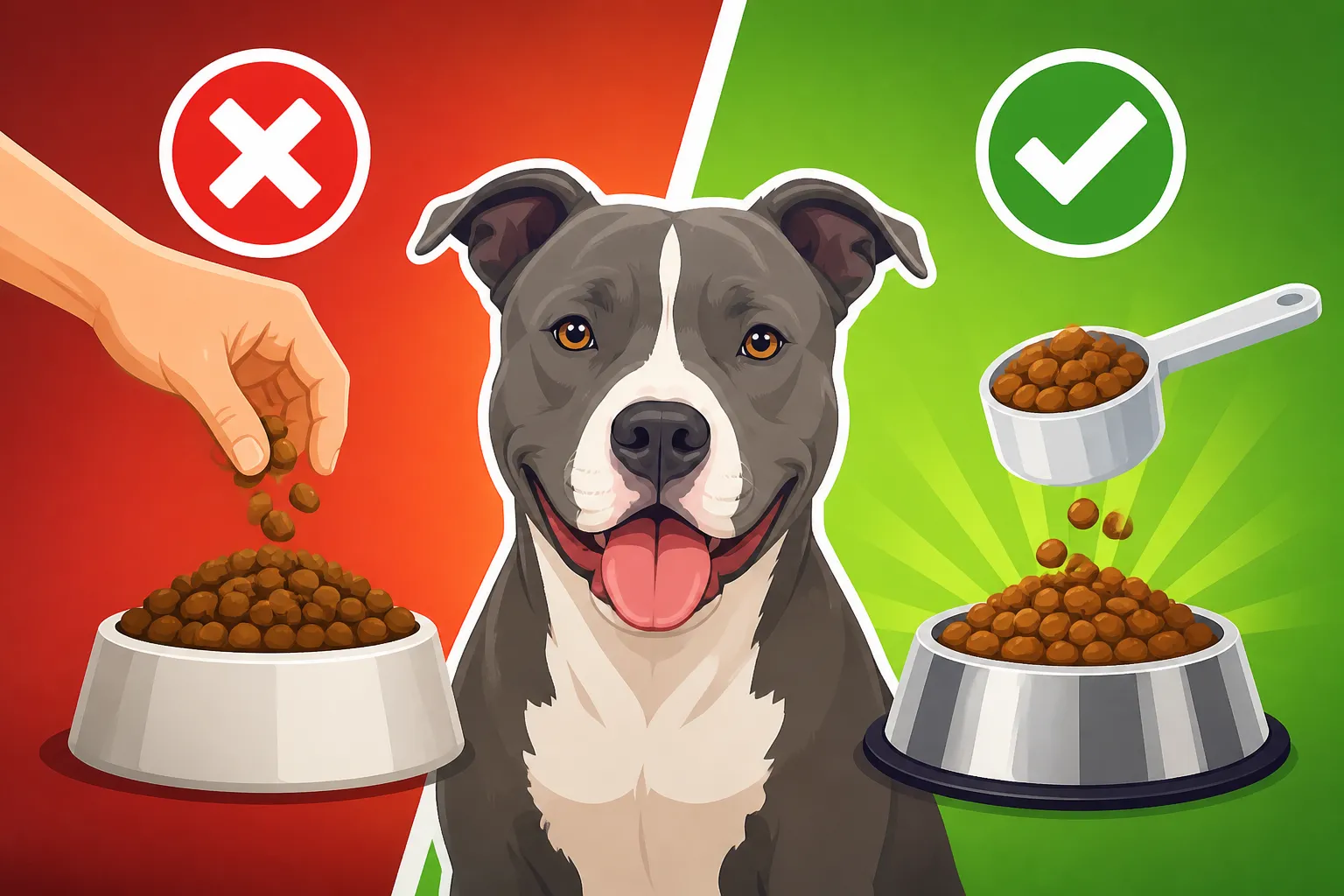
Oh, the infamous "looks about right" method! I've been there, especially on hectic mornings. You pour the kibble from the bag, or scoop it with a random cup you found, and tell yourself, "Yeah, that looks like enough." The problem is, "enough" is a subjective term that can change dramatically from one day to the next, or even between family members. What looks like a cup to you might be a cup and a half to your partner, or a skimpy three-quarters of a cup when you're distracted. The size of the bowl, the density of the food, even the angle you're pouring from can all influence your perception. Over time, these small discrepancies add up, either slowly nudging your Pit Bull toward an unhealthy weight gain or leaving them feeling perpetually hungry. This method is simply too inconsistent for a creature whose health depends on a precise, stable diet. It feels convenient in the moment, but the long-term consequences are anything but.
The Calorie Density Conundrum
Here’s a head-scratcher that often catches owners off guard: not all dog foods are created equal, especially when it comes to calorie density. You might think a "cup" of kibble is a universal measurement, but it’s not. One brand's chicken formula might pack 350 calories into a standard measuring cup, while another brand’s salmon formula, looking exactly the same volume-wise, could have 450 calories. That's a huge difference! If you're switching foods or even just buying a different formula from the same brand, and you continue to scoop by volume without checking the new food's caloric content, you could be drastically over or underfeeding your Pit Bull without even realizing it. This is particularly problematic for a Pit Bull, whose muscular physique can make Reading Pit Bull Body Condition Under Muscle a challenge. A dog carrying a bit of extra weight might still look lean because of their muscle mass, masking the underlying issue caused by caloric creep. Guessing by volume ignores this critical difference and makes it nearly impossible to maintain a consistent, healthy calorie intake.
Impact on Training and Treat Allocation
Pit Bulls are smart, eager to please, and often highly food-motivated, making treats an indispensable tool for training. Whether you're working on basic obedience, tackling Pit Bull Leash Manners and Physical Strength, or just reinforcing good behavior, those little training treats add up! If you're guessing your Pit Bull’s main meal portions, it's highly unlikely you're accurately factoring in all the extra calories from treats, dental chews, or even sneaky scraps from the table (though we know you don't do that, right?). This oversight can easily tip the scales, leading to unintended weight gain. For example, a single medium-sized dental chew can contain as many calories as a small meal for some dogs. Without precise measurement of their main diet, it becomes incredibly difficult to track the total caloric intake and ensure your dog isn't overfed. Understanding Where Treats Fit in a Pit Bull's Calories means you have to start with a consistent baseline for their regular meals. If you're serious about managing your Pit Bull's weight and health, every bite needs to be considered, and that starts with accurate meal portions.
Practical Tools for Accurate Food Measurement
Okay, so we’ve established that guessing just isn't going to cut it for our amazing Pit Bulls. The good news is, achieving accurate food measurement is surprisingly simple and doesn't require a science degree. There are a few practical tools that will become your best friends in this journey, ensuring your dog gets precisely the right amount of fuel every single day.
The Digital Kitchen Scale: Your Best Friend
If there's one tool I could recommend above all others for feeding your Pit Bull, it's a digital kitchen scale. Seriously, this thing is a game-changer. Why? Because the most accurate way to measure your dog's food isn't by volume (cups) but by weight (grams or ounces). Most quality dog food bags will provide feeding guidelines not just in cups but also in grams or ounces per day, often giving a more precise range.
Here’s how easy it is:
- Place the empty bowl on the scale.
- Turn the scale on and hit the "tare" or "zero" button. This resets the scale to zero, so it only weighs the food you add, not the bowl.
- Slowly add your Pit Bull's kibble (or raw, or fresh food) until you reach the desired weight.
- Divide that daily weight by how many meals you feed. If your Pit Bull eats twice a day and needs 400 grams total, you'll weigh out 200 grams for breakfast and 200 grams for dinner.
The benefits are huge: consistency across every meal, perfect accuracy even if you switch foods (as long as you know the new food's recommended weight), and no more arguments about whether "that's a full cup." Digital kitchen scales are readily available and affordable, whether you pick one up from a general retailer like Amazon or a pet-specific site like Chewy. It's a small investment that pays huge dividends in your Pit Bull's health.
Standard Measuring Cups vs. Specific Scoops
While a digital scale is the gold standard, sometimes volume measurement is necessary. In this case, there’s a big difference between a standard kitchen measuring cup and a generic plastic scoop that might come with a bag of food.
- Standard Kitchen Measuring Cups: These are designed to be accurate for volume measurements in cooking and baking. If you absolutely must measure by volume, use these. Always fill the cup to the brim and level it off with a straight edge (like a knife or a ruler) to ensure you're getting a consistent amount. Don't eyeball it; an un-leveled cup can easily be 10-20% off.
- Specific Food Scoops: Many dog food brands include a plastic scoop with their larger bags. While these can be useful, they are often inconsistent. Their stated volume might not be perfectly accurate, and their design often encourages heaping rather than level scoops, leading to overfeeding. If you're using a specific food scoop, measure it once against a digital scale to see what a "level scoop" actually weighs in grams. Then, you can use that scoop more confidently, knowing its true capacity. However, if your dog's food bag provides feeding instructions in cups, always clarify if they mean a standard 8-ounce measuring cup or their proprietary scoop. When in doubt, default to the standard kitchen measuring cup for the most consistent volume measurement if a scale isn't an option.
Understanding Your Food Bag's Feeding Guidelines
That chart on the back of your dog food bag isn't just decoration; it's your primary guide to how much to feed. But you need to know how to read it correctly.
Most feeding charts will provide a range based on your dog's weight, age, and activity level. For example, it might say:
- "Adult dogs, 50-75 lbs: 2 to 3.5 cups per day"
- Or, more precisely: "Adult dogs, 23-34 kg: 220-390 grams per day"
Key things to look for:
- Dog's Weight: This is the starting point. Be honest about your Pit Bull's current weight.
- Age and Life Stage: Puppies, adults, and seniors have different caloric needs.
- Activity Level: A highly active Pit Bull who works or runs daily will need more calories than a couch potato. The bag might classify this as "low," "moderate," or "high" activity.
- Units of Measurement: Note whether the recommendation is in cups (volume) or grams/ounces (weight). As discussed, weight is always more accurate.
- Caloric Content (kcal/kg or kcal/cup): Somewhere on the bag, often in small print, you'll find the metabolizable energy (ME) content, usually expressed as kilocalories per kilogram (kcal/kg) and sometimes also per standard measuring cup (kcal/cup). This number is vital for calculating exact portions, especially if you get a vet's specific caloric recommendation.
Remember, these guidelines are starting points. Your Pit Bull's individual metabolism, environment, and precise activity level might mean they need slightly more or less than the bag suggests. But understanding these labels is the first step toward informed, accurate feeding.
Calculating Your Pit Bull's Daily Food Needs
Once you have your measuring tools, the next step is figuring out the "how much." This isn't a one-size-fits-all answer, especially for a Pit Bull with their varied lifestyles and builds. Calculating their daily food needs involves a bit of science and a lot of common sense, always starting with expert advice.
The Importance of a Vet Consultation
I cannot stress this enough: your veterinarian is your absolute best resource for determining your Pit Bull's precise caloric and nutritional needs. While food bags provide general guidelines, your vet knows your dog's individual health history, current body condition, and lifestyle better than any generalized chart. They can assess factors like:
- Current Weight and Ideal Weight: Are they at their Pit Bull Weight and Muscle on a Working Frame ideal, or do they need to lose or gain? If your Pit Bull is carrying extra pounds, your vet can help you create a safe plan for Trimming a Heavy Pit Bull Back to Lean.
- Activity Level: How much strenuous exercise does your Pit Bull actually get? Not just walks, but true calorie-burning activity.
- Age and Life Stage: A growing puppy, a mature adult, or an aging senior all have different energy requirements.
- Spay/Neuter Status: Neutering can significantly reduce caloric needs, making it crucial to adjust their diet accordingly. Adjusting Pit Bull Food After the Neuter is a common step owners overlook.
- Underlying Health Conditions: Allergies, joint issues, or other medical concerns can influence dietary choices and caloric intake.
Your vet can help you establish a specific daily calorie target – say, 1500 kcal per day – which you can then use with your food bag’s caloric content (kcal/cup or kcal/gram) to precisely measure. They can also provide guidance on The Calorie Target for a Lean Pit Bull and how to slowly and safely achieve it.
Estimating Basal Metabolic Rate and Daily Energy Requirement
While your vet provides the definitive answer, it's helpful to understand the basic science behind it. Dogs, like humans, have a Basal Metabolic Rate (BMR), which is the number of calories they burn just to stay alive (breathing, heart function, etc., at rest). Their actual Daily Energy Requirement (DER) is their BMR multiplied by an "activity factor" that accounts for everything else they do in a day.
- BMR (or RER – Resting Energy Requirement): This is calculated based on their body weight.
- DER: This takes the BMR and adjusts it for things like being intact or neutered, being a puppy, being pregnant, or having different activity levels.
Here’s a simplified way to think about how activity levels impact caloric needs (numbers are illustrative and will vary greatly by individual and specific food):
| Activity Level | Typical Activity Factor (Multiplier) | Example Daily Calorie Needs (for a 50lb adult Pit Bull) |
|---|---|---|
| Sedentary (low) | 1.0 – 1.2 | 1000 – 1200 kcal |
| Active (moderate) | 1.4 – 1.6 | 1400 – 1600 kcal |
| Very Active (high) | 1.8 – 2.0+ | 1800 – 2000+ kcal |
| Puppy (growing) | 2.0 – 3.0 | 2000 – 3000 kcal (depending on age) |
| Senior (less active) | 0.8 – 1.0 | 800 – 1000 kcal |
Note: These are approximations. Always consult your vet for precise figures.
Your vet will take all of this into account when giving you a specific number. The key takeaway is that a Pit Bull lounging on the sofa all day needs significantly fewer calories than one who spends hours training or exercising rigorously.
Adjusting for Treats, Chews, and Supplements
This is where many owners unintentionally sabotage their carefully measured meal plans. Every single calorie your Pit Bull consumes throughout the day counts toward their total energy intake. That includes:
- Training Treats: Even small bits of kibble or commercial treats given during training sessions add up, especially if you're doing multiple sessions a day.
- Dental Chews: These often have a surprising amount of calories. Always check the packaging.
- Pill Pockets: Those tasty little morsels designed to hide medication? Calories!
- Supplements: While many supplements (like joint support or omega oils) might have negligible calories, some palatability enhancers or chews do.
- Human Food Scraps: Even a tiny bite of cheese or a sliver of turkey from your plate contributes.
The best practice is to deduct the calories from these "extras" from your Pit Bull's main meal portion. If your vet advises 1500 kcal/day, and your dog gets 200 kcal from treats and chews, then their main food portion should only provide 1300 kcal. Some high-quality food brands or fresh food services like Ollie provide detailed caloric information for their meals and even their treats, making this calculation easier. This diligent approach ensures your Pit Bull's overall calorie intake remains consistent with their needs, preventing inadvertent weight gain or nutritional imbalances.
Implementing a Consistent Feeding Routine
Once you understand why and how to measure, the final piece of the puzzle is putting it into consistent practice. Establishing a routine around feeding isn't just good for your Pit Bull's physical health; it also provides mental stability and reinforces your role as their provider.
Weighing Every Meal, Every Time
This really is the golden rule for accurate feeding. After you've consulted your vet and determined your Pit Bull's ideal daily caloric intake, and you know how many grams or ounces of their specific food equate to that, your digital kitchen scale becomes your daily companion. It might feel like an extra step at first, but it quickly becomes second nature – just like brushing your own teeth.
- Make it a Habit: Set up your feeding station with the scale, bowl, and food. When it's mealtime, it's a simple, repeatable process.
- Divide and Conquer: Most Pit Bulls benefit from Two Measured Meals a Day for a Pit Bull. This helps keep their energy levels stable, prevents them from getting overly hungry, and can even reduce the risk of bloat in deep-chested breeds. If your Pit Bull needs 400 grams of food per day, simply weigh out 200 grams for breakfast and 200 grams for dinner.
- Consistency from Everyone: If multiple people feed your Pit Bull, ensure everyone knows the exact weight to measure. Write it down, put it on a sticky note by the food, or even set up the scale with a pre-set target. This eliminates confusion and maintains the precise diet.
By weighing every meal, every time, you remove all doubt and ensure your Pit Bull is consistently receiving the nutrition they need, supporting their robust health and maintaining their ideal body condition.
Monitoring Body Condition and Adjusting as Needed
Even with the most precise measurements, your Pit Bull’s needs aren’t static. Factors like changes in activity, age, weather, or even subtle shifts in metabolism mean you need to be a responsive owner. This is where regularly monitoring their body condition comes in.
You can't just rely on the number on the scale (though that's important too). Learning to assess your Pit Bull's body condition score (BCS) by touch is crucial, especially given their muscular build.
How to assess BCS:
- Ribs: Run your hands along their sides. You should be able to feel their ribs easily, like feeling the knuckles on your hand, but not see them protruding sharply.
- Waist: From above, your Pit Bull should have a noticeable tuck behind their rib cage, creating a "waistline." From the side, their belly should tuck up slightly, not hang low.
- Spine and Hip Bones: You should be able to feel their spine and hip bones with slight pressure, but they shouldn't be sharply visible.
A Pit Bull in ideal condition will have clearly defined muscles and a lean frame. If you start to notice their ribs becoming harder to feel, or their waistline disappearing, it’s time for a slight adjustment. Similarly, if they start looking too lean or you can see their ribs clearly, you might need a small increase. Consult your vet before making significant changes, but minor adjustments (e.g., adding or subtracting 10-20 grams of food) are part of responsible ownership. Remember, feeding guides are excellent starting points, but your Pit Bull's actual body condition is the ultimate feedback loop.
Troubleshooting Common Feeding Challenges
Even with the best intentions, feeding can present its challenges. Pit Bulls, like all dogs, have their quirks.
- The Food Guzzler: Some Pit Bulls eat like there's no tomorrow, inhaling their food in seconds. This can lead to digestive upset or even increase the risk of bloat in deep-chested dogs. For these speedy eaters, consider a slow feeder bowl. These bowls, often found on Chewy or Amazon, have ridges or maze-like designs that force your Pit Bull to eat more slowly, making mealtime a more mindful and safer experience. Slow Feeders for a Pit Bull That Bolts Food are an excellent investment.
- The Picky Eater: While less common in Pit Bulls, some can be a bit particular. Ensure their food is fresh, and rule out any medical reasons for a reduced appetite with your vet. Avoid the trap of constantly switching foods or adding enticing (and often unhealthy) toppers, as this can create an even pickier eater. Stick to your measured, consistent food.
- Multi-Dog Households: If you have more than one dog, feeding separately is paramount to ensure each dog gets their exact measured portion. This prevents food guarding, stops one dog from stealing another's food, and guarantees that your Pit Bull, with their specific dietary needs, is getting exactly what you've weighed out for them. Feeding in separate rooms or crates can solve this easily.
By understanding these common challenges and having a plan, you can maintain a consistent, accurate, and stress-free feeding routine for your Pit Bull, ensuring their long-term health and happiness.
| Feeding Method | Accuracy | Effort | Best For | Drawbacks |
|---|---|---|---|---|
| Guessing / Eyeball | Very Low | Very Low | None (seriously, avoid this for health) | Inconsistent portions, weight issues, health risks |
| Random Scoop | Low | Low | Quick, but with inherent inaccuracies | Scoops vary, promotes over/underfeeding |
| Standard Volume Cup | Medium | Medium | Good if scale unavailable, must be leveled | Still susceptible to food density variations |
| Digital Kitchen Scale | High | Medium | Precision for all food types, health-focused | Initial purchase, small extra step in routine |
Disclaimer
This article is for general informational purposes only and does not constitute professional advice. Laws, prices and regulations vary by location and change over time. Consult a qualified professional for guidance on your specific situation.