Whether Pit Bull Bans Reduce Dog Bites
It's a question that weighs heavily on the hearts and minds of Pit Bull owners and dog lovers everywhere, and it sparks intense debate in communities grappling with public safety concerns: do bans on Pit Bulls actually make our neighborhoods safer by reducing dog bites? For years, cities and towns across the country, fueled by fear and sometimes by tragic incidents, have enacted breed-specific legislation (BSL), hoping to address this complex issue. But the reality on the ground, and the data, tell a much more nuanced story. This guide aims to pull back the curtain on this deeply divisive topic, exploring the history, the evidence, and the alternatives to breed-specific laws.
The Rationale Behind Pit Bull Bans and the Hope for Fewer Bites
When communities consider or implement Pit Bull bans, it's almost always driven by a genuine concern for public safety. The idea is simple: if a particular type of dog is perceived to be involved in a disproportionate number of severe bite incidents, then removing or heavily restricting that type of dog should, logically, lead to a reduction in those incidents. It's an understandable impulse, a desire to protect citizens, especially children, from harm.
Historical Context and Public Perception
The journey of the Pit Bull from "America's Dog" to a controversial figure is a complex one, deeply influenced by media narratives and societal anxieties. Historically, these dogs were seen as loyal family companions, even featured prominently in advertising and as mascots. However, starting in the 1980s, negative media portrayals, often sensationalizing incidents involving dogs identified as Pit Bulls, began to shift public opinion dramatically. These stories, while sometimes based on real events, rarely provided context about the individual circumstances, owner behavior, or the specific breed involved, often lumping several distinct breeds under the broad "Pit Bull" umbrella.
This persistent narrative created a powerful public perception that Pit Bulls are inherently more dangerous, leading to widespread fear. When a serious dog bite occurs, the knee-jerk reaction in many communities is to look for a quick solution, and targeting a breed type that has been demonized becomes an easy, albeit often misguided, policy choice. For many, the visual identification of a dog as a "Pit Bull" became synonymous with potential danger, overshadowing all other factors.
How Bans Are Enacted and What They Entail
Breed-specific legislation (BSL) can take many forms, but at its core, it aims to regulate or prohibit the ownership of certain dog breeds or types, with Pit Bulls being the most common target. These laws might ban new Pit Bulls from entering a municipality, require existing Pit Bulls to be muzzled in public, mandated sterilization, impose special licensing fees, or demand specific insurance coverage. Some laws even dictate that dogs identified as Pit Bulls must be microchipped and registered with the city, sometimes with hefty penalties for non-compliance.
The hope behind such stringent regulations is that by either eliminating these dogs from the population over time or by making their ownership so burdensome that fewer people choose them, the number of dog bites will decrease. Advocates for BSL often point to a belief that these dogs possess unique physical traits or temperamental tendencies that make them more prone to biting or to inflicting more severe damage when they do bite. They argue that proactive measures, even if they seem harsh to some, are necessary to safeguard the community.
The Data: What the Studies and Cities Show
While the rationale behind Pit Bull bans might seem logical on the surface, the real-world data and numerous studies offer a different perspective. Many communities that have implemented BSL have not seen the promised reduction in dog bites, and often, the legislation creates more problems than it solves.
Challenges in Data Collection
One of the biggest hurdles in assessing the effectiveness of Pit Bull bans is the inherent difficulty in collecting accurate data on dog bites. Firstly, the term "Pit Bull" itself is not a recognized breed but rather a generic term used to describe several breeds (like the American Pit Bull Terrier, American Staffordshire Terrier, and Staffordshire Bull Terrier) and countless mixed-breed dogs that share similar physical characteristics. This means that breed identification in bite incidents is often unreliable, based on visual assessment by untrained individuals, or even misreported by owners trying to avoid legal repercussions for their dog. When a dog is involved in an incident, whether minor or severe, it's often labeled a "Pit Bull" by default, skewing statistics.
Secondly, many dog bites go unreported. Minor nips or altercations between known dogs might not warrant a police report or veterinary visit, leading to an incomplete picture of total bite incidents. This makes it challenging to draw definitive conclusions about whether bans are truly impactful or if other factors are at play. Accurate and consistent reporting methods are crucial for any meaningful analysis, and these are often lacking.
City-Level Outcomes Post-Ban
Looking at cities that have enacted or repealed BSL provides valuable insight. For example, Denver, Colorado, had a ban on Pit Bulls for over 30 years. During that time, while the number of dogs identified as Pit Bulls in the city decreased, the overall number of dog bites did not significantly decline. In fact, after the ban was repealed in 2020, replaced by breed-neutral dangerous dog laws and stricter licensing requirements, city officials reported no surge in dog bites or related incidents attributable to the breed. The focus shifted from the dog's breed to its behavior and the owner's responsibility.
Miami-Dade County, Florida, famously had a Pit Bull ban for over three decades, yet the county still experienced severe dog bite incidents. This long-standing ban was finally overturned in 2024, signaling a growing understanding among legislators that such laws are largely ineffective and difficult to enforce. Many studies and animal welfare organizations, including the American Veterinary Medical Association (AVMA), have concluded that BSL does not result in a measurable decrease in dog bite incidents or severity. Instead, they often find that bite rates remain stable or even increase, as people simply choose other powerful breeds that are not banned. This displacement effect means the underlying issue of irresponsible ownership isn't addressed, it's just shifted to a different type of dog. For more on local laws, check out Cities That Still Restrict Pit Bulls.
Focus on Responsible Ownership Over Breed
What the data consistently points to is that factors related to responsible ownership, socialization, and training are far more critical in preventing dog bites than a dog's breed. A well-socialized, properly trained Pit Bull with a responsible owner is far less likely to be involved in an incident than a neglected, untrained dog of any breed. Issues like tethering, lack of supervision, failure to spay/neuter, and a history of abuse are strong indicators of potential aggression, regardless of breed.
Effective bite prevention programs emphasize public education on safe interactions with dogs, early socialization for puppies, and enforcing leash laws and dangerous dog laws that focus on individual animal behavior rather than blanket breed restrictions. When owners understand the importance of What to Teach a Pit Bull Puppy and When and invest in proper training, such as preparing for Canine Good Citizen and Why It Matters for a Pit Bull, they are actively contributing to a safer community. It is the human element, the training, care, and management of any dog, that largely dictates its behavior.
Why Breed-Specific Legislation Often Falls Short
Beyond the statistical shortcomings, BSL faces fundamental challenges that undermine its effectiveness and create unintended negative consequences. These laws often fail because they target the wrong problem and misallocate valuable community resources.
Defining "Pit Bull"
Perhaps the most significant flaw in breed-specific legislation is the ambiguous and subjective definition of "Pit Bull" itself. As we've touched on, "Pit Bull" is a term that encompasses several distinct breeds and a vast array of mixed-breed dogs. There is no single, universally accepted breed standard for a "Pit Bull." This makes accurate identification a nightmare for animal control officers, shelter staff, and even veterinarians. A dog that one person identifies as a "Pit Bull" might be called a "Bully mix" by another, or simply a "mixed breed." This subjective labeling leads to arbitrary enforcement and often targets dogs based purely on their appearance, rather than actual genetic makeup or behavior. For deeper insights into this, consider reading How Shelters Decide a Dog Is a Pit Bull.
The practical implication of this is that many dogs are wrongly labeled, subjecting innocent family pets to harsh restrictions, or worse, euthanasia. Simultaneously, truly aggressive dogs of other breeds might slip through the cracks of BSL because they don't fit the visual "Pit Bull" criteria. This legal imprecision creates a system that is inherently unfair, difficult to implement consistently, and ultimately ineffective at addressing the core issue of dangerous dogs.
The Displacement Effect and Other Breeds
One of the counterproductive outcomes of BSL is what's known as the "displacement effect." When a particular breed type is banned or heavily restricted, individuals who seek powerful or intimidating dogs, often for nefarious purposes, simply shift to another breed that isn't on the banned list. This might lead to an increase in bites from other large, strong breeds, or it might result in the creation of new "designer" breeds that mimic the banned dogs but fall outside the legal definition.
This means that BSL doesn't solve the problem of irresponsible dog ownership or the misuse of dogs; it merely pushes it underground or redirects it to a different set of dogs. The underlying issues that contribute to dog aggression—poor breeding practices, lack of socialization, neglect, abuse, or using dogs for fighting—are not addressed by banning a specific breed. Instead, communities need to focus on comprehensive strategies that target these root causes, regardless of the dog's appearance.
Resource Misallocation
Implementing and enforcing breed-specific legislation is not a simple or inexpensive task. It requires significant resources from animal control agencies, local law enforcement, and judicial systems. These resources are spent on investigating breed identification, prosecuting owners, housing impounded dogs, and managing compliance. Consider the legal costs and time involved in appealing a Pit Bull breed determination, for instance. These funds and efforts could be far more effectively utilized in proactive, evidence-based bite prevention strategies.
Imagine if those resources were instead channeled into free or low-cost spay/neuter programs, public education campaigns on dog body language and safe interactions, subsidized training classes, or enhanced animal control services that respond to nuisance complaints and investigate cruelty regardless of breed. These programs address the root causes of aggression and promote responsible pet ownership across all breeds, leading to a much greater impact on public safety than breed bans ever could.
More Effective Approaches to Dog Bite Prevention
If breed-specific legislation isn't the answer, what truly works to reduce dog bites and foster safer communities? The consensus among animal welfare professionals, veterinary organizations, and experienced dog trainers points to a holistic approach focused on responsible ownership, education, and behavior-based laws.
Universal Dog Laws and Enforcement
Instead of targeting breeds, effective legislation focuses on behaviors and practices that contribute to dog bites. This includes universal leash laws, which ensure that all dogs are under control in public spaces. It also involves strict enforcement of anti-tethering laws, as dogs left chained or penned for extended periods are more likely to become frustrated and aggressive. "Dangerous dog" laws, when properly crafted, designate individual dogs as dangerous based on their actual behavior (e.g., history of unprovoked bites, aggression towards people or other animals), rather than their breed.
These laws are fairer, more enforceable, and more effective because they address the actions of a dog and its owner. They place the responsibility squarely on the owner to manage their dog appropriately, regardless of whether it's a Chihuahua or a Pit Bull. Penalties for non-compliance with these behavior-based laws should be significant enough to deter irresponsible ownership.
Community Education and Support
Education is a powerful tool in bite prevention. Communities should invest in public awareness campaigns that teach people how to safely interact with dogs, recognize canine body language, and understand the importance of supervision, especially between children and dogs. Programs that offer free or low-cost training classes, focusing on basic obedience and socialization for all puppies and adult dogs, can dramatically reduce the likelihood of behavioral problems. Many responsible owners invest in resources from trusted retailers like Chewy for training tools, educational books, and durable chew toys.
Furthermore, supporting pet owners with resources like affordable veterinary care, microchipping clinics, and guidance on proper nutrition can contribute to healthier, better-adjusted dogs. A dog that is well-fed, healthy, and properly exercised is generally a happier and less stressed animal. For those looking into high-quality food options, even brands like Ollie offer tailored meal plans that can support a dog's overall well-being, which indirectly contributes to good behavior. Providing easy access to these resources reduces the chances of neglect and ensures more dogs are raised in environments conducive to good behavior. Pit Bull Puppy Vaccination and Parvovirus is another crucial area where community support can make a difference.
Early Socialization and Training
One of the most impactful strategies for preventing dog bites begins in a dog's earliest weeks and months: comprehensive socialization and consistent training. A puppy, regardless of breed, needs to be exposed to a wide variety of sights, sounds, people, and other friendly dogs in a positive and controlled manner during its critical developmental period. This helps them grow into confident, well-adjusted adults who are less likely to react fearfully or aggressively to new situations.
For a Pit Bull puppy, early socialization is particularly vital given the societal prejudices they face. Owners must be committed to making sure their puppies have positive experiences. Enrolling in puppy classes, hosting supervised playdates, and carefully introducing them to new environments are all key steps. Continuing this training throughout adolescence and adulthood, focusing on impulse control and polite greetings, reinforces good manners. A well-trained dog understands boundaries and responds reliably to commands, which is a cornerstone of bite prevention. Even for health management, like knowing about Year-Round Parasite Cover for a Pit Bull, contributes to a dog's comfort and thus, often, its temperament.
The Overall Impact of Pit Bull Bans
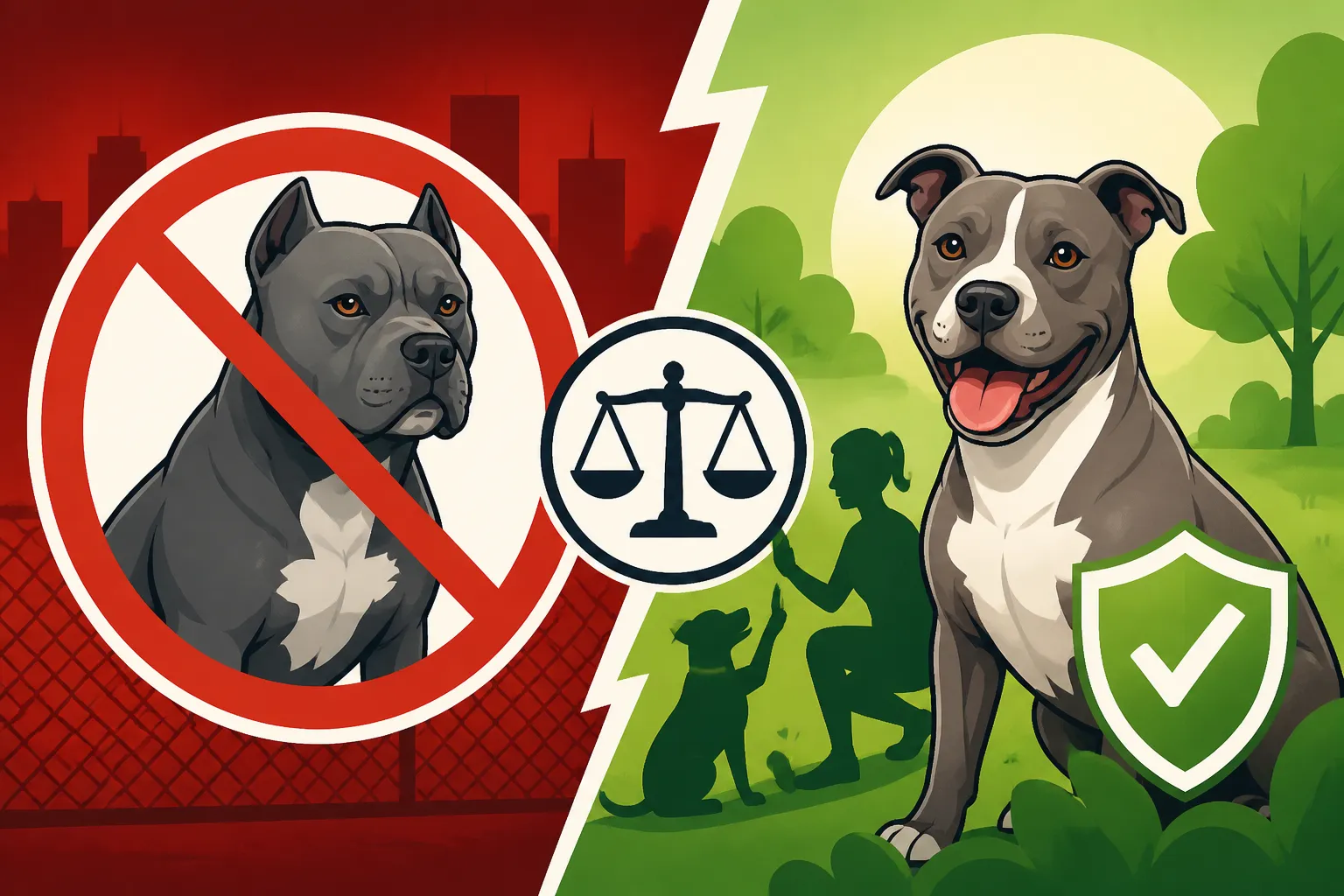
Ultimately, the evidence overwhelmingly suggests that Pit Bull bans do not effectively reduce dog bites. Instead, they often perpetuate breed stigma, punish responsible owners, strain community resources, and fail to address the complex underlying factors that contribute to dog aggression. Shifting focus from reactive, breed-specific prohibitions to proactive, breed-neutral legislation that promotes responsible ownership, education, and early intervention is the path toward truly safer communities for both people and pets.
Disclaimer
The information provided in this article is for general informational purposes only and is not intended as a substitute for professional veterinary advice, diagnosis, or treatment. Always seek the advice of your veterinarian or other qualified health provider with any questions you may have regarding a medical condition or the health and welfare of your pet.