Telling Demodex From an Allergy in a Pit Bull
It's incredibly frustrating when your beloved Pit Bull starts itching, losing hair, or developing rashes, and you're left wondering if it's "just allergies" or something more serious. The worry is real, especially with how quickly skin issues can escalate in our Pits. This guide will walk you through the distinct signs and diagnostic approaches to help you understand whether your Pit Bull is battling Demodex mange or an underlying allergy, so you can get them the right treatment faster.
Understanding Pit Bull Skin Issues
When your Pit Bull starts scratching incessantly, licking their paws, or develops red, irritated patches, it’s natural to feel a pang of worry. Skin issues are notoriously common in Pit Bull-type dogs, and they can be some of the most challenging conditions to diagnose and manage. The sheer variety of potential causes, from parasites to environmental irritants, makes it a puzzle for both owners and veterinarians.
The Frustration of Persistent Itching
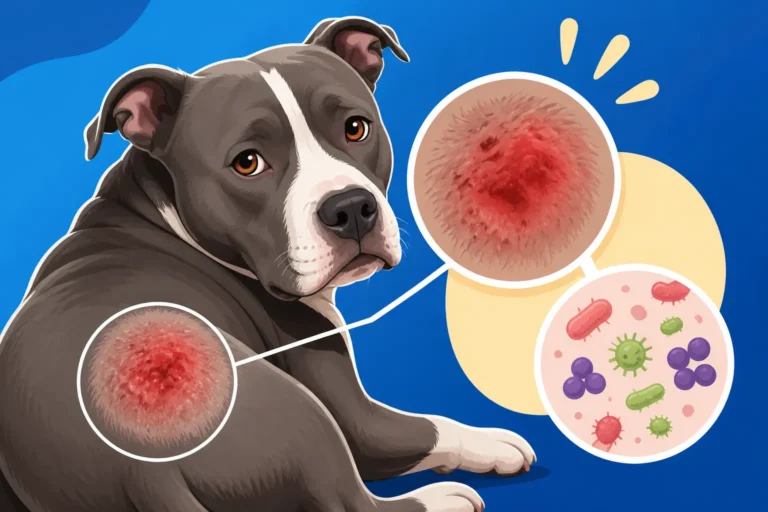
You might find yourself constantly inspecting your dog's skin, trying to pinpoint the source of their discomfort. Maybe you've tried switching foods, giving more baths, or even restricting their access to certain areas, only to see the itching persist or worsen. This cycle of frustration is something many Pit Bull owners experience. One day it might seem like a simple rash, and the next, they're covered in scabs and sores, often due to secondary bacterial or yeast infections that thrive on damaged skin. This persistent discomfort can significantly impact your Pit Bull's quality of life, leading to restlessness, irritability, and even changes in their playful demeanor. It's not just an aesthetic problem; it's a deep-seated issue affecting their daily well-being.
Why Pit Bulls Are Prone to Skin Problems
Pit Bulls, like many short-coated breeds, can be particularly susceptible to various dermatological conditions. Their genetic predisposition plays a significant role, with many lines showing a higher incidence of allergic skin disease, also known as atopy. Beyond genetics, their short, coarse coats offer less protection against environmental allergens like pollen, dust mites, or mold, which can easily come into contact with their skin. Furthermore, their powerful build and active nature mean they're often out exploring, exposing them to even more potential triggers. It's a combination of nature and nurture that often places them squarely in the vet's office with a skin complaint. Understanding this inherent susceptibility is the first step in being proactive about their skin health.
Demodectic Mange in Pit Bulls
Demodectic mange, often simply called "Demodex," is a common skin condition in dogs, including Pit Bulls, caused by microscopic mites that live harmlessly in the hair follicles of most canids. The challenge arises when a dog's immune system is compromised or immature, allowing these mites to multiply out of control, leading to skin irritation, hair loss, and sometimes secondary infections. Unlike sarcoptic mange, Demodex is generally not considered contagious to other dogs or humans, making it a different beast entirely.
What is Demodex Mange
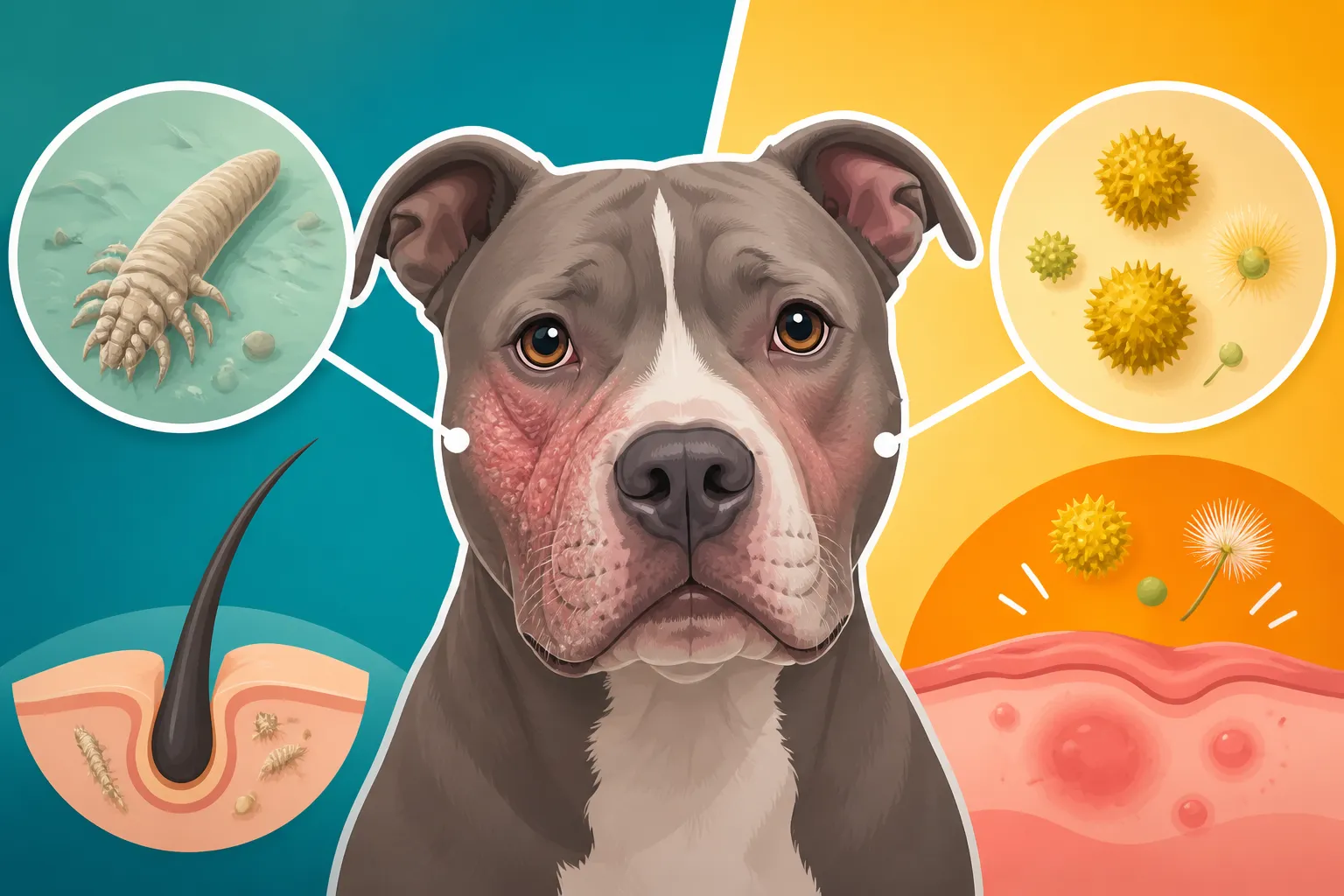
Demodex mange is caused by Demodex canis mites, tiny cigar-shaped parasites that are a normal part of a dog's skin flora. Most dogs live their entire lives with these mites without any issue. However, in certain circumstances, usually due to a genetic predisposition, an immature immune system (in puppies), or a suppressed immune system (in older or sick dogs), the mites proliferate excessively. This overgrowth triggers an inflammatory response in the skin, leading to the characteristic symptoms. There are two main forms: localized Demodex, which typically presents as small, isolated patches, and generalized Demodex, which covers larger areas of the body and is often more serious.
The generalized form is more concerning and can indicate an underlying immune issue, especially in adult dogs. When you see Demodex Mange in a Pit Bull, particularly an adult, your vet will likely want to explore potential reasons for immune suppression, such as certain medications, endocrine disorders like hypothyroidism, or even some cancers. For puppies, it often resolves on its own or with minimal treatment as their immune system matures.
Typical Presentation of Demodex
The symptoms of Demodex mange often begin subtly and can be easily confused with other skin conditions. You might notice small, circular patches of hair loss, often around the eyes, mouth, or on the legs. These patches are typically not very itchy in the early stages, which is a key differentiator from allergies. The skin within these patches might appear reddish or scaly, and as the condition progresses, it can become thickened, discolored, and develop secondary bacterial infections. When this happens, the skin can become very itchy, crusty, and even painful, emitting a foul odor.
If you observe Demodex patches on a Pit Bull face, it’s a common location for the localized form. In more severe generalized cases, the hair loss can spread across the entire body, leading to a moth-eaten appearance, and the skin can take on a leathery texture. Pustules and sores might also develop, complicating the picture. It's essential to recognize that while initial Demodex might not be intensely itchy, the secondary infections it paves the way for certainly are. This is where the confusion with allergies often begins for owners.
Diagnosing Demodex Through Skin Scrapings
The definitive diagnosis of Demodex mange relies on a simple, in-office procedure called a deep skin scraping. Your veterinarian will use a scalpel blade to gently scrape the surface of the skin in affected areas, deep enough to collect material from within the hair follicles where the mites reside. The collected material is then placed on a microscope slide with mineral oil and examined for the presence of the characteristic cigar-shaped mites. It's usually a quick and minimally invasive process, though some dogs might find it slightly uncomfortable.
Sometimes, multiple scrapings from different areas are needed to confirm the diagnosis, especially if the mites are sparse. In areas where scraping isn't feasible, like between the toes, a biopsy might be considered, though this is less common. For a thorough understanding of the process, you might find our article on Skin Scrapings That Confirm Pit Bull Mange helpful. Once Demodex is confirmed, your vet can then determine if it's localized or generalized and discuss the appropriate treatment plan. Remember, if it's generalized Demodex in a Pit Bull, especially an adult, further investigation into the dog's overall health and immune function is often warranted.
Allergies in Pit Bulls
Allergies are perhaps the most common reason Pit Bulls visit the vet for skin problems. They represent an overreaction of the immune system to otherwise harmless substances, leading to a cascade of inflammatory responses that manifest primarily on the skin. Unlike Demodex, which is an external parasite issue, allergies are an internal immune system malfunction.
Common Types of Pit Bull Allergies
Pit Bulls can suffer from various types of allergies, each with its own set of triggers. The most prevalent is environmental allergy, or atopy, which is an inherited predisposition to develop allergic reactions to common airborne substances like pollen (from trees, grasses, and weeds), dust mites, and mold spores. This often leads to Pit Bull Atopy and Seasonal Itching, though it can become year-round in some regions or with multiple allergens. Another significant type is food allergy, where the immune system reacts negatively to certain proteins in the diet, like chicken, beef, or dairy. You can learn more about Food Allergies Behind Pit Bull Itching to better understand this specific trigger.
Beyond environmental and food allergies, contact allergies (reactions to things like certain grasses, cleaning products, or bedding) and flea allergy dermatitis (an intense reaction to flea saliva) also contribute to skin issues in Pit Bulls. While flea allergies are often overlooked, even a single flea bite can trigger a severe, widespread reaction in a sensitive dog. It’s a complex landscape, and often, Pit Bulls can suffer from multiple allergies simultaneously, making diagnosis and management even more challenging.
How Allergies Manifest on Pit Bull Skin
Allergic reactions in Pit Bulls almost invariably lead to intense itching (pruritus). This itching can be relentless, causing your dog to scratch, lick, chew, and rub themselves constantly. Common areas affected include the paws (leading to Pit Bull Paw Licking and Chewing), ears (which can result in chronic Pit Bull Ear Infections and What Drives Them), armpits, groin, and belly. The skin in these areas often becomes red, inflamed, and can develop rashes, bumps, or hives. Due to the constant self-trauma, secondary bacterial (pyoderma) and yeast (malassezia) infections are incredibly common, leading to further itching, odor, greasy skin, and crusting. These secondary infections can sometimes manifest as Pit Bull Hot Spots and Secondary Infection, appearing almost overnight.
Unlike Demodex, which often starts with hair loss and minimal itching, allergies typically begin with intense itching, which then leads to hair loss, skin thickening, and discoloration over time from chronic inflammation and trauma. The pattern of irritation can sometimes offer clues; for instance, itching around the face and ears might point to food allergies, while seasonal paw licking often suggests environmental allergies.
The Seasonal vs. Year-Round Allergy Pattern
One of the most telling signs when trying to differentiate allergies is whether the symptoms follow a seasonal pattern or persist year-round. Environmental allergies (atopy) are often seasonal, flaring up when specific pollens are in the air. For example, a Pit Bull might be perfectly fine in winter but start itching intensely every spring and fall when tree or weed pollens are abundant. This pattern can be a strong indicator of an environmental allergen at play.
However, many environmental allergens, such as dust mites and molds, are present year-round, leading to non-seasonal allergic symptoms. Food allergies almost always cause year-round symptoms, as the offending ingredient is typically present in the diet consistently. Flea allergy dermatitis can also be year-round if flea prevention isn't consistent. Keeping a detailed log of when your Pit Bull's symptoms flare up, and any changes in their environment or diet, can be incredibly helpful for your vet in narrowing down the possibilities. This detailed history is often the first crucial step in understanding the nature of your Pit Bull's itching.
Key Differences: Demodex vs. Allergy
While both Demodex and allergies can cause uncomfortable skin issues in Pit Bulls, understanding their fundamental differences in presentation and progression is crucial for accurate diagnosis. It's easy for an owner to confuse a persistent itch with hair loss, but a vet looks for specific clues.
Pattern of Hair Loss and Lesions
One of the most telling differences lies in the initial pattern of hair loss and the characteristics of the skin lesions. With Demodex, the earliest signs are typically patches of hair loss (alopecia) that are often non-itchy or only mildly itchy. These patches are frequently circular or irregular in shape and can appear around the eyes, muzzle, front legs, or trunk. The skin within these patches might look red, scaly, or slightly thickened, but without overt signs of intense inflammation or self-trauma in the initial stages. Think of it as bald spots appearing first. You might see Demodectic Mange in a Pit Bull Puppy starting around the face.
In contrast, allergies typically start with intense itching, which then leads to secondary hair loss from constant scratching, licking, and chewing. The skin lesions are usually diffuse, widespread redness (erythema), and papules (small red bumps) or pustules (pus-filled bumps), often concentrated in areas like the paws, armpits, groin, belly, and ears. The hair loss, when it occurs, is a consequence of the itching and inflammation, not the primary symptom. The skin often appears generally inflamed and irritated rather than having distinct, non-itchy bald patches.
Severity of Itching and Secondary Infections
The level of itching is arguably the most significant clinical differentiator. Demodex mange, particularly in its localized form or early stages of generalized Demodex, is often characterized by minimal to no itching. The owner's main concern might be the hair loss itself. However, if secondary bacterial or yeast infections set in due to the damaged skin barrier, then the itching can become severe and indistinguishable from allergy-induced pruritus. This is where the diagnostic challenge for the owner truly begins, as the secondary infection masks the original underlying problem.
Allergies, on the other hand, are defined by pruritus – intense, persistent itching is their hallmark. From the very beginning, an allergic Pit Bull will be constantly scratching, licking, or chewing, often to the point of self-mutilation. This constant itching rapidly leads to skin damage, inflammation, and almost inevitably, secondary bacterial and yeast infections. So, with allergies, severe itching usually precedes the development of secondary skin problems, whereas with Demodex, the severe itching often follows and is caused by the secondary infections rather than the mites themselves. This distinction is critical for your vet.
Age of Onset and Progression
The age at which symptoms first appear can also provide a valuable clue. Demodectic mange, especially the localized form, is most commonly seen in puppies and young dogs (under 18 months of age) due to their immature immune systems. It often resolves as they mature. Generalized Demodex can occur in puppies, but if it develops in an adult Pit Bull, it strongly suggests an underlying systemic health issue that has compromised the immune system. The progression of Demodex tends to be gradual, with hair loss slowly spreading over weeks or months.
Allergies, particularly environmental allergies (atopy), typically manifest between 6 months and 3 years of age. While puppies can show signs, it's less common for severe, widespread allergic disease to appear earlier than 6 months. Food allergies can appear at any age, but often start when a dog is younger. Allergic symptoms can come on quite suddenly, especially with seasonal flares, and can range from mild to severe. The waxing and waning nature of seasonal allergies is a classic presentation, whereas Demodex tends to steadily worsen if left untreated.
To help visualize these key differences, here's a comparison table:
| Feature | Demodectic Mange (Demodex) | Allergies (Atopy, Food, Flea) |
|---|---|---|
| Primary Cause | Overgrowth of Demodex canis mites (normal skin inhabitants) | Immune system overreaction to environmental substances, food, or fleas |
| Initial Symptom | Patches of hair loss (alopecia), often non-itchy | Intense itching (pruritus) |
| Itching Level | Minimal to none initially; severe if secondary infection occurs | Severe and persistent from the outset |
| Lesion Pattern | Circular or irregular patches of hair loss; often localized around eyes/face/legs; skin may be red/scaly | Widespread redness, rashes, bumps, thickening; commonly paws, ears, groin, belly |
| Age of Onset | Primarily puppies/young dogs (under 18 months); adults suggest underlying immune issue | Typically 6 months to 3 years for environmental allergies; any age for food allergies |
| Progression | Gradual spread of hair loss; often worsens steadily if untreated | Can be seasonal or year-round; often fluctuates in severity |
| Contagious | Generally not contagious to other pets or humans | Not contagious |
Diagnostic Pathways and Vet Visits
When your Pit Bull is struggling with skin issues, a trip to the vet is essential. It's not just about getting relief for your dog; it's about getting an accurate diagnosis so that you can tackle the root cause effectively. Don't be surprised if your vet wants to gather a lot of information – every detail can be a clue.
The Initial Veterinary Examination
Your veterinarian will start with a thorough physical examination, paying close attention to your Pit Bull's skin, coat, ears, and paws. They'll ask you a series of detailed questions about the onset of symptoms, their progression, any seasonality, your dog's diet, flea prevention, and any other relevant medical history. This history is incredibly important for differentiating between potential causes. For instance, knowing if you've already tried various flea treatments or if the itching only occurs during spring can significantly narrow down the possibilities.
Based on the initial assessment, your vet will likely perform some basic diagnostic tests right in the clinic. The most common and crucial test for distinguishing Demodex from allergies is the deep skin scraping we discussed earlier. This quick test can definitively confirm or rule out Demodex mites. Your vet might also take samples for cytology (examining cells under a microscope) to identify secondary bacterial or yeast infections, which are common complications of both conditions. Ear swabs are often done if the ears are affected. While these initial tests are straightforward, they provide vital information, steering the diagnostic path in the right direction. It's often at this stage that your vet can clearly tell you if it's Demodex or if they need to look further into allergies.
Advanced Allergy Testing Options
If Demodex is ruled out and secondary infections are treated but the itching persists, your vet will likely shift focus to allergies. The first step often involves a strict dietary elimination trial for suspected food allergies. This usually means feeding a novel protein or hydrolyzed protein diet for a minimum of 8-12 weeks, with absolutely no other treats or foods. It's a challenging commitment, but it's the gold standard for diagnosing food allergies. You might read our guide on An Eight Week Food Trial on an Itchy Pit Bull for detailed steps.
For environmental allergies (atopy), there are two main types of tests: intradermal skin testing and serum allergy testing (blood tests). Intradermal testing, performed by a veterinary dermatologist, involves injecting small amounts of common allergens into the skin and observing for reactions. Blood tests measure antibodies against specific allergens in the blood. Both tests have their pros and cons, and your vet will advise which one might be best for your Pit Bull. These tests don't diagnose allergies themselves but identify the specific allergens your dog is sensitive to, which then guides treatment, such as allergen-specific immunotherapy (allergy shots). Understanding the value of such tests can be crucial for long-term management, and some pet insurance providers like Healthy Paws may cover these diagnostic costs, making advanced testing more accessible.
When to Suspect Something More Complex
Sometimes, despite initial diagnostics, the picture remains unclear, or your Pit Bull isn't responding to treatment as expected. This is when your vet might suspect something more complex. Persistent generalized Demodex in an adult Pit Bull, for example, often warrants a full workup to check for underlying conditions that could be suppressing the immune system, such as hypothyroidism (which can also cause skin issues) or even certain types of cancer. If you've been managing Pit Bull Skin Allergies and the Atopy Pattern for a while with little success, it's time to re-evaluate.
Furthermore, some less common skin diseases can mimic allergies or Demodex, such as autoimmune conditions, fungal infections, or nutritional deficiencies. In these situations, your vet might recommend biopsies (taking a small sample of skin for pathological examination), specialized blood tests, or a referral to a veterinary dermatologist. It’s vital not to give up hope if the first few rounds of treatment aren't working. A dedicated veterinary team will continue to investigate until they uncover the true cause of your Pit Bull's discomfort.
Managing and Treating Skin Conditions
Once a diagnosis is made, whether it's Demodex or allergies, a clear treatment and management plan is essential. The approach for each condition is quite different, highlighting why accurate diagnosis is so important.
Targeting Demodex Effectively
The treatment for Demodex mange depends on whether it's localized or generalized. Localized Demodex in puppies often resolves spontaneously as their immune systems mature, but topical treatments like medicated shampoos or gels may be used to speed recovery and prevent secondary infections. For generalized Demodex, a more aggressive approach is usually necessary. Modern treatments often involve oral medications such as isoxazolines (e.g., Bravecto, Credelio, Simparica, NexGard), which are highly effective at killing the mites. These are typically given over several months, with regular skin scrapings performed by your vet to monitor mite counts until multiple negative scrapings are achieved. For serious cases, you might want to read more about Treating Generalised Demodex in a Pit Bull.
Alongside specific mite-killing medications, treating any secondary bacterial or yeast infections is paramount. This often involves antibiotics or antifungals, either orally or topically. Medicated baths can also be incredibly helpful in soothing the skin, removing crusts and debris, and delivering topical antimicrobials. Patience is key with Demodex treatment, as it can take several months to fully clear. Regular veterinary check-ups are crucial to ensure the treatment is working and to address any underlying immune issues, especially in adult dogs.
Long-Term Allergy Management Strategies
Unlike Demodex, which can often be cured, allergies in Pit Bulls, particularly environmental allergies, are generally managed rather than cured. The goal is to reduce symptoms, control secondary infections, and improve your dog's comfort. This often involves a multi-modal approach. For environmental allergies, allergen-specific immunotherapy (ASIT), commonly known as allergy shots or oral drops, is the only treatment that targets the underlying immune system overreaction. While it doesn't work for every dog, it can significantly reduce the need for other medications and improve quality of life. Understanding What Allergy Shots Cost a Pit Bull Owner can help you budget for this long-term solution.
Other management strategies include medications like Apoquel or Cytopoint, which rapidly reduce itching and inflammation. Regular Medicated Baths for a Pit Bull With Atopy can help remove allergens from the coat and soothe irritated skin. Dietary management for food allergies is lifelong once the offending proteins are identified. Consistent flea prevention is also critical, even if your dog isn't confirmed to have flea allergy dermatitis, as fleas can exacerbate any allergic condition. For many Pit Bulls with allergies, a combination of these strategies, tailored to their individual needs, provides the best outcome. Some owners also find that omega-3 fatty acid supplements help support skin barrier health. Having a good pet insurance plan from a company like Healthy Paws can be a lifesaver for the ongoing costs associated with long-term allergy management, which can really add up.
Prognosis and Ongoing Care
The prognosis for Pit Bulls with Demodex mange is generally very good, especially for localized cases in puppies. Even generalized Demodex can often be cured with diligent treatment and follow-up, though adult-onset generalized Demodex warrants careful monitoring for underlying health issues. Recurrence is possible, especially if the immune system remains compromised. For allergies, the prognosis is for lifelong management. While allergies cannot be cured, they can be controlled effectively with the right strategies, allowing your Pit Bull to live a comfortable, itch-free life. It’s a journey of understanding your dog's triggers and consistently applying the management plan your vet develops.
Ongoing care for both conditions involves regular veterinary check-ups, prompt treatment of secondary infections, and a commitment to the prescribed long-term management. For allergic dogs, this might mean year-round allergy shots, specific diets, or daily medication. For Demodex survivors, it involves monitoring for any signs of recurrence. Remember, Whether a Pit Bull Allergy Ever Goes Away is a common question, and the answer is usually no, but it absolutely can be managed. By being proactive and working closely with your veterinarian, you can ensure your Pit Bull enjoys healthy, comfortable skin for years to come.
Disclaimer
The information provided in this article is for general informational purposes only and is not a substitute for professional veterinary advice. Always consult with a qualified veterinarian for any health concerns or before making any decisions related to your pet's health and treatment.