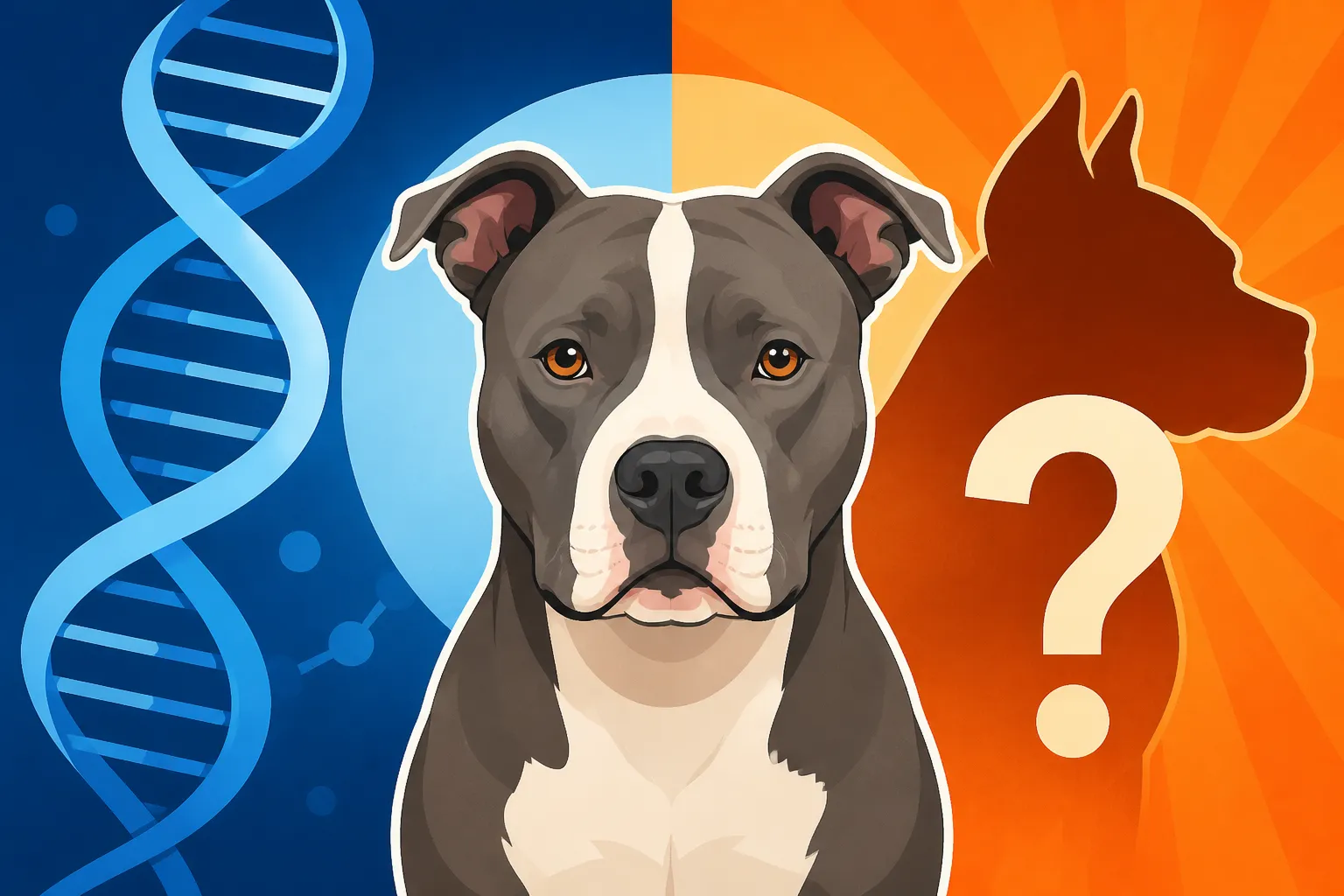
Whether a DNA Test Settles the Pit Bull Question
It’s a frustrating reality: you love your dog unconditionally, but the moment someone asks, "Is that a Pit Bull?" a whole host of assumptions, judgments, and even legal complications can arise. Many owners, eager to clarify their beloved pet's lineage and perhaps avoid breed-specific discrimination, turn to DNA tests hoping for a definitive answer. This guide will delve deep into what DNA tests can and cannot tell you about your "Pit Bull," exploring the nuances of breed identification, the science behind the tests, and the real-world implications of those results.
The Elusive "Pit Bull" Label and Why DNA Tests Can Be Confusing
The term "Pit Bull" is perhaps one of the most misunderstood and inconsistently applied labels in the canine world. It's not a single breed in the same way a Labrador Retriever or a German Shepherd is. This fundamental misunderstanding is at the heart of why a DNA test might not "settle the Pit Bull question" in the way many owners hope.
Understanding the "Pit Bull" Umbrella
When people say "Pit Bull," they're often referring to a group of dogs that share certain physical characteristics – a muscular build, a blocky head, and a short coat. Historically, these traits trace back to bull-and-terrier crosses, originally bred for fighting. However, over time, various registries recognized distinct breeds from this lineage.
The three primary breeds generally considered "Pit Bull types" are:
- American Pit Bull Terrier (APBT): Recognized by the United Kennel Club (UKC) and American Dog Breeders Association (ADBA). This is often considered the "original" Pit Bull.
- American Staffordshire Terrier (AmStaff): Recognized by the American Kennel Club (AKC). The AmStaff shares a common ancestry with the APBT but was developed along a slightly different lineage for show purposes. You can read more about How AmStaffs and APBTs Split in the 1930s.
- Staffordshire Bull Terrier (Staffie): Originating in England, this is a smaller, often stockier dog, also with bull-and-terrier heritage.
Beyond these, the newer American Bully breed, which emphasizes extreme musculature and a wider build, is also often visually categorized as a Pit Bull type. And then there are countless mixed-breed dogs that simply look like one of these breeds, leading to them being labeled as "Pit Bulls." This is why it's so important to understand Why Pit Bull Is a Type and Not a Breed. A DNA test might pinpoint specific breeds, but it can't erase the common perception of what a "Pit Bull" looks like.
The Limitations of Visual Identification
It’s easy to look at a dog and declare it a "Pit Bull" based on its appearance. Shelters, veterinarians, and the general public frequently make these calls. However, studies have repeatedly shown that visual identification of breeds, especially for Pit Bull types, is incredibly unreliable. A dog with a blocky head and muscular body could be a mix of Boxer, Bulldog, and even Labrador, with no actual APBT or AmStaff DNA. Conversely, a dog with significant Pit Bull lineage might not "look" the part at all. This creates a huge challenge for owners who are trying to navigate breed-specific legislation, housing restrictions, or insurance policies.
How Dog DNA Tests Actually Work and Their Accuracy
So, you've decided to get a DNA test. You swab your dog's cheek, send it off, and eagerly await the results. But what exactly are these tests looking for, and how reliable are they in identifying your dog's "Pit Bull" heritage?
The Science Behind Canine DNA Testing
Dog DNA tests work by comparing your dog's genetic markers to a database of known breed profiles. Each breed has a unique genetic signature – a specific pattern of DNA sequences that makes it distinct. When you send in a sample, the lab extracts DNA and analyzes hundreds of thousands of genetic markers, comparing them to reference samples from purebred dogs. The tests then calculate the probability that your dog inherited certain segments of DNA from specific breeds. The result is typically a percentage breakdown of breeds found in your dog's genetic makeup, often going back three generations or more. For a deeper dive into what they can tell you, explore What a DNA Panel Says About a Pit Bull.
Reputable companies like Embark, Wisdom Panel, and Mars Veterinary Health (through their Royal Canin subsidiary) maintain extensive databases of breed DNA, constantly updating them as more dogs are tested. The accuracy of the test largely depends on the size and diversity of their reference database. If a particular breed isn't well represented in their database, or if your dog has a very unusual mix, the results might be less precise.
Why "Pit Bull" is a Tricky Label for DNA Tests
Here's where the "Pit Bull question" gets complicated for DNA tests:
- No "Pit Bull" Breed in Databases: Because "Pit Bull" is a type, not a single recognized breed across all major registries (like the AKC), you won't get a result that says "100% Pit Bull." Instead, you'll see a breakdown of the specific breeds within that type, such as American Pit Bull Terrier, American Staffordshire Terrier, or Staffordshire Bull Terrier.
- Shared Ancestry: Many breeds share common ancestry. Bulldogs, Boxers, Mastiffs, and various terriers all contribute to the "bull breed" look and some of their genetic markers might overlap. This can sometimes lead to results that identify a bull-breed mix but don't clearly point to a "Pit Bull type" for someone unfamiliar with the nuances.
- Mixed Breed Complexity: Most "Pit Bulls" in shelters are actually mixed breeds. A DNA test might reveal your dog is 30% American Pit Bull Terrier, 20% Boxer, 15% Labrador Retriever, and 35% "mixed breed group." While this is accurate, it doesn't give a simple "yes" or "no" to the "Pit Bull question" for external purposes like apartment applications or insurance.
A DNA test can definitively tell you if your dog has genetic markers for American Pit Bull Terrier or American Staffordshire Terrier. It can show you the exact percentage of these breeds in your dog's background. However, it won't necessarily change the perception of someone who simply sees your dog and applies the "Pit Bull" label based on appearance alone. This is particularly relevant when considering Whether a DNA Test Settles the Pit Bull Question in the eyes of authorities or landlords.
| Feature | What a DNA Test Can Tell You | What a DNA Test Cannot Tell You |
|---|---|---|
| Breed Identity | Specific breeds (e.g., APBT, AmStaff, Boxer, Labrador). | A single "Pit Bull" breed percentage. |
| Lineage | Parentage (if parents are in the database), genetic health risks. | Whether your dog looks like a Pit Bull to the average person. |
| Genetic Health | Predisposition to certain genetic diseases (e.g., Pit Bull Hip Dysplasia Showing at One to Two Years, Pit Bull Heart and Thyroid Conditions). | Whether your dog will definitely develop those conditions. |
| Physical Traits | Genetic markers for coat color, shedding, adult size prediction. | Exact temperament or behavior traits. |
| Legal Status | Your dog's genetic breed makeup. | Whether your dog is exempt from breed-specific bans based on appearance. |
The Practical Implications for Pit Bull Owners
So, you've got your DNA test results in hand. You know your beloved rescue is 40% American Pit Bull Terrier, 30% American Staffordshire Terrier, and 30% Labrador. Does this information actually help you navigate the challenges of Pit Bull ownership? The answer, unfortunately, is often complicated and varies greatly depending on the context.
Navigating Housing and Insurance Restrictions
One of the biggest hurdles for Pit Bull owners is finding housing and securing appropriate insurance. Many landlords and homeowner's insurance companies maintain breed-specific policies that either prohibit certain breeds outright or charge significantly higher premiums.
- Landlords: A DNA test might help if your landlord is open to it, especially if your dog's Pit Bull percentage is low or if other breeds are more dominant. For instance, if your dog is 50% Labrador and 25% American Staffordshire Terrier, and looks more like a Lab, the DNA test could be a tool for negotiation. However, many landlords rely on visual identification and blanket policies, making the genetic truth less impactful. Some will argue that any percentage of a restricted breed is enough to deny housing.
- Insurance Companies: This is often where the most frustration lies. Insurance providers, like Healthy Paws, have their own lists of restricted breeds. While some companies are becoming more flexible, many still rely on broad categories. Even with a DNA test showing your dog is a mixed breed with only a fraction of Pit Bull type DNA, some insurers may still classify them under their "restricted breeds" list due to appearance or even the presence of any percentage of a targeted breed. Exploring Pit Bull Pet Insurance and Breed Exclusions is critical here, as policies can vary wildly. Sometimes, having an official breed breakdown can at least open a conversation, but it's rarely a guaranteed fix for securing Getting Home Insurance With a Pit Bull.
The sad reality is that for many, a DNA test's scientific precision doesn't always trump public perception or established policies. While it provides factual lineage, the social and legal labels often remain sticky.
Public Perception and Social Stigma
Let's be honest: the "Pit Bull" label carries a heavy stigma for many people. Whether it's neighbors, strangers at the dog park, or even family members, biases about these dogs are deeply ingrained. A DNA test showing your dog is mostly Boxer, with a dash of American Pit Bull Terrier, might bring you personal clarity. However, it’s unlikely to instantly change the mind of someone who already perceives your dog as dangerous or aggressive simply because of its appearance.
This is why focusing on your dog's individual temperament and training is paramount, regardless of its DNA. Responsible ownership, diligent training, and exemplary behavior are the most powerful tools against negative stereotypes. Investing in proper Pit Bull Leash Manners and Physical Strength and ensuring your dog is well-socialized can do far more to shift public perception than a genetic certificate ever could.
What a DNA Test Does Not Change
While DNA tests are fascinating and can provide valuable insights into your dog's health predispositions (like for Pit Bull Skin Allergies and the Atopy Pattern), they don't change a few fundamental truths:
- Your Dog's Personality: A DNA test won't tell you if your dog is sweet, goofy, or prone to chasing squirrels. Those traits come from genetics, environment, training, and individual personality.
- Your Responsibilities as an Owner: Regardless of breed, all dogs require responsible ownership, including proper training, socialization, exercise, and veterinary care. Your commitment to your dog remains the same.
- The Need for Advocacy: Pit Bull type dogs still face significant prejudice. Owners are often their strongest advocates, educating others and demonstrating the loving, loyal nature of their companions.
Beyond the DNA Test: What Truly Matters for Your Pit Bull Type Dog
While a DNA test can be an interesting tool for understanding your dog's heritage and potential health predispositions, it's rarely the magic bullet that "settles the Pit Bull question" in the eyes of the world. What truly matters is focusing on your individual dog and being a responsible, educated owner.
Prioritizing Training and Socialization
A well-trained and socialized dog is your best defense against negative stereotypes, regardless of its breed makeup. This is especially true for Pit Bull type dogs, who are often held to a higher standard.
- Early and Consistent Training: Start training early with a Pit Bull puppy, focusing on positive reinforcement. Commands like "sit," "stay," "come," and a reliable "leave it" are not just polite manners; they are safety commands that can prevent incidents. Consider enrolling in classes that lead to a Canine Good Citizen and Why It Matters for a Pit Bull title, which can demonstrate your dog's reliability and good behavior to others.
- Thoughtful Socialization: Expose your puppy to a wide variety of sights, sounds, people, and appropriate dog interactions from a young age. This doesn't mean dog parks for every Pit Bull type dog, as many can be dog selective, but rather controlled, positive experiences.
- Leash Management: Given their strength and natural enthusiasm, mastering Pit Bull Leash Manners and Physical Strength is crucial. A strong, well-behaved dog on a leash is far less likely to cause concern than one that's dragging its handler down the street.
Remember, a dog's behavior is a reflection of its training and upbringing more than its genetic makeup. You can choose to be proactive in shaping your dog's actions and public perception.
Responsible Health and Wellness Practices
Understanding your dog's health needs, regardless of breed, is vital for a long and happy life. Pit Bull type dogs, like all breeds, have certain predispositions.
- Regular Veterinary Care: Consistent check-ups, Year-Round Parasite Cover for a Pit Bull, and a healthy diet are non-negotiable. Discuss any concerns about potential breed-specific health issues with your vet.
- Nutrition and Exercise: A high-quality diet and appropriate exercise are key to keeping a muscular, athletic dog healthy. Preventing Pit Bull Obesity and Joint Strain is important for breeds prone to joint issues.
- Observation: Pay close attention to changes in your dog's behavior or physical condition. Early detection of health issues, whether it's an Pit Bull Ear Infections and What Drives Them or a new lump, can make a huge difference in treatment outcomes. Companies like Healthy Paws can offer great support for these unexpected costs, which is why having good pet insurance is so important.
Being a Proactive Advocate
As an owner of a Pit Bull type dog, you are inherently an ambassador for these breeds. Every positive interaction your dog has with the public chips away at the unfair stereotypes.
- Education: Be prepared to politely educate people about your dog. Explain that "Pit Bull" is a type, not a breed, and share positive facts about their temperament.
- Transparency: When dealing with landlords, HOAs, or insurance companies, be transparent about your dog's background and provide any training certifications or veterinary records that showcase their health and good behavior.
- Support Breed-Neutral Legislation: Advocate for laws that focus on individual dog behavior rather than breed bans. Many organizations work tirelessly to dispel myths and promote responsible dog ownership for all breeds.
Ultimately, while a DNA test provides a fascinating glimpse into your dog's genetic past, it's your commitment to their present and future – through responsible care, training, and advocacy – that truly settles the "Pit Bull question" by demonstrating the wonderful companions these dogs truly are.
Disclaimer
The information provided in this article is for general informational purposes only and does not constitute veterinary advice. Always consult with a qualified veterinarian for any health concerns or before making any decisions related to your pet's care. Breed identification, especially for "Pit Bull" types, can be complex and may be subject to local regulations, housing policies, and insurance guidelines.