Where Treats Fit in a Pit Bull’s Calories
It's so easy to fall into the trap of loving our Pit Bulls with extra goodies, isn't it? That soulful gaze, the wagging tail, the enthusiastic response to the crinkle of a treat bag – it all makes us want to give them more. But while treats are a wonderful tool for training, bonding, and enrichment, they can quickly derail your Pit Bull's carefully balanced diet and lead to unwanted weight gain, often without you even realizing how much extra they're consuming. This guide is all about helping you understand exactly where treats fit into your Pit Bull's daily caloric intake, ensuring you can spoil them responsibly and keep them lean, healthy, and happy.
The Treat Trap: Why We Overfeed Our Pit Bulls (and How It Happens)
Let's be honest, those big, goofy smiles and powerful personalities make it hard to say no. Pit Bulls are often incredibly food-motivated, which is a fantastic trait for training, but it also means they're usually up for another treat, no matter how many they've already had. The problem isn't usually malicious overfeeding; it's often a slow creep of extra calories that adds up over days and weeks. We mean well, but sometimes our affection gets the better of our nutritional awareness.
The Innocent Handout and Hidden Calories
Think about your daily routine. Do you grab a small piece of cheese for your Pit Bull while making lunch? Maybe a bite of apple, a lick of peanut butter from your spoon, or a few extra kibbles when they're particularly well-behaved? Each of these small, seemingly insignificant handouts adds calories. A single slice of American cheese, for example, can be a significant portion of a smaller Pit Bull's daily allowance, yet it's often given without a second thought. These calories are "hidden" because they aren't measured as part of their main meals, and we often forget to factor them into the overall picture.
It's not just table scraps either. Many commercial treats, especially those marketed as "dental chews" or "training bites," can be surprisingly calorie-dense. A large dental chew might have as many calories as a small meal, intended to be given over several days, but often consumed in one sitting by a strong chewer. Even tiny training treats, when given dozens of times throughout the day during an active training session, can pile up. Before you know it, your well-intentioned efforts to reward good behavior or show affection have quietly pushed your Pit Bull over their daily caloric limit, leading to gradual weight gain.
Emotional Feeding and the Pit Bull's Bottomless Pit
Our Pit Bulls are family, and we often project human emotions and needs onto them. It's natural to want to comfort them with food when they seem sad, reward them extravagantly when they've been exceptionally good, or just share a moment of connection with a tasty bite. This "emotional feeding" is a powerful force for many pet owners. When we feel guilty for leaving them alone, or we want to celebrate a good day, food becomes our go-to expression of love.
The challenge with Pit Bulls is their incredible drive and enthusiasm. They rarely act "full" or turn down a treat, making it difficult to judge if they've had enough. You might offer a treat to soothe them during a thunderstorm, another when you leave for work, and yet another when you return, all on top of their regular meals. This cycle, while born of love, can easily lead to an overweight Pit Bull, which in turn can exacerbate health issues like Pit Bull Hip Dysplasia Showing at One to Two Years or contribute to Pit Bull Obesity and Joint Strain. Breaking this cycle requires a conscious effort to separate our emotional desire to give from their actual nutritional needs.
Understanding Your Pit Bull's Daily Calorie Needs
Getting a handle on your Pit Bull's calorie intake starts with knowing what they actually need. This isn't a one-size-fits-all number, as it varies significantly based on age, activity level, and individual metabolism. Think of it as a baseline calculation that you’ll tweak based on your dog’s specific circumstances.
Calculating Baseline Energy Requirements
Every dog has a Resting Energy Requirement (RER), which is the number of calories needed for basic bodily functions when at rest – things like breathing, maintaining body temperature, and organ function. From there, we factor in activity. For an average adult Pit Bull, a good starting point is around 25-30 calories per pound of ideal body weight. So, if your Pit Bull should ideally weigh 50 pounds, their daily calorie target might be in the range of 1250-1500 calories.
However, this is just a very rough guide. Factors like your dog's age (a growing puppy needs more, a senior needs less), their reproductive status (intact dogs might need more than spayed/neutered ones due to hormonal differences), and their general metabolism play a huge role. A lean, athletic 50-pound Pit Bull might burn through calories much faster than a couch potato of the same weight. It’s a good idea to chat with your vet about your specific dog’s ideal weight and a precise daily calorie target, especially if you're aiming for The Calorie Target for a Lean Pit Bull. They can help you calculate a more accurate number tailored to your Pit Bull's individual needs.
Adjusting for Activity Level and Life Stage
Once you have a baseline, you'll need to adjust for how active your Pit Bull is and what stage of life they're in. A young, energetic Pit Bull who spends hours running, playing, and training will naturally need more calories than an older, less active dog who mostly enjoys short walks and naps. For highly active dogs, like those involved in dog sports or regular strenuous exercise, their caloric needs could be 1.5 to 2 times their RER.
Conversely, a senior Pit Bull, whose metabolism has slowed and whose activity levels have naturally decreased, might need significantly fewer calories. Caring for a Pit Bull in Its Second Decade often involves adjustments to diet to prevent weight gain and support aging joints. Similarly, if your Pit Bull has been spayed or neutered, their metabolism might shift, often requiring a slight reduction in calories to prevent them from putting on weight. Adjusting Pit Bull Food After the Neuter is a common consideration for many owners. It’s crucial to observe your Pit Bull's body condition regularly. You should be able to feel their ribs easily without seeing them protruding, and they should have a discernible waist when viewed from above. Regularly checking their Reading Pit Bull Body Condition Under Muscle will help you fine-tune their diet.
Making Room for Treats: The 10% Rule and Beyond
Now that we know how many calories your Pit Bull needs, how do we fit in those beloved treats without overdoing it? The widely accepted "10% rule" is your best friend here, but it's important to understand how to apply it practically and what it truly means for your dog's overall nutrition.
Practical Application of the 10% Rule
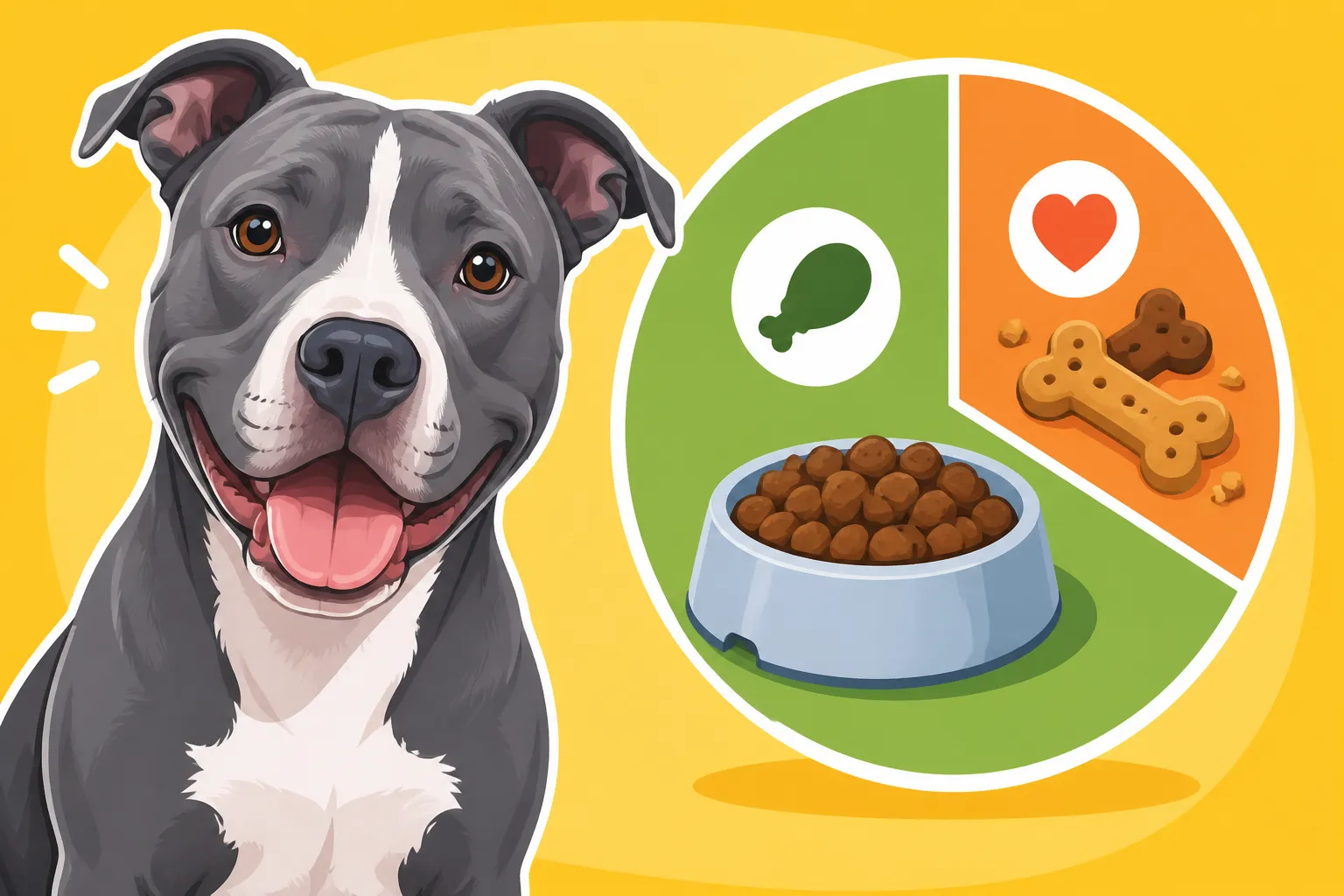
The 10% rule is simple: treats should make up no more than 10% of your dog's total daily caloric intake. This means if your 50-pound Pit Bull needs 1300 calories a day, only 130 of those calories should come from treats. This might sound like a lot, or it might sound like very little, depending on the treats you're using! The key is to know the caloric content of your chosen treats.
For example, if a single commercial dog biscuit is 40 calories, your Pit Bull could have three of those in a day and still be within the 10% guideline. But if you're using larger, richer treats, or those fatty bits of human food, you can hit that 130-calorie limit very quickly. It's often helpful to think of treats as part of the total daily meal. If you give a higher-calorie treat, consider slightly reducing the portion size of their regular kibble or wet food for that day to keep them in balance. This requires a bit of math and diligence, but it’s the most effective way to prevent unintended weight gain. Many owners find it helpful to measure out their Pit Bull's daily kibble ration in the morning, then set aside the 10% for treats in a separate container, drawing from that throughout the day. This visual cue makes it easier to track.
Balancing Nutritional Needs with Treat Enjoyment
While the 10% rule is a great guideline for calories, it's also important to remember that treats are generally not nutritionally complete. They are supplements, not meal replacements. Your Pit Bull's primary nutrition should always come from a high-quality, balanced dog food. If too many calories come from treats, especially those low in essential nutrients, your dog might fill up without getting all the vitamins, minerals, and proteins they need from their main diet.
This is particularly true for Pit Bulls who might have specific dietary needs, such as those on limited ingredient diets for allergies or special formulations for joint health. Giving them too many treats outside of their prescribed food can disrupt their delicate nutritional balance. It's about finding that sweet spot where treats offer joy and motivation without compromising their overall health. For some, this might mean choosing treats that offer some nutritional benefit, like small pieces of lean meat or certain vegetables, rather than highly processed options with fillers. The goal is enjoyment and reinforcement, not just calorie delivery.
Here's a quick comparison of calorie impact:
| Treat Type | Example | Approximate Calories (per unit/small piece) | Equivalent to % of 1300 Calorie Diet (approx.) |
|---|---|---|---|
| Small Dog Biscuit | Basic crunchy biscuit | 20-40 | 1.5% – 3% |
| Soft Training Treat | Small, chewy bite | 3-5 | 0.2% – 0.4% |
| Large Dental Chew | Greenie (large size) | 100-300+ | 7.5% – 23% (can exceed 10% limit quickly) |
| Cheese Cube (1/2 inch) | Cheddar | 30 | 2.3% |
| Apple Slice (1 oz) | Plain apple | 15 | 1.1% |
| Peanut Butter (1 tbsp) | Smooth, unsweetened | 100 | 7.7% |
| Boiled Chicken (1 oz) | Skinless, boneless | 45 | 3.5% |
(Note: Calorie counts are estimates and vary significantly by brand and specific ingredient. Always check product labels.)
Smart Treat Choices: Quality Over Quantity for Your Pit Bull
It's not just about how many treats, but what kind of treats you're offering. Making smart choices can help keep your Pit Bull healthy, satisfied, and within their calorie goals. This means looking beyond the marketing and understanding the ingredients.
Low-Calorie, High-Value Options
For training or frequent rewards, low-calorie, high-value treats are your secret weapon. "High-value" refers to how much your Pit Bull loves the treat, not necessarily its caloric density. The trick is to find things they go absolutely crazy for that don't pack a huge caloric punch. Small pieces of cooked, lean protein like plain chicken breast, turkey, or even lean beef can be incredibly motivating for a Pit Bull. These are often easier to digest and less likely to cause an upset stomach than rich, fatty treats.
Vegetables like baby carrots, green beans, or cucumber slices can also be excellent low-calorie options. Many Pit Bulls love the crunch of a carrot! Just be sure to avoid vegetables that are toxic to dogs, like onions or garlic, and introduce new foods slowly to avoid digestive upset. Even breaking a larger, healthy dog biscuit into several tiny pieces can extend its use and reduce the calories per reward. Consider shopping on platforms like Chewy or Amazon for a wide selection of low-calorie training treats, often specifically designed to be small and palatable without being calorie bombs. Remember, even a tiny speck of a truly high-value treat can be just as effective as a whole biscuit if your Pit Bull really loves it. This is key for Treats Small Enough for Repeated Pit Bull Training during intensive sessions.
Commercial Treats vs. Whole Food Alternatives
When it comes to treats, you essentially have two main categories: commercial dog treats and whole food alternatives. Both have their pros and cons. Commercial treats are convenient, shelf-stable, and often come in specific sizes for training or dental benefits. However, it's crucial to read the ingredient labels carefully. Look for treats with whole ingredients, without excessive fillers, artificial colors, or preservatives. Brands that prioritize natural ingredients and transparent sourcing are generally a better bet. You can find a vast array of options, from freeze-dried meats to crunchy biscuits, on sites like Chewy.
Whole food alternatives, on the other hand, offer complete control over ingredients and can often be very low in calories. As mentioned, cooked lean meats and certain vegetables are fantastic. Some owners even prepare their own homemade dog treats using simple recipes, which allows them to avoid unwanted additives and control the nutritional content. For instance, homemade pumpkin treats (without sugar or spices) can be a hit. Subscription services like Ollie, which deliver fresh, human-grade dog food, also often include healthy, simple ingredients that can be used sparingly as treats, ensuring high quality. The key is to be mindful of portions and ensure any whole food item you offer is safe for canine consumption. Always research before introducing new human foods to your Pit Bull's diet.
Strategic Treat Use: Training, Enrichment, and Beyond
Treats aren't just about indulgence; they're powerful tools when used strategically. For a breed as intelligent and driven as a Pit Bull, treats can be invaluable for shaping behavior, reinforcing good choices, and providing mental stimulation.
Treats as Training Rewards and Motivators
Pit Bulls are often highly intelligent and eager to please, making them excellent candidates for positive reinforcement training. Treats, when used correctly, are a cornerstone of this method. They provide immediate, tangible feedback that your Pit Bull understands: "I did something right, and I got rewarded!" This strengthens the association between the desired behavior and a positive outcome. From basic commands like sit and stay to more complex tasks, a well-timed treat can solidify learning.
To maximize effectiveness, use treats that your Pit Bull finds truly motivating – those "high-value" rewards we talked about. During initial training, you might use frequent, small treats for every correct response. As your Pit Bull masters a behavior, you can gradually reduce the frequency of treats, moving to intermittent rewards or pairing them with verbal praise or a quick play session. This helps your Pit Bull learn that good behavior is intrinsically rewarding, not just a means to get food. For example, when Teaching a Pit Bull to Sit Before Every Door, a small, soft treat delivered instantly for sitting can be far more effective than a verbal "good boy" alone. Make sure you're using treats that hold your Pit Bull's focus, especially in distracting environments. High-Value Treats That Hold a Pit Bull's Focus are crucial for keeping their attention.
Treats for Enrichment and Mental Stimulation
Beyond formal training, treats can be fantastic for enrichment. Pit Bulls thrive on mental challenges, and puzzle toys or Kongs stuffed with treats can keep them engaged and prevent boredom, which can sometimes lead to destructive behaviors. Instead of just giving a treat straight from your hand, try freezing a smear of peanut butter or plain yogurt inside a Kong, or stuffing a puzzle toy with some of their daily kibble mixed with a few tasty morsels. This makes them "work" for their food, simulating natural foraging behaviors and providing a healthy outlet for their energy.
This kind of enrichment is particularly helpful when you need to leave your Pit Bull alone for a period or want to provide a calming activity. A frozen, stuffed Kong can keep them occupied for a good chunk of time, burning mental energy and reducing anxiety. You can also use treats in scent work games, hiding small pieces around the house for them to sniff out. This taps into their natural instincts and provides a wonderful mental workout. Remember to factor these "enrichment treats" into their daily calorie allowance to maintain their healthy weight. This is a great way to provide mental stimulation without adding excessive calories directly from your hand.
Troubleshooting Treat-Related Weight Gain in Pit Bulls
Despite our best intentions, it's easy for Pit Bulls to slowly gain weight, especially with their muscular build making it harder to spot. If you suspect your Pit Bull is getting a little chunky, don't despair – there are practical steps you can take to get them back on track.
Recognizing the Subtle Signs of Excess Weight
Because Pit Bulls are naturally muscular, it can be tricky to tell if they're carrying extra fat. What looks like "more muscle" to an untrained eye might actually be an unhealthy layer of fat. One of the most common mistakes owners make is underestimating Pit Bull Obesity and How to Spot It Under Muscle. You shouldn't be able to see their ribs, but you absolutely should be able to feel them easily with light pressure, almost like feeling the back of your hand. If you have to press firmly to feel them, your Pit Bull is likely overweight.
Look for a distinct waistline when viewed from above, just behind their rib cage. If they look like a solid cylinder from head to tail, they're probably too heavy. From the side, their belly should tuck up slightly, not hang low or be flat like a board. Also, observe their energy levels and mobility. Are they panting more easily after exercise? Are they less enthusiastic about walks or jumping? These can all be subtle indicators of excess weight. Regular weigh-ins at home or at the vet, along with consistent body condition scoring, are vital for catching weight creep early. A quick check of their Why Muscle Makes Pit Bull Weight Hard to Judge can offer more insights.
Adjusting the Diet to Get Back on Track
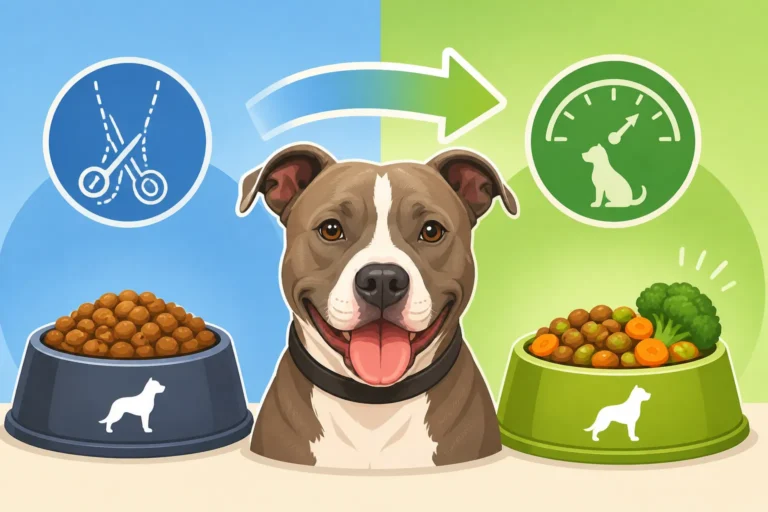
If you've identified that your Pit Bull needs to shed a few pounds, the good news is that it's completely manageable with a few adjustments. First and foremost, revisit their main food portion. Are you truly measuring it, or just scooping? Measuring Pit Bull Food Instead of Guessing is critical for accuracy. Even a small handful extra at each meal can add hundreds of calories over a day. Weighing their food with a kitchen scale is the most precise method.
Next, drastically cut back on treats, or switch entirely to extremely low-calorie options. This is where those tiny pieces of plain cooked chicken or green beans really shine. You can still reward them, but you'll be doing it with minimal caloric impact. If your Pit Bull is heavily treat-motivated, you might even "borrow" a small portion of their daily kibble and use that for training rewards throughout the day, ensuring they're still within their total calorie budget. Increase their exercise, but do so gradually and safely to avoid injury. A brisk walk or an extra play session can burn calories and help build lean muscle. Remember, weight loss should be slow and steady. Aim for a gradual reduction, typically 1-2% of their body weight per week, to ensure it’s healthy and sustainable. Consistency is key, and Getting a Pit Bull Back Into Condition is a journey that requires patience and dedication.
Disclaimer
This article is for general informational purposes only and does not constitute professional advice. Laws, prices and regulations vary by location and change over time. Consult a qualified professional for guidance on your specific situation.