Why Pit Bull Is a Type and Not a Breed
It can be incredibly frustrating to hear the term "Pit Bull" used loosely, causing endless confusion and often leading to unfair judgment of dogs that fall under this broad umbrella. Many people, even experienced dog owners, don't realize that "Pit Bull" isn't actually a single breed recognized by major kennel clubs, but rather a descriptive term for a type of dog. This guide is here to untangle that knot, explaining exactly why "Pit Bull" is a type, not a breed, what specific breeds are included, and why this distinction matters so much for owners and their beloved companions.
Unpacking the "Pit Bull" Label: A Matter of Type, Not Breed
The conversation around "Pit Bulls" often starts with a fundamental misunderstanding: that everyone is talking about the same, officially recognized dog breed. In reality, the term "Pit Bull" is more of a catch-all, a descriptor for dogs that share certain physical characteristics, a powerful build, and a common ancestry. This can be baffling when you're trying to understand your dog's heritage or discuss them with others, especially given the weight this label carries in public perception.
The Semantic Confusion and Its Impact
Imagine walking into a hardware store and asking for "a saw." You could mean a handsaw, a hacksaw, a circular saw, or a chainsaw! Each is a saw, but they are distinctly different tools with different purposes and characteristics. The term "Pit Bull" operates in much the same way. It's a generic descriptor, and without further clarification, it leads to a lot of assumptions and misinformation. People often use it as if it refers to a singular, defined breed, which immediately puts the dog and its owner at a disadvantage.
This semantic confusion impacts owners directly and profoundly. For instance, when searching for housing, you might encounter lease agreements that explicitly ban "Pit Bulls." What does that even mean? Does it refer to an American Pit Bull Terrier, an American Staffordshire Terrier, or any dog that looks like one? This ambiguity creates a minefield for dog owners, where a visual assessment by a landlord or neighbor can determine your living situation or even your ability to get insurance. The lack of a clear, universally accepted definition contributes significantly to the challenges faced by owners of these types of dogs, making it difficult to advocate for their pets when the very definition of their dog is up for debate.
How Registries Define Breeds (or Don't)
To understand why "Pit Bull" isn't a breed, we need to look at how official dog breeds are established and recognized. Major kennel clubs, such as the American Kennel Club (AKC) and the United Kennel Club (UKC), maintain studbooks and set breed standards. These standards are incredibly detailed, outlining everything from ideal height, weight, coat color, and ear set to temperament traits and gait. A dog must meet these specific criteria and have a documented pedigree to be registered as a member of a recognized breed. This rigorous process ensures consistency and predictability within a breed over generations.
The crucial point here is that neither the AKC nor the UKC recognizes a breed specifically named "Pit Bull." The AKC does not list a "Pit Bull" breed at all. The UKC recognizes the American Pit Bull Terrier (APBT) as a distinct breed, which is one of the dogs often referred to as a "Pit Bull." However, the term "Pit Bull" itself, without the "American Terrier" suffix, is not a registered breed name. This distinction is vital because when legislation, insurance policies, or housing rules mention "Pit Bulls," they are often referring to a generalized type of dog, rather than dogs registered under a specific breed name. It means that even if your dog is a purebred, registered American Pit Bull Terrier, it might still fall under a generic "Pit Bull" ban simply because of the common usage of the term.
The Core Breeds Commonly Called "Pit Bulls"
When people talk about "Pit Bulls," they are typically referring to one of three distinct breeds, each with its own history, characteristics, and official recognition by various kennel clubs. Understanding these individual breeds helps to clarify the picture and challenges the monolithic perception of the "Pit Bull" type.
The American Pit Bull Terrier (APBT)
Often considered the quintessential "Pit Bull" by many, the American Pit Bull Terrier is a breed recognized by the United Kennel Club (UKC) and the American Dog Breeders Association (ADBA). The UKC was actually the first to recognize the APBT in 1898, specifically acknowledging its heritage as a working dog bred for athleticism and companionship. Historically, these dogs were developed from bull-and-terrier crosses in England, making their way to America where they were valued for their versatility on farms, catching vermin, guarding property, and being cherished family members.
APBTs are known for their muscular, powerful build, intelligent eyes, and often a broad head. Their temperament is typically described as courageous, high-spirited, and exceptionally loyal to their families. They possess a strong prey drive and an eager-to-please nature, which, coupled with their intelligence, makes them highly trainable. However, due to their historical use in dog-fighting (a dark chapter that responsible breeders and owners vehemently condemn), they have unfortunately garnered a reputation that belies the true nature of well-bred and well-socialized individuals. Understanding the origins of this breed, as discussed in The Bull and Terrier Origin of the Pit Bull, is crucial to appreciating its qualities.
The American Staffordshire Terrier (AmStaff)
The American Staffordshire Terrier, or AmStaff, is the breed most commonly confused with the APBT, and for good reason—they share a common ancestry. The AKC began registering dogs of "Pit Bull" type in 1936, but under the name Staffordshire Terrier, to distance them from the fighting rings and focus on their conformation and companion qualities. In 1972, the breed name was officially changed to American Staffordshire Terrier to differentiate it from its smaller British cousin, the Staffordshire Bull Terrier. You can learn more about this split in How AmStaffs and APBTs Split in the 1930s.
AmStaffs are recognized by the AKC and are typically slightly larger and heavier-boned than the average APBT, bred for a more uniform "show" standard rather than diverse working abilities. They exude confidence, intelligence, and a friendly, outgoing disposition, particularly towards humans. Their muscular physique and alert expression make them very striking dogs. Responsible AmStaff breeders prioritize stable temperaments, aiming for dogs that are excellent family companions. Like their APBT cousins, they thrive on mental and physical stimulation and form strong bonds with their owners.
The Staffordshire Bull Terrier (Staffie)
Hailing from England, the Staffordshire Bull Terrier is another distinct breed that falls under the "Pit Bull" type umbrella. These charming dogs are recognized by both the AKC and the UKC and are significantly smaller than their American relatives. Bred in the Staffordshire region of England as fighting dogs in the 19th century, their ancestry also lies in crosses between bulldogs and various terriers. However, their development focused on creating an agile, powerful dog that was also a loving and trustworthy companion to humans.
The Staffie is known for its compact, muscular build, broad head, and distinctive "rose" ears. Their temperament is one of their most celebrated traits: intelligent, courageous, and famously good with children, often earning them the affectionate moniker "nanny dog" in their homeland. While the "nanny dog" claim is a myth that needs careful clarification (as explored in Where the Pit Bull Nanny Dog Claim Started), it speaks volumes about their affectionate and patient nature with people. They are energetic and playful, making wonderful family pets for those who can provide ample exercise and training.
Beyond the Core: Other Dogs Often Labeled "Pit Bull"
The ambiguity of the "Pit Bull" label extends beyond the three core breeds, encompassing other similar-looking dogs and a vast number of mixed breeds. This further complicates identification and contributes to the general confusion surrounding the type.
The American Bully and Its Relationship
The American Bully is a relatively new breed, developed in the 1990s, specifically created to be a companion dog that retains the powerful, muscular physique of its "Pit Bull" type ancestors but with a more docile temperament. This breed was developed through selective breeding of American Pit Bull Terriers and American Staffordshire Terriers, often with infusions from other bulldog-type breeds to enhance their "bully" characteristics—a broader chest, heavier bone structure, and a distinct blockier head. Unlike the APBT and AmStaff, the American Bully has its own distinct breed registries, such as the American Bully Kennel Club (ABKC).
The American Bully comes in various sizes (Pocket, Standard, Classic, XL), but all share a common goal of being robust, confident, and amiable companions. They are generally known for their calm and friendly demeanor, often being less energetic than APBTs or AmStaffs. However, their physical resemblance to the broader "Pit Bull" type means they are frequently misidentified by the public, by landlords, and even by some authorities, leading to similar challenges regarding housing and insurance. For more on this, see Whether an American Bully Is a Pit Bull. It's a prime example of how the "type" designation casts a wide net.
Mixed Breeds and Visual Identification Challenges
Perhaps the largest group of dogs labeled "Pit Bull" are those of mixed ancestry. In animal shelters across the country, a significant percentage of dogs are labeled as "Pit Bull," "Pit Mix," or "Bully Breed." However, scientific studies, including DNA analysis, have repeatedly shown that visual identification of breeds, especially "Pit Bull" types, is highly unreliable. Shelter staff, veterinarians, and even experienced dog enthusiasts often guess incorrectly when trying to identify breeds based solely on appearance.
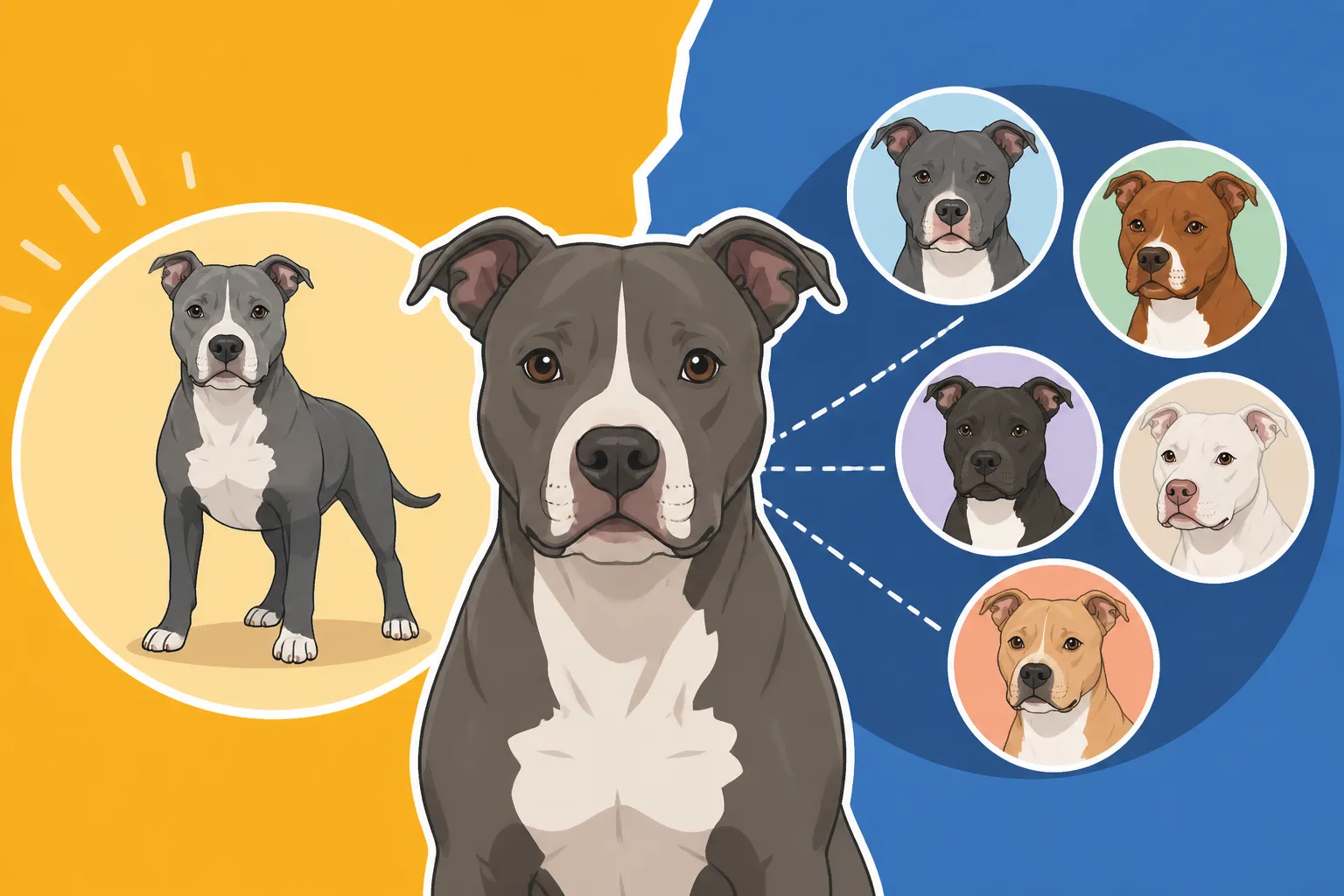
A dog with a blocky head, muscular build, and short coat might be visually tagged as a "Pit Bull" even if its DNA reveals a complex mix of breeds like Boxer, Labrador Retriever, German Shepherd, or even breeds not typically associated with the "bully" phenotype. This phenomenon is extensively discussed in How Accurate a Visual Pit Bull Call Is. The consequences of this misidentification are significant. A dog that is only 25% "Pit Bull" type might face the same breed-specific restrictions as a purebred APBT, purely because of how it looks. This underscores the arbitrary nature of breed bans and how they disproportionately affect dogs based on superficial traits rather than actual behavior or definitive genetics.
The Historical Context: How the "Type" Emerged
Understanding the origins of the "Pit Bull" type helps to shed light on why the term is so pervasive and why these dogs possess the characteristics they do. Their history is intertwined with human sport and utility, leading to the development of powerful, resilient animals.
Bull and Terrier Origins
The story of the "Pit Bull" type begins in 19th century England, a period when "blood sports" involving animals were unfortunately popular. Two types of dogs were central to these activities: the Old English Bulldog, a tenacious and powerful breed used in bull-baiting (pitting dogs against bulls), and various terrier breeds, known for their gameness, agility, and hunting prowess. The practice of bull-baiting was eventually outlawed in 1835 in the UK, leading to a shift in these brutal contests towards rat-baiting and dog-on-dog fighting, which could be conducted more discreetly.
To create a dog that excelled in these new "sports," breeders began to cross the powerful, heavy-jawed Bulldogs with the agile, fiery Terriers. The goal was to combine the Bulldog's strength and tenacity with the Terrier's quickness and determination. These resulting "bull and terrier" crosses were incredibly athletic, possessing a powerful bite, immense stamina, and a high pain tolerance. While this history is undeniably dark and abhorrent by modern standards, it is essential context for understanding the genetic foundation of the "Pit Bull" type. The traits that made them formidable in the pit – their drive, strength, and unwavering focus – are some of the same traits that, when channeled positively, make them exceptional working dogs and loyal companions today.
Arrival in America and Divergence
As immigrants from England and Ireland made their way to America, they brought their beloved bull and terrier dogs with them. In the nascent United States, these dogs found new roles that extended far beyond the fighting pits. On sprawling farms and homesteads, they quickly proved their worth as versatile working dogs. Their strength and determination made them excellent at controlling vermin, from rats in barns to larger predators. Their protective instincts made them reliable guardians of livestock and property. Furthermore, their unwavering loyalty and affectionate nature quickly cemented their status as cherished family companions. They were truly all-around farm dogs, capable of a day's work and an evening cuddle.
Over time, different lines of these bull and terrier dogs began to diverge in America. Some breeders continued to focus on the performance traits for fighting, maintaining a lineage that would eventually become the American Pit Bull Terrier, recognized by the UKC for its athletic abilities and game spirit. Other breeders, seeking to distance their dogs from the fighting aspect and emphasize a more uniform appearance and companion temperament, developed a more conformation-focused line. These dogs eventually became the American Staffordshire Terrier, recognized by the AKC. This divergence led to two distinct breeds from a common ancestral pool, both falling under the broad "Pit Bull" type. How Pit Bull Type Dogs Reached America further details this journey across the Atlantic.
The Real-World Impact of the "Pit Bull" Type Label
The term "Pit Bull" might be technically inaccurate as a breed designation, but its real-world consequences are undeniably harsh for owners and their dogs. From housing to insurance, the label can create significant barriers, impacting daily life in profound ways.
Housing and Insurance Restrictions
One of the most immediate and frustrating impacts of the "Pit Bull" label is the pervasive struggle to find suitable housing and obtain adequate homeowners or renters insurance. Many apartment complexes, HOAs, and landlords implement breed restrictions, and "Pit Bulls" are almost invariably at the top of their prohibited lists. This often means responsible owners of well-behaved dogs are forced to choose between their pet and their home, or face an uphill battle to prove their dog is not a threat based purely on its appearance. It's a truly disheartening situation, especially when your dog is a cherished family member who has never caused an issue.
Insurance companies, too, frequently have "dangerous breed" lists that include "Pit Bulls," American Pit Bull Terriers, American Staffordshire Terriers, and even dogs that simply resemble them. This can result in outright denial of coverage, increased premiums, or breed-specific exclusions that leave owners vulnerable to liability. Even if you've never had an incident, the perceived risk associated with the "Pit Bull" label can create immense financial and logistical hurdles. It's not uncommon for people to struggle for months trying to secure a policy that doesn't penalize them for owning their beloved dog. For a deeper dive into these challenges, you might find Getting Home Insurance With a Pit Bull and Finding a Rental That Takes a Pit Bull to be invaluable resources.
Public Perception and Misinformation
Beyond the practical challenges, the "Pit Bull" label carries a heavy burden of public perception, often fueled by sensationalized media and a lack of accurate information. These dogs are frequently (and unfairly) portrayed as inherently aggressive, dangerous, or unpredictable, leading to fear and prejudice from strangers. Owners regularly report receiving dirty looks, encountering people who cross the street to avoid their dog, or being subjected to unsolicited negative comments while out on walks. This constant scrutiny can be emotionally draining and isolate owners who are simply trying to enjoy time with their pet.
The misinformation surrounding these dogs includes persistent myths, such as the "locking jaw" (which is anatomically impossible for any dog breed) or the often-misrepresented "nanny dog" narrative. While the "nanny dog" story attempts to highlight their gentleness with children, relying on this myth is irresponsible and can lead to dangerous situations, as no dog, regardless of breed or type, should ever be left unsupervised with children. It's crucial for owners to remember that while their dog might be the sweetest, most loving companion, public perception means they often have to work twice as hard to demonstrate responsible ownership and challenge stereotypes. This means consistently going above and beyond in training and management, which leads us to the next point.
Advocating for Your "Pit Bull" Type Dog
Living with a "Pit Bull" type dog means being an ambassador for your canine companion every single day. It requires proactive measures, continuous training, and a willingness to educate others. By being a shining example of responsible dog ownership, you can help chip away at the misconceptions that plague these wonderful animals.
Understanding Local Laws and Lease Agreements
One of the most critical steps for any owner of a "Pit Bull" type dog is to thoroughly research and understand the laws and regulations in their area, as well as the specifics of their housing agreements. Many cities and counties still have breed-specific legislation (BSL) in place, which can mandate muzzle use in public, require special permits, or even prohibit certain breeds outright. Knowing these laws before you get a dog, or as soon as you move to a new area, is paramount to avoiding severe legal consequences. For an overview of where these laws are still in effect, check out Where Pit Bull Legislation Still Applies.
Beyond local ordinances, carefully scrutinize lease agreements, HOA bylaws, and insurance policies. Don't assume anything. If there's any ambiguity, get clarification in writing. Sometimes, simply having a clear understanding of your dog's actual breed (e.g., American Staffordshire Terrier vs. generic "Pit Bull") can make a difference if a landlord or insurer is willing to look beyond the broad label. In some cases, a DNA test might clarify a mixed-breed dog's ancestry, which could help if the primary forbidden breed is not present, though this isn't a guaranteed solution. Remember, being prepared and informed is your first line of defense.
Responsible Ownership and Community Engagement
Being a responsible owner of a "Pit Bull" type dog goes beyond basic care; it involves a commitment to high standards of training, socialization, and public conduct. Because of the scrutiny these dogs face, it's often necessary to train them to a higher standard than other dogs. This means consistent training from puppyhood, focusing on excellent leash manners, rock-solid recall, and polite greetings. Utilizing positive reinforcement methods and high-value treats (which you can often find readily available on sites like Chewy) can make training sessions fun and productive. Training a Pit Bull to a Higher Standard Than Other Dogs offers great insights into what this entails.
Consider enrolling your dog in formal obedience classes, earning certifications like the Canine Good Citizen (CGC) title. The CGC test demonstrates that your dog is a well-behaved member of the community, capable of listening to commands and remaining calm in various situations. This title can be a powerful tool for advocacy, providing tangible proof of your dog's good temperament and training, which can sometimes help with housing or insurance. Canine Good Citizen and Why It Matters for a Pit Bull explains the value of this certification.
Engaging positively with your community is also key. By being a visible example of a well-behaved "Pit Bull" type dog and a responsible owner, you help challenge negative stereotypes one interaction at a time. This could mean politely correcting misinformation, educating curious strangers about your dog's true breed (if known), or simply demonstrating that your dog is a friendly, well-adjusted pet. Remember that every positive interaction helps shift the narrative for these often-misunderstood animals.
| Breed/Type | Recognizing Kennel Club(s) | Typical Size (Weight) | General Appearance | Key Temperament Trait |
|---|---|---|---|---|
| American Pit Bull Terrier | UKC, ADBA | 30-60 lbs | Athletic, lean-muscled, strong jaws, various colors | Confident, eager to please, loyal, energetic |
| American Staffordshire Terrier | AKC | 40-70 lbs | Stockier, broader head, powerful build, emphasis on conformation | Confident, intelligent, stable, friendly with people |
| Staffordshire Bull Terrier | AKC, UKC | 24-38 lbs | Compact, muscular, short coat, wide smile | Courageous, highly affectionate, known for being good with children |
| American Bully | ABKC (various others) | Varies by type (e.g., 60-120+ lbs for XL) | Very broad, heavy-boned, thick neck, pronounced musculature | Gentle, calm, confident, companion-focused |
| Mixed Breeds (Labeled "Pit Bull") | None, visual assessment | Highly variable | Shares some "bully" traits (head shape, muscle) | Highly variable, depends on blend of breeds |
Disclaimer
This article is for general informational purposes only and does not constitute professional advice. Laws, prices and regulations vary by location and change over time. Consult a qualified professional for guidance on your specific situation.