Positive Reinforcement Training With a Pit Bull
It can be incredibly disheartening when you're trying your best to communicate with your beloved Pit Bull, only to feel like you're speaking different languages. Maybe your sweet, powerful companion is struggling with leash manners, or perhaps their boundless enthusiasm translates into an unwelcome jump on guests. This guide is all about diving deep into positive reinforcement training, showing you how to build a strong, loving bond with your Pit Bull while teaching them the skills they need to thrive in our busy world, all without resorting to harsh methods that can damage trust.
Understanding Positive Reinforcement for Your Pit Bull
When it comes to training a powerful, intelligent, and often misunderstood breed like the Pit Bull, the methods you choose make all the difference. Positive reinforcement isn't just a trend; it's a science-backed approach that builds confidence, strengthens your relationship, and genuinely helps your dog understand what you're asking.
What Positive Reinforcement Actually Means
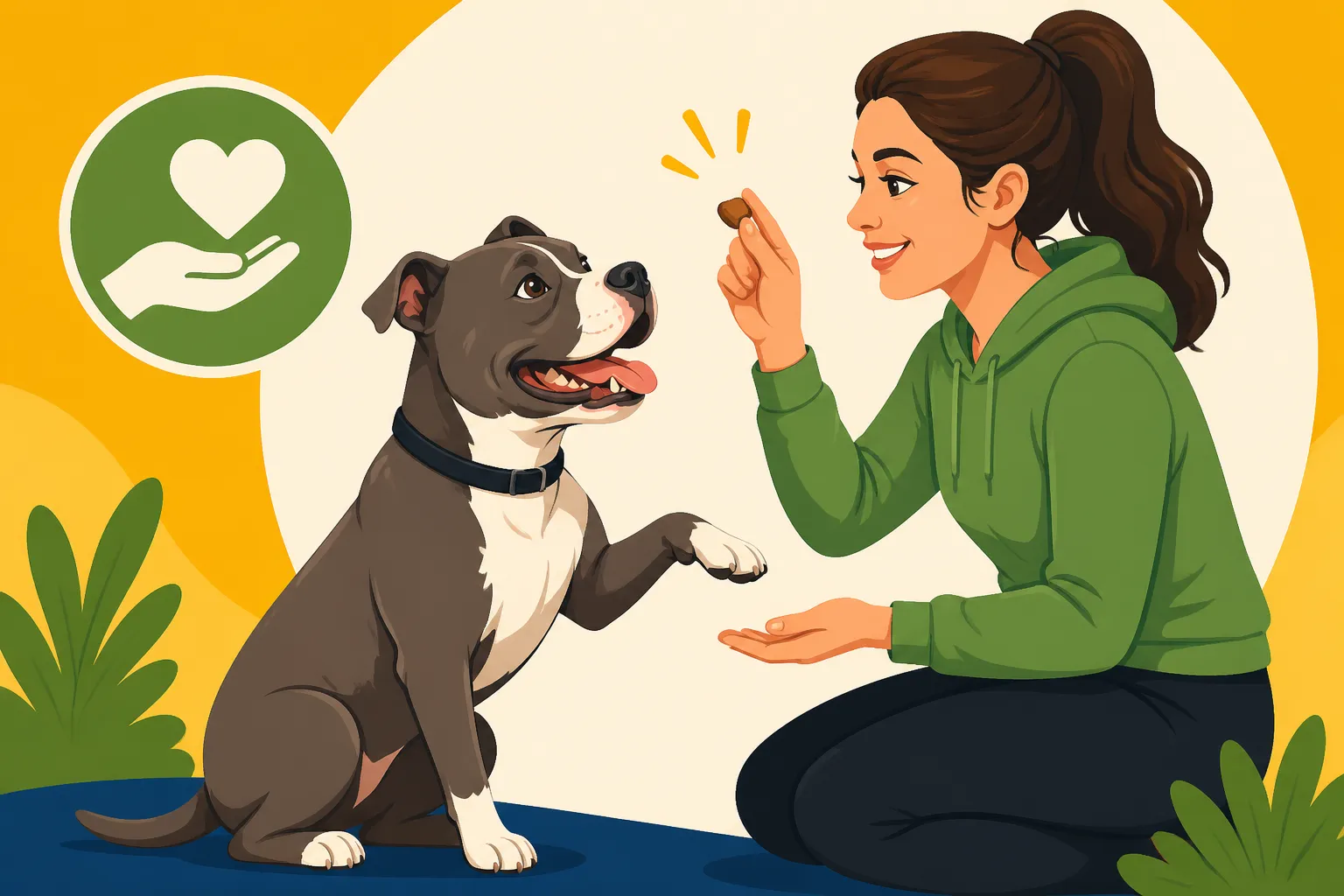
At its heart, positive reinforcement is about adding something good to increase the likelihood of a behavior happening again. Think of it this way: your Pit Bull does something you like – maybe they sit politely instead of jumping – and you immediately give them something they value, like a tasty treat, a quick game of tug, or enthusiastic praise. The "positive" part refers to adding something, and the "reinforcement" part means the behavior is strengthened. It's not about bribing your dog; it's about clear communication. You're essentially saying, "Yes! That's exactly what I want!" and making that outcome highly rewarding for them. Over time, your Pit Bull learns to associate certain actions with pleasant results, making them more likely to offer those behaviors willingly. This creates a dog who wants to work with you, not one who fears what might happen if they don't.
Why It's the Best Approach for Pit Bulls
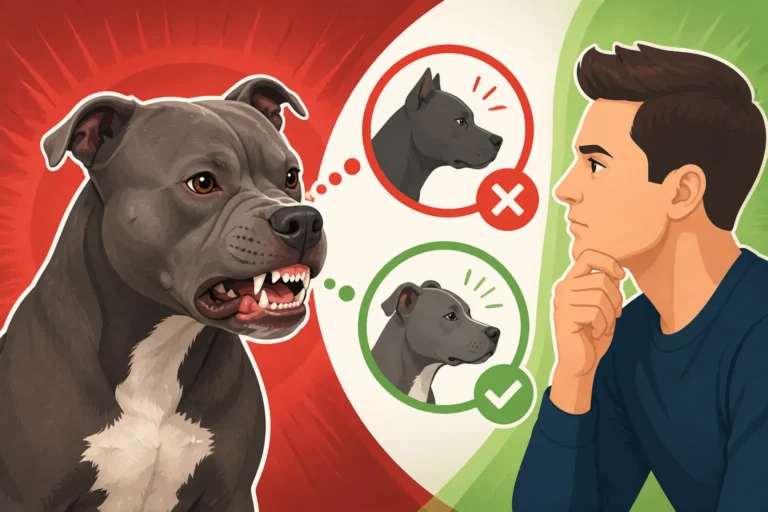
Pit Bulls, despite their tough exterior and often undeserved reputation, are incredibly sensitive and eager to please the people they love. They thrive on connection and clear, fair guidance. Using punishment-based methods can easily backfire with a Pit Bull; it can erode trust, lead to fear-based behaviors, and even make existing issues worse. Imagine being constantly corrected or intimidated – how would that make you feel about your teacher or mentor? For a breed already under public scrutiny, building a solid foundation of trust and understanding is paramount. Why Harsh Handling Backfires on a Pit Bull Positive reinforcement capitalizes on their intelligence and desire to cooperate. It encourages them to think and make good choices, rather than just reacting to avoid discomfort. This method builds a dog who is confident in their actions, understands boundaries, and genuinely enjoys training, making them a much better ambassador for their type. It helps nurture the joyful, clownish, and loyal companions that so many Pit Bull owners know and love.
Common Misconceptions to Avoid
One of the biggest myths surrounding positive reinforcement is that it spoils a dog or leads to a lack of control. This couldn't be further from the truth! A spoiled dog is often one who hasn't been given clear boundaries or consistent communication. Positive reinforcement, when done correctly, is all about establishing clear expectations and consistently rewarding the behaviors you want to see. It’s not about endless treats for no reason, but about using those rewards strategically to shape behavior. Another misconception is that it's only for "easy" dogs. In reality, it’s highly effective for all dogs, including strong-willed or challenging Pit Bulls, because it speaks their language: what’s in it for them? It's also often mistaken for simply bribing a dog. The difference is critical: a bribe is offered before the behavior to lure it, while a reward is given after the desired behavior occurs, reinforcing that action. The goal is to fade the constant food rewards over time, transitioning to life rewards like praise, playtime, or access to desired activities, once the behavior is well-established.
Essential Tools for Successful Positive Reinforcement
You wouldn't try to build a house without the right tools, and the same goes for training your Pit Bull. Having the proper gear and understanding how to use it effectively will set you and your dog up for tremendous success.
High-Value Treats and Rewards
For a Pit Bull, motivation is key, and high-value treats are often your most powerful currency. Forget the dry, dusty kibble bits you might use for daily meals; for training, you want something truly irresistible. Think small pieces of cooked chicken, cheese, hot dogs, or commercially available soft, meaty training treats. The "value" of a treat can vary greatly from dog to dog, and even from situation to situation. What's high-value at home might barely register at the park with squirrels around. It's crucial to experiment and find out what really makes your Pit Bull's eyes light up. These treats aren't just about taste; they are a powerful signal of success and happiness for your dog. Keep them tiny – pea-sized or smaller – so you can deliver many repetitions without overfeeding, especially if you're working on a long session. Having a variety on hand can also keep things interesting. Amazon is a fantastic place to explore different brands and types of high-value training treats, allowing you to find what your Pit Bull loves most. High-Value Treats That Hold a Pit Bull's Focus
Clickers and Marker Words
A clicker is a small device that makes a distinct, consistent sound. When paired with a reward, it becomes a powerful communication tool, acting as a precise "marker" for the exact moment your Pit Bull performs the desired behavior. The beauty of a clicker is its consistency and speed – it's much faster than saying "Good dog!" and more accurate. Think of it like a camera snapping a picture of the exact behavior you're trying to reinforce. To "charge" the clicker, simply click, then immediately give a treat, over and over again, until your dog associates the sound with something wonderful. If a clicker feels awkward or you have a sound-sensitive dog, a short, sharp, consistent marker word like "Yes!" or "Good!" can serve the same purpose. The key is consistency and immediacy. You click or say your marker word the instant your Pit Bull does what you want, then follow it up with their reward. This clear communication dramatically speeds up learning. Starting Clicker Training on a Pit Bull
Effective Training Environments and Gear
Setting your Pit Bull up for success means controlling their environment and using appropriate equipment. Start training in a quiet, distraction-free space, like your living room or a fenced yard. As your dog gets better, gradually introduce more distractions. For leash training, a sturdy, well-fitting harness is often a game-changer for Pit Bulls. Their broad chests and powerful build mean that a flat collar can put pressure on their windpipe and still allow them to pull you around. Front-clip harnesses or head halters can provide better control and comfort without pain or discomfort. Harness Fit Across a Broad Pit Bull Chest Durable leashes, ideally 6 feet long, are essential. Beyond the basics, consider puzzle toys or chew items to help manage their powerful jaws and provide mental enrichment outside of formal training sessions. Having these reliable tools on hand ensures that you’re prepared for spontaneous training moments and can keep your Pit Bull comfortable and safe during structured sessions.
Implementing Positive Reinforcement in Daily Life
Training isn't just about scheduled sessions; it's about integrating learned behaviors into your everyday routine. This approach helps your Pit Bull generalize skills and understand that good manners apply everywhere, not just when you have treats in your hand.
Foundation Behaviors: Sit, Stay, Come
These three commands are the bedrock of any well-trained dog, and teaching them with positive reinforcement creates a reliable, enthusiastic response.
- Sit: Hold a high-value treat near your Pit Bull's nose. Slowly move the treat up and back over their head. As their nose follows the treat, their rear end will naturally lower into a sit. The instant their bottom touches the ground, click (or say your marker word) and give the treat. Repeat this many times in short, fun sessions. Once they are consistently sitting, add your verbal cue ("Sit!") just as their bottom is starting to go down. Gradually fade the lure of the treat, using just your hand signal, then eventually just the verbal cue.
- Stay: Once your Pit Bull reliably sits, ask for a "Sit," then immediately say "Stay" and take one small step back. If they remain in place for even a second, step back to them, click, and reward. Gradually increase your distance and the duration they need to stay, always returning to them to deliver the click and treat. If they break, calmly reset them and try again, making it a little easier. The key is to reward them before they have a chance to fail.
- Come: This is perhaps the most critical command for safety. Start in a quiet, enclosed area. Get down low, enthusiastically call your Pit Bull's name, and say "Come!" When they start moving towards you, offer praise and encouragement. The instant they reach you, click and deliver a jackpot of treats or engage in a quick, exciting game of tug. Make coming to you the most rewarding thing they can possibly do. Never use "Come" to do something unpleasant, like giving medicine or ending fun playtime, or they'll learn to associate it negatively. Building a Pit Bull's Impulse Control
Addressing Common Pit Bull Challenges with Positive Methods
Pit Bulls are powerful dogs, and their natural enthusiasm can sometimes manifest as challenging behaviors. Positive reinforcement provides humane and effective solutions.
- Leash Pulling: This is a huge one for many Pit Bull owners. Instead of yanking or correcting, reward your Pit Bull for walking on a loose leash. Start by walking a few steps; if the leash is slack, click and treat. If they pull, simply stop moving. The moment the leash slackens, even a tiny bit, reward them and start walking again. They quickly learn that a tight leash means no progress, while a loose leash means forward movement and treats. Using a front-clip harness can also help physically redirect their pulling power without causing discomfort. Pit Bull Leash Pulling at Fifty Pounds
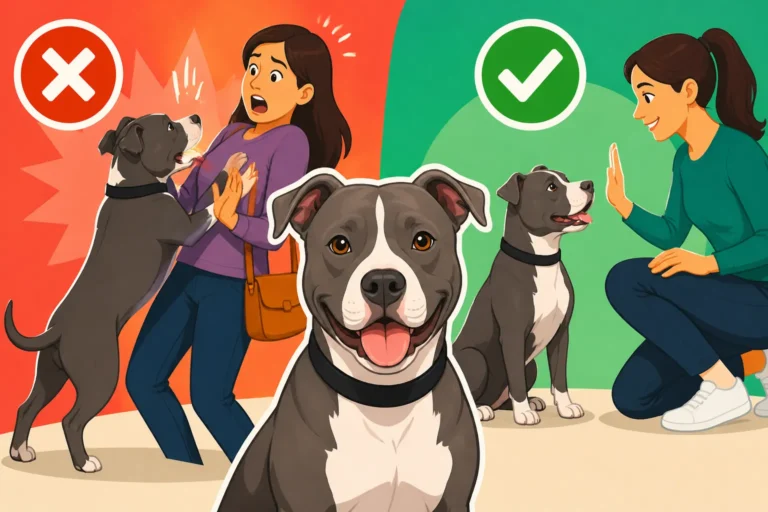
- Jumping: When your Pit Bull jumps on people, the key is to remove the reward (attention). As they approach, turn your back, cross your arms, and completely ignore them. The instant all four paws are on the floor, turn around, praise them, and offer a treat or calm attention. You can also actively teach them an incompatible behavior, like "Sit" for greetings. When someone approaches, ask for a "Sit," and have the person reward them for sitting calmly. Teaching a Pit Bull to Greet Calmly
- Impulse Control: Pit Bulls are often driven and excitable. Teach "Wait" before going through doors, for their food bowl, or before greeting another dog. Hold them back gently (or use a leash), say "Wait," and release them with "Okay!" and a reward when they calm down. This teaches them that calm patience leads to good things.
Building a Positive Relationship Through Play
Play isn't just fun; it's a vital component of positive reinforcement and relationship building. Engaging in appropriate, structured play sessions with your Pit Bull reinforces your bond and provides another avenue for rewards. Games like fetch, hide-and-seek with toys, or structured tug-of-war (with clear rules like "drop it" and "take it") are fantastic. When your Pit Bull plays politely and follows cues within the game, you're reinforcing those good behaviors. For example, if you're playing fetch, reward them not just for bringing the ball back, but for dropping it into your hand on command. This makes training feel less like work and more like an extension of your shared joy. Play can also be used as a high-value reward in itself – "Good Sit! Now let's play!" – showing your Pit Bull that cooperating with you leads to even more fun.
Beyond Basic Commands: Advanced Positive Reinforcement
Once your Pit Bull has mastered the foundational behaviors, positive reinforcement doesn't stop there. It's a continuous journey of learning and refinement, allowing you to tackle more complex tasks and generalize their good manners to every part of their lives.
Teaching Complex Behaviors and Tricks
The beauty of positive reinforcement is its versatility. You can use it to teach your Pit Bull almost anything, from opening a door to performing intricate tricks. The secret lies in breaking down complex behaviors into tiny, achievable steps, and rewarding each successful approximation. This process is called "shaping." For example, if you want to teach your Pit Bull to "spin," you might start by rewarding them for just turning their head, then for a quarter turn, then a half turn, and so on, until they complete a full circle. Each small step is a "win" that gets a click and a treat, building their confidence and understanding. You'll be amazed at how quickly your intelligent Pit Bull can pick up new things when you communicate clearly and make it rewarding. Keeping Pit Bull Training Sessions Productive It's like guiding them through a maze one step at a time, always celebrating their progress.
Proofing Behaviors in Distracting Environments
It’s one thing for your Pit Bull to "Sit" perfectly in your quiet living room, but quite another for them to do it at a busy park with other dogs, children, and tantalizing smells. This is where "proofing" comes in. Proofing means practicing known behaviors in increasingly distracting environments. Start with minimal distractions and gradually increase the challenge. For instance, practice "Sit" first in your yard, then on a quiet street, then near a distant dog, and eventually in a bustling environment. Always start by making it easy enough for your Pit Bull to succeed, and liberally reward them for performing the behavior despite the distractions. If they fail, it simply means you've asked for too much too soon; go back to a less distracting environment and build up again. The goal is for your Pit Bull to understand that the command means the same thing, no matter where they are or what's going on around them. The Manners a Pit Bull Needs in Public
Integrating Positive Reinforcement for Life Skills
Positive reinforcement extends far beyond traditional commands; it's a powerful tool for teaching your Pit Bull crucial life skills that make daily living smoother for everyone.
- Grooming and Handling: Many dogs dislike having their nails trimmed, ears cleaned, or being brushed. Use positive reinforcement to create positive associations. Pair a small, non-threatening step (like touching a paw for nail trims) with a treat. Gradually increase the duration and intensity of the touch, always rewarding cooperation. For ear cleaning, show the bottle, then touch the ear, then lift the flap, each step followed by a treat. Teaching a Pit Bull to Tolerate Ear Cleaning This makes routine care much less stressful.
- Vet Visits: The vet's office can be scary. Practice "happy visits" where you just walk in, give a treat, and leave. At the actual appointment, reward your Pit Bull for calmly sitting in the waiting room, allowing the vet to touch them, or staying still for an examination.
- Polite Greetings: Instead of letting your Pit Bull jump on guests, teach them to automatically "Sit" when someone approaches. Reward them for holding their "Sit" while the person offers a gentle pat. This makes them a joy to have around company. Teaching a Pit Bull to Hold a Place
By applying positive reinforcement to these everyday scenarios, you're not just training; you're building a confident, well-adjusted Pit Bull who navigates the world with grace and comfort.
Troubleshooting and Maintaining Your Training Progress
Training is rarely a straight line of constant progress. There will be plateaus, setbacks, and moments of frustration. Understanding how to troubleshoot and maintain momentum is crucial for long-term success with your Pit Bull.
When Progress Stalls: Identifying and Adjusting
It's completely normal for training progress to slow down or even seem to reverse. When this happens, don't get discouraged – it's a sign to re-evaluate your approach. First, consider the Three D's: Distance, Duration, and Distraction. Have you increased one of these too quickly? If your Pit Bull is struggling, make the task easier by reducing the distance, shortening the duration, or finding a less distracting environment. Perhaps your rewards aren't high-value enough for the current situation. Are you asking for a "Stay" at the dog park with boring kibble? Try cooked chicken! Is your timing off? Remember, the click or marker word needs to be delivered the instant the desired behavior occurs. Sometimes, a lack of progress can also signal that your Pit Bull isn't feeling well or is experiencing discomfort, so rule out any underlying health issues with a vet check. Re-evaluate your methods, break down the behavior into smaller steps, and approach the session with fresh eyes and renewed patience.
Consistency is Key: Family Involvement and Daily Practice
Training isn't a "set it and forget it" task; it's an ongoing conversation that requires daily commitment and, critically, consistency from everyone in the household. If one person allows your Pit Bull to jump on them while another tries to train a "Sit for greeting," your dog will be confused and progress will be slow. Hold a family meeting and ensure everyone understands the cues, the rules, and the reward system. Make short, fun training sessions a part of your daily routine – even just 5-10 minutes spread throughout the day is more effective than one long, tedious session once a week. Practice behaviors in different rooms of the house, in the yard, and on walks. Consistency reinforces the rules and helps your Pit Bull understand what's expected no matter who is giving the command. For families looking for structured guidance, online programs like BAXTER & Bella can provide excellent, consistent curriculum that everyone can follow, ensuring that all family members are on the same page. This unified front helps solidify your Pit Bull's understanding and reinforces their good behavior.
Knowing When to Seek Professional Guidance
While positive reinforcement is incredibly effective, some challenges might be beyond what you can tackle on your own. There's absolutely no shame in seeking professional help; in fact, it's a sign of a responsible and dedicated Pit Bull owner. Consider consulting a certified professional dog trainer (CPDT-KA) or a certified dog behavior consultant (CDBC) if you're encountering:
- Aggression towards other dogs or people.
- Severe separation anxiety.
- Deep-seated fear or phobias.
- Behaviors that pose a safety risk.
- If you've hit a wall and feel utterly frustrated.
A good professional will use positive, humane methods and tailor a plan specifically for you and your Pit Bull. They can identify nuances in your dog's body language or your own technique that you might be missing. When looking for a trainer, make sure they align with positive reinforcement philosophies and have experience with powerful breeds like Pit Bulls. Vetting a Trainer Before Booking a Pit Bull A qualified professional can provide invaluable support, guidance, and expertise, helping you and your Pit Bull overcome obstacles and continue on the path to a harmonious life together.
| Reward Type | Description | Best Uses | Example Pit Bull Behavior |
|---|---|---|---|
| High-Value Food | Small, soft, extremely palatable treats | Early learning, high-distraction environments, quick repetitions | Loose-leash walking, recall, complex tricks |
| Praise/Affection | Enthusiastic verbal praise, gentle petting | Maintaining learned behaviors, low-distraction environments | Calm greetings, settling on cue |
| Toys/Play | Quick game of tug, toss of a favorite ball | High-energy breeds, reinforcing specific active behaviors | Coming when called, fetch, "drop it" |
| Life Rewards | Access to a desired activity (door, meal, sniff) | Integrating training into daily routine, building impulse control | Waiting at the door, sitting for dinner |
Disclaimer
This article is for general informational purposes only and does not constitute professional advice. Laws, prices and regulations vary by location and change over time. Consult a qualified professional for guidance on your specific situation.